




Due to scheduled maintenance work on our servers, there may be short service disruptions on this website between 11:00 and 12:00 CEST on March 28th.
-
Declination and Segmentation in Children with Childhood Apraxia of Speech -
The Relation of Slavic Verb Prefixes to Perfective Aspect -
Language Use and Attitudes Among Ukrainian Refugees in Canada: Do They Differ by Participants’ Age? -
Exploring the Cooperative Principle in Cross-Cultural Contexts: A Corpus-Based Pragmatic Study of International Students Learning Romanian
Journal Description
Languages
Languages
is an international, multidisciplinary, peer-reviewed, open access journal on interdisciplinary studies of languages published monthly online by MDPI. The European Society for Transcultural and Interdisciplinary Dialogue (ESTIDIA) is affiliated with Languages and its members receive discounts on the article processing charges.
- Open Access— free for readers, with article processing charges (APC) paid by authors or their institutions.
- High Visibility: indexed within Scopus, ESCI (Web of Science), ERIH Plus, and other databases.
- Journal Rank: JCR - Q2 (Linguistics) / CiteScore - Q1 (Language and Linguistics)
- Rapid Publication: manuscripts are peer-reviewed and a first decision is provided to authors approximately 55.2 days after submission; acceptance to publication is undertaken in 9.6 days (median values for papers published in this journal in the second half of 2025).
- Recognition of Reviewers: reviewers who provide timely, thorough peer-review reports receive vouchers entitling them to a discount on the APC of their next publication in any MDPI journal, in appreciation of the work done.
- Journal Cluster of Human Thought and Cultural Expression: Culture, Histories, Humanities, Languages, Literature and Religions.
Impact Factor:
1.2 (2024);
5-Year Impact Factor:
1.2 (2024)
Latest Articles
Beyond Sociodemographics: Attitudinal and Personality Predictors of Lexical Change
Languages 2026, 11(3), 61; https://doi.org/10.3390/languages11030061 - 23 Mar 2026
Abstract
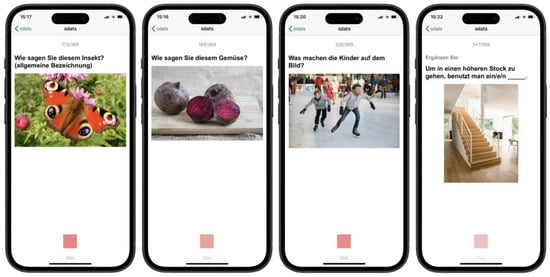
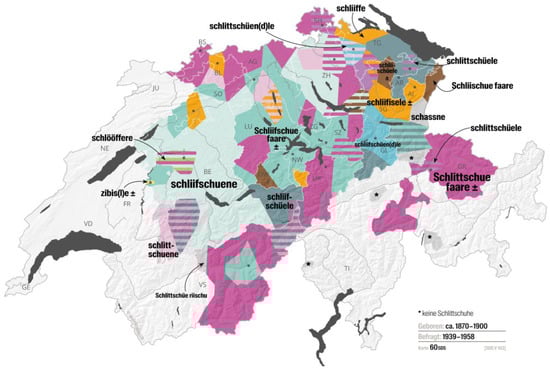
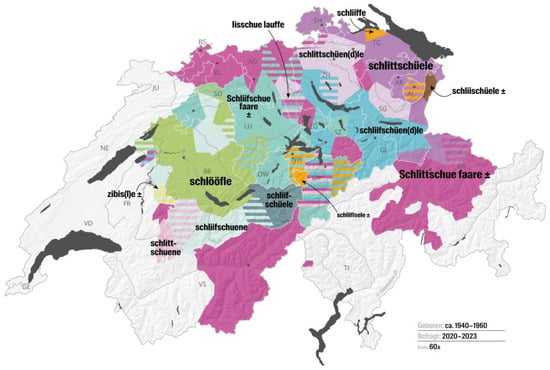
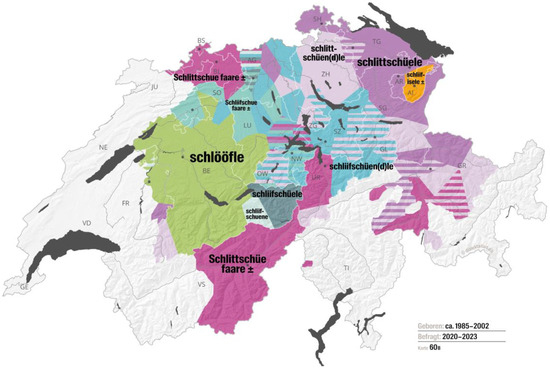
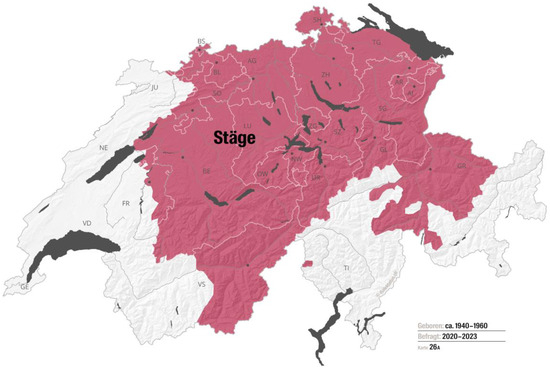
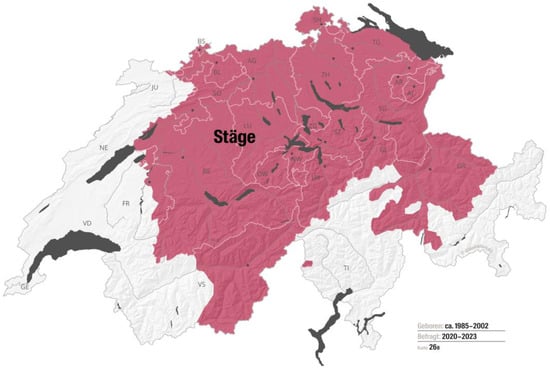
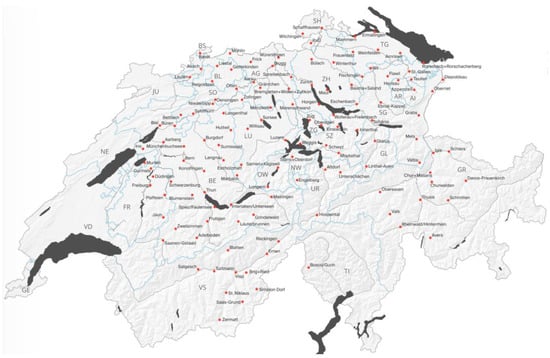
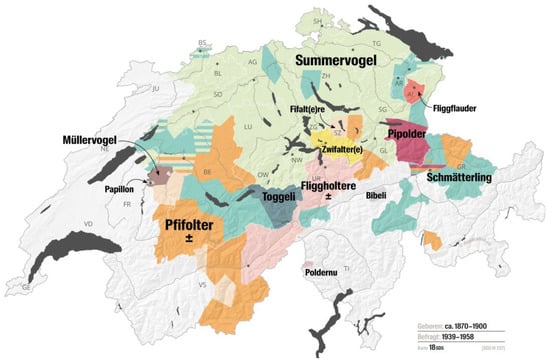
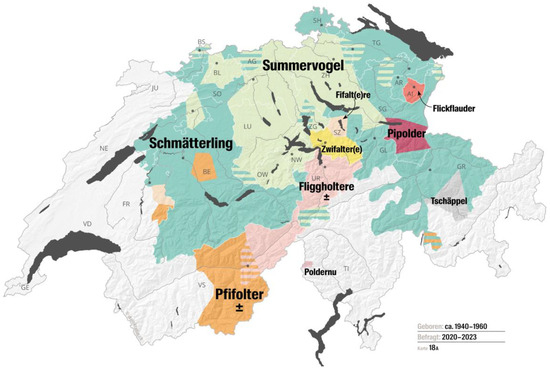
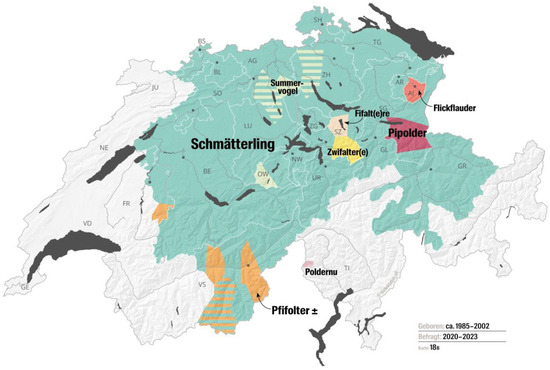
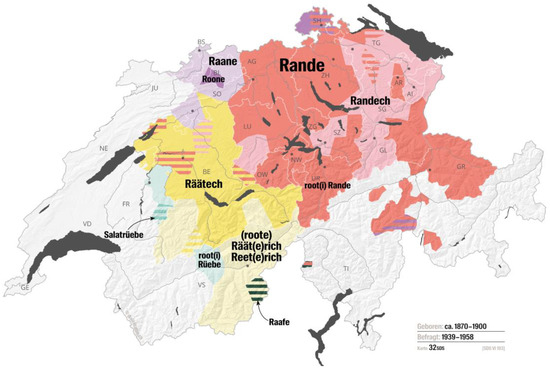
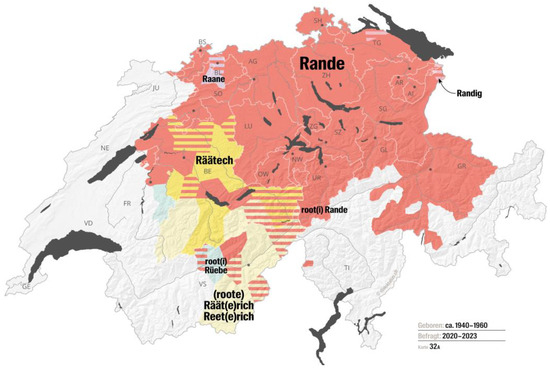
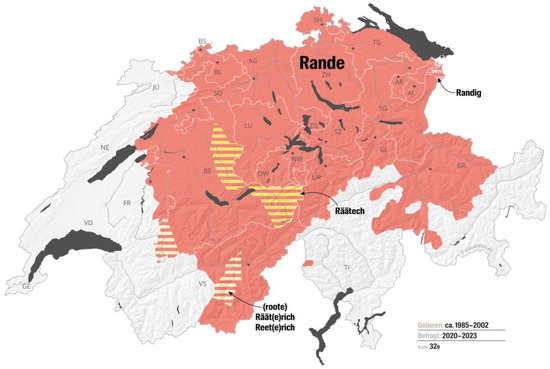
Moving beyond traditional sociodemographic models, this study investigates the psychometric drivers of lexical change. Using Swiss German as a case study, we compare historical data from the Sprachatlas der deutschen Schweiz (1939–1958) with a recent large-scale app-based survey (N = 1013) to quantify
[...] Read more.
Moving beyond traditional sociodemographic models, this study investigates the psychometric drivers of lexical change. Using Swiss German as a case study, we compare historical data from the Sprachatlas der deutschen Schweiz (1939–1958) with a recent large-scale app-based survey (N = 1013) to quantify trajectories over the past century. We identify four distinct mechanisms: exogenous convergence (Schmetterling), endo-normative leveling (Rande), endogenous innovation and divergence (schlittschuhlaufen), and diachronic persistence (Stäge). For the locally rooted speakers in our dataset, structural analysis indicates that traditional variables carry less weight than expected. While age remains the primary vertical predictor, psychological factors outperform traditional variables (e.g., gender, social networks) in this environment of ubiquitous exposure. Multivariate models demonstrate that lexical choices are strongly influenced by individual disposition: traits such as agreeableness accelerate the adoption of supraregional forms, whereas a strong local identity functions as a “brake” against standardization. Ultimately, while macro-factors create the pressure for change, individual micro-factors determine whether it takes hold. A speaker’s attitude acts as a “filter” and their personality as a “gate,” deciding whether they accept or resist new forms. These findings challenge purely structural accounts, suggesting that for these locally rooter speakers, even without high physical mobility, lexical change is shaped by a psychometric architecture.
Full article
(This article belongs to the Special Issue Advances in Variationist Linguistics on German—Focus on Lexis and Pragmatics)
►
Show Figures
Open AccessArticle
Regional Variation in Mood Use in Spanish: A Comparison Among Three Spanish-Speaking Regions
by
Silvia Tort-Ranson and Aarnes Gudmestad
Languages 2026, 11(3), 60; https://doi.org/10.3390/languages11030060 - 20 Mar 2026
Abstract
The current investigation, couched within variationist sociolinguistics, has the purpose of advancing knowledge of regional variation in mood use (the subjunctive and indicative contrast) in Spanish. Prior cross-dialectal research has reported that mood use in Spanish varies geographically. To contribute to the understanding
[...] Read more.
The current investigation, couched within variationist sociolinguistics, has the purpose of advancing knowledge of regional variation in mood use (the subjunctive and indicative contrast) in Spanish. Prior cross-dialectal research has reported that mood use in Spanish varies geographically. To contribute to the understanding of mood variation in Spanish, this study explored a range of sociolinguistic independent variables across three Spanish-speaking regions. The participant pool (N = 107) consisted of Spanish speakers residing in three metropolitan areas (Rosario, Argentina; Barcelona, Spain; and Seville, Spain). The analysis substantiated evidence of geographical variation in the frequency of use of verbal moods, the governors (e.g., preferir que ‘to prefer that’) that exhibited categorical and variable use, and the influence of time reference on mood use. These results provide additional insights into the presence of regional variation in mood use and reinforce the value of cross-dialectal analyses with the same type of data and mood-use contexts.
Full article
Open AccessArticle
Between Worlds: Two Portraits of Language Knowledge, Belonging, and Cultural Connection Among Spanish Heritage Speakers
by
Abdulrahman Almalki, Alaina Smith, Idoia Elola and Heather Kaplan
Languages 2026, 11(3), 59; https://doi.org/10.3390/languages11030059 - 19 Mar 2026
Abstract
Heritage speakers’ language acquisition is a complex process that is affected by linguistic, social, cultural, and affective factors. Studies on heritage speakers (HSs) have primarily focused on challenges HSs face in the classroom and scarcely investigated these challenges outside of instructional settings. This
[...] Read more.
Heritage speakers’ language acquisition is a complex process that is affected by linguistic, social, cultural, and affective factors. Studies on heritage speakers (HSs) have primarily focused on challenges HSs face in the classroom and scarcely investigated these challenges outside of instructional settings. This study addresses this gap by exploring the lived experiences of two young adult Spanish HSs outside of educational settings through a series of interviews to create personal narratives of their HL and experiences. Through Narrative Interpretative Phenomenological Analysis (NIPA), three main themes emerged from these narratives: (1) Spanish heritage language (HL) knowledge and language use, (2) emotional factors that hinder language knowledge and language use, and (3) self-positioning towards SHL and culture. The findings indicated that the participants’ experiences with their Spanish heritage language (SHL) were profoundly impacted by the nature of language input they received, hostile environments, and negative interactions with members of their communities, which led to emotional distress and communicative avoidance. This situated study also offers potential conceptual and community-based implications for the Spanish HSs.
Full article
Open AccessArticle
Tamil Speakers in Switzerland: An Intergenerational and Typological Perspective
by
S. Rajamathangi, Anita Auer and Gurujegan Murugesan
Languages 2026, 11(3), 58; https://doi.org/10.3390/languages11030058 - 18 Mar 2026
Abstract
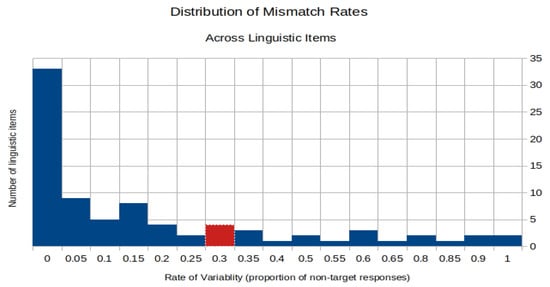
Since the mid-1980s, many Tamils left their homeland because of the civil war in Sri Lanka (1983–2009) and for other reasons and settled in different countries. More than 40,000 Tamil migrants have come to Switzerland since then, and Tamil is spoken as a
[...] Read more.
Since the mid-1980s, many Tamils left their homeland because of the civil war in Sri Lanka (1983–2009) and for other reasons and settled in different countries. More than 40,000 Tamil migrants have come to Switzerland since then, and Tamil is spoken as a heritage language by second- and third-generation speakers who were born and raised in Switzerland. Within this context, it is the aim of the current study to shed light on the difference between Tamil spoken in the first generation (migrant language) and the second generation (heritage language) in the Swiss German and Swiss French parts of Switzerland. We therefore study Tamil, which is part of the Dravidian language family, in different majority language contexts, i.e., a Germanic language and a Romance language, respectively. While some research on Tamil in a diaspora setting already exists on migrated Tamil communities in Lancaster, California (US), East London (UK) and Toronto (Canada), the focus on Switzerland and contact with German and French has not previously been investigated. The data under investigation, which stems from 20 speakers in total (i.e., 5 first-generation and 5 second-generation speakers from the Swiss German and the Swiss French parts respectively), was collected in 2024 by way of a semi-structured interview based on a sociolinguistic questionnaire and a linguistic test. The data serves as the basis for the intergenerational and typological comparison. The analysis reveals systematic intergenerational differences across several morphosyntactic domains, including agreement, negation pattern, case marking, and subject pro-drop. While first-generation speakers retain greater access to dialect-specific and register-sensitive patterns, second-generation speakers show increased reliance on discourse-pragmatic cues and reduced sensitivity to morphologically encoded distinctions. These findings highlight the role of register, input conditions, and discourse context in shaping heritage Tamil across generations in Switzerland.
Full article
(This article belongs to the Special Issue From Migrant to Heritage Languages: Transgenerational Language Change in Diasporic Communities)
►▼
Show Figures

Figure 1
Open AccessArticle
The Back-and-Forth of assim que in the History of Portuguese
by
Aroldo Leal de Andrade and Glayson Martins Oliveira
Languages 2026, 11(3), 57; https://doi.org/10.3390/languages11030057 - 16 Mar 2026
Abstract
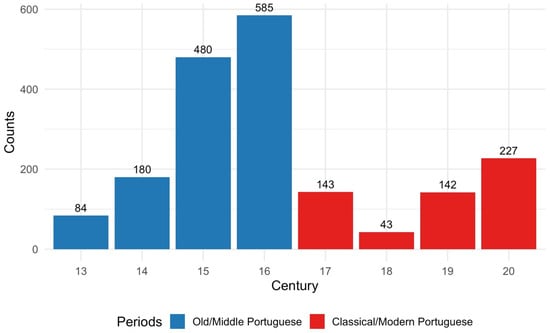
This paper investigates the diachronic development of the sequence assim que (lit. ‘such that’) in the history of Portuguese, with a comparative perspective on the parallel construction así que in Spanish. A corpus-based approach was employed, analyzing approximately 1800 tokens from the Corpus
[...] Read more.
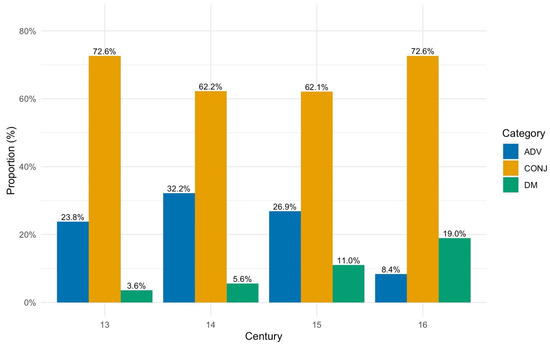
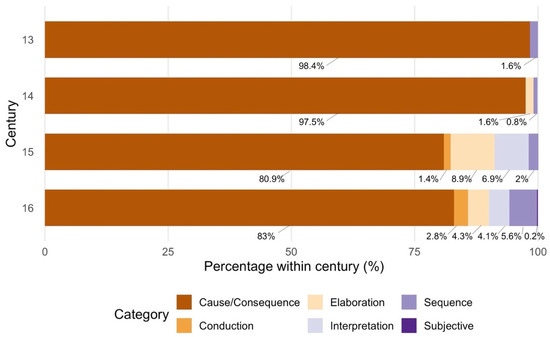
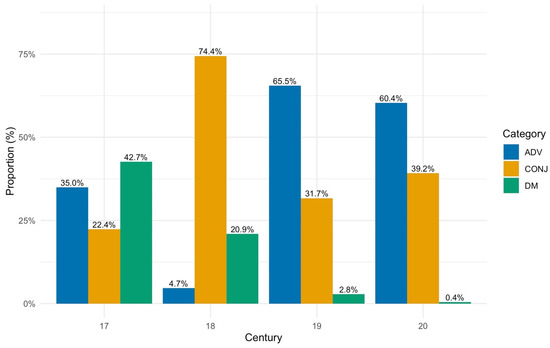
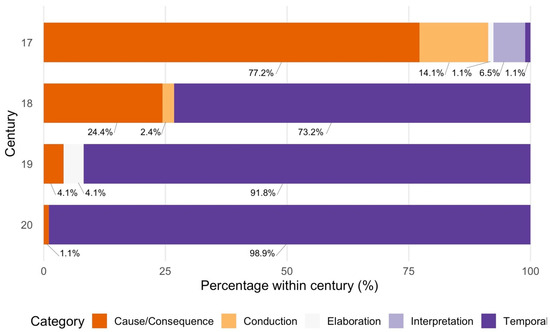
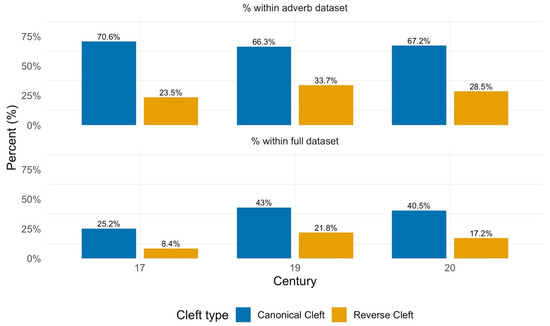
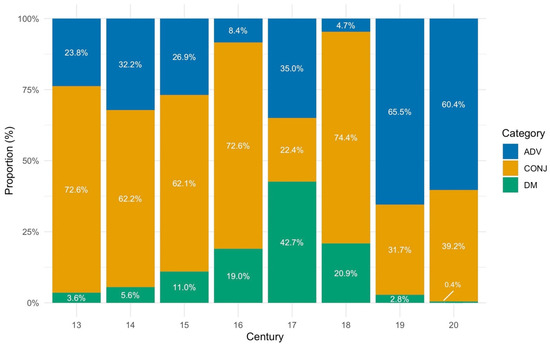
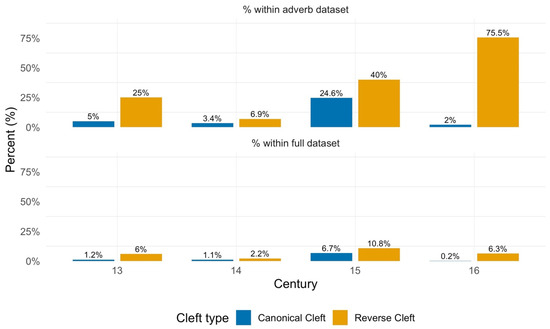
This paper investigates the diachronic development of the sequence assim que (lit. ‘such that’) in the history of Portuguese, with a comparative perspective on the parallel construction así que in Spanish. A corpus-based approach was employed, analyzing approximately 1800 tokens from the Corpus do Português: Historical Genres, spanning eight centuries of written European Portuguese. The results show that assim que remained highly analyzable until the end of the Old Portuguese period, with the adverb assim often followed by a complement or result clause. The grammaticalization of assim que appears to have evolved partly independently from standalone assim. While Portuguese and Spanish share many uses of the construction, modern European Portuguese has diverged, with assim que losing its status as a discourse marker. This change is best explained by the frequent use of cleft constructions (e.g., foi assim que), which reanalyzed que as a subordinating connector, undoing the earlier single-unit interpretation. These findings suggest that even deeply entrenched grammaticalization processes may undergo retraction when the semantic analyzability of component elements allows it.
Full article
(This article belongs to the Special Issue Romance Historical Syntax: Special Issue on Syntactic Analyzability in Diachrony)
►▼
Show Figures

Figure 1
Open AccessArticle
The Geography of Meaning: Investigating Semantic Differences Across German Dialects
by
Alfred Lameli and Matthias Hahn
Languages 2026, 11(3), 56; https://doi.org/10.3390/languages11030056 - 16 Mar 2026
Abstract
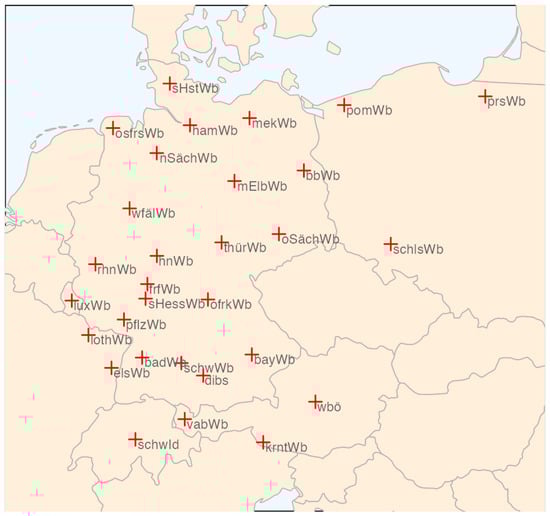
This study reconstructs the geography of meaning of the German perception verb schmecken on the basis of 30 major dialect dictionaries, treating them as a distributed semantic corpus and coding attestations as binary variables reflecting the presence or absence of semantic options. Combining
[...] Read more.
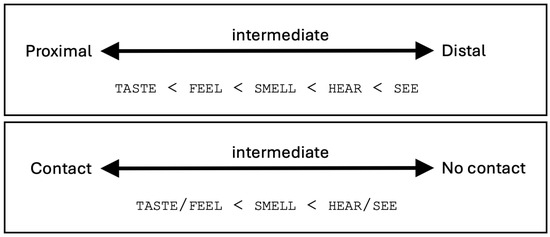
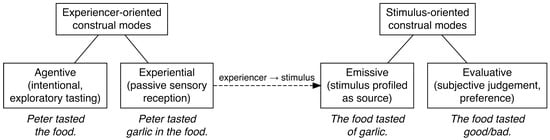
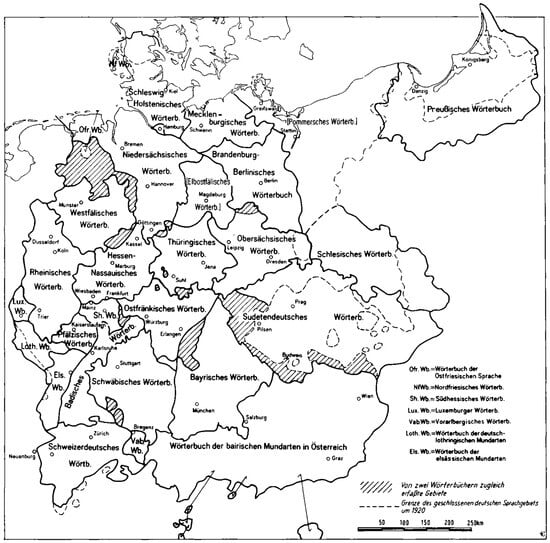
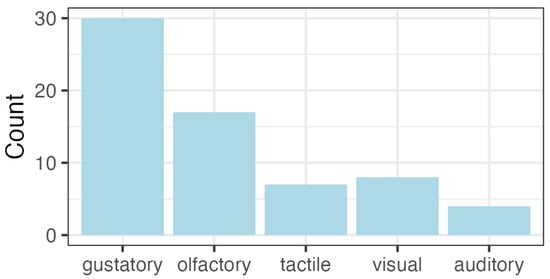
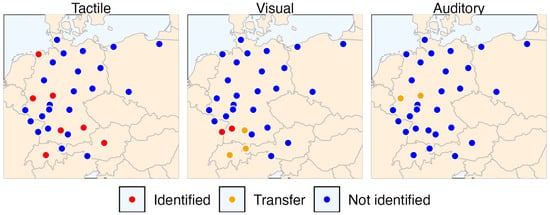
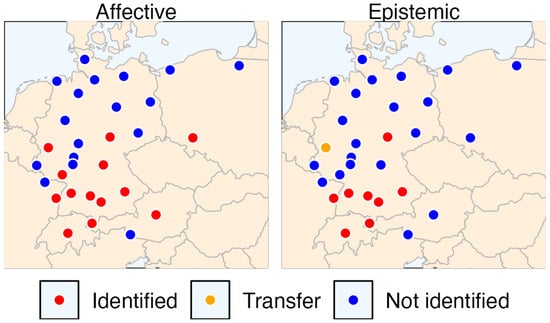
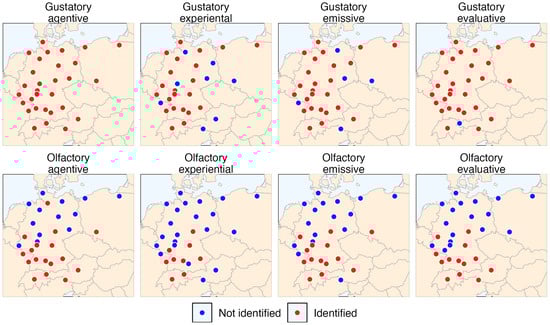
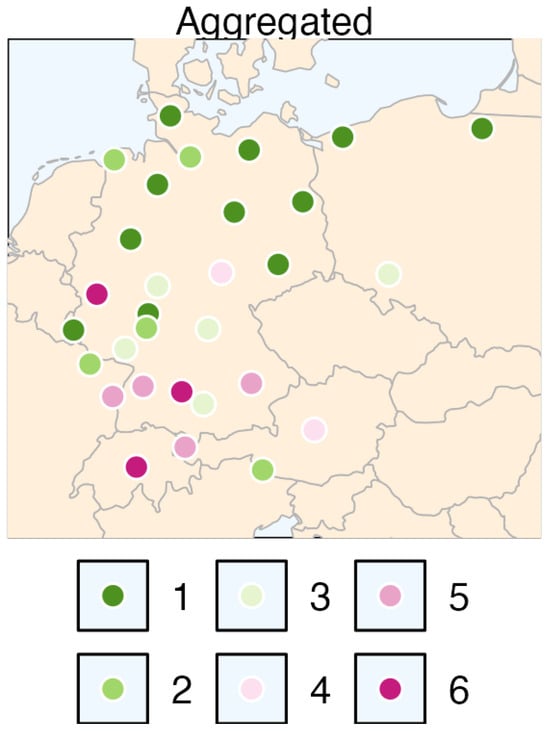
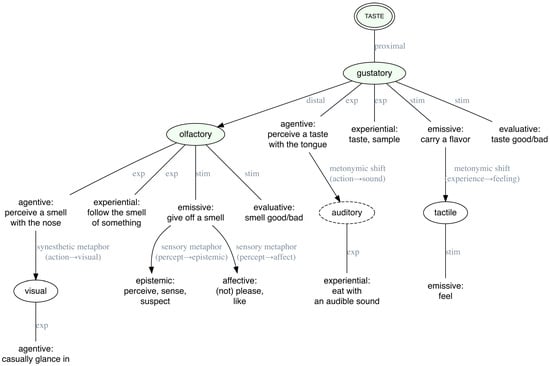
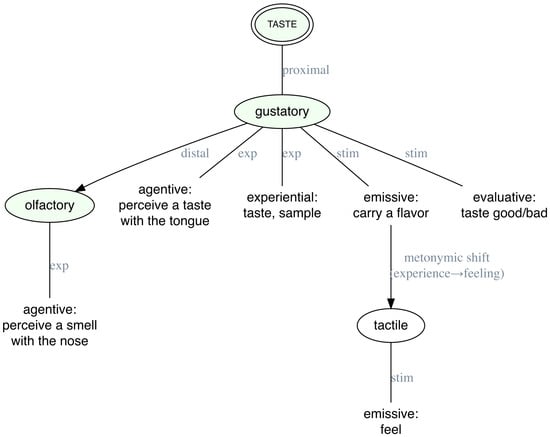
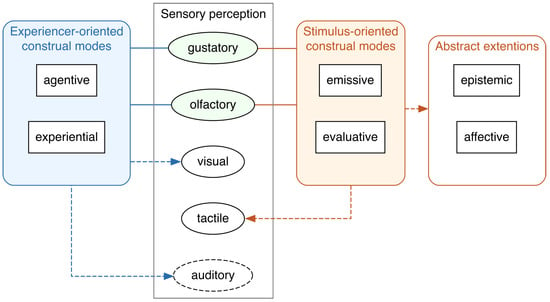
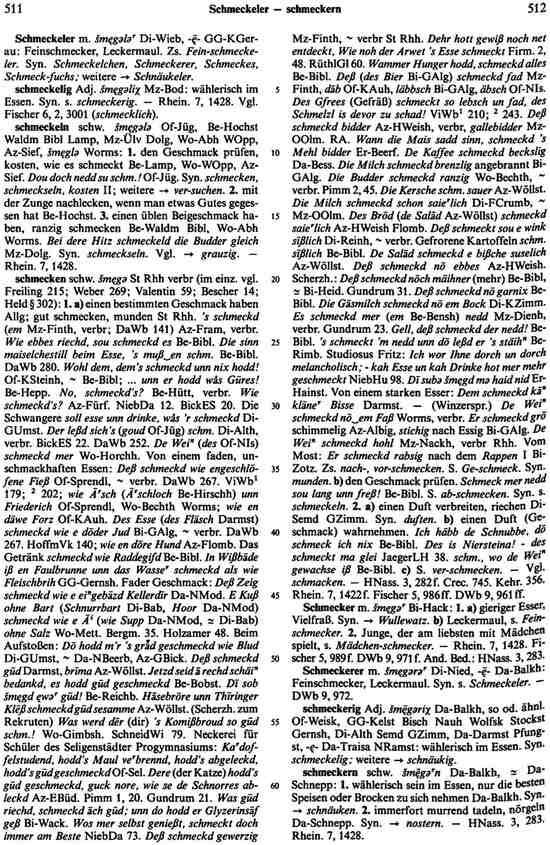
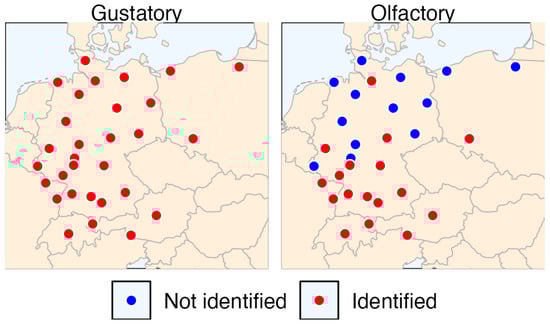
This study reconstructs the geography of meaning of the German perception verb schmecken on the basis of 30 major dialect dictionaries, treating them as a distributed semantic corpus and coding attestations as binary variables reflecting the presence or absence of semantic options. Combining a construal-based framework with spatial modeling, the analysis shows that the polysemy of schmecken is structured by three mutually reinforcing forces: embodied sensory organization, construal-based perspectivization, and regionally patterned areal dynamics. The gustatory–olfactory axis forms the semantic core of the verb, from which tactile, visual, affective, and epistemic extensions emerge. These extensions align with systematic pathways constrained by agentive, experiential, emissive, and evaluative construals, demonstrating that semantic extension is channeled through specific construal modes—notably emissive and agentive—rather than determined by sensory modality alone. A detailed areal analysis reveals a pronounced north–south divide. While Low German dialects conform to the cross-linguistically more common tendency to avoid colexifying taste and smekk—itself the outcome of historical change rather than uninterrupted differentiation—Upper German varieties preserve a typologically rare gustatory–olfactory cluster and exhibit the richest range of cross-modal and abstract extensions. The resulting semantic graph formalizes how regional varieties activate different subsets of a lexeme’s semantic potential and demonstrates that semantic networks themselves display spatial organization. The study thus provides an empirically grounded reconstruction of a German geography of meaning and illustrates how dialect data illuminate the interplay between embodied cognition, construal-based lexical architecture, and areal dynamics.
Full article
(This article belongs to the Special Issue Advances in Variationist Linguistics on German—Focus on Lexis and Pragmatics)
►▼
Show Figures

Figure 1
Open AccessArticle
Psych Light Verb Constructions in Old Catalan: Patterns and Contrasts with Present-Day Catalan
by
Jordi Ginebra Serrabou
Languages 2026, 11(3), 55; https://doi.org/10.3390/languages11030055 - 16 Mar 2026
Abstract
This study aims, first, to contribute to our understanding of the regularities of light verb constructions (LVCs) by identifying syntactic–semantic patterns and, secondly, to provide data and reflections on how syntactic analyzability and semantic compositionality interact to shape the diachronic evolution of LVCs.
[...] Read more.
This study aims, first, to contribute to our understanding of the regularities of light verb constructions (LVCs) by identifying syntactic–semantic patterns and, secondly, to provide data and reflections on how syntactic analyzability and semantic compositionality interact to shape the diachronic evolution of LVCs. To this end, the paper analyzes and describes, through corpus research, a subset of LVCs from Old Catalan—psych LVC or those denoting emotional states—and compares them with those from Contemporary Catalan. The main contrast between Old Catalan and Contemporary Catalan in this domain is that Contemporary Catalan tends to place the Experiencer in non-localist positions. Localist metaphors no longer structure the form–meaning pairing of Catalan psych LVCs. Once these metaphorical extensions no longer link P(sych)LVCs to their dominating construction, what remains can be described as a situation of vacuous analyzability: linguistic chains that are syntactically analyzable but lack semantic pairing.
Full article
(This article belongs to the Special Issue Romance Historical Syntax: Special Issue on Syntactic Analyzability in Diachrony)
Open AccessArticle
The Pathway from Taste to Epistemic Flavors: Modal Semantics of Italian mi sa
by
Andrea Miglietta and Eva-Maria Remberger
Languages 2026, 11(3), 54; https://doi.org/10.3390/languages11030054 - 16 Mar 2026
Abstract
In (colloquial) Italian, the fixed expression mi sa functions as an evidential/epistemic marker, requiring the dative 1SG clitic experiencer and the 3SG default form of the verb sapere. Mi sa diachronically develops from the verb for taste/smell, sapere, which is still
[...] Read more.
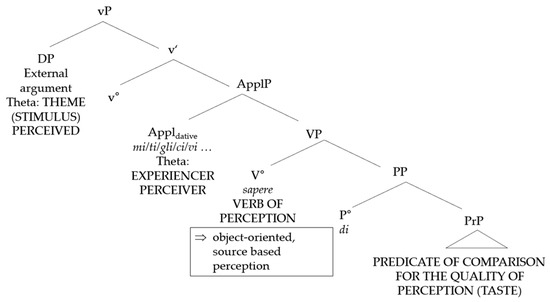
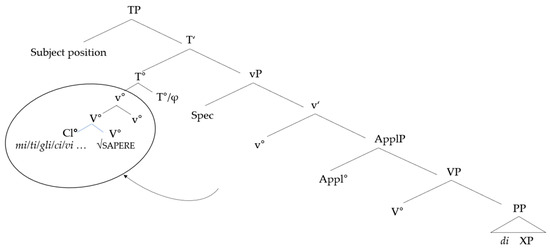
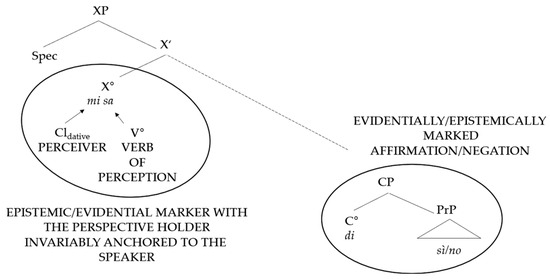
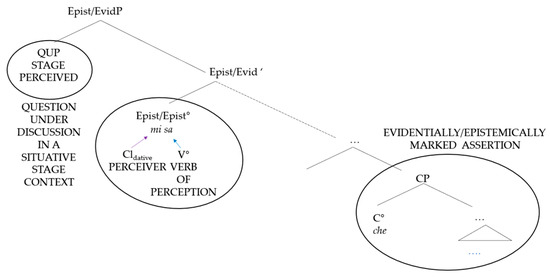
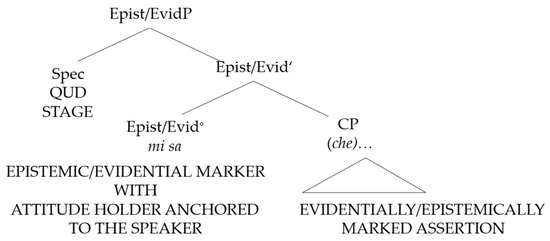
In (colloquial) Italian, the fixed expression mi sa functions as an evidential/epistemic marker, requiring the dative 1SG clitic experiencer and the 3SG default form of the verb sapere. Mi sa diachronically develops from the verb for taste/smell, sapere, which is still productive in contemporary Italian, and the structure that it projects. This comprises an obligatory PP introduced by di encoding the type/quality of taste/smell (often metaphorically extended); a subject expressing the perceived entity; and an optional dative experiencer. We systematically analyzed data from the KIParla corpus, comparing the distribution of mi sa to the distribution of one of the most frequent Italian epistemic verb forms, namely, credo ‘I believe’. This study aimed to establish how the original perceptual meaning of mi sa influences its epistemic meaning. The results suggest that the persistence of the original object-oriented perception verb makes mi sa more likely to appear in particular contexts, i.e., events/situations that are known by the speaker through an inferential-like process. Furthermore, mi sa can only rarely be uttered out of the blue and seems to need a situative context (a stage), often containing an explicit QUD.
Full article
(This article belongs to the Special Issue Recent Developments on the Semantics of Perception Verbs)
►▼
Show Figures

Figure 1
Open AccessArticle
Sustainable Family Language Policy in Multicultural Communities: An Empirical Study of Macao Permanent Resident Families
by
Yuhan Zhang and Huiping Wei
Languages 2026, 11(3), 53; https://doi.org/10.3390/languages11030053 - 16 Mar 2026
Abstract
This study investigated family language policies (FLP) in the current context of the Macao Special Administrative Region (Macao SAR). It explored family language ideologies, management strategies, and intergenerational practices through questionnaires, semi-structured interviews, and participant observations. The findings indicate that Macao permanent residents’
[...] Read more.
This study investigated family language policies (FLP) in the current context of the Macao Special Administrative Region (Macao SAR). It explored family language ideologies, management strategies, and intergenerational practices through questionnaires, semi-structured interviews, and participant observations. The findings indicate that Macao permanent residents’ families take Cantonese Chinese as the primary medium of communication and cultural identity. Simultaneously, Mandarin and English are often valued for their roles in academic and professional advancement. Portuguese exhibits a trend of marginalization, despite remaining one of the official languages of the Macao SAR. As for other dialects, they may be used in family conversations but are not considered important languages. Beyond this hierarchy of language values, the researchers also revealed that the FLP of Macao’s permanent residents’ families tends to be driven by both experience and foresight, enabling family members to engage in effective consultation on language choice and language learning. Regarding language practice, children’s multilingual fluency is significantly better than that of their parents. The dominant family language tendency does not influence the consensus of multilingualism and allows code-mixing to appear in conversations. In this article, FLP in Macao families is found to be shaped by both experiential knowledge and future-oriented practical considerations, while also reflecting parents’ affective concerns and responses to broader structural pressures. All these factors together form a decision-making system. In this system, both emotion and reason play their roles simultaneously. If a hierarchical distinction must be made, the rational recognition of the diverse characteristics of the linguistic environment and the dominant status of the main language will be primary.
Full article
Open AccessArticle
Compositional Incrementality Based on Polish Reveal-Type Verbs and Verbal Nouns
by
Karolina Zuchewicz
Languages 2026, 11(3), 52; https://doi.org/10.3390/languages11030052 - 16 Mar 2026
Abstract
This article focuses on the realization of incrementality in Polish verbal and nominal constructions. The object of investigation is clause-embedding reveal-type concepts like ‘prove’, ‘reveal’, or ‘show’. In Slavic languages, incremental relations have traditionally been examined in direct relation to (im)perfectivity, with imperfective
[...] Read more.
This article focuses on the realization of incrementality in Polish verbal and nominal constructions. The object of investigation is clause-embedding reveal-type concepts like ‘prove’, ‘reveal’, or ‘show’. In Slavic languages, incremental relations have traditionally been examined in direct relation to (im)perfectivity, with imperfective verbs enforcing partial affectedness of events and objects, and perfective verbs enforcing their total affectedness. In the present paper, I take a closer look at the incremental output within the reveal-type concept. I investigate whether an incremental event comes with a fixed incremental path that remains intact independently of any morphological or syntactic modifications. My research question is: Is an incremental feature specified in the lexicon as is the aspectual value ‘(im)perfective’, or does it rather arise compositionally? To answer this question, I analyze the impact of the dative argument and the nominalization on the incremental output of clause-embedding reveal-type predicates. I demonstrate that incremental meanings are affected by the properties of an entire construction. Based on that, I propose to distinguish between two types of incrementality: the non-modifiable (im)perfectivity-dependent partial and total integration requirement, and the compositional incrementality that arises as an interplay between lexical semantics, argument structure, and the morphological shape of the respective lexeme.
Full article
(This article belongs to the Special Issue The Aspectual Architecture of the Slavic Verb: Analogies in Different Languages and Other Grammatical Domains)
Open AccessArticle
Code-Switching, Reggaetón, and Identity Negotiation Among Puerto Ricans in the Diaspora
by
Claudia Matachana López
Languages 2026, 11(3), 51; https://doi.org/10.3390/languages11030051 - 16 Mar 2026
Abstract
This qualitative study examines the language ideologies surrounding code-switching and Puerto Rican Spanish among Puerto Rican bilingual speakers in Massachusetts, focusing on how these ideologies interact with identity construction in the diaspora. Participants in this study commonly described their own language use as
[...] Read more.
This qualitative study examines the language ideologies surrounding code-switching and Puerto Rican Spanish among Puerto Rican bilingual speakers in Massachusetts, focusing on how these ideologies interact with identity construction in the diaspora. Participants in this study commonly described their own language use as Spanglish, emphasizing both its practical role in everyday communication and its significance as a marker of cultural and linguistic identity. Drawing on data collected through sociolinguistic interviews and focus groups, this research explores how participants perceive code-switching not only as a communicative strategy but also as a meaningful expression of Puerto Rican identity. Although negative ideologies persist–framing code-switching as linguistic inadequacy–this study centers on how speakers actively negotiate and redefine these views within their communities. Puerto Rican Spanish, shaped by historical contact with English and sociopolitical ties to the U.S., offers a unique lens through which to explore these dynamics. The findings also suggest that media representations, particularly through music genres such as reggaetón, contribute to shaping and reflecting language ideologies. By centering on speakers’ voices, this paper contributes to understanding how language ideologies form and are shaped by bilingual practices, and how code-switching functions as a form of linguistic citizenship in the Puerto Rican diaspora.
Full article
(This article belongs to the Special Issue A Citizen’s Perspective on Code-Switching: Language Attitudes and Language Ideologies)
Open AccessArticle
Task Type and Distributional Differences in the Spanish Differential Object Marking of Catalan–Spanish Bilinguals
by
Tiffany Judy and Eloi Puig-Mayenco
Languages 2026, 11(3), 50; https://doi.org/10.3390/languages11030050 - 11 Mar 2026
Abstract
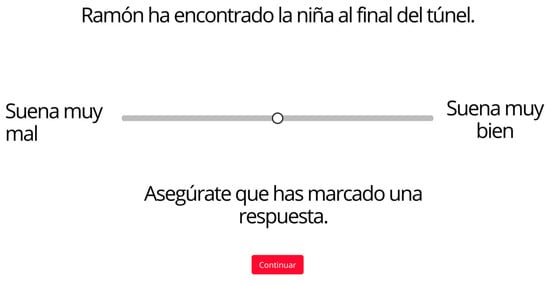
This study examines offline acceptance and online processing of Differential Object Marking (DOM) in the Spanish of Catalan–Spanish bilinguals in Catalonia. Both languages evidence DOM, though prescriptive grammars claim only partial overlap. Empirical research on Catalan DOM within these bilinguals reveals differences in
[...] Read more.
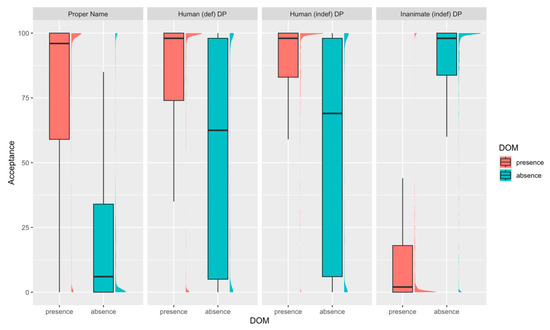
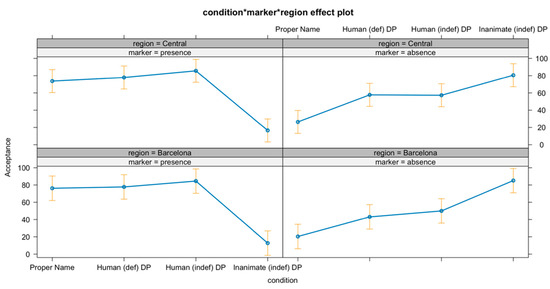
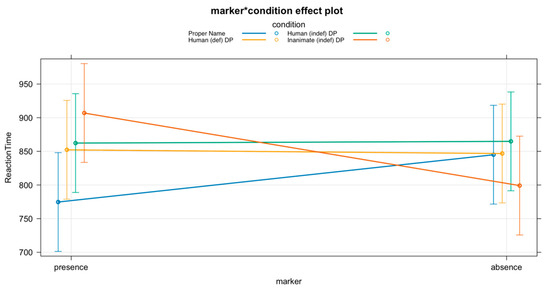
This study examines offline acceptance and online processing of Differential Object Marking (DOM) in the Spanish of Catalan–Spanish bilinguals in Catalonia. Both languages evidence DOM, though prescriptive grammars claim only partial overlap. Empirical research on Catalan DOM within these bilinguals reveals differences in distribution. Based on these factors, along with sustained bilingualism at the community and individual levels, more optionality was predicted for the distribution of Spanish DOM. Results from an offline scalar Acceptability Judgment Task and a Self-Paced Reading Task reveal three important findings. First, each task revealed distinct distributions. Participants aligned more with prescriptive grammars for DOs that are high on the animacy and definiteness scales in the offline task and were more tolerant of greater variability with the same DOs in the online task, possibly indicating weakening of the obligatory DOM constraint in these contexts. Second, geographic area modulated acceptance of the absence of DOM with animate DOs, suggesting microvariation. Third, unmarked inanimate DOs were preferred across both tasks. Overall, the results are interpreted as revealing divergence from prescriptive descriptions of Peninsular Spanish DOM system.
Full article
(This article belongs to the Special Issue The Interaction between Language Acquisition and Linguistic Theory)
►▼
Show Figures

Figure 1
Open AccessArticle
(Im)Politeness and Offence in Greek Food Blogs
by
Angeliki Tzanne
Languages 2026, 11(3), 49; https://doi.org/10.3390/languages11030049 - 11 Mar 2026
Abstract
Digital communication has been discussed as the locus of impoliteness and conflict par excellence. The aim of this paper is to examine impoliteness in a context of digital communication, that of food blogs, where impoliteness seems to be rather rare. The dataset consists
[...] Read more.
Digital communication has been discussed as the locus of impoliteness and conflict par excellence. The aim of this paper is to examine impoliteness in a context of digital communication, that of food blogs, where impoliteness seems to be rather rare. The dataset consists of 2660 comments from 11 Greek food blogs. The data are analysed with the aid of strategies proposed in impoliteness research. The study aims to examine the frequency of offensive behaviour and to identify the issues that may trigger it. Furthermore, it purports to delve into the types and strategies of impoliteness used, and into interactants’ responses to offence. Data analysis showed that impolite behaviour is rare in this specific context and that it is triggered by issues related to features of good recipes and healthy eating practices, among others. It was also found that offence is usually mitigated through politeness strategies. Finally, several cases of offence were found to be disregarded by interactants, while others were resolved amicably. A tendency emerges in Greek food blogs towards the avoidance of impoliteness and the cultivation of relationships of closeness and solidarity.
Full article
(This article belongs to the Special Issue Greek Speakers and Pragmatics)
Open AccessArticle
Investigating Grammatical Aspect Choices in Oral Narratives of Greek Heritage Speakers: A Corpus-Based Study
by
Ifigeneia Dosi and Zoe Gavriilidou
Languages 2026, 11(3), 48; https://doi.org/10.3390/languages11030048 - 10 Mar 2026
Abstract
►▼
Show Figures
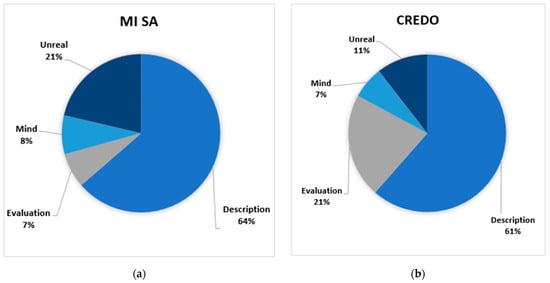
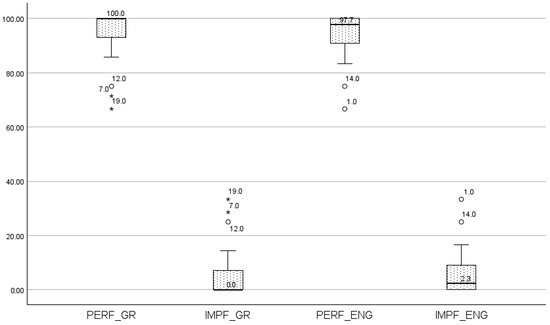
This study investigates grammatical aspect in Greek and English oral narratives produced by Greek heritage speakers in the United States, examining aspectual marking across the bilingual repertoire, patterns of cross-linguistic alignment, and morphological restructuring. Using 31 narratives from the Greek Heritage Language Corpus,
[...] Read more.
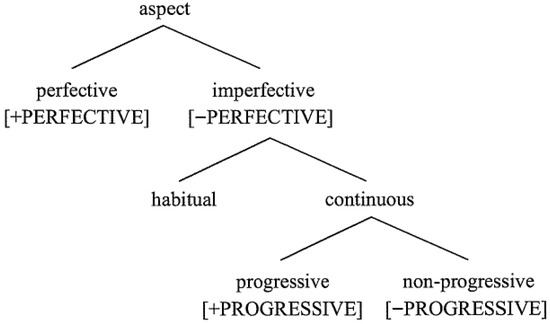
This study investigates grammatical aspect in Greek and English oral narratives produced by Greek heritage speakers in the United States, examining aspectual marking across the bilingual repertoire, patterns of cross-linguistic alignment, and morphological restructuring. Using 31 narratives from the Greek Heritage Language Corpus, the analysis addressed (a) the role of background variables, (b) default aspectual preferences, (c) cross-linguistic alignment between Greek and English, and (d) morphological variation relative to baseline Greek. Quantitative results revealed a strong preference for the perfective aspect in both Greek and English, suggesting that past-time reference is typically conceptualized as completed or bounded. Education was the only factor associated with aspectual choice, with more educated speakers producing more progressive forms in English; no effects emerged for age group, generational status, schooling context, or years of schooling in Greek. Qualitative findings identified a limited number of systematic morphological simplification and analogical leveling patterns, including overregularization, and occasional periphrastic forms consistent with restructuring and possible cross-linguistic alignment. The results indicate that heritage speakers maintain the core distinction between perfective and imperfective aspect, despite favoring perfective forms across both languages. Meanwhile, they show emerging tendencies toward more transparent and analytic realizations, although such patterns remain quantitatively marginal in the present dataset. Overall, the findings support the view that heritage grammars are systematic, adaptive, and resilient linguistic systems.
Full article

Figure 1
Open AccessReview
Sociolinguistic Competence in Curricula, Teacher Cognition, and Classroom Practice: Research Gaps and Future Directions
by
Jana Pflaeging and Erik Schleef
Languages 2026, 11(3), 47; https://doi.org/10.3390/languages11030047 - 6 Mar 2026
Abstract
Sociolinguistic competence (SC) has been recognised as essential for Communicative Language Teaching since the 1970s and features prominently in policy documents like the Common European Framework of Reference for Languages (CEFR). Research demonstrates that explicit, systematic instruction effectively develops learners’ SC. While the
[...] Read more.
Sociolinguistic competence (SC) has been recognised as essential for Communicative Language Teaching since the 1970s and features prominently in policy documents like the Common European Framework of Reference for Languages (CEFR). Research demonstrates that explicit, systematic instruction effectively develops learners’ SC. While the academic case for SC in language teaching remains strong, we identify significant weaknesses and barriers to its implementation in contemporary EFL teacher education. These challenges span three key domains: integration into secondary-school and higher-education curricula, teacher cognition, and classroom practice—specifically how and how often SC is taught in EFL contexts across different regions and schools. While our findings have relevance for EFL contexts globally, we use Austria as a case study to illustrate these challenges and opportunities. Based on a review of existing theoretical, methodological, and empirical work, we formulate five critical research questions across these three domains. We conclude that comprehensive mixed-methods research triangulating curriculum, teacher cognition, and classroom practice is essential for transforming SC from a curricular ideal into classroom reality, equipping learners with communicative skills required for navigating increasingly diverse linguistic landscapes.
Full article
(This article belongs to the Special Issue Sociolinguistic Variation and Change: Focus on English as a Second and Foreign Language)
Open AccessArticle
Derivational Morphology in L2 English: Investigating the Role of Affixal Neutrality Through the Lens of Linguistic Theory
by
Xingcheng Wang and Helen Zhao
Languages 2026, 11(3), 46; https://doi.org/10.3390/languages11030046 - 5 Mar 2026
Abstract
This study investigates how second language (L2) learners acquire morphologically complex English words, focusing on affixal neutrality—whether suffixes preserve the phonological form and semantic transparency of the base (e.g., -ness in happiness) or trigger phonological/orthographic changes (e.g., -ity in activity). Drawing
[...] Read more.
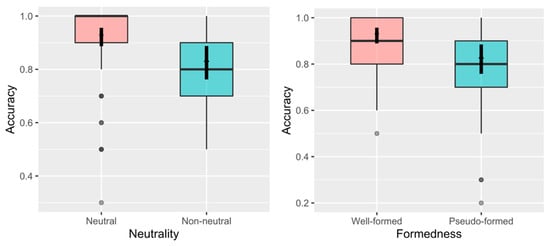
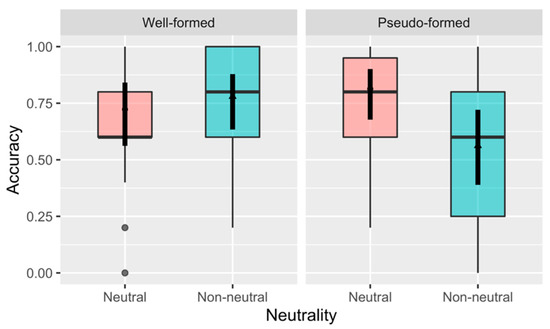
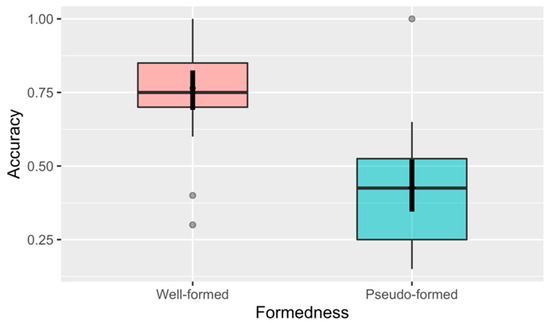
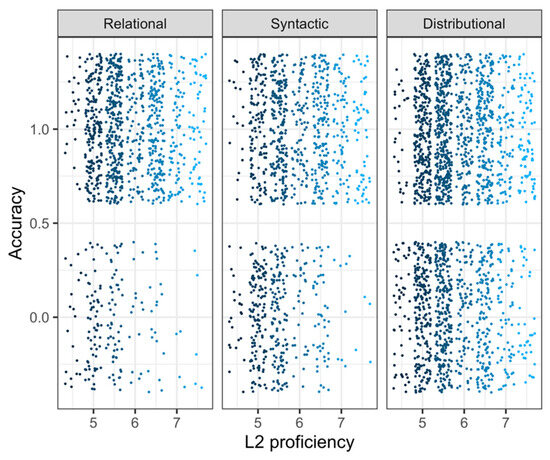
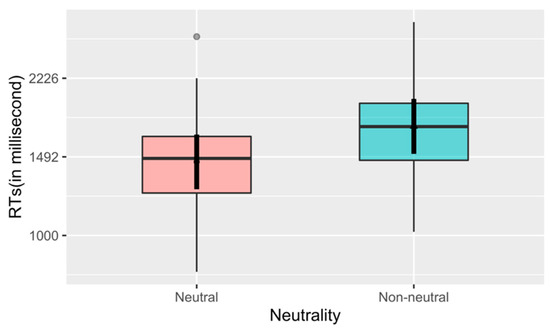
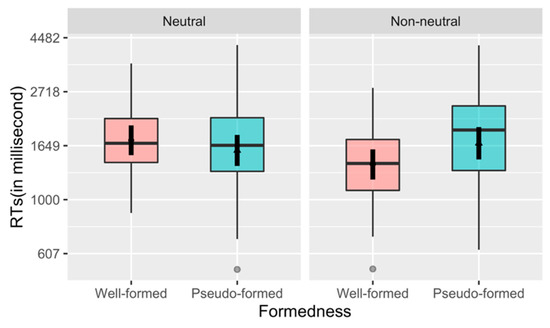
This study investigates how second language (L2) learners acquire morphologically complex English words, focusing on affixal neutrality—whether suffixes preserve the phonological form and semantic transparency of the base (e.g., -ness in happiness) or trigger phonological/orthographic changes (e.g., -ity in activity). Drawing on linguistic theories of morphological decomposition and lexical representation, we examine how this property influences different dimensions of derivational knowledge. Fifty-four Mandarin-speaking secondary school EFL learners completed three receptive tasks targeting relational knowledge (morphological relatedness), syntactic knowledge (category awareness), and distributional knowledge (contextual appropriateness). Lexical items varied in affixal neutrality, and participants’ accuracy and response times were analysed across three L2 proficiency levels. Affixal neutrality significantly affected performance in the relational knowledge task, with neutral suffixes facilitating accuracy and faster responses. Effects were attenuated in syntactic and distributional tasks, suggesting domain-specific sensitivity to neutrality. L2 Proficiency was associated with higher accuracy across all three domains but did not substantially affect processing speed. These findings highlight the selective role of a theoretically motivated morphological property in L2 lexical acquisition and show how linguistic concepts such as affixal neutrality can form the basis of targeted hypotheses, bridging theoretical linguistics and empirical research in second language learning.
Full article
(This article belongs to the Special Issue The Interaction between Language Acquisition and Linguistic Theory)
►▼
Show Figures

Figure 1
Open AccessSystematic Review
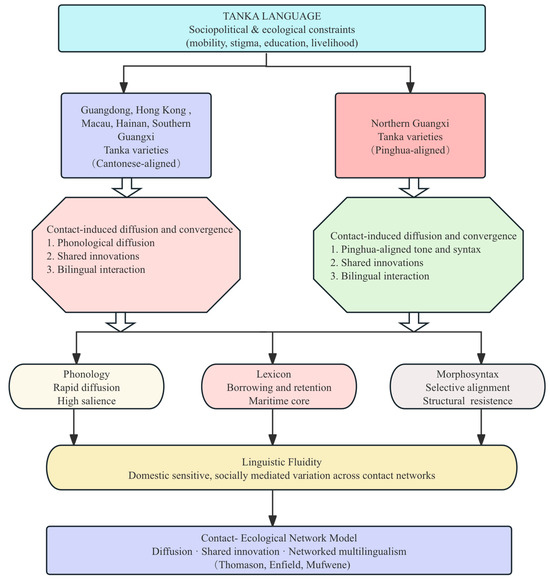
Endangered Tanka Language of the Maritime Communities Across Southeast China: Convergence and Loss
by
Yanmei Dai and Cong Wang
Languages 2026, 11(3), 45; https://doi.org/10.3390/languages11030045 - 5 Mar 2026
Abstract
►▼
Show Figures
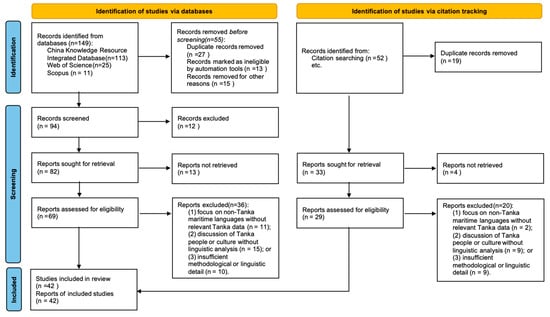
Amidst global concerns for linguistic diversity, this systematic review synthesizes six decades (1965–2025) of research on Tanka, a critically endangered language spoken by the boat people along Southeast China. Analyzing 42 studies identified through the PRISMA framework, the review reveals significant sociolinguistic and
[...] Read more.
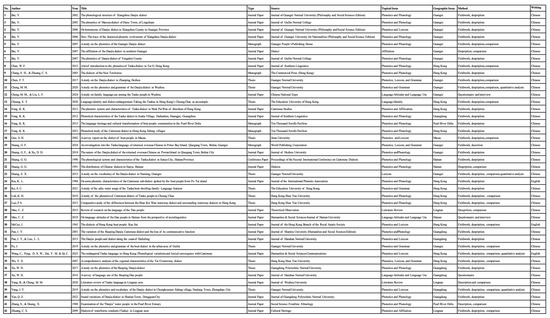
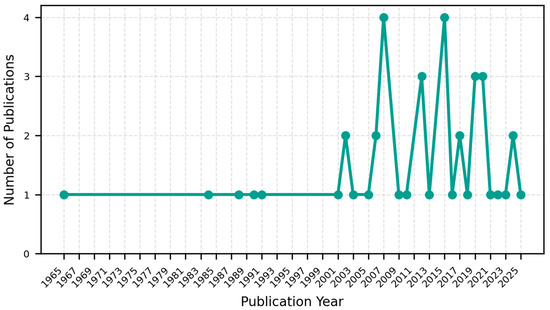
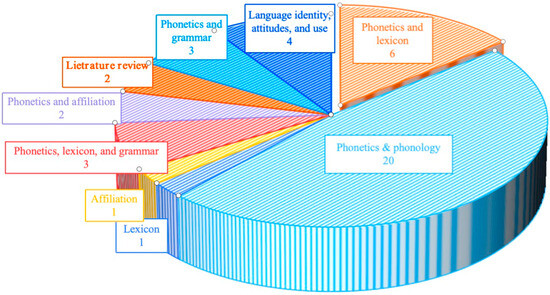
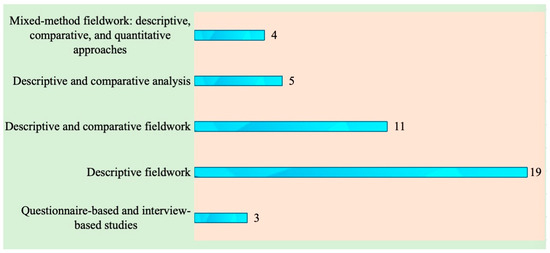
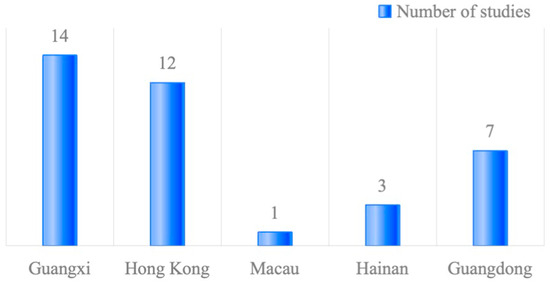
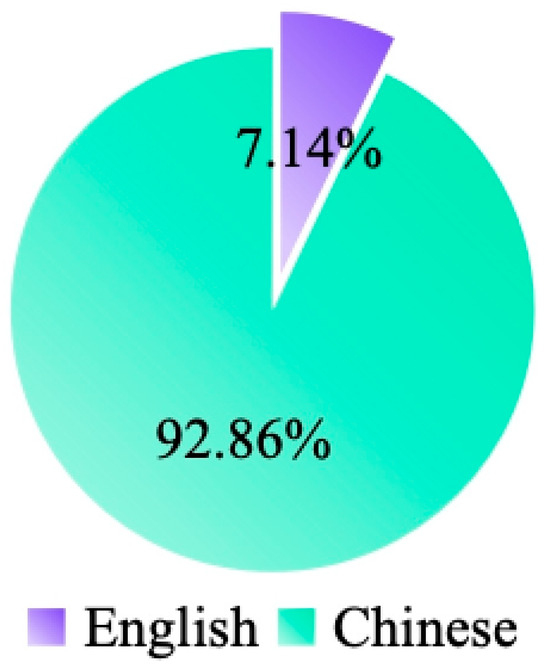
Amidst global concerns for linguistic diversity, this systematic review synthesizes six decades (1965–2025) of research on Tanka, a critically endangered language spoken by the boat people along Southeast China. Analyzing 42 studies identified through the PRISMA framework, the review reveals significant sociolinguistic and epistemological imbalances. Research output disproportionately focuses on phonetics and phonology (50%), while neglecting grammar, lexicon, and sociolinguistic vitality. Linguistically, Tanka demonstrates substantial contact-induced convergence with Cantonese or Pinghua within multilingual ecologies; nevertheless, it retains distinctive phonological shifts, a unique maritime lexicon, and grammatical innovations, reflecting both regional alignment and endogenous community practices. Its heterogeneous genetic affiliation highlights local sociohistorical contact dynamics. Rapid intergenerational language shift is documented across communities, driven by intersecting pressures, including state-led urbanization, Mandarin-centric education policies, demographic shifts, occupational change, and enduring social stigmatization. Therefore, community attitudes often prioritize socio-economic mobility through dominant languages over heritage maintenance. Persistent gaps include limited syntactic and discourse analysis, minimal use of quantitative and computational methods (e.g., AI-assisted documentation), insufficient geographic coverage, and a lack of longitudinal shift studies. The field thus urgently requires enhanced international engagement via English publications and a decisive shift towards collaborative, community-centered revitalization frameworks that address power asymmetries and harness cultural resilience.
Full article

Figure 1
Open AccessArticle
Anchoring Meaning: Relational Nouns and Language Change in Italian
by
Ludovico Franco and Federico Schirato
Languages 2026, 11(3), 44; https://doi.org/10.3390/languages11030044 - 4 Mar 2026
Abstract
This study examines the structure and use of Axial Parts and Relational Nouns in Italian from both a syntactic and diachronic perspective. In the first part, we argue that these elements function as nouns and establish an elementary predicate relation of inclusion with
[...] Read more.
This study examines the structure and use of Axial Parts and Relational Nouns in Italian from both a syntactic and diachronic perspective. In the first part, we argue that these elements function as nouns and establish an elementary predicate relation of inclusion with an adjacent noun. This relation can be analyzed in terms of Ground and Figure: the Axial Part acts as a possessum of the Ground linked, in turn, to a nominal phrase functioning as possessor/Figure. The interpretation of Axial Parts depends on the context, and while the predicative relation is marked by an adpositional relator, its lexical shape varies, precluding a fixed argumental or complemental relation. This Double-Relator Model contrasts with hierarchical functional projections in the PP structure. The second part supports this view with data from early Italian texts. Focusing on common nouns (e.g., front, head, foot, etc.) used as Relational Nouns or Axial Parts, we show that the Double-Relator Model captures the variability in terms of phonological realization and grammatical function of Old Italian complex PPs, at the same time making it possible to clearly analyze each component of these structures from the syntactic point of view.
Full article
(This article belongs to the Special Issue Romance Historical Syntax: Special Issue on Syntactic Analyzability in Diachrony)
Open AccessReview
A Review of the Effectiveness of Hand Gestures in Second Language Phonetic Training
by
Xiaotong Xi and Peng Li
Languages 2026, 11(3), 43; https://doi.org/10.3390/languages11030043 - 4 Mar 2026
Abstract
This narrative review synthesizes 24 empirical studies on the role of four types of pedagogical gestures (beat, durational, pitch, and articulatory) in second language (L2) phonetic training since 2010. We reviewed studies involving training interventions to assess the efficacy, mediating factors, and robustness
[...] Read more.
This narrative review synthesizes 24 empirical studies on the role of four types of pedagogical gestures (beat, durational, pitch, and articulatory) in second language (L2) phonetic training since 2010. We reviewed studies involving training interventions to assess the efficacy, mediating factors, and robustness of multimodal training. The findings confirm that gestural training is a powerful tool, yielding the most robust positive effects for L2 speech production and the acquisition of suprasegmental features. Crucially, the effectiveness is highly dependent on gesture-sound consistency and visual saliency of the target phonetic/prosodic feature. However, results are mixed regarding perceptual learning and the generalization of gains to untrained items or novel contexts. While the literature supports the value of gestural training, there are gaps in determining the optimal training paradigm (observing gestures vs. performing gestures), accounting for individual learner differences, and establishing long-term retention and ecological validity. Future research should incorporate longitudinal designs and neurophysiological methods to fully illuminate the cognitive mechanisms that drive the body–mind link in L2 speech acquisition.
Full article
Open AccessArticle
Navigating Language, Faith, and Identity: A Case Study of Language Policies in Indian Transnational Families in Saudi Arabia
by
Muhammad Alasmari, Rashad Ahmed, Amna Shamim and Nief Aied Al-Gamdi
Languages 2026, 11(3), 42; https://doi.org/10.3390/languages11030042 - 28 Feb 2026
Abstract
This study investigates the family language policies (FLPs) of two North Indian Muslim families residing in Saudi Arabia, focusing on how they navigate multilingualism to balance cultural heritage, religious practices, and sociolinguistic adaptation. Using Spolsky’s FLP framework and a qualitative case study approach,
[...] Read more.
This study investigates the family language policies (FLPs) of two North Indian Muslim families residing in Saudi Arabia, focusing on how they navigate multilingualism to balance cultural heritage, religious practices, and sociolinguistic adaptation. Using Spolsky’s FLP framework and a qualitative case study approach, the research examines the dynamic roles of Urdu, Arabic, and English in these households. Semi-structured interviews were conducted with mothers and children to explore language ideologies, practices, and management strategies. The findings reveal that Urdu serves as a cornerstone of cultural identity, while Arabic is pivotal for religious education and social integration. English plays a supplementary role as a tool for academic and professional aspirations. Despite shared goals, the families adopt distinct approaches: one emphasizes heritage preservation and liturgical Arabic, while the other integrates Arabic more comprehensively alongside Urdu. These insights contribute to FLP scholarship by highlighting the intersection of language, faith, and identity in transnational families in non-western context, offering practical implications for educators and policymakers working with multilingual communities.
Full article
Journal Menu
► ▼ Journal Menu-
- Languages Home
- Aims & Scope
- Editorial Board
- Topical Advisory Panel
- Instructions for Authors
- Special Issues
- Topics
- Article Processing Charge
- Indexing & Archiving
- Editor’s Choice Articles
- Most Cited & Viewed
- Journal Statistics
- Journal History
- Journal Awards
- Society Collaborations
- Editorial Office
- 10th Anniversary
Journal Browser
► ▼ Journal BrowserHighly Accessed Articles
Latest Books
E-Mail Alert
News
Topics
Topic in
Behavioral Sciences, Languages, Neurology International
Language Disorders in Autism Spectrum Disorders (ASDs)
Topic Editors: Vasiliki Zarokanellou, Maria Andreou, Katerina PapanikolaouDeadline: 30 June 2026
Special Issues
Special Issue in
Languages
Heritage Languages in Italy: New Issues and Perspectives
Guest Editors: Francesca Romana Moro, Margherita Di SalvoDeadline: 30 March 2026
Special Issue in
Languages
Shifting Borders: Spanish Morphosyntax in Contact Zones
Guest Editors: Juana M. Liceras, José CamachoDeadline: 31 March 2026
Special Issue in
Languages
The Impacts of Phonetically Variable Input on Language Learning
Guest Editor: Kiwako ItoDeadline: 25 April 2026
Special Issue in
Languages
Grammatical Deficits in Children with Language Disorder
Guest Editors: Judith Rispens, Agnes LukacsDeadline: 30 April 2026