


Abstract
Lithium-ion battery datasheets, also known as specification sheets, are documents that battery manufacturers provide to define the battery’s function, operational limit, performance, reliability, safety, cautions, prohibitions, and warranty. Product manufacturers and customers rely on the datasheets for battery selection and battery management. However, battery datasheets often have ambiguous and, in many cases, misleading terminology and data. This paper reviews and evaluates the datasheets of 25 different lithium-ion battery types from eleven major battery manufacturers. Issues that customers may face are discussed, and recommendations for developing an informative and valuable datasheet that will help customers procure suitable batteries are presented.
1. Introduction
Commercial lithium-ion batteries have been the dominant power supply for today’s consumer electronics and high-power and energy mobile systems [1,2]. A technical specification sheet (datasheet) is a document that prescribes technical requirements to be fulfilled by a product, process, or service [3], is needed to choose and use a lithium-ion battery. A datasheet lists information about the product for both informational and advertising purposes [4]. Datasheets typically define the basic capabilities and performance characteristics, including product composition, methods of use, operating requirements, common applications, and product warnings.
Battery manufacturers usually provide two datasheets for a battery type: battery specifications and a safety datasheet. Sometimes these two datasheets are combined into one. A safety datasheet consists of standardized 16 sections, including information such as the material properties and hazards, the safe handling, and appropriate measures the customer can take when an unsafe event occurs. A complete battery specification sheet describes physical parameters, electrical performance and operating limits, reliability, safety, storage and transportation recommendations, and prohibitions, which is the focus of this paper.
Customers use lithium-ion battery datasheets to select the most appropriate battery for an application; these datasheets also guide product manufacturers to develop battery management systems for enhanced performance, reliability, and safety. A confusing or misleading term describing these performance parameters will affect a proper evaluation of the batteries and datasheet validation and may cause legal issues between customers and battery manufacturers. For example, a capacity term whose measurement condition is not explicitly listed can make the capacity warranty equivocal. Academia also test commercial lithium-ion batteries per the specifications to analyze and model degradation, failure, and protection mechanisms. Any inconsistencies can lead to studies using these batteries being incomplete, invalid, and not ready to be implemented for real-world applications. To date, however, there has been no dedicated review research conducted to investigate various problems in lithium-ion battery datasheets, based on the results of thorough literature research in the major academic publishers (IEEE, Elsevier, Wiley, MDPI, Springer, etc.) and Google scholar search with keywords such as “battery” and “datasheet” or “specification”) [5,6,7,8,9,10,11]. This work is a first step toward filling this void by recommending improvements to the battery manufacturers.
Battery manufacturers often do not provide a datasheet to low-volume customers. Instead, these customers must search for the specific datasheet online and end up finding multiple datasheets for the same battery type. There are several ways to obtain lithium-ion battery datasheets, such as battery manufacturer websites, distributors, third-party sales websites, and online sources. For example, a popular battery type Panasonic NCR18650B has been used in customer electronics and space applications. The datasheet for this battery type is not available directly to the customer on the Panasonic website [12], but it is found on third-party sales websites [13] and online sources [14,15]. However, these datasheets contain conflicting information about some key battery parameters. Moreover, many authentic datasheets from world-known battery manufacturers have a myriad of issues, such as discrepancies in terminology, ambiguity, lack of critical electrical performance parameters, and misleading statements.
This paper is motivated by the difficulty of using battery datasheets to compare suppliers, conduct battery tests, and design products that require batteries. The information provided in the datasheet is insufficient for the end-users due to issues including discrepancies for the same term such as using one voltage reading to specify the capacity but another to specify the cycle life, lack of critical parameters such as the operating current limits, and ambiguity such as specifying a term’s value without mentioning the measurement conditions.
This paper reviews and evaluates the datasheets of 25 different lithium-ion battery types from eleven major battery manufacturers: Panasonic, Samsung, LG Chem, A123, ATL, Routejade, EEMB, GMB, VPW, Toshiba, and Johnson Controls-SAFT. The formats include cylindrical, pouch, prismatic, and coin-type cells. The specified physical parameters, electrical performance, reliability, and safety are compiled and evaluated for each datasheet per standard definitions from the International Electrotechnical Commission (IEC), International Organization for Standardization (ISO), and ANSI (American National Standards Institute).
Recommendations are provided for battery manufacturers to develop an informative datasheet with clearly and completely defined items. An informative datasheet will make it easier for users to correctly compare suppliers’ performance, evaluate the lifetime, and develop battery management systems with the appropriate voltage, current, and temperature limits.
2. Physical Parameters
Battery datasheets typically specify physical parameters such as cell dimensions and weight with the mean or the range. The datasheets specify the length, width, and thickness for the pouch and prismatic cells and the height and diameter for the cylindrical and coin cells.
Table 1 summarizes the physical parameters of each battery model. For the same battery manufacturer and format, there is inconsistency observed in specifying physical parameters. For example, Panasonic uses maximum, typical, or range to define the values for their different battery models. ATL 902738 specifies the thickness of new and swollen cells. However, the state-of-health (SOH) information (capacity retention) of swollen cells is missing.

Table 1.
Physical parameters used in specifications.
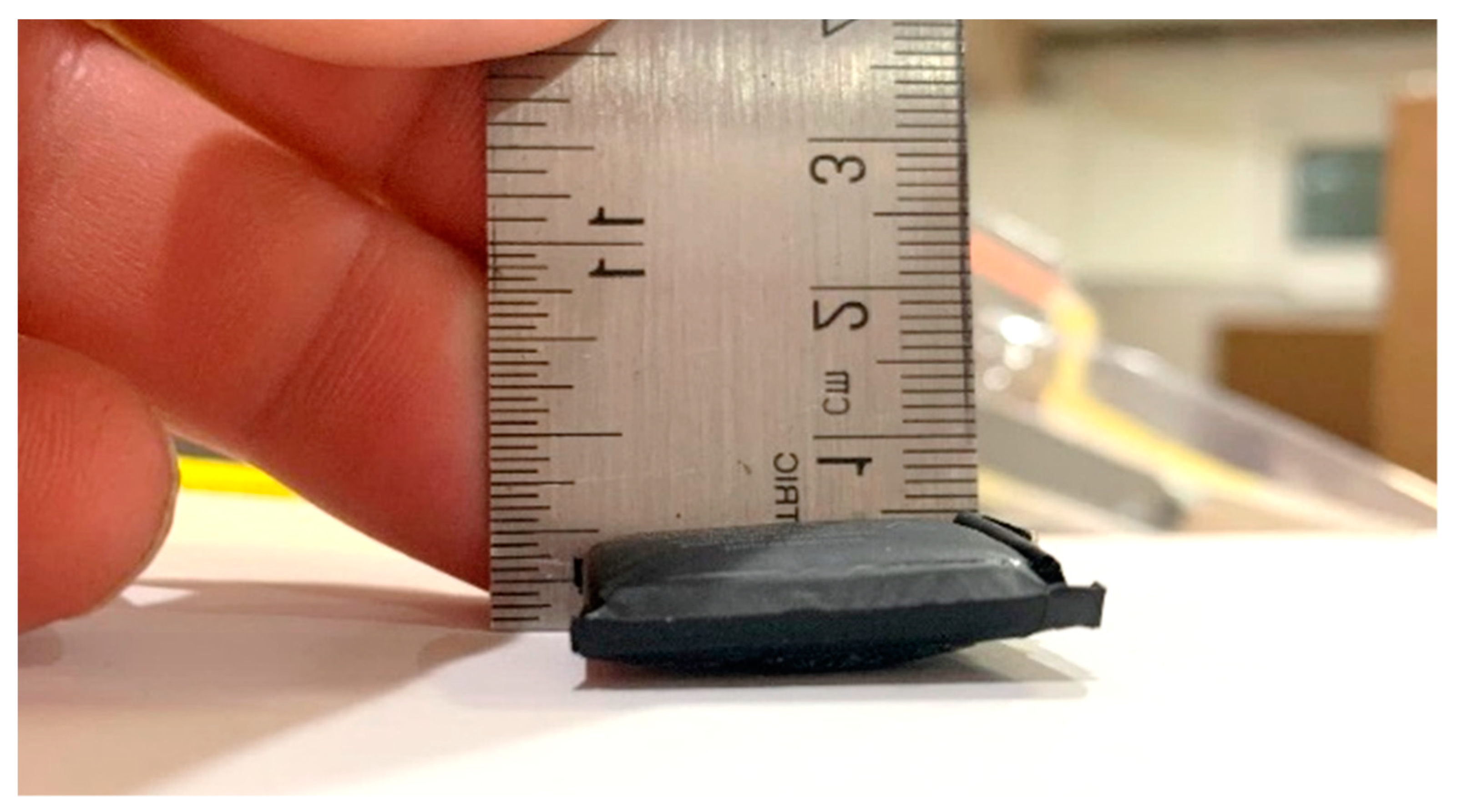
Battery datasheets should specify physical parameters in the following ways. The datasheet should provide the mean and range, useful for a preliminary assessment of the product design and manufacturing process [35]. The process capability can be used to determine if there has been a change in the manufacturing process. In addition, because a pouch cell package will expand (see Figure 1) when gas is generated internally due to cell aging, device manufacturers need to consider the thickness change when designing a product. To prevent the battery swelling from destroying the product in which it is embedded, the battery datasheet is recommended to provide the thickness change of the pouch cell over cell degradation.
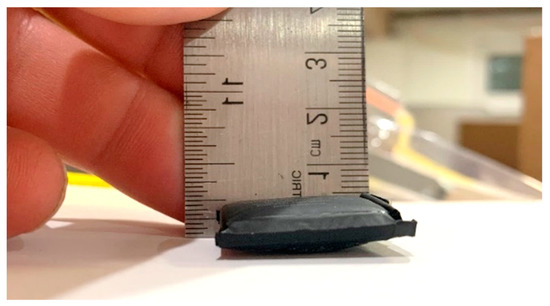
Figure 1.
A swollen pouch cell.
3. Electrical Performance and Operating Limits
The electrical performance parameters included in a datasheet are capacity, energy, power, voltage, and resistance. The operating limits guide how to operate batteries safely and reliably.
3.1. Capacity Parameters
Capacity represents the amount of time a fully charged battery can operate for a given loading current and temperature condition. IEC ref 482-03-14 [3] defines capacity as the electric charge a cell can deliver under specified discharge conditions. ANSI C18.2M [36] defines capacity as the quantity of electricity, usually expressed in Ah, which a battery can provide under specified discharge conditions. The International System of Units (SI) for electric charge is the coulomb (1 C = 1 A·s), but in practice, capacity is usually expressed in ampere-hours (Ah).
IEC ref 482-03-15 [3] defines the rated capacity as the capacity value of a battery determined under specified operating conditions and declared by the manufacturer. ANSI C18.2M [36] describes the rated capacity as the quantity of electricity declared by the manufacturer which a single cell or battery can deliver during a 5 h period when charging, storing, and discharge under the conditions specified in the ANSI standard in which the battery datasheets determine the cut-off voltage values. ISO 12405-4 describes the rated capacity [37] as the supplier’s specification of the total number of ampere-hours that can be withdrawn from a fully charged battery pack or system for a specified set of test conditions, such as discharge rate, temperature, and discharge cut-off voltage.
Table 2 summarizes the capacity terms used in the 25 datasheets and the capacity value used to define the 1 C rate for the respective battery types. Other than the rated capacity and nominal capacity, other capacity terms (including minimum capacity, typical capacity, and standard capacity) are also used in the datasheets. There are battery models that specify up to three capacity terms (e.g., Panasonic NCR18650BF). However, not all battery datasheets explain the corresponding measurement condition for each capacity term.
Table 2.
Capacity terms used in specifications.
Several battery models (e.g., Panasonic UR1865ZM2 and Samsung INR21700-50E) list the testing condition for each capacity term mentioned in the datasheets, whereas others do not. There are also battery datasheets in which multiple values are specified for the same capacity term. An example is Panasonic NCR18650B, in which the “rated capacity” was measured at 20 °C, whereas the “minimum capacity” and “typical capacity” were measured at 25 °C; however, the “minimum capacity” and “rated capacity” were measured under the same temperature, C-rate, and cut-off condition, which introduces contradictions. For Panasonic NCR18650BD, two values are specified for each capacity term without a clear explanation for variation in these values.
For all the reviewed battery types, except for Panasonic NCR18650BF, the rated capacity and nominal capacity are not used together in a datasheet. No pattern is found for which capacity is used to define 1 C. Only eight out of the 25 datasheets define the electrical current value of 1 C. Without defining each capacity term’s testing conditions and the electrical current value of 1 C, customers have difficulty validating the capacity values specified in datasheets. Besides, none of the 25 datasheets provide the range of the capacity value.
The following conditions are recommended to specify the capacity parameter. First, the datasheet should list each capacity term’s measurement condition, including the temperature, charge/discharge C-rate, and cut-off voltage/C-rate. Second, the datasheet should clarify the meanings if more than one value is listed for a single capacity term. Third, the mean and range should be listed for customers to evaluate the production lot variation. Fourth, the current value of 1C should be defined if there is more than one specified capacity term because this helps customers verify the electrical performance and reliability.
3.2. Charge/Discharge Procedures and Limitations
The standard charge consists of charging batteries at a constant current to the upper voltage limit and then at a constant voltage until the charging current has tapered to the cut-off charge current. The charge characteristics are usually plotted in specifications with the parameters mentioned above. The standard discharge consists of discharging batteries at a constant current to the lower voltage limit. While some datasheets plot the discharge characteristics at different C-rates and temperatures, others provide only the charge/discharge capacity values at different temperatures and C-rates.
Table 3 shows the operating parameters and limits for charge and discharge summarized for each battery model. The “standard” current or C-rate does not come from any particular industry standards; it is a term used to define the current or C-rate in the standard charge and discharge cycle in a datasheet.
Table 3.
Charge and discharge parameters and limits.
Several battery manufacturers specify the standard charge and discharge current/C-rate for different operating temperature ranges in which the C-rate at lower temperature ranges tends to be lower. In contrast, others do not distinguish the temperature range. Except for Toshiba-LTO-20AH, all other battery datasheets specify the temperature range for both charge and discharge. Not all datasheets specify the maximum charge and discharge C-rates. For the maximum discharge current/C-rate, only the two battery models from VPW specify continuous discharge values, pulse discharge with its length, and the applied temperature range. Others lack 1–3 elements.
Battery manufacturers should recommend charging and discharging C-rates for different temperature ranges, considering the adverse effect of increasing C-rate on battery lifetime due to mechanical stress and side-electrochemical reactions such as lithium plating and gas generation. When specifying the maximum discharge current/C-rate, the datasheet should provide the values for continuous discharge rate, pulse discharge rate with pulse length, the applied state of charge (SOC), and temperature range, such that users know the conditions they can use the battery up to the maximum discharge current.
3.3. Voltage Parameters
The cell voltage is defined by IEC ref 114-03-10 [3] as the voltage between the two terminals of an electrochemical cell. IEC ref 482-03-31 [3] defines the nominal voltage as the suitable approximate value of the voltage used to designate or identify a cell, a battery, or an electrochemical system. However, the way the battery manufacturers determine the nominal voltage is not provided in most datasheets.
Table 4 shows the voltage terms and their values in the 25 battery datasheets. Four battery types (LG 18650HE2, LG ICR18650MF1, EEMB LIR18650, and GMB043450S) specify how the nominal voltage is measured—the average cell voltage during standard discharge. The ATL 902738 datasheet uses typical voltage instead of nominal voltage.
Table 4.
Voltage terms used in specifications.
The operating voltage range is necessary for developing battery management strategies. Other than A123 AMP20m1HD-A, the remaining 24 datasheets all specify the operating voltage range. Routejade SLPB526495 specifies the voltage range between 2.7 V and 4.2 V but guides customers to cycle the batteries between 3 V and 4.2 V with a decreased usable capacity. This information is misleading because of the discrepancy between the advertised capacity value and the capacity value associated with the recommended voltage range. Thus, the operating voltage range should be specified consistently in a datasheet. It should also specify measured nominal/rated voltage, including the temperature, C-rate, cut-off voltage, and C-rate.
3.4. Impedance/Resistance Parameters
IEC ref 131-12-43 defines the impedance for a passive linear two-terminal element or circuit as the quotient of the phasor (the voltage between the terminals) by the phasor (the electric current in the element or circuit). The phasor represents the sinusoidal voltage , and the phasor represents the sinusoidal electric current. The impedance is equal to , where is the resistance to an alternating current, and is the reactance. The coherent SI unit of impedance is ohm, Ω. The battery is not a passive circuit, but its impedance is calculated in the same way.
IEC ref 482-03-36 defines the “internal apparent resistance” of a battery as the quotient of change of voltage as the corresponding change in the discharge current under specified conditions. If the measurement current is direct current (DC), the quotient is mostly called internal resistance or DC resistance; if the measurement current is alternating current (AC), the quotient is called impedance.
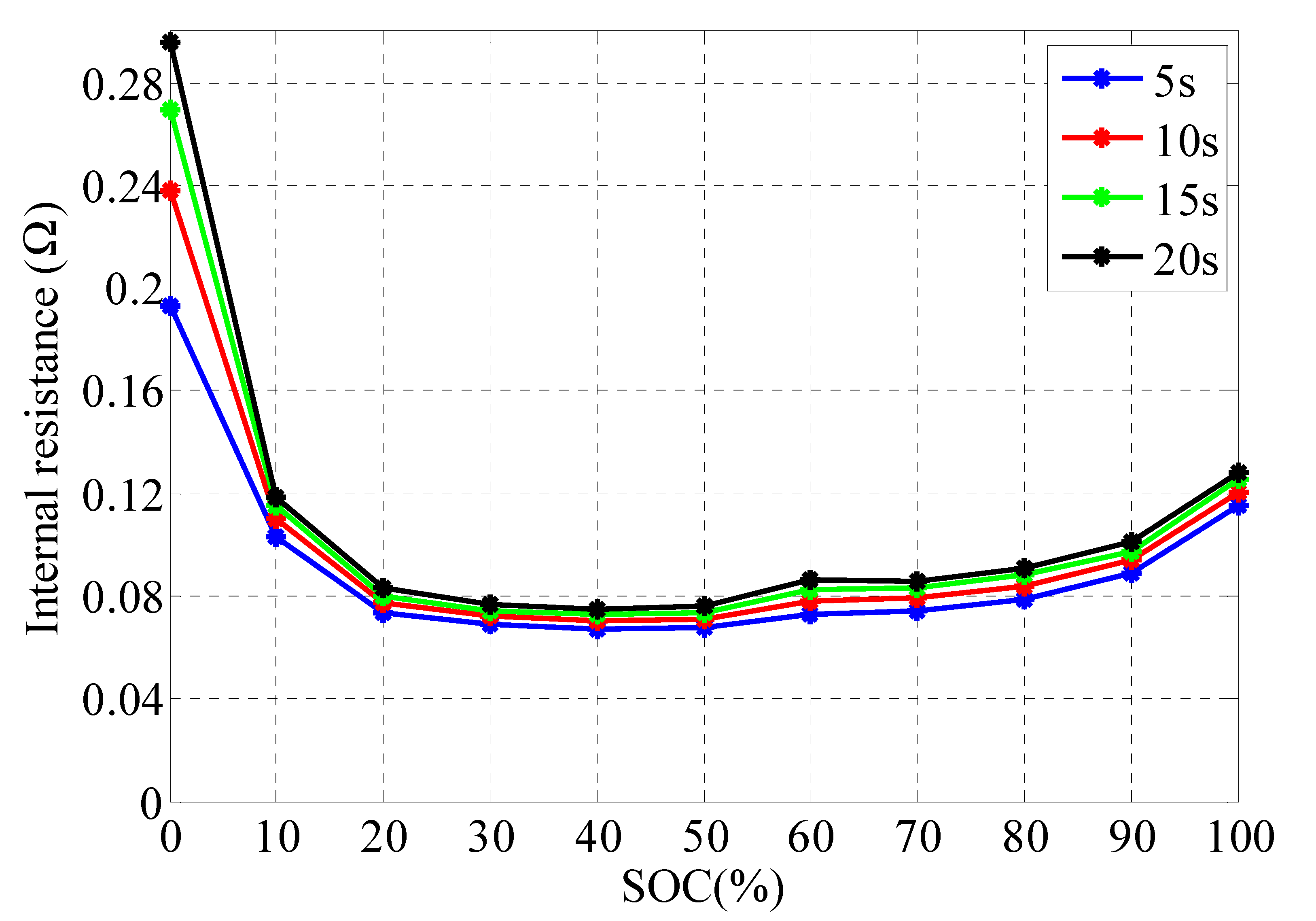
Table 5 summarizes the impedance/resistance values from the 25 datasheets. Battery impedance will change with the measurement frequency of the sinusoidal excitation. Battery impedance/internal resistance also depends on the battery SOC (see Figure 2) and temperature [38,39]. However, some datasheets define the impedance values without specifying the frequency and SOC of the impedance values (e.g., EEMB LIR18650) or the SOC of the resistance value (e.g., battery model VPW 580013). This ambiguity makes it difficult to validate the specified impedance/resistance values.
Table 5.
Impedance/resistance.
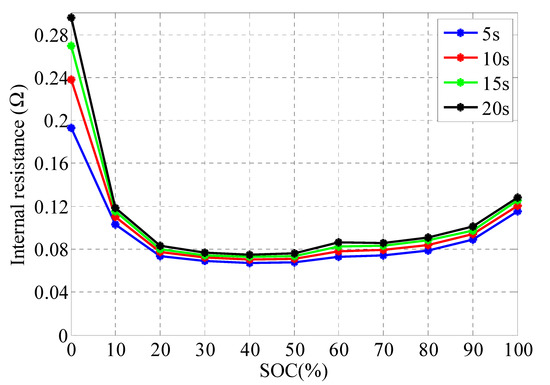
Figure 2.
DC resistance measured at different SOCs for Li(NiCoAl)O2 based cells using C/2 discharge.
Increased impedance/resistance can cause the battery terminal voltage to reach the discharge cut-off voltage and terminate the battery’s discharge operation, thus decreasing the battery’s power capability and deliverable capacity. In addition to the measurement temperature and battery SOC for the resistance/impedance values, battery datasheets should specify the measurement frequency for the impedance values. A comparison of different methods to measure the internal resistance and impedance can be found in [40].
3.5. Energy and Power Parameters
Specific energy, also called gravimetric energy density, is the energy per unit mass stored in a lithium-ion battery/cell. Specific power is the power per unit mass provided by a lithium-ion battery/cell, changing with battery SOC and operating conditions. The specific energy and power are useful in comparing the cost per unit of energy or power among different batteries.
Table 6 shows that ten out of the 25 datasheets provide specific energy or energy density data. However, none of the nine datasheets specify the testing condition for measuring the specific energy or energy density, which can vary significantly with the testing condition, such as the discharge C-rate. Besides, Panasonic NCR18650BD provides two values for the specific energy and two values for the energy density without a distinction. Only A123 ANE26650m1-B provides the specific power with the battery SOC and the testing condition.
Table 6.
Energy and power.
Thus, similar to specifying the capacity, the measurement condition of the specific energy or energy density should be provided. The specific power with battery SOC, temperature, discharge pulse, and pulse duration needs to be listed.
4. Reliability and Recommendations for Storage
The maximum amount of charge that a battery can deliver decreases with usage (cycle life through charge-discharge cycles) and storage (calendar life), known as capacity fade. A lithium-ion battery reaches the end of life when its capacity no longer meets the mission’s requirement, described by the end-of-life (EOL) threshold that is predetermined for the mission. The EOL threshold is application dependent. There is also a required number of cycles or time (lifetime requirement) for each mission. That is, the battery capacity should not drop below the EOL threshold until the required lifetime. Lithium-ion batteries with unsatisfactory lifetimes can significantly reduce customer satisfaction and make products inefficient to use in such applications. Thus, the cycle life and storage life are specified in the datasheets.
4.1. Cycle Life
Table 7 summarizes the cycle life parameters in the 25 datasheets in which the cycle life is specified for as low as 200 cycles and as high as 15,000 cycles. The cycling characteristics are usually in the form of plots (capacity vs. cycles) or the capacity retention value after being used for a certain number of cycles in which lithium-ion batteries are cycled at certain environmental and loading conditions for a specific number of cycles. Most of the 25 datasheets provide the cycling characteristics for one testing condition, whereas the A123 ANE26650m1-B datasheet provides the plots for multiple testing conditions.
Table 7.
Cycle life characteristics.
The cycle life at multiple testing conditions, such as the operating limit (maximum C-rate and highest and lowest temperature), is recommended for inclusion in the datasheet. In this way, customers understand the cycle life at various loading conditions and predict the lifetime for a targeted application [41,42].
4.2. Storage Life
IEC ref 482-03-47 [3] defines storage life (shelf life) as the duration, under specific conditions, at the end of which a battery has retained the ability to perform a specified function. As shown in the third column in Table 8, out of the 25 datasheets, 21 specify the recommended storage temperature range (ATL, VPW, and Toshiba battery types do not provide information); however, the datasheets do not explain the implications for the storage time associated with each temperature range. For example, the statement “−20–50 °C, less than 1 month” does not reveal the amount of charge and capacity left after the battery is stored for a month at 50 °C.
Table 8.
Storage life characteristics.
Nine datasheets specify the amount of charge left in a battery after being stored at 100% SOC. Five datasheets specify the capacity retention after storage. Particularly, EEMB LIR1632 provides the capacity fade over storage time at three different temperatures. ATL 902738 specifies the cell voltage after storage. Toshiba provides the capacity fade over float storage at 2.7 V at three different temperatures.
5. Safety and Safety Caution
Lithium-ion batteries are classified under UN category 9 as dangerous goods because they are thermally and electrically unstable if subjected to certain harsh environmental conditions or are mishandled during transportation, storage, and usage [43]. Battery hazards include electrolyte leakage, heat production, venting of gases, thermal runaway leading to fire and explosions.
Frequent lithium-ion battery fires increase the safety concerns in customer electronics, vehicles, and large commercial aircraft. Severe environmental conditions, such as external heating, can lead to thermal runaway by triggering a series of exothermic chemical reactions inside the battery [44]. Electrical mishandling, such as overcharging, can lead to gas generation, lithium metal plating on the anode, and electrode fracture [45]. At elevated battery voltage during overcharging, the cathode crystal structure will collapse due to excessive delithiation, and the electrolyte will be oxidized, both generating a significant amount of gas. Lithium plating may cause an internal short circuit by piercing the separator or growing dendrite through the separator’s pores. Mechanical damage, such as crush or penetration, may cause an internal short circuit, leading to rapid heating and thermal runaway [46].
Table 9 summarizes lithium-ion batteries’ behavior under different environmental, electrical, and mechanical conditions. The tests are performed at the cell level without any external protection component. Thirteen datasheets specify safety in various examinations.
Table 9.
Safety.
The three LG battery datasheets provide the safety behavior in nine tests, the highest number of tests among the 25 battery models. The two Routejade battery models were tested per the UL1642 standard. The safety tests for Samsung INR21700-50E and ICR18650-26J batteries followed the IEC 62133 standard, UN transportation regulation (UN38.3), and the UL1642 standard. The A123 AMP20m1HD-A batteries were tested per EUCAR 3. The testing procedures can be found in the corresponding standards.
The testing procedures should be specified in detail for the safety tests that do not follow a standard test methodology. However, EEMB LIR 1632 batteries did not mention the circuit resistance used in the short-circuit test [47].
The battery datasheets instruct customers about handling lithium-ion batteries to avoid unsafe events leading to fire or bodily injury; these rules also exempt the manufacturer from liability if customers violate any stated precautions in the datasheet. For example, the customers shall not expose the battery to extreme heat or flame, shall not immerse the battery in water, and shall not subject the battery to external mechanical shocks. The warranty ranges from 6 to 18 months from the date of shipment. The malfunctioning cells will be replaced within the warranty period if cell manufacturing defects cause the issue, which may lead to an unsafe event or a rapid performance decay. Battery manufacturers typically set the safety test pass criteria to include no explosion or fire in the mentioned safety tests. Still, no statement clarifies the manufacturer’s responsibility once an unsafe event occurs due to manufacturing or other defects out of customers’ control.
It is recommended that the datasheets specify the battery’s behavior under extreme environmental, electrical, or mechanical conditions that possibly occur during transportation, storage, or usage. The safety may be defined individually or combinedly, i.e., transportation, storage, or usage, but needs to be clearly defined and stated for the respective stage. If the batteries are not tested per an industry standard where the specific testing procedures and conditions are given, each safety test should provide the testing condition for customers to verify the safety, such as the battery SOC, environmental temperature, the circuit resistance, and the short-circuit time in the short-circuit test.
6. Discrepancies in Datasheets for the Same Battery Model
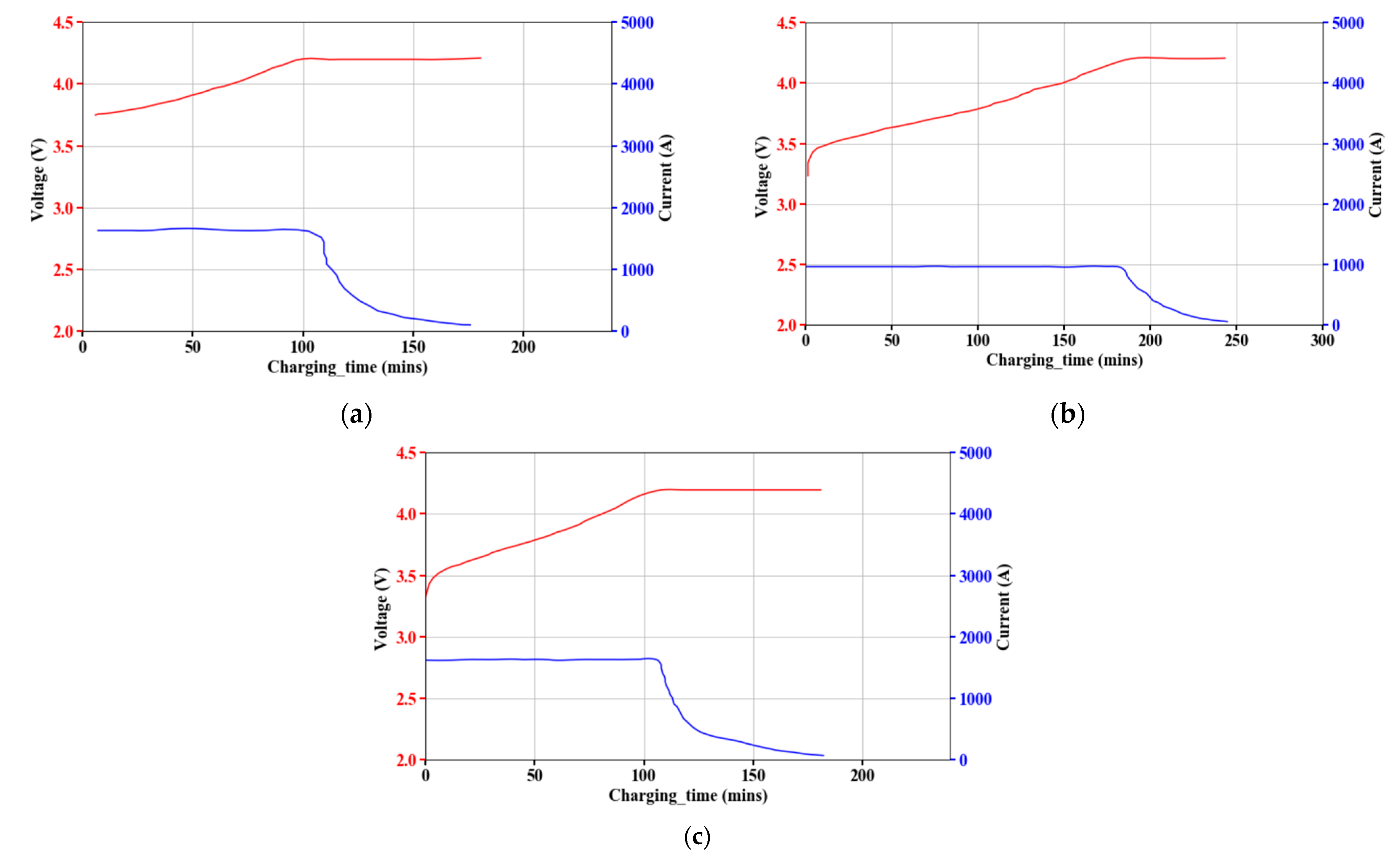
For Panasonic NCR18650B cells, three different datasheets are found online [13,14,15]. The specified capacity and nominal voltage are the same; however, the physical parameters, charge/discharge characteristic curves, and cycling characteristics curves are all different. Figure 3 compares the charge curves. The charging C-rate is 0.5 C in “The Charge Characteristics for NCR18650B” Plot [13] and “Charge Characteristics” Plot [15] and 0.3 C in “TYPICAL CHARGE CHARACTERISTICS” plot [14].
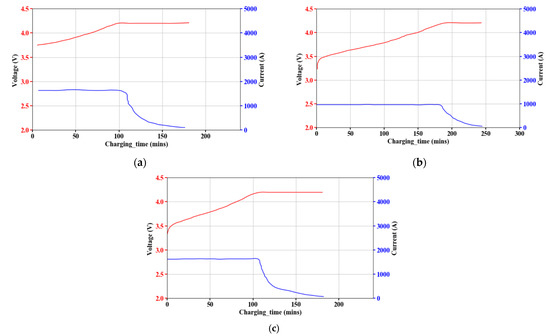
Figure 3.
Observed inconsistent charge characteristics from different sources for Panasonic NCR18650B cells: (a) [13]; (b) [14]; and (c) [15].
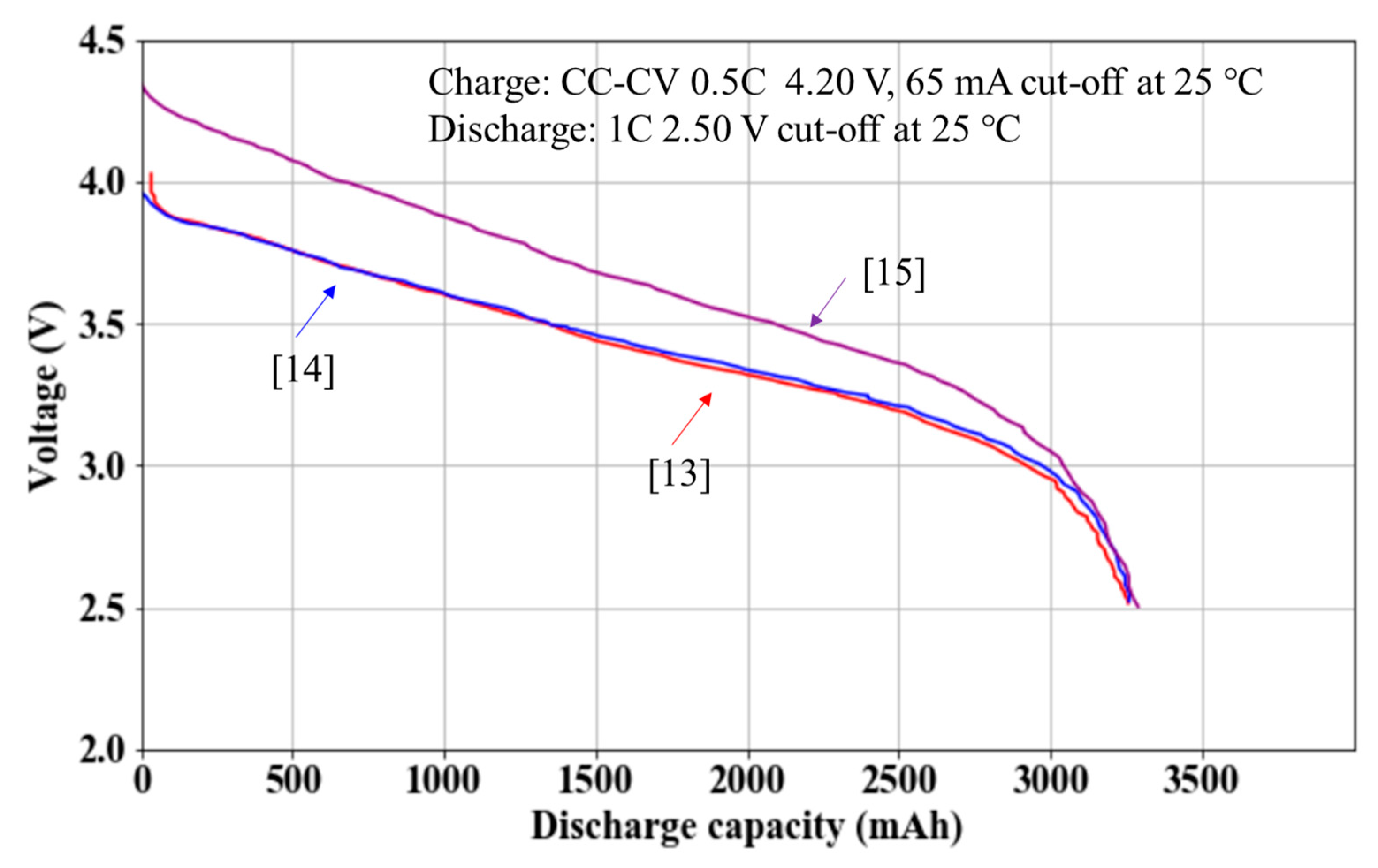
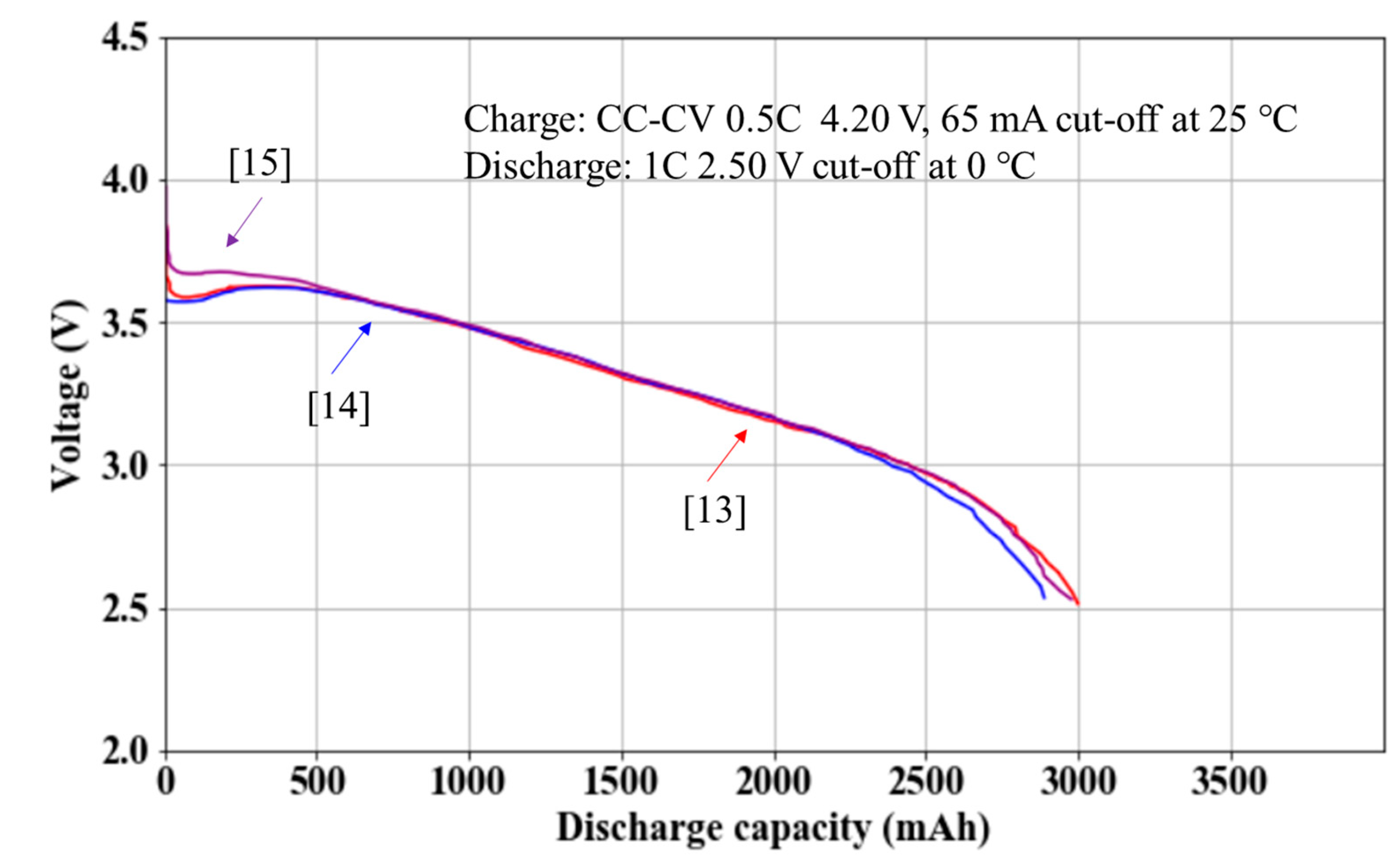
Figure 4 and Figure 5 shows that compares that the discharge characteristic curves are inconsistent with each other at the same discharge C-rate and temperature. The discharge curves have significant variation. This may be due to a change in the electrode and electrolyte properties or variation in the manufacturing batch. These should be clarified in the datasheet so customers can select the right product for their targeted application.
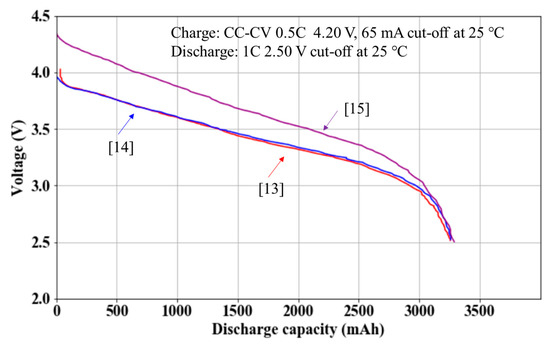
Figure 4.
Observed inconsistent discharge characteristics at 25 °C, 1 C from different sources for Panasonic NCR18650B cells.
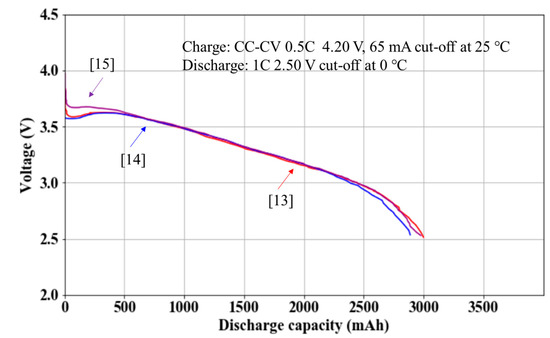
Figure 5.
Observed inconsistent discharge characteristics at 0 °C, 1 C from different sources for Panasonic NCR18650B cells.
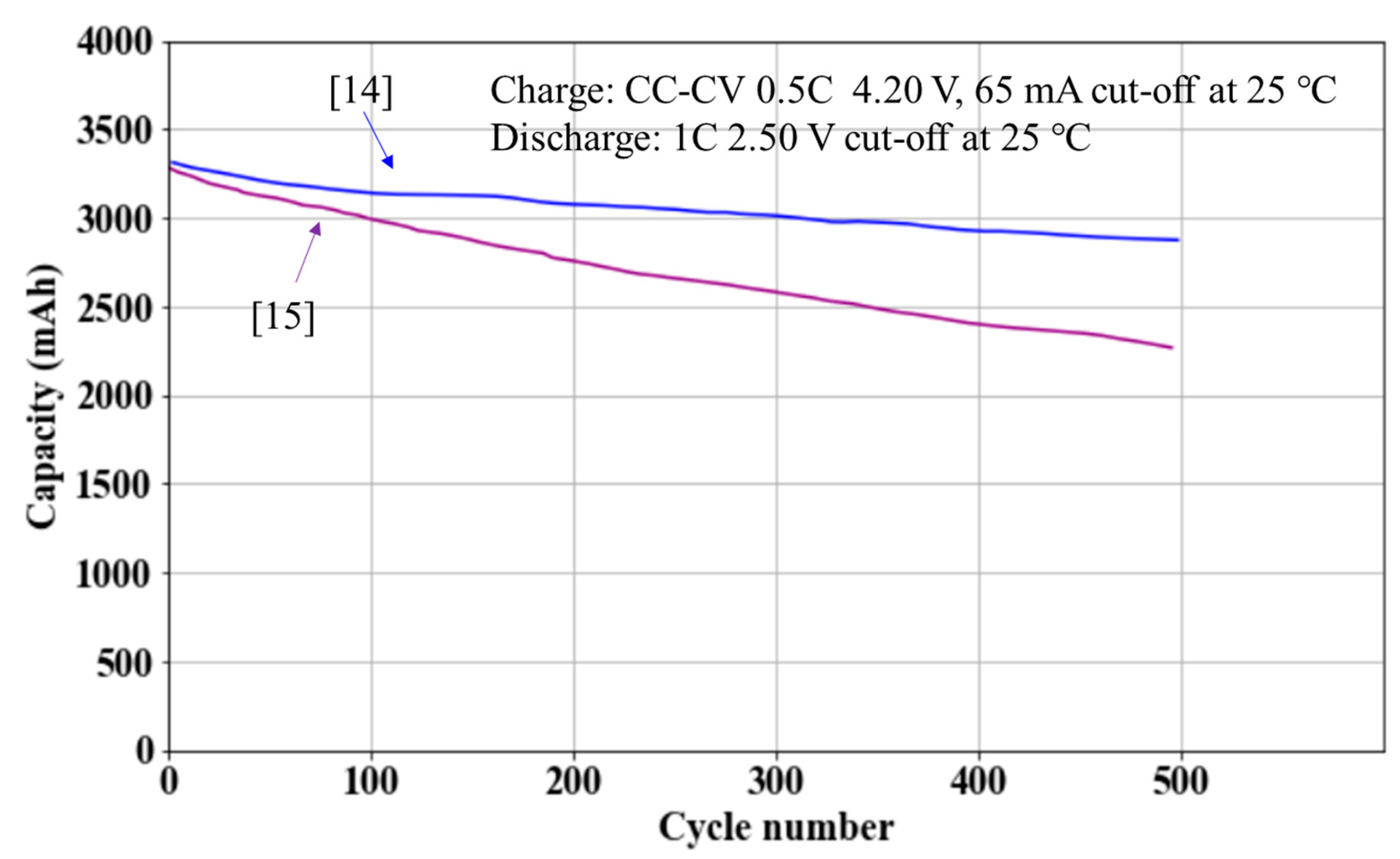
Figure 6 shows there is a distinct difference between the cycling performance in the two data sheets [14,15]. This all results in confusion for low-volume battery customers who do not have direct communication access with battery manufacturers. Thus, battery manufacturers should provide the official datasheet for clarification for commercial-off-the-shelf battery models sold on various third-party sales websites. The battery manufacturer should confirm the credentials of distributors and third-party sales websites.
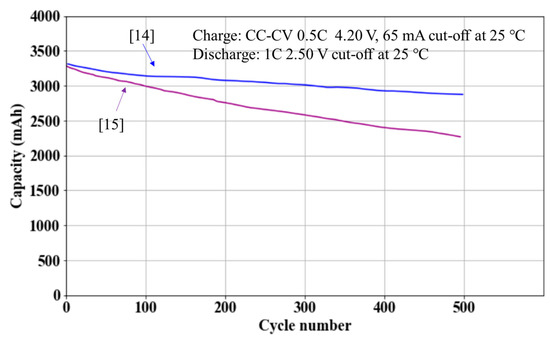
Figure 6.
Inconsistency observed in the cycle characteristics from different sources for Panasonic NCR18650B cells.
7. Conclusions
In this paper, datasheets from 25 different lithium-ion battery types from eleven major battery manufacturers are evaluated regarding the way present information related to physical parameters, electrical performance parameters, and operating limits, reliability, and safety is made available to the end-users. It is recommended that the battery manufacturer supply sufficient and clear information to end-users through the following practices.
The datasheet should provide the mean and range for physical parameters and capacity/impedance for customers to evaluate the production lot variation. To prevent the battery swelling from damaging the product in which it is embedded, the datasheet should provide the thickness change in the pouch cell over cell degradation.
For electrical parameters, the electrical current value of 1 C should be defined. The datasheets need to list the measurement conditions for each capacity term, specific energy, and nominal/rated voltage, including the temperature, charge/discharge C-rate, and cut-off voltage/C-rate. When indicating the specific power, they also need to provide the measurement conditions for battery impedance/resistance, including SOC, measurement frequency, temperature, pulse amplitude, and pulse duration. The datasheet should clarify the meanings of the differences if more than one value is listed for a single term, such as capacity, power, or energy. The maximum discharge current/C-rate needs to be specified with additional information: continuous discharge, pulse discharge (length), and the applied temperature and SOC range.
As a recommendation, this work proposes a well-defined datasheet, including cycle life at multiple testing conditions such as at the operating limit (maximum C-rate and highest/lowest temperature), for users to make cycle life predictions for various applications. The datasheet should specify the storage temperature range and describe the implications of the storage time associated with each temperature range. Information, including charge retention and capacity retention over the storage time, should be included possibly at multiple storage conditions (e.g., at the limit of the specified SOC and temperature range). The datasheets are recommended to provide any resources to locate the reliability characteristics, if available.
Further for safety parameters, the datasheets should report battery behavior under all abusive thermal, electrical, or mechanical conditions that possibly occur during transportation, storage, and usage or as per required compliance standards. Each safety test should either mention the specific standard per which they conduct the safety testing or provide the testing condition for customers to verify battery safety.
Finally, to benefit the customers and end-users, it is recommended that battery manufacturers authenticate the correct datasheet version for the battery under consideration and confirm the credentials of distributors and third-party sales websites. Implementing the recommended suggestions and changes to the datasheets will enable customers to procure suitable battery types for their required applications and develop appropriate battery management systems for enhanced reliability and safety, hence benefitting a wide spectrum of battery users’ communities.
Author Contributions
Conceptualization, M.P.; methodology, W.D.; software, W.D.; validation, C.K.; formal analysis, W.D.; investigation, W.D.; resources, C.K. and M.P.; data curation, W.D.; writing—original draft preparation, W.D.; writing—review and editing, C.K. and M.P.; visualization, M.P.; supervision, M.P.; project administration, M.P. All authors have read and agreed to the published version of the manuscript.
Funding
This research received no external funding.
Institutional Review Board Statement
Not applicable.
Informed Consent Statement
Not applicable.
Data Availability Statement
Not applicable.
Acknowledgments
The authors would like to thank the more than 150 companies and organizations that support research activities at the Center for Advanced Life Cycle Engineering (CALCE) at the University of Maryland annually, as well as the Center for Advances in Reliability and Safety (CAIRS) of Hong Kong. The contributions of C.K. were performed under NASA Ames Research Center, contract No. 80ARC020D0010.
Conflicts of Interest
The authors declare no conflict of interest.
References
- Saxena, S.; Roman, D.; Robu, V.; Flynn, D.; Pecht, M. Battery stress factor ranking for accelerated degradation test planning using machine learning. Energies 2021, 14, 723. [Google Scholar] [CrossRef]
- Diao, W.; Saxena, S.; Han, B.; Pecht, M. Algorithm to determine the knee point on capacity fade curves of lithium-ion cells. Energies 2019, 12, 2910. [Google Scholar] [CrossRef] [Green Version]
- International Electrotechnical Vocabulary (Produced by International Electrotechnical Commission: IEC). Available online: http://www.electropedia.org (accessed on 23 March 2021).
- Technical Data Sheet (TDS). Available online: https://www.corrosionpedia.com/definition/6926/technical-data-sheet-tds (accessed on 23 March 2021).
- IEEE Search. Available online: https://ieeexplore.ieee.org/search/searchresult.jsp?action=search&newsearch=true&matchBoolean=true&queryText=(%22All%20Metadata%22:datasheet)%20OR%20(%22All%20Metadata%22:specification)%20AND%20(%22All%20Metadata%22:battery) (accessed on 2 August 2021).
- Elsevier Search. Available online: https://www.sciencedirect.com/search?qs=battery%20datasheet%20specification (accessed on 2 August 2021).
- Wiley Search. Available online: https://onlinelibrary.wiley.com/action/doSearch?AllField=battery%2C+datasheet%2C+specification+ (accessed on 2 August 2021).
- MDPI Search. Available online: https://www.mdpi.com/search?q=battery+specification (accessed on 2 August 2021).
- MDPI Search. Available online: https://www.mdpi.com/search?q=battery+datasheet (accessed on 2 August 2021).
- Springer Search. Available online: https://link.springer.com/search?query=battery+and+%28datasheet+or+specification%29&facet-content-type=ReferenceWorkEntry&facet-eisbn=978-1-4020-6754-9 (accessed on 2 August 2021).
- Google Scholar Search. Available online: https://scholar.google.com/scholar?hl=en&as_sdt=0%2C21&q=battery+datasheet+specifications&btnG= (accessed on 2 August 2021).
- Panasonic. Available online: https://industrial.panasonic.com/ww/products/batteries/secondary-batteries/lithium-ion/models (accessed on 23 March 2021).
- Orbtronic. Available online: https://www.orbtronic.com/batteries-chargers/panasonic-3400mah-18650-li-ion-battery-cell-ncr18650b (accessed on 23 March 2021).
- Panasonic NCR18650B Datasheet. Available online: https://www.imrbatteries.com/content/panasonic_ncr18650b-2.pdf (accessed on 23 March 2021).
- Panasonic NCR18650B Datasheet. Available online: https://www.batteryspace.com/prod-specs/NCR18650B.pdf (accessed on 23 March 2021).
- Panasonic NCR18650PF Datasheet. Available online: https://actec.dk/media/documents/70FC46554038.pdf (accessed on 23 March 2021).
- Panasonic NCR18650BD Datasheet. Available online: https://evwest.com/support/panasonic-ncr18650bd-datasheet.pdf (accessed on 23 March 2021).
- Panasonic NCR18650BF Datasheet. Available online: https://www.nkon.nl/sk/k/Technical%20Information%20NCR18650BF%2006.08.2014.pdf (accessed on 23 March 2021).
- Panasonic UR18650GA Datasheet. Available online: https://www.orbtronic.com/content/Datasheet-specs-Sanyo-Panasonic-NCR18650GA-3500mah.pdf (accessed on 23 March 2021).
- Samsung ICR18650-26J Datasheet. Available online: http://www.datasheet-pdf.com/PDF/ICR18650-26J-Datasheet-Samsung-1402663 (accessed on 23 March 2021).
- Samsung INR21700-50E Datasheet. Available online: https://batteryservice.bg/wp-content/uploads/2018/12/INR21700-50E.pdf (accessed on 23 March 2021).
- Samsung INR18650-15Q Datasheet. Available online: https://www.batteryspace.com/prod-specs/6615.pdf (accessed on 23 March 2021).
- LG Chem 18650HE2 Datasheet. Available online: https://www.powerstream.com/p/LG-ICR18650HE2-REV0.pdf (accessed on 23 March 2021).
- LG Chem ICR18650MF1 Datasheet. Available online: http://kinstarbattery.com/Uploads/Celldatasheet/20210218114057_LG_ICR18650MF1_Datasheet.pdf (accessed on 23 March 2021).
- LG Chem INR18650 B4 Datasheet. Available online: https://www.batteryspace.com/prod-specs/5457_B4.pdf (accessed on 23 March 2021).
- A123 AMP20m1HD-A Datasheet. Available online: https://www.buya123products.com/uploads/vipcase/468623916e3ecc5b8a5f3d20825eb98d.pdf (accessed on 23 March 2021).
- A123 ANR26650m1-B Datasheet. Available online: https://www.batteryspace.com/prod-specs/6610.pdf (accessed on 23 March 2021).
- ATL 902738 Datasheet. Available online: https://www.lego.com/cdn/cs/legal/assets/bltb786186b7fc7fcdc/ATL-Battery-spec-Rev-A-20150521.pdf (accessed on 23 March 2021).
- EEMB LIR18650 Datasheet. Available online: https://www.eemb.com/public/image/download/LIR18650(2600).pdf (accessed on 23 March 2021).
- EEMB LIR1632 Datasheet. Available online: https://www.eemb.com/public/Download/Rechargeable-Lithium-Battery/Li-ion-Battery/Button/LIR1632.pdf (accessed on 23 March 2021).
- GMB GMB043450S Datasheet. Available online: https://www.powerstream.com/p/GMB043450S.pdf (accessed on 23 March 2021).
- VPW 580013 Datasheet. Available online: https://1327152.app.netsuite.com/core/media/media.nl?id=4866750&c=1327152&h=842f192ba60355ac385e&_xt=.pdf&fcts=20190517161911&whence= (accessed on 23 March 2021).
- VPW 580049 Datasheet. Available online: https://www.vpwllc.com/wp-content/uploads/2020/09/580049-Sales-Sheet.pdf (accessed on 23 March 2021).
- Toshiba Lithium Titanate Battery Datasheet. Available online: http://futuregrqd.cluster027.hosting.ovh.net/Download/Datasheet/Toshiba_LTO_2.4V_20Ah.pdf (accessed on 7 August 2021).
- Kapur, K.C.; Pecht, M. Reliability Engineering; Wiley Series in Systems Engineering and Measurement; John Wiley and Sons: New York, NY, USA, 2014; pp. 177–185. [Google Scholar]
- NEMA. American National Standard for Portable Rechargeable Cells and Batteries—General and Specifications; Part 1-2019; NEMA: Arlington, VA, USA, 2020. [Google Scholar]
- British Standards Institution. ISO 12405-4: 2018 Electrically Propelled Road Vehicles–Test Specification for Lithium-Ion Traction Battery Packs and Systems; Part 4: Performance Testing; British Standards Institution: London, UK, 2018. [Google Scholar]
- Barai, A.; Uddin, K.; Widanage, W.D.; McGordon, A.; Jennings, P. A study of the influence of measurement timescale on internal resistance characterisation methodologies for lithium-ion cells. Sci. Rep. 2018, 8, 21. [Google Scholar] [CrossRef] [PubMed]
- Andre, D.; Meiler, M.; Steiner, K.; Wimmer, C.; Soczka-Guth, T.; Sauer, D.U. Characterization of high-power lithium-ion batteries by electrochemical impedance spectroscopy. I. Experimental investigation. J. Power Sources 2011, 196, 5334–5341. [Google Scholar] [CrossRef]
- Schweiger, H.G.; Obeidi, O.; Komesker, O.; Raschke, A.; Schiemann, M.; Zehner, C.; Birke, P. Comparison of several methods for determining the internal resistance of lithium ion cells. Sensors 2010, 10, 5604–5625. [Google Scholar] [CrossRef] [PubMed] [Green Version]
- Diao, W.; Saxena, S.; Pecht, M. Accelerated cycle life testing and capacity degradation modeling of LiCoO2-graphite cells. J. Power Sources 2019, 435, 226830. [Google Scholar] [CrossRef]
- Saxena, S.; Ning, Y.; Thompson, R.; Pecht, M. Role of the rest period in capacity fade of Graphite/LiCoO2 batteries. J. Power Sources 2021, 484, 229246. [Google Scholar] [CrossRef]
- Huo, H.; Xing, Y.; Pecht, M.; Züger, B.J.; Khare, N.; Vezzini, A. Safety requirements for transportation of lithium batteries. Energies 2017, 10, 793. [Google Scholar] [CrossRef]
- Feng, X.; Zheng, S.; He, X.; Wang, L.; Wang, Y.; Ren, D.; Ouyang, M. Time sequence map for interpreting the thermal runaway mechanism of lithium-ion batteries with LiNixCoyMnzO2 cathode. Front. Energy Res. 2018, 6, 126. [Google Scholar] [CrossRef] [Green Version]
- Diao, W.; Xu, B.; Pecht, M. Charging induced electrode layer fracturing of 18650 lithium-ion batteries. J. Power Sources 2021, 484, 229260. [Google Scholar] [CrossRef]
- Feng, X.; Ouyang, M.; Liu, X.; Lu, L.; Xia, Y.; He, X. Thermal runaway mechanism of lithium ion battery for electric vehicles: A review. Energy Storage Mater. 2018, 10, 246–267. [Google Scholar] [CrossRef]
- Chen, Z.; Xiong, R.; Lu, J.; Li, X. Temperature rise prediction of lithium-ion battery suffering external short circuit for all-climate electric vehicles application. Appl. Energy 2018, 213, 375–383. [Google Scholar] [CrossRef]
Publisher’s Note: MDPI stays neutral with regard to jurisdictional claims in published maps and institutional affiliations. |
© 2021 by the authors. Licensee MDPI, Basel, Switzerland. This article is an open access article distributed under the terms and conditions of the Creative Commons Attribution (CC BY) license (https://creativecommons.org/licenses/by/4.0/).