


Abstract
This paper provides policy recommendations for accelerating the adoption of Fossil-Energy-Free Technologies and Strategies (FEFTS) in the EU agricultural sector. Faster adoption of these technologies and strategies is crucial to achieving the medium- and long-term sustainability targets laid out in EU policy. The prepared policy recommendations originate out of the key outputs and findings of the Horizon 2020 project “AgroFossilFree”, including an assessment and evaluation of the current energy use status in EU agriculture, survey results on farmers’ needs, ideas and interests on the adoption of FEFTS, FEFTS categories identified through an online inventory of FEFTS called the AgEnergy platform, and key innovative processes through national and transnational workshops that combine expertise from hundreds of keys stakeholders (researchers, innovation brokers, policymakers, farmers, and industry representatives). The policy recommendations are synthesized and presented in the form of 19 policy briefs split into three main categories: those that are related to energy issues in farming and can be applied to any farm and FEFTS type; those that are specific to certain agricultural production systems; and those that are necessary for FEFTS integration in agriculture in general.
1. Introduction
The agricultural sector in the European Union (EU) is at a critical juncture, facing the challenges of transitioning towards a sustainable food and agriculture sector, ensuring food security and developing resilience against climatic change [1]. The agricultural sector remains heavily reliant on fossil energy and contributes significantly to greenhouse gas emissions and environmental degradation. As the urgency to combat climate change intensifies, there is a growing consensus on the need to transition towards fossil-energy-free technologies and strategies (FEFTS) within the agricultural sector. This transition is not only crucial for environmental sustainability, but also for enhancing the resilience and economic viability of agriculture in the face of fluctuating energy prices and depleting fossil fuel reserves.
The EU has set ambitious targets for reducing greenhouse gas emissions, increasing the use of renewable energy, and improving energy efficiency, as outlined in the European Green Deal [2], the Common Agricultural Policy (CAP) [3], and the Farm to Fork Strategy [1]. However, the pace of adoption of FEFTS in agriculture remains slow especially when compared to other economic sectors [4]. In addition, in recent years, considerable attention has been placed on adopting sustainable agricultural practices and decarbonizing the agricultural sector. Still, the role and steps required to effectively transition away from fossil energy in agriculture is not well explored. This paper addresses these critical gaps by providing comprehensive policy recommendations aimed at accelerating the adoption of such technologies and strategies across the European agricultural sector.
Drawing on a thorough analysis of the outputs of the Horizon 2020 project AgroFossilFree (www.agrofossilfree.eu), based on an interactive innovation model, this paper synthetizes key policy recommendations and proposes targeted policy interventions to accelerate the adoption of FEFTS in the EU agricultural system. The proposed policies emphasize the integration of renewable energy sources (RESs), energy-efficient technologies and practices, and innovative carbon sequestration practices that reduce dependence on fossil fuels. Furthermore, the paper highlights the importance of financial incentives, regulatory frameworks, and capacity-building measures to support farmers in this transition. By fostering a collaborative approach among policymakers, industry stakeholders, and the farming community, the proposed policy recommendations aim to create a conducive environment for the widespread adoption of FEFTS. This paper contributes to the broader discourse on sustainable agriculture by offering actionable recommendations that align with the EU’s climate goals and support the sustainable development of the agricultural sector.
Such a study is particularly relevant in the present context, as the EU has established several overarching policies to promote sustainability and the adoption of renewable energy and energy efficient technologies in agriculture. The CAP, the European Green Deal, and the Farm to Fork Strategy are central to these efforts, setting ambitious targets for reducing greenhouse gas emissions, increasing the use of renewable energy and applying more energy efficient technologies and practices. These strategies aim to create a sustainable food system and encourage the adoption of environmentally friendly practices in agriculture [1,2,3]. However, it is often noted that these policies often lack specific, actionable measures tailored to the agricultural sector. For instance, while the Renewable Energy Directive (RED II) mandates a significant increase in the share of renewable energy in the EU’s energy mix, it does not provide detailed guidance on how agricultural stakeholders can contribute to this target [5].
At the national level, several EU member states have implemented framework policies to support the adoption of FEFTS in agriculture. For example, Germany’s Renewable Energy Sources Act (EEG) has been instrumental in promoting the use of biogas and solar energy in agriculture. Similarly, Denmark’s integrated approach to renewable energy, which combines wind, solar, and bioenergy, has provided a robust framework for sustainable agricultural practices [6]. In addition, there are multiple specific policy initiatives within EU member states that promote FEFTS adoption in agriculture. For renewable energy generation, notable examples include the following: France’s “Plan Énergie Méthanisation Autonomie Azote” (EMAA) that promotes biogas from agricultural waste [7], Italy’s “Conto Energia” that supports photovoltaic installations on farms [8], and the Netherlands’ SDE++ that provides support for RES generation by famers [9]. For energy efficiency measures, notable examples include Spain’s “PAREER-CRECE”, focused on the energy efficiency of agricultural buildings [10], Poland’s “Program Agroenergia” [11], and Germany’s “Bundesprogramm Energieeffizienz in der Landwirtschaft” (Federal Program for Energy Efficiency in Agriculture) [12]. There are significant disparities in the implementation of national policies across the EU and some national initiatives are not fully aligned with EU-level goals, leading to a fragmented policy landscape [13].
To address these challenges, several scholars and policy analysts have proposed more coherent and inclusive policy frameworks. Bojnec and Ferto (2022) show that targeted financial incentives, such as subsidies and low-interest loans, lower the barriers to entry for small and medium-sized farms [14]. Jenner et al. (2013) have also argued that regulatory measures, such as feed-in tariffs and renewable energy mandates, should be harmonized across the EU to create a stable and predictable market for renewable energy penetration [15].
Knowledge sharing and capacity-building initiatives are also shown as crucial policy mechanisms in promoting FEFTS in agriculture [16]. Herrera et al. (2019) show the importance of effective advisory services in the sustainability profiles of farms and highlight the importance of training programs and knowledge-sharing platforms to equip farmers with the necessary skills and information [17]. These programs should be designed to reflect the diverse agricultural contexts within the EU and be accessible to farmers in all member states.
While existing policies provide a foundation for the promotion of FEFTS in agriculture, there is a clear need for a comprehensive study that spans the entire EU. Such a study should be representative of the diverse agricultural practices and conditions across member states and capture grassroots-level opinions. This would ensure that policy recommendations are evidence-based and reflect the realities faced by farmers on the ground. Grassroots perspectives are particularly important for designing effective policies. According to recent research, many farmers are hesitant to adopt new technologies due to a lack of awareness and technical knowledge. Engaging with farmers directly can help policymakers understand these barriers and design interventions that are both practical and acceptable to the agricultural community [18]. In this context, the present study that is based on an interactive innovation model that captures the opinions and needs of hundreds of relevant stakeholders across the EU is particularly crucial in developing policies for promoting FEFTS acceleration in the EU agricultural sector.
2. Materials and Methods
2.1. Process for the Integration of Results
The policy recommendations for accelerating the adoption of FEFTS were developed as part of and based on the results of the Horizon 2020 Project AgroFossilFree that followed the EIP-AGRI “multi-actor approach”, engaging agricultural and energy sectors’ stakeholders to support agricultural defossilization. A bottom-up approach was used to gather information at the grassroots level. First, the policy gaps were identified and then specific policy recommendations were developed using the results of the main activities of the project, which were as follows:
- Literature review to assess and evaluate the energy use state of EU agriculture.
- Identification and detailed description of the successful innovation processes of specific marker-ready FEFTS that defossilize specific agricultural practices.
- Survey execution to 470 farmers and 41 experts from eight countries (Denmark, Germany, Greece, Ireland, Italy, the Netherlands, Poland, and Spain) to primarily identify the main factors affecting FEFTS adoption in EU farms and then extract the needs and interests to shift into a greener farm energy profile.
- Detection and recording of FEFTS derived from international peer-reviewed journal publications, EU research projects’ results, and commercial products combined with important training information on how to install and use such FEFTS and financing mechanisms available today to support agricultural defossilization practices.
- Organization of 24 national (three agricultural systems (namely open-field, livestock, greenhouses) workshops in each of the eight countries) and 3 transnational workshops to collaborate directly and interactively with agricultural and energy stakeholders (998 actors in national and 140 in transnational events) to gather ideas on how FEFTS could be integrated in agricultural production systems in a national and EU level.
- Development of an online toolkit, named AgEnergy Platform, where an easily searched inventory of the main FEFTS types would be available for all users, while giving the registered members the ability for FEFTS assessment.
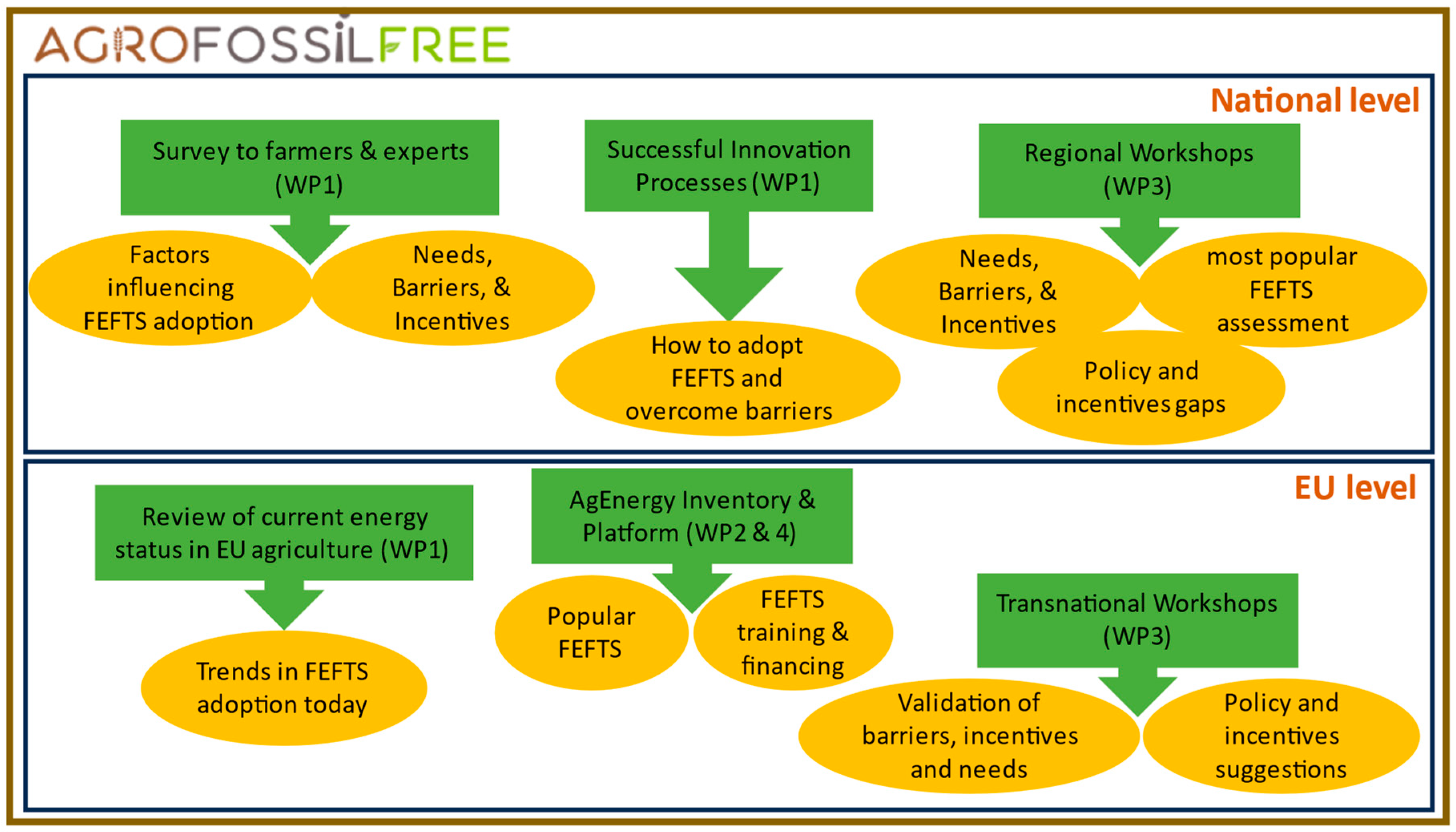
Figure 1 shows explicitly the above mentioned activities, the respective results, and their liaison for producing the proposed policy guidelines to support agricultural defossilization. More specifically, the sequence of activities (in green boxes) and the respected results (in orange bubbles) are given on a national and EU level, respectively. The three main activities on a national level were (i) the survey to farmers and experts, (ii) the successful innovation processes identification of specific FEFTS that are in action and contribute to farming defossilization, and (iii) the organization of national (regional) workshops. The survey expressed the experiences and thoughts of the 511 interviewed stakeholders and after a thorough qualitative analysis it was possible to extract their knowledge about farm energy related needs, the obstacles that delay FEFTS adoption, and the respective incentives to promote defossilization of EU farming [19,20]. The successful innovation processes analysis identified the ways that the selected use cases overcame the existing barriers (recognized from the survey) and managed to apply their FEFTS in practice [21]. The 24 national workshops were focused on extracting additional information about the needs, obstacles, and motivations that all types of actors in the agricultural and energy sectors would require to promote FEFTS integration in EU agriculture. In addition, the participating stakeholders were asked to point out the most important FEFTS for the defossilization of their sector. A shared methodology was used in all workshops and after an analysis of the workshops’ outcomes in different countries, the gaps in existing policies and incentives were retrieved [22,23]. As for the EU level, three more activities were executed, starting with (i) the review of the EU energy use in the three main agricultural systems (open-field, livestock, and greenhouses), following up with (ii) the AgEnergy Platform creation and filling it with inventoried FEFTS of all categories, and (iii) the three transnational workshops (one per agricultural system). The literature review detected the tendencies of energy consumption in all types of farming systems and acknowledged the main conventional technologies and FEFTS that are in use today [24,25,26]. This way, the starting point for agricultural defossilization was set as the cornerstone of this work methodology. The AgEnergy Platform was filled based on the methodology and standards set from the beginning of the project [27] and it contains low-to-medium-TRL technology solutions as results of scientific publications and research projects and high-TRL commercial technologies ready to use in EU farming. In addition, the platform provides access to relative training material about different types of FEFTS and financing tools to support FEFTS application. Finally, the three transnational workshops were used to validate the needs, obstacles, and motivations extracted from the regional workshops and provide extra ideas on further policies and incentives to increase FEFTS adoption [23].
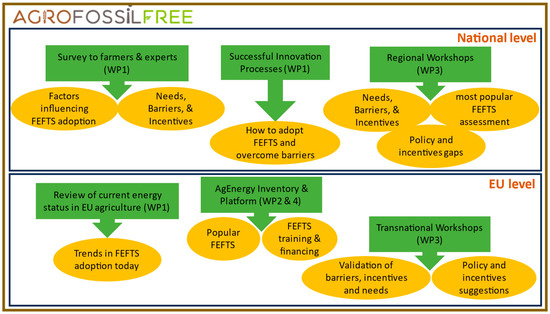
Figure 1.
Methodology for the development of policy recommendations to assist the defossilization of EU farming. Each activity (green boxes) produces one or more results (orange bubbles). The above frame considers the work carried out at a national level, while the frame below refers to the EU level.
After the main results for policy recommendations were gathered, an extensive critical analysis process by experts of all the organizations that are a part of the AgroFossilFree consortium was conducted to gather the main relevant outputs. This was largely a qualitative analysis of the results and their importance, as considered by the experts, as well as a detailed investigation into the most common aspects originating from the workshops. This analytical process then allowed for a synthesis of the main results leading to the formulation of a series of policy recommendations presented into 19 specific policy briefs. Experts from the following organizations took part in this process: Agricultural University of Athens (AUA), Agricultural & Environmental Solutions (AGENSO), Aarhus Universitet (AU), the Comite Europeen Des Groupements De Constructeurs Du Machinisme Agricole (CEMA), the Centre for Research & Technology Hellas (CERTH), the Confederazione Generale Dell Agricoltura Italiana (CONFAGRICOLTURA), DELPHY European Conservation Agriculture Federation (ECAF), Iniciativas Innovadoras Sal (INI), Innovationscenter for Økologisk Landbrug (ICOEL), the Instytut Uprawy Nawozenia I Gleboznawstwa, Panstwowy Instytut Badawczy (IUNG-PIB), Lubelski Osrodek Doradztwa Rolniczego W Konskowoli (LODR), RESCOOP EU ASBL, the Agriculture and Food Development Authority (TEAGASC), Trama Tecnoambiental S.L. (TTA), and Wirtschaft Und Infrastruktur Gmbh & Co Planungs Kg (WIP).
In order to validate the results of this methodology, an online consultation meeting with Policy Officers from selected DGs of the European Commission was conducted. A total of 41 people participated and the selected 19 policy recommendations/briefs were presented. After a thorough discussion, the feedback was used to assist in the optimization of the policy recommendations/briefs. Their revised versions were presented at a brokerage event in Brussels, Belgium, on 22 June 2023. After the critical review of the participants at the brokerage event and an external reviewer of the project, the policy recommendations were optimized and finalized.
2.2. Limitations
There are a number of methodological limitations relevant to the present study. The synthesizing of the project results to policy recommendations, particularly derived from workshops, was predominantly a qualitative process. This reliance on qualitative data introduces potential biases, as the experts and stakeholders involved are active participants in the agricultural sector who may have vested interests or specific perspectives that could influence their contributions. These biases can arise from the individual priorities, experiences, or sectoral positions of the participants, potentially skewing the findings or recommendations. However, efforts were made to mitigate such biases through cross-validation and expert reviews. The use of cross-validation involved comparing inputs from different workshops or stakeholder groups to identify consistent themes and minimize the influence of outlier opinions. Furthermore, additional expert reviews were used to provide an external assessment of the data synthesis, ensuring that conclusions drawn were robust and reflected a balanced interpretation of the broader context. Despite these efforts, it is important to acknowledge that any qualitative analysis inherently carries a degree of subjectivity, and the interpretations made by the experts in this study, while informed, may still not fully capture the diversity of perspectives within the agricultural sector.
In addition, the agricultural sector within the EU is a large and highly diverse sector, encompassing a wide range of practices, scales of operation, and regional variations. This diversity poses a significant challenge, as it increases the risk of the analysis being overly generic and not adequately capturing the nuances of different contexts. To address this issue, efforts were made to derive specific results and to connect these findings to targeted policy recommendations. This approach aimed to ensure that the insights were applicable to distinct aspects of the sector, culminating in the development of 19 separate policy briefs. By tailoring policy suggestions to specific contexts and issues and providing recommendations on both an EU and member state level, our research sought to mitigate the risk of overly broad generalizations and to provide meaningful guidance for policy development.
3. Results
This section synthesizes the main results relevant to policy recommendations coming out of the activities of AgroFossilFree. More detailed results can be found in the associated AgroFossilFree deliverable on identified policy gaps and policy guidelines [28]. The results presented have been synthesized into 19 policy briefs presented in the discussion section.
3.1. Research on Energy Use in EU Agriculture
AgroFossilFree research that combined results from hundreds of studies on the energy use status of EU agriculture revealed that EU agriculture is a significant energy consumer and that this sector is considerably fossil fuel-dependent. More specifically, agriculture is responsible for 3.2% of total energy consumption in the EU, according to Eurostat. Energy used in EU agriculture is mainly derived directly from crude oil and petroleum products (56%), leaving electricity second in importance (17%), and natural gas third (14%). Renewables and biofuels account only for 9%. Nonetheless, these results do not consider indirect energy use from the production and transportation of fertilizers and pesticides, something that would increase agriculture’s proportion of energy use in the EU-27 up to 62% higher overall [29]. Another important finding was that the three main production systems (open-field, livestock, greenhouses) vary significantly in terms of energy use, its concentration, and breakdown.
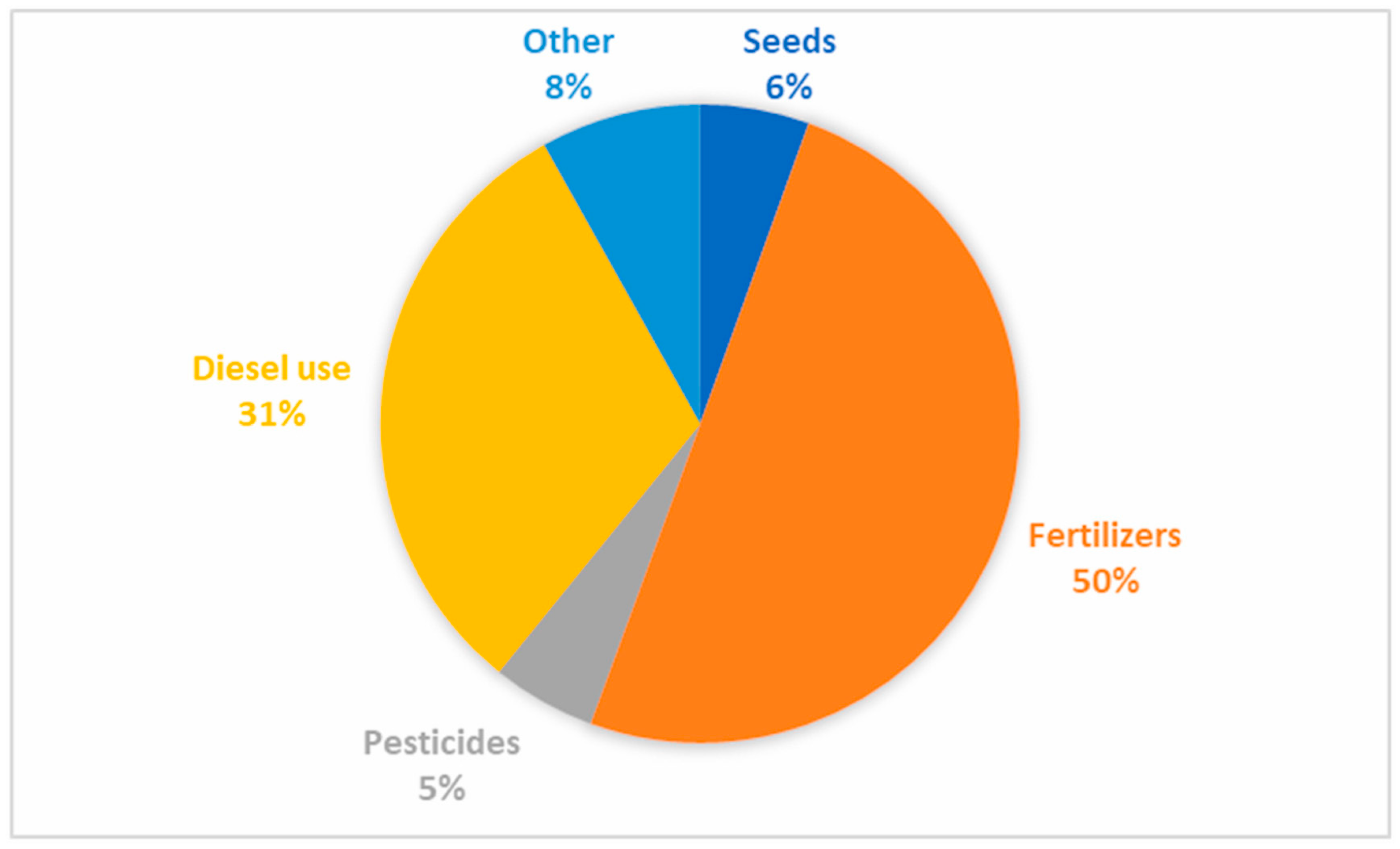
Considering indirect energy consumption as shown in Figure 2, the production and use of fertilizers plays the most important role in energy consumption in EU open-field agriculture (around 50% of all energy inputs). Diesel fuel for on-farm activities is also significant (around 30%), electricity for irrigation, storage and drying covers 8% of the total energy consumption, and pesticides and seeds consume around 5% each [24]. Regarding livestock production, except for beef farms, animal feed accounts for around 75% of all energy use. A total of 60% of cereal production in the EU is used for animal feed, while high-protein agricultural products (e.g., soybean) are significantly imported. Electricity use in livestock facilities is also important and it is mainly derived from fossil sources; however, it varies considerably depending on the production system [25]. The greenhouse sector is split into two main categories in terms of energy consumption. High-tech facilities are also high-yielding- and high-energy-intensive, using energy mainly for heating and cooling. By contrast, low-tech facilities present lower yields and are less energy-intensive, as they use little to no heating/cooling and their main energy use is more similar to open-field agricultural systems with fertilizers, diesel use for machinery, irrigation, and other activities dominating their energy use profile [26].
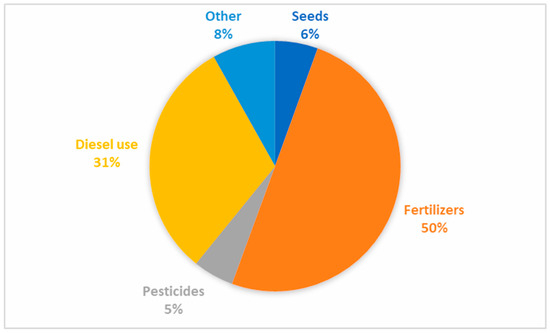
Figure 2.
Energy inputs of open-field agriculture for EU-27 (%) [24].
A series of policy-related needs and outputs from this literature review are summarized in Table 1:

Table 1.
Policy-related results originating from research on energy use status in EU agriculture.
3.2. Farmers’ Needs, Ideas, and Interests in the Adoption of FEFTS in the EU
In order to identify the barriers and drivers for the adoption of FEFTS, 511 stakeholder were surveyed including 470 direct surveys with farmers, and 41 expert interviews that were carried out across eight EU countries. The results indicate that economic factors are the main motivators, with cost reduction being a key reason for adopting renewable energy sources (RES) and energy-saving technologies/practices. Environmental concerns are also significant. Farmers highlight that financial support and access to customized cost–benefit models tailored to their specific farm operations are crucial incentives for adopting FEFTS. Based on these findings a number of key policy-related needs stood out and are synthesized in Table 2 [18].
Table 2.
Key identified policy-related needs from farmer surveys and expert interviews.
3.3. Main FEFTS Categories Identified by Stakeholders in the Content of the AgEnergy Platform
One of the main project outputs of AgroFossilFree is the AgEnergy platform [27] where around 2000 publicly available FEFTS have been curated and published by stakeholders, including a decision support toolkit (DST) [30] supporting stakeholders in selecting the most appropriate FEFTS for their farms.
The main FEFTS categories in the AgEnergy Platform were assessed by stakeholders using specific questions (four general, two environmental and three socioeconomic related questions) and a Likert scale (Strongly disagree, Disagree, Neutral, Agree, and Strongly Disagree). Then, this scale was converted into numerical values (−2, −1, 0, 1, 2) and the answers to all nine questions were aggregated to give the final score (max score: 16; min score: −16) of each FEFTS. The FEFTS included in this process were from scientific publications, research projects, and market-ready products, while the related training material and the possible financing tools were not included in this analysis, as they did not show trends in interest about FEFTS, which was the main target of this process. After sorting the FEFTS list according to their score and based on their categories, it was selected to consider specific thresholds for each category (Papers: ≥14; Projects: ≥10; Products: ≥14) above which a FEFTS could be considered as a popular solution for European agricultural stakeholders. The most prevalent FEFTS categories are presented in Table 3. This process was particularly useful in the development of policy recommendations as it provided a list of the most relevant FEFTS in the EU agricultural context.
Table 3.
FEFTS categories identified in the content of AgEnergy Platform.
3.4. Grassroots Workshop Results
Central to AgroFossilFree’s methodology was capturing grassroots stakeholders’ opinions on FEFTS by bringing together relevant agricultural stakeholders in national and transnational workshops to develop community grassroot ideas around topics that included energy consumption in EU agriculture, the main aspects influencing the integration of innovative FEFTS in EU farms, the most interesting commercial FEFTS, the related current and possible future policies around FEFTS application in EU farming, the future changes in terms of energy efficiency improvements and renewable energy sources applied in agricultural production systems, and the possible novel research paths and collaboration schemes. Regarding the eight national hubs, information exchange was held in three multi-actor workshops per hub (twenty-four workshops), connecting researchers, agricultural and energy advisors, and FEFTS providers and farmers in order to capture their ideas and needs regarding energy use in agriculture and FEFTS integration on a regional level. As for the EU level, three workshops were carried out to bring stakeholders from all eight countries together to interact explaining the advantages and disadvantages of the situation around FEFTS in their countries, expand their knowledge about practices in other states and conclude in common and local strategies to increase FEFTS adoption in the EU. The discussions and findings from these workshops were analyzed and synthesized by relevant experts. The main findings are presented in the following sections.
3.4.1. Generic Results
The most common policy related outputs from all workshops combined are summarized in Table 4. The main discussion issues that arose were (i) farms’ energy needs at a technical, financing, and knowledge-sharing level, (ii) obstacles impeding FEFTS adoption, and (iii) motivations to enhance FEFTS adoption. More detailed information is given in the relevant project deliverables [22,23].
Table 4.
Key identified policy-related needs from all workshops.
3.4.2. Open Field Agriculture
The open field agriculture workshops addressed a wide range of pertinent topics. Some of the key, though non-exhaustive, results include the fact that the growing fuel and electricity prices will adversely impact open-field food production and increase their prices, with fertilization, tillage, and irrigation being the most energy-intensive practices. Alternative production systems, like organic farming, often require more energy as compared to conventional practices but these are seen as generally environmentally acceptable as they use more sustainable and renewable energy sources. Reducing fertilization costs through cover crops, conservation agriculture, and resilient crop varieties can reduce dependence on fossil energy sources. Legislative actions enabling electricity sales and storage could revolutionize large-scale farming as they can support on farm renewable energy production. In addition, policies should prioritize energy efficiency, carbon storage, alternative fuels like biomethane, and the effective dissemination of information on FEFTS. Proposed measures for promoting FEFTS in open-field agriculture include training programs, pilot platforms, subsidy schemes, tax reductions on renewable energy, carbon credit schemes, and EU-level incentives for sustainable practices. Policies should be results-based, linking subsidies to measurable outcomes rather than specific technologies [22,23]. Table 5 below shows the main policies proposed in the workshops about open-field agriculture.
Table 5.
Key identified policy-related needs from open-field agriculture workshops.
3.4.3. Livestock
The livestock workshops addressed a wide range of pertinent topics. Some of the key, though non-exhaustive, results include the fact that feed production is identified as the primary energy consumer, followed by transport and building energy use. The impact of rising fuel and electricity costs on livestock production is not significant for the sector, affecting only 5–10% of production costs, thus not driving significant investment. However, rising energy prices incentivize larger farms to invest in RESs, like solar PV and biogas, while smaller farms struggle without subsidies and may cease operations due to unsustainable costs. Participants advocated for analyzing energy consumption across supply chains and implementing energy-saving technologies. Suggested policies include practical and online training, pilot platforms, economic incentives for adopting FEFTS, and policies to stabilize prices and ensure investment returns. Financial support should focus on green technology adoption, with tax policies encouraging shifts from fossil fuels and subsidies based on farm size and RES production levels. Table 6 below shows the main policies proposed in the workshops about livestock production.
Table 6.
Key identified policy-related needs from livestock production workshops.
3.4.4. Greenhouse
The greenhouse agriculture workshops addressed a wide range of pertinent topics. Some of the key, though non-exhaustive, results include the fact that stakeholders acknowledge the substantial difference in energy use and Energy Use Efficiency (EUE) and agree that rising energy costs will possibly reduce food production in greenhouses. This will drive the shift to energy-efficient technologies and practices, though the pace depends on fossil fuel prices, technological advancements, and EU efficiency goals. The European greenhouse industry should prioritize policies to reduce direct and indirect energy consumption and increase renewable energy production. Proposed incentives include policies, subsidies, communication approaches, information sharing, and training. While some countries have applicable policies, more effective support is needed, particularly policies focusing on returns on investment to promote the adoption of FEFTS. Table 7 below shows the main policies proposed in the workshops about greenhouse production.
Table 7.
Key identified policy-related needs from greenhouse production workshops.
4. Discussion
In recent years, the EU agriculture sector has been shifting towards FEFTS integration in agriculture. The adoption of RES technologies has accelerated while, additionally, more energy-efficient machinery is becoming available and being developed by the industry [27]. Simultaneously, there is an increased focus on finding appropriate ways to reduce synthetic fertilizer and pesticide use through biological alternatives and the adoption of more sustainable agricultural practices. These trends are expected to continue in the medium term as these technologies develop and policy is supportive of these transitions.
4.1. Policy Briefs
Based on the presented results, policy recommendations were extracted about technical, financial, regulatory, and information-sharing aspects of the agricultural domain in order to give a guideline to national and EU policymakers for developing strategies to defossilize farming by introducing FEFTS in EU farms. The main three categories of policy recommendations derived by this work are as follows:
- Horizontal policies that are suitable for any farm type and any FEFTS and can act as fundamental for other specific FEFTS policies to be followed easier by farmers.
- Policies specific to agricultural production systems that are associated with open-field, livestock, or greenhouse systems and related FEFTS and designate the essential stages for farmers to apply them.
- Generic policies refer to actions that would benefit any innovation towards green growth to grow in EU farming.
These policy recommendations were then synthesized into 19 policy briefs, presented in Table 8 [31]. These policy briefs portray current challenges, policy recommendations on the EU and Member States’ levels, and the expected impact of implementing these policies. More details about them are given in the references shown within Table 8 that presents their titles.
Table 8.
Titles of developed policy briefs.
4.2. Generic Policy Recommendations in the Context of the New CAP
The current CAP has a large focus on environmental sustainability and climate resilience and complements the Green Deal. It also places an increased focus on innovation and knowledge transfer while supporting rural development. The Generic Policy Recommendations in Table 8 align well with the objectives and mechanisms of the new CAP (2023–2027).
Policy Brief 17 “Financial Support to FEFTS” aligns well with some of the mechanisms as part of the CAP including the emphasis on providing financial support for sustainable practices, which can include FEFTS. Through eco-schemes under Pillar I and targeted measures under Pillar II, the CAP can channel funds towards these technologies. Eco-schemes are specifically designed to reward farmers for adopting environmentally friendly practices, such as using RESs and energy-efficient technologies. Similarly, rural development programs can provide grants and subsidies for investments in FEFTS, promoting energy efficiency and RES use on farms, while the focus on fairer distribution of payments includes supporting small and medium-sized farms to adopt new technologies, which can be directed towards FEFTS [51].
Regarding Policy Brief 18 “Regulatory Support to FEFTS”, under the CAP, member states have the flexibility to design regulatory frameworks that support the adoption of FEFTS within their national CAP strategic plans, ensuring alignment with EU-wide objectives, while addressing local needs. Similarly, the new CAP’s focus on a performance-based approach allows for regulatory measures to be designed in a way that incentivizes compliance and adoption of sustainable technologies, such as FEFTS [52].
Regarding Policy Brief 19 “Technology, Knowledge Transfer, and Awareness Building Provisions to Support FEFTS Diffusion”, the new CAP places significant emphasis on research, innovation, and knowledge transfer. Programs like Horizon Europe and CAP-funded advisory services are aimed at promoting technological advancements and sustainable practices. Enhanced advisory services under the new CAP will provide farmers with the necessary knowledge and skills to adopt and effectively use FEFTS. This includes demonstration projects, training sessions, and extension services. In addition, the European Innovation Partnership for Agricultural Productivity and Sustainability (EIP-AGRI), and the EU-CAP network, can play a key role in facilitating the transfer of knowledge and innovation related to FEFTS to the farming community [3].
4.3. Policy Recommendations Specific to Agricultural Production Systems
These policy briefs are unique as they are to a large extent based on inputs from grassroots stakeholders. The 13 policy briefs that are related to specific agricultural production systems are particularly relevant as they promote specific FEFTS. By promoting these, based on evidence-based results, it can be of particular importance for policymakers, especially on a national level, where the relevant context for each of these technologies exists.
In particular, policy briefs 4–9 are related to open-field agriculture while 10–16 are related to agricultural constructions (livestock and greenhouse facilities). Some respond to the energy use make-up of European agriculture. For instance, in open-field agriculture, our research indicates that around 30% of all energy use is associated with the use of diesel for agricultural machinery, while over half of all energy use is associated with the production of chemical fertilizers. As such, policy brief 5 on alternative fuels and policy brief 9 on alternative crop nutrient providers are particularly relevant. For instance, the development of biomethane for tractors in localized livestock production farms could significantly reduce fossil use and dependency for livestock farmers, while development and support for local biofertilizers would significantly reduce the dependence on natural gas for the production of chemical fertilizers. In other cases, the policy briefs respond to the emergence of innovative and new technologies and practices. For instance, carbon farming and rewarding farmers for sequestering carbon is increasingly gaining traction in policy discourse [53] and the relevant policy brief calls for an acceleration in developing a standard for monitoring, reporting and verification of soil carbon stocks in order to make a transparent and trustworthy framework for carbon farming credits application in agriculture. Certain policies that promote and incentivize the adoption of more sustainable agricultural practices, such as precision agriculture in policy brief 6 and conservation agriculture in policy brief 8, could considerably reduce the use of fossil fuels through the adoption of more efficient practices, such as no-tillage, and the more efficient use of agricultural inputs.
4.4. Integrating Policy Guidelines into Policy Processes
It is notable that the sustainability dimensions in the policy briefs promoted by stakeholders are already, in many cases, included in or under discussion by policymakers. Integrating policy guidelines into the policy processes of the EU and member states’ agricultural policies presents both significant challenges and opportunities. One major challenge is the heterogeneity of agricultural practices and economic conditions across member states, which complicates the uniform application of policy guidelines. Additionally, the varying degrees of technological readiness and adoption among farmers further exacerbate these disparities [54,55].
However, there are substantial opportunities in harmonizing these guidelines with the CAP to promote sustainable practices and the adoption of FEFTS. The presented policy briefs and their presentation to relevant policymakers is an initial step and following from this there is a pressing need for more in-depth discussions between policymakers and stakeholders to ensure the successful integration of FEFTS promotion in agricultural policy. These discussions should focus on practical implementation strategies, aligning with the CAP’s sustainability goals, and fostering a collaborative approach to policy development and execution.
5. Conclusions
In conclusion, the results presented in this paper can be useful for EU and national policymakers due to the fact that they are the result of a direct interaction with European agricultural and energy stakeholders working in all agricultural production systems through their participation in surveys, interviews, and workshops over three years (2020–2023). Based on these results, 19 key policy recommendations have been synthesized, including horizontal policies for any farm and FEFTS type, specific agricultural production system policies that support FEFTS application in farms of certain production systems, and generic policies considered essential for a green transition of EU farming. The proposed policies should be addressed by the future amendments of the CAP, the RED, the Green Deal, and the Farm-to-Fork strategy amendments and future member state legal initiatives.
The independence of EU agriculture from fossil fuels will require decades. This paper presents the increased availability of key FEFTS for farm use with relatively acceptable costs and the clear willingness of farmers to shift from conventional technologies and strategies to more sustainable ones, but simultaneously identifies several obstacles that hinders this transition. The outlined policies should be effectively implemented with a long-term view, supporting farms from a technical and economical perspective for the transition to more sustainable and resilient EU agriculture. Accelerating the adoption of FEFTS in EU agriculture is imperative for achieving climate neutrality and ensuring long-term sustainability. The policy guidelines presented in this paper provide a strategic roadmap for policymakers to drive this transformation.
The implications of these findings extend beyond the agricultural sector. On one hand, shifting away from fossil fuels in agriculture is a crucial component of the EU’s broader climate strategy. On the other hand, while other major economic sectors have generally made more progress towards integrating RESs in recent years compared to agriculture, it is particularly necessary to implement policies that support sustainable energy transitions within the agricultural sector. Such policies are not only essential for agriculture but are also likely to generate positive spillover effects across other economic sectors. For instance, an increase in RES supply from agriculture, combined with the rising demand for electrified machinery, will contribute to creating a larger and more stable energy market, thus minimizing distortions and benefiting the broader economy.
Author Contributions
Conceptualization, A.T.B.; methodology, A.T.B.; formal analysis, A.T.B. and B.P.; investigation, A.T.B. and B.P.; data curation, A.T.B.; writing—original draft preparation, A.T.B. and B.P.; writing—review and editing, A.T.B. and B.P.; supervision, A.T.B.; project administration, A.T.B.; funding acquisition, A.T.B. All authors have read and agreed to the published version of the manuscript.
Funding
This research was funded by the European Union’s Horizon 2020 research and innovation program under grant agreement ID 101000496.
Data Availability Statement
The original contributions presented in the study are included in the article, further inquiries can be directed to the corresponding author.
Acknowledgments
This study has been developed as part of the Horizon 2020 AgroFossilFree project (www.agrofossilfree.eu). We would like to thank the following partners for their contributions and insight into developing this article: Agricultural University of Athens (AUA), Agricultural & Environmental Solutions (AGENSO), Aarhus Universitet (AU), the Comite Europeen Des Groupements De Constructeurs Du Machinisme Agricole (CEMA), the CenterCentre for Research & Technology Hellas (CERTH), the Confederazione Generale Dell Agricoltura Italiana (CONFAGRICOLTURA), DELPHY European Conservation Agriculture Federation (ECAF), Iniciativas Innovadoras Sal (INI), Innovationscenter for Økologisk Landbrug (ICOEL), the Instytut Uprawy Nawozenia I Gleboznawstwa, Panstwowy Instytut Badawczy (IUNG-PIB), Landbrug & Fodevarer F.M.B.A. (L&F), Lubelski Osrodek Doradztwa Rolniczego W Konskowoli (LODR), RESCOOP EU ASBL, the Agriculture and Food Development Authority (TEAGASC), Trama Tecnoambiental S.L. (TTA), and Wirtschaft Und Infrastruktur Gmbh & Co Planungs Kg (WIP).
Conflicts of Interest
The authors declare no conflicts of interest. The funders had no role in the design of the study; in the collection, analyses, or interpretation of data; in the writing of the manuscript; or in the decision to publish the results.
References
- European Commission. Farm to Fork Strategy; European Commission: Brussels, Belgium, 2020. [Google Scholar]
- European Commission. A European Green Deal | European Commission. Available online: https://ec.europa.eu/info/strategy/priorities-2019-2024/european-green-deal_en (accessed on 7 December 2022).
- European Commission. The New Common Agricultural Policy: 2023-27. Available online: https://ec.europa.eu/info/food-farming-fisheries/key-policies/common-agricultural-policy/new-cap-2023-27_en (accessed on 14 September 2021).
- Long, T.B.; Blok, V.; Coninx, I. Barriers to the Adoption and Diffusion of Technological Innovations for Climate-Smart Agriculture in Europe: Evidence from the Netherlands, France, Switzerland and Italy. J. Clean. Prod. 2015, 112 Pt 1, 9–21. [Google Scholar] [CrossRef]
- Scarlat, N.; Fahl, F.; Lugato, E.; Monforti-Ferrario, F.; Dallemand, J.F. Integrated and Spatially Explicit Assessment of Sustainable Crop Residues Potential in Europe. Biomass Bioenergy 2019, 122, 257–269. [Google Scholar] [CrossRef]
- Musiał, W.; Zioło, M.; Luty, L.; Musiał, K.; Bianco, V.; Klepacki, B.; Stolarski, M.J. Energy Policy of European Union Member States in the Context of Renewable Energy Sources Development. Energies 2021, 14, 2864. [Google Scholar] [CrossRef]
- The French ministry of Agriculture and Food Le Plan Énergie Méthanisation Autonomie Azote | Ministère de l’Agriculture et de La Souveraineté Alimentaire. Available online: https://agriculture.gouv.fr/le-plan-energie-methanisation-autonomie-azote (accessed on 18 September 2024).
- Poponi, D.; Basosi, R.; Kurdgelashvili, L. Subsidisation Cost Analysis of Renewable Energy Deployment: A Case Study on the Italian Feed-in Tariff Programme for Photovoltaics. Energy Policy 2021, 154, 112297. [Google Scholar] [CrossRef]
- Netherlands Enterprise Agency. Stimulation of Sustainable Energy Production and Climate Transition (SDE++). Available online: https://english.rvo.nl/subsidies-financiering/sde (accessed on 18 September 2024).
- Plan Up. PAREER-CRECE Programme [Spain] | PlanUp. Available online: https://www.planup.eu/en/resources/policies/pareer_crece_programme_[spain]/871 (accessed on 18 September 2024).
- Dział: Aktualności Polskie Towarzystwo Fotowoltaiki » A Rising Star: PV Market Poland. Available online: https://pv-polska.pl/en/a-rising-star-pv-market-poland/ (accessed on 18 September 2024).
- Land & Forst Federal Energy Efficiency Programme: These Are the Funding Criteria | LAND & FOREST. Available online: https://www.landundforst.de/energie/bundesprogramm-energieeffizienz-foerderkriterien-569931 (accessed on 18 September 2024).
- Pe’er, G.; Finn, J.A.; Díaz, M.; Birkenstock, M.; Lakner, S.; Röder, N.; Kazakova, Y.; Šumrada, T.; Bezák, P.; Concepción, E.D.; et al. How Can the European Common Agricultural Policy Help Halt Biodiversity Loss? Recommendations by over 300 Experts. Conserv. Lett. 2022, 15, e12901. [Google Scholar] [CrossRef]
- Bojnec, Š.; Fertő, I. Do Different Types of Common Agricultural Policy Subsidies Promote Farm Employment? Land Use Policy 2022, 112, 105823. [Google Scholar] [CrossRef]
- Jenner, S.; Groba, F.; Indvik, J. Assessing the Strength and Effectiveness of Renewable Electricity Feed-in Tariffs in European Union Countries. Energy Policy 2013, 52, 385–401. [Google Scholar] [CrossRef]
- Fieldsend, A.F.; Cronin, E.; Varga, E.; Biró, S.; Rogge, E. ‘Sharing the Space’ in the Agricultural Knowledge and Innovation System: Multi-Actor Innovation Partnerships with Farmers and Foresters in Europe. J. Agric. Educ. Ext. 2021, 27, 423–442. [Google Scholar] [CrossRef]
- Herrera, B.; Gerster-Bentaya, M.; Tzouramani, I.; Knierim, A. Advisory Services and Farm-Level Sustainability Profiles: An Exploration in Nine European Countries. J. Agric. Educ. Ext. 2019, 25, 117–137. [Google Scholar] [CrossRef]
- Paris, B.; Kanaki, V.; Koutsouris, A.; Balafoutis, A.T.; Papadakis, G. Farmers’ Needs, Ideas and Interests on the Adoption of Fossil Energy Free Technologies and Strategies in the EU. Int. J. Sustain. Energy 2024, 43, 2326454. [Google Scholar] [CrossRef]
- Koutsouris, A.; Vassilki, K. Report on Framework, Methodology and Standards; AgroFossilFree Consortium: Athens, Greece, 2020. [Google Scholar]
- Koutsouris, A.; Kanaki, V. Report on Farmers’ Needs, Innovative Ideas and Interests; Agricultural University of Athens: Athens, Greece, 2021. [Google Scholar]
- Agricultural University of Athens. Multi-Media Material; Zenodo: Geneva, Switzerland, 2023. [Google Scholar] [CrossRef]
- Aarhus University. Final Report on AFF Regional Workshops Outcome; Zenodo: Geneva, Switzerland, 2023. [Google Scholar] [CrossRef]
- Aarhus University. Report from the Transnational Workshops; Zenodo: Geneva, Switzerland, 2023. [Google Scholar] [CrossRef]
- Paris, B.; Vandorou, F.; Balafoutis, A.T.; Vaiopoulos, K.; Kyriakarakos, G.; Manolakos, D.; Papadakis, G. Energy Use in Open-Field Agriculture in the EU: A Critical Review Recommending Energy Efficiency Measures and Renewable Energy Sources Adoption. Renew. Sustain. Energy Rev. 2022, 158, 112098. [Google Scholar] [CrossRef]
- Paris, B.; Vandorou, F.; Tyris, D.; Balafoutis, A.T.; Vaiopoulos, K.; Kyriakarakos, G.; Manolakos, D.; Papadakis, G. Energy Use in the EU Livestock Sector: A Review Recommending Energy Efficiency Measures and Renewable Energy Sources Adoption. Appl. Sci. 2022, 12, 2142. [Google Scholar] [CrossRef]
- Paris, B.; Vandorou, F.; Balafoutis, A.T.; Vaiopoulos, K.; Kyriakarakos, G.; Manolakos, D.; Papadakis, G. Energy Use in Greenhouses in the EU: A Review Recommending Energy Efficiency Measures and Renewable Energy Sources Adoption. Appl. Sci. 2022, 12, 5150. [Google Scholar] [CrossRef]
- AgroFossilFree. What Is the AgEnergy Platform? Available online: https://www.agrofossilfree.eu/about/ (accessed on 14 July 2021).
- Centre for Research and Technology Hellas. Report on Identified Policy Gaps and Policy Guidelines; Zenodo: Geneva, Switzerland, 2023. [Google Scholar] [CrossRef]
- Agricultural University of Athens; Centre for Research and Technology Hellas. Report on Current Energy Use Status in EU Agriculture; Zenodo: Geneva, Switzerland, 2021. [Google Scholar] [CrossRef]
- Kyriakarakos, G.; Balafoutis, A.T.; Vaiopoulos, K.; Abdul, M.; Voskakis, M.; Kaminiaris, M.D.; Tsiropoulos, Z.; Bochtis, D. Design and Implementation of a Decision Support Tool to Assist the Ranking of Fossil-Energy-Free Technologies and Strategies for a given Farm. Smart Agric. Technol. 2023, 4, 100169. [Google Scholar] [CrossRef]
- AgroFossilFree. Consortium AgroFossilFree Policy Briefs. Available online: https://www.agrofossilfree.eu/2023/09/01/policy-briefs/ (accessed on 29 July 2024).
- AgroFossilFree Consortium. Enabling the Creation and Growth of Energy Communities in Rural Areas. Available online: https://www.agrofossilfree.eu/2023/09/01/policy-briefs/ (accessed on 29 July 2024).
- AgroFossilFree Consortium. Policy Brief No 2 Farm Energy Audits. Available online: https://www.agrofossilfree.eu/2023/09/01/policy-briefs/ (accessed on 29 July 2024).
- AgroFossilFree Consortium. Policy Brief No 3 European Low Energy/Carbon Label of Agricultural Products. Available online: https://www.agrofossilfree.eu/2023/09/01/policy-briefs/ (accessed on 29 July 2024).
- HyPErFarm Consortium. Policy Brief No 4 Agrivoltaics for Open-Field Agriculture. Available online: https://www.agrofossilfree.eu/2023/09/01/policy-briefs/ (accessed on 29 July 2024).
- AgroFossilFree Consortium. Policy Brief No 5 Alternative Fuels for Agricultural Machinery. Available online: https://www.agrofossilfree.eu/2023/09/01/policy-briefs/ (accessed on 29 July 2024).
- AgroFossilFree Consortium. Policy Brief No 6 Precision Agriculture as Energy Consumption Reduction Strategy. Available online: https://www.agrofossilfree.eu/2023/09/01/policy-briefs/ (accessed on 29 July 2024).
- AgroFossilFree Consortium. Policy Brief No 7 Carbon Farming for Carbon Removals. Available online: https://www.agrofossilfree.eu/2023/09/01/policy-briefs/ (accessed on 29 July 2024).
- AgroFossilFree Consortium. Policy Brief No 8 Conservation Agriculture to Enhance Soil Carbon Stock and Reduce GHG Emissions in European Agriculture. Available online: https://www.agrofossilfree.eu/2023/09/01/policy-briefs/ (accessed on 29 July 2024).
- AgroFossilFree Consortium. Policy Brief No 9 Alternative Crop Nutrient Providers (Green Fertilisers/Biofertilisers, Biostimulants/Biochar). Available online: https://www.agrofossilfree.eu/2023/09/01/policy-briefs/ (accessed on 29 July 2024).
- AgroFossilFree Consortium. Policy Brief No 10 Building Management Systems (BMS) for Agricultural Constructions. Available online: https://www.agrofossilfree.eu/2023/09/01/policy-briefs/ (accessed on 29 July 2024).
- RES4LIVE Consortium. Policy Brief No 11 Heat Pumps for HVAC of Agricultural Constructions. Available online: https://www.agrofossilfree.eu/2023/09/01/policy-briefs/ (accessed on 29 July 2024).
- AgroFossilFree Consortium. Policy Brief No 12 Photovoltaics (PV) and Photovoltaic Thermal (PVT) Collectors and Systems for Agricultural Constructions Rooftops. Available online: https://www.agrofossilfree.eu/2023/09/01/policy-briefs/ (accessed on 29 July 2024).
- AgroFossilFree Consortium. Policy Brief No 13 Biogas Production from Agricultural Waste and Other Innovative Feedstock/Biomethane Upgrading for Local Consumption or Grid Injection. Available online: https://www.agrofossilfree.eu/2023/09/01/policy-briefs/ (accessed on 29 July 2024).
- AgroFossilFree Consortium. Policy Brief No 14 Facilitating the Development of Energy Independent Farming in Livestock. Available online: https://www.agrofossilfree.eu/2023/09/01/policy-briefs/ (accessed on 29 July 2024).
- AgroFossilFree Consortium. Policy Brief No 15 Energy Upgrading/Renovation of Livestock Buildings. Available online: https://www.agrofossilfree.eu/2023/09/01/policy-briefs/ (accessed on 29 July 2024).
- The Greefa Consortium. Policy Brief No 16 The Use of Thermochemical Fluids for Energy Saving and Storage in Agriculture. Available online: https://www.agrofossilfree.eu/2023/09/01/policy-briefs/ (accessed on 29 July 2024).
- AgroFossilFree Consortium. Policy Brief No 17 Financial Support to Fossil Energy Free Technologies and Strategies (FEFTS). Available online: https://www.agrofossilfree.eu/2023/09/01/policy-briefs/ (accessed on 29 July 2024).
- AgroFossilFree Consortium. Policy Brief No 18 Regulatory Support to Fossil Energy Free Technologies and Strategies (FEFTS). Available online: https://www.agrofossilfree.eu/2023/09/01/policy-briefs/ (accessed on 29 July 2024).
- AgroFossilFree Consortium. Policy Brief No 19 Technology, Knowledge Transfer, and Awareness Building Provisions to Support Fossil Energy Free Technologies and Strategies (FEFTS) Diffusion. Available online: https://www.agrofossilfree.eu/2023/09/01/policy-briefs/ (accessed on 29 July 2024).
- European Commission. Common Agricultural Policy for 2023–2027 28 CAP Strategic Plans at a Glance; European Commission: Brussels, Belgium, 2022. [Google Scholar]
- Pe’er, G.; Zinngrebe, Y.; Moreira, F.; Sirami, C.; Schindler, S.; Müller, R.; Bontzorlos, V.; Clough, D.; Bezák, P.; Bonn, A.; et al. A Greener Path for the EU Common Agricultural Policy. Science 2019, 365, 449–451. [Google Scholar] [CrossRef] [PubMed]
- European Commission. Carbon Removals and Carbon Farming. Available online: https://climate.ec.europa.eu/eu-action/carbon-removals-and-carbon-farming_en (accessed on 31 July 2024).
- Serebrennikov, D.; Thorne, F.; Kallas, Z.; McCarthy, S.N. Factors Influencing Adoption of Sustainable Farming Practices in Europe: A Systemic Review of Empirical Literature. Sustainability 2020, 12, 9719. [Google Scholar] [CrossRef]
- Barnes, A.P.; Soto, I.; Eory, V.; Beck, B.; Balafoutis, A.; Sánchez, B.; Vangeyte, J.; Fountas, S.; van der Wal, T.; Gómez-Barbero, M. Exploring the Adoption of Precision Agricultural Technologies: A Cross Regional Study of EU Farmers. Land Use Policy 2019, 80, 163–174. [Google Scholar] [CrossRef]
Disclaimer/Publisher’s Note: The statements, opinions and data contained in all publications are solely those of the individual author(s) and contributor(s) and not of MDPI and/or the editor(s). MDPI and/or the editor(s) disclaim responsibility for any injury to people or property resulting from any ideas, methods, instructions or products referred to in the content. |
© 2024 by the authors. Licensee MDPI, Basel, Switzerland. This article is an open access article distributed under the terms and conditions of the Creative Commons Attribution (CC BY) license (https://creativecommons.org/licenses/by/4.0/).