


Abstract
Forest parks are important for ecological conservation, recreation, and the health and well-being of the people who use them. However, forest parks located in urban areas often face the problem of crowding. To better understand perceived crowding in urban forest parks and to improve tourists’ recreation experiences and satisfaction, we constructed a conceptual model of the relationships between perceived crowding, emotion, and satisfaction with mechanisms of adjustment based on survey data from Dafu Mountain Forest Park in China. The results indicate that, in urban forest parks, perceived crowding significantly and negatively affects tourists’ satisfaction, but there is no significant difference in satisfaction between different activity types. Both positive and negative emotions have partially mediating effects on the relationship between perceived crowding and satisfaction. Crucially, our modeled mechanisms of adjustment play a moderating role in the effect of crowding on tourist satisfaction, and the choice of adjustment behaviors varies according to the activity type. This work enriches the research related to perceived crowding, mechanisms of adjustment, and satisfaction in tourist destinations and provides a theoretical basis for the future management of urban forest parks.
1. Introduction
Ecotourism is a very important component of annual global tourism and has come to be considered an effective way to mitigate conflicts between ecological conservation and development [1,2,3,4]. From the perspective of tourism development, ecotourism has become the fastest-growing element of the world tourism industry in recent years, with an annual growth rate of 25%–30%. Forest recreation is a popular form of ecotourism that can offer mental and physical stimulation to people through engagement in natural or artificial forest ecosystems [5,6,7]. In China, forest parks are the main places in which people can pursue recreational activities, and they not only help to protect the natural environment and species diversity but also play an important role in maintaining the balance between existing ecosystems and human development. In addition, appropriate planning for tourism in urban forest parks can help to improve the quality of life of urban residents [8,9].
Unfortunately, China’s urban forest parks are scarce and cannot fully satisfy the demand of urban residents for recreation activities. Urban forest parks can thus become overcrowded, which is quickly becoming a major challenge in their construction and management. “Crowding” refers to a negative reaction to a high density of people [10,11]. When the population density reaches a certain standard and the need for personal space is obstructed for a long period of time, people will feel crowded; thus, we use the term “perceived crowding” to describe this subjective and negative feeling of being constrained under the condition of excessive external stimulation [12]. Crowding is often used as an important evaluative indicator to measure tourists’ satisfaction with parks, and a large body of research suggests that crowding can have a potentially negative impact on satisfaction [13]. Put simply, as the number of people increases, satisfaction declines [14]. However, some studies have also pointed out that perceived crowding does not necessarily reduce tourist satisfaction for everyone but can increase it for people who prefer crowding or in the case of certain festivals.
Since perceived crowding is based on a subjective evaluation of the outside world, it is influenced by many aspects. Studies have divided these influences into individual factors (gender, age, motivation, personal preferences, emotion, place attachment, etc. [15]), other factors (partners, behavior of others, etc. [16]), and environmental factors (park type, space size, environmental quality, etc. [17]). Many scholars have studied the relationships between crowding and emotions, arguing that crowding increases negative emotions and decreases positive emotions [18]. However, other researchers have shown that crowding may increase the positive emotions of tourists during holidays, because it makes them feel more joyful [19,20]. Additionally, in terms of the research on emotions and tourist satisfaction, most researchers believe that emotions play an important role in satisfaction and that positive emotions positively affect tourist satisfaction, while negative emotions have no effect on satisfaction.
Stress is the negative feeling that arises when people are unable to cope with changes resulting from their environment. In tourism, tourists may feel stressed when they cannot adjust to the changes induced by the scenic environment, and perceived crowding can thus be regarded as a form of recreational stress. Adjustment arises from a stressful situation. The psychological view is that people need to resolve their discomfort and uneasiness when stress arises, and the mechanisms of adjustment are behavioral or cognitive efforts that seek to reduce, dominate, or tolerate inner stress. In this way, individuals develop an identity-based mechanism to ensure a positive travel experience. When recreational stress (e.g., crowding) arises and triggers the activation of the mechanisms of adjustment, the relationship between tourists and their environment will continue to change until they no longer feel the stress. Therefore, after feeling crowded, tourists need mechanisms of adjustment to adapt to their discomfort and to thus restore their state of mind. Studies on the mechanisms of adjustment for perceived crowding have focused on the effects of mechanisms of adjustment on tourist satisfaction and loyalty [21], while few have highlighted the factors involved in the mechanisms of adjustment, often concentrating solely on factors such as social or economic characteristics. Manning [22] found that gender, age, income, and marriage all had an effect on mechanisms of adjustment, and Herberlin [23] noted that tourists who went rafting on the Colorado River could maintain a high level of satisfaction through mental adjustment when they perceived crowding.
An analysis of the research results to date shows that there is little academic coverage of crowding in urban forest parks. Urban forest parks are prone to crowding because of their scarcity and location in urban areas with already high population densities, and the characteristics of the crowding they are subject to may be different from those of other types of scenic areas. Therefore, the question of how we can better understand the perceived crowding mechanism of tourists in urban forest parks and use this knowledge to improve tourists’ recreational experiences and satisfaction and to promote the sustainable development of forest parks is a pressing issue. At present, the research on perceived crowding is primarily theoretical, and research regarding mechanisms of adjustment is scant. The role of mechanisms of adjustment in the relationship between perceived crowding and satisfaction is still unknown. In addition, although studies have demonstrated a correlation between perceived crowding and emotions, the role of emotions in the relationship between perceived crowding and satisfaction is still unclear, and the relationship between perceived crowding, emotions, mechanisms of adjustment, and satisfaction has yet to be systematically studied.
Hence, in this study, we took Dafu Mountain Forest Park in Guangzhou, China, as a case study and constructed a conceptual model of the relationships of perceived crowding, emotion, and satisfaction with mechanisms of adjustment. Furthermore, we attempted to discern whether tourists performing different activities choose different adjustment behaviors. Finally, we analyzed the tourists’ emotions to clarify the role that emotions play in the relationship between perceived crowding and satisfaction.
2. Theoretical Background and Hypothesis Development
2.1. Activity Types and Mechanisms of Adjustment
Urban forest parks enable tourists to engage in a rich variety of activities, including social activities, cultural activities, and sports. Adjustment behaviors reflect the need of people to manage their intrinsic stress through behavioral or cognitive efforts [24]. This concept was first applied by sociologists in studies related to entertainment and was introduced into tourism research in the late 1970s [25]. In the context of tourism, mechanisms of adjustment are behavioral and are ultimately identity mechanisms that people generate so as to have better recreational experiences. These adjustments continue until a tourist no longer feels stressed. To date, there is no unified standard for the classification of mechanisms of adjustment. Generally, adjustment behaviors can be divided into five categories [26,27,28]: cognitive adjustment (where tourists reduce psychological stress by adjusting their expectations), spatial adjustment (tourists choose to shift their areas of activity), activity adjustment (tourists change their activity types), temporal adjustment (tourists choose to avoid peak periods and choose other times to travel), and no adjustment (tourists leave the destination or perceive no obvious crowding). The choice of adjustment behavior is influenced by a variety of factors but perhaps most prominently by the type of activity [21,29]. Tourists engaging in different types of activities have different tourism behaviors; hence, their perceptions of crowding and choices of adjustment behaviors might be different [30]. Therefore, we propose the following hypothesis:
H1.
Tourists who carry out different types of activities choose different adjustment behaviors.
2.2. Perceived Crowding and Tourist Satisfaction
The study of perceived crowding dates back to the 1960s [31], when Social Interference Theory (SIT) and Behavior Constraint Theory (BCT) provided the first theoretical bases for its analysis [32]. SIT suggests that crowding occurs when the number of people in a location interferes with tourists’ goals or activities, and BCT suggests that crowding is a state in which an individual’s wishes cannot be carried out due to constraints and limitations on behavior. In summary, perceived crowding increases when the presence or behaviors of others constrain or interfere with an individual’s behavior. Most scholars consider perceived crowding as a form of negative evaluation [25,33]. For example, Stokols [31] defines perceived crowding as “people’s subjective negative evaluation of objective density”, and Schmidt [32] argues that crowding is the negative evaluation of a population numbering over a certain figure in a given region. Hurtado [34] and other scholars also stated that crowding is the negative evaluation of a density above a specific value under a particular condition. However, some studies have concluded that people are highly receptive to crowding in specific settings and even prefer crowding in some contexts, such as parties and playgrounds.
Satisfaction is a subjective post-play perception that can be influenced by perceived crowding or expectations. Crowding theory is often used as an important evaluative indicator of tourist satisfaction, and researchers have found that as the number of tourists increases, perceived crowding also increases, and satisfaction decreases [14]. Thus, we propose hypothesis 2:
H2.
Perceived crowding has a negative impact on tourist satisfaction.
2.3. Perceived Crowding, Emotions, and Tourist Satisfaction
Emotions refer to a psychological concept that describes people’s feelings or subjective experiences. Russell [35] stated that tourists’ emotions are a series of emotional reactions, including positive emotions (happiness, excitement, relaxation) and negative emotions (anger, sadness, fear, etc.) that occur through the influence of the external environment during travel. Some studies have examined perceived crowding in relation to emotions and have suggested that negative emotions arise among people when the presence or activity of other tourists affects the integrity of the human–environment interaction [31]. However, it has also been noted that crowding may increase the positive emotions of tourists. For example, tourists may consider crowding as a reflection of jollification [20].
Additionally, some studies have focused on the impacts that changes in emotions yield on tourist satisfaction and have pointed out that emotions are a fundamental determinant of this satisfaction [36]. There is also a significant relationship between emotions triggered by perceived crowding and satisfaction. Tourists with high degrees of perceived crowding tend to generate negative emotions such as boredom and fatigue, which, in turn, lead to dissatisfaction with their destination. However, a reduction in perceived crowding leads to positive emotions such as comfort and pleasure, thereby increasing tourists’ satisfaction [18]. A study of theme park recreational experiences found that positive emotions were positively correlated with tourist satisfaction and that interactions with the environment and other people visiting theme parks caused mood changes [37]. Some studies have used the Izard emotion scale to study the effects of changes in tourists’ emotions triggered by perceived crowding on satisfaction [38]. These authors took positive emotions (excitement, joy, happiness) or negative emotions (sadness, disgust, exhaustion) generated during travel as variables to construct a model demonstrating how perceived crowding affects tourists’ emotions and then analyzed tourist satisfaction [39,40,41]. We thus suggest that emotions play a mediating role between perceived crowding and satisfaction and propose the following hypothesis:
H3a.
Positive emotions play a mediating role in the relationship between perceived crowding and tourist satisfaction.
H3b.
Negative emotions play a mediating role in the relationship between perceived crowding and tourist satisfaction.
2.4. Perceived Crowding, Mechanisms of Adjustment, and Tourist Satisfaction
Perceived crowding can be considered to be a stressor. When people are in a stressful or undesirable environment, they take a series of cognitive and behavioral measures to relieve this tension and psychological stress [42]. Tourists are subject to intrinsic norms and guidelines for the quality of their leisure experiences, and when their experience does not meet their expectations, their satisfaction decreases. Thus, they try to make themselves satisfied with their experience by exercising their subjective initiative and adopting adjustment behaviors according to their situation [23]. The specific mechanisms of adjustment used may be influenced by society, the economy, tourism, personality, and the situation, and the types of adjustment behaviors can include cognitive, spatial, temporal, and activity-related adjustments. Researchers have found that the adjustment behaviors adopted by tourists during a trip have a positive impact on their satisfaction. Tourists can reduce their psychological stress caused by crowding by lowering their expectations, changing the type of activity they are pursuing, choosing other travel destinations, and changing their time of attendance at a given location to improve their satisfaction.
In a crowded environment, tourists can resist the negative effects of crowding through mechanisms of adjustment to improve their recreation satisfaction. Yan found that tourists who were highly sensitive to crowding still achieved high satisfaction because they used mechanisms of adjustment in the face of crowding, such as making scene substitutions in order to travel to other destinations and making temporal substitutions to avoid peak periods [43]. Hammitt stated that tourists seek to keep the number of people within a comfortable or tolerable range by selecting adjustment behaviors such as temporal substitution and spatial substitution [44]. Hence, mechanisms of adjustment play a moderating role between perceived crowding and satisfaction. Therefore, in this paper, we take mechanisms of adjustment as a moderating variable and posit that with the intensification of perceived crowding, tourists engage in mechanisms of adjustment to intrinsically improve their satisfaction.
H4.
Mechanisms of adjustment play a moderating role in the relationship between perceived crowding and tourist satisfaction.
2.5. Conceptual Model
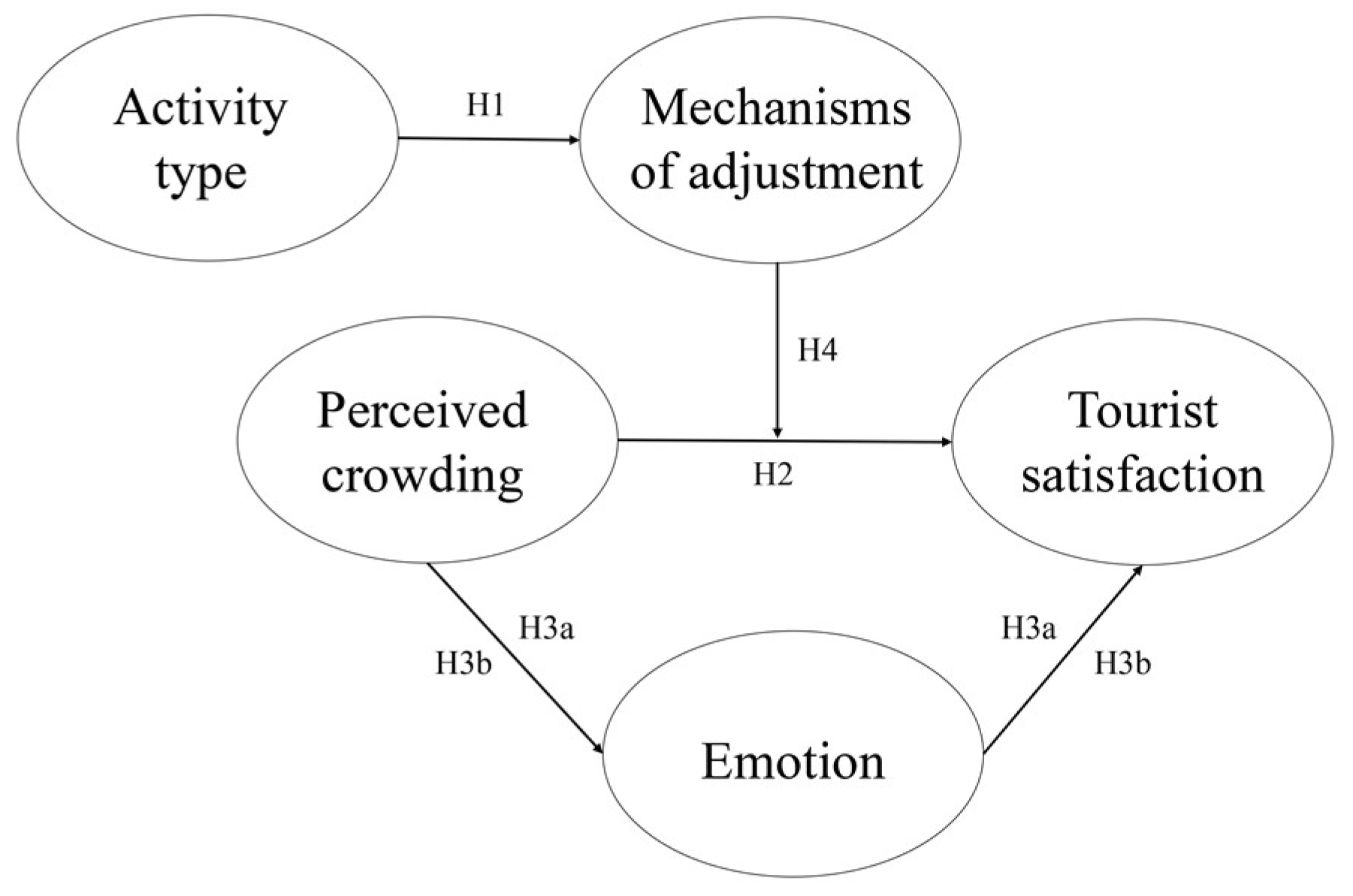
Based on the above five hypotheses, we constructed a conceptual model of the relationships of perceived crowding, emotion, and satisfaction with mechanisms of adjustment (Figure 1), in which emotion was the mediating variable and the mechanisms of adjustment were the moderating variables.
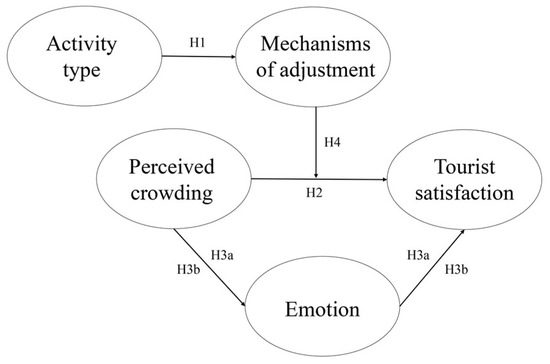
Figure 1.
Conceptual model.
3. Materials and Methods
3.1. Description of the Case Study
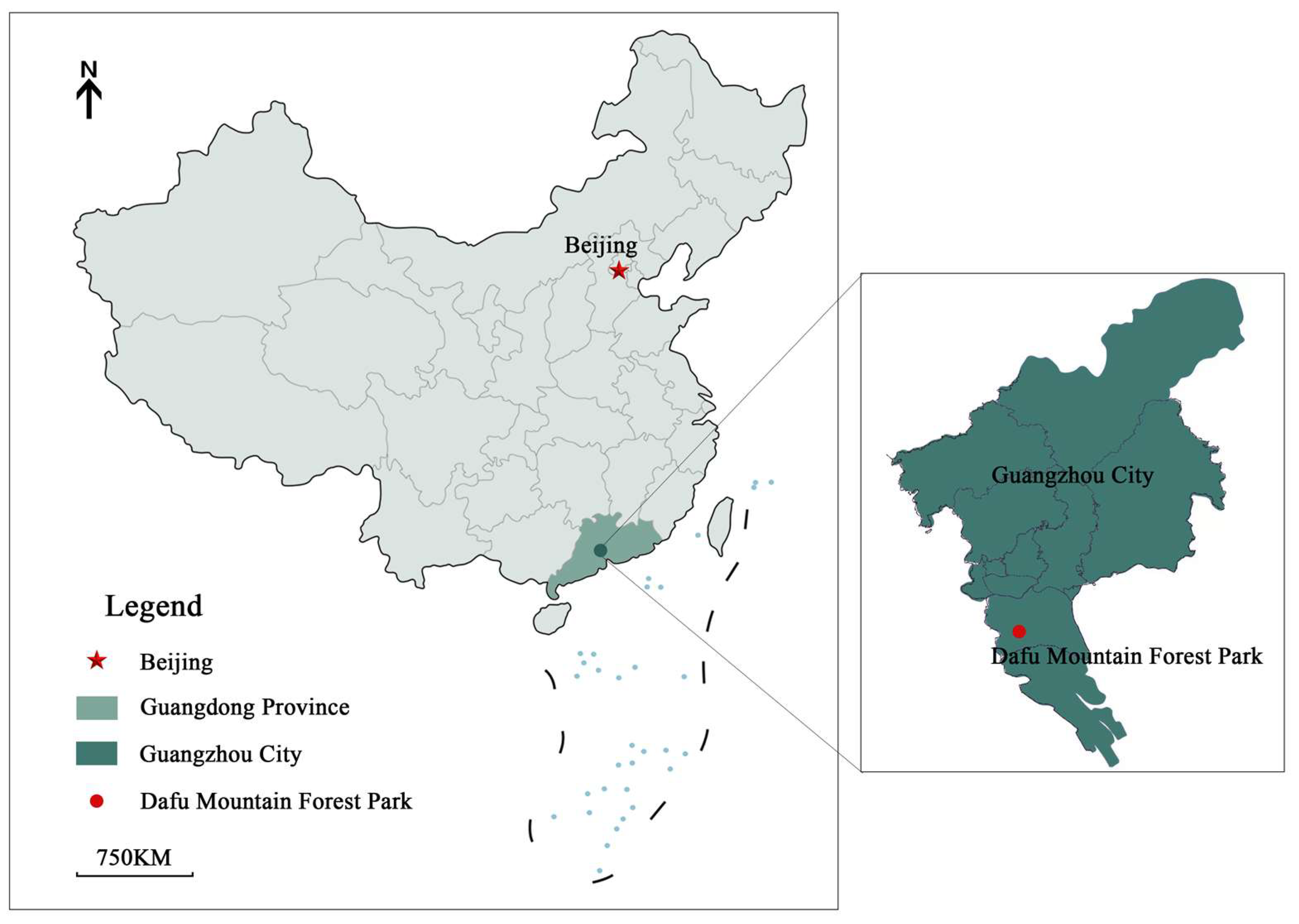
We selected Dafu Mountain Forest Park, located in Guangzhou, China, as a representative case study (Figure 2). Located in southeastern China, Guangzhou is the core city of the Guangdong–Hong Kong–Macao Greater Bay Area and one of the four largest cities in China, with a population of 18.8 million as of 2021. The park is located in the southern part of Guangzhou, in the center of the Guangzhou–Foshan metropolitan area, and covers a total area of 546.6 hm2, including 442.8 hm2 of woodland. Thus, this park has the characteristics of both a forest park and an urban park. Dafu Mountain Forest Park attracts many tourists because of its pleasant natural conditions and abundance of available activities. Data show that before COVID-19, the number of tourists visiting the park was 4.6 million in 2019, and even in May 2020, the number of tourists was approximately 100,000, with approximately 180,000 on National Day. The enthusiasm of tourists is higher during the holidays, and this leads to overcrowding. This park is a major tourist destination not only for the area’s residents but also for people across China.
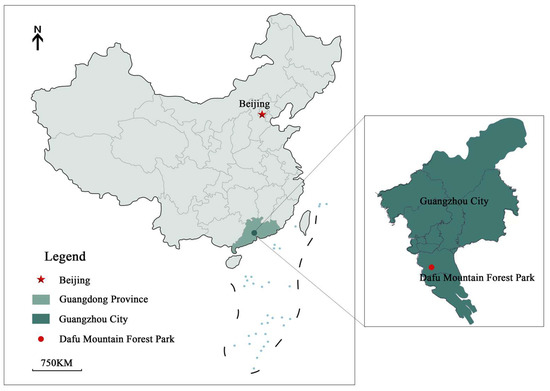
Figure 2.
The location of Dafu Mountain Forest Park.
3.2. Questionnaire Design
The questionnaire contains five sections: (1) the social and economic characteristics of tourists; (2) perceived crowding, referring to Stokols’ scale [45], which contains 2 dimensions (including physical crowding and social crowding) with a total of 5 items; (3) mechanisms of adjustment, which refer to Manning’s scale [26], containing 5 dimensions (including no adjustment, temporal adjustment, spatial adjustment, activity adjustment, and cognitive adjustment) with a total of 15 items; (4) emotions, which mainly refer to Changjo’s study [46] and contain 2 dimensions (including positive emotions and negative emotions) with a total of 6 items; and (5) satisfaction, which mainly refers to the scale refined by Dong [47] and contains 4 dimensions (including facility satisfaction, environment satisfaction, psychological satisfaction, and activity satisfaction) with a total of 12 items. The questionnaire was administered on a five-point Likert scale, where tourists were asked to choose their level of agreement with each item according to their feelings, with “strongly disagree”, “disagree”, “average”, “agree”, and “strongly agree” being assigned a score of 1–5, respectively. In addition, the acceptance of perceived crowding was investigated using a visual approach. Tourists’ perceptions of crowding are influenced by the number of people within the park; thus, we used photographs taken at Dafu Mountain Forest Park (of a walking trail 1 m-wide with a visual range of approximately 10 m), adjusted the number of people in the photographs using Photoshop (the number of people ranged from 5 to 25), and asked tourists to select pictures of the maximum number of people they could accept to indicate their perception and acceptance of crowding.
3.3. Data Collection
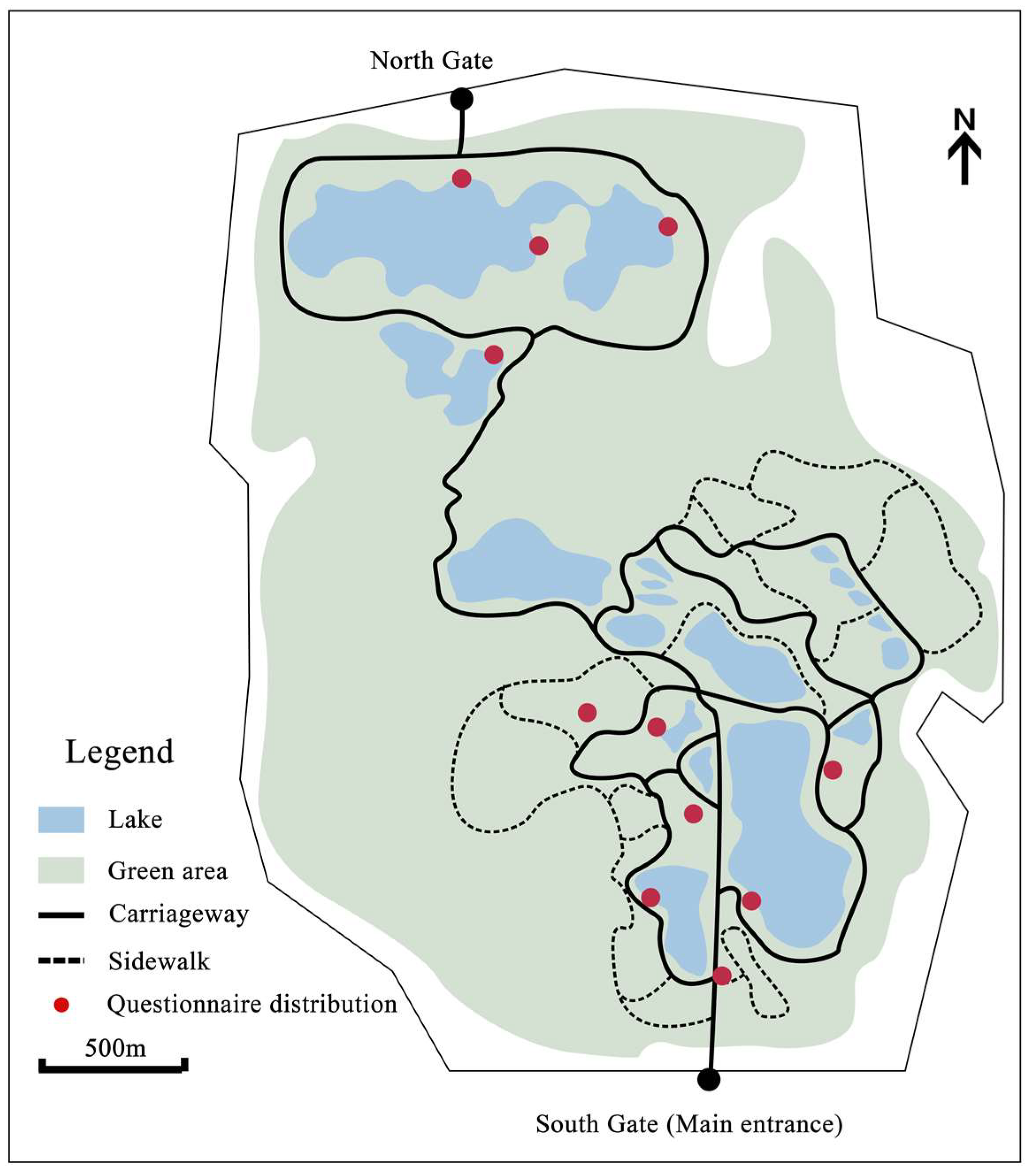
A pre-study revealed that crowding in Dafu Mountain Forest Park (Figure 3) occurs mainly on weekends and holidays; hence, these periods were when we distributed the questionnaires. Data were collected in April and July 2021 at 9:00 a.m. and 2:30 p.m., and the questionnaires were distributed at playgrounds, fishing areas, courts, and other leisure activity locations. In total, 490 questionnaires were distributed. After a strict screening process, 41 invalid questionnaires were eliminated, with an effective rate of 91.6%.
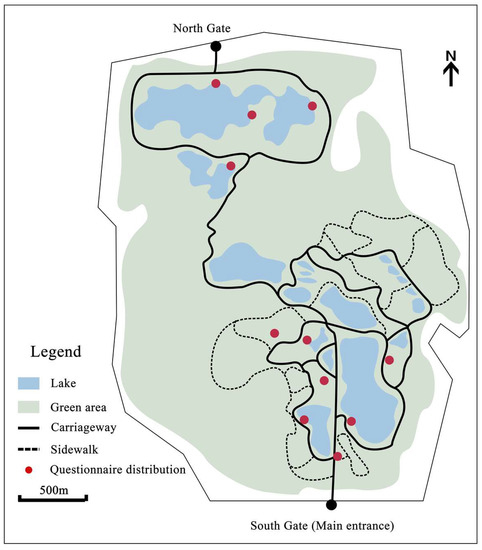
Figure 3.
The map of Dafu Mountain Forest Park.
3.4. Data Analysis
The data collected from the sample were analyzed using SPSS 26.0 and AMOS 26.0. After describing the sample, the reliability and validity of the measurement scales were tested using Cronbach’s alpha and confirmatory factor analysis (CFA). Then, a difference analysis of the activity types and mechanisms of adjustment and a correlation analysis of perceived crowding and tourist satisfaction were conducted. Finally, we constructed a structural equation model to validate the effects of emotions and mechanisms of adjustment on the relationship between perceived crowding and tourist satisfaction.
4. Results
4.1. Sample Profile
The descriptive information of the sample is outlined in Table 1. The number of female tourists was slightly higher than the number of males. The tourists were primarily between 18 and 34 years of age, with this age range accounting for 56.0% of the total number of tourists. Over 60% of the tourists (62%) had a bachelor’s degree, and in terms of income, 27% of the tourists had a monthly salary of less than CNY 3000 (USD 470). We classified the activities in the park into three categories, namely, sports, cultural activities, and social activities [30], and found that 64.8% of the tourists engaged in sports, mostly walking (41.6%) and cycling (20.3%), and 21% engaged in social activities, such as picnicking, camping, and playing games with children. In addition, due to the beautiful scenery of the park, the tourists who carried out cultural activities mostly enjoyed painting, photography, and sightseeing.

Table 1.
Sociodemographic information of the study sample.
4.2. Measurement Model Testing
4.2.1. Reliability Test and Confirmatory Factor Analysis
This paper employed SPSS 26.0 to test the reliability of the scale. Cronbach’s alpha and the CR (coefficient of reliability) are two indicators commonly used in scale reliability and validity tests, both of which range from 0–1. In both cases, the closer the value is to 1, the higher the consistency between the items in the scale is. The results showed that for all the variables, Cronbach’s α was greater than 0.7, and the CR values were also greater than 0.7, indicating the good reliability of the scale [48]. These values are shown in Table 2. The measurement model was also evaluated using confirmatory factor analysis (CFA) in AMOS 26.0, and the results showed that X2/df = 2.916 (lower than the critical threshold value of 3), RMSEA = 0.065 (lower than the critical threshold value of 0.08), and CFI = 0.878, TLI = 0.860, IFI = 0.879, and GFI = 0.854 (all higher than the critical threshold value of 0.8). Thus, the fitted parameters were all within the accepted range [48,49,50], and our models of perceived crowding, no adjustment, temporal adjustment, spatial adjustment, activity adjustment, cognitive adjustment, negative emotion, positive emotion, and tourist satisfaction fitted well.
Table 2.
Reliability and convergent validity analysis.
4.2.2. Validity Test
We analyzed the questionnaire in terms of convergent validity and discriminant validity (Table 2), which indicate the consistency and correlation, respectively, between a theoretical model and its variables, as well as the differentiation and independence between the variables in the scales. In the analysis, the AVE (average variance extracted) and CR (coefficient of reliability) take values of 0–1; the higher the value is, the greater the amount of information extracted from the scales and the better the consistency between the items are. The results showed that the factor loads of perceived crowding, no adjustment, temporal adjustment, spatial adjustment, activity adjustment, cognitive adjustment, negative emotion, positive emotion, and satisfaction for each item in this study were all greater than 0.5. Moreover, as shown in Table 2, the AVE was always higher than 0.45 (the critical threshold value), and the CR was always higher than 0.7 (the critical threshold value), indicating that the questionnaire had good convergent validity [48].
As shown in Table 3, the correlation coefficients between perceived crowding, no adjustment, temporal adjustment, spatial adjustment, activity adjustment, cognitive adjustment, negative emotion, positive emotion, and satisfaction were all smaller than the square root of the AVE, indicating that the variables were correlated but different from each other and that the questionnaire had good discriminant validity.
Table 3.
Discriminant validity analysis.
4.3. Structural Model and Hypothesis Testing
4.3.1. Activity Types and Mechanisms of Adjustment
A one-way ANOVA and multiple comparisons were conducted using SPSS 26.0 to analyze the relationships between activity types and mechanisms of adjustment in order to explore whether activity types differed in regard to the choice of mechanism of adjustment. The types of activities possible in Dafu Mountain Forest Park include sports and cultural and social activities, to which we assigned the values of “1”, “2”, and “3”, respectively. An analysis of variance was conducted with these three types of activities and five adjustment behaviors (cognitive adjustment, spatial adjustment, temporal adjustment, activity adjustment, and no adjustment), and the results showed that only activity adjustment was significantly different between the groups (p < 0.05) (Table 4). This suggested that tourists who performed different types of activities showed significant differences in their choices of mechanisms of adjustment. Then, a multiple comparison was conducted to analyze the differences in activity adjustment between the different groups (who performed sports or cultural or social activities) (Table 5). Here, we observed a significant difference between those who engaged in sports and social activities (p = 0.015, mean deviation = −0.16272), which indicated that tourists who engaged in social activities had a higher level of activity adjustment than those who performed sports. There was also a significant difference in activity adjustment between those who chose cultural and social activities (p = 0.016, mean deviation = −0.27541), indicating that those who engaged in social activities had a higher level of activity adjustment than those who engaged in cultural ones. Finally, sports and cultural activities did not show a significant difference in activity adjustment (p > 0.05).
Table 4.
Results of ANOVA analysis.
Table 5.
Results of multiple-group comparison analysis.
The above results indicated that tourists chose mechanisms of adjustment in the order of cognitive adjustment, spatial adjustment, temporal adjustment, activity adjustment, and no adjustment, and that tourists who performed different types of activities could exhibit differences in activity adjustment. Therefore, H1 was not rejected.
4.3.2. Perceived Crowding and Tourist Satisfaction
Based on the analysis of the perceived crowding data collected from the processed images, it can be seen that the average number of people acceptable to tourists was 7.5, with a median of 7. We used SPSS 26.0 to perform a Pearson correlation analysis of perceived crowding and tourist satisfaction, and the results are shown in Table 6. The normalization coefficient was negative, and p was less than 0.01; thus, there was a significant negative correlation between them, and perceived crowding had a negative impact on tourist satisfaction, as anticipated in H2.
Table 6.
Pearson correlation analysis of perceived crowding and tourist satisfaction.
4.3.3. The Mediating Effect of Emotions
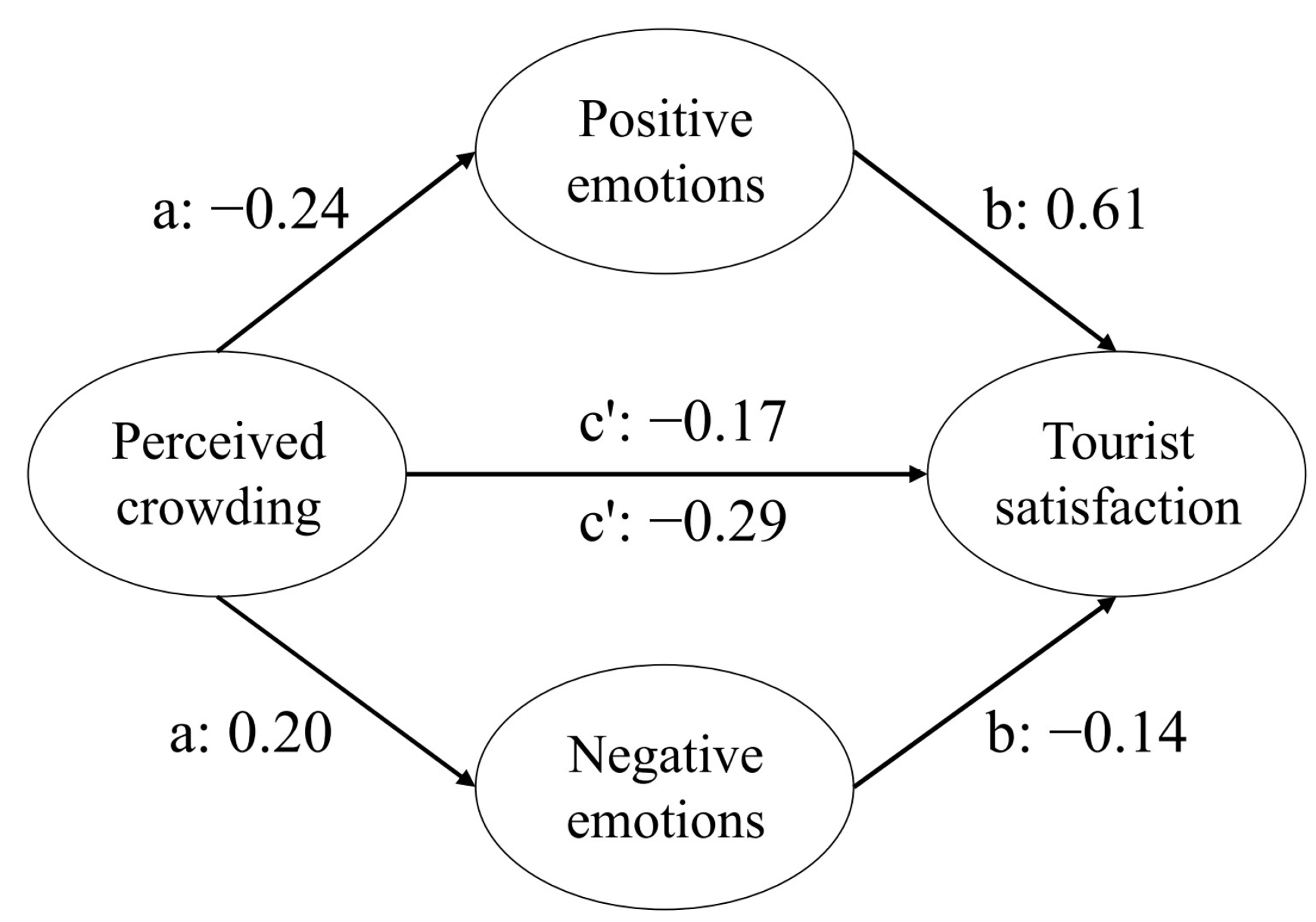
In the questionnaire, we characterized emotions as either positive or negative and constructed mediating effect models for the role of positive and negative emotions in the perception of overcrowding and its effect on tourist satisfaction, which we found to have a good fit with the data (Table 7). The mediating effect of emotion was tested using AMOS 26.0 (Figure 4). According to Liu (2021) [29], “c” represents the path coefficient of the total effect of perceived crowding on tourist satisfaction, “ab” represents the path coefficient of the mediating effect, and “c′” represents the direct effect. The relationship between these effects is defined as “c = c′ + ab”, and the magnitude of the mediating effect is determined by “c − c′ = ab” (Table 8). The results showed that both positive and negative emotions were significant at the 95% probability level, and both direct and indirect effects were significant. The mediating effect of positive emotions accounted for 46.9% of the total effect, but the mediating effect of negative emotions accounted for only 9.4% of the total effect. This indicated that both positive and negative emotions played a partial mediating role between perceived crowding and tourist satisfaction. Perceived crowding influenced satisfaction mainly through positive emotions, and tourists could experience higher satisfaction under the influence of positive emotions. Therefore, neither H3a nor H3b were rejected.
Table 7.
Tests of the degree of fit of the model.
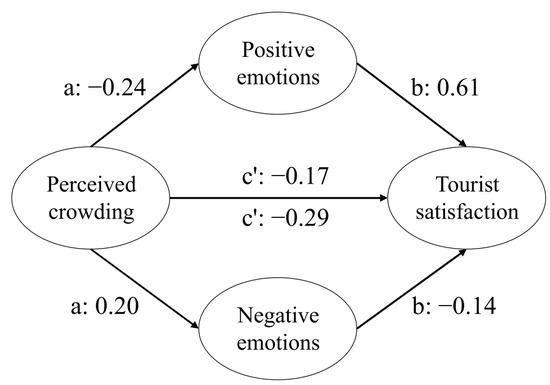
Figure 4.
Model of the mediating effects of positive and negative emotions.
Table 8.
Results of mediating effect analysis.
4.3.4. The Moderating Effects of Mechanisms of Adjustment
According to Wen (2006) [51], a moderating effect is significant if the change produced upon adding its interaction to the model is significant. With this in mind, we added the moderating variables of no adjustment, temporal adjustment, spatial adjustment, activity adjustment, and cognitive adjustment to the model using SPSS 26.0 for data analysis. In addition, we used a simple slope test to verify the extent of the moderating effects of no adjustment, temporal adjustment, spatial adjustment, activity adjustment, and cognitive adjustment using the PROCESS plug-in in SPSS 26.0.
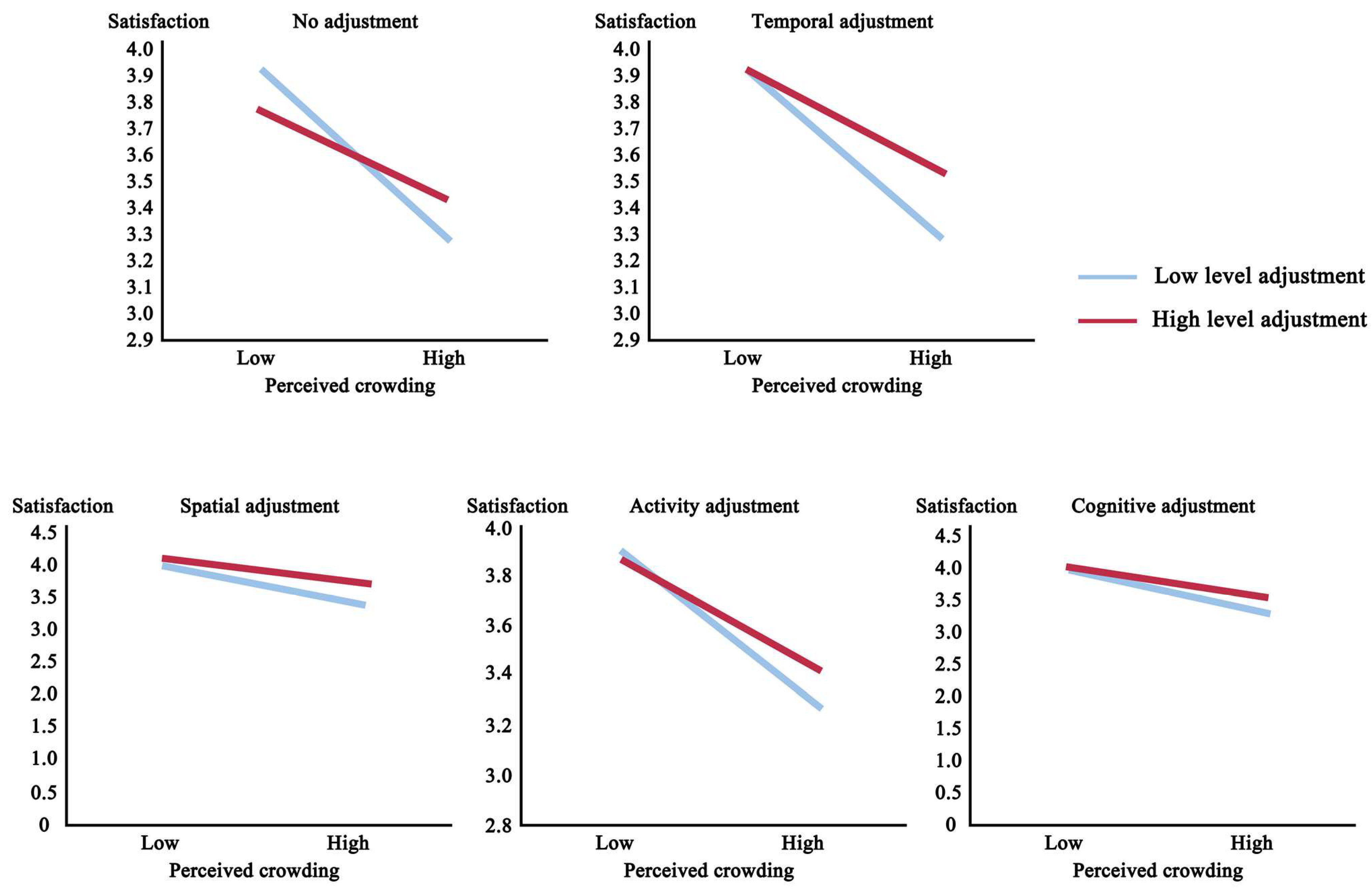
The results showed that perceived crowding had a significant negative effect on tourist satisfaction and that the mechanisms of adjustment could weaken this effect (Table 9). In the case of no adjustment, the R2 of the first model was 0.182, and the R2 of the second model was 0.209. When the interaction was added to model 1 (becoming model 2), the R2 changed to 0.027, though the results became statistically significant (p < 0.05, F change of 0.000). In the case of temporal adjustment, the R2 of the first model was 0.208, and the R2 of the second model was 0.227, which changed to 0.019 when the interaction was added to model 1 and showed a significant change (p < 0.05, F change of 0.001). In the case of spatial adjustment, the R2 of the first model was 0.253, and the R2 of the second model was 0.265, which changed to 0.012 when the interaction was added, although, again, the results were statistically significant (p < 0.05, F change of 0.007). In the case of activity adjustment, the R2 of the first model was 0.188 and the R2 of the second model was 0.240, which changed to 0.052 after the interaction term (p < 0.05, F change of 0.000). Finally, in the model of cognitive adjustment, the R2 of the first model was 0.227 and the R2 of the second was 0.235, which changed to 0.007 after the interaction term was added (p < 0.05, F change of 0.038) (Figure 5).
Table 9.
Results of hierarchical multiple regression of our model with mechanisms of adjustment.
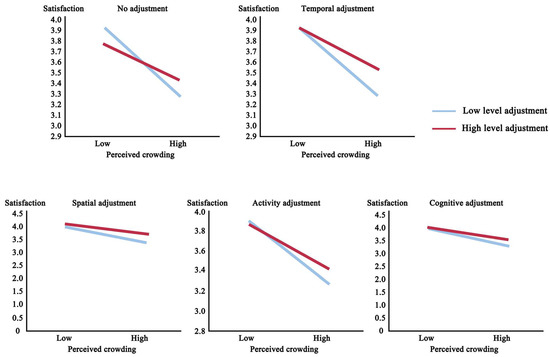
Figure 5.
The moderating effects of adjustment behaviors.
In summary, we found that our five tested adjustment behaviors all played a significant positive moderating role in the effect of perceived crowding on satisfaction. In each case, the mechanisms of adjustment weakened the effect of perceived crowding on tourist satisfaction; thus, H4 was not rejected.
4.4. Hypothesis Test Results
The results showed that activity adjustment differed significantly between different activity types. Perceived crowding had a negative impact on tourist satisfaction. Both positive and negative emotions played partial mediating roles in the interaction between perceived crowding and tourist satisfaction. Perceived crowding influenced satisfaction mainly through positive emotions, and tourists can experience higher satisfaction under the influence of positive emotions. Meanwhile, all the adjustment behaviors could weaken the effect of perceived crowding on tourist satisfaction. The hypothesis testing results are shown in Table 10.
Table 10.
Hypothesis testing results.
5. Discussion and Conclusions
We took Dafu Mountain Forest Park as a case study in order to investigate the relationship between perceived crowding, adjustment mechanisms, and tourist satisfaction in urban forest parks. Crowding, emotions, satisfaction, and adjustment behavior are concepts that have been used in tourism research [52,53,54]. The mechanism of the influence of crowding on tourist satisfaction is also an important, well-studied topic in this field [55,56]. However, most studies have directly explored the impact of perceived crowding on tourist satisfaction [34,57], and few studies have integrated the two variables of emotions and mechanisms of adjustment into models of perceived crowding and satisfaction in order to systematically explore the relationship between them. Therefore, this study is one of the few that not only explores the mediating effect of emotions on the relationship between crowding perception and satisfaction but also introduces the mechanisms of adjustment as a moderating variable to analyze whether tourists can experience higher satisfaction through adjustment behaviors when they feel crowded. Our principal conclusions are as follows:
First, in urban forest parks, perceived crowding significantly and negatively affected tourist satisfaction, but we found no significant difference between tourists engaging in different activity types. Similar to previous studies, the higher the number of people was, the stronger the perception of crowding and the lower the satisfaction of the tourists were, because tourists consider less crowded places as more suitable for activities [19,58]. Jathe et al. also reported that tourists who felt crowded experienced less pleasant emotions during their trips [59]. However, crowding perception may vary between different types of tourist destinations. Therefore, we suggest that studies of crowding should differentiate between travel destination types [60,61]. Unlike forest parks located far from cities, urban forest parks are not only close to city centers but also provide tourists with the opportunity to engage in a variety of activities [24,62,63]. However, since tourists may engage in multiple types of activities at the same time, we observed no significant difference in the perception of crowding between activity types in our analysis.
Second, both positive and negative emotions partially played partial mediating roles in the relationship between perceived crowding and tourist satisfaction. Perceived crowding significantly and positively affected tourists’ negative emotions and significantly and negatively affected positive emotions. Positive emotions improve satisfaction, and negative emotions reduce satisfaction [64,65,66]. In Dafu Mountain Forest Park, emotions had a mediating role in the mechanism of crowding perception with respect to its impact on satisfaction. The mediating effect of emotions was reflected in the fact that perceived crowding not only directly affected tourist satisfaction but also had an impact on satisfaction through positive and negative emotions, and the mediating effect of positive emotions was more significant than that of negative emotions. Thus, urban forest parks should pay more attention to measures for improving positive emotions while avoiding the triggering of negative emotions in order to mitigate the dissatisfaction caused by perceived crowding.
Furthermore, mechanisms of adjustment play a moderating role in the relationship between perceived crowding and tourist satisfaction, and the choice of adjustment behaviors varies according to activity type. Many studies have validated the relationship between mechanisms of adjustment and satisfaction. For example, Arnberger et al. demonstrated that adjustment behaviors are important because they allow tourists to avoid popular tourist locations or peak travel periods, thereby increasing satisfaction [67]. We further explored the moderating role played by mechanisms of adjustment in shaping the effect of perceived crowding on tourist satisfaction in an urban-type forest park. We categorized five types of adjustment behaviors performed in urban forest parks: no adjustment, temporal adjustment, spatial adjustment, activity adjustment, and cognitive adjustment. We found that tourists preferentially chose their adjustment behaviors in the order of cognitive adjustment, spatial adjustment, temporal adjustment, activity adjustment, and no adjustment. In Dafu Mountain Forest Park, tourists chose cognitive adjustment first, because they were mainly residents who tended to be familiar with the park and to recognize that the environment is difficult to change. Hence, cognitive adjustment is the easiest way to adjust. In addition, for tourists who were already in the park, spatial adjustment was more appropriate than temporal adjustment. Tourists who have a set purpose may rarely change their activity types due to overcrowding; hence, the adjustment behaviors they take, naturally, do not include activity adjustment. Finally, after all adjustment behaviors fail, tourists are left with the only remaining choice: no adjustment.
In addition, tourists who engaged in social activities had a higher level of activity adjustment than those who engaged in sports and cultural activities. They placed more emphasis on emotional communication when carrying out activities, so they tended to reduce their scope of activities or even change their activity type when faced with crowding. For tourists with high levels of adjustment, perceived crowding had less of a negative influence on their satisfaction. Therefore, tourists who engaged in a variety of adjustment behaviors could weaken the effect of perceived crowding and improve satisfaction.
5.1. Research Implications
5.1.1. Theoretical Implications
This paper has four theoretical implications, as follows: (1) We offer a comprehensive study of perceived crowding in urban forest parks, a topic which has hitherto lacked attention. Previous studies have mainly focused on theme parks, ancient towns, and natural scenic areas situated far from cities [68,69,70,71]. This paper enriches the results of perceived crowding, broadening this research area to include forest parks. (2) The mediating role of emotions in the relationship between perceived crowding and tourist satisfaction in urban forests park was examined. We found that tourists in urban forest parks show improved satisfaction under the influence of positive emotions and that perceived crowding mainly influences satisfaction through positive emotions. (3) The moderating role played by mechanisms of adjustment in the relationship between perceived crowding and satisfaction was revealed. We examined the moderating effect of mechanisms of adjustment and found that they play a positive moderating role in the relationship between perceived crowding and tourist satisfaction [72]. (4) The important role of cognitive adjustment in reducing perceived crowding was clarified. Previous studies have shown that activity adjustment takes precedence over behavioral adjustment when tourists encounter crowding at attractions [67], but we found that since most tourists in urban forest parks are residents, they are more familiar with the park and thus make predictions about crowding and plan their activities. Thus, these tourists usually choose cognitive adjustment.
5.1.2. Management Implications
Based on the above conclusions, we suggest the following recommendations for the management of crowding in urban forest parks:
First, in urban forest parks, we can establish smart scenic spots, clarify activity areas, and add route guidance so as to guide tourists in adopting adjustment behaviors when facing perceived crowding. Since the activity types and activity areas in urban forest parks are diverse and different activity areas have different carrying capacities [73,74], park managers could set up intelligent systems that can monitor not only the number of tourists in real time but also the population in each activity area. This would make it convenient for tourists to make spatial or activity adjustments according to their needs. Park managers could also develop and operate their web-based information-sharing platforms to allow tourists to identify the number of people in parks in advance and to make reservations so that they can make time adjustments in order to visit parks at their preferred times.
Second, forest park managers should enrich the types and conditions of their activities so as to help tourists to make activity adjustments. We found that tourists who carry out sports and cultural activities exhibit lower levels of activity adjustment, mainly due to the lack of activity alternatives in our case study. Therefore, parks can help tourists to make choices when they feel crowded by providing them with a variety of activity types and conditions. In addition, parks can also provide rental activity equipment for activities such as table tennis, badminton, and camping tents in order to provide more possibilities for tourists to change their activities. Parks should also pay attention to the creation of landscapes and facilities to create a suitable activity environment, enhance tourists’ interest in their surroundings, and encourage them to try different leisure activities to allow for greater activity adjustment.
Furthermore, parks should also pay attention to tourists’ emotions and enhance their satisfaction by increasing positive emotions if possible. Perceived crowding has a greater impact on tourist satisfaction through positive emotions than through negative emotions; thus, park managers need to focus more on tourists’ positive emotions. Parks can help to foster positive emotions by providing a wide range of activities, optimizing service quality, and enhancing the landscape to make it more attractive for tourists. For example, parks can design different landscape themes according to the seasons and can increase tourists’ sense of identity and belonging by creating regional landscapes and organizing attractive activities.
5.2. Research Limitations and Future Research
Urban forest parks attract a large number of tourists, and the question of how to provide tourists with high-quality and diversified ecological products and achieve harmony between humans and nature while protecting the forest park environment remains an important issue. This paper enriches the study of crowding in forest parks through the examination of perceived crowding, mechanisms of adjustment, and tourist satisfaction together in one model and provides practical suggestions for how public-oriented forest environments can better coordinate the relationship between man and nature. However, one limitation of our study is that its object was urban-type forest parks, and the relationship between perceived crowding, mechanisms of adjustment, emotion, and tourist satisfaction in other types of parks and scenic spots needs to be further verified. Meanwhile, we only collected data from tourists at Dafu Mountain Forest Park, and this lone sample site may likely be insufficient. In the future, more urban forest parks could be included to improve the robustness of our results.
Author Contributions
Conceptualization, M.L. and Y.W.; methodology, M.L. and S.Y.; validation, M.L., Y.W., X.F. and S.Y.; formal analysis, M.L., Y.W., S.Y., and X.F.; investigation, M.L., S.Y. and X.F.; resources, M.L.; writing—original draft preparation, M.L., X.F. and Y.W.; writing—review and editing, Y.W. and X.F.; supervision, M.L.; funding acquisition, M.L. All authors have read and agreed to the published version of the manuscript.
Funding
This research was funded by the National Natural Science Foundation of China, grant number 42271237, and Guangdong Basic and Applied Basic Research Foundation, grant number 2021A1515011186.
Data Availability Statement
The data presented in this study are available on request from the corresponding author. The data are not publicly available due to privacy and intellectual property protection.
Conflicts of Interest
The authors declare no conflict of interest.
References
- Xu, L.S.; Ao, C.L.; Liu, B.Q.; Cai, Z.Y. Ecotourism and sustainable development: A scientometric review of global research trends. Environ. Dev. Sustain. 2022, 25, 2977–3003. [Google Scholar] [CrossRef] [PubMed]
- Ren, L.J.; Li, J.; Li, C.; Dang, P.Y. Can ecotourism contribute to ecosystem? Evidence from local residents’ ecological behaviors. Sci. Total Environ. 2021, 757, 143814. [Google Scholar] [CrossRef] [PubMed]
- Ruhanen, L. The prominence of eco in ecotourism experiences: An analysis of post purchase online reviews. J. Hosp. Tour. Manag. 2019, 39, 110–116. [Google Scholar] [CrossRef]
- Ma, B.; Yin, R.; Zheng, J.; Wen, Y.; Hou, Y. Estimating the social and ecological impact of community-based ecotourism in giant panda habitats. J. Environ. Manag. 2019, 250, 109506. [Google Scholar] [CrossRef] [PubMed]
- Chen, R.; Gao, Y.; Zhang, R.X.; Zhang, Z.; Zhang, W.K.; Meng, H.; Zhang, T. How Does the Experience of Forest Recreation Spaces in Different Seasons Affect the Physical and Mental Recovery of Users? Int. J. Environ. Res. Public Health 2023, 20, 2357. [Google Scholar] [CrossRef] [PubMed]
- Hsiao, C.H.; Tang, K.Y. Who captures whom–Pokémon or tourists? A perspective of the Stimulus-Organism-Response model. Int. J. Inf. Manag 2021, 61, 102312. [Google Scholar] [CrossRef]
- Weinbrenner, H.; Breithut, J.; Hebermehl, W.; Kaufmann, A.; Klinger, T.; Palm, T.; Wirth, K. “The Forest Has Become Our New Living Room”—The Critical Importance of Urban Forests During the COVID-19 Pandemic. Front. For. Glob. Change 2021, 4, 68. [Google Scholar] [CrossRef]
- Leung, Y.F.; Spenceley, A.; Hvenegaard, G.; Buckley, R.; Gland, S. Witzerland Tourism and Visitor Management in Protected Areas: Guidelines for Sustainability; IUCN: Gland, Switzerland, 2018. [Google Scholar]
- Kim, Y.; Kim, C.K.; Lee, D.K.; Lee, H.W.; Andrada, R.I.I.T. Quantifying nature-based tourism in protected areas in developing countries by using social big data. Tour. Manag. 2019, 72, 249–256. [Google Scholar] [CrossRef]
- Nian, S.F.; Chen, M.; Zhang, X.W.; Li, D.H.; Ren, J.Y. How Outstanding Universal Value Attractiveness and Tourism Crowding Affect Visitors’ Satisfaction? Behav. Sci. 2023, 13, 112. [Google Scholar] [CrossRef]
- Szuster, B.W.; Peng, M. Longitudinal perspectives on crowding and management at a beach park in Hawai’i. Ocean. Coast. Manag. 2021, 211, 105763. [Google Scholar] [CrossRef]
- Lee, N.H.; Kim, N.J. The Effects of Residents’ Perceived Crowding on the Emotion and Coping Behavior in Tourism Destination. Int. J. Tour. Manag. Sci 2015, 30, 157–185. [Google Scholar]
- Kang, N.N.; Wang, E.R.; Yu, Y.; Duan, Z.H. Valuing Recreational Services of the National Forest Parks Using a Tourist Satisfaction Method. Forests 2021, 12, 1688. [Google Scholar] [CrossRef]
- Nielsen, J.M. Crowding models, stress and wilderness. Mass Emergencies 1976, 1, 249–260. [Google Scholar]
- Ali, M.A.; Ting, D.H.; Ahmad-ur-Rahman, M.; Ali, S.; Shear, F.; Mazhar, M. Effect of Online Reviews and Crowd Cues on Restaurant Choice of Customer: Moderating Role of Gender and Perceived Crowding. Front. Psychol. 2021, 12, 780863. [Google Scholar] [CrossRef] [PubMed]
- Cheng, Y.; Yin, J. The generation, difference and impact of tourist crowding: A review and prospect. Geogr. Geo Inf. Sci. 2021, 37, 121–127. [Google Scholar]
- Park, I.J.; Kim, J.K.; Kim, S.; Lee, J.C.; Giroux, M. Impact of the COVID-19 pandemic on travelers’ preference for crowded versus non-crowded options. Tour. Manag. 2021, 87, 104398. [Google Scholar] [CrossRef]
- Pil, L.J.; Jae-Sook, R. A study on the relationships among perceived crowding, emotional response, attitude, and loyalty of walking travelers visiting Ollegil tours in Jeju Island. Int. J. Tour. Hosp. Res. 2019, 33, 169–181. [Google Scholar]
- Blut, M.; Iyer, G.R. Consequences of Perceived Crowding: A Meta-Analytical Perspective. J. Retail. 2020, 96, 362–382. [Google Scholar] [CrossRef]
- Kim, D.; Lee, C.; Joseph, M.S. Examining the differential impact of human crowding versus spatial crowding on visitor satis faction at a festival. J. Travel Tour. Market. 2016, 33, 293–312. [Google Scholar] [CrossRef]
- Du, Y.Q.; Zhao, R. Research on the Development of Urban Parks Based on the Perception of Tourists: A Case Study of Taihu Park in Beijing. Int. J. Environ. Res. Public Health 2022, 19, 5287. [Google Scholar] [CrossRef]
- Manning, R.E.; Valliere, W.A.; Wang, B. Crowding Norms: Alternative Measurement Approaches. Leis. Sci. 1999, 21, 97–115. [Google Scholar]
- Herberlein, T.A.; Shelby, B. Carrying capacity, values, and the satisfaction model: A reply to Greist. J. Leis. Res. 1977, 9, 142–148. [Google Scholar] [CrossRef]
- Cai, M.M.; Cui, C.Y.; Lin, L.; Di, S.Y.; Zhao, Z.; Wang, Y.B. Residents’ Spatial Preference for Urban Forest Park Route during Physical Activities. Int. J. Environ. Res. Public Health 2022, 18, 11756. [Google Scholar] [CrossRef] [PubMed]
- Cheng, P.P.; Yang, X.Z.; Peng, M. Progress in Chinese and International Tourism Crowding Research and Its Implications. Tour. Trib. 2015, 30, 106–115. [Google Scholar]
- Manning, R.E. Study in Outdoor Recreation, Search and Research for Satisfaction, 2nd ed.; Oregon State University Press: Corvalis, OR, USA, 1999; pp. 80–99. [Google Scholar]
- Pan, Y. Study on the Tourist Crowded Perception and Coping Behavior of West Lake Scenic Spot in Hangzhou. Master’s Thesis, Fujian Normal University, Fuzhou, China, 2018. [Google Scholar]
- Shelby, B.; Vaske, J. Resource and Activity Substitutions for Recreational Salmon Fishing in New Zealand. Leis. Sci. 1991, 13, 21–32. [Google Scholar] [CrossRef]
- Liu, W.J. Research on the Relationship between Tourists’ Perception OF Crowding and Tourists’ Interaction Behavior. Master’s Thesis, Shandong University of Finance and Economics, Jinan, China, 2021. [Google Scholar]
- Lee, J.M.; Sang, H.L. The Influence of Perceived Crowding among Festival Visitors on Emotion, Coping Behavior and Satisfac tion: Focused on 7 Manin Festivals in Busan Region. J. Tour. Leis. Res. 2016, 28, 43–60. [Google Scholar]
- Stokols, D. On the distinction between density and crowding: Some implications for future research. Psychol. Rev. 1972, 3, 275–277. [Google Scholar] [CrossRef]
- Schmidt, D.E.; Keating, J.P. Human crowding and personal control: An integration of the research. Psychol. Bull. 1979, 86, 680–700. [Google Scholar] [CrossRef]
- Sever, I.; Verbic, M.; Marusic, Z. Measuring trail users’ perception of crowding in a peri-urban nature park: A best-worst scaling experiment. Urban For. Urban Green. 2018, 35, 202–210. [Google Scholar] [CrossRef]
- Hurtado, M.; Burns, R.C.; Andrew, R.G.; Schwarzmann, D.; Moreira, J.C. User Satisfaction and Crowding at Florida Keys National Marine Sanctuary. Water 2021, 13, 3423. [Google Scholar] [CrossRef]
- Russell, J.A. Affective space is bipolar. J. Personal. Soc. Psychol. 1979, 7, 345–356. [Google Scholar] [CrossRef]
- Zins, A.H. Consumption emotions, experience quality and satisfaction: A structural analysis for complainers and non-com plainers. J. Travel Tour. Mark. 2022, 12, 3–18. [Google Scholar] [CrossRef]
- Yeh, S.S.; Aliana, L.; Zhang, F.Y. Visitors’ perception of theme park crowding and behavioral consequences. Adv. Hosp. Pitality Leis. 2012, 1, 63–83. [Google Scholar]
- Izard, C.E. Human Emotions; Plenum Press: New York, NY, USA, 1977; pp. 1–503. [Google Scholar]
- Moon, S.S. A Study on the Effects of Density on Perceived Crowding and Emotions, Customer’s Behavior Change in Small Beer Stores. Culin. Sci. Hosp. Res. 2021, 27, 109–119. [Google Scholar]
- Wang, C.F.; Wei, F. Crowding perception, past experience and satisfaction of visitors about open urban parks. J. Anhui Agric. Univ. 2017, 26, 36–42. [Google Scholar]
- Manning, R.E. Studies in Outdoor Recreation: Search and Research for Satisfaction, 3rd ed.; Oregon State University Press: Corvalis, OR, USA, 2011; pp. 412–468. [Google Scholar]
- Folkman, S.; Lazarus, R.S. An analysis of coping in a middle-aged community sample. J. Health Soc. Behav. 1980, 21, 219–239. [Google Scholar] [CrossRef] [PubMed]
- Yan, W.X. Study on the Tourists’ Perception and Adjustment Behavior of Changle Holiday Resort in Nanjing. Master’s Thesis, Shen Yang Agricultural University, Shenyang, China, 2017. [Google Scholar]
- Hammitt, W.E.; Patterson, M.E. Coping behavior to avoid visitor encounters: Its relationship to wildland privacy. J. Leis. Res. 1991, 23, 225–237. [Google Scholar] [CrossRef]
- Stokols, D. The experience of crowding in primary and secondary environments. Environ. Behav. 1976, 8, 49–86. [Google Scholar] [CrossRef]
- Changjo, Y.; Jonghee, P.; Deborah, J. Effects of Store Characteristics and In-Store Emotional Experiences on Store Attitude. J. Bus. Res. 1998, 42, 253–263. [Google Scholar]
- Dong, G.Z.; Yang, F.Y. A Study on the Evaluation System of Tourist Satisfaction Degree in Tourist Areas. Tour. Trib. 2005, 1, 27–30. [Google Scholar]
- Zhou, J. Questionnaire Data Analysis; Publishing House of Electronic Industry: Beijing, China, 2017; pp. 1–240. [Google Scholar]
- Watson, D.; Clark, L.A.; Tellegen, A. Development and validation of brief measures of positive and negative affect: The PANAS scales. J. Personal. Soc. Psychol 1988, 54, 1063. [Google Scholar] [CrossRef] [PubMed]
- Weng, L.; Liang, Z.; Bao, J. The effect of tour interpretation on perceived heritage values: A comparison of tourists with and without tour guiding interpretation at a heritage destination. J. Destin. Mark. Manag 2020, 16, 100431. [Google Scholar] [CrossRef]
- Wen, Z.L.; Zhang, L.; Hou, T.J. Mediated Moderator and Moderated Mediator. Acta Psychol. Sin. 2006, 38, 448–452. [Google Scholar]
- Gossling, S.; McCabe, S.; Chen, N. A socio-psychological conceptualisation of overtourism. Ann. Tour. Res. 2020, 84, 102976. [Google Scholar] [CrossRef] [PubMed]
- Chen, H.; Wang, Y.W.; Zou, M.L.; Li, J.X. Antecedents of Rural Tourism Experience Memory: Tourists’ Perceptions of Tourism Supply and Positive Emotions. Behav. Sci. 2022, 12, 475. [Google Scholar] [CrossRef]
- Qiu, L.; Qi, L.K. E-learning assessment for tourism education LISREL assisted intercultural tourism perception and data integrated satisfaction perspectives. J. Comput. High. Educ. 2020, 32, 89–108. [Google Scholar] [CrossRef]
- Yin, J.; Cheng, Y.; Bi, Y.H.; Ni, Y.S. Tourists perceived crowding and destination attractiveness: The moderating effects of perceived risk and experience quality. J. Destin. Mark. Manag. 2020, 18, 100489. [Google Scholar] [CrossRef]
- Saeporsdottir, A.D.; Hall, C.M.; Wendt, M. Overtourism in Iceland: Fantasy or Reality? Sustainability 2020, 12, 7375. [Google Scholar] [CrossRef]
- Saeeporsdottir, A.D.; Hall, C.M. Visitor satisfaction in wilderness in times of overtourism: A longitudinal study. J. Sustain. Tour. 2020, 29, 123–141. [Google Scholar] [CrossRef]
- Pikkemaat, B.; Bichler, B.F.; Peters, M. Exploring the crowding-satisfaction relationship of skiers: The role of social behavior and experiences. J. Travel Tour. Mark 2020, 37, 902–916. [Google Scholar] [CrossRef]
- Jathe, K.; Gjerald, O.; Ogaard, T. Crowding, Emotions, Visitor Satisfaction and Loyalty in a Managed Visitor Attraction. Leis. Sci. 2022, 1–23. [Google Scholar] [CrossRef]
- Kim, D.; Lee, I. A Study on Influence of the Service Quality of Exhibition and Perceived Crowding on Satisfaction—Focused on Visitors of Korea Travel Expo 2019. Trade Assoc. Res. 2021, 16, 63–83. [Google Scholar]
- Drabicki, A.; Cats, O.; Kucharski, R.; Fonzone, A.; Szarata, A. Should I stay or should I board? Willingness to wait with real-time crowding information in urban public transport. Res. Transp. Bus. Manag. 2023, 47, 100963. [Google Scholar] [CrossRef]
- Guo, Y.L.; Wang, K.; Zhang, H.; Jiang, Z.Q. Soundscape Perception Preference in an Urban Forest Park: Evidence from Moon Island Forest Park in Lu’an City. Sustainability 2022, 14, 16132. [Google Scholar] [CrossRef]
- Fang, X.Y.; Gao, T.; Hedblom, M.; Xu, N.S.; Xiang, Y.; Hu, M.Y.; Chen, Y.X.; Qiu, L. Soundscape Perceptions and Preferences for Different Groups of Users in Urban Recreational Forest Parks. Forests 2021, 12, 468. [Google Scholar] [CrossRef]
- Novelli, D.; Drury, J.; Reicher, S.; Stott, C. Crowdedness Mediates the Effect of Social Identification on Positive Emotion in a Crowd: A Survey of Two Crowd Events. PLoS ONE 2013, 8, e78983. [Google Scholar] [CrossRef] [PubMed]
- Lee, S.H.; Lee, C.W. The Relation among Antecedent Variables of Crowding, Store Crowding, and Shopping Emotions. J. Prod. Res 2008, 26, 15–30. [Google Scholar]
- Yanling, K.; Dae-hoon, K. Effects of Human and Spatial Crowding on Positive and Negative Emotions. J. Bus. Converg 2016, 1, 9–15. [Google Scholar]
- Arnberger, A.; Eder, R. Exploring coping behaviours of Sunday and workday visitors due to dense use conditions in an urban forest. Urban For. Urban Green 2012, 11, 439–449. [Google Scholar] [CrossRef]
- Seok, H.J.; Nam, J.K. The Effect of the Exhibition Servicescape on Perceived Crowding and Coping Behaviors among Attendees: The Moderating Role of Korean World Travel Fair Visitor Motivation. J. Tour. Sci. 2017, 41, 167–190. [Google Scholar]
- Yuan, Y.G.; Zheng, W.M. How to Mitigate Theme Park Crowding? A Prospective Coordination Approach. Math. Probl. Eng. 2018, 2018, 3138696. [Google Scholar] [CrossRef]
- Xu, Z.J.; Hou, L.Y.; Zhang, Y.Y.; Zhang, J.Q. Passenger Flow Prediction of Scenic Spot Using a GCN-RNN Model. Sustainability 2022, 14, 3295. [Google Scholar] [CrossRef]
- Ge, J.-L.; Zhang, L.; Liu, M.-S.; Liu, F.-Y.; Long, Y.; Huang, Z.-F. Dynamic estimation method of scenic area carrying capacity and its application. J. Nat. Resour 2021, 36, 2797–2810. [Google Scholar] [CrossRef]
- Manning, R.E.; Valliere, W.A. Coping in outdoor recreation: Causes and consequences of crowding and conflict among community residents. J. Leis. Res. 2001, 33, 410–426. [Google Scholar] [CrossRef]
- Deng, S.J.; Huang, L.; Zeng, J. Tourist satisfaction of national forest park based on IPA method-A case study of Wuyi Mountain National Park in Fujian Province. J. Jiangsu For. Sci. Technol 2021, 48, 39–44. [Google Scholar]
- Hall, T.; Shelby, B. Temporal and spatial displacement: Evidence from a highuse reservoir and alternate sites. J. Leis. Res. 2000, 32, 435–456. [Google Scholar] [CrossRef]
Disclaimer/Publisher’s Note: The statements, opinions and data contained in all publications are solely those of the individual author(s) and contributor(s) and not of MDPI and/or the editor(s). MDPI and/or the editor(s) disclaim responsibility for any injury to people or property resulting from any ideas, methods, instructions or products referred to in the content. |
© 2023 by the authors. Licensee MDPI, Basel, Switzerland. This article is an open access article distributed under the terms and conditions of the Creative Commons Attribution (CC BY) license (https://creativecommons.org/licenses/by/4.0/).