


Abstract
Iran, possessing unique topographic and diverse climatic conditions, is the home of 8167 vascular plant species. Iran has a historical tradition in using plants for medicinal purposes. Approximately 2075 species over the whole are popularly characterized as medicinal or aromatic. Medicinal trees and shrubs compose a significant percentage of Iranian medicinal flora. Nonetheless, there are no integrated databases on their applications and most of the publications and documents have been scattered to date. Therefore, the present investigation aims to integrate the published literature considering its ethnobotanical aspects that would serve as promising precursors for developing potent medicines of plant origin. In the study, we compile information about ethnobotany of trees and shrubs of Iran. Our survey found 174 taxa belonging to 109 genera and 56 families. The majority of species were classified in Rosaceae, Fabaceae, Rutaceae, Salicaceae, and Lamiaceae families. Rosaceae was the most dominant, representing 21.8% of the total plant species recorded, among them, the genus with the highest number of species was Prunus (16 species). Berberis vulgaris, Citrus limon, and Betula pendula have the highest number of medicinal uses (24 number of uses) in Iran. Leaves (22.7%) represented the most dominant usage of the plant parts, while the most commonly used preparation method was infusion (33.5%). Most of the plant species have been consumed for digestive system treatment (21%), followed by immune system treatment (20%). The present review highlights that different trees and shrubs taxa have great traditional applications in various healing throughout the Iranian territory. The represented data can potentially be a precious reference containing useful information for directing further phytochemical, biological, and pharmacological investigations. Several endemic species of trees and shrubs, particularly Ribes khorasanicum, are frequently used in Iranian traditional medicine. Because of overharvesting, these species are calling a wake-up alarm for conservation.
1. Introduction
Plants play diverse important roles in human life, supplying basic needs such as food, clothing, medicine, and housing [1]. During the last few decades there has been an increasing interest in the study of medicinal plants and their traditional uses all around the world [2]. In the last few decades, due to the side effects of synthetic drugs, the interest in medicinal plants has increased [3,4]. Currently, various medicinal plants have gained special importance in biotechnology and nanotechnology industries due to their antioxidant properties and active biochemical metabolites [5,6,7]. The term “ethnobotany” was initially introduced by American botanist “John Harshberger” in 1896. The definition of ethnobotany can be summed up in four words, i.e., people, plants, interactions, and uses. Ethnobotany studies the relationship between humans and plants in all its complexity and is generally based on a detailed observation and study of the use a society makes of plants, including all the beliefs and cultural practices associated with this application [8,9]. Plants used in traditional medicine define the field of ethnomedicine, which is a subfield of ethnobotany [10].
The importance of the study of local knowledge has been recognised in defining strategies for the conservation and utilization of biological resources [9]. Collection information regarding how people deal with their natural surroundings is not only important for the recording of local cultural traditions and the richness of this heritage but also gives us some of the information necessary to protect our natural habitat in the long term and forms the best source of hope for safe future medicines [11]. The importance of traditional medicine has also been recognized by the World Health Organization (WHO) and guidelines and standards for botanical medicines have been created. According to the WHO, about 80% of the population in developing countries depend on traditional medicinal plants for primary health care, income generation and livelihood improvement [1].
Iran, by having varied climate, geographical diversity and 8167 species of vascular plants (2597 (sub)endemic vascular plant species), is considered one of the ten important centres of speciation in the world [12,13]. Approximately 2075 of the 8167 species are popularly characterized as medicinal or aromatic [1]. Iran has an admirable past regarding traditional medicines, especially involving plants. The history of indigenous medicines dates back to the time of Babylonian Assyrian civilization [14]. Some scholars such as Avicenna (980–1037 AD) and Al-Biruni (973–1048 AD), of the ninth century, published classical books on ethnomedicine which have been used as textbooks for several centuries.
Approximately 99 families, 329 genera, and 956 species of trees and shrubs have been reported in Iran. The most important families of trees and shrubs in Iran are Rosaceae, Papililionaceae, Tamaricaceae. Other important families are Pinaceae, Mimosaceae, Myrtaceae, Caprifoliaceae, Oleaceae, and Caesalpinaceae [15].
Recently, several activities to collect ethnobotanical data have been published in Iran [16,17,18,19,20,21,22,23]. However, there are no distinct references on the ethnobotanical applications of trees and shrubs in Iran and most of the publications and documents are scattered. Therefore, this review aims to integrate the findings concerning the different applications of trees and shrubs taxa of Iran in order to support sufficient baseline data for the next scientific works with ethnobotanical interests.
2. Results
The present review reported 174 medicinally important tree and shrub species distributed into 109 genera and 56 families for the treatment of various human ailments in Iran. The scientific name, along with plant families, local name, uses, plant part used, mode of preparation, and references are listed in Table 1.
Table 1.
Ethnomedicinal uses of trees and shrubs in Iran (Iranian endemics are marked by asterisk).
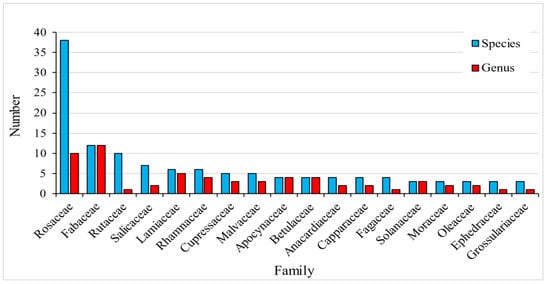
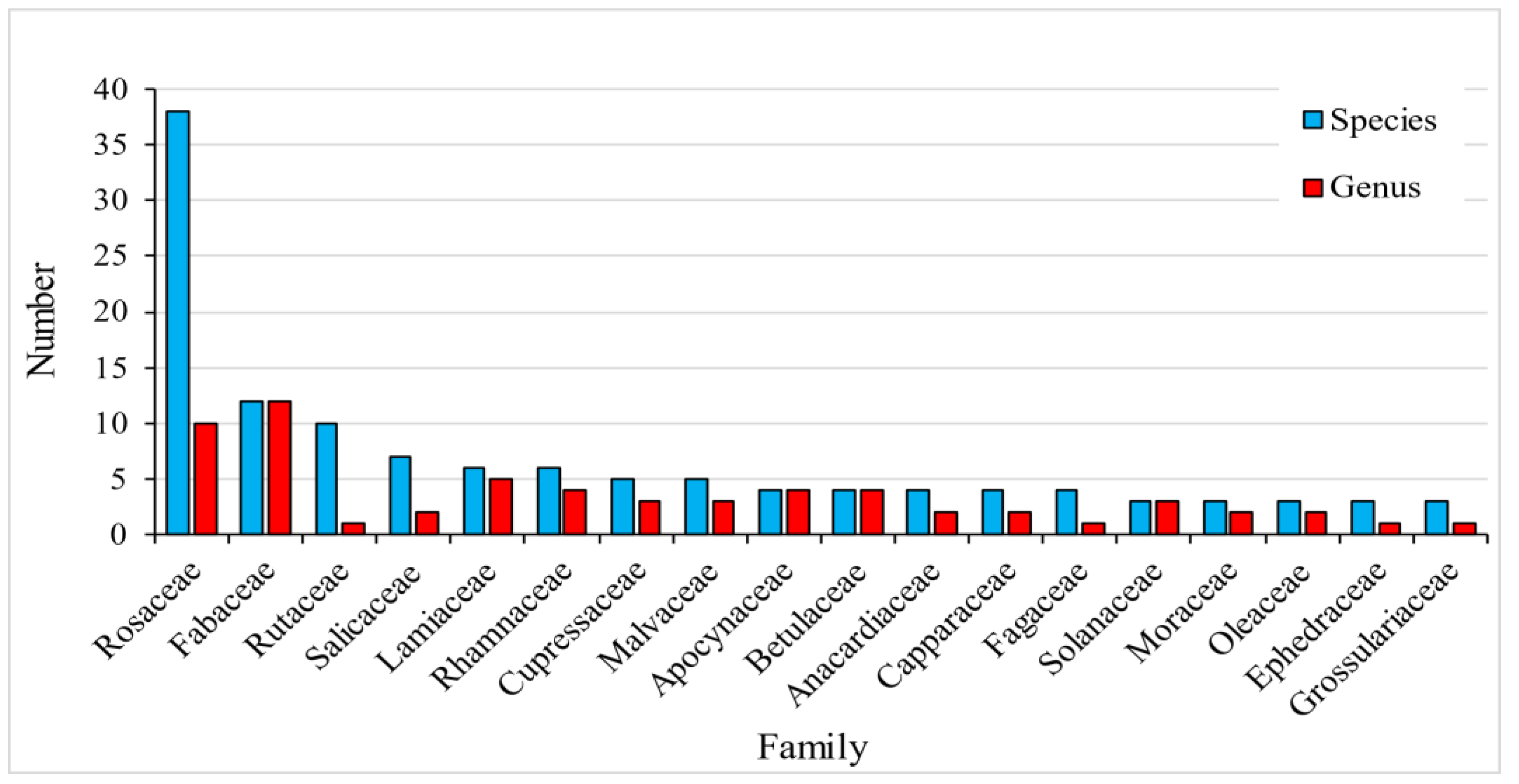
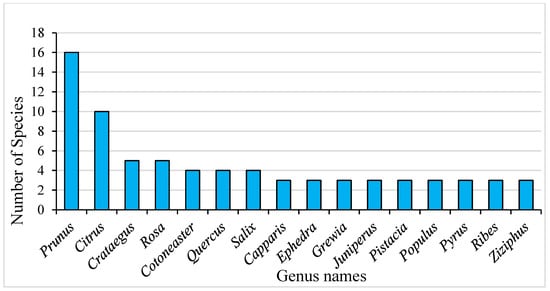
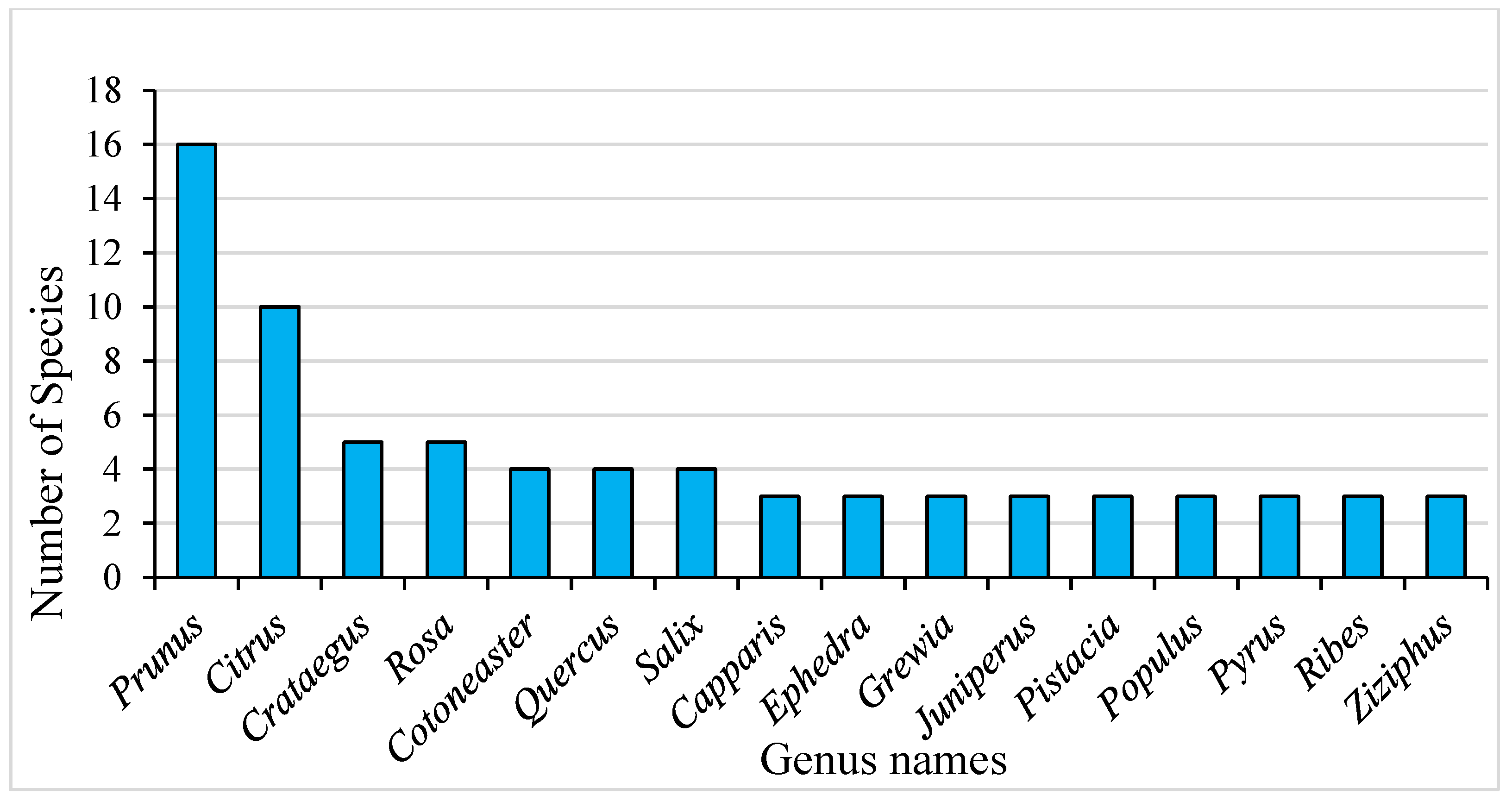
Table 1 indicated that the plant families contributing the highest number of medicinal species was Rosaceae and Fabaceae each with 38 and 12 species, respectively; these are the most used families in Iran, followed by Rutaceae (10 species) and Salicaceae (7 species) (Figure 1). The genus Prunus participates with the highest number of species (16 species) (Figure 2).
Figure 1.
Plant families and the number of genera and species of Iranian medicinal trees and shrubs which have been reported in the literature.
Figure 2.
Plant genera with the highest number of species of Iranian medicinal trees and shrubs reported in the literature.
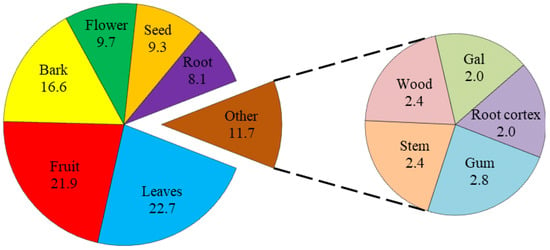
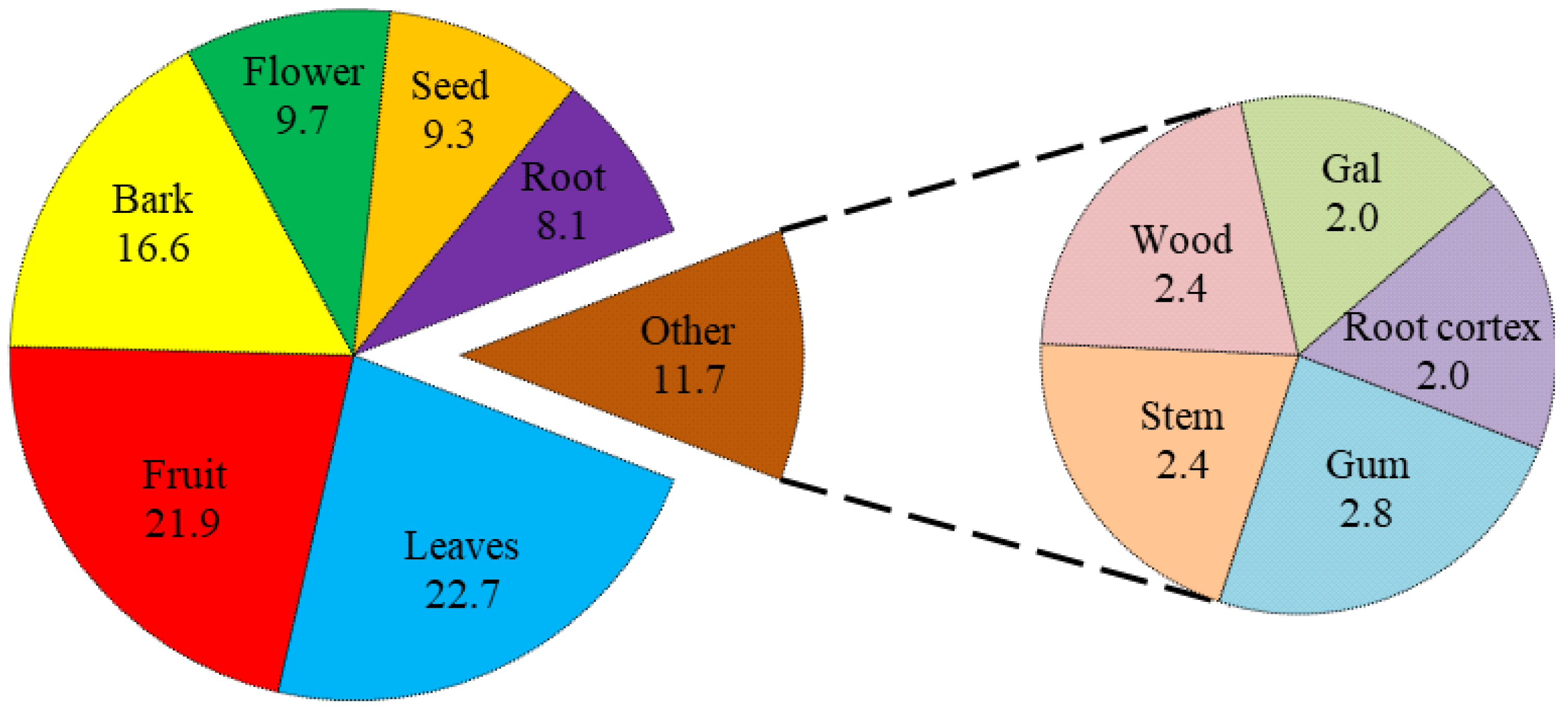
The analysis of the parts used of reported medicinal trees and shrubs in Iran indicated the parts most used are leaves (22.7%), followed by fruits (21.9%), bark (16.6%), flower (9.7%), seed (9.3 %), root (8.1%) and others (wood, gall, stem, gum, root cortex, collectively 11.7%) (Figure 3).
Figure 3.
Plant parts used for medicinal applications (expressed as percent of the total) based on data reported in the literature for Iranian medicinal trees and shrubs.
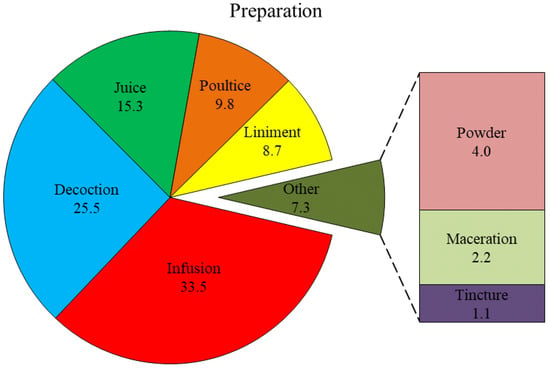
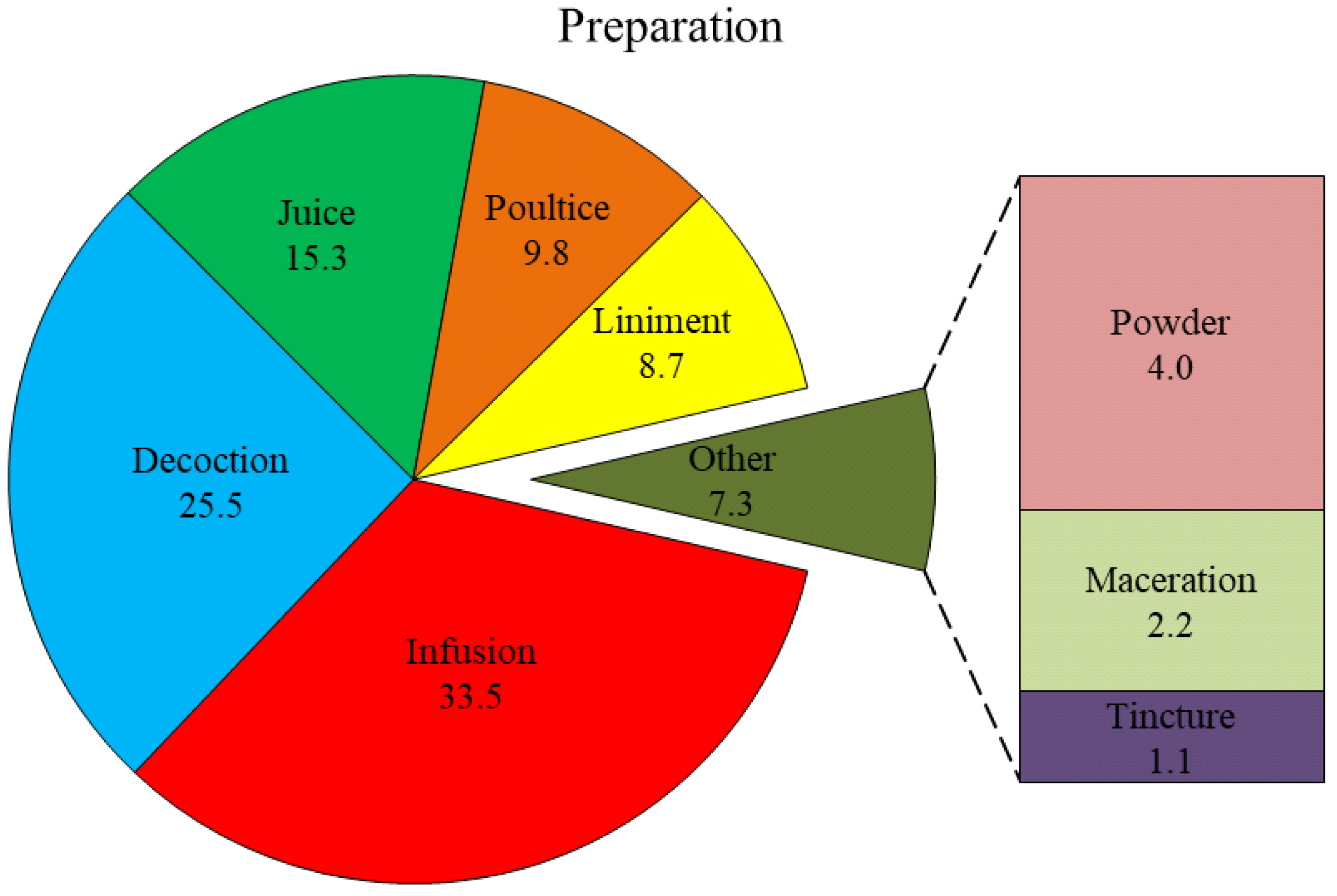
Modes of preparation were grouped into eight different and well-defined categories (infusion, decoction, juice, poultice, liniment, powder, maceration, and tincture). The most used preparation was infusion (33.5%) followed by decoction (25.5%), juice (15.3%), poultice (9.8%), liniment (8.7%) and others (7.3%) (Figure 4).
Figure 4.
Mode of preparation of plant parts and their percentages based on data reported in the literature for Iranian medicinal trees and shrubs.
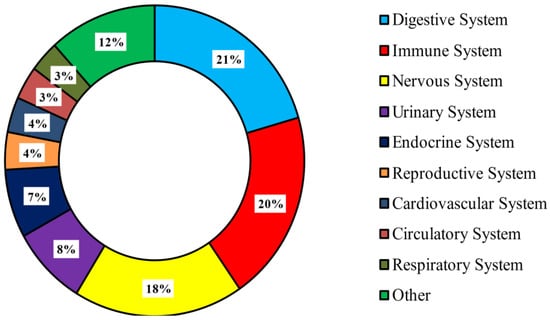
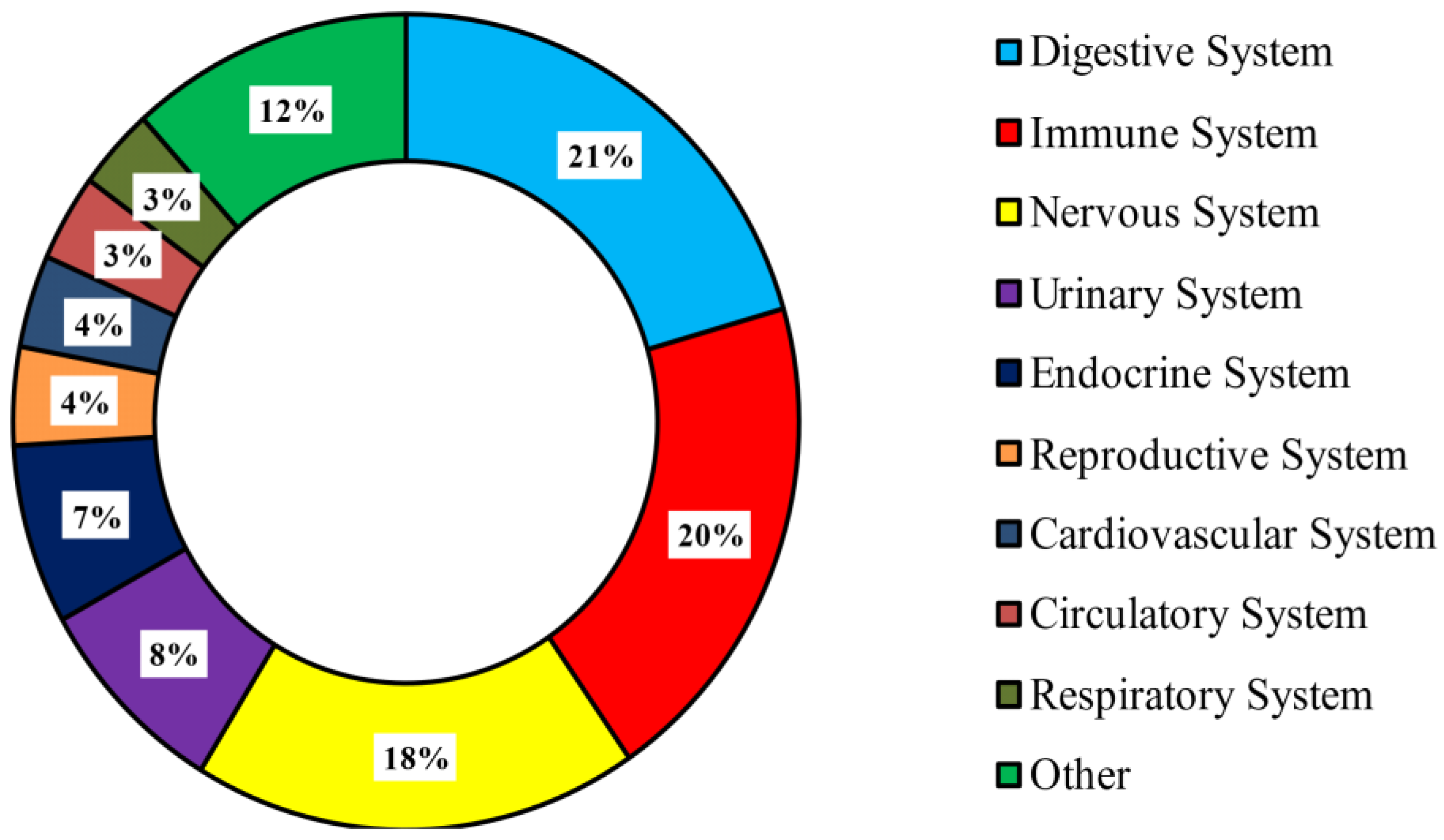
The highest percentage of plants were used for digestive system treatment (21%), followed by immune system treatment (20%). Among the reported tree and shrub species, 18 percent have been reported in the treatment of nerve diseases, urinary system 8%, endocrine system 7%, reproductive system and cardiovascular system 4%, circulatory system and respiratory system 3% and other diseases 12%. (Figure 5).
Figure 5.
The most frequently cited health problems treated by the trees and shrubs in Iran.
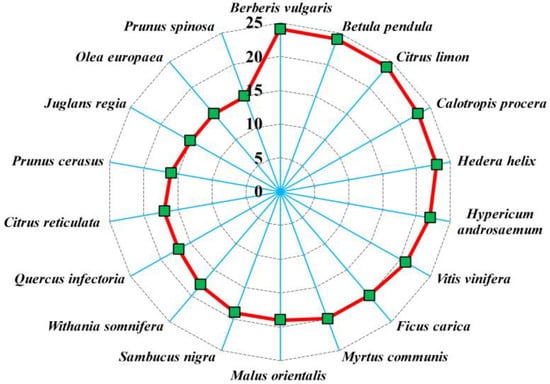
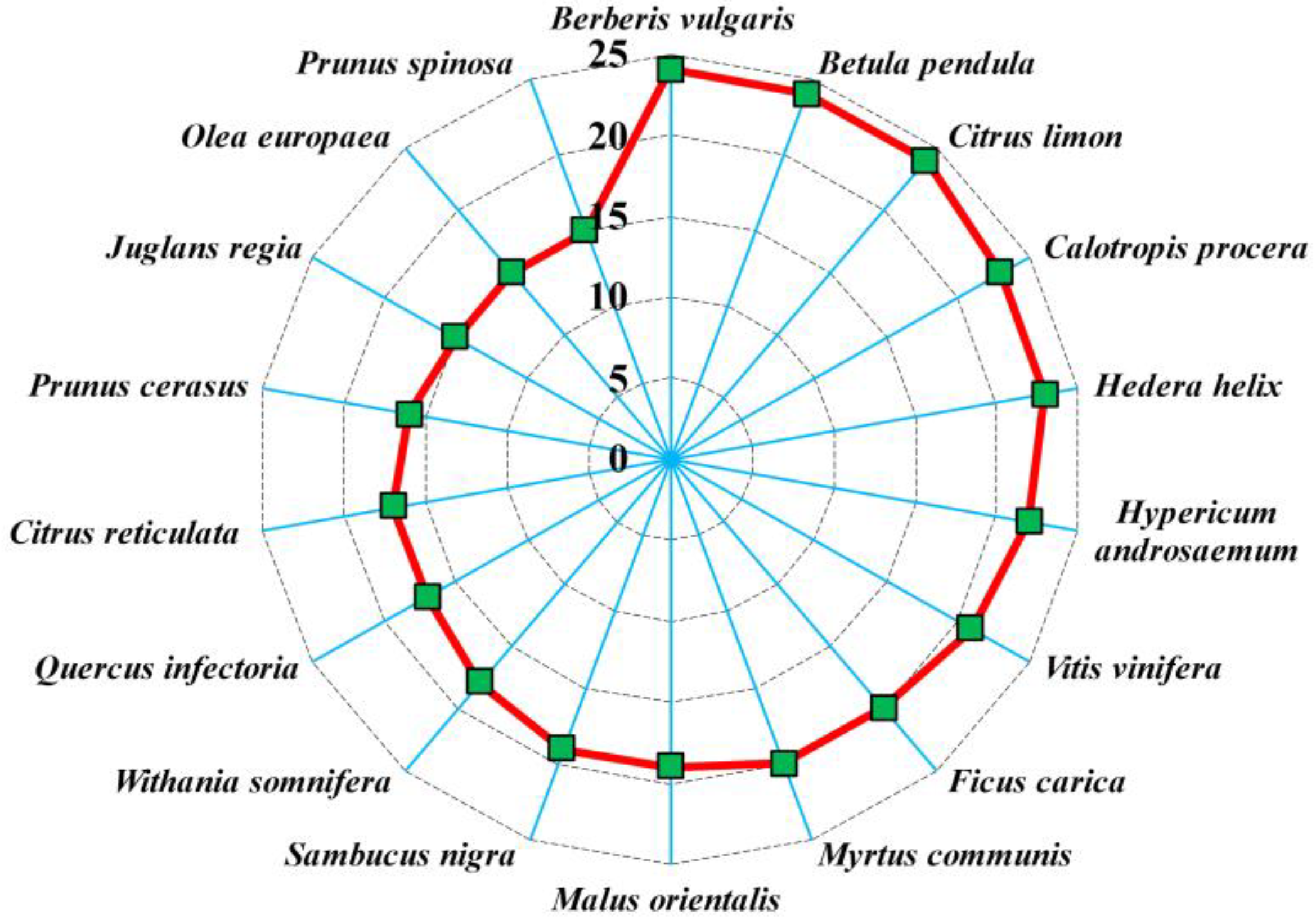
In Figure 6, species with the highest number of uses have been identified. Berberis vulgaris, Citrus limon and Betula pendula, with 24 types of uses, are the highest percentage of medicinal tree and shrub species introduced from Iran. The species that are in the next ranks are: Calotropis procera (23 number of uses), Hedera helix (23 number of uses), Hypericum androsaemum (22 number of uses) and Vitis vinifera (21 number of uses).
Figure 6.
Trees and shrubs species with the largest number of uses in Iran.
As stated in Table 2, forty-three species have been also reported for miscellaneous uses including edible, cosmetics, making candy, making baskets, toothbrush, house building, as natural dyes and as flavors in food, etc.
Table 2.
List of tree and shrub species in Iran for other ethnobotanical uses.
3. Discussion
Iran, renowned as one of the earliest civilizations in the world, possesses a worthwhile history in traditional medicine, dating back to the Babylonian–Assyrian civilization era. Iran is not only rich in its biodiversity, but it is also well known as a country with high ethnic diversity. It is a multi-ethnic country with various ethnic groups including Persians, Kurds, Arabs, Lurs, Turkmen, Baluch, and Azari communities. Due to the ancient civilization and various ethnicities, as well as its situation at the heart of the Silk Road that connected it with other countries, Iran enjoys a variety of cultures, providing a rich backbone for the expansion of ethnobotanical knowledge and plant-based medicines [1].
In the last decades, several ethnobotanical investigations have been reported in various geographical regions of the country [55]. However, there are no distinct references on the ethnobotanical applications of Iranian woody plants and most of the publications and documents are scattered. Thus, we compiled these scattered data together in a single document for the next scientific works with ethnobotanical interests. To our knowledge, this paper presents the first comprehensive report associated with the ethnobotanical uses of woody plants in Iran.
In this review, a total of 174 species of trees and shrubs belonging to 56 families were recorded and found to be useful to cure various ailments in different regions of Iran (Table 1).
From the taxonomical point of view, woody plants that are being used for ethnobotanical purpose in Iran belong to gymnosperms (9 species from Cupressaceae, Ephedraceae, and Taxaceae) and angiosperms (monocots contain 3 species and Dicots contain 162 species). Our results revealed that the maximum number of ethno-medicinal plant species belongs to family Rosaceae (38 species) followed by Fabaceae (12 species) and Rutaceae (10 species). In ethnofloristic works conducted in Iran, these three families are always predominating at the top of the list [1,55].
Family Rosaceae comprises of ca. 91 genera and 2950 species/infraspecific taxa in the world [56]. Among the chemical components, sugar alcohols, terpenoids, tannins, cyanogenic glycosides, saponins, mucilage, and cyclitols have been reported in this family [57]. Rosaceae is the first large family in case of diversity and endemism of trees and shrubs in Iran, including many medicinal woody species. Different species of this family including Cotoneaster nummularius Fisch. & C.A.Mey., Cydonia oblonga Mill., Rosa beggeriana Schrenk ex Fisch. & C.A.Mey., Rosa × damascene Mill., Rosa foetida Herrm., and Sorbus aucuparia L. are the most popular in Iranian folk medicine, and are often used for the treatment of digestive ailments, neurological complaints, urinary disorders, and diabetes [1,55,57,58].
The genus Rosa L. is one of the most important genera in this family, which includes approximately 200 shrubby species distributed widely throughout the temperate and subtropical habitats of the northern hemisphere. Roses have worldwide economic importance as a source of essential oils for perfumes, for medicinal properties, as ornamental plants, and in the cut flower industry. Several species of this genus are being used for ethnobotanical purpose in Iran. Rose water is used as dietary supplements and alternative medicine and is commonly used for flavoring in baking and other cooking. Rose water is referred to the liquid obtained from the cooled steam (distillation) of Rosa × damascena (Table 1 and Table 2). Furthermore, the fruits (hips) of different species of Rosa genus have a long history of traditional use in folk medicine in different parts of the world. In Iranian traditional medicine, the fruits of R. canina and R. beggeriana are used as a diuretic and for the treatment of hypertension and kidney stones [50,51,59].
Fabaceae (Leguminosae) is the third major family of vascular plants in the world and contains ca. 751 genera and 19,500 species/infraspecific taxa [56]. Among the chemical components, unusual aminoacids and tannins occur in the family, often with alkaloids and sometimes cyanogenic. It is the largest plant family in Iranian flora, including many medicinal plants. Various woody species of this family including Alhagi spp., Astragalus spp., Colutea buhsei (Boiss.) Shap., Indigofera oblongifolia Forssk., Prosopis cineraria (L.) Druce, Indigofera argentea Burm.f., and Sophora mollis (Royle) Graham ex Baker, are the most popular plants in Iranian traditional remedies and are often used for the cure of urinary disorders, gastrointestinal ailments, respiratory diseases, and metabolic problems [1,25]. Astragalus L. comprises of ca. 2900 annual and perennial species which is the largest genus in the plant kingdom and widely utilized as ornamental, medication, food, and fuel. The resins from A. gummifer were used for the production of Katira, which is mainly applied as a hair tonic [1,42,57,60].
Among the Fabaceae spp., different Alhagi species, have notable traditional medicinal properties in various regions of the country. Tarangabin, a kind of manna which is produced on some Alhagi species, is collected mostly in Iran and Afghanistan, and exported from these areas to other countries [61]. It is sweet, yellowish white in color and semi-liquid exudate, created on the aerial parts of some Alhagi species which is produced by an insect called Poophilus nebulosus Leth. The medicinal properties of Tarangabin have been mentioned in some major Materia Medica manuscripts in the Islamic era. Tarangabin has various pharmacological properties including antioxidant, anti-inflammatory, antipyretic, diaphoretic, diuretic, expectorant, analgesic, and gastrointestinal effects [61].
Family Rutaceae comprises of ca. 148 genera and 2070 species/infraspecific taxa in the world [56]. It comprises a wide variety of alkaloids, volatile oils, rhamno–glucosides, coumarins and terpenoids. Alkaloids include alkaloidal amines, imidazole, indole isoquinoline, pyridine, pyrrolidine, quinazoline types. Many of the fruits are rich in citric acid and other acids including vitamin C [57]. It includes many economically and medicinally important species [1,57]. In the ethnobotanical diversity of trees and shrubs of Iran, the dominance of Rutaceae is basically explained by the genus Citrus. It is one of the world’s major fruit crops with global availability and popularity contributing to human health and diets [53]. In Iran, different species of this genus are consumed in food, beverage, cosmetic and therapeutic applications (Table 1 and Table 2) [53].
Some of the reported plants in this paper were well-known for the people of the region and have a long reputation in Iran. Our survey showed that there were several Quercus spp. with different applications and many recent papers confirmed some of their activities [62]. For example, Quercus brantii, Q. infectoria and Q. robur bearing galls have been traditionally used for centuries by the people of Iran (Table 1 and Table 2). The regions of the Zagros Mountains in the west of Iran, are the main producer of the oak galls. The galls are even smuggled out of the country illegally because of their high economic value. Gallic acid and its derivatives isolated from Quercus species demonstrated a broad range of beneficial effects in prevention and/or management of several disorders; also, their acceptable safety and stability profiles make them significant options to be introduced as dietary supplements. These compounds have been reported to have therapeutic activities in gastrointestinal, neuropsychological, metabolic, and cardiovascular disorders [42,62].
Moreover, some of the plants listed in this study were only used in Iranian folk medicine. For instance, Ribes khorasanicum Saghafi & Assadi, known as Ghareh Ghat, that grows only in Iran and was prescribed for the treatment of diabetes and as antihypertensive. Another example is Amygdalus lycioides Spach is a species of almond that grows only in Iran and was used by Lor people for the treatment of diabetes, cough, nausea, intestinal worms, toothache, and infectious wounds [42]. Prunus eburnea and P. haussknechtii are another example; they are endemic popular medicinal plants that are used by traditional healers for treating alopecia, hyperlipidemia, hypertension, toothache, and as a laxative.
Our results showed that people reported using medicinal plants mostly for the treatment of gastrointestinal problems. Similarly, this pattern can be seen in ethnofloristic works conducted in various areas of the country. The prevalence of gastrointestinal problems such as constipation, indigestion, diarrhea, vomit, gastroenteritis, and reflux is very high in Iran. In addition, because of the side effects inherent to synthetic drugs, the exploration of new natural drugs with minimum adverse effects is highly welcomed. For this purpose, medicinal plants are good candidates especially since they are more compatible with human nature [55].
In addition to the potential therapeutic application of trees and shrubs of Iran, many other woody plants are also used for food (edible oils, flavorings, beverages, etc.), perfumery and cosmetics, natural dyes, handicraft, house building, insecticides and ornamentals. Most of the wild fruits and seeds (mostly Berberis integerrima, Pistacia spp., Quercus spp., Crataegus pontica, Prunus mahaleb, Myrtus communis, Rosa canina, Rubus caesius, Cornus mas, Corylus avellana) are used for food (Table 1 and Table 2). In Iran, traditional food is known to be an important source of dietary energy for local and ethnic people. For example, one of the famous foods, commonly known as “Qovatoo” which is prepared by a mixture of fruits and seeds powder of 19 plants, particularly Pistacia vera L., Juglans regia L., Myrtus communis L., Coriandrum sativum L., and Sesamum indicum L. Indigenous people believe that it will strengthen male potency and improves intelligence and memory [31,63]. Another example is acorn seeds (particularly Quercus brantii and Quercus infectoria) that are used for bread production by local people in southern and western Iran (especially in the provinces of Kurdistan and Luristan). Indigenous people use a corn flour for the preparation of flatbreads and cakes, particularly when other resources are lacking. Quercus species are considered as a nutritionally rich source of energy (source of carbohydrates, proteins, and fat), justifying their use as food or ingredient food for thousands of years in the human diet, such as in bread production or as an ingredient for making coffee [64,65].
Therefore, this review demonstrates that various species of trees and shrubs of Iran have great traditional uses in different ethnobotanical practices throughout the country. However, despite the rich knowledge that lies behind the folk uses of the Iranian ethnoflora, few attempts have been made to evaluate the phytochemical and biological potential of endemic woody species such as Ribes khorasanicum, Prunus eburnea and P. haussknechtii. According to the results of our study, some species should be given precedence in subsequent investigations, particularly for the treatment of some globally prevalent diseases such as diabetes, including Ribes khorasanicum Saghafi & Assadi, Rhizophora mucronata Poir., Berberis integerrima Bunge, Prunus spinosa L., Quercus brantii Lindl., Vaccinium arctostaphylos L., Rhus coriaria L., and Ziziphus jujuba Mill. (Table 1). In this context, the best and quickest way to species selection for phytochemical, biological and pharmacological studies is by reviewing the ethnobotanical literature, which highlights the importance of such studies [66].
Finally, some Iranian tree and shrub species have a narrow distribution and collection from wild populations will threaten these taxa. Some rare and endemic species of trees and shrubs including Ribes khorasanicum Saghafi & Assadi, Prunus eburnea (Spach) Aitch. and P. haussknechtii C.K.Schneid. are frequently used in Iranian traditional medicine (ITM), which was one of this study’s most intriguing findings. Ribes khorasanicum is an important endemic medicinal plant, which has been severely harvested and is now endangered (EN) with narrow distribution and low abundance. Prunus eburnea and P. haussknechtii are threatened medicinal plants belonging to the Rosaceae family. Continued overutilization and habitat degradation of these invaluable species for therapeutic and food purposes may lead to the eradication from the area. Due to overharvesting, these species are calling a wake-up alarm for conservation.
4. Methods
The relevant articles about ethnobotanical uses of trees and shrubs species by the Iranian people were searched from 1937 to 2022. The literature survey was performed using various electronic databases (Medline, PubMed, Science Direct, Scopus, and Google Scholar websites). In addition, some Persian papers, botanical and folk medicine books [15,30] were considered. The following keywords were selected: “trees and shrubs species in Iran”, “Iranian medicinal plants”, “ethnobotanical uses of trees and shrubs in Iran”. After a comprehensive search, we reviewed a total 66 publications that provided beneficial information about different application of these medicinal trees and shrubs in human and livestock, in Iran. In this review, scientific and author names of medicinal trees and shrubs were checked for the latest changes according to the database www.theplantlist.org. All statistical analysis was carried out with Microsoft Excel 2019 software.
5. Conclusions
Ethnobotany is the organized survey of plants and their applied usages through the folklore information of an autochthonous culture and people. Ethnobotanical studies have been conducted in many areas of Iran and by collecting them, knowledge of the use of plants in the treatment of diseases can be well-maintained. To conclude, the information in this scientific literature review, related to documented traditional medicinal practices and ethnobotanical knowledge of shrub and tree species in Iran, represents a useful tool to species collection for phytochemical and pharmaceutical surveys and such data should be preserved for the production of plant-based medicine research in the future. In our opinion, there is still a large space for scientific research that could deepen the above-stated aspects, encouraging further research in this field. Further comprehensive pharmacological, ecological, and clinical studies as well as phytochemical investigations of Iranian endemic medicinal trees and shrubs are recommended. Furthermore, several endemic taxa of trees and shrubs of Iran are potentially threatened species. Special consideration should be given to these plants in the area and protection from extinction by excessive utilization. Some of these invaluable species have very limited distribution in the country and need special conservation strategies for their survival. If overexploitation and habitat destruction of such invaluable medicinal plants is continued, they may vanish from the area within a few years.
Author Contributions
Conceptualization, M.N. and M.S.A.; methodology, M.N., M.S.A., R.O., M.R.J.; writing—original draft preparation, M.E.T.Y.; writing—review and editing, M.N., M.E.T.Y.; J.M.; investigation, M.N., M.S.A., M.M., B.M.; supervision, M.N. and J.M.; funding acquisition, M.N. and J.M. All authors have read and agreed to the published version of the manuscript.
Funding
This research received no external funding.
Institutional Review Board Statement
Not applicable.
Informed Consent Statement
Not applicable.
Data Availability Statement
No datasets analyzed or generated during this study.
Acknowledgments
The authors thanks from Payame Noor University for helpful supporters.
Conflicts of Interest
The authors declare no conflict of interest.
References
- Amiri, M.S.; Yazdi, M.E.T.; Rahnama, M. Medicinal plants and phytotherapy in Iran: Glorious history, current status and future prospects. Plant Sci. Today 2021, 8, 95–111. [Google Scholar] [CrossRef] [Scilit]
- Nadaf, M.; Joharchi, M.; Amiri, M.S. Ethnomedicinal uses of plants for the treatment of nervous disorders at the herbal markets of Bojnord, North Khorasan Province, Iran. Avicenna J. Phytomed. 2019, 9, 153. [Google Scholar] [PubMed]
- Mousavi-Kouhi, S.M.; Beyk-Khormizi, A.; Mohammadzadeh, V.; Ashna, M.; Es-haghi, A.; Mashreghi, M.; Hashemzadeh, V.; Mozafarri, H.; Nadaf, M.; Taghavizadeh Yazdi, M.E. Biological synthesis and characterization of gold nanoparticles using Verbascum speciosum Schrad. and cytotoxicity properties toward HepG2 cancer cell line. Res. Chem. Intermed. 2022, 48, 167–178. [Google Scholar] [CrossRef] [Scilit]
- Es-haghi, A.; Javadi, F.; Yazdi, M.E.T.; Amiri, M.S. The Expression of Antioxidant Genes and Cytotoxicity of Biosynthesized Cerium Oxide Nanoparticles Against Hepatic Carcinoma Cell Line. Avicenna J. Med. Biochem. 2019, 7, 16–20. [Google Scholar] [CrossRef] [Scilit]
- Modarres, M.; Taghavizadeh Yazdi, M.E. Elicitation improves phenolic acid content and antioxidant enzymes activity in salvia leriifolia cell cultures. Iran. J. Sci. Technol. Trans. A Sci. 2021, 45, 849–855. [Google Scholar] [CrossRef] [Scilit]
- Darroudi, M.; Yazdi, M.E.T.; Amiri, M.S. Plant-Mediated Biosynthesis of Nanoparticles. In 21st Century Nanoscience–A Handbook; CRC Press: Boca Raton, FL, USA, 2020; pp. 1-1–1-18. [Google Scholar]
- Ghorani-Azam, A.; Mottaghipisheh, J.; Amiri, M.S.; Mashreghi, M.; Hashemzadeh, A.; Haddad-Mashadrizeh, A.; Nourbakhsh, F.; Nadaf, M.; Qayoomian, M.; Yazdi, M.E.T. Resveratrol-Mediated Gold-Nanoceria Synthesis as Green Nanomedicine for Phytotherapy of Hepatocellular Carcinoma. Front. Biosci. Landmark 2022, 27, 227. [Google Scholar] [CrossRef] [Scilit] [PubMed]
- Ghorbani, A.; Naghibi, F.; Mosadegh, M. Ethnobotany, ethnopharmacology and drug discovery. Iran. J. Pharm. Sci. 2006, 2, 109–118. [Google Scholar]
- Dolatkhahi, M.; Dolatkhahi, A.; Nejad, J.B. Ethnobotanical study of medicinal plants used in Arjan–Parishan protected area in Fars Province of Iran. Avicenna J. Phytomed. 2014, 4, 402. [Google Scholar]
- Ogwu, M.; Osawaru, M.; Obahiagbon, G. Ethnobotanical survey of medicinal plants used for traditional reproductive care by Usen people of Edo State, Nigeria. Malaya J. Biosci. 2017, 4, 17–29. [Google Scholar]
- Mood, S.G. A contribution to some ethnobotanical aspects of Birjand flora (Iran). Pak. J. Bot. 2008, 40, 1783–1791. [Google Scholar]
- Naghibi, F.; Esmaeili, S.; Malekmohammadi, M.; Hassanpour, A.; Mosaddegh, M. Ethnobotanical survey of medicinal plants used traditionally in two villages of Hamedan, Iran. Res. J. Pharmacogn. 2014, 1, 7–14. [Google Scholar]
- Noroozi, J.; Talebi, A.; Doostmohammadi, M.; Manafzadeh, S.; Asgarpour, Z.; Schneeweiss, G.M. Endemic diversity and distribution of the Iranian vascular flora across phytogeographical regions, biodiversity hotspots and areas of endemism. Sci. Rep. 2019, 9, 1–12. [Google Scholar] [CrossRef] [Scilit] [PubMed]
- Sadeghi, Z.; Kuhestani, K.; Abdollahi, V.; Mahmood, A. Ethnopharmacological studies of indigenous medicinal plants of Saravan region, Baluchistan, Iran. J. Ethnopharmacol. 2014, 153, 111–118. [Google Scholar] [CrossRef] [Scilit]
- Mozaffarian, V. Identification of Medicinal and Aromatic Plants of Iran; Farhange Moaser: Tehran, Iran, 2017. [Google Scholar]
- Amiri, M.S.; Joharchi, M.R.; TaghavizadehYazdi, M.E. Ethno-medicinal plants used to cure jaundice by traditional healers of Mashhad, Iran. Iran. J. Pharm. Res. IJPR 2014, 13, 157. [Google Scholar]
- Joharchi, M.R.; Amiri, M.S. Taxonomic evaluation of misidentification of crude herbal drugs marketed in Iran. Avicenna J. Phytomed. 2012, 2, 105. [Google Scholar] [PubMed]
- Amiri, M.S.; Jabbarzadeh, P.; Akhondi, M. An ethnobotanical survey of medicinal plants used by indigenous people in Zangelanlo district, Northeast Iran. J. Med. Plants Res. 2012, 6, 749–753. [Google Scholar]
- Emami, S.; Nadjafi, F.; Amine, G.; Amiri, M.; Khosravi Mt, N.M. Les espèces de plantes médicinales utilisées par les guérisseurs traditionnels dans la province de Khorasan, nord-est de l’Iran. J. Ethnopharmacol. 2012, 48, 48–59. [Google Scholar]
- Safa, O.; Soltanipoor, M.A.; Rastegar, S.; Kazemi, M.; Dehkordi, K.N.; Ghannadi, A. An ethnobotanical survey on hormozgan province, Iran. Avicenna J. Phytomed. 2013, 3, 64. [Google Scholar] [PubMed]
- Rajaei, P.; Mohamadi, N. Ethnobotanical study of medicinal plants of Hezar mountain allocated in south east of Iran. Iran. J. Pharm. Res. IJPR 2012, 11, 1153. [Google Scholar]
- Ghorbani, A. Studies on pharmaceutical ethnobotany in the region of Turkmen Sahra, north of Iran:(Part 1): General results. J. Ethnopharmacol. 2005, 102, 58–68. [Google Scholar] [CrossRef] [Scilit]
- Hooper, D.; McNair, J.B.; Field, H. Useful Plants and Drugs of Iran and Iraq; Field Museum of Natural History: Chicago, IL, USA, 1937; Volume 9. [Google Scholar]
- Pirbalouti, A.G.; Malekpoor, F.; Enteshari, S.; Yousefi, M.; Momtaz, H.; Hamedi, B. Antibacterial activity of some folklore medicinal plants used by Bakhtiari tribal in Southwest Iran. Int. J. Biol. 2010, 2, 55. [Google Scholar] [CrossRef] [Scilit]
- Amiri, M.S.; Joharchi, M.R. Ethnobotanical investigation of traditional medicinal plants commercialized in the markets of Mashhad, Iran. Avicenna J. Phytomed. 2013, 3, 254. [Google Scholar] [PubMed]
- Vakili Shahrbabaki, S.M.A. The Ethnobotanical Study of Medicinal Plants in (Dehe-lolo-vameghabad-bidoieh) Village. Kerman, Iran. J. Med. Plants By-Prod. 2016, 5, 105–111. [Google Scholar]
- Khodayari, H.; Amani, S.; Amiri, H. Ethnobotanical study of medicinal plants in the Northeast of Khuzestan province: Identification and traditional uses. J. Echophytochem. Med. Plants 2014, 8, 12–26. [Google Scholar]
- Delfan, B.; Bahmani, M.; Hassanzadazar, H.; Saki, K.; Rafieian-Kopaei, M.; Rashidipour, M.; Bagheri, F.; Sharifi, A. Ethnobotany study of effective medicinal plants on gastric problems in Lorestan province, West of Iran. J. Chem. Pharm. Res. 2015, 7, 483–492. [Google Scholar]
- Moghanloo, L.; Ghahremani Nezhad, F.; Vafadar, M. Ethnobotanical study of medicinal plants in the central district of the Zanjan county, Zanjan province, Iran. J. Med. Herbs 2019, 9, 121–131. [Google Scholar]
- Zargari, A. Medicinal Plants, 6th ed.; Institute of Tehran University Press and Publications: Tehran, Iran, 1996. [Google Scholar]
- Nasab, F.K.; Khosravi, A.R. Ethnobotanical study of medicinal plants of Sirjan in Kerman Province, Iran. J. Ethnopharmacol. 2014, 154, 190–197. [Google Scholar] [CrossRef] [Scilit]
- Bahmani, M.-P.; Bahmani, M.; Shahsavari, S.; Naghdi, N.; Ezatpour, B.; Moradniani, M.; Rafieian-Kopaei, M.; Sari, M. A review of the antiparasitic medicinal plants used in ethnobotany of different regions of Iran. Der Pharma Chem. 2016, 8, 134–138. [Google Scholar]
- SHarifi Far, F.; Moharam Khani, M.; Moatar, F.; Babakhanlo, P.; Khodami, M. Ethnobotanical study of medicinal plants of Joopar Mountains of Kerman province, Iran. J. Kerman Univ. Med. Sci. 2014, 20, 37–51. [Google Scholar]
- Asadi-Samani, M.; Moradi, M.-T.; Mahmoodnia, L.; Alaei, S.; Asadi-Samani, F.; Luther, T. Traditional uses of medicinal plants to prevent and treat diabetes; an updated review of ethnobotanical studies in Iran. J. Nephropathol. 2017, 6, 118. [Google Scholar] [CrossRef] [Scilit]
- Baharvand-Ahmadi, B.; Asadi-Samani, M. A mini-review on the most important effective medicinal plants to treat hypertension in ethnobotanical evidence of Iran. J. Nephropharmacol. 2017, 6, 3. [Google Scholar] [PubMed]
- Taghavizadeh Yazdi, M.E.; Darroudi, M.; Amiri, M.S.; Zarrinfar, H.; Hosseini, H.A.; Mashreghi, M.; Mozafarri, H.; Ghorbani, A.; Mousavi, S.H. Antimycobacterial, anticancer, antioxidant and photocatalytic activity of biosynthesized silver nanoparticles using Berberis Integerrima. Iran. J. Sci. Technol. Trans. A Sci. 2022, 46, 1–11. [Google Scholar] [CrossRef] [Scilit]
- Sobhani, Z.; Akaberi, M.; Amiri, M.S.; Ramezani, M.; Emami, S.A.; Sahebkar, A. Medicinal species of the genus Berberis: A review of their traditional and ethnomedicinal uses, phytochemistry and pharmacology. Pharmacol. Prop. Plant-Deriv. Nat. Prod. Implic. Hum. Health 2021, 547–577. [Google Scholar] [CrossRef] [Scilit]
- Mosaddegh, M.; Naghibi, F.; Moazzeni, H.; Pirani, A.; Esmaeili, S. Ethnobotanical survey of herbal remedies traditionally used in Kohghiluyeh va Boyer Ahmad province of Iran. J. Ethnopharmacol. 2012, 141, 80–95. [Google Scholar] [CrossRef] [Scilit]
- Jalali, H.; Nejad, A.M.; Ebadi, A.; Laey, G. Ethnobotany and folk pharmaceutical properties of major trees or shrubs in northeast of Iran. Asian J. Chem. 2009, 21, 5632. [Google Scholar]
- Akaberi, M.; Boghrati, Z.; Amiri, M.S.; Khayyat, M.H.; Emami, S.A. A Review of Conifers in Iran: Chemistry, Biology and their Importance in Traditional and Modern Medicine. Curr. Pharm. Des. 2020, 26, 1584–1613. [Google Scholar] [CrossRef] [Scilit]
- Eslami Farouji, A.; Khodayari, H. Ethnomedicinal plants of Farouj district, north khorasan province, Iran. J. Herb. Drugs (Int. J. Med. Herbs) 2016, 7, 21–36. [Google Scholar]
- Mehrnia, M.; Akaberi, M.; Amiri, M.; Nadaf, M.; Emami, S. Ethnopharmacological studies of medicinal plants in central Zagros, Lorestan Province, Iran. J. Ethnopharmacol. 2021, 280, 114080. [Google Scholar] [CrossRef] [Scilit]
- Yazdi, M.E.T.; Khara, J.; Husaindokht, M.R.; Reza, H.; Sadeghnia, S.E.B.; Amiri, M.S.; Darroudi, M. Biocomponents and antioxidant activity of Ribes khorasanicum. Int. J. Basic Sci. Med. 2018, 3, 99–103. [Google Scholar] [CrossRef] [Scilit]
- Yazdi, M.E.T.; Khara, J.; Housaindokht, M.R.; Sadeghnia, H.R.; Bahabadi, S.E.; Amiri, M.S.; Mosawee, H.; Taherzadeh, D.; Darroudi, M. Role of Ribes khorassanicum in the biosynthesis of AgNPs and their antibacterial properties. IET Nanobiotechnol. 2018, 13, 189–192. [Google Scholar] [CrossRef] [Scilit]
- Jafari, F.; Ramezani, M.; Nomani, H.; Amiri, M.S.; Moghadam, A.T.; Sahebkar, A.; Emami, S.A.; Mohammadpour, A.H. Therapeutic Effect, Chemical Composition, Ethnobotanical Profile of Eucalyptus globulus: A Review. Lett. Org. Chem. 2021, 18, 419–452. [Google Scholar] [CrossRef] [Scilit]
- Farhadi, A.; Hassanzad-Azar, H.; Pour-Anbari, P.; Joudaki, Y.; Shahsavari, F.; Bahmani, M.; Rafieian-Kopaei, M. The most important medicinal plants affecting the brain and nerves: An overview on Iranian ethnobotanical sources. Der Pharma Chem. 2016, 8, 269–274. [Google Scholar]
- Moein, M.; Zarshenas, M.M.; Khademian, S.; Razavi, A.D. Ethnopharmacological review of plants traditionally used in Darab (south of Iran). Trends Pharm. Sci. 2015, 1, 39–43. [Google Scholar]
- Akhondi, M.; Zare Hassanabadi, M.; Amiri, M.; Shabani, S. The effects of mechanical and chemical treatments on dormancy breaking and seed germination indices of Myrtus communis L. Iran. J. Seed Sci. Technol. 2017, 5, 1–7. [Google Scholar]
- Sobhani, Z.; Nikoofal-Sahlabadi, S.; Amiri, M.S.; Ramezani, M.; Emami, S.A.; Sahebkar, A. Therapeutic effects of Ziziphus jujuba Mill. fruit in traditional and modern medicine: A review. Med. Chem. 2019, 16, 1069–1088. [Google Scholar] [CrossRef] [Scilit] [PubMed]
- Ayati, Z.; Ramezani, M.; Amiri, M.S.; Sahebkar, A.; Emami, S.A. Genus Rosa: A Review of Ethnobotany, Phytochemistry and Traditional Aspects According to Islamic Traditional Medicine (ITM). Pharmacol. Prop. Plant-Deriv. Nat. Prod. Implic. Hum. Health 2021, 16, 353–401. [Google Scholar] [CrossRef] [Scilit]
- Ayati, Z.; Amiri, M.S.; Ramezani, M.; Delshad, E.; Sahebkar, A.; Emami, S.A. Phytochemistry, traditional uses and pharmacological profile of rose hip: A review. Curr. Pharm. Des. 2018, 24, 4101–4124. [Google Scholar] [CrossRef] [Scilit]
- Maleki, T.; Akhani, H. Ethnobotanical and ethnomedicinal studies in Baluchi tribes: A case study in Mt. Taftan, southeastern Iran. J. Ethnopharmacol. 2018, 217, 163–177. [Google Scholar] [CrossRef] [Scilit]
- Zibaee, E.; Kamalian, S.; Tajvar, M.; Amiri, M.S.; Ramezani, M.; Moghadam, A.T.; Emami, S.A.; Sahebkar, A. Citrus species: A Review of Traditional Uses, Phytochemistry and Pharmacology. Curr. Pharm. Des. 2020, 26, 44–97. [Google Scholar] [CrossRef] [Scilit]
- Razmjouei, D.; Zarei, Z.; Akbari, M. Ethnobotanical study of medicinal plants of Abadeh city in Fars province. J. Plants Ecophysiol. 2015, 7, 222–234. [Google Scholar]
- Sadeghi, Z.; Akaberi, M.; Sobhkhizi, A.; Sahebkar, A.; Emami, S.A. Evaluation the ethno-pharmacological studies in Iran during 2004–2016: A systematic review. J. Cell. Physiol. 2018, 233, 914–923. [Google Scholar] [CrossRef] [Scilit] [PubMed]
- Christenhusz, M.J.; Byng, J.W. The number of known plants species in the world and its annual increase. Phytotaxa 2016, 261, 201–217. [Google Scholar] [CrossRef] [Scilit]
- Tayarani-Najaran, Z.; Emami, S.A. Cytotoxic plants: Potential uses in prevention and treatment of cancer. In Current Cancer Treatment-Novel Beyond Conventional Approaches; IntechOpen: London, UK, 2011. [Google Scholar] [CrossRef] [Scilit]
- Mehrabian, A.; Sayadi, S.; Kuhbenani, M.M.; Yeganeh, V.H.; Abdoljabari, M. Priorities for conservation of endemic trees and shrubs of Iran: Important Plant Areas (IPAs) and Alliance for Zero Extinction (AZE) in SW Asia. J. Asia-Pac. Biodivers. 2020, 13, 295–305. [Google Scholar] [CrossRef] [Scilit]
- Mousavi, S.R.; Namaei-Ghassemi, M.; Layegh, M.; AfzalAghaee, M. Determination of methanol concentrations in traditional herbal waters of different brands in Iran. Iran. J. Basic Med. Sci. 2011, 14, 361. [Google Scholar]
- Amiri, M.S.; Joharchi, M.R.; Nadaf, M.; Nasseh, Y. Ethnobotanical knowledge of Astragalus spp.: The world’s largest genus of vascular plants. Avicenna J. Phytomed. 2020, 10, 128. [Google Scholar]
- Tavassoli, A.P.; Anushiravani, M.; Hoseini, S.M.; Nikakhtar, Z.; Baghdar, H.N.; Ramezani, M.; Ayati, Z.; Amiri, M.S.; Sahebkar, A.; Emami, S.A. Phytochemistry and therapeutic effects of Alhagi spp. and Tarangabin in traditional and modern medicine: A review. J. Herbmed Pharmacol. 2020, 9, 86–104. [Google Scholar] [CrossRef] [Scilit]
- Kahkeshani, N.; Farzaei, F.; Fotouhi, M.; Alavi, S.S.; Bahramsoltani, R.; Naseri, R.; Momtaz, S.; Abbasabadi, Z.; Rahimi, R.; Farzaei, M.H. Pharmacological effects of gallic acid in health and diseases: A mechanistic review. Iran. J. Basic Med. Sci. 2019, 22, 225. [Google Scholar]
- Sobhani, Z.; Mohtashami, L.; Amiri, M.S.; Ramezani, M.; Emami, S.A.; Simal-Gandara, J. Ethnobotanical and phytochemical aspects of the edible herb Coriandrum sativum L. J. Food Sci. 2022, 87, 1386–1422. [Google Scholar] [CrossRef] [Scilit]
- Taib, M.; Rezzak, Y.; Bouyazza, L.; Lyoussi, B. Medicinal uses, phytochemistry, and pharmacological activities of Quercus species. Evid.-Based Complement. Altern. Med. 2020. [Google Scholar] [CrossRef] [Scilit]
- Zocchi, D.M.; Bondioli, C.; Hamzeh Hosseini, S.; Miara, M.D.; Musarella, C.M.; Mohammadi, D.; Khan Manduzai, A.; Dilawer Issa, K.; Sulaiman, N.; Khatib, C. Food Security beyond Cereals: A Cross-Geographical Comparative Study on Acorn Bread Heritage in the Mediterranean and the Middle East. Foods 2022, 11, 3898. [Google Scholar] [CrossRef] [Scilit]
- Amiri, M.S.; Joharchi, M.R. Ethnobotanical knowledge of Apiaceae family in Iran: A review. Avicenna J. Phytomed. 2016, 6, 621. [Google Scholar] [PubMed]

Disclaimer/Publisher’s Note: The statements, opinions and data contained in all publications are solely those of the individual author(s) and contributor(s) and not of MDPI and/or the editor(s). MDPI and/or the editor(s) disclaim responsibility for any injury to people or property resulting from any ideas, methods, instructions or products referred to in the content. |
© 2023 by the authors. Licensee MDPI, Basel, Switzerland. This article is an open access article distributed under the terms and conditions of the Creative Commons Attribution (CC BY) license (https://creativecommons.org/licenses/by/4.0/).