


Abstract
Lime is an ancient construction material that has been utilized throughout the world in various forms, providing stable construction methods in usable conditions. Lime mortar is well known for its low carbon footprint in production and carbon absorption throughout its lifespan as a hardened material. The significant benefits of lime mortar were analyzed and reviewed for further research. Ancient lime constructions need proper maintenance for aesthetic and structural strengthening to preserve this cultural architecture of national pride. Hence, the characterization of ancient mortars is mandatory for renovation work. Here, we studied the various characterization methods available worldwide. We analyzed samples taken from the 1900-year-old Vedapureeswarar Temple of Thiruvothur, Cheyyar, and the 1800-year-old Lakshmi Narasimhar Temple of Parikkal, located in Tamil Nadu. Hardened samples from these two ancient temples were collected and analyzed. The mineralogical characterization of these mortars using SEM, XRF, FTIR and XRD gave immense knowledge of the mortar matrix. Experimental analysis indicated that using natural organic materials in the lime has made the structures more potent and stable. The characterization study provided information on the ratio of mortar mix used, the presence of organic ingredients, and the need for compatible repair materials for proper maintenance of the temple structures. The characterization study furthers the necessary knowledge to provide a compatible repair material and indicates the need for ancient construction technology in the current highly polluted environment.
1. Introduction
The long lifespan of ancient structures has interested researchers to analyze and study the use of old construction materials for present environmental conditions. These ancient monuments require proper maintenance, capable of making them more stable. The United Nations Educational, Scientific and Cultural Organization (UNESCO) lists about 1154 properties throughout the world as heritage sites, out of which 52 are on the danger list because of improper maintenance and are prone to natural calamities (such as climate change). India is home to 40 of the total heritage properties listed by UNESCO, out of which 36 heritage sites have been given international assistance. However, thousands of ancient structures (temples/palaces/mosques, etc.) are present locally in every part of the country, which need immense care for the pride they represent. India is rich in culture, resources, and numerous peoples who live united and work together to preserve their traditions in all aspects. The peoples of every region traditionally conduct the construction of any structure according to their beliefs.
The initial development of construction technology throughout the world made use of lime, the most important binder material for construction, which is readily available and can quickly be processed into a usable form for more substantial and more durable buildings [1]. Lime is a natural rock formed by the sedimentation of shell, coral, algal, fecal, and other organic debris, as well as by chemical sedimentary processes, such as the precipitation of calcium carbonate from lake or ocean water. It has been the primary binding material for construction from ancient periods until today, in partial combination with cement. Historically, people made use of materials for construction, which were minimally processed and utilized; these materials satisfied the needs of people without disturbing nature [1].
Despite their merits, modern construction materials have the major demerit of producing carbon dioxide emissions [2], which is a significant greenhouse gas. From its production phase and throughout its life span, cement material emits this harmful pollutant into the environment. The carbon dioxide sequestered by cement materials is much higher than the amount they produce in the atmosphere. Carbon dioxide is the primary greenhouse gas leading to the increase in global warming. Global warming is a global problem that is melting the ice glaciers, which will increase the sea level [3,4] and submerge coastal areas. Hence, more populated areas will be submerged by water. The introduction of cement was a major breakthrough in construction due to its highly beneficial property of faster setting time and higher strength than lime (initially the most common binding material used by humans from the construction era) [5,6]. Lime as a construction material has significant quality of carbon dioxide absorption for the carbonation of lime to form a stable and durable construction material [7]. The carbonation process benefits the environment and the construction quality [6].
Tamil Nadu is rich in cultural, heritage, and historic sites, which play a vital role in the tourism sites of South India. The origin and historic sites are renowned constructions made with construction technology using naturally available environmental materials, without causing any pollution. These sites thus have a minimal carbon footprint, from production to throughout their lifespan. Lime and river sand enabled the construction of magnificent structures such as Brihadeshwarar Temple, Thanjavur; Shore Temple, Mahabalipuram; Vellore Fort; Gingee Fort, and numerous temples in Kanchipuram, Madurai, Kumbakonam, and other parts of Tamil Nadu. In this study, characterizations of sample materials taken from these ancient structures of Tamil Nadu confirmed the presence of organic materials in lime mortar. Reports of the samples collected from these ancient structures indicate the mineralogical presence of various organic substances. Characterization studies play a vital role in choosing repair materials because incompatible repair materials lead to enhanced structural deterioration. Many temples have undergone renovations with cement repair materials and utterly incompatible repair work methods for lime-based structures. To maintain the originality and the environment produced in these old temples, the preservation should retain its uniqueness. The characterization study was effectively conducted using RILEM TC 167-COM norms to determine the mineralogical composition [8,9].
2. Characterization of Ancient Mortar—Overview
The importance of characterization studies has been researched across various aspects to determine compatible repair materials and suggest ancient construction materials for the modern scenario. This research paper analyzes and overviews the experimental methods and identifies the presence of various ingredients formed by age capable of giving solid and durable constructions. Table 1 provides an overview of the research conducted in different parts of the world.

Table 1.
Overview of characterization studies and experimental methods used.
Table 1 presents brief details of various interesting studies that have experimented on the characterization of ancient lime mortar in multiple parts of the world. The significant number of experimental results given by all the researchers to develop basic knowledge on the ingredients of ancient lime mortar revealed the acid dissolution process of the hardened mortar material. The components were segregated and studied further by SEM, XRD, and FTIR tests. Each study exhibited a different composition, and all the results had one joint achievement of strength and durability. The research findings give the reactions of the formation of stable polymorphs of calcium carbonate by crystal morphology. The appearance of crystals and ettringite traces provide an understanding of the responses and construction of components that have made ancient structures time-resistant.
3. Lime with Bio-Additives
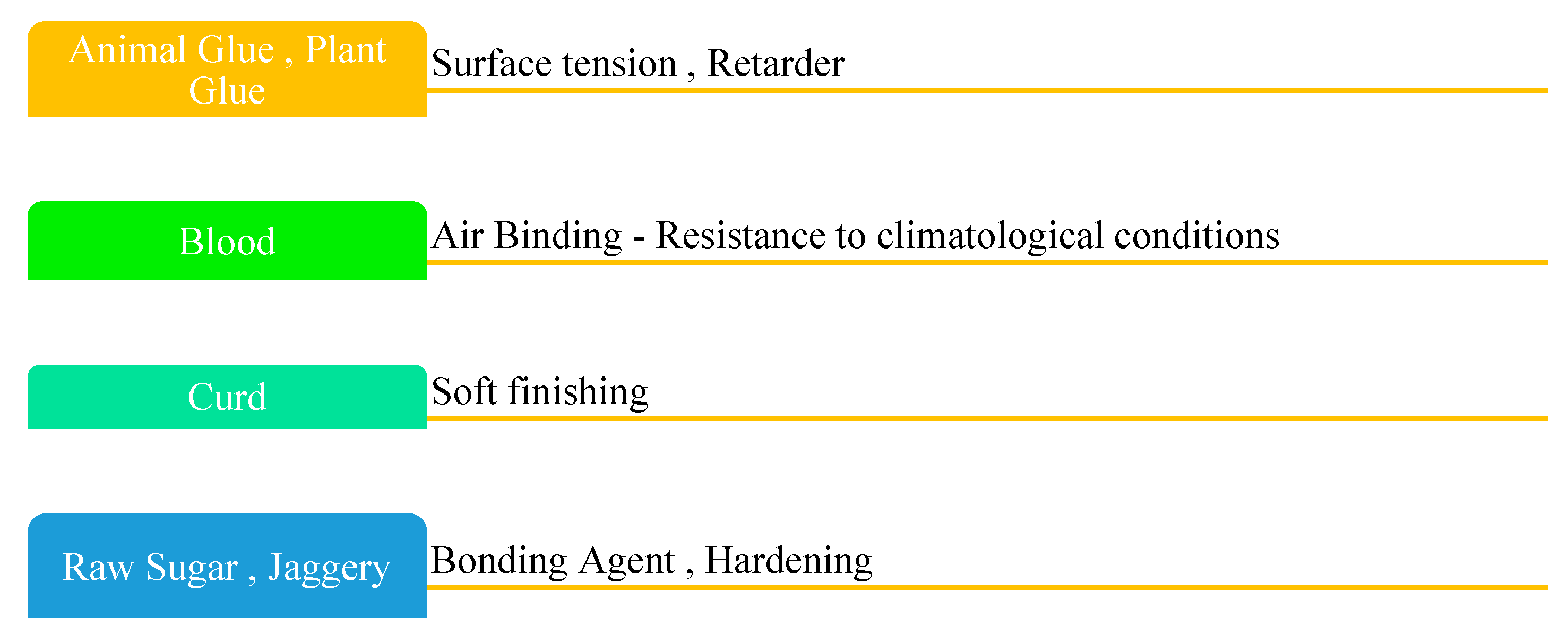
Lime is a form of sedimentary rock calcined to form lime and is minimally processed to form calcium oxide with water forms into a binding material. On environmental exposure, this matrix material absorbs carbon dioxide present in the air to form stable calcium carbonate (the carbonation process). The capability to utilize carbon dioxide makes it unique. It is a point of much-needed research to utilize it in present-day constructions. Bio-additives have been seen to improve the lime properties for more robust and durable ancient structures. Some of the predominantly used bio-additives for their associated improvements in properties are presented in Figure 1.
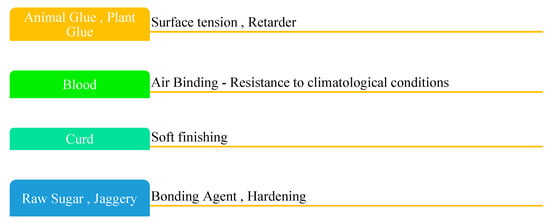
Figure 1.
Commonly used bio-additives in ancient lime mortar [3,28,29,36,37,38,39].
The utilization of locally available materials in all the construction materials resulted in a reduced carbon footprint and more stable constructions that satisfied every area’s respective climatic conditions.
4. Characterization of Ancient Mortar—Case Study
The characterization study of ancient mortar was performed with the motive to experimentally analyze and prove the presence of organic material in the lime mortar of the two studied ancient temple structures which are over 2000 years old.
4.1. Sample Collection Process
The sample collection process initiated the characterization study during the renovation work on most interior parts of the temple structure. Both the temples were being prepared for their traditional periodical renovation work, which happens once every 12 years, although regular maintenance is carried out every year.
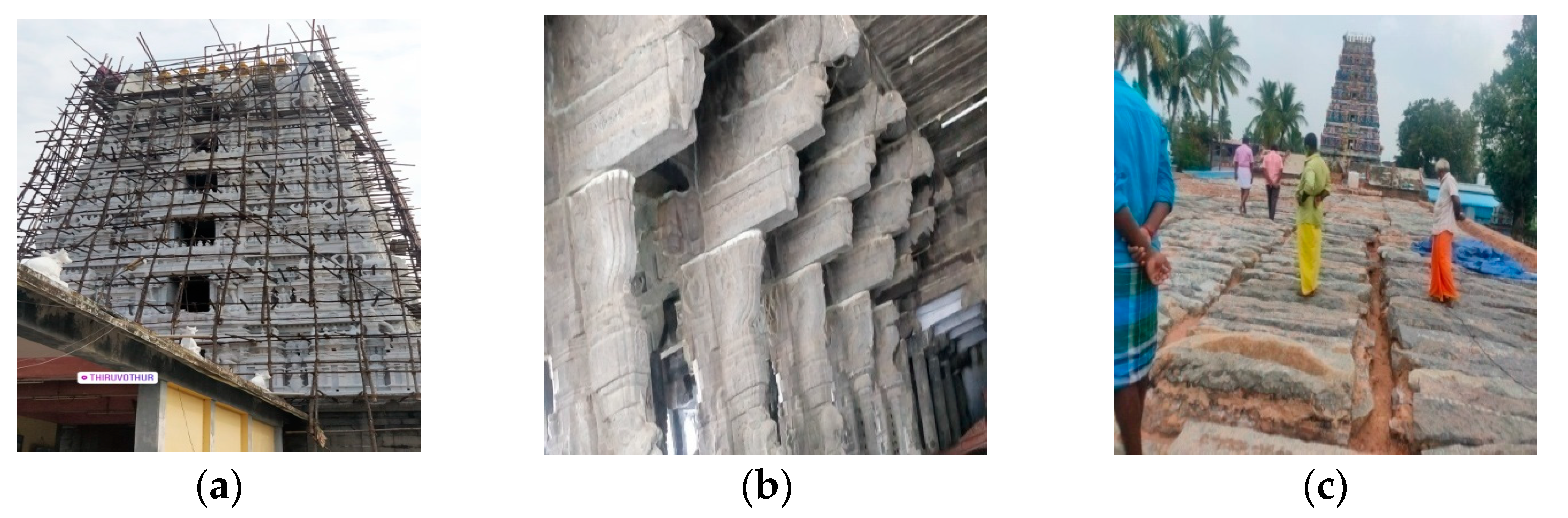
The Vedapureeswarar temple, as seen in Figure 2a,b, was built in the 6th century CE, and is located on the northern bank of the Cheyyar River near Kanchipuram, Tiruvannamalai District. Previously known as Thiruvothur, the sacred place is now known as Cheyyar. The Lakshmi Narasimhar temple, located in Parikal, Vizhupuram District, is 1000–2000 years old and still stands strong and stable. Figure 2c denotes the roof renovation, taken as the sample location point. The location of sample collection plays a vital role in determining the ancient mortar. The composition of mortar mix varies according to the use location, whether structural (load-bearing points) or non-structural (non-load-bearing points). The percentage of binder material increases because the area of the structural point is crucial for the structure. The plastering and outer mortar materials usually contain less binder material than the structural points. The common factor between the two temples is that both are located several kilometers from a water source (i.e., a river); hence, the exposure conditions are similar, and they are situated in a less polluted area, being in a village environment.
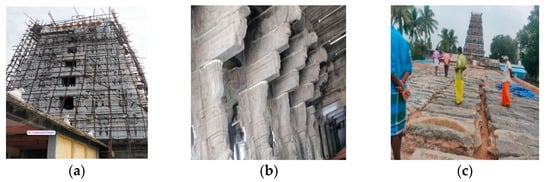
Figure 2.
Vedapureeswarar temple, Thiruvothur, Cheyyar (a); long pillars of the temple (b); on the roof of Parikal Temple, Vizhupuram (c).
4.2. Material Analysis
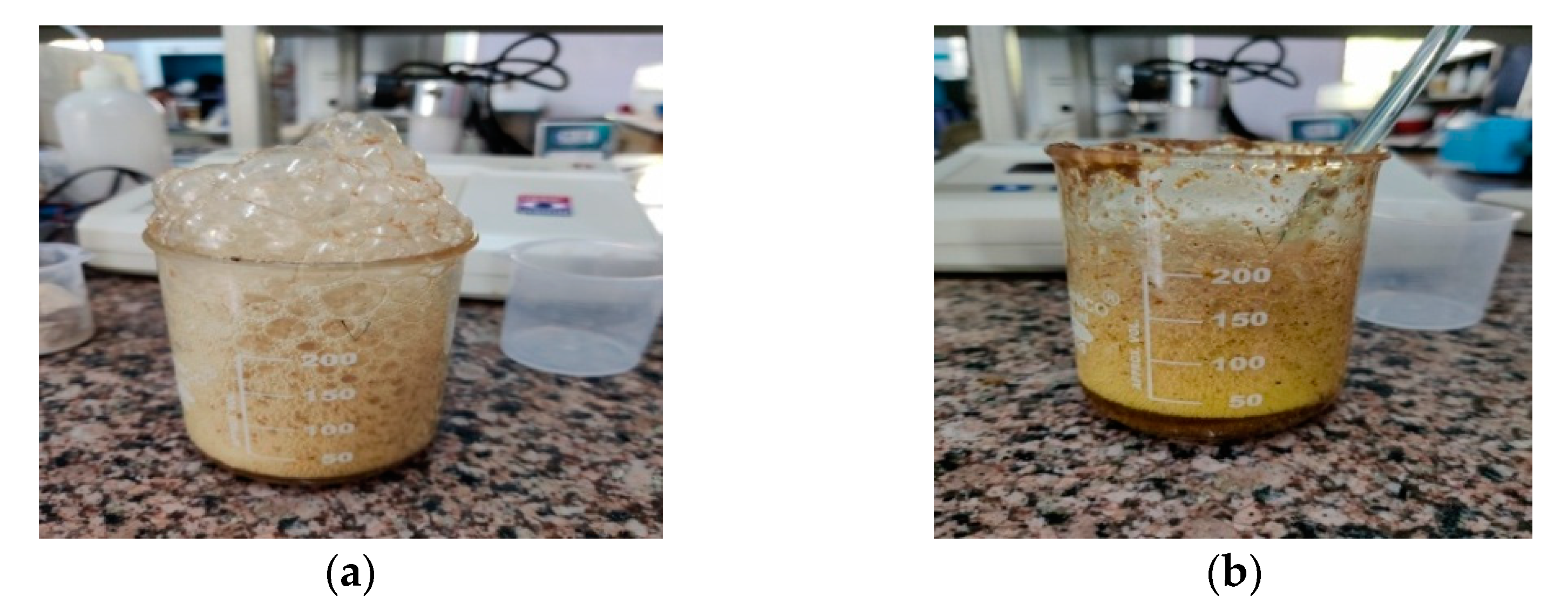
As per the Rilem Tc 167-COM: “Characterization of old mortars concerning their Repair—Part 2—Chemical Characterization”, the following chemical dissolution test results gave the aggregate binder ratio of the ancient mortar sample. This is the process of dissolving rigid mortar in concentrated hydrochloric acid. The aggregates and binder materials separate during this dissolving process (Figure 3a,b). Furthermore, this aggregate and binder are washed with distilled water, dried, and weighed to ascertain the quantitative presence. The binder-to-aggregate ratio helps to reveal the composition used in the mortar matrix (Table 1).
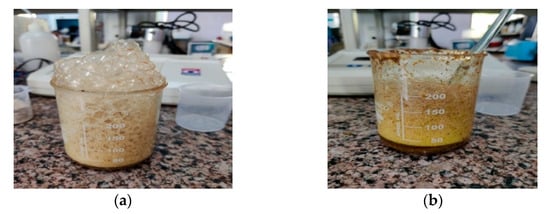
Figure 3.
The foam is formed by the reaction between lime mortar and concentrated HCl solution (a) and the acidic reaction slows after a while settling down (b).
Table 2 presents the results of the acid dissolution test, which reveals the aggregate binder ratio of hardened ancient lime mortar.
Table 2.
Chemical composition of the binder from acid dissolution test results.
From the XRF results, the chemical composition of the percentages of calcium, magnesium, Al2O3, Fe2O3, and soluble silica present in the mortar was calculated and used in the following formula to determine the hydraulic nature of the materials used in the mortar (Table 2). Hydraulic lime is one of the best binder materials in a mortar [40], and was used in both ancient temples.
The identification of lime-based on hydraulic index ranges developed by Taylor [38] was:
- If, 0.30 < HI < 0.50—Weakly hydraulic
- 0.30 < HI < 0.70—Moderately hydraulic
- 0.30 < HI < 1.10—The higher the index, the greater the hydraulic properties
The identification of lime based on hydraulic index ranges developed by Eckel [39] was:
- 0.15 < CI—Air lime
- 0.15 < CI < 0.30—Sub-hydraulic lime
- 0.30 < CI < 0.50—Weakly hydraulic
- 0.50 < CI < 0.70—Moderately hydraulic
- 0.70 < CI < 1.10—The higher the index, the greater the hydraulic properties
| (a) Hydraulic Index Sample A (b) Cementation index Sample A | = (4.36 + 1.979 + 38.11)/(24.47 + 5.9) = 1.46 = (1.1 × 4.36 + 0.7 × 1.979 + 2.8 × 38.11)/(24.47 + 5.9) = 3.7 |
| (a) Hydraulic Index Sample B (b) Cementation index Sample C | = (1.58 + 1.372 + 16.63)/(13.79 + 1.9) = 1.24 = (1.2 × 1.58 + 0.7 × 1.372 + 2.8 × 16.63)/13.79 + 1.9) = 3.14 |
From the formulae given by Taylor and Eckel [38,39], the mortar materials exhibited high hydraulic properties. The hydraulic properties indicate that the buildings were naturally cured by carbonation, i.e., they breathed in carbon dioxide and did not trap moisture. Hence, they absorb carbon dioxide present in the environment for the purpose of gaining strength, which is very beneficial for the polluted contemporary environment.
4.3. Micro Characterization
4.3.1. XRF Analysis
The XRF analysis was performed using an XRF gun, a non-destructive testing tool that is used for elemental mineral analysis and works on the principle of X-ray fluorescence.
The XRF results from Figure 4 reflect a higher percentage of calcium content than that of silica content, confirming the aggregate binder ratio content in the ancient lime mortar. The XRF resulted in optimum accuracy of the content present in the lime mortar matrix. The quantification of constituents present in the lime matrix is shown in Table 2. From the acid dissolution tests, the aggregate binder ratio was 1:3 for sample A and 1:2 for sample B. The XRF confirmed the higher percentage of calcium content in sample B than in sample A. The ratio confirmation was confirmed by the comparisons between sample A and sample B from the acid dissolution test and XRF analysis.
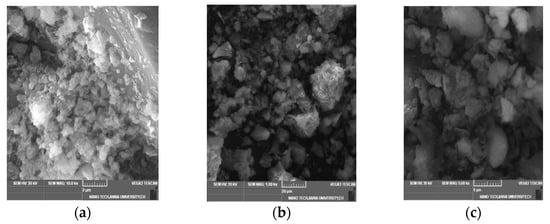
Figure 4.
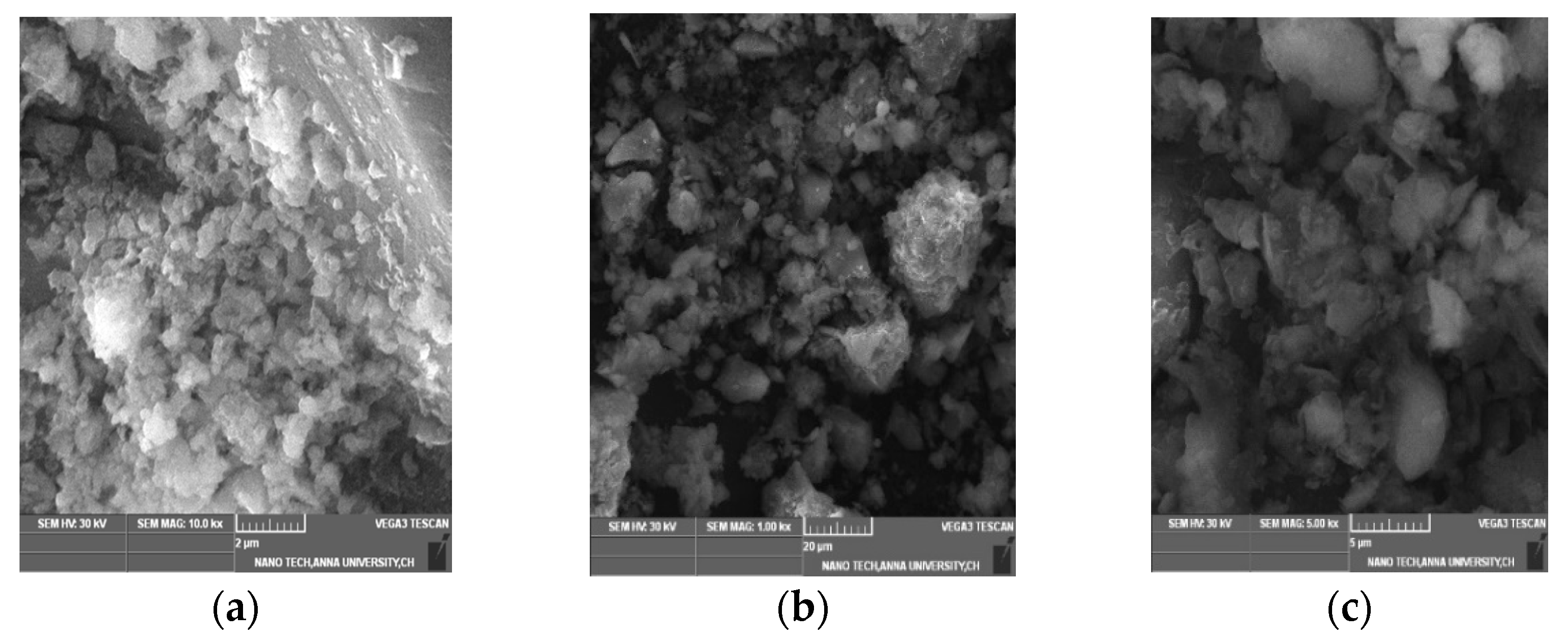
SEM images of sample A with (a) resolution at 2 µm, (b) 20 µm, and (c) 5 µm.
4.3.2. SEM Analysis
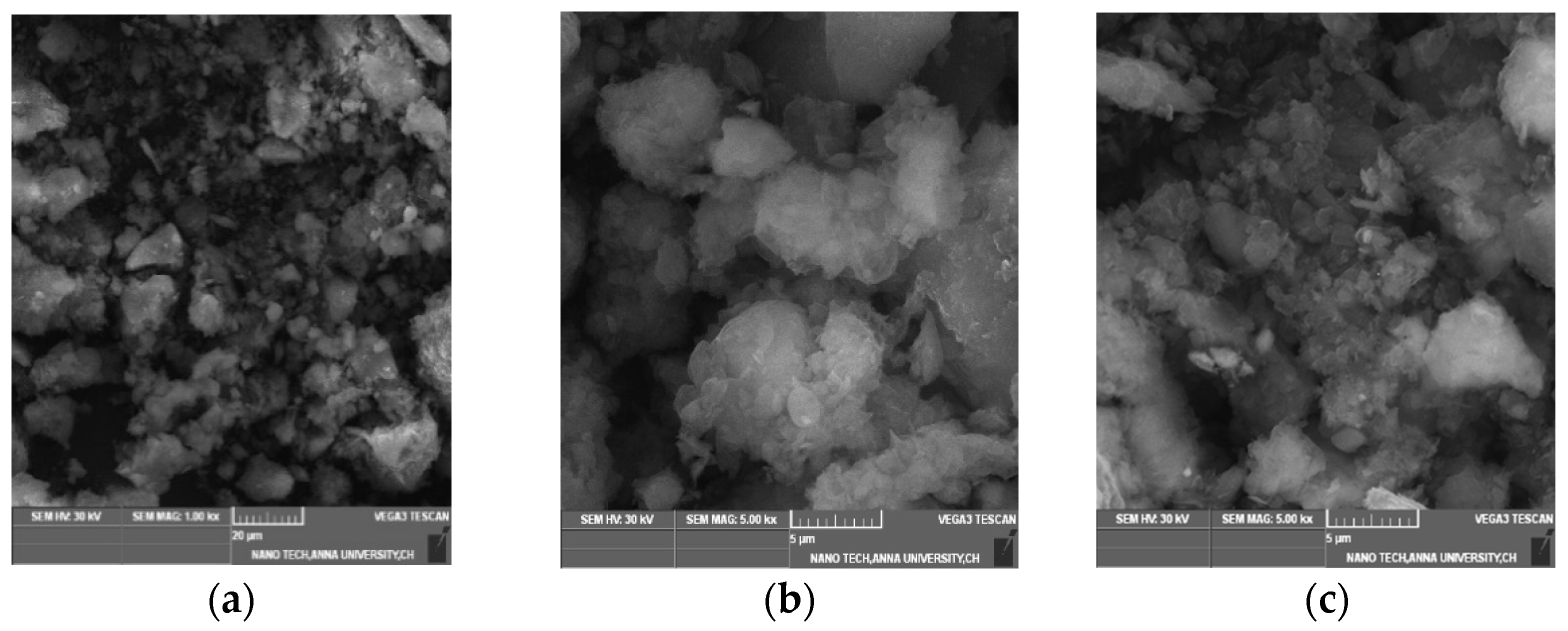
SEM analysis (scanning electron microscopy) gave high-resolution images of the materials for the study of particles formed and were reacted in a matrix in Figure 4 for a sample and in Figure 5 for sample B. The samples were analyzed using a VEGA3 TESCAN microscope at the Centre for Nanoscience and Technology, Anna University.
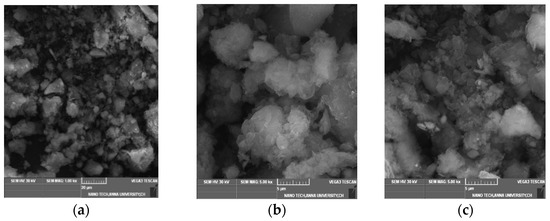
Figure 5.
SEM images of sample B with (a) 20 µm, (b), and (c) of 5 µm.
The SEM image of sample A confirms a homogenous distribution of particles with finer-material calcite plates compared with the Sample B image in Figure 5. The chemical analysis clearly showed the 1:2 ratio equal to the binding material in sample A, and 1:3 for sample B. The presence of needle-shaped structures can be seen in the SEM images of the samples (Figure 4b), and (Figure 5c) [41], indicating that calcium carbonate is dominantly present throughout the composition. The rhombohedral crystals are seen in all the images (Figure 4a–c and Figure 5a–c) in different resolutions depict the presence of calcite, one of the hardest minerals: it has a value of 3 on the Mohs scale of mineral hardness.
4.3.3. XRD Analysis
XRD analysis was performed using a PANalytical 3 kW X’pert PRO X-ray diffractometer at the National Center for Earth Science and Studies, Earth System Science Organization (NCESS), Government of India.
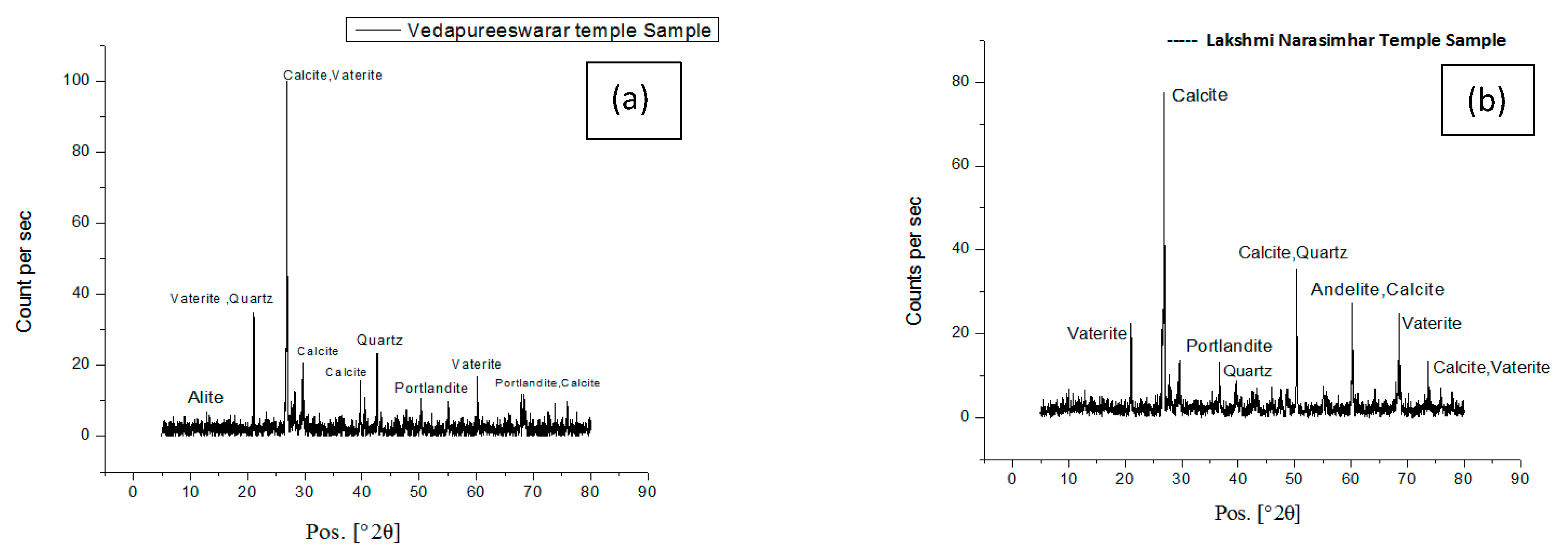
Figure 6 presents polymorphs of calcium carbonate in the XRD results, which consisted of calcite, quartz, vaterite, and portlandite, and were equally present in both samples. The peaks indicate the presence of all the components at various levels from the studied mortar [41]. Notably, the polymorphs of calcium carbonate are calcite, vaterite, and portlandite, which can withstand high pressures; vaterite is specifically known for its self-healing capacity. The carbon-dioxide-absorbing nature of lime tends to be achieved with these metastable forms of lime composition [42].
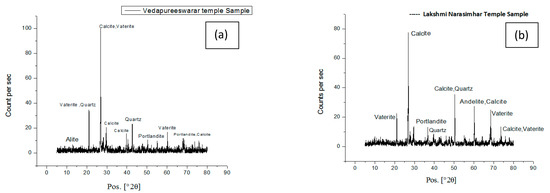
Figure 6.
XRD image of Vedapureeswarar Temple (a) and Lakshmi Narasimhar Temple mortar samples (b).
4.3.4. FT-IR Analysis
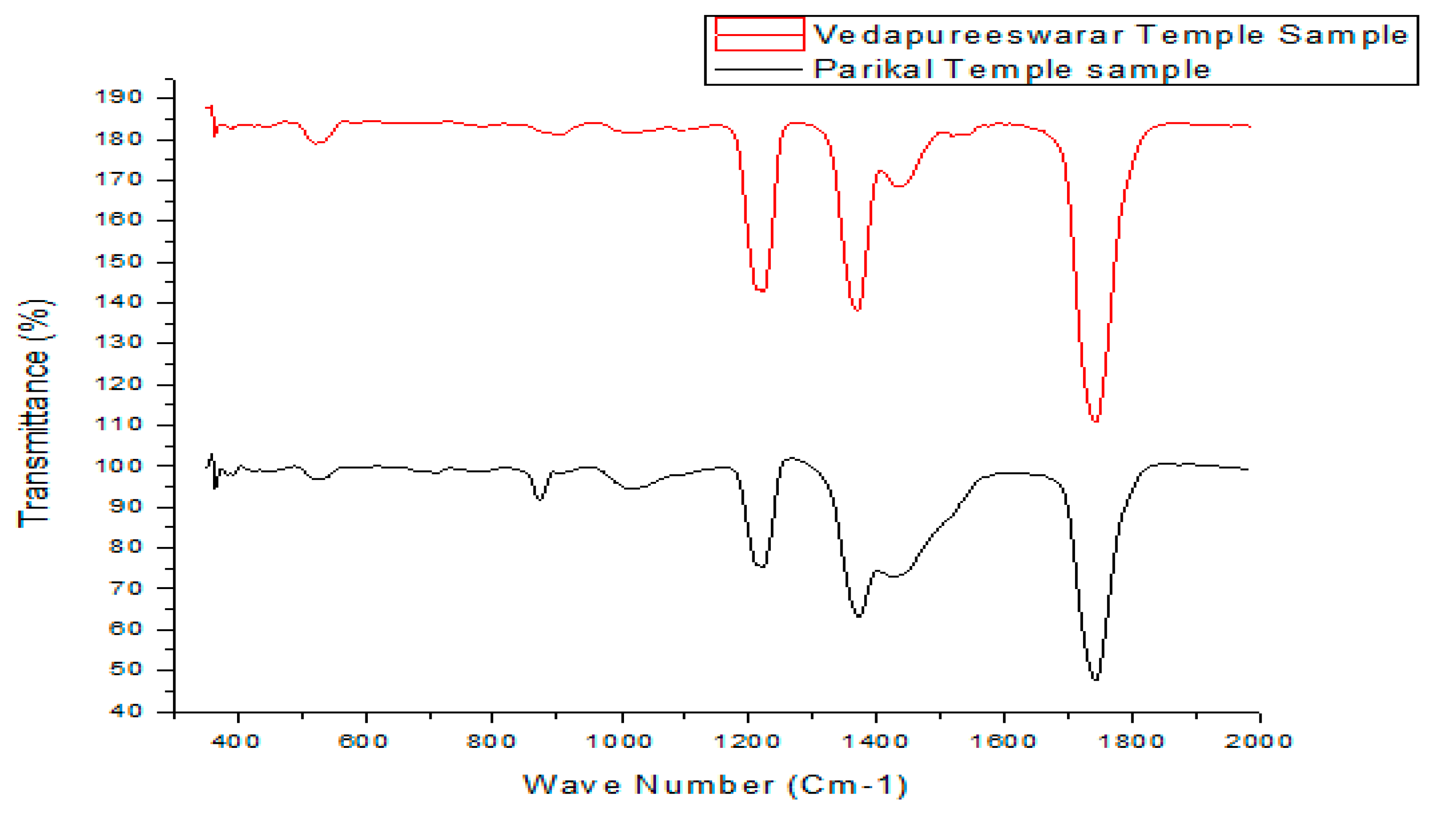
Infrared spectra were generated using a spectrometer/data system locale with 1033 resolution. The FT-IR analysis was performed to confirm the presence of organic compounds and determine the functional groups of the organic materials present in the samples, as shown in Figure 7, and the peaks indications from Table 3.
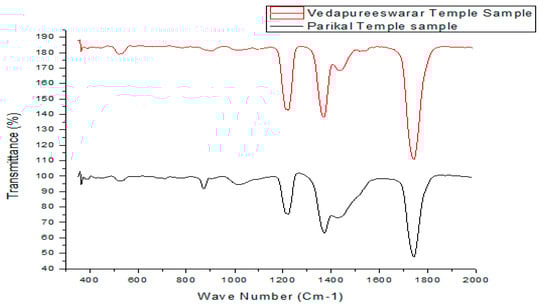
Figure 7.
FT-IR analysis of ancient mortar.
Table 3.
FT-IR band indications for various minerals.
The hydroxyapatite and apatite contents in the lime mortar indicated the reason for the high hardness achieved in the ancient lime mortar; these are natural forms of the mineral calcium apatite, which give hardness to the matrix. Quartz is a hard crystalline material, mainly composed of silica. Amide group formation occurs by a biological process from the components of amines and carboxylic acid. The presence of protein is confirmed through the indication of the amide group in the FT-IR analysis.
Table 4 explains the presence of various constituents present in the ancient mortar samples taken from Tamil Nadu, as shown in Figure 4.
Table 4.
Chemical binder composition from the XRF results.
5. Summary and Conclusions
This research provides an overview of various studies on the characterization of ancient mortar, in order to produce a compatible repair material that can maintain structural stability and hence preserves ancient architecture which is of great national pride. The overview details available experiments that have been used all around the world to characterize and determine ancient construction materials. This area of research shows that the use of sustainable construction materials in contemporary constructions has been causing a major threat to the environment. From the experimental analysis and visual inspection of the case study:
- -
- On visual inspection, the mortar material was very much cohesive, rigid, and bonded well to the ancient structures; external activities of birds/animals/humans have primarily caused external distress, necessitating periodical maintenance;
- -
- The SEM analysis showed the most homogeneous mixture of ancient lime mortar with stable self-healing calcium carbonate crystals with metastable polymorphs (vaterite);
- -
- The FTIR analysis confirmed the presence of organic protein additive materials (Amide group) used in ancient times that have improved the material binding properties and air-absorbing properties [37];
- -
- The characterization study develops in-depth knowledge of the materials used during the historical period; thus, trials can be performed and compatible repair material produced for contemporary maintenance. Every study provides new knowledge concerning these materials and opens up huge opportunities for further research to determine the various other stable ingredients used by our ancestors that have resulted in time-resistant and climate-resistant structures;
- -
- Tamil Nadu is rich in cultural heritage, with thousands of ancient structures in the form of temples, mosques, and palaces that need proper maintenance and preservation. These experimental methods researched here (SEM, XRD, FTIR, XRF, and the chemical dissolution test) were performed to determine compatible repair materials for the preservation of magnificent historical structures;
- -
- The research on bio-additives added to ancient lime mortar reveals a considerable gap in the literature in terms of characterizing old lime mortar, which should be studied in-depth, and whether it can be replaced with artificial inorganic toxic additives to the construction materials in the future.
Funding
This study was funded by UGC-OBC, grant number 201819-NFO-2018-19-OBC-TAM-70033.
Informed Consent Statement
Not applicable.
Data Availability Statement
The raw data, as well as the processed data required to reproduce these findings, are available within the paper.
Acknowledgments
The authors would like to thank Er. Raghavan from HR and CE Tamil Nadu.
Conflicts of Interest
The authors declare that they have no known competing financial interests or personal relationships that could have appeared to influence the work reported in this paper.
References
- Frankeová, D.; Koudelková, V. Influence of aging conditions on the mineralogical micro-character of natural hydraulic lime mortars. Constr. Build. Mater. 2020, 264, 120205. [Google Scholar] [CrossRef]
- Sun, G.; Li, X.; Wu, Y. Impacts of climate change on biological dynamics. Discret. Dyn. Nat. Soc. 2016, 2016, 9046107. [Google Scholar] [CrossRef] [Green Version]
- Pintea, A.O.; Manea, D.L. New types of mortars obtained by adding traditional mortars with natural polymers to increase physic mechanical performances. Procedia Manuf. 2019, 32, 201–207. [Google Scholar] [CrossRef]
- Silva, B.A.; Ferreira Pinto, A.P.; Gomes, A.; Candeias, A. Effects of natural and accelerated carbonation on the properties of lime-based materials. J. CO2 Util. 2021, 49, 101552. [Google Scholar] [CrossRef]
- Nie, S.; Zhou, J.; Yang, F.; Lan, M.; Li, J.; Zhang, Z.; Chen, Z.; Xu, M.; Li, H.; Sanjayan, J.G. Analysis of theoretical carbon dioxide emissions from cement production: Methodology and application. J. Clean. Prod. 2022, 334, 130270. [Google Scholar] [CrossRef]
- Rehan, R.; Nehdi, M. Carbon dioxide emissions and climate change: Policy implications for the cement industry. Environ. Sci. Policy 2005, 8, 105–114. [Google Scholar] [CrossRef]
- de Almendra Freitas, J., Jr.; Marienne do Rocio de Mello Maron da Costa, M.; Valduga Artigas, L.; Martins, L.; Roberto Sanquetta, C. Assessment of the impact of binders in the evolution of carbonation in mortars. Constr. Build. Mater. 2019, 225, 496–501. [Google Scholar] [CrossRef]
- van Hees, R.P.J.; Binda, L.; Papayianni, I.; Toumbakari, E. RILEM TC 167-COM: ‘Characterisation of old mortars with respect to their repair’Characterisation and damage analysis of old mortars. Mater. Struct. 2004, 37, 644–648. [Google Scholar] [CrossRef]
- TC 203-RHM (Jan Erik Lindqvist). Rilem TC 203-RHM: Repair mortars for historic masonry. Testing of hardened mortars, a process of questioning and interpreting. Mater. Struct. 2009, 42, 853–865. [Google Scholar] [CrossRef]
- Maravelaki-Kalaitzaki, P.; Bakolas, A.; Moropoulou, A. Physico-chemical study of Cretan ancient mortars. Cem. Concr. Res. 2003, 33, 651–661. [Google Scholar] [CrossRef]
- Borsoi, G.; Silva, A.S.; Menezes, P.; Candeias, A.; Mirão, J. Analytical characterization of ancient mortars from the archaeological roman site of Pisões. Constr. Build. Mater. 2019, 204, 597–608. [Google Scholar] [CrossRef] [Green Version]
- Degryse, P.; Elsen, J.; Waelkens, M. Study of ancient mortars from Sagalassos (Turkey) in view of their conservation. Cem. Concr. Res. 2002, 32, 1457–1463. [Google Scholar] [CrossRef]
- Haneefa, K.M.; Rani, S.D.; Ramasamy, R.; Santhanam, M. Microstructure and geochemistry of lime plaster mortar from a heritage structure. Constr. Build. Mater. 2019, 225, 538–554. [Google Scholar] [CrossRef]
- Leone, G.; de Vita, A.; Magnani, A.; Rossi, C. Characterization of archaeological mortars from Herculaneum. Thermochim. Acta 2016, 624, 86–94. [Google Scholar] [CrossRef]
- Ayat, A.; Bouzerd, H.; Ali-Boucetta, T.; Navarro, A.; Benmalek, M.L. Valorisation of waste glass powder and brick dust in air-lime mortars for restoration of historical buildings: Case study theatre of Skikda (Northern Algeria). Constr. Build. Mater. 2022, 315, 125681. [Google Scholar] [CrossRef]
- Stefanidou, M.; Kamperidou, V.; Konstantinidis, A.; Koltsou, P.; Papadopoulos, S. Use of Posidonia oceanica fibres in lime mortars. Constr. Build. Mater. 2021, 298, 123881. [Google Scholar] [CrossRef]
- Miriello, D.; Bloise, A.; Crisci, G.M.; de Luca, R.; de Nigris, B.; Martellone, A.; Osanna, M.; Pace, R.; Pecci, A.; Ruggieri, N. New compositional data on ancient mortars and plasters from Pompeii (Campania–Southern Italy): Archaeometric results and considerationsabout their time evolution. Mater. Charact. 2018, 146, 189–203. [Google Scholar] [CrossRef]
- Lezzerini, M.; Ramacciotti, M.; Cantini, F.; Fatighenti, B.; Antonelli, F.; Pecchioni, E.; Fratini, F.; Cantisani, E.; Giamello, M. Archaeometric study of natural hydraulic mortars: The case of the Late Roman Villa dell’Oratorio (Florence, Italy). Archaeol. Anthropol. Sci. 2017, 9, 603–615. [Google Scholar] [CrossRef]
- Santhanam, K.; Shanmugavel, D.; Ramadoss, R.; Arakatavemula, V. Characterisation on ancient mortar of Chettinadu house at Kanadukathan, Karaikudi, Tamil Nadu, India. Mater. Today Proc. 2021, 43, 1147–1153. [Google Scholar] [CrossRef]
- Franzini, M.; Leoni, L.; Lezzerini, M. A procedure for determining the chemical composition ofbinder and aggregate in ancient mortars: Its application tomortars from some medieval buildings in Pisa. J. Cult. Herit. 2000, 1, 365–373. [Google Scholar] [CrossRef]
- Papayianni, I.; Pachta, V.; Stefanidou, M. Analysis of ancient mortars and design of compatible repair mortars: The case study of Odeion of the archaeological site of Dion. Constr. Build. Mater. 2013, 40, 84–92. [Google Scholar] [CrossRef]
- Izzo, F.; Arizzi, A.; Cappelletti, P.; Cultrone, G.; de Bonis, A.; Germinario, C.; Graziano, S.F.; Grifa, C.; Guarino, V.; Mercurio, M.; et al. The art of building in the Roman period (89 B.C.–79 A.D.): Mortars, plasters and mosaic floors from ancient Stabiae (Naples, Italy). Constr. Build. Mater. 2016, 117, 129–143. [Google Scholar] [CrossRef]
- Zhang, Z.; Liu, J.; Li, B.; Yu, G.; Li, L. Experimental study on factors affecting the physical and mechanical properties of shell lime mortar. Constr. Build. Mater. 2019, 228, 116726. [Google Scholar] [CrossRef]
- Loureiro, A.M.S.; da Paz, S.P.A.; Veiga, M.d.R.; Angélic, R.S. Investigation of historical mortars from Belém do Pará, Northern Brazil. Constr. Build. Mater. 2020, 233, 117284. [Google Scholar] [CrossRef]
- Izzo, F.; Furno, A.; Cilenti, F.; Germinario, C.; Gorrasi, M.; Mercurio, M.; Langella, A.; Grifa, C. Thedomus domini imperatoris Apiciibuilt by Frederick II along the Ancient Via Appia (southern Italy): An example of damage diagnosis for a Medieval monument in rural environment. Constr. Build. Mater. 2020, 259, 119718. [Google Scholar] [CrossRef]
- Fort, R.; Ergenç, D.; Aly, N.; de Buergo, M.A.; Hemeda, S. Implications of new mineral phases in the isotopic composition of Roman lime mortars at the Kom el-Dikka archaeological site in Egypt. Constr. Build. Mater. 2021, 268, 121085. [Google Scholar] [CrossRef]
- Kuckova, S.; Rambouskova, G.; Junkova, P.; Santrucek, J.; Cejnar, P.; Smirnova, T.A.; Novotny, O.; Hynek, R. Analysis of protein additives degradation in aged mortars using mass spectrometry and principal component analysis. Constr. Build. Mater. 2021, 288, 123124. [Google Scholar] [CrossRef]
- Qian, K.; Song, Y.; Lai, J.; Qian, X.; Zhang, Z.; Liang, Y.; Ruan, S. Characterization of historical mortar from ancient city walls of Xindeng in Fuyang, China. Constr. Build. Mater. 2022, 315, 125780. [Google Scholar] [CrossRef]
- Dai, M.; Peng, M.; Liu, C.; Wang, H.; Ali, J.; Naz, I. Analysis and imitation of organic Sanhetu concrete discovered in an ancient Chinese tomb of Qing Dynasty. J. Archaeol. Sci. Rep. 2019, 26, 101918. [Google Scholar] [CrossRef]
- Bertolini, L.; Carsana, M.; Gastaldi, M.; Lollini, F.; Redaelli, E. Binder characterisation of mortars used at different ages in the San Lorenzo church in Milan. Mater. Charact. 2013, 80, 9–20. [Google Scholar] [CrossRef]
- Donaisa, M.K.; Alraisa, M.; Konomia, K.; George, D.; Ramundt, W.H.; Smith, E. Energy dispersive Xray fluorescence spectrometry characterization of wall mortars with principal component analysis: Phasing and exit u versus in situ sampling. J. Cult. Herit. 2020, 43, 90–97. [Google Scholar] [CrossRef]
- Singh, M.R.; Ganaraj, K.; Sable, P.D. Surface mediated Ca-phosphate biomineralization and characterization of the historic lime mortar, Janjira Sea Fort, India. J. Cult. Herit. 2020, 44, 110–119. [Google Scholar] [CrossRef]
- Morricone, A.; Macchia, A.; Campanella, L.; David, M.; de Togni, S.; Turci, M.; Maras, A.; Meucci, C.; Ronc, S. Archeometrical analysis for the characterization of mortars from Ostia Antica. Procedia Chem. 2013, 8, 231–238. [Google Scholar] [CrossRef] [Green Version]
- Degloorkar, N.K.; Pancharathi, R.K. Characterization of ancient mortar for sustainability of an 800-year oldheritage site in India. Mater. Today Proc. 2020, 32, 734–739. [Google Scholar] [CrossRef]
- Rodriguez-Juareza, M.E.; Perez-Diaza, E.; Lopez-Domingueza, G.I.; Picazoa, V.L.; Valencia-Cruzb, D.; Millan-Maloc, B.M.; Rodriguez-Garcia, M.E. Development and characterization of lime-based stucco for modern construction and restoration applications based on ancient stuccoes from the “El Cerrito” pyramid, Quer étaro, Mexico. Case Stud. Constr. Mater. 2022, 16, e00875. [Google Scholar] [CrossRef]
- Ventolà, L.; Vendrell, M.; Giraldez, L.P. Traditional organic additives improve lime mortars: New old materials for restoration and building natural stone fabrics. Merino Construct. Build. Mater. 2011, 25, 3313–3318. [Google Scholar] [CrossRef]
- Jasiczak, J.; Zielinski, K. Effect of protein additive on properties of mortar. Cem. Concr. Compos. 2006, 28, 451–457. [Google Scholar] [CrossRef]
- Thirumalini, S.; Ravi, R.; Rajesh, M. Experimental investigation on physical and mechanical properties of lime mortar: Effect of organic addition. J. Cult. Herit. 2018, 31, 97–104. [Google Scholar] [CrossRef]
- Li, W.; Dobraszczyk, B.J.; Dias, A.; Gil, A.M. Polymer Conformation Structure of Wheat Proteins and Gluten Subfractions Revealed by ATR-FTIR. Cereal Chem. 2006, 83, 407–410. [Google Scholar] [CrossRef]
- Luxbn, M.P.; Dorrego, F. Ancient xvi century mortar from the Dominican republic: Its characteristics, microstructure and additives. Cem. Concr. Res. 1996, 26, 841–849. [Google Scholar]
- Marini, L. (Ed.) Chapter 5—The Product Solid Phases. In Developments in Geo-Chemistry; Elsevier: Amsterdam, The Netherlands, 2007; Volume 11, pp. 79–167. [Google Scholar]
- Biernat, M.; Jaegermann, Z.; Tymowicz-Grzyb, P.; Konopka, G. Influence of low-temperature reaction time on morphology and phase composition of short calcium phosphate whiskers. Process. Appl. Ceram. 2019, 13, 57–64. [Google Scholar] [CrossRef] [Green Version]
- Kulpetchdara, K.; Limpichaipanit, A.; Randorn, C.; Rujijanagul, G.; Tunkasiri, T.; Chokethawai, K. Microstructure-property relations of biphasic calcium phosphate obtained by hot pressing process. Process. Appl. Ceram. 2019, 13, 300–309. [Google Scholar] [CrossRef]
- Meejoo, S.; Maneeprakorn, W.; Winotai, P. Phase and thermal stability of nanocrystalline hydroxyapatite prepared via microwave heating. Thermochim. Acta 2006, 447, 115–120. [Google Scholar] [CrossRef]
- Shanmugavel, D.; KumarYadav, P.; Ramadoss, M.A.K.R. Experimental analysis on the performance of egg albumen as a sustainable bio admixture in natural hydraulic lime mortars. J. Clean. Prod. 2021, 320, 128736. [Google Scholar] [CrossRef]
Publisher’s Note: MDPI stays neutral with regard to jurisdictional claims in published maps and institutional affiliations. |
© 2022 by the authors. Licensee MDPI, Basel, Switzerland. This article is an open access article distributed under the terms and conditions of the Creative Commons Attribution (CC BY) license (https://creativecommons.org/licenses/by/4.0/).