


Abstract
While the marine sector contributes significantly to the global economy, its environmental impact is a cause for apprehension due to growing concerns about ship emissions. The International Maritime Organization (IMO) has set decarbonization strategies consistent with sustainable development goals. The impending legislation aimed at reducing greenhouse gas (GHG) emissions from maritime shipping by at least half by 2050 and to zero by the end of the century. A growing body of research has focused on alternative marine fuel selection; hence, this bibliometric review is timely. We assess the global scientific research on alternative marine fuel for knowledge mapping based on the articles available on the Scopus database since 1973. A total of 749 publications associated with alternative marine fuel has been subjected to a range of bibliometric analyses to explore this research field quantitatively and qualitatively. The study utilized the R-studio bibliometrics package and VOSviewer bibliometric tools to generate the results. The field of study has a growth rate of 7.05%, having a significant contribution to knowledge from the USA, the United Kingdom, India, and China. Recent trends indicate that researchers are increasingly focused on alternative fuel oil choices. By analyzing commonly used keywords, it was possible to trace a multi-criteria decision analysis process that might be utilized to construct decision support systems for alternative maritime fuel selection. According to relevant articles, the research community has concentrated on the possibility of alternative fuels being utilized in place of traditional marine fuels to reduce emissions from the shipping sector from an environmental, technological, and economic standpoint. The current study offers an updated and comprehensive overview of research trends on alternative marine fuels. Researchers interested in data mapping work in this area can begin with this endeavor.
1. Introduction
Global climate change appears to be one of the most perplexing problems that humanity has ever encountered [1]. The Intergovernmental Panel on Climate Change (IPCC) believes that human-induced greenhouse gas (GHG) concentrations are responsible for at least half of the observed global warming since 1950. The International Maritime Organization (IMO), an international regulating authority for shipping, adopted the international convention for the prevention of pollution from ships (MARPOL). It has six regulation annexes to protect the environment from pollution caused by oil, harmful liquids, dangerous substances, sewage, garbage, and air pollution caused by ships. IMO is steadily tightening environmental standards. A target has been established to cut GHG emissions by at least 50% by 2050. Thus, a long-term shift to zero-carbon ship technologies is anticipated, switching to alternative fuel with zero carbon emissions. To meet the low carbon maritime transportation target of 2050 and zero carbon by the end of this century, the reliance on fossil fuels as the principal marine fuel source must be gradually phased out [2]. Det Norske Veritas and Germanischer Lloyd (DNV-GL) now known as Det Norske Veritas (DNV) projected that while all other technical measures can reduce a maximum of 20% air pollution from ships, only appropriate alternate fuel and energy sources can potentially reduce it to 100%. Therefore, Alternative Marine Fuels (AMF) adoption is an absolute solution. As a result, AMF had become a significant interest for the maritime shipping industry, and it has recently attracted the attention of researchers. Therefore, research trend analysis on AMF is needed to understand scientific studies’ state of the art in this phenomenon of interest.
There have been only a few bibliometric investigations on AMF, which is the motivation of this study. A bibliometric survey of AMF was conducted by Kołakowski et al. [3] who analyzed 234 articles published between 1992 to 2019 extracted from the Web of Science (WoS) database. The study focused only on “alternative fuels and renewable energy systems” from technology and legal framework perspective. Another bibliometric survey by Ampah et al. [4] considered the time frame of two decades, 2000–2020. The study collected 583 articles from the scientific database from the WoS Core Collection and Scopus databases. Bibliometric analysis should provide an updated overview of a field because scholarly databases add new scientific papers each day. Both the studies mentioned above-analyzed documents published in 2019, 2020. Hence, there is a knowledge gap regarding the updated status of research progress and trend in AMF literature. Consequently, the study aims to conduct a bibliometric knowledge mapping of AMF literature extracted from the Scopus database.
The study’s objectives are as follows: (i) To assess the overall research trend using annual publication, citation, three field plots, and trend topic data generated by bibliometrix, (ii) to identify subject areas and most cited literature utilizing the information from the Scopus database, (iii) to rank leading institutions, journals, territories, authors of the field based on bibliometrix software generated data and visualization, (iv) to produce a social network structure of an AMF scientific community from co-authorship of authors, co-authorship of territories, co-occurrence of author keywords, (v) to examine the conceptual structure of AMF through the lens of thematic mapping and evaluation.
This study contributes significantly to the body of knowledge by providing updated bibliometric findings in AMF research. Firstly, it considered 749 documents for analysis published between 1973 and 2022 and presents overall research publication, citation trends, how the topics have evolved with time, and trending topics. Secondly, it offers several bibliometric indicator results and discussions such as co-authorship analysis of authors and countries, author keyword co-occurrence to understand the nature of affiliation, and the keywords that appaired repeatedly. Thirdly, ranking the most productive authors, nations, and institutes provides researchers with information to search for potential collaboration. This study identifies top-ranked journals that could be targeted for publication on AMF related topics. Finally, another set of findings such as thematic maps, structural maps, subject area, and clusters presents state-of-the-art of research and highlights research gaps for future endeavors.
In summary, identifying trends in AMF can be beneficial not only for investigators and research organizations but also for industry players. This data could be extremely helpful for current and prospective investors and governing bodies in this sector. The latter can help identify state-of-the-art research gaps in the maritime-related AMF selection challenge and contribute to the growth of optimal solutions via further assessments.
The remainder of the article is organized in the following manner. Section 2 holds a literature review, whereas Section 3 describes materials and methods of data collection and analytic tools used in this study. Section 4 presents the result and discussion on the findings for objectives (i–v). Besides, an additional discussion is presented in Section 5. Section 6 offers the limitation of this study and provides future research direction and concludes in Section 7.
2. Literature Review
2.1. Bibliometric Analysis
Bibliometric analysis is a systematic method for determining the research trends in a particular field of study using scholarly publications published in scientific databases. Additionally, this analytical approach enables researchers to assess and analyze the current state of scientific research in a particular field. The bibliometric analysis aims to ascertain the progress and problems associated with a specific contemporary phenomenon of interest by examining the features of scientific publications. Additionally, this study guides future research within that subject area.
Bibliometrics, or the statistical analysis of bibliographers, appears to have been launched in 1969 as a technique of “illuminating scientific and technological processes through the numbering of documents.” Nowadays, bibliometrics is widely used to assess the qualities of articles, books, and other forms of literary production, determine the influence of academics and institutions, discover patterns of research collaboration, and identify and forecast trends in specific research fields. Given the rapid growth of scholarly outputs, bibliometrics is viewed as a critical and efficient method for researching libraries of published information—both qualitative data (e.g., hotspots and future research trends) and quantitative data such as temporal and geographic distribution of outputs, leading researchers, and mainstream journals [1]. The mathematical and statistical approaches employed in bibliometrics are based on three standard models: the Bradford dispersion law of literature, Lotka’s law, and Zipf’s law.
2.2. GHG Emission Control Initiatives and Scientific Studies on Alternative Marine Fuel
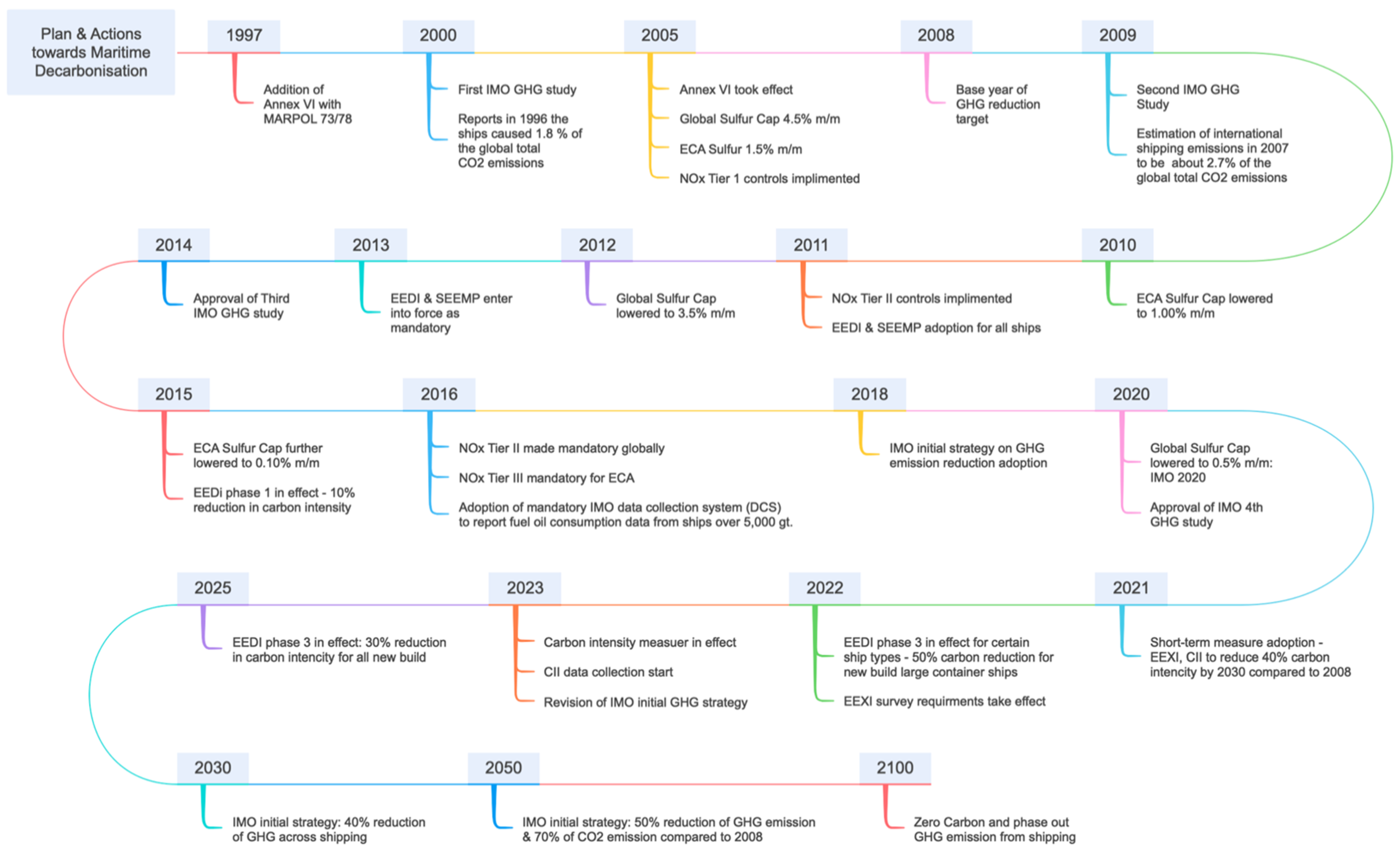
The international shipping decarbonization timeline (see Figure 1) presents the chronological exhibition of IMO’s initiatives towards GHG emission control. The illustration begins with that Annex VI established restrictions on the amount of NOx emitted by marine diesel engines in 1997. IMO’s first GHG study that reported, as of 1996, that maritime shipping caused around 1.8 percent of global CO2 emission. The second GHG study published in 2009 presents an estimation holding international maritime shipping accountable for 2.7 percent of the total CO2 emission worldwide. In the meantime, in 2005, Annex VI came to play its role in controlling global sulphur cap, sulphur emission control area (ECA), and NOx Tier 1. Further reduction of ECA sulphur cap and NOx Tier 2 occurred in 2010 and 2011, respectively. IMO’s third and fourth GHG studies were approved in 2014 and 2020. In 2018, considering 2008 as base year, IMO’s initial GHG strategy came in action, while in 2015 and 2016, the ECA sulphur cap further reduction to 0.10 percent m/m, energy efficiency design index (EEDI), data collection system (DCS) NOx Tier II and III were made mandatory [5]. During its 72nd session in April 2018, the IMO’s Marine Environment Protection Committee (MEPC 72) approved the Initial IMO Strategy for decreasing GHG emissions from ships. The IMO Strategy established phase–by–phase targets for reducing GHG emissions from international shipping by 2050 in comparison to 2008. From the year of its announcement to 2023 it has been prioritized by IMO. Several potential short-term measures include enhancing current energy efficiency frameworks; establishing technological and operational efficiency solutions for newbuild and existing ships; and optimizing and reducing ship speeds [6]. Furthermore, to reduce CO2 emissions per ton–mile of cargo transportation by at least 40% by 2030 through mid-term measures, with a goal of 70% by 2050, and to reduce average yearly GHG emissions by at least 50% by 2050, while pursuing efforts to phase out GHG emissions from international shipping as soon as possible during this millennium [7]. Beyond 2030, targets are defined for the mid-term (by 2030), and long-term (by 2050). Under short-term measure, ship energy efficiency existing ship index (EEXI), carbon intensity indicator (CII) has been introduced and EEDI phase 3 applies for newbuild large container ships.
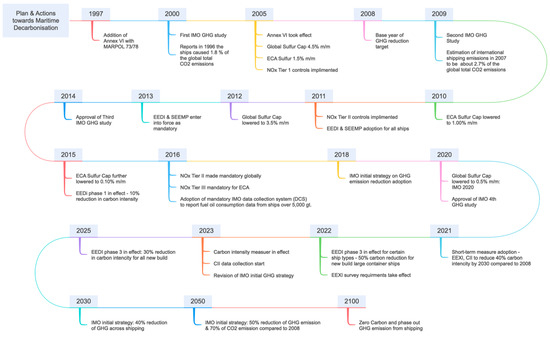
Figure 1.
International shipping decarbonization timeline.
Mid-term and long-term measures include signing a program for AMF with low-carbon (in the mid-term) and zero-carbon (in the long-term) fuels, operational energy efficiency measures for newbuild and existing ships, and market-based measures [6].
IMO’s ambitious initial strategy has influenced the scientific literature on AMF since 2018. Consequently, there has been noticeable progress in knowledge development in this study area. Understandably, recent studies on AMF are decarbonizing, GHG emission control focused aimed at the short-, mid-, and long-term targets set by IMO. However, the studies mostly discussed several AMFs or fuel groups [8] such as biofuels [9], green hydrogen, or liquid hydrogen [10]. Existing studies applied several methods to address AMF related gaps, such as multi-criteria decision-making (MCDM), bibliometric review, traditional systematic review, etc.
Some of the studies applied the MCDM method to address the AMF related decision-making issue. The method is also known as multi-criteria decision analysis (MCDA). Xing et al. [11] emphasize AMF along with technological and operational measures considering the target of low carbon shipping by 2050. The authors carried out a technical review to determine the most promising AMF considering the simultaneous reduction of SOx, NOx, CO2 emissions, as well as sustainability. A qualitative ranking of the potential of different marine fuel options is presented based on a multi-dimensional decision-making framework. Ren and Lützen [12] used the MCDA technique to evaluate LNG, nuclear, and wind power based on ten criteria: technical maturity, reliability, energy storage efficiency, infrastructure, capital cost, bunker price, NOx and GHG reduction, social acceptability, and safety. Technological, economic, environmental, and social aspects are among the dimensions considered in this study. The analysis concluded by naming nuclear power followed by LNG as the most sustainable AMFs. Similarly, under the four (technological, economic, environmental, social) dimensions and methods like Ren and Lützen [12], another study by Ren and Liang [13] ranks LNG, fossil methanol, and hydrogen based on 11 criteria. The study’s findings revealed that hydrogen or LNG is the most environmentally friendly AMF.
Balcombe et al. [14] provided an overview to a suggest research direction, identifying research gaps. The study covers environmental, economic, and policy aspects and a cost comparison and life cycle emissions. Liquefied natural gas (LNG), nuclear power, renewable energy, biofuels (i.e., straight vegetable oil––SVO, hydrotreated vegetable oil––HVO, bioethanol, etc.) are some of the potential AMFs. The study prioritizes LNG for SOx, NOx, CO2 emission reduction. However, LNG is combustion efficient, GHG reduction is threatened due to methane slip during upstream and downstream activity, and liquefaction is related to 8 to 12 percent energy loss. To address this issue regarding LNG, dual-fuel ships might need selective catalytic reduction (SCR) for NOx lessening. LNG needs to be combined with other measures to obtain a 50 percent reduction in GHG emissions. Another potential AMF hydrogen produced from nuclear power onshore is mentioned and from renewables such as electricity from solar and wind. Subsidies for LNG are recommended to accelerate the implementation until nuclear, renewables, and hydrogen take over. Large-scale production of biofuels is linked to “sustainability reasons” because they come from food sources. While the study mention wastes and residues from forest-based industries, non-food cellulosic material, it reminds us that the availability of these fuels is limited. The concluding remark states a need for combined effort in terms of fuels, technology, and policy to achieve the decarbonization target.
Ben Brahim et al. [15] specifically focused on the Danish maritime sector towards CO2 neutrality by 2050. The evaluation has been conducted based on emissions from well to tank, regulation, and carbon pricing data. The study looks into “fuel technologies” and AMFs, namely hydrogen, methanol, LNG, and ammonia. The environmental and technological benefits and drawbacks were explored qualitatively and in light of the literature. The study employed a cost minimization model at the system level and the anticipated remaining CO2 budget to determine how to restrict CO2 emissions and achieve carbon neutrality by 2050. The assessment concluded that hydrogen, methanol, and ammonia are the most economically viable AMFs. In contrast, LNG is not considered a long-term solution due to methane leakage and expensive fuel and technological costs, and battery options are evaluated solely for short sea shipping.
Research trend analysis of AMF was conducted by Kołakowski et al. [3] and Ampah et al. [4] last year. Kołakowski et al. [3] analysed the research output on AMF considering technological and legal framework perspectives. The bibliometric technique was used to analyse 234 articles from the Web of Science. The findings show that scientists have focused their efforts on AMFs, whereas renewable energy sources have become a major research topic lately. Prospective technologies’ environmental benefits are being studied more than their economical features. Ampah et al. [4] conducted a bibliometric analysis of 583 scientific papers published between 2000 and 2020 using the Web of Science Core Collection and Scopus databases. According to the findings, the United States is making substantial contributions to the sector. The most investigated alternative shipping fuel has been discovered as liquefied natural gas. On the other hand, recent developments reveal that researchers are increasingly interested in methanol, ammonia, and hydrogen fuels. The research community has primarily focused on the potential of different AMFs as a replacement for conventional marine fuels to limit emissions from the shipping sector from an environmental, technical, and economic perspective, as evidenced by the frequently used keywords and relevant articles. To recapitulate, there is significant gaps that are the motivation of this study. Past studies used diverse methods such as MCDA, systematic review, and bibliometric review. However, only a few bibliometric studies on AMF have been conducted until the year 2021. Bibliometric studies analyses meta data extracted from scholarly databases, which are continuously updating new studies. Currently, this swift progressing area of the study’s research trend remains unknown. A thorough, updated search of Scopus revealed no studies that conduct a comprehensive review of published research on AMF using bibliometric methods in the current year, 2022. Research trend analysis is required to suggest a future research direction. The present study fills this knowledge gap, conducting a bibliometric review of the AMF literature. Besides, few studies provided empirical finding on considerable criteria in choosing appropriate AMF. However, a comprehensive list of criteria could be beneficial for further research. It can be a significant input for MCDM-based assessment, which in turn will support management decision making. This study provides a list of criteria to fill this gap in Section 5.
3. Materials and Methods
A traditional bibliometric study ideally consists of the following five steps. The initial phase deals with defining the research objective. Five research objectives were defined in the study. Following that, the Scopus database’s central search theme was chosen as alternative marine fuel. The central search theme can be chosen using the publication keywords that define a large search domain (e.g., alternative fuel) and their relationship at the micro-level (e.g., alternative marine fuel). The researchers sought to visualize the knowledge structure within a microdomain using the AMF keyword/central search theme as a starting point (749 results on Scopus). The second stage involves the extraction of data from scientific databases. The Scopus database was used for data mining in this study (see Section 3.1). Stage three and four primarily comprise software-generated analytic findings and visual illustrations. This study uses bibliometrix and VOSviewer software (see Section 3.2). Presentation and discussion of the results are in Section 4. The researchers conducted a descriptive bibliometric analysis and created a matrix containing all the documents during this phase, using the bibliometrix codes in R environment. Additionally, the bibliometrix and VOSviewer software were used to create several bibliographic outputs as stated in the research objective. The results were analysed by visualizing the knowledge structure using the data reduction technique. The final interpretation stage refers to researcher’s input based on the knowledge from the literature review in explaining the data findings generated using bibliometric tools [16].
3.1. Data Sourcing Strategy
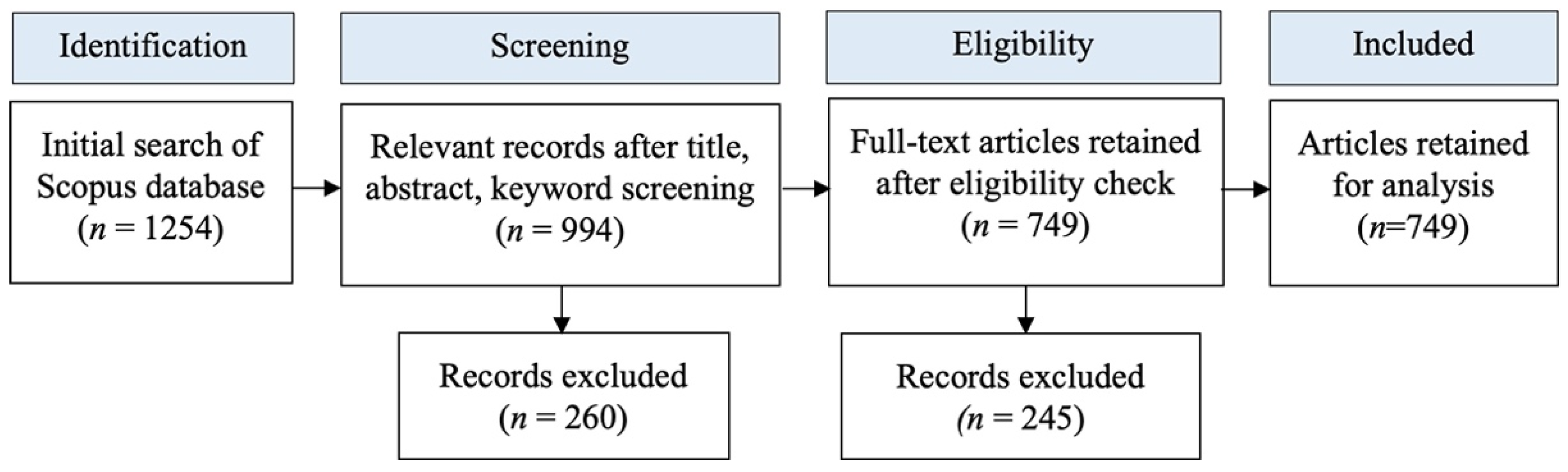
The Scopus database was used to compile the data for this study. Elsevier has designated Scopus as the primary scientific database for diverse research literature that is extensively peer-reviewed and approved by the Content Selection and Advisory Board to assure the publication’s quality. Information gathering and scanning took place between February 24th and 25th, 2022. Steps involved in data gathering for this study can be seen from Figure 2. TITLE-ABS-KEY (alternative AND marine AND fuel) AND (LIMIT-TO (LANGUAGE, “English”)) AND (LIMIT-TO (SRCTYPE, “j”)) was the search query string for the central theme alternative marine fuel. This search returned 1254 documents. Upon removing irrelevant documents based on the title, abstract, keyword, and full-text scanning, 749 items were judged to be pertinent and held for further investigation. The search was limited to journals published in the English language.
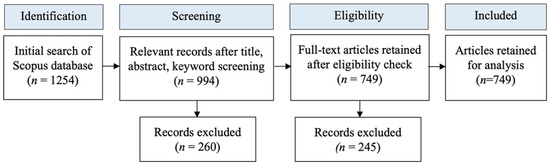
Figure 2.
Data search and scanning process of this study.
Scopus’s Electronic Identification, EID, is a unique digital identification designated to each article. The EIDs of selected irrelevant articles were listed and incorporated into the Scopus search string to ensure that those documents were excluded from the search. The relevant article was then downloaded for bibliometric analysis in CSV file format. CSV format is accepted by bibliometric analytic tools VOSviewer version 1.6.16 and R version 4.1.2, Bibliometricx 3.1. The current study used both to generate results.
3.2. Analytic Tools
In this study, we utilized VOSviewer and Bibliometrics. VOSviewer is a widely used bibliometric mapping tool. The Centre for Science and Technology Studies at Leiden University in the Netherlands developed this program [17]. Bibliometrics (biblioshiny) is a new open-source software tool for scientific literature mapping built in the R environment [16]. Metadata extracted from the Scopus database were used to produce visualizations. As a result, citation information, author keywords, and bibliographic data were collected from the Scopus database to create and visualize bibliometric maps. The CSV files containing the data for the selected articles were imported into the R package Bibliometrix (biblioshiny) and “VOSviewer” software version 1.6.16.
In VOSviewer, “items” refers to the object of interest. Any two elements (i.e., author, country, keyword) can be connected, providing a degree of strength (curved line represents interlink). The link shows “link strength” that quantifies its positive arithmetic value. The greater the value, the stronger the bond. In co-occurrence analysis, link strength refers to the number of journals in which two keywords occur together. The term “co-authorship” refers to the number of journals produced by two countries/authors in which both countries/authors are affiliated.
4. Results and Discussion
The main information regarding the study data derived from Scopus is listed in Table 1. Prior to proceeding with the study, it is critical to grasp the descriptive characteristics of AMF literature. We completed 749 items, all of which were journal articles. From 1973 to 2021, all these journals used 5872 and 2139 author keywords. These documents were written by a total of 2501 authors; only 96 of them are single-authored. The collaboration index indicates a high level of collaboration among authors. The document per author ratio is 0.299, suggesting that nearly three authors wrote one document on average.

Table 1.
Descriptive characteristics of the AMF literature.
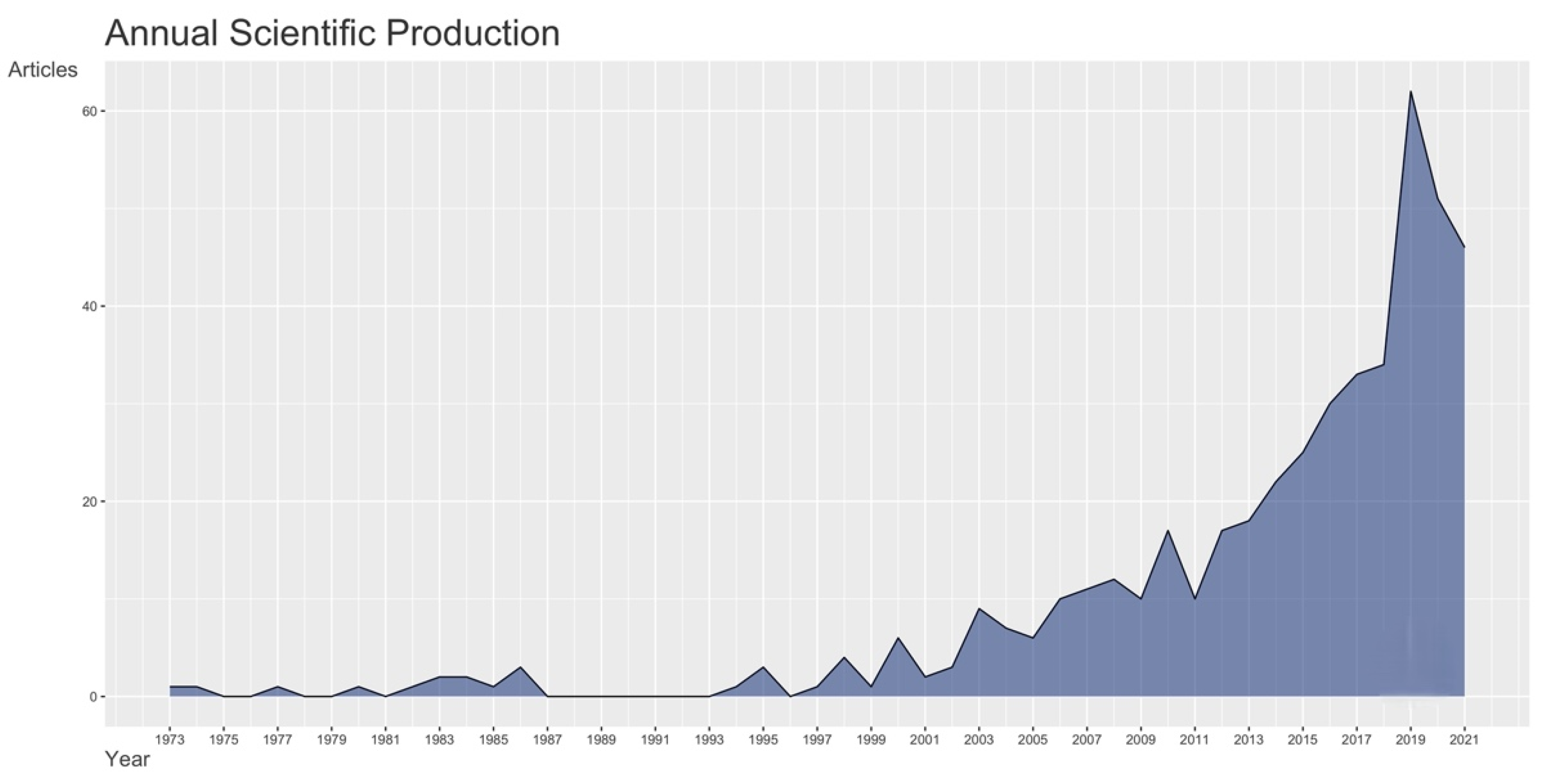
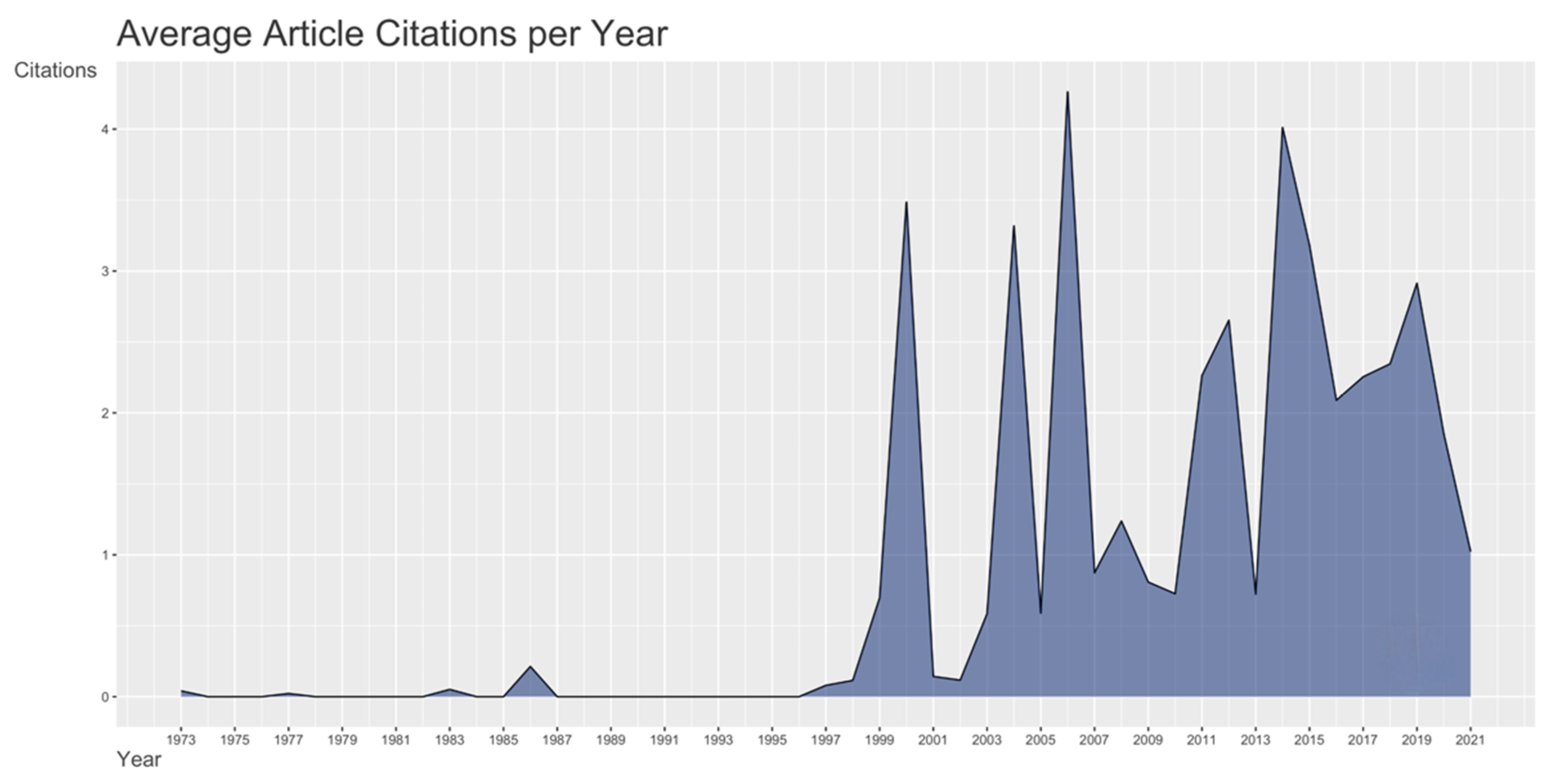
The concept of alternative fuel in the maritime industry is not new. Articles on AMF from the Scopus database could be found from 1973. Figure 3 depicts the number of scientific papers, and Figure 4 illustrates the annual number of citations for AMF publications. At first, production was minimal, but it gradually increased. Articles on AMF were published on Scopus each year from 1973 to 2021. However, the annual growth rate from 1973 is 7.05%. Since 2020, the growth rate has been 15.08% [4]. AMF has become an emerging research topic since the early 2000s due to rising concerns regarding NOx, SOx, and CO2. With the rising concern over environmental sustainability, decarbonization has been in the spotlight. As a consequence, in line with the Sustainable Development Goals (SDG), IMO adopted the Initial Strategy for curbing GHG emissions from ships on 13 April 2018 with an ambitious target of 70% carbon intensity and at least 50% reduction of the total annual GHG emissions from shipping by 2050, compared to 2008, while pursuing efforts towards phasing them out as soon as possible in this century. Therefore, a noticeable swift increase in scientific research from 2010 can be noticed as well as citations.
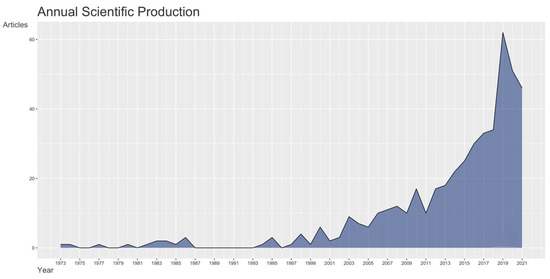
Figure 3.
Annual scientific production on AMF.
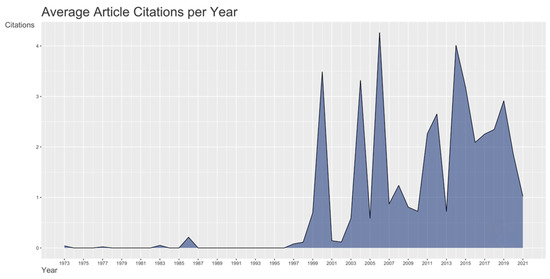
Figure 4.
Average article citation per year.
The articles mostly explore the possibility of fuels and technologies that have zero carbon emission possibility. However, a study identifying fuel selection criteria and sub-criteria are few [8,12,14]. A comprehensive framework consisting of environmental, economic, technological, socio-political, and safety aspects can aid decision-making. The predominant study has a particular focus on the environment that limits the practical implication of the study. The shipping firms play one of the most critical roles. Thus, ship owners, managers, and decision-makers at the firm level need decision support that is beneficial for the environment without impeding business profitability.
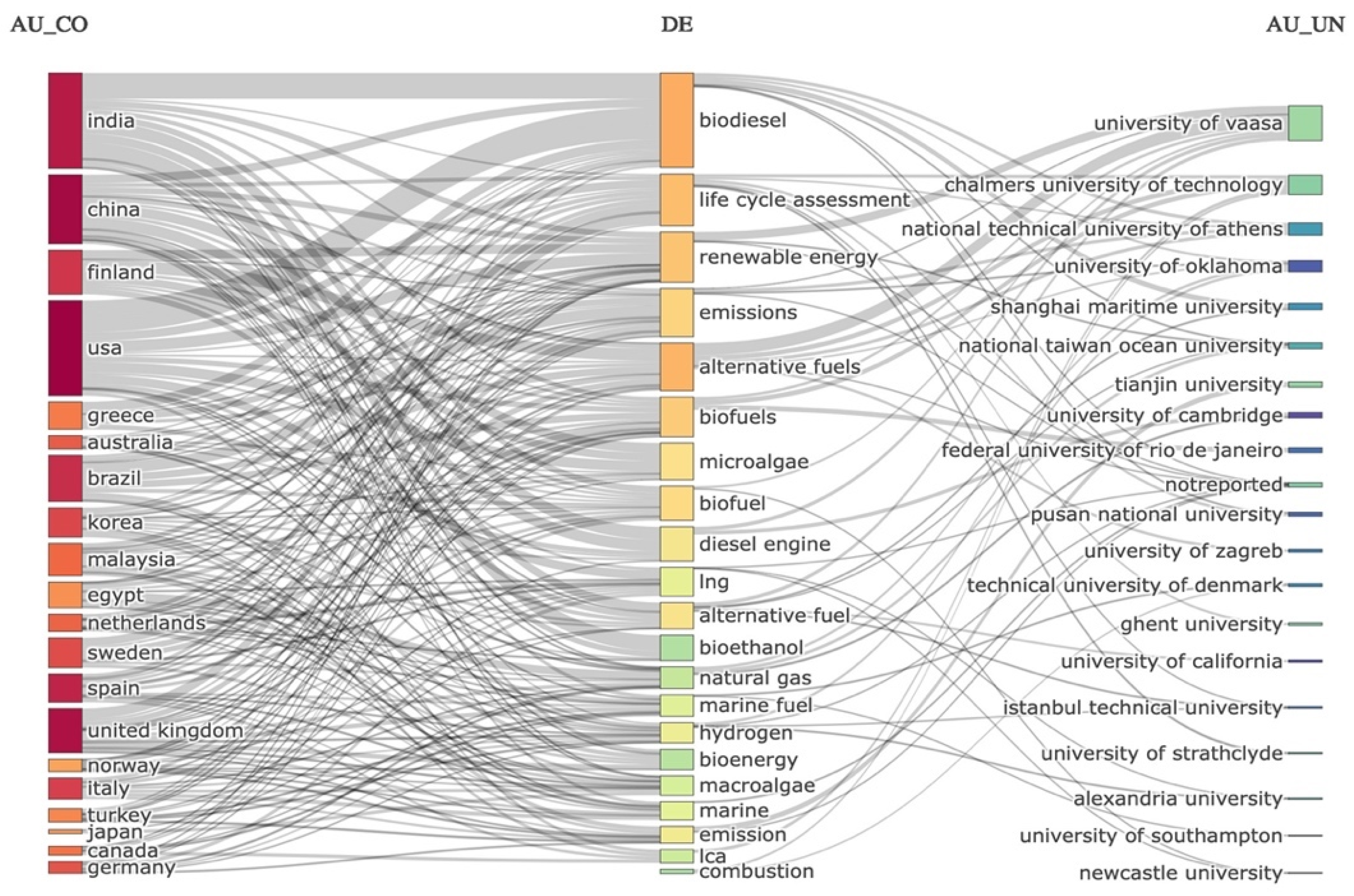
In addition to the annual production and article citations per year, it is imperative to see the pattern of AMF publications’ research topics, nations, and states. Figure 5 presents the threefold analysis of AMF publication with author keywords in the middle, affiliations on the right, and the countries are on the left side of the figure. The figure shows that the USA is working with most of the top affiliations concerning topics related to AMF, followed by India, China, and the United Kingdom. Furthermore, Australia, Malaysia, Brazil, Netherlands, Greece, Spain, and Sweden have a significant contribution to AMF research. Issues related to emission control towards environmental sustainability have been studied in most countries.
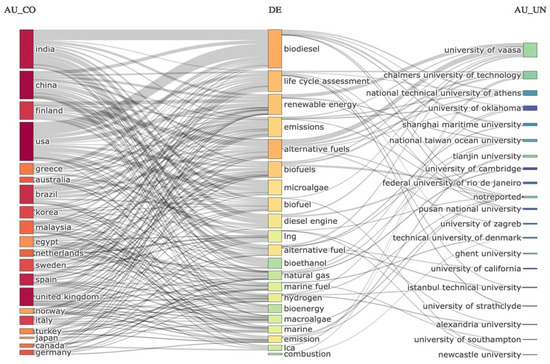
Figure 5.
Three field plots of country, keyword, and affiliation.
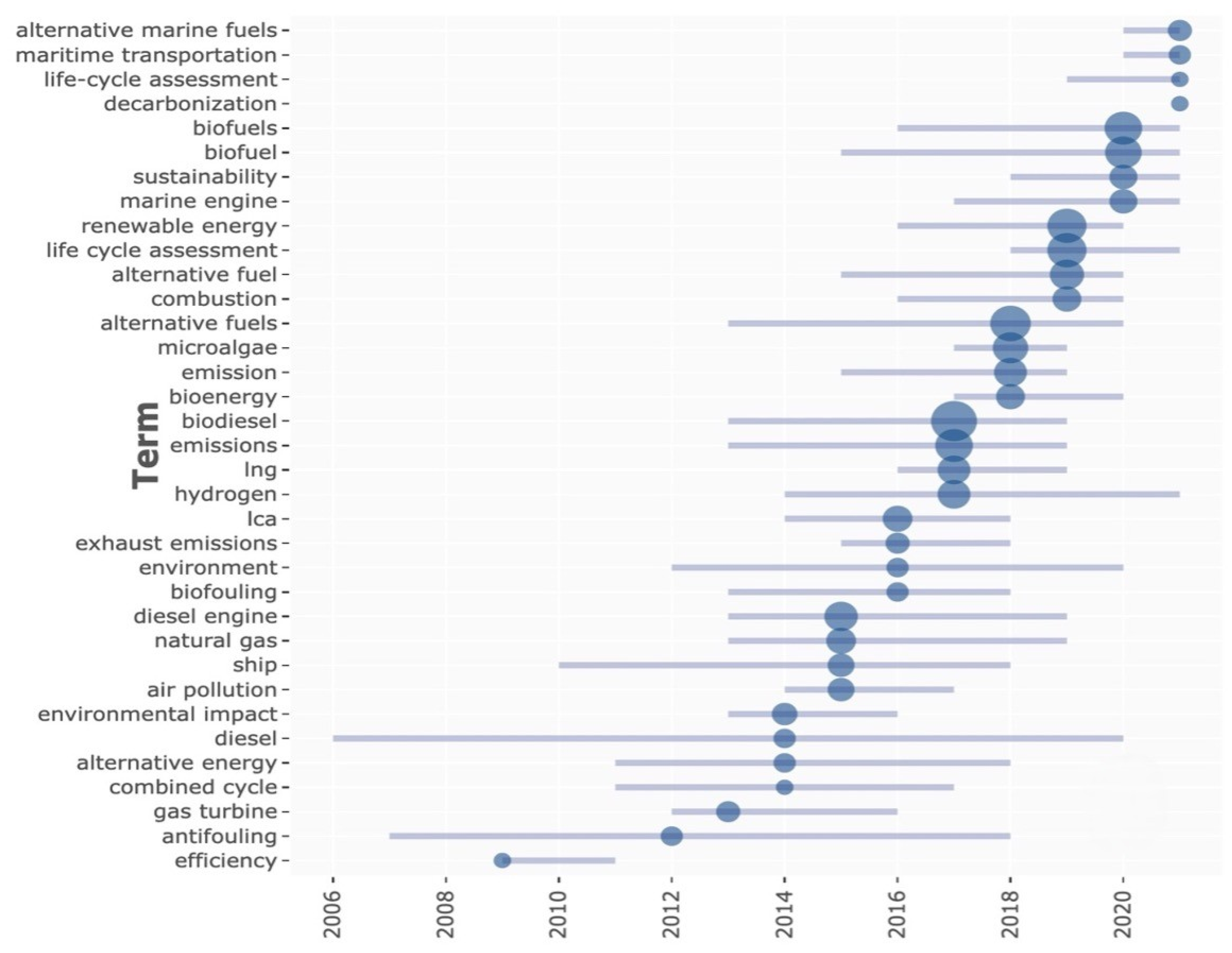
Trend topics have evolved over the last 15 years, as shown in Figure 6. The topic AMF is trending because of the call to decarbonize the shipping industry to achieve sustainable development goals (SDGs). Keywords such as greenhouse gas, carbon dioxides, marine environment, environmental impact, emission control, and alternative fuel are strongly co-related with SDG 7—Affordable and clean energy, SDG 13—Climate action, SDG—14 Life below water, and SDG 15—Life on land.
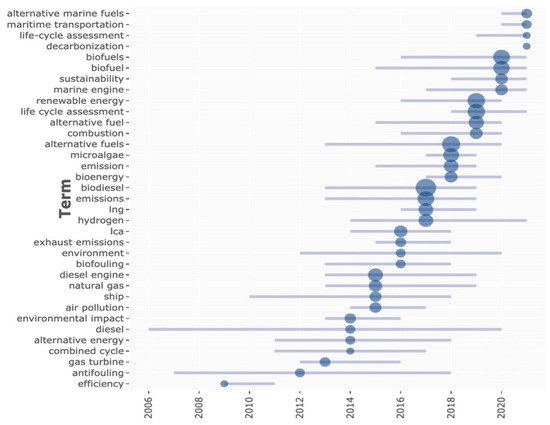
Figure 6.
Trend topics over the last 15 years.
4.1. Influential Aspects of AMF Literature
4.1.1. Subject Areas and Most Cited Articles
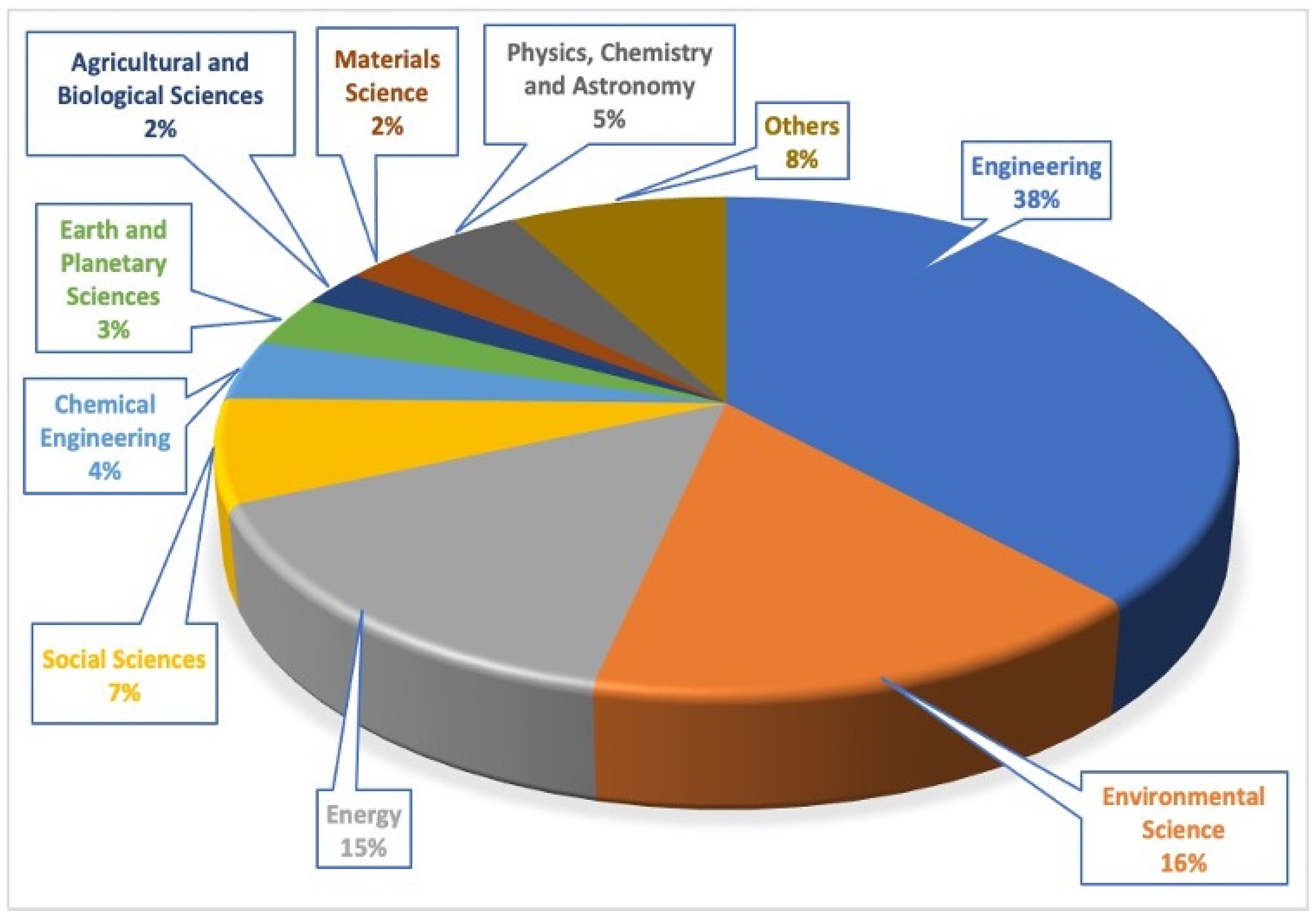
This study solely looked at articles about alternative fuels in the context of the maritime industry. Figure 7 depicts the study’s topic areas (in percentages) under the maritime shipping sector. The engineering field has the most publications, accounting for 38% of all publications. Publications in environmental science and energy account for 31%. Social science stands for 7% followed by physics, chemistry, and astronomy by 5%. Chemical engineering, earth and planetary science, agriculture and biological science, and materials science all have tiny percentages ranging from 2% to 4%. Other subject categories accounted for 8% of the publications. It is understandable that the issue is a hot topic in the engineering and environmental science domain. However, social science studies potentially consider the business aspect of decision-making the most. Nevertheless, business, social science, management, and economic domain studies lag in this phenomenon.
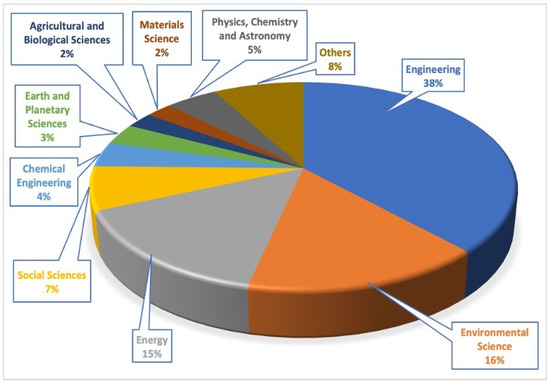
Figure 7.
Publications on AMF by subject area.
4.1.2. Most Cited Articles
The number of times an article is mentioned in scientific publications reflects its impact on a particular subject and the authors and the journals in which it was published [1]. Within the last 15 years (2008–2022), the most cited articles in the search are listed in Table 2. Six of these articles are co-authored by three authors, and three of the articles have only two authors. The article that receives the most citations is titled “Microalgae as a raw material for biofuels production,” authored by Gouveia and Oliveira, published in Journal of Industrial Microbiology and Biotechnology, volume 36, issue 2, page 269–274, in 2009. It has been cited 926 times until 2022. Brynolf Selma and Andersson Karin authored two highly cited articles. These two researchers are also among the field’s leading authors, as found in this study. All the top-cited articles (including proceedings) belong to leading journals. More enigmatically, these highly prominent academic studies have covered a broad spectrum of fuels and fuel technologies, environmental and health implications, and business perspectives, emphasizing the maritime shipping industry.
Table 2.
Ten most cited articles.
4.2. Leading Institutions, Journals, Territories, Authors
4.2.1. Leading Institutions
The top ten institutions actively engaged in AMF research are listed in Table 3. Seven hundred and sixty-nine institutions were identified as having made contributions to this field. According to the number of publications, Alexandria University is at the top of the list with 18 articles. Then, 14, 12, and 10 articles were Chalmers University of Technology, National Taiwan Ocean University, and IVL Svenska Miljöinstitutet, respectively. King Abdulaziz University and Istanbul Teknik Üniversitesi have published nine articles on AMF. The remaining institutes on the list are Athens National Technical University, Vaasan Yliopisto, Arab Academy for Science, Technology, Maritime Transport, and Norges Teknisk-Naturvitenskapelige Universitet—each produced eight publications. These institutes are influential in the AMF study. However, the method for calculating publication results varied by institution. As a result, the number of publications may vary for each institution.
Table 3.
Ten leading institutions.
4.2.2. Leading Journals
Journals that publish articles on AMF could be identified through this analysis. Researchers involved in the AMF study can target those journals for publication. Furthermore, it enables researchers to understand the motivation of each journal. When evaluating the influence of journals, the Journal of Citation Report (JCR) offers several quantitative techniques for ranking, categorizing, evaluating, and comparing publications. One of these is the impact factor (IF), widely regarded as one of the most prominent metrics in contemporary bibliometric studies [1]. Thomson Reuters, known as Clarivate Analytics, established the IF as the first bibliometric parameter. Clarivate Analytics is in charge of the Web of Science database, which includes the extended science citation index (SCIE), and IF is exclusive only to SCIE. In this study, we considered CiteScore (Scopus, Elsevier), which serves the same purpose in interpreting the journal’s impact and is the alternative to IF [28]. CiteScore indicates how influential a journal is to the academic community.
Table 4 presents the ranking of the 10 most prominent journals of this field of study. Journals with CiteScore have been ranked based on the number of documents published. The Journal of Cleaner Production is in the first position with 25 published articles. Renewable and Sustainable Energy Reviews is close to the first journal and is listed at number 2 with 23 documents. This is a very high-impact journal. Another prominent journal named Transportation Research, Part D: Transport and Environment can be seen in third position, having 19 publications on AMF. Fuel and Energy are ranked 4th and 5th with 17 and 16 journal articles, respectively. Applied Energy, Energies, Sustainability are at the sixth, seventh, and eighth positions, with each having published 14 articles. Journal of Cleaner Production, Sustainability, Renewable and Sustainable Energy Reviews range between 18 to 12. Elsevier Ltd. is the publisher for eight list journals, while Energies and Sustainability Switzerland belongs to MDPI. It is worth noticing that the top 10 journals’ CiteScore ranges from 3.9 to 30.5, which means these are the credible, prominent, and high impact journals of the field that have a solid contribution to the development of AMF research. The other two journals, Ocean Engineering (9th) and Renewable Energy (10th), published 11 documents each.
Table 4.
Ten leading journals.
4.2.3. Leading Territories
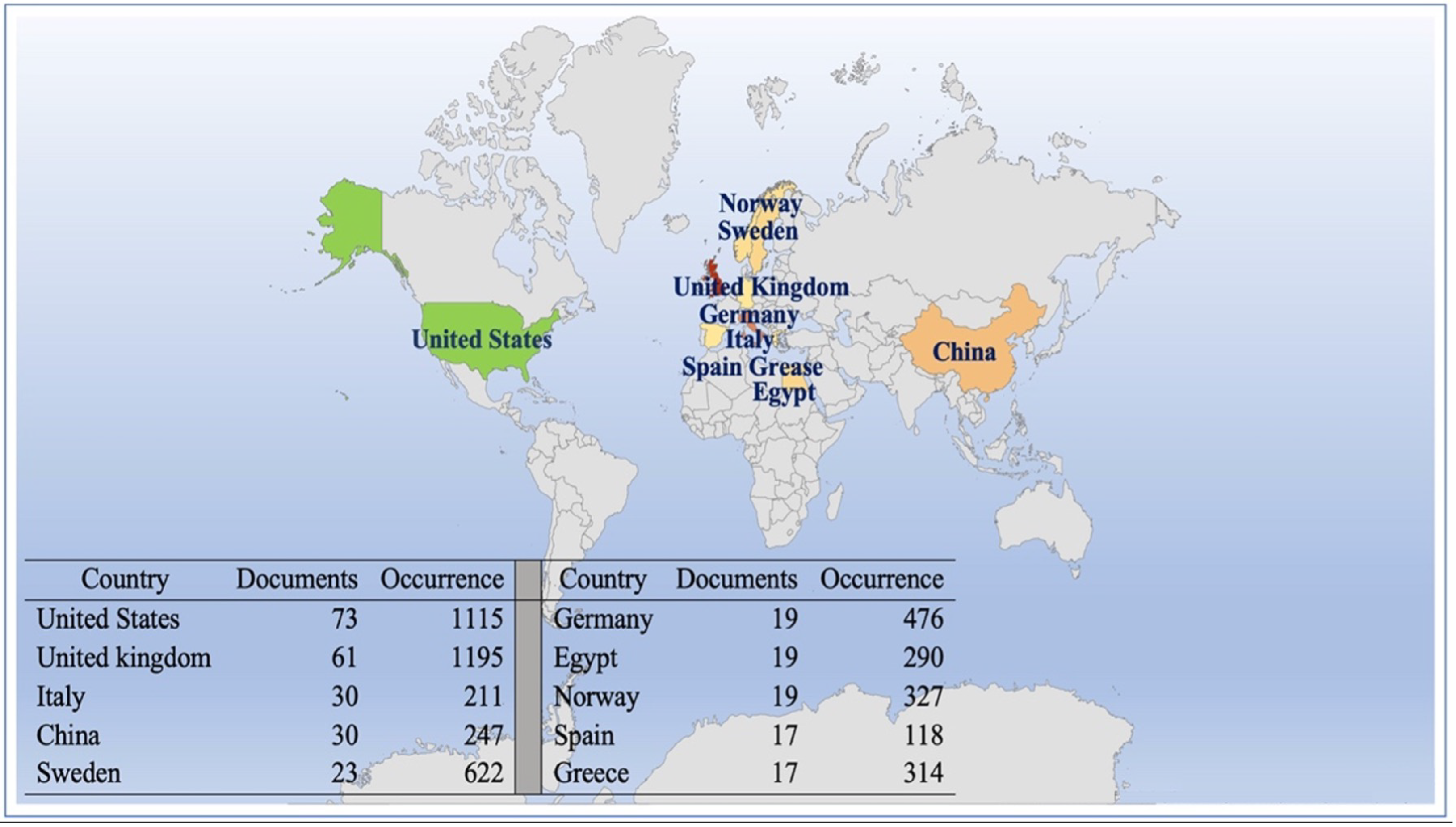
The ranking of countries is presented in Figure 8. It represents the number of publications by the ten leading territories. The United States of America leads the list with 73 published journals, while the United Kingdom ranks with 61 articles on AMF. Among other countries, Italy is ranked 3rd, China is in 4th, and each has 30 published documents. Sweden’s 23 scientific papers secured fifth place for the country. While Germany (6th), Egypt (7th), Norway (8th) each have 19 articles, Spain (9th) and Greece (10th) each have 17 articles on AMF.
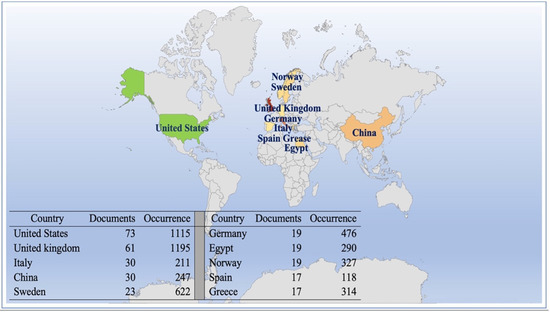
Figure 8.
Ten leading territories.
It is worth to mention that, because many of the Scimago Journal & Country Rank (SJR) journals are based in the United States, the United Kingdom, and China, the bulk of articles come from those countries.
The data in Table 5 pertain to the top twenty corresponding author countries, with the United States of America ranking first. Corresponding authors from the United States of America have authored 73 papers, 63 of which are single country publications (SCP) and ten of which are multi-country publications (MCP). Multi-country publications include at least one foreign co-author. China is ranked second with 60 articles of correspondence, 48 SCP, and 12 MCP. In India, there are 47 publications, 42 of which are SCP and five of which are MCP. United Kingdom is in fourth place, having published 42 research articles on AMF. It has an SCP of 25 and an MCP of 17. Korea is ranked sixth with 27 corresponding research publications (SCP—22, MCP—5). Spain is rated sixth with twenty-one articles (SCP—13, MCP—8).
Table 5.
Corresponding author’s country.
4.2.4. Leading Authors
Based on data from the Scopus database, this study identifies the top ten authors, as shown in Table 6. Authors involved in the AMF study were affiliated to seven countries worldwide. The affiliations were as follows: three authors from Sweden, two from Finland, and one author from Saudi Arabia, Taiwan, Spain, Turkey, and Egypt each. The first journals of the authors were published between 1991 to 2014. The authors have been ranked based on the number of citations. Author Fridell, Erik affiliated with the Chalmers University of Technology, Gothenburg, Sweden, ranked number 1 with 108 publications since 1993, 47 h-index, and 6549 citations. Fifty percent of the authors of this list are affiliated with two institutions only. Three authors (Fridell, Erik; Andersson, Karin; Brynolf, Selma) are affiliated with the Chalmers University of Technology, Gothenburg, Sweden, and two are (Niemi, Seppo A.; Sirviö, Katriina) with Vaasan Yliopisto, Vaasa, Finland.
Table 6.
Ten leading authors.
Although the ranking has been done based on the number of documents published by the author, the h-index is an important indicator of an author’s productivity. The h-index is frequently used to quantify a researcher’s significance. In 2005, Jorge Hirsch developed the h-index as a mechanism to quantify the contributions of individual scholars. This author-level indicator is intended to aid scientists, journals, and institutes in determining the impact of their publications on the scientific community. Because it enables direct comparisons across and within disciplines, it consolidates quantitative and impacts measures into a single value [1].
4.3. Bibliometric Maps
4.3.1. Co-Authorship of Authors and Territories
The term “co-authorship” refers to the number of journals produced by two countries in which both countries are affiliated and have co-authors. In co-authorship analysis, the bibliometric network depicts the relationships between researchers, research institutions, and states based on the number of publications they have co-authored. Additionally, items are referred to as objects of interest. Any two elements can be linked together with the same strength (in VOSviewer, the interlink is represented as a curved/straight line). A link’s strength is quantified by its positive arithmetic value—the greater the value, the stronger the bond. The term “link strength” refers to the overall strength of two countries. In co-occurrence analysis, link strength refers to the number of journals in which two terms occur together [29].
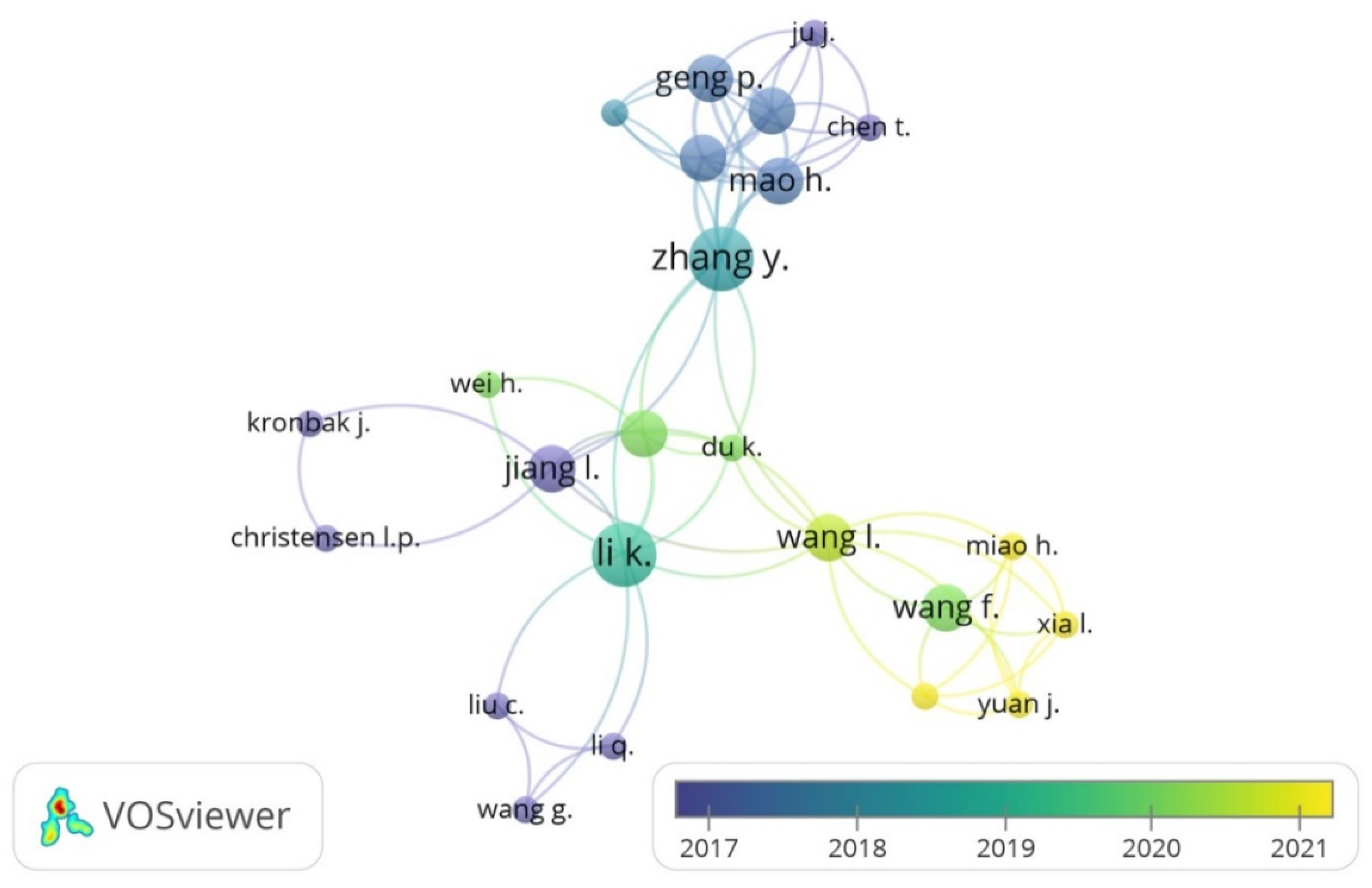
As illustrated in Figure 9, a bibliometric map of co-authorship utilizing author names reveals five groups. A cluster is a set of closely related nodes. Each node in a network is assigned to exactly one cluster. A resolution parameter determines the number of clusters. An explanation of Figure 8 is as follows: author Jiang L. from cluster 4 with seven links, link strength of 7, 2 items with an average year of publication 2017.00. Again, with an average year of publication of 2018.33, author Wang S. from cluster 1 has 12 links, 16 strengths, and three items. These two authors have two items together, and the link strength between them is 1.
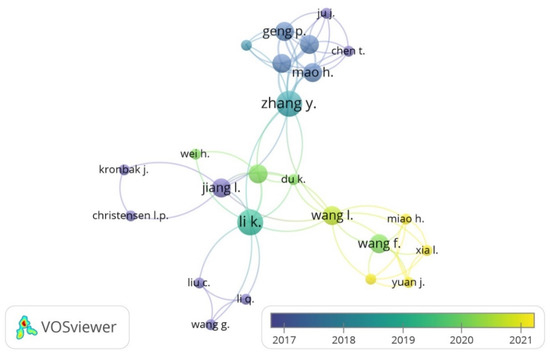
Figure 9.
Co-authorship between authors.
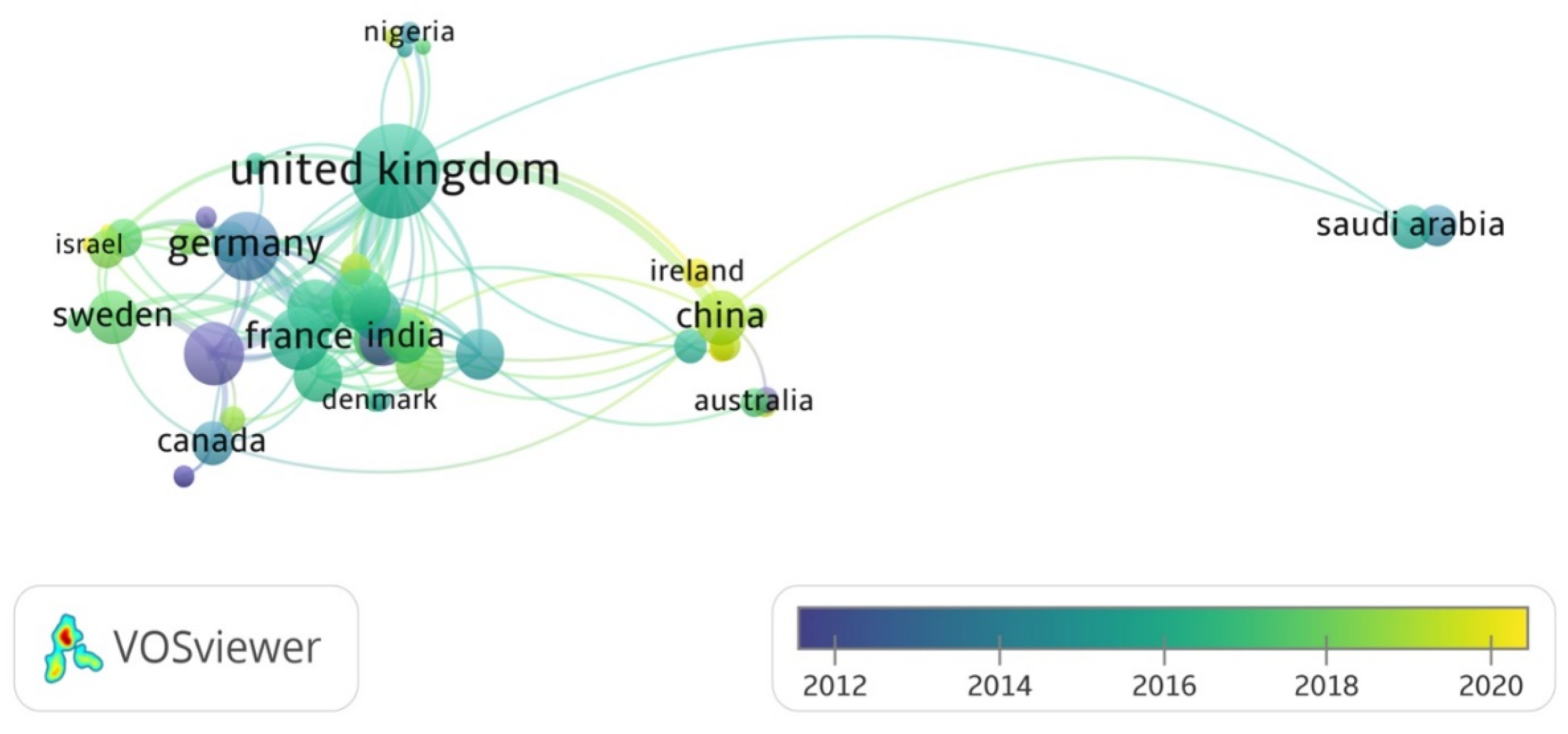
Figure 10 illustrates 40 of 63 with a minimum of two publications under six clusters. The over visualization demonstrates that 160 links among the nations have 236 total link strength. The higher the link value, the higher the link strength. For example, the United States–Sweden and the United Kingdom–Sweden link strength is 4. However, the link strength between the United States and the United Kingdom is 11. That means the United States and the United Kingdom have co-authored more publications than Sweden.
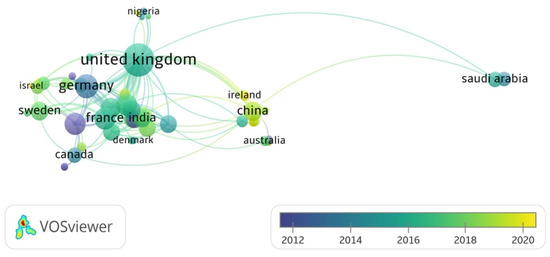
Figure 10.
Co-authorship between countries.
The urgency to switch towards cleaner fuel is expected to influence the collaboration between territories in terms of scientific research. Yellow represents the latest research activities; thus, countries like China, Switzerland, Sweden, Turkey, and Indonesia are on this list. However, although China, Indonesia, and Malaysia can be seen in the co-authorship analysis visualization, Singapore is missing despite being a developed nation and one of the most informant shipping hubs [30]. Thus, more research on AMF considering the Singapore context is appreciated.
Data from Table 7 clearly indicates that collaboration between countries on a global scale is deemed to be limited. The highest frequency of collaboration (at 10) was recorded between China and the United Kingdom. The United Kingdom–Spain and United Arab Emirates–Canada collaborated on eight articles apiece. The USA and the United Kingdom collaborate at a level of six, whereas the rest of the world collaborates at a level of five or less.
Table 7.
Collaboration between countries.
4.3.2. Author Keywords and Conceptual Structural Map
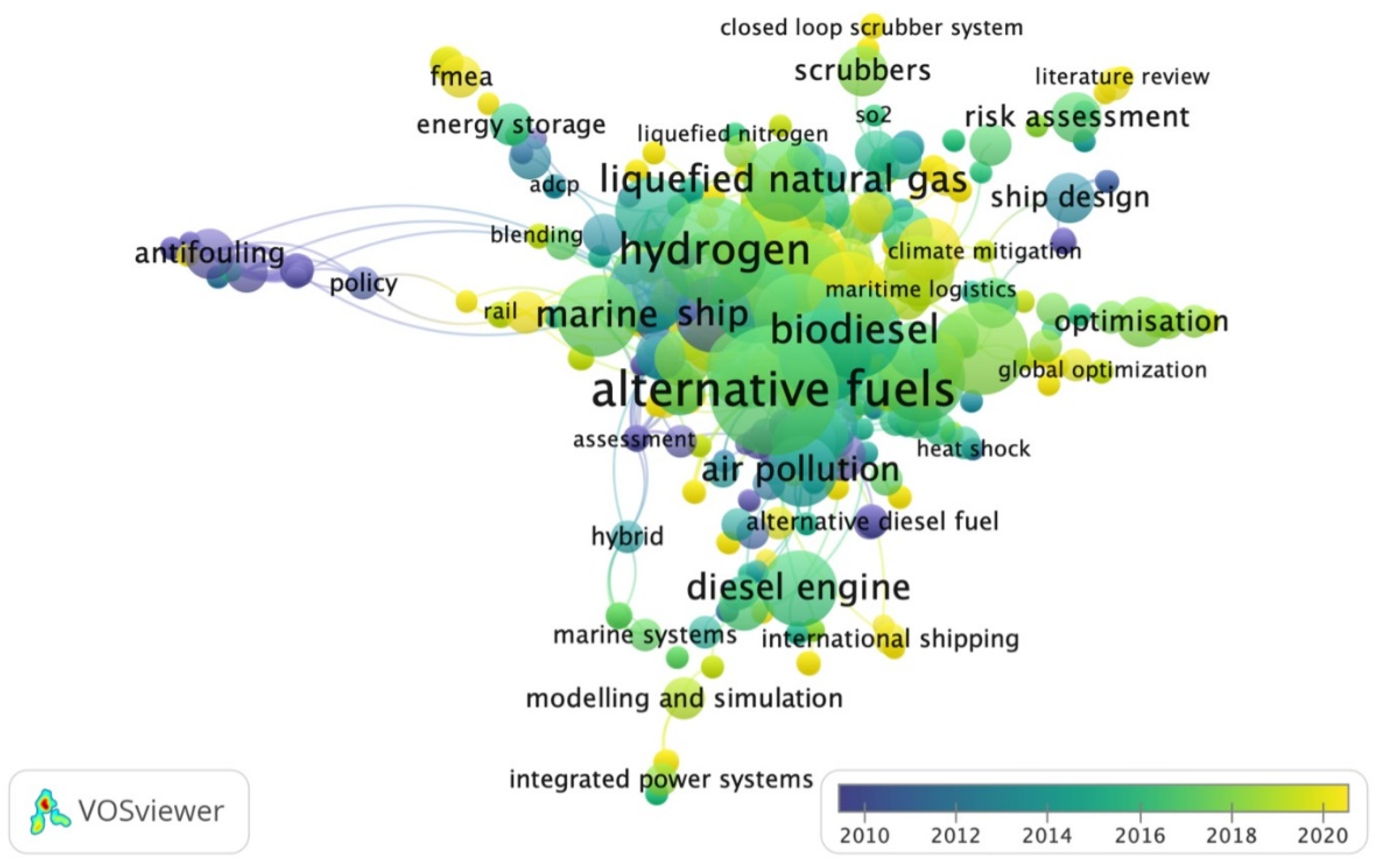
The co-occurrence of author keywords analyses both keywords that appear more frequently in publications, typically beneath the introduction, and keywords that appear in the same texts. This analysis examined 998 article author keywords. Notably, this study concentrated on author keywords rather than index keywords. The VOSviewer identified 998 author keywords; however, only 39 of those keywords exceeded the criterion with a minimum of five co-occurrences. Additionally, when the minimum number of co-occurrences of a term was four or three, 58 and 87 of the keywords satisfied the requirements, respectively. When the minimum occurrence was set to two, 185 keywords were identified after duplication removal, but only 147 were selected. Figure 11 shows an overlay depiction of co-occurrences of author keywords, where 703 items were generated on the web following data cleaning.
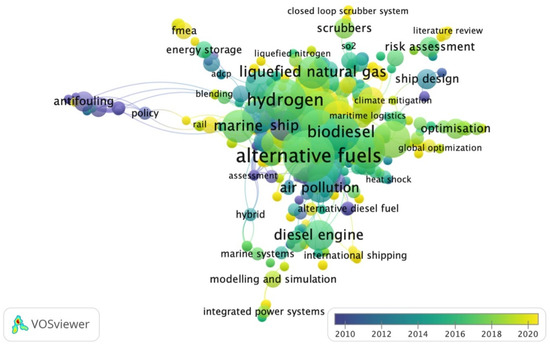
Figure 11.
Co-occurrence of author keywords.
Few duplications, similar words, such as alternative fuel, alternative fuels; maritime transportation, maritime transport; biofuel, biofuels, were encountered during data analysis. For instance, IMO is the short form of International Maritime Organization. Thus, we kept IMO only. Therefore, only one of those terms has been used. Table 8 displays the 15 most used keywords. The keywords mention some proposed alternative marine fuel options such as hydrogen, natural gas (LNG), liquefied natural gas, methanol, biofuels. The concern over air pollution and emission in the maritime industry is justifiably represented in the keyword search. To comply with IMO regulation towards sustainability, the lifecycle assessment of fuel has focused on scholarly articles. Multi-criteria decision-making (MCDM) is being widely used to propose a decision support framework for AMF selection.
Table 8.
Most frequently appeared 15 author keywords.
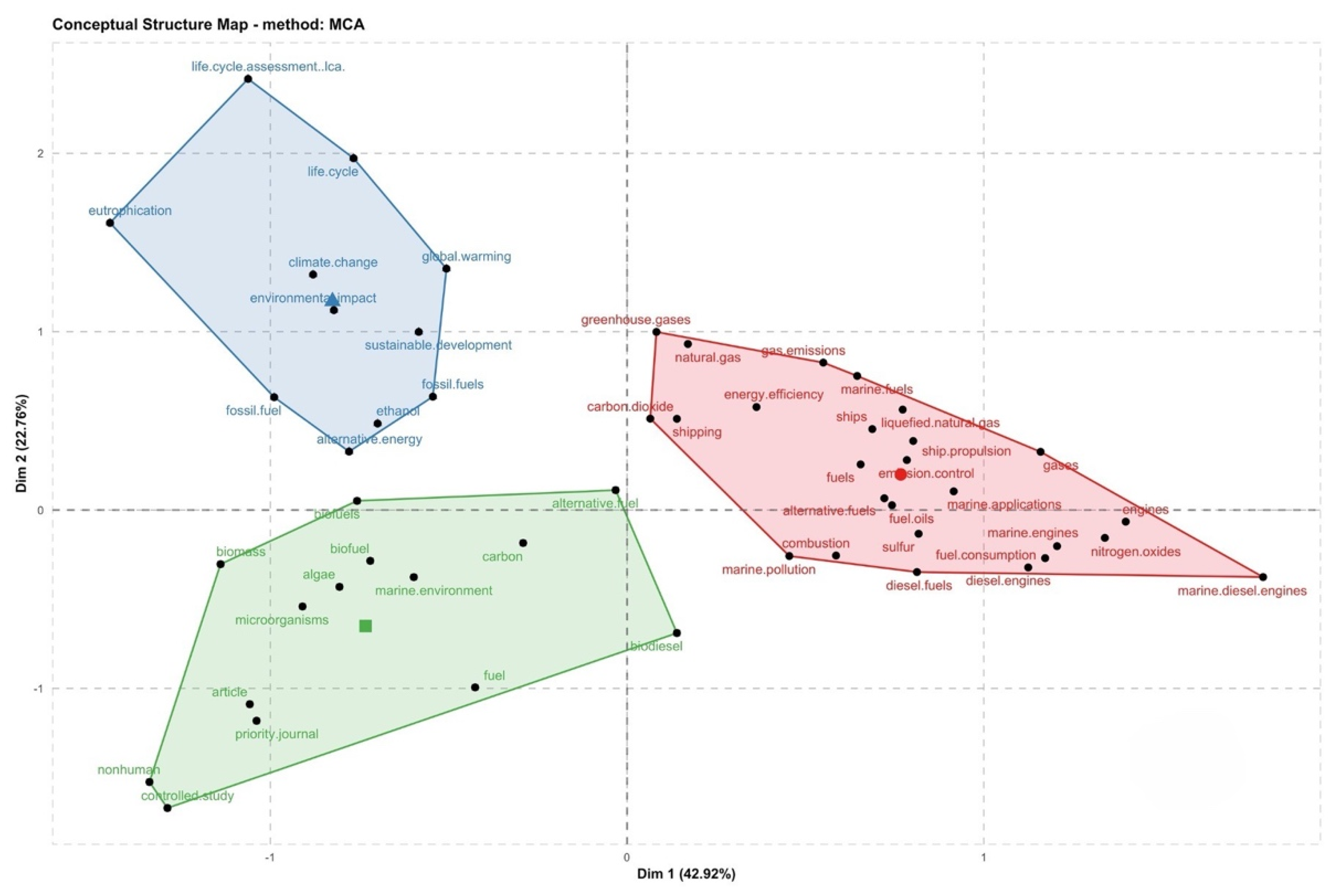
The conceptual structural map of the AMF literature is depicted in Figure 12. It represents the co-word analysis performed on the Hierarchical Stochastic Clustering (HSC) bibliographic data retrieved from the Scopus database. We found three groups of documents communicating similar themes using multiple correspondence analysis (MCA) [17], a frequently used sociological technique. It distorts large data sets with multiple variables into a low-dimensional space to create an intuitive two- or three-dimensional graph that uses plane distance to represent the similarity between the keywords. The interpretation, in this case, is determined by the location of the keywords. Keywords that approach the centre point have received ample attention recently. The study theme or transition to other themes becomes narrower as it gets closer to the edge. The green cluster is concerned with maritime ecology, where the marine environment, biofuel, algae, and microorganisms appear to be more central than alternative fuel, fuel, and biodiesel. The red cluster is about ship emission management, where the research community should pay more attention to marine pollution, shipping, marine diesel fuels, and diesel engines. Similarly, the blue cluster is researching global warming-related topics such as sustainable development, life cycle assessment, and alternative energy. Such unresearched keywords suggest a potential research topic for the future.
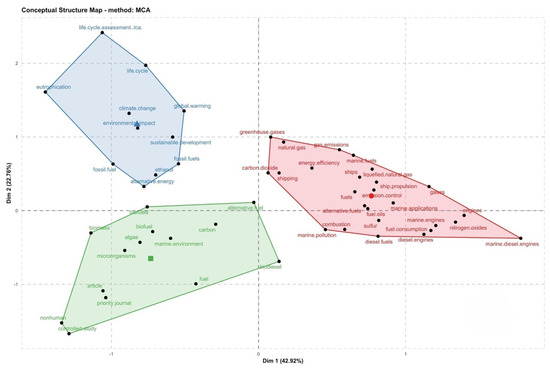
Figure 12.
Conceptual structure map.
4.3.3. Thematic Map
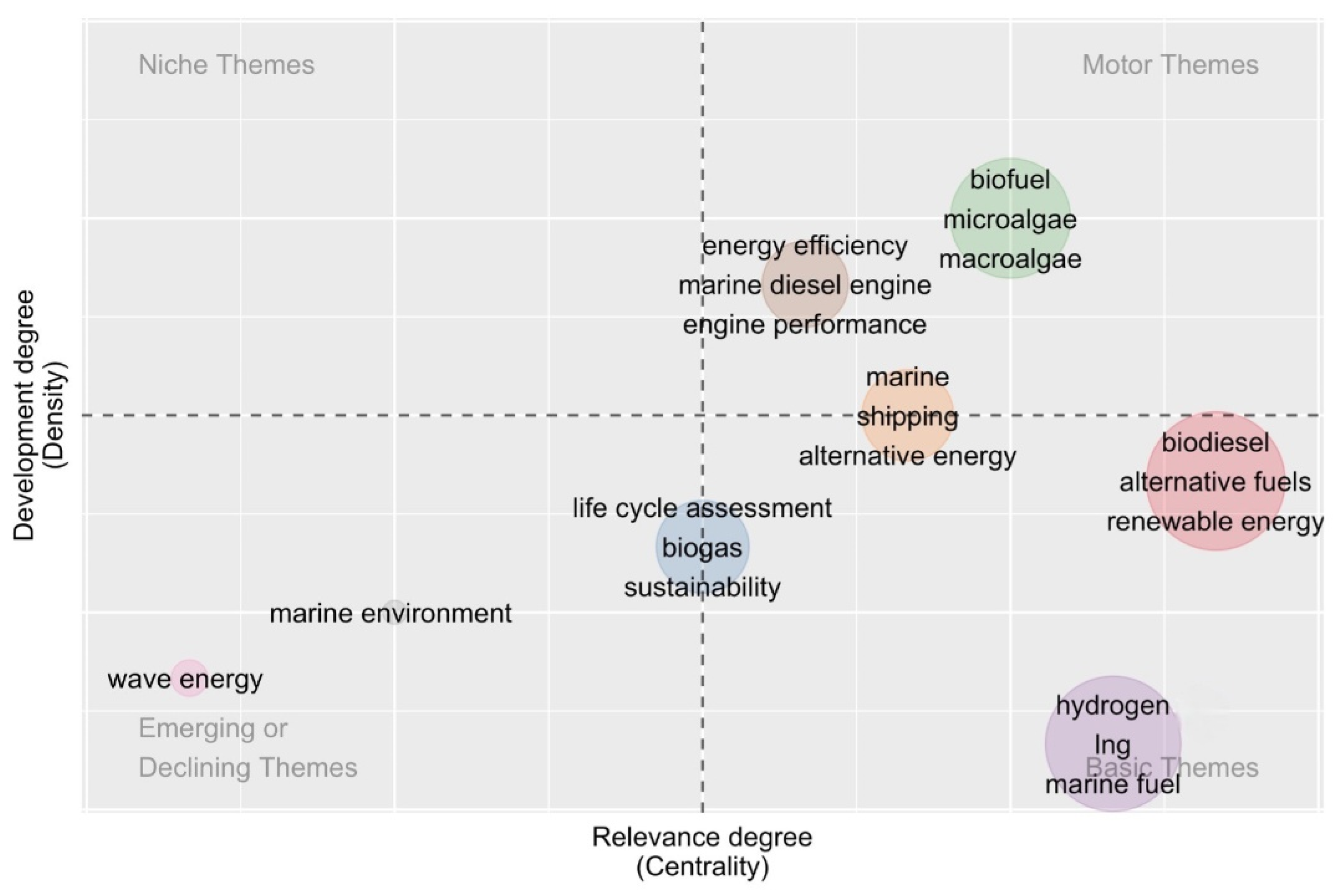
The thematic map classifies most topics into two categories: basic themes with a high centrality but a low density and motor themes with a high centrality but a low density. Basic and motor themes have great potentiality, and researchers can effectively work on them. Generally, the AMF literature discusses in detail the issues that fall under the basic and motor themes. In the case of AMF, the issues have been explored but not fully developed. Considerable study has been conducted, and additional work is necessary, which is why this theme is transitioning from emergent to basic. For instance, the keyword alternative fuel belongs to the basic theme, but the criteria and decision support framework for AMF selection are embryonic. Thus, further study is much appreciated.
Figure 13 shows the location of the themes, and Table 9 presents the theme label with theme title and keywords under those themes. Clustering is used to create these themes. Clustering is a bibliometric analysis enrichment approach. Its primary purpose is to form topic clusters to organize network clusters and track their evolution in understanding how a study field emerges and evolves. The basic theme, labelled as biodiesel, has keywords such as biodiesel, renewable energy, biofuels, emission, and diesel engine related to marine engine combustion toward emission control. This theme also discusses marine fuels such as hydrogen, liquefied natural gas (LNG), and methanol. LNG is the topmost discussed alternative fuel option. Another keyword under this theme is alternative fuel. The topics of basic theme are related to the topics under the motor theme. The theme labelled as marine is shipping- and shipboard-focused as this theme covers keywords like marine, shipping, alternative energy. All the themes are interlinked with the concept of environmental concern.
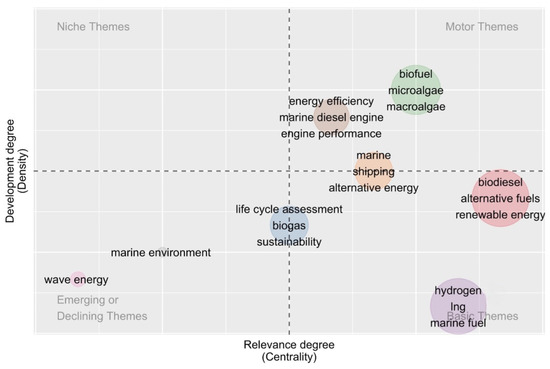
Figure 13.
Thematic map.
Table 9.
Themes and keywords in the thematic map.
Motor themes are well-developed research areas; yet they need more attention from researchers. They cover a range of technology-related topics such as biofuel, microalgae, macroalgae, bioenergy, bioethanol, fermentation, biomass, and seaweed. Besides, motor themes indicate the management of ships emission. Diesel engine, engine performance, waste heat recovery, exhaust emission, combined cycle, economic analysis, and energy efficiency have gained the most scientists’ attention. However, the research field has a long way to go because the total number of publications published on AMF is so tiny (only 749). If research is undertaken on developing ideas, these topics may eventually evolve into fundamental or motor themes.
4.3.4. Thematic Evolution
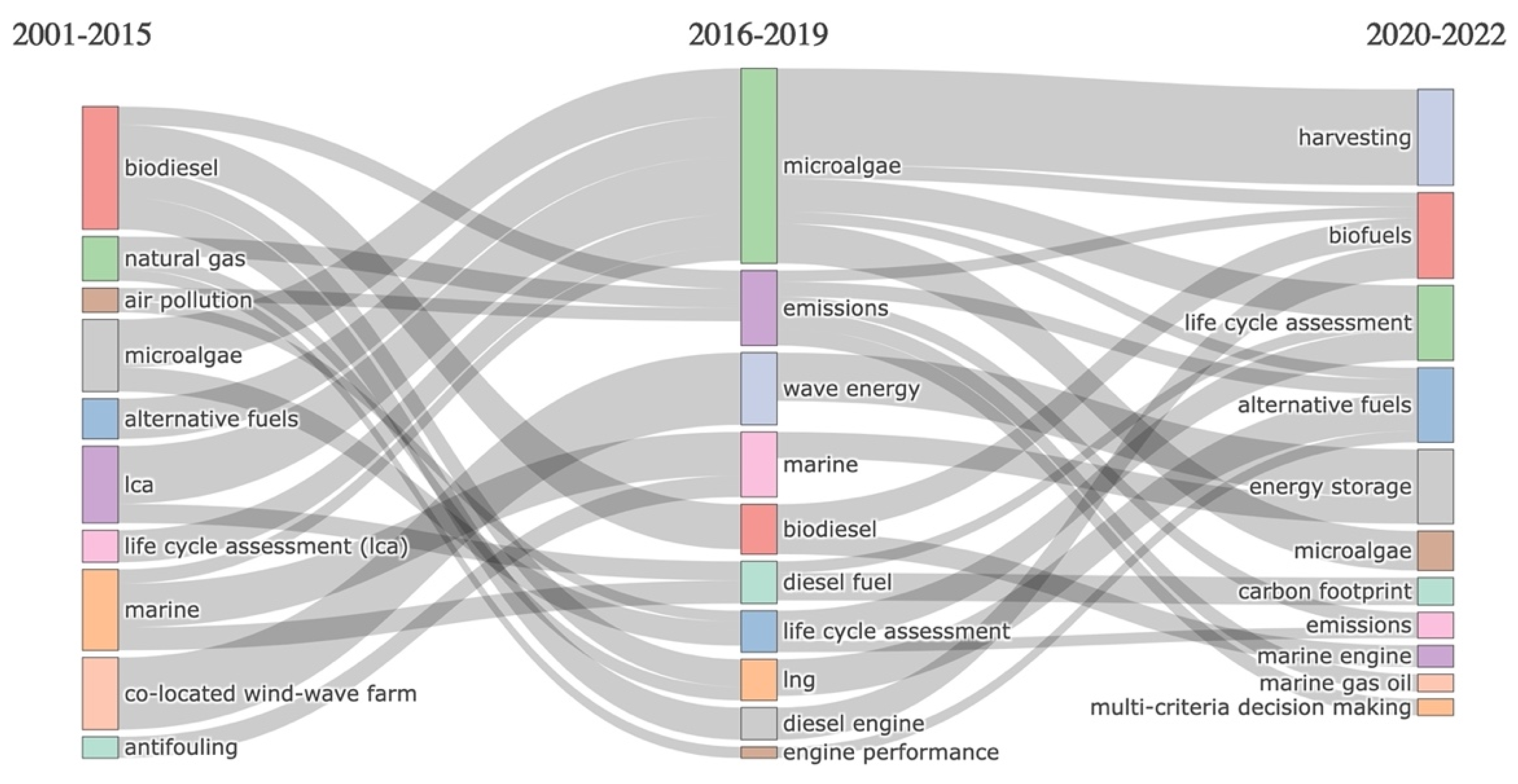
Figure 14 depicts the thematic evolution of AMF literature since 2001. The thematic evolution illustrates the history of themes and how they evolved using the author’s keywords. Thematic progression is accomplished using “biblioshiny”, and two-time breaks result in three-time segments. This temporal division is subjective to the researcher’s judgment to maintain a more accurate picture of topic evolution [31]. The first part spans 2001 to 2015, the second spans 2016 to 2019, and the third spans 2020 to the current year 2022. Themes have progressed over time. The environment has always been a central priority to the marine industry. Analysis shows that from 2001 to 2015, the studies already began to embark onto microalgae, biodiesel, and lifecycle assessment of fuel to mitigate the risk of air pollution. With the announcement of SDGs, the study diverted towards environmental safety more than ever before. Although the GHG emission from shipboard is not much, upstream, and downstream emission has been the main concern of the research community. As a result, lifecycle assessment research demonstrates an increasing trend up until 2022. Liquefied natural gas (LNG) has been the most researched alternative fuel. This finding is in line with [4]. The research on AMF has progressed significantly from 2016 onwards. Lifecycle assessment is gaining researchers’ attention and the same applies to air pollution, particularly marine emission, carbon footprint. Microalgae was a noticeably large topic from 2001 to 2019; however, from 2020, the focus has decreased. Recently, from 2020 onwards, harvesting has become one of the dominant topic areas. Alternative fuel from food sources is being studied, thus, harvesting has gained such notice in all three time-slices. Researchers’ focus has shifted towards sustainability. This paradigm shift is justifiable because the triple bottom-line (3P––people, planet, profit) notion is ingrained in the business model as a core practice in the maritime industry. Thus, social, and environmental concerns are equally significant for maritime commercial enterprises in addition to economic considerations. Upcoming legislation towards GHG emission reduction and decarbonizing maritime shipping is the prime priority in industry and academia.
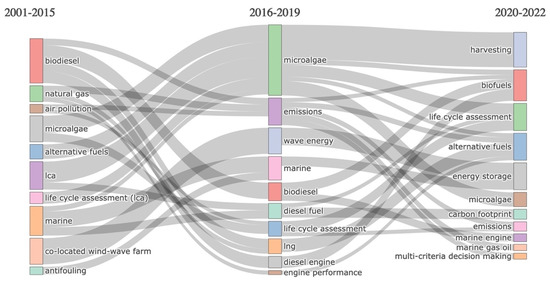
Figure 14.
Thematic evolution.
5. Additional Discussion
The results and key findings of the study demonstrate that; AMF is an emerging area of research. Particularly developed nations such as the USA, the United Kingdom, Finland, Germany, Netherlands, and Sweden are advancing the field. While the central focus of researchers is to select appropriate alternative fuel, the technologies or the combination of fuel and technology is understudied. Furthermore, the current development status of newbuild ships and the dual-fuel ship has already tapped into the industry, and ammonia-ready ships development is underway. Still, these aspects did not appear in the bibliometric analysis. The share of ammonia fuel in the maritime sector is expected to increase [32]. LNG is a suitable AMF for the ships in the short-term. LNG has been the most studied AMF, but ammonia did not gain enough attention compared to LNG. Updated literature on recent development is yet to be uncovered, as not many studies are embarking on investigating the industry outlook. The case study on industry fast mover’s activity aimed at GHG emission reduction is much needed to understand how those organizations’ newbuild ships and maritime logistics support are evolving. There is a disconnect between academic knowledge of AMF and industrial manifestation progress, which supports Section 4.1.1’s finding. According to the study topic area, the business and management domain studies lag in the AMF phenomenon. Unlike road transportation, it is very unlikely that only one fuel will be adopted in the maritime industry. Maritime shipping is classified into domestic and international shipping. There are various trading pattern types (i.e., deep-sea vessels, short-sea vessels, inland vessels, fishing vessels, etc.), and the sizes and functions of these vessels differ. Considering these characteristics of maritime logistics, the alternative fuels need to be studied because infrastructure development strategies to supply them may vary. Again, the industry is also bound to follow national regulations while operating in a particular nation’s area. Therefore, national energy strategies may also influence the direction and topics of research on AMF.
Based on the literature, author keywords, thematic map, and thematic cluster evaluation, we have highlighted several criteria and aspects that need consideration while selecting AMF and could be the potential topics of further study (see Table 10).
Table 10.
Identified aspects and criteria to consider in selecting AMF.
There is still a need to align criteria consistent with the sustainability efforts. The evaluations’ scope varies significantly, and some studies examined specific parameters in greater detail, ranging from focusing exclusively on a particular fuel, fuel group, or CO2 including other emissions, economic, and technical factors. More application-oriented studies, emphasizing recommendations for ship owners is recommended. Rapidly growing ship management organizations may be researched as case studies to understand their decarbonization strategy better; however, there is a shortage of such studies. From the standpoint of ship owners and managers, commercial viability is just as critical as environmental sustainability. The finance components received less attention from AMF researchers. The concept of “green financing” or “sustainable financing” has lately gained prominence in the maritime industry’s decarbonization efforts. The industry requires huge investment for infrastructure development. For instance, fuel bunkering infrastructure development requires financial support for facility development in ports. Bunkering is a crucial component for the paradigm shift toward zero carbon and low carbon maritime shipping [44].
6. Limitations and Future Research Direction
The study only considered the Scopus database to map out the research trends in AMF. Since the researchers’ primary objective was to identify alternative fuel research trends in the maritime industry, studies on alternative fuels in other sectors such as road transportation, aviation, and industrial use were disregarded. A confined search of “alternative marine fuel” within the title, abstract, and keyword made the search so narrow that the result may have overlooked potential studies that used slightly different terms or had similar scope. Some papers were probably omitted from the search results because they used a different type of “alternative fuel” rather than alternative marine fuel. The authors limited their data search to papers produced in the English language. To maximize global awareness and attention, significant research would indeed have been submitted to English-language journals—such is the rationale behind such a choice. As a result, English linguistic bias can be viewed as a constraint. The study’s main disadvantage is that it was limited to scientific publications retrieved from the Scopus database. Co-occurrence analysis of author keywords found that only 85% of the articles contained author keyword information that journals offered. This study employed the traditional bibliometric analytic method to generate results from AMF literature. Future research may integrate various forms of literature reviews with bibliometric analysis.
It is worth mentioning that the bibliometric study’s conclusions are subject to periodic revisions in reaction to the addition of new articles to scholarly databases. As a result, subsequent investigations are highly valued due to the nature of the analysis approach. Additionally, future research may compare or combine the results from several scholarly databases, such as Web of Sciences and Scopus. It is advised that the search method be redesigned to gain a more in-depth understanding of the research trends in this sector. Despite using the exact search query string, the output may vary. Thus, further study may rerun the search to get updated findings. Furthermore, the data search strategy can be redefined by applying the search strategy’s multi-method approach for a more extensive investigation. The criteria highlighted in Table 10 are recommended to consider for assessing potential AMF in future studies. The research on AMF is pre-dominantly environment-focused. Management and decision-support aspects require thorough discussion. Additionally, criteria aligned with sustainability dimensions are recommended, as the maritime shipping industry is committed to achieving the Sustainable Development Goals. This alignment will aid in developing and modifying shipping firms’ business models.
7. Conclusions
The present study significantly contributes to the knowledge. Firstly, the study provides an up-to-date overview of AMF research using bibliometric indicators. It examines the rise of scientific and academic publications on alternative fuels in maritime shipping based on Scopus articles. The author’s keywords’ co-occurrence and co-authorship were analysed using the analytic program VOSviewer and Bibliometrics. This study identified 749 relevant works of literature since 1973 from a total of 1254 papers that have been devoted to the subject of alternative maritime fuel. This branch of study is described using bibliometric analysis and new visuals. Researchers in this field may consider collaborating with the study’s top authors. Similarly, leading institutions and countries can be potential affiliations. The top journals that make a significant contribution to the advancement of AMF research may be considered for publication. The most frequent author keywords, thematic map, and clusters highlight the current state and transition of the research topic; with this information, the researcher can narrow the field of AMF research even further. Secondly, the study provided the list of criteria in Table 10, which can be used as the input for MCDM analysis in the future. The resulting AMF selection framework will then assist industry practitioners in choosing appropriate fuel considering customized needs based on vessel type, size, design, etc. Thirdly, the study highlights the topic of green financing. Bunkering facility development needs to focus on the industry and research community. The finding demonstrates that LNG, hydrogen, and ammonia are considered the most prominent fuel options, while LNG is being considered for the short term. Furthermore, technology support and alternative fuel together can help reach the zero carbon. The study finding demonstrates that effective research necessitates various country-level cooperation for researching. The study describes the research trend on alternative marine fuels.
Additionally, the study gives a snapshot of research advances since 1973, illustrating the extent to which AMF has influenced publication trends. The fast rise of scholarly studies is likely to continue. The survey revealed a small number of countries and institutions actively engaged in this field of research. Authors or institutions from other nations can collaborate with colleagues at various institutes operating in this topic. The deficiencies identified in this study serve as a foundation for future research.
Author Contributions
Conceptualization, A.M.M. and F.A.H.; methodology, F.A.H.; formal analysis, A.M.M. and F.A.H.; investigation, A.M.M. and R.M.; resources, A.M.M., R.M. and N.M.; data curation, R.M.; writing—original draft preparation, A.M.M., and F.A.H.; writing—review and editing, R.M. and N.M.; visualization, F.A.H. and A.M.M.; supervision, R.M.; project administration, A.M.M. and R.M.; funding acquisition, R.M. and N.M. All authors have read and agreed to the published version of the manuscript.
Funding
This research was funded by and the Universiti Teknologi Malaysia (UTM) Encouragement Research Grant (19J48) and the Ministry of Higher Education (MOHE) under the Fundamental Research Grant Scheme (FRGS) (grant number: FRGS/1/2019/TK03/UTM/02/14).
Institutional Review Board Statement
Not applicable.
Informed Consent Statement
Not applicable.
Data Availability Statement
Not applicable.
Acknowledgments
This study was financially supported by the Universiti Teknologi Malaysia (UTM) Encouragement Research Grant (19J48), the Ministry of Higher Education (MOHE) under the Fundamental Research Grant Scheme (FRGS) (grant number: FRGS/1/2019/TK03/UTM/02/14), Razak Faculty of Technology and Informatics (UTM), Azman Hashim International Business School (UTM), Universiti Teknologi Malaysia (UTM); for all the support towards making this study a success.
Conflicts of Interest
The authors declare no conflict of interest.
Nomenclature
| AMF | Alternative marine fuel |
| CII | Carbon intensity indicator |
| CAPEX | Capital expenditure |
| CO2 | Carbon dioxide |
| CH4 | Methane |
| DCS | Data collection system |
| DNV | Det Norske Veritas |
| DNV-GL | Det Norske Veritas and Germanischer Lloyd |
| ECA | Emission control area |
| EEDI | Energy efficiency design index |
| EEXI | Energy efficiency existing ship index |
| GHG | Greenhouse gas |
| GWP | Global warming potentials |
| HSC | Hierarchical stochastic clustering |
| HVO | Hydrotreated vegetable oil |
| IMO | International maritime organization |
| IPCC | Intergovernmental Panel on Climate Change |
| LCA | Life cycle assessment |
| LNG | Liquefied natural gas |
| MARPOL | The International Convention for the Prevention of Pollution from Ships |
| MCDA | Multi-criteria decision-analysis |
| MCDM | Multi-criteria decision-making |
| MEPC | Marine environment protection committee |
| NOx | Nitric oxide |
| N2O | Nitrous oxide |
| OPEX | Operating expenses |
| SCR | Selective catalytic reduction |
| SDG | Sustainable development goal |
| SEEMP | Ship energy efficiency management plan |
| SOx | Sulphur oxides |
| SVO | Straight vegetable oil |
| WoS | Web of Science |
References
- Wang, L.; Wei, Y.M.; Brown, M.A. Global transition to low-carbon electricity: A bibliometric analysis. Appl. Energy 2017, 205, 57–68. [Google Scholar] [CrossRef]
- Yeo, S.J.; Kim, J.; Lee, W.J. Potential economic and environmental advantages of liquid petroleum gas as a marine fuel through analysis of registered ships in South Korea. J. Clean. Prod. 2022, 330, 129955. [Google Scholar] [CrossRef]
- Kołakowski, P.; Gil, M.; Wrobel, K.; Ho, Y. State of play in technology and legal framework of alternative marine fuelsn and renewable energy systems: A bibliometric analysis. Marit. Policy Manag. 2021, 1–25. [Google Scholar] [CrossRef]
- Ampah, J.D.; Yusuf, A.A.; Afrane, S.; Jin, C.; Liu, H. Reviewing two decades of cleaner alternative marine fuels: Towards IMO’s decarbonization of the maritime transport sector. J. Clean. Prod. 2021, 320, 128871. [Google Scholar] [CrossRef]
- Čampara, L.; Hasanspahić, N.; Vujičić, S. Overview of MARPOL ANNEX VI regulations for prevention of air pollution from marine diesel engines. In Proceedings of the SHS Web of Conferences, Samara, Russia, 26–27 November 2018; Volume 58, pp. 1–10. [Google Scholar] [CrossRef]
- Comer, B.; Chen, C.; Rutherford, D. Relating short-term measures to IMO’s minimum 2050 emissions reduction target. Append. Pap. MEPC 2018. Available online: https://theicct.org/publication/relating-short-term-measures-to-imos-minimum-2050-emissions-reduction-target/ (accessed on 1 March 2022).
- Psaraftis, H.N.; Kontovas, C.A. Influence and transparency at the IMO: The name of the game. Marit. Econ. Logist. 2020, 22, 151–172. [Google Scholar] [CrossRef]
- Andersson, K.; Brynolf, S.; Hansson, J.; Grahn, M. Criteria and decision support for a sustainable choice of alternative marine fuels. Sustainability 2020, 12, 3623. [Google Scholar] [CrossRef]
- Kesieme, U.; Pazouki, K.; Murphy, A.; Chrysanthou, A. Attributional life cycle assessment of biofuels for shipping: Addressing alternative geographical locations and cultivation systems. J. Environ. Manag. 2019, 235, 96–104. [Google Scholar] [CrossRef]
- Atilhan, S.; Park, S.; El-Halwagi, M.M.; Atilhan, M.; Moore, M.; Nielsen, R.B. Green hydrogen as an alternative fuel for the shipping industry. Curr. Opin. Chem. Eng. 2021, 31, 100668. [Google Scholar] [CrossRef]
- Xing, H.; Stuart, C.; Spence, S.; Chen, H. Alternative fuel options for low carbon maritime transportation: Pathways to 2050. J. Clean. Prod. 2021, 297, 126651. [Google Scholar] [CrossRef]
- Ren, J.; Lützen, M. Selection of sustainable alternative energy source for shipping: Multi-criteria decision making under incomplete information. Renew. Sustain. Energy Rev. 2017, 74, 1003–1019. [Google Scholar] [CrossRef]
- Ren, J.; Liang, H. Measuring the sustainability of marine fuels: A fuzzy group multi-criteria decision-making approach. Transp. Res. Part D Transp. Environ. 2017, 54, 12–29. [Google Scholar] [CrossRef]
- Balcombe, P.; Brierley, J.; Lewis, C.; Skatvedt, L.; Speirs, J.; Hawkes, A.; Staffell, I. How to decarbonise international shipping: Options for fuels, technologies and policies. Energy Convers. Manag. 2019, 182, 72–88. [Google Scholar] [CrossRef]
- Ben Brahim, T.; Wiese, F.; Münster, M. Pathways to climate-neutral shipping: A Danish case study. Energy 2019, 188, 116009. [Google Scholar] [CrossRef]
- Aria, M.; Cuccurullo, C. Bibliometrix: An R-tool for comprehensive science mapping analysis. J. Informetr. 2017, 11, 959–975. [Google Scholar] [CrossRef]
- Van Eck, N.J.; Waltman, L. Software survey: VOSviewer, a computer program for bibliometric mapping. Scientometrics 2010, 84, 523–538. [Google Scholar] [CrossRef]
- Gouveia, L.; Oliveira, A.C. Microalgae as a raw material for biofuels production. J. Ind. Microbiol. Biotechnol. 2009, 36, 269–274. [Google Scholar] [CrossRef]
- Natalio, F.; André, R.; Hartog, A.F.; Stoll, B.; Jochum, K.P.; Wever, R.; Tremel, W. Vanadium pentoxide nanoparticles mimic vanadium haloperoxidases and thwart biofilm formation. Nat. Nanotechnol. 2020, 7, 530–535. [Google Scholar] [CrossRef]
- Fiore, A.M.; Naik, V.; Leibensperger, E.M. Air quality and climate connections. J. Air Waste Manag. Assoc. 2015, 65, 645–685. [Google Scholar] [CrossRef]
- Brynolf, S.; Magnusson, M.; Fridell, E.; Andersson, K. Compliance possibilities for the future ECA regulations through the use of abatement technologies or change of fuels. Transp. Res. Part D Transp. Environ. 2014, 28, 6–18. [Google Scholar] [CrossRef]
- Lasserre, F.; Pelletier, S. Polar super seaways? Maritime transport in the Arctic: An analysis of shipowners’ intentions. J. Transp. Geogr. 2011, 19, 1465–1473. [Google Scholar] [CrossRef]
- Jiang, L.; Kronbak, J.; Christensen, L.P. The costs and benefits of sulphur reduction measures: Sulphur scrubbers versus marine gas oil. Transp. Res. Part D: Transp. Environ. 2014, 28, 19–27. [Google Scholar] [CrossRef]
- Winebrake, J.J.; Corbett, J.J.; Green, E.H.; Lauer, A.; Eyring, V. Mitigating the health impacts of pollution from oceangoing shipping: Anassessment of low-sulfur fuel mandates. Environ. Sci. Technol. 2009, 43, 4776–4782. [Google Scholar] [CrossRef] [PubMed]
- Brynolf, S.; Fridell, E.; Andersson, K. Environmental assessment of marine fuels: Liquefied natural gas, liquefied biogas, methanol and bio-methanol. J. Clean. Prod. 2014, 74, 86–95. [Google Scholar] [CrossRef]
- Mohd Noor, C.W.; Noor, M.M.; Mamat, R. Biodiesel as alternative fuel for marine diesel engine applications: A review. Renew. Sustain. Energy Rev. 2018, 94, 127–142. [Google Scholar] [CrossRef]
- Douglas, C.A.; Harrison, G.P.; Chick, J.P. Life cycle assessment of the Seagen marine current turbine. Proceeding Inst. Mech. Eng. Part M J. Eng. Marit. Environ. 2008, 222, 1–12. [Google Scholar] [CrossRef]
- Okagbue, H.I.; Bishop, S.A.; Adamu, P.I.; Opanuga, A.A.; Obasi, E.C. Analysis of percentiles of computer science, theory and methods journals: CiteScore versus impact factor. DESIDOC J. Libr. Inf. Technol. 2020, 40, 359–365. [Google Scholar] [CrossRef][Green Version]
- Martínez-López, F.J.; Merigó, J.M.; Valenzuela-Fernández, L.; Nicolás, C. Fifty years of the European Journal of Marketing: A bibliometric analysis. Eur. J. Mark. 2018, 52, 439–468. [Google Scholar] [CrossRef]
- Schøyen, H.; Bjorbæk, C.T.; Steger-Jensen, K.; Bouhmala, N.; Burki, U.; Jensen, T.E.; Berg, Ø. Measuring the contribution of logistics service delivery performance outcomes and deep-sea container liner connectivity on port efficiency. Res. Transp. Bus. Manag. 2018, 28, 66–76. [Google Scholar] [CrossRef]
- Nasir, A.; Shaukat, K.; Khan, K.I.; Hameed, I.A.; Alam, T.M.; Luo, S. What is core and what future holds for blockchain technologies and cryptocurrencies: A bibliometric analysis. IEEE Access 2020, 9, 989–1004. [Google Scholar] [CrossRef]
- Inal, O.B.; Zincir, B.; Deniz, C. Investigation on the decarbonization of shipping: An approach to hydrogen and ammonia. Int. J. Hydrog. Energy 2022. [Google Scholar] [CrossRef]
- Deniz, C.; Zincir, B. Environmental and economical assessment of alternative marine fuels. J. Clean. Prod. 2016, 113, 438–449. [Google Scholar] [CrossRef]
- Liang, H.; Ren, J.; Lin, R.; Liu, Y. Alternative-fuel based vehicles for sustainable transportation: A fuzzy group decision supporting framework for sustainability prioritization. Technol. Forecast. Soc. Chang. 2019, 140, 33–43. [Google Scholar] [CrossRef]
- Ashrafi, M.; Lister, J.; Gillen, D. Toward a harmonization of sustainability criteria for alternative marine fuels. Marit. Transp. Res. 2020, 3, 1–18. [Google Scholar] [CrossRef]
- Hansson, J.; Månsson, S.; Brynolf, S.; Grahn, M. Alternative marine fuels: Prospects based on multi-criteria decision analysis involving Swedish stakeholders. Biomass Bioenergy 2019, 126, 159–173. [Google Scholar] [CrossRef]
- Endresen, Ø.; Eide, M.; Longva, T. Maritime Forecast to 2050; Energy Transition Outlook 2019; DNV GL: Hamburg, Germany, 2019; Available online: https://eto.dnvgl.com/2019/download (accessed on 1 March 2020).
- Ryste, J.A. Comparison of Alternative Marine Fuels—Options and Limitations. In Proceedings of the DNV GL Alternative Fuels Online Conference, 25 September 2019; Available online: https://www.dnv.com/maritime/webinars-and-videos/on-demand-webinars/alternative-fuels-online-conference.html (accessed on 1 March 2020).
- Brynolf, S.; Taljegard, M.; Grahn, M.; Hansson, J. Electrofuels for the transport sector: A review of production costs. Renew. Sustain. Energy Rev. 2018, 81, 1887–1905. [Google Scholar] [CrossRef]
- Winebrake, J.J.; Corbett, J.J.; Umar, F.; Yuska, D. Pollution Tradeoffs for Conventional and Natural Gas-Based Marine Fuels. Sustainability 2019, 11, 2235. [Google Scholar] [CrossRef]
- Tanzer, S.E.; Posada, J.; Geraedts, S.; Ramírez, A. Lignocellulosic marine biofuel: Technoeconomic and environmental assessment for production in Brazil and Sweden. J. Clean. Prod. 2019, 239, 117845. [Google Scholar] [CrossRef]
- Bouman, E.A.; Lindstad, E.; Rialland, A.I.; Strømman, A.H. State-of-the-art technologies, measures, and potential for reducing GHG emissions from shipping–A review. Transp. Res. Part D Transp. Environ. 2017, 52, 408–421. [Google Scholar] [CrossRef]
- Gilbert, P.; Walsh, C.; Traut, M.; Kesieme, U.; Pazouki, K.; Murphy, A. Assessment of Full Life-Cycle Air Emissions of Alternative Shipping Fuels. J. Clean. Prod. 2018, 172, 855–866. [Google Scholar] [CrossRef]
- De, A.; Choudhary, A.; Turkay, M.; Tiwari, M.K. Bunkering policies for a fuel bunker management problem for liner shipping networks. Eur. J. Oper. Res. 2021, 289, 927–939. [Google Scholar] [CrossRef]
Publisher’s Note: MDPI stays neutral with regard to jurisdictional claims in published maps and institutional affiliations. |
© 2022 by the authors. Licensee MDPI, Basel, Switzerland. This article is an open access article distributed under the terms and conditions of the Creative Commons Attribution (CC BY) license (https://creativecommons.org/licenses/by/4.0/).