


Highlights
What are the main findings?
- Graph attention networks (GATs) guided by unit-simplex maximization produce physically meaningful topology-preserved pixel purity to construct a geometric discriminative paradigm, solving the combinatorial optimization problem of endmember extraction when pure pixels exist.
- The consistency of pixel purity vectors and abundance vectors in both value domain and approximate one-hot representation for pure pixels enables unit-simplex maximization to be implemented in the purity feature space, mitigating the interferences from nonlinear data manifolds, spectral variability, and outliers during endmember identification.
What are the implications of the main findings?
- The proposed geometry-guided deep learning mechanism free from explicit data reconstruction provides a lightweight and physically meaningful alternative for improving hyperspectral endmember extraction in complex heterogeneous scenarios.
- The unit-simplex search in the purity space derives a more robust heuristic solution to the combinatorial optimization problem of endmember extraction under uncertain data interferences, building an accurate and effective technical support for hyperspectral interpretation and practical remote sensing applications.
Abstract
Endmember extraction (EE) in an unmixing chain aims at determining source component spectra constituting pixels from hyperspectral imagery. However, the influence of spectral variability, nonlinear manifolds, and outliers on datasets can seriously degrade EE’s reliability even if pure pixels exist. Improving EE’s accuracy and applicability across heterogeneous scenarios remains a challenge. In this paper, we propose a novel unit-simplex-inspired graph attention network (GAT) to identify endmembers based on the pure pixel assumption. First, the geometric relationship between pixels in a constructed graph is incorporated into a network architecture which integrates spectral feature learning with GAT-driven adaptive information aggregation and inference among neighboring pixel nodes. Second, a unit-simplex maximization rule is exploited to guide the network’s training without relying on data reconstruction, producing pixel purity representations. The normalized purity of pixels with respect to different land covers depends on their geometric positions and relations on the data manifold. Finally, candidate endmember bundles consisting of pixels with high purity are recognized, and the purest pixels in each endmember bundle are identified as the endmembers because their purity feature vectors construct the largest unit simplex. The pixel purity-based characterization of endmembers’ spatial distributions enables geometrically meaningful discrimination between endmember and non-endmember nodes in a graph, also improving EE’s robustness to interfering factors. Extensive experiments conducted on different types of simulated datasets and three real hyperspectral images demonstrate that the proposed method has competitive performance and improved robustness under heterogeneous scenarios, despite its limitations in dealing with highly mixed data.
1. Introduction
Land covers are characterized and discriminated by various diagnostic spectral curves across continuous visible and near-infrared bands in Earth observation with hyperspectral sensors [1]. Hyperspectral remote sensing image (HSI) pixels possess abundant spectral information, offering remarkable advantages for practical applications such as mineral investigation and environmental monitoring [2]. However, the low spatial resolution of HSIs often results in a pixel being a mixture of different pure material spectra (i.e., endmembers). Thus, the pixel-level uncertainty of spectral curves significantly increases, deteriorating many tasks such as detection and classification. To address this issue, model-guided and data-driven spectral unmixing methods are being extensively studied to subtly decompose the HSI pixels into a set of endmembers and their fractional abundances [1,2,3]. Physical spectral mixing mechanisms can be mathematically interpreted in linear mixing models (LMMs) and nonlinear mixing models (NMMs) [4]. Assuming pixels are linearly constituted by endmembers and abundances, a single-scattering-based LMM with a simple form is widely used. NMMs with more complex forms can overcome the limitations of LMMs in explaining nonlinear mixing effects by further introducing second-order [5,6] or higher-order [7] scattering terms to the models. Based on an LMM or NMMs, three typical unmixing tasks include endmember extraction, abundance inversion, and unsupervised unmixing that estimates endmembers and abundances simultaneously.
Endmember extraction (EE) plays a vital role in the technical chain of HSI unmixing. Used as explanatory variables in multivariate regression, extracted endmembers must be accurate and reliable enough to solve the typical inverse problem of unmixing. Notably, abundance inversion methods, including the classical fully constrained least squares (FCLS) [8], sparse regression [9], and NMM-guided unmixing methods [5,6,7], are heavily dependent on prior endmembers. Unsupervised unmixing based on non-negative matrix/tensor factorization [10,11,12] is able to reduce error propagation across different stages of unmixing. However, it may be sensitive to the initialized endmembers and produce ill-posed solutions [10]. Commonly, endmembers can be identified directly from HSIs, selected from a known spectral library, or generated by data reconstruction. The first type of method is the most representative and suitable for many scenarios where pure pixels exist. Once the number of endmembers is determined [13], such methods can efficiently identify endmembers while preserving the spectral characteristics of HSIs in practical applications. It is meaningful to study EE based on the pure pixel assumption.
Winter considered that endmembers should be the HSI’s pure pixels spanning the largest simplex volume, and proposed the classic N-FINDR method [14]. This criterion is in line with the convex geometric explanation of an LMM that pixels lie on a simplex with endmembers being the vertices, leading to a well-known endmember extraction paradigm. The simplex growing algorithm (SGA) [15] improves the efficiency of N-FINDR by simplifying the simplex volume maximization. Other typical algorithms, including vertex component analysis (VCA) [16], the automatic target generation process (ATGP) [17], and orthogonal bases algorithm (OBA) [18], follow a similar geometric idea to search for the vertices of a hyperspectral data cloud via multiple projections. However, reliance on this geometric principle alone cannot prevent them from being affected by significant nonlinear mixing effects, spectral variability (e.g., multiple endmembers belonging to the same material class can have different spectral curves), and outliers.
In light of the above limitations, a recently proposed affine simplicial cone model [19] captures local geometric features to restrict error propagation between extracted endmembers of incomplete HSIs. Nonlinear endmember extraction methods in [20,21,22] exploit geodesic distances defined on a graph or a hypergraph to reformulate the Winter criterion and identify endmembers in the geometric structures of nonlinear data manifolds. In addition, endmember bundles (i.e., multiple spectral curves from a class of endmembers) can be extracted instead to account for spectral variability. Combinatorial optimization problems related to this task can be solved via swarm intelligence approaches [23,24,25]. In a word, these geometry- or model-guided endmember extraction methods are physically meaningful and convenient to implement with competitive accuracy. However, they often fail to effectively capture the inherent spatial–spectral features of HSIs, leading to poor robustness across heterogeneous datasets.
Recently, modern deep neural networks have been widely adopted to improve HSI processing. For example, advanced modules such as convolutions and transformers have been introduced to extract and generate HSIs’ subtle hidden features [26,27]. Deep unrolling has been employed to improve interpretability [28], and foundation models have been developed to unify various HSI processing tasks by large-scale data learning [29]. In the field of hyperspectral anomaly detection, frequency-to-spectrum mapping GANs [30], feature-coupled self-supervised networks [31], and blind-spot reconstruction networks [32,33] have successfully improved detection accuracy and robustness. Deep learning has also enabled a new data-driven HSI unmixing paradigm. Unmixing task-guided neural networks are commonly developed using autoencoder architectures based on data reconstruction [34,35,36,37]. Their model training primarily involves encoding the input HSIs into hidden abundance features and then learning endmember weights to decode the abundances back to the original HSIs.
Compared to classical convolution used in early works, modules including multimodal data fusion [38], multi-scale and frequency-domain learning [39,40], graph attention [41,42,43], and Mamba [44] have shown superiority in learning valuable spatial–spectral features for unmixing. Moreover, issues concerning nonlinear mixing effects and spectral variability can be addressed in deep neural networks using multi-task learning [37] and diffusion [45]. Recurrent neural networks have been extended for dynamical unmixing [46]. It is considered that data-driven unmixing methods have advantages for learning the hidden intrinsic features of HSIs. However, their estimated endmembers are often treated merely as decoder parameters to be trained. This drawback may diminish the endmembers’ physical meaning and make unmixing sensitive to model initialization and data distribution, reducing applicability across datasets. Although some methods have attempted to employ additional network branches to learn endmembers collaboratively [47,48] in unmixing, similar problems persist when processing hyperspectral data acquired in complex scenarios.
For trustworthy hyperspectral remote sensing interpretation and quantitative applications [49], accurate and physically meaningful endmember determination is essential. Notably, although endmember extraction for highly mixed data can be important and meaningful, achieving robust endmember extraction for HSIs affected by complex factors such as spectral variability and nonlinear mixing effects when pure pixels exist is also challenging and meaningful. Focusing on solving the problem of recognizing pure pixels in complex HSIs, this work tries to integrate the geometric meaning of endmember extraction into a tailored deep learning architecture, proposing a novel unit-simplex-inspired Graph Attention Network for Endmember Determination (SGATED). It has the potential to address endmember extraction limitations in complex HSIs, e.g., unsatisfactory accuracy and weak robustness. Moreover, unlike advanced methods using transformers, Mamba, graph neural networks, or diffusion to enhance spectral continuity or spatial abundance details [27,43,44,45,48], SGATED particularly exploits the deep learning-based graph reasoning of HSIs’ geometric structures for endmember extraction. Specifically, it builds combinatorial heuristics for the endmember determination problem by conducting a unit-simplex-growing criterion to guide graph attention network (GAT)-based unsupervised learning of pixel purity features. By relaxing discrete hard binary variables to continuous soft probability assignments and training the GAT-based network architecture, it can overcome the global combinatorial optimization non-differentiability problem in endmember extraction.
In the proposed SGATED, first, the similarity between every pair of pixels in a HSI is evaluated to construct a simple graph whose nodes represent pixels, capturing the complex spatial–spectral relationships among pixels. Second, two 1 × 1 convolution layers, each connected to a normalization layer, are used to learn low-dimensional spectral features of the original HSI and reduce the impact of noise. The compressed features are then fed to a multi-head GAT layer to capture and aggregate information from each pixel node’s geometric neighbors on the graph. This process preliminarily produces the pixels’ discriminative hidden features corresponding to different endmember classes. The multi-head attention outputs are subsequently fed into another GAT layer, followed by a softmax projection to generate normalized pixel purity features. The pixel purity depends on the pixels’ geometric positions and relations on the data manifold. Third, according to the per-pixel purity variations across land cover types, candidate endmember bundles are identified and grouped. To enhance the physical meaning of training, a loss function is designed to combine the sparsity of the endmember bundles’ purity features with the volume of the unit simplex constructed by the purest pixel’s purity features per endmember class. Finally, since the endmembers are the pixels with the highest purity in each candidate endmember bundle, they can be effectively extracted by identifying these pixels’ indices in the HSI. The main contributions of this work are as follows:
- Relying on no explicit data reconstruction-based training nor complex network architectures, a novel GAT-based unsupervised learning paradigm has been proposed to aggregate the neighboring information of pixel nodes on a graph to generate and update pixel purity, solving the combinatorial optimization problem of endmember extraction on complex nonlinear geometric manifolds when pure pixels exist.
- The simplex in the observation data space is extended to the unit-simplex in a physically meaningful pixel purity feature space. A unit-simplex volume maximization criterion is built to improve the robustness of deep learning-based endmember extraction under an extensible graph framework (e.g., simple graphs and hypergraphs) that captures the complex structures and intrinsic features of diverse HSIs.
2. Related Works
2.1. Spectral Mixing Models and Geometric Simplex Maximization
In an LMM, a pixel from a HSI represented by is defined as the linear combination of endmembers according to their abundances . We use and to denote the numbers of bands, pixels, and endmembers, respectively. As shown in Equation (1), the LMM has the form
where is the th endmember column vector in , , and is the abundance of in the pixel . is the model residual. To be physically meaningful, and should be non-negative, and the sum of abundances in any pixel is equal to 1. Compared to an LMM, can be represented as , accounting for different nonlinear mixing components in NMMs such as the multilinear mixing model (MLM) [7]. Hadamard products between endmembers such as and are usually exploited in to explain the nonlinearity induced by second-order and third-order scatterings, respectively [5,6,7].
The LMM gives a simple geometric description of the HSI, i.e., in the data feature space, where endmembers are vertices spanning an -dimensional simplex containing every pixel point. Notably, the feasible set of pixels’ abundance vectors (or barycentric coordinate vectors) is a unit simplex [2]. Pure pixels’ abundance vectors are correspondingly the vertices of the unit simplex in the abundance feature space. Winter’s criterion [14] indicates that the endmembers in can be identified by finding a set of pure pixels () that construct the largest . Meanwhile, these pure pixels’ abundance vectors are correspondingly one-hot encoded for each material class, e.g., in , only the abundance value of endmember is one, and the others equal to zero, spanning the largest unit simplex. The simplex volume maximization in Equation (2) helps identify the pixel indices of endmembers:
where is a dimension-reduced vector of , and denotes the determinant calculation. Due to the difficulty of solving the combinatorial optimization problem derived by Equation (2), conventional geometric endmember extraction methods such as N-FINDR and VCA are often susceptible to local optima.
2.2. Graph and Graph Neural Networks
A simple undirected weighted graph can be defined by a node set and an edge set , where [50]. provides the weight of each edge in . If an edge is shared by nodes and , belongs to , which denotes the neighbors of . Since hyperspectral data’s irregular geometric structures can be captured by a graph model, graph-based unmixing methods have been studied in the literature. In [20], a simple graph was constructed to find the endmembers spanning the largest simplex in a geodesic distance-based coordinate system. In our early work [22], we introduced a short hyperpath-based method to model global nonlinear manifold variations and extract endmembers on hypergraphs. Moreover, graph-based regularization can also be used to improve the spatial smoothness of estimated abundances in unmixing [11,12].
In recent years, graph theory has been widely applied in deep learning, e.g., graph neural networks (GNNs), to break through the limitations of conventional methods in dealing with data with irregular non-Euclidean topological structures and explaining complex node relationships in typical applications, such as pharmaceutical molecule design and transportation networks [50]. GNN layers can exchange valuable information between nodes over edges and aggregate received neighborhood messages to update node representations and propagate node features [51]. Specifically, in the classical graph convolutional network (GCN), an embedding feature vector of node can be updated to a new representation via Equation (3):
where and are trainable model weights. denotes a nonlinear activation function, and is a normalization constant. Due to the extendibility of GCNs, they have been successfully applied in [51] as a solver for large-scale quadratic binary unconstrained optimization (QUBO) problems. Compared to GCNs, GATs can dynamically learn attention weights to model complex graph structures, and hypergraph neural networks are proposed to encode high-order data correlation [52]. Recent research has shown that GATs using a graph constructed by superpixel nodes can effectively model long-range dependencies of HSIs and learn high-level spatial–spectral features, advancing unmixing and classification tasks [41,53].
3. Method
Conventional endmember extraction methods can be susceptible to local optima and exhibit marked performance degradation under complex interfering factors, including outliers, spectral variability, and nonlinear manifolds. Instead of considering the situation that all pixels are highly mixed, our proposed method, SGATED, assumes the presence of pure pixels and focuses on studying how to overcome the influence of these interfering factors. We try to extend the classical Winter criterion of simplex volume maximization to nonlinear data manifolds via GATs, which belong to a deep learning-based geometric discriminative paradigm for endmember extraction. Different from existing GNN-based unmixing methods, SGATED employs GATs as neural solvers for the combinatorial optimization problem derived by Equation (2). It can achieve globally approximate endmember search via adaptively aggregating pixels’ neighboring information and further recognizing pure pixels through graph inference. This enables the typical problems in geometric endmember extraction to be well addressed in a unified GAT-based unsupervised learning framework, improving the robustness and applicability to complex heterogeneous HSIs.
As shown in Figure 1, SGATED comprises two simple stages: graph construction and unit-simplex-inspired GAT learning. After a graph is designed to capture the relationship between pixel nodes, the second stage develops a GAT-based model to recursively aggregate each pixel’s neighborhood information to generate pixel purity features. The maximization of a unit simplex constructed by candidate endmembers’ purity features guides the network training. Finally, endmembers are identified by locating the indices of pure pixels corresponding to each material class in a HSI. After the major procedures of SGATED are introduced in Section 3.1, Section 3.2, Section 3.3 and Section 3.4, Section 3.5 provides analysis on SGATED’s principles and properties.
Figure 1.
Illustrative diagram of the proposed SGATED method. SGATED can be divided into two major stages. In the first stage, pixels are regarded as nodes to construct a graph. In the second stage, (a) low-dimensional spectral features of the original HSI are extracted by convolution layers, and graph information is aggregated in GAT layers to project spectral features to pixel purity features; (b) candidate endmember bundles of each material class are determined and group-ordered according to purity features; and (c) the loss function is iteratively evaluated to maximize both the volume of a unit simplex spanned by purity features of each endmember bundle’s first pixel, and group sparsity of endmember bundles’ purity features.
3.1. Graph Construction for HSI
It is considered that if two pixels are spatial neighbors, or geometrically adjacent in the data feature space, their spectral curves and constituent substances are similar. In the presence of spectral variability, pure pixels of each material class usually gather closely to form multiple endmember bundles [24]. The endmember bundles are geometrically located near the vertices in the hyperspectral data point cloud. Moreover, endmembers’ one-hot encoded abundance vectors are orthogonal to each other, which also construct the largest unit simplex (see Figure 2).
Figure 2.
Schematic illustration of unit-simplex maximization-inspired GAT aggregating pixel neighborhood information in the pixel purity feature space for endmember determination during training.
In light of this, we consider that the proper integration of neighboring pixels’ geometric properties and spatial–spectral features can be beneficial for endmember extraction. A critical breakthrough lies in quantitatively interpreting the complex relationship between pixels to discriminate between pure pixels and mixed pixels (a detailed illustration is in Section 3.5). To this end, graph theory and techniques are employed in the proposed method.
Specifically, each pixel () is regarded as a node, and is required to be connected to its -nearest neighboring pixels, generating an undirected K-uniform graph with nodes . Euclidean distances (or other metrics such as spectral angle distances) between and other pixels are calculated and sorted in ascending order to determine the neighborhood of . An adjacency matrix is obtained in Equation (4):
By constructing graph embeddings of pixels through nodes, edges, and their topological relationships in , the proposed method has transformed the HSI into graph data. Thus, it is possible to employ GAT-based learning to enable accurate endmember extraction through network reasoning.
3.2. GAT-Based Information Aggregation for Purity Projection
In this section, a network architecture comprising a spectral feature extraction module and a graph information aggregation module is proposed. It leverages the geometric relationships among pixels and spatial–spectral features of HSIs to produce pixel purity features and identify endmembers. This procedure of SGATED enhances robustness and applicability for endmember extraction in complex heterogeneous scenarios.
Firstly, as shown in Figure 1, low-dimensional spectral features of the original HSI are extracted using a CNN-based module. This procedure mitigates noise impact while pruning spectral redundancy, strengthening pixel discrimination. Moreover, compared to a traditional fully connected layer, a convolution layer has lower computational requirements for network parameters due to local connections. Specifically, to prevent the mutual interference of distinct pixels’ features, two 2D convolution layers with a kernel size of 1 × 1 process X in the spectral domain. After each convolution layer, a batch normalization (BN) layer is added to mitigate gradient vanishing and accelerate convergence. Thus, the output features of the first convolution layer and of the second convolutional layer can be calculated as follows:
where , , , and are trainable parameters of the convolution kernel and bias, respectively. corresponds to the batch normalization operation, and LeakyReLU is used as the activation function. The detailed network configuration of the proposed SGATED is shown in Table 1. The dimensionality reduction dimension is determined following a classic empirical rule to balance representation capacity and overfitting risk.
Table 1.
Network configuration of the proposed SGATED.
Secondly, compared to traditional graph embedding approaches, GATs preserve the original graph neighborhood structure. It can automatically learn and represent node proximity to achieve effective graph-based learning [53]. The exploitation of an attention mechanism enables a GAT to be geometrically meaningful in discriminating the importance of a node’s neighbors. For instance, two pixel nodes connected by an edge with a high attention weight typically imply similar material composition. As shown in Figure 2, this property can be readily applied to perform a preliminary division of pixel nodes into distinct material classes, facilitating the subsequent finer identification of pure pixels.
Given the advantages of a GAT in complex combinatorial optimization and node classification [51], we adopted it as a core architecture to cluster pixel nodes and further identify the pure pixels of distinct material-class endmembers in HSIs. During network training, the generated graph structure of recorded in the adjacency matrix D and the dimension-reduced features are first input to a multi-head GAT layer. The graph structure recorded in D defines the information aggregation range of each pixel node’s features in , and the GAT layer performs adaptive feature fusion within this range. The multi-head attention mechanism is used to facilitate a multi-perspective embedding representation of each pixel node through its neighbors. For the th head, after the importance of pixel node to another pixel node is calculated in Equation (6), the corresponding normalized attention coefficient can be derived in Equation (7) by using a softmax function:
In Equation (6), from is the dimension-reduced vector of . denotes the concatenation operation. and are learnable parameters of the th attention head. The attention coefficient in Equation (7) is required to be independently calculated times. is used as the number of heads in this paper (see Section 4.2.1), and is the ceiling function. Then, we can use Equation (8) to further concatenate and transform these attention computations to enhance discrimination of distinct material classes. Each pixel node’s graph representation feature can be updated to , producing . ELU is applied as the activation function, and dropout is used in this procedure to prevent overfitting.
Finally, as shown in Figure 1, another GAT layer is employed to integrate the high-level hidden features of every attention head in for endmember extraction-oriented feature refinement. Specifically, resorting to similar operations in Equations (6) and (7) to achieve new attention coefficients , we update each pixel node’s feature vector via GAT-based information aggregation and project it into an -dimensional embedding vector through softmax-based transformation, as in Equation (9):
where denotes learnable parameters. In this work, we can define projected by the softmax operation as a pixel purity vector in Remark 1 as follows.
Remark 1.
For the th pixel
in a HSI, its purity vector
denotes its geometric membership degree acrossendmember classes. The pixel purity vector satisfies
and
, with a value domain identical to that of the abundance vector.
- The proposed SGATED adopts the design motivation that pure pixels at the extreme vertices of the original hyperspectral data cloud can be mapped to approximate one-hot purity vectors by GAT-based learning. Given a pixel and its corresponding purity vector defined in Remark 1, let denote the proposed GAT-based nonlinear mapping. In geometry, is a point in the original data cloud, and is a point in a unit simplex representing the mapped data cloud in the purity feature space. Due to the graph topological constraints, f can achieve continuous topological embedding. On this basis, when a unit-simplex maximization criterion is used to drive the training of f, every pixel point can be divided into r groups based on their intrinsic spatial–spectral features and mutual geometric relationships. It can be empirically assumed that mapped points of pure pixels may easily move toward their corresponding one-hot standard basis vectors, while mapped points of mixed pixels are more likely to move inside the unit simplex in the purity feature space. In this sense, if x is a pure pixel of some material, ’s primary dimension value corresponding to this material can possibly approach one, enlarging the overall unit-simplex volume.
According to Remark 1, compared to an abundance vector, the pixel purity vector tends to indicate whether endmembers exist or not in a specific pixel. Notably, since the purity represents the membership degree of to the th endmember , closely approximates the abundance value if . In addition, due to the topological constraint of the constructed graph , neighboring pixel nodes can share similar purity vectors, which may make the topological structure of the pixel purity feature space globally similar with that of the original data space.
In light of this, SGATED generates a pixel purity matrix by maximizing the unit simplex constructed by selected pixels’ purity vectors through training. Notably, pure pixels’ purity vectors will tend to be highly similar with their abundance vectors, spanning the largest unit simplex containing other pixels’ purity points in the purity feature space. Then, endmembers can be determined when pure pixels are recognized according to their purity vectors. For example, in Figure 2, as the unit-simplex volume increases, the purity vectors of three pure pixels corresponding to endmembers approximate (1, 0, 0)T, (0, 1, 0)T, and (0, 0, 1)T, respectively, constructing the largest unit simplex. Since the maximization of a unit simplex is slightly affected by the nonlinear manifold structures of the original observed HSI, the robustness of endmember extraction is improved.
3.3. Group Sparse Constraint of Candidate Endmember Bundle
In this work, the maximization of the unit simplex can be achieved in two situations. The first is when all the selected pure pixels’ () are sparse enough to approximate one-hot vectors and are different from each other. The second is when the geometric unit-simplex volume defined by the set of the selected is the largest. They are theoretically interrelated, and SGATED combines them in the construction of its loss function to guide the identification of endmembers.
Based on the pixel purity matrix , each pixel node can be roughly classified to a specific endmember class according to its largest element in during network training. In the th endmember class (), the corresponding pixel nodes are sorted in descending order according to the values in the th row of . To promote the aggregation of candidate endmember nodes in the graph , we select the top (or a percentage ) pixel nodes per endmember class as a candidate endmember bundle. A brief geometric illustration is shown in Figure 2. We can employ the candidate endmember bundles to associate and reinforce the hidden feature learning of similar pixel nodes near the vertices of the HSI data cloud.
Specifically, the th endmember bundle has a purity feature matrix (). Considering the inherent sparsity of , we design a group sparsity constraint in Equation (10) to enhance pure-pixel discrimination for endmember extraction.
where represents the L1 norm, and is a sub-matrix obtained by deleting row of . is required to be minimized in the network’s loss function during training. In this process, it can be inferred that the first column vectors of every tend to be sparse one-hot vectors. Thus, the unit-simplex volume defined by these vectors significantly grows. Moreover, the introduction of Equation (10) can strengthen the physics-inspired affinity among high-purity pixels to explain spectral variability and accelerate endmember identification.
3.4. Unit-Simplex-Inspired Endmember Determination
As elaborated in Section 2, pure pixels can be identified as endmembers when their abundance vectors are the vertices of a unit simplex with a volume large enough to contain all the other pixels’ feasible abundances. In other words, if the largest unit simplex constructed by the pixels’ abundances can be determined, the endmembers can be identified simultaneously. Moreover, the direct influence of the original nonlinear data manifold on endmember extraction can be reduced in the abundance feature space where the simplex properties remain. In this work, instead of estimating abundances based on conventional HSI reconstruction, pixels’ purity vectors generated following a geometric discriminative paradigm are adopted to construct and evaluate the unit simplex because of the consistency of the pure pixels’ purity vectors and abundance vectors.
The proposed SGATED determines an endmember matrix by employing each candidate endmember bundle’s first pixel (pixel indices ) as a candidate endmember. Given that , is the first column vector of , . Due to the high consistency of candidate endmembers’ abundances and their purity vectors, is used to evaluate the unit-simplex volume. Compared to Equation (2), another version of the volume formula without extra dimension reduction in Equation (11) is adopted to calculate the unit-simplex volume defined by . Finally, Equations (10) and (11) are combined in Equation (12) to achieve unit-simplex maximization, deriving a total loss function .
In Equation (12), is a regularization hyperparameter to balance the influence of candidate endmember bundles’ group sparsity. Compared to Equation (10), Equation (11) provides an explicit measure of the unit-simplex volume and plays a leading role in the unit-simplex maximization. in Equation (10) implicitly collaborates with in (11) for endmember extraction. The utilization of Equation (12) enables SGATED to be geometrically meaningful through unit-simplex-inspired graph deep learning. The geometric growth of the unit simplex is illustrated in Figure 2, and Figure 1 shows that endmembers and endmember bundles are determined from the achieved pixel indices after training.
Hence, endmember identification has shifted from the traditional simplex of pixels’ spectra to the unit simplex of pixel purity scores. This makes it easier to improve the accuracy and robustness of endmember extraction for HSIs with complex geometric structures. Finally, SGATED can be summarized in Algorithm 1. Forward candidate-set screening operations of SGATED, including argmax classification, within-class sorting, and top-Q selection, are non-differentiable and have no learnable parameters during training. The gradients from the loss are back-propagated to the features of selected candidate sets. For undersized classes, Equation (10) is calculated by considering them separately from other classes. If empty classes exist, an empirical threshold can be used to recognize them, and they can be merged with another class for endmember identification. Generally, the training process can converge steadily due to the smoothly evolving GAT features and the dominant loss based on the unit-simplex maximization, which compresses the solution space and improves geometric meaning. Experiments are conducted in Section 4.2.1 to analyze SGATED’s numerical convergence. Notably, SGATED does not perform hyperspectral image reconstruction, which is significantly different from existing unmixing methods that use a data reconstruction loss for training. Instead, it is a geometric criterion-driven unsupervised network, targeting solving a combinatorial optimization problem (referring to [51] for more details) for endmember extraction by directly identifying pure pixels in the original image as endmembers.
| Algorithm 1. Unit-simplex-inspired graph attention network for endmember determination (SGATED). |
| Input: Hyperspectral data , the number of endmembers , and hyperparameters , , and . Output: Endmembers with pixel indices in being . Step 1:
While do
|
3.5. Analysis of Method Principles and Properties
3.5.1. Method Assumption
SGATED assumes that pure pixels exist in HSIs. Therefore, it implies that SGATED may fail to identify true endmembers when all pixels are highly mixed, like other methods relying on this assumption. If no pure pixels can be found, the pixel indices of endmembers identified by SGATED actually correspond to mixed pixels. However, it is still valuable to temporarily leave highly mixed scenarios out of the current research scope, to focus on improving the robustness of endmember extraction to HSIs with complex nonlinear manifolds. Moreover, SGATED can provide a preliminary reference to deal with complex interference factors, such as spectral variability and nonlinear mixing effects in challenging studies of extracting endmembers from highly mixed data.
3.5.2. Pixel Purity Generation, Unit-Simplex Maximization, and Identifiability Analysis
Pixel purity generation requires the learning of pixels’ geometric relationships and spatial–spectral information. During training of the GAT, the correlation of similar neighboring pixels and discrimination among diverse pixels located in different regions of the data manifold have been enhanced. On this basis, the unit-simplex maximization criterion used in Equation (12) may cause the pixels located on the vertices (i.e., endmembers of different material classes) of the original data cloud to have one-hot vectors learned by the network. Since the constructed graph can effectively retain the topological structures of original HSIs, a pixel’s geometric membership degree to each material class can be quantitatively measured based on the unit-simplex maximization criterion and learned, which is the pixel purity illustrated in Equation (9) and Remark 1.
This property not only gives the pixel purity a value domain identical to that of the abundance, but also enables the pure pixels’ purity vectors to be highly similar to their abundance vectors. In this sense, abundances can be replaced by the geometrically meaningful pixel purity vectors to search for the largest unit simplex. Therefore, SGATED removes conventional abundance estimation-based explicit data reconstruction and just follows a geometric discrimination paradigm to generate pixel purity vectors. If pure pixels exist in the HSIs, endmembers can be identified according to the largest found unit simplex in the newly constructed purity feature space, where the influence of the original data nonlinear manifold, spectral variability, and outliers is reduced.
The identifiability of the unit-simplex maximization used in SGATED for endmember extraction is related to the data and the reliability of a priori assumptions. Firstly, the geometric consistency can exist based on an LMM where endmembers are the vertices of a simplex in the data feature space, and their abundances are correspondingly the vertices of a unit simplex in the abundance feature space. If the observed hyperspectral data are not in line with the LMM, the consistency can change. However, due to the effective use of graph modeling and GAT-based learning, SGATED is able to better capture the complex changes in a nonlinear data manifold, determining the volume and vertices of the simplex along the manifold [20,22]. Hence, the unit-simplex maximization-based training can often generate one-hot vectors (i.e., the vertices of the unit simplex in the purity feature space) for the pure pixels at the vertices of the original hyperspectral data, even for complex heterogeneous scenarios. On this basis, SGATED can find the most dispersed vertices, which correspond to the unique pure-material extreme points in the original data space, rather than cluster centers.
Secondly, GAT-based learning leverages continuous relaxation optimization and converges near optima via gradient descent, while uncertain data interferences introduce faint cross-class information via graph aggregation. Therefore, a minor difference exists between and a completely strict -dimensional one-hot vector. Thirdly, if all pixels in a HSI are highly mixed, the pixel indices of endmembers identified by SGATED actually correspond to mixed pixels due to the absence of the corresponding simplex’s real vertices, which is a limitation. Moreover, the identifiability of the unit-simplex maximization for endmember identification can also be affected if different endmembers’ spectra are highly correlated or the number of endmembers is wrongly estimated. In Section 4.2.3, we conduct experiments with simulated datasets and compare clustering membership results to further illustrate the physical consistency and analyze the identifiability experimentally.
3.5.3. Graph Topologically Constrained Optimization
Although the performance of SGATED is related to the convex geometric structure of hyperspectral data like many conventional endmember extraction methods, the problem of ill-posed solutions can be effectively alleviated. The adjacency matrix D in Equation (4) defines the global graph topology and sets the aggregation range for all subsequent GAT layers, ensuring that feature learning operates on neighboring pixels instead of indiscriminate aggregation across the whole graph. Moreover, graph topological construction ensures topological similarity between the purity feature space and the original data space, while group sparsity constraints in Equation (10) enforce the sparse separability of pure pixel vertices. Therefore, the solution space can be greatly limited in the optimization of Equation (12), and SGATED can achieve reasonable endmembers.
On the other hand, SGATED may use graph construction like other graph- or hypergraph-based endmember extraction methods [20,22]. However, its endmember determination via the pixel purity-based unit-simplex maximization is more robust and stable to data noise, non-flat, and incomplete complex nonlinear data manifolds. Moreover, traditional graph-based methods are subject to determining endmembers one by one. They rely on classic geometric calculations to maximize several low-dimensional sub-simplices in sequence, and can be easily affected by local optima. However, SGATED adopts a GAT-based neural network to solve the combinatorial optimization problem of endmember extraction. It can accurately identify all the endmembers simultaneously by following a global search mode for the optimal discrete combination indices of the original pixel set. Compared to existing GAT-based unmixing methods [41,42,43], SGATED does not focus on learning substances’ spatial distribution details, but uses a GAT to exploit the HSIs’ geometric manifolds and conduct graph inference to derive physically meaningful pixel purity to discriminate endmembers and non-endmembers.
4. Results
In this section, experiments with both simulated datasets and real hyperspectral images are carried out to evaluate the proposed SGATED, with analysis of its accuracy and robustness. The experiments were performed on a computer with an Intel Core Ultra9 CPU and an NVIDIA GeForce RTX 4050 GPU.
4.1. Datasets and Experimental Setup
4.1.1. Simulated Datasets
In the first evaluation stage, we generated not only LMM-based simulated datasets to analyze the effects of noise intensity and the number of endmembers, but also further complicated the data by accounting for interfering factors, including a high mixing degree, outliers, and spectral variability. Additionally, an artificial manifold in the shape of “Swiss Roll (SR)” [22] and an MLM [7] accounting for high-order nonlinear scatterings were adopted to construct complex datasets to study the influences of complex data manifold and nonlinear mixing effects on endmember extraction.
Specifically, real endmember spectra, each comprising 224 bands ranging from 0.38 to 2.5 μm, were selected from the United States Geological Survey (USGS) digital spectral library. Abundances were generated using a Gaussian random field method in the Hyperspectral Imagery Synthesis toolbox. Then, the endmembers and abundances were substituted into the LMM, the SR manifold model, and the MLM (details of the last two models can be found in [7,22]), respectively, to generate different simulated datasets. Additive white Gaussian noise was added to the noise-free data based on different signal-to-noise ratios (SNRs). Figure 3 depicts the geometrically scattered distribution of pixel points in different feature spaces. It is observed that the geometric structure of LMM-based pixels in Figure 3a is simpler than that of the other datasets in Figure 3b,c. Complex manifolds induced by the nonlinearity of the SR manifold model and the MLM pose significant challenges for endmember extraction.
Figure 3.
Geometric distribution of different simulated datasets. (a) LMM. (b) SR-manifold. (c) MLM.
Further, three typical interfering factors were employed to complicate an LMM-based dataset constituted by three endmembers. Firstly, we achieved a highly mixed LMM-based dataset without pure pixels by setting the maximum abundance to 0.8, named “LMM-0.8”. Secondly, we constructed a dataset with r (the number of endmembers) outliers, named “LMM-outlier”. In brief, the outliers were generated by allowing several selected pixels’ abundances to be randomly drawn from the range (1, 1.2), or to be negative [22]. Thirdly, endmember bundles of three substances, i.e., water, vegetation, and soil, were adopted to regenerate pixels based on the LMM. Each endmember bundle contained twenty endmember spectra, which were randomly assigned to the pixels to present spectral variability in a dataset named “LMM-SV”. The SNR of the three datasets was set to 40 dB.
4.1.2. Real Hyperspectral Datasets
In the second evaluation stage, three real public hyperspectral images with different types of natural scenarios and numbers of endmembers, i.e., Jasper Ridge, Urban, and Cuprite, were used for experiments. They have been widely adopted as benchmark datasets in the hyperspectral unmixing community [5,6,7,8,9,10,11,12,13,14,15,16,17,18,19,20,21,22,23,24,25]. It is often considered that linear/nonlinear mixing effects, outliers, and spectral variability exist in these real datasets. Moreover, references to ground truth are accessible in many published works for comparison.
- Jasper Ridge Dataset: The Jasper Ridge dataset was acquired by an airborne visible–infrared imaging spectrometer (AVIRIS) with a spectral resolution up to 9.46 nm. Its spectral domain covers wavelengths from 0.38 to 2.5 μm. In the experiments, a region of interest in Figure 4a was used, consisting of 100 × 100 pixels. Four endmembers, i.e., trees, soil, water, and road, are present. The number of pixel bands was reduced to 198 by removing bands (i.e., 1–3, 108–112, 154–166, and 220–224) that were seriously affected by water vapor and atmospheric effects [54].
- Urban Dataset: The Urban dataset was collected by the Hyperspectral Digital Imagery Collection Experiment (HYDICE) over an urban area at Copperas Cove, Texas, USA, with a spectral resolution of 10 nm and a spatial resolution of 2 m. Each pixel consists of 210 bands with wavelengths ranging from 0.4 to 2.5 μm. A 180 × 180-pixel subregion in Figure 4b was selected from the original image, which had a size of 307 × 307 pixels. Following existing work and applying the HySime method [13], we set the number of endmembers to five: asphalt, grasses, trees, roof, and dirt. We retained 162 bands after removing noise-corrupted bands, whose serial numbers are 1–4, 76, 87, 101–111, 136–153, and 198–210 [54].
- Cuprite Dataset: The Cuprite dataset was acquired by the AVIRIS over Cuprite in Las Vegas, NV, USA, providing 224 bands with wavelengths ranging from 0.37 to 2.48 μm. The spectral resolution and spatial resolution are 10 nm and 20 m, respectively. As shown in Figure 4c, we selected a subregion containing 200 × 200 pixels from the original image. The number of endmembers was set to 12, and 188 bands were retained (spectral channels 1–2, 104–113, 148–167, and 221–224 were removed because of noise corruption and water absorption) for the experiments. The observed area of this dataset is covered by minerals such as kaolinite, andradite, and chalcedony [55].
Figure 4.
Regions of interest from real hyperspectral images. (a) Jasper Ridge. (b) Urban. (c) Cuprite.
4.1.3. Compared Methods and Performance Metrics
Since our core research task focuses on endmember extraction, seven state-of-the-art endmember extraction methods and four advanced deep learning-based unsupervised unmixing methods, including DAEN [34], CyCU-Net [36], DTU-Net [39], and SWC-Net [40] (only their estimated endmembers were considered), were compared in the experiments. Linear endmember extraction methods include VCA [16], SGA [15], ATGP [17], and OBA [18]. Nonlinear endmember extraction methods are graph-based DMaxD [20] and hypergraph-based HFNEE [22]. Moreover, a swarm intelligence-based method that considers spectral variability, IMOPSO [23], was also compared.
For quantitative analysis, the mean spectral angle distance (MSAD) in Equation (13) was used to evaluate endmember extraction accuracy. It is noted that the estimation of abundances can be affected by endmembers in an unmixing chain. Therefore, the classical FCLS method (a sequential quadratic programming [7] method was used instead for the MLM-based data) further adopted the endmembers extracted by all the compared methods to invert abundances. On this basis, the root mean square error (RMSE) of the abundances in Equation (14) could provide a supplemental reference for endmember extraction evaluation. This guarantees a fair comparison, and the gaps in the abundance RMSE originate from the extracted endmembers. However, the RMSE merely serves as a downstream indicator reflecting the quality discrepancy of extracted endmembers, and no innovation is made with respect to the abundance estimation algorithm itself.
In Equations (13) and (14), and denote the th true endmember vector and the th true abundance vector, respectively. and are their corresponding estimated endmember and abundance vectors. In the following experiments, the averages and standard deviations of MSADs and RMSEs in ten independent runs are provided for quantitative comparison. The best results are in bold font.
In terms of qualitative analysis, estimated endmember spectral curves and abundance maps are visually displayed in the following experiments. To interpret the physical meaning of the unit-simplex-inspired GAT for identifying endmembers, pixel purity maps and difference maps between true abundance and pixel purity (“A-P” for short) are provided for comparison. SGATED’s computational cost stems from two parts: graph construction and network learning. The complexity of graph construction is , and the network’s forward propagation costs per epoch. The computational complexity analysis of the other compared methods can be found in [22,23,24]. Moreover, Section 4.2 provides the runtimes of the compared methods.
4.2. Experimental Results with Simulated Datasets
In this section, firstly, the sensitivity of SGATED to hyperparameter settings is analyzed. SGATED’s core modules, loss function, and potential hypergraph extensions are studied through ablation analysis. Secondly, the effect of noise intensity and the number of endmembers is studied in experiments with simple LMM-based datasets. Thirdly, complex simulated datasets are employed to evaluate SGATED’s performance and compare it to related endmember extraction methods in dealing with typical interferences, including a high mixing degree, outliers, nonlinear mixing effects, and spectral variability.
4.2.1. Hyperparameter Sensitivity
The adaptive moment estimation (Adam) optimizer was employed as the optimizer for network training, which had a learning rate of 0.01 and a weight decay rate of 0.001. The maximum number of epochs was 300. The experiments of this subsection were carried out with an LMM-based simulated dataset constructed by three endmembers.
Firstly, Figure 5a indicates that the network training of SGATED can converge to a numerically stable stage. Since SGATED is a discriminative geometry-driven network without a data reconstruction decoder, it provides rapid convergence of the unit-simplex volume maximization term in Equation (11) in this paradigm. We preserve 300 epochs with learning rate decay to ensure the global combinatorial search stability.
Figure 5.
Analysis of convergence and hyperparameters. (a) Numerical change in total loss during iterations. (b) Influence of , the number of nearest neighboring pixels. (c) Influence of , the regularization coefficient in the loss function. (d) Influence of different numbers of GAT heads. (e) Influence of , the number of pixels in an endmember bundle (or pixel percentage of a material class).
Secondly, SGATED’s sensitivity to hyperparameters, i.e., the number of nearest neighboring pixels , the regularization coefficient , the number of GAT heads, and the number of pixels in an endmember bundle , is analyzed in turn when the others are fixed. We have also discussed a case where is set to the pixel percentage of a material class. As shown in Figure 5b–e, accurate endmembers can be determined if . Since tends to be optimal for two datasets with different numbers of endmembers, we can empirically set the number of GAT heads to , which may balance representation capacity and overfitting risk. and seem to slightly affect the accuracy of endmembers extracted by SGATED. Finally, based on cross-validation, the hyperparameter settings, i.e., , , and , were adopted in the experiments with simulated data.
4.2.2. Ablation Analysis and Hypergraph Extensions
Figure 6a compares ablation experimental results of three typical cases, i.e., Case1: replacing GAT with a GCN in SGATED; Case2: removing the unit-simplex loss of SGATED in Equation (12); and Case3: SGATED. MSAD increased significantly in Case1 because an attention-based GAT performs better than a GCN in aggregating neighboring information and graph inference. It implies that GAT-based learning is essential for SGATED. Notably, competitive accuracy can be provided in Case2 because can also implicitly lead to the growth of the unit-simplex volume (see Section 3.2 and Section 3.3). Case3 slightly outperforms Case2 due to the explicit guidance of in the unit-simplex maximization. It is concluded that and can enable the unit-simplex volume to be maximized in their own specific ways, guiding SGATED to extract accurate endmembers.
Figure 6.
Ablation analysis. (a) Case1: GAT is replaced by a GCN in SGATED. Case2: Loss function is used in SGATED. Case3: SGATED. (b) Comparison of different graph construction approaches.
To study the influence of graph construction on endmember extraction, we further used a hypergraph and a spatial hypergraph to interpret the complex relationships between pixels. Notably, unlike a simple graph, a hypergraph allows a hyperedge to contain more than two nodes. Nodes can share multiple hyperedges simultaneously. It is usually considered that higher-order relationships among multiple pixels can be explained by hypergraphs. Specifically, pixels are still regarded as nodes, and a pixel and its -nearest neighbors share a hyperedge. In a spatial hypergraph, a pixel’s -nearest neighbors are required to be chosen from its local spatial neighborhood. We adopted two LMM-based simulated datasets with/without spectral variability for experiments.
In Figure 6b, it can be observed that more accurate endmembers can always be found in all cases when spectral variability is absent, indicating that spectral variability is an important factor that reduces endmember extraction accuracy. A simple graph can enable SGATED to achieve slightly better results compared to hypergraph-based alternatives. A reason is that inappropriate redundant connections between nodes may be present, and the absence of global neighboring relationships may interfere with the search for endmember nodes when hypergraphs are used. Particularly, neighboring information aggregation and inference based on spatial hypergraphs can be sensitive to the definition of local spatial neighborhoods. Moreover, we compared two similarity metrics—Euclidean distance (ED) and spectral angle distance (SAD)—to determine the pixels’ neighbors. Figure 6b reveals that ED-based graph construction can yield smaller residuals, particularly when spectral variability is present. SAD may confuse the graph connections between pixels with spectral similarity, leading to inaccurate endmembers.
4.2.3. Endmember Extraction for Fundamental LMM-Based Datasets and Physical Meaning Analysis
To study the robustness of the compared methods to noise and the number of endmembers, experiments were conducted on LMM-based simulated datasets generated by three and five endmembers, respectively, at SNRs of 40, 30, and 20 dB. Table 2 and Table 3 list the MSADs of extracted endmembers and the RMSEs of abundances estimated by FCLS, respectively. It can be observed that most of the methods compared are able to accurately extract endmembers when no complex interfering factors are introduced into the data generation.
Table 2.
MSADs of extracted endmembers by all methods for the LMM-based simple simulated datasets with different SNRs and numbers of endmembers.
Table 3.
RMSEs of extracted endmembers by all methods for the LMM-based simple simulated datasets with different SNRs and numbers of endmembers.
As the number of endmembers or noise intensity increases, the performance of all the methods compared tends to decrease. In most cases, SGATED achieves either the best or second-best accuracy among the compared methods, though its MSAD and RMSE may be slightly outperformed by VCA and IMOPSO in the case of SNR being 20 dB and . Although DAEN, CyCU-Net, DTU-Net, and SWC-Net have no advantage when the noise intensity is low, they can better deal with noisy data by deep learning-based virtual endmember generation. VCA performed better in improving the accuracy of abundance estimation by reducing band noise and smoothing endmember spectral curves. It implies that a GAT with multi-head attention can improve SGATED’s robustness to the number of endmembers and noise, but more endmembers may complicate the node neighborhood aggregation driven by a GAT, particularly under low-SNR conditions. In conclusion, the experimental results validate SGATED’s robustness to noise and to variations in the number of endmembers. SGATED is effective at processing ideal simplex-structured simulated datasets based on an LMM despite increased model complexity.
In addition, Figure 7 provides an explicit illustration of SGATED’s physical meaning in identifying endmembers. As shown in Figure 7, SGATED can provide endmembers to estimate abundance maps that are visually consistent with true abundance maps. Pixel purity maps generated by SGATED are similar to abundance maps, but focus on accurately revealing the sparse spatial locations of pure pixels. This fact was clearly revealed in the “A-P” difference maps. When abundances approximate 1 or 0 in some pixels, these pixels’ purity scores are highly consistent with their abundances. Moreover, we further compared the pixel purity maps generated by SGATED with membership maps produced by two classic clustering methods, i.e., fuzzy c-means and soft spectral clustering, and a deep attentional embedded graph clustering (DAEGC) [56] method. It is clearly observed that clustering membership maps can only reveal the global spatial distribution of each class. The true spatial locations of real endmembers cannot be identified by them. In comparison, SGATED can effectively eliminate the interference from most mixed pixels. Physically meaningful pure pixels can be accurately found that correspond to true endmembers whose abundances and purity values are equal to one.
Figure 7.
Abundance maps and pixel purity maps of three endmembers estimated by the proposed SGATED, and clustering membership maps provided by fuzzy c-means, soft spectral clustering, and DAEGC for simulated data.
These experimental results indicate that pure pixels’ purity vectors and abundance vectors are highly similar. The estimated endmembers’ purity vectors from SGATED can be used as vertices to construct the largest unit simplex, like true endmembers’ abundance vectors. On the other hand, it is known that pure pixels can be regarded as endmembers of the vertices of the largest simplex in the data feature space. Therefore, it is concluded that the maximization of the unit simplex based on pixel purity can be strongly correlated with the maximization of the simplex spanned by pixels. The function of the unit-simplex maximization criterion for SGATED can be experimentally identified. Purity features can be used to calculate the unit-simplex volume in Equation (11) to guide network training for endmember extraction. The specific network architecture of SGATED can effectively exploit the complex neighborhood relationships among pixels to discriminate different material classes, generating the purity of pixels to identify endmembers and endmember bundles.
Further, Figure 8 illustrates that SGATED is physically meaningful through unit-simplex-inspired graph deep learning. We can observe statistical differences in SGATED-learned attention weights between non-endmember pixel nodes and endmember bundle nodes, revealing distinct node interaction patterns. Notably, the attention weight interval [0.15, 0.2] contains the highest ratio overall. Endmember bundle nodes exhibit a significantly higher ratio in this critical range compared to non-endmember pixels. This implies that most connections between endmember bundle nodes are similar. Moreover, within the maximum-attention-weight range [0.25, 0.3], endmember bundle nodes still have a higher ratio than non-endmember pixel nodes. These experimental findings are consistent with Figure 2 and the generated purity maps in Figure 7, demonstrating that the affinity among high-purity pixel nodes can be strengthened by the proposed method for facilitating endmember identification.
Figure 8.
Comparison of the occurrence probability of different attention weight values related to (a) non-endmember pixel nodes and (b) endmember bundle nodes.
Finally, the computational time of all compared methods for the LMM-based simulated datasets with three endmembers and three real hyperspectral datasets is listed in Table 4. It can be observed that HFNEE, DMaxD, and DAEN require a significant amount of runtime, especially when the number of pixels is large. In terms of SGATED, its graph construction as a preprocessing procedure should take more time than its network training as the data size increases. Although SGATED is slower than classic endmember extraction methods, it is still faster than two deep learning-based methods, i.e., DAEN and DTU-Net, when the number of pixels significantly increases, and its running time may be acceptable in non-real-time applications.
Table 4.
Time comparison (in seconds) of all methods for representative experimental datasets.
4.2.4. Robustness Analysis on Complex Simulated Datasets
Nevertheless, ideal linearly mixed pixels are commonly absent in real HSIs with heterogeneous scenarios. To comprehensively verify the robustness and reliability of SGATED, experiments with complex simulated datasets, including the “LMM-0.8”, “LMM-outlier”, “LMM-SV”, “SR-manifold”, and “MLM”, were carried out. Figure 9 shows the MSADs and RMSEs for these datasets. Compared to other methods, SGATED achieved the best accuracy of endmembers in most cases.
Figure 9.
Accuracy comparison for complex simulated datasets with different interfering factors. (a) MSAD of extracted endmembers. (b) RMSE of estimated abundances.
- Specifically, in the first case where pixels were highly mixed in the “LMM-0.8” dataset, almost all the methods could not identify accurate enough endmembers when pure pixels were absent. DAEN performed the best because it adopts variational autoencoder-based unsupervised learning constrained by a minimum simplex-volume regularizer to generate endmembers for highly mixed data. SGATED has no obvious advantage due to its reliance on the pure pixel assumption. It can be concluded that the absence of pure pixels seriously affects the performance of graph inference in SGATED. Mixed pixels may be wrongly recognized as endmembers.
- For the second dataset, the “LMM-outlier” dataset with outlier interference, methods like SGA are susceptible to misidentifying outliers as endmembers because of the participation of outliers in defining the largest simplex. However, HFNEE, IMOPSO, and SGATED performed better than the others. In brief, HFNEE avoided the interference of outliers by minimizing hyperedge weights to identify endmembers. IMOPSO extracted endmember bundles to reduce the impact of outliers. In comparison, a significant advantage of SGATED in handling outliers stems from adaptive graph neighborhood aggregation and the use of a purity-based unit simplex for network training.
- For the third dataset, “LMM-SV” with spectral variability, we adopted the average spectra of each true endmember bundle in Figure 10a as reference endmembers for quantitative evaluation. As shown in Figure 9, HFNEE exhibits a competitive performance for this dataset because it can use hyperedges to resemble distinct endmember bundles. SGATED outperformed the methods compared due to the production of GAT-based pixel purity maps, enabling it to determine various endmember bundles, with the impact of spectral variability being reduced. Moreover, according to the geometric scattering distribution of endmembers depicted in Figure 10b, it can be observed that endmember bundle points of SGATED are located closer to the true positions when compared with IMOPSO. Although reference endmembers deviate from the largest simplex’s vertices because of spectral variability, SGATED can provide endmembers with acceptable accuracy.
- When complex nonlinear geometric manifolds were introduced into the generation of “SR-manifold” and “MLM” datasets, all compared methods except SGATED showed a significant decrease in endmember extraction accuracy. Although two nonlinear endmember extraction methods, i.e., DMaxD and HFNEE, exhibited robustness to the datasets, their accuracies and applicability across datasets are required to be further improved compared to SGATED. GAT-based deep learning enabled SGATED to better exploit the inherent relationships between neighboring pixel nodes to capture the complex geometric change in the nonlinear manifold.
Figure 10.
Visual illustration of extracted endmembers and endmember bundles for simulated datasets with spectral variability. (a) Real endmember bundles for data generation. (b) Geometric scattering distribution of extracted endmembers in the feature space.
Notably, when SGATED’s extracted endmembers were used for abundance estimation, FCLS exhibited a large RMSE on the “SR-manifold” dataset. In comparison, DAEN had a small RMSE but a large MSAD. FCLS may fail to estimate accurate abundances for such datasets with complex nonlinear manifolds, even if accurate endmembers have been extracted. This implies that reliable abundance estimation methods robust to multiple interference factors are also essential for the unmixing chain. In conclusion, the experimental results validate SGATED’s accurate and robust endmember extraction capability across complex heterogeneous datasets with different interfering factors.
4.3. Experimental Results with Real Hyperspectral Datasets
Real public hyperspectral datasets with different natural scenarios and numbers of endmembers were employed for experiments, in which linear/nonlinear mixing effects, spectral variability, and outliers may coexist, and some material classes may have no pure pixels (e.g., referring to related reference abundance data and published works [1,10,16,54,55]). In these experiments, SGATED’s robustness in practical applications can be comprehensively evaluated, and its hyperparameter settings of in Section 4.2.1 were reused. In terms of other compared methods, the default parameter settings reported in their original works were also adopted without additional per-dataset tuning.
Table 5 lists the unmixing accuracies for the Jasper Ridge and Urban datasets. Figure 11 and Figure 12 compare the spectral curves of extracted endmembers, while Figure 13 and Figure 14 present both the estimated abundance maps and pixel purity maps for the two datasets. In terms of endmember extraction, SGATED achieved the lowest MSADs among the methods. HFNEE, DTU-Net, and SWC-Net provide competitive MSADs and RMSEs for the Jasper Ridge dataset. However, as shown in Figure 11 and Figure 12, DTU-Net and SWC-Net wrongly generated some endmembers with excessively large or small reflectance (e.g., water and road). In comparison, the spectral curves of endmembers extracted by SGATED are similar to the reference endmembers. VCA, ATGP, OBA, and IMOPSO fail to precisely extract one or more endmembers.
Table 5.
Comparison of the unmixing accuracies of all methods for Jasper Ridge and Urban datasets.
Figure 11.
Spectral curves of endmembers extracted by all the compared methods for the Jasper Ridge dataset. (a) Tree. (b) Water. (c) Soil. (d) Road.
Figure 12.
Spectral curves of endmembers extracted by all the compared methods for the Urban dataset. (a) Asphalt. (b) Grass. (c) Tree. (d) Roof. (e) Dirt.
Figure 13.
Abundance maps and pixel purity maps estimated by the proposed SGATED for the Jasper Ridge dataset. (a) Tree. (b) Water. (c) Soil. (d) Road.
Figure 14.
Abundance maps and pixel purity maps estimated by the proposed SGATED for the Urban dataset. (a) Asphalt. (b) Grass. (c) Tree. (d) Roof. (e) Dirt.
For abundance estimation via FCLS using endmembers extracted by the compared methods, SGATED had the second best RMSE on the Jasper Ridge dataset but exhibited a marginally higher RMSE than DAEN on the Urban dataset. The MSADs and RMSEs of most methods decrease significantly for the Urban dataset. This can be explained by nonlinear mixing effects and spectral variability in this dataset leading to the failure of FCLS in estimating accurate abundances, even if the endmembers with the lowest MSAD of SGATED were used. As shown in Figure 13 and Figure 14, compared to the estimated abundance maps, SGATED’s pixel purity maps exhibit higher similarity to the reference abundance maps by highlighting the actual spatial distribution of endmembers. This verifies that deep learning-based SGATED is geometrically meaningful in endmember extraction. Moreover, it is concluded that endmember accuracy is but one factor influencing abundance estimation accuracy, which also depends heavily on the abundance inversion method’s performance and dataset characteristics.
Regarding the Cuprite dataset, partial ground truth is available in existing works. Standard mineral spectra from the USGS spectral library are applied as reference endmembers to calculate the SAD of each endmember extracted by the methods in Table 6. As shown in Figure 15, spectral curves of extracted endmembers are depicted for comparison. Given the absence of true abundances, Figure 16 qualitatively compares SGATED’s pixel purity maps with its estimated abundance maps, which were used to generate the “A-P” difference maps here. SGATED not only achieves the best SAD for kaolinite, sphene, muscovite, and chalcedony, but also yields the second-best SAD for four additional mineral endmembers, leading to the optimal average SAD among all the compared methods. These endmembers’ spectral curves in Figure 15 further prove their consistency with the corresponding reference endmembers. Although VCA achieved four most-accurate endmembers, it shows large errors when identifying minerals such as kaolinite and montmorillonite. Sphene and desert varnish were wrongly identified by three methods. In Figure 16, twelve abundance maps produced using SGATED’s endmembers have very similar spatial distributions to real situations [55]. Compared to the abundance maps, SGATED’s pixel purity maps performed better in revealing the sparse distribution of pixels with high purity.
Table 6.
SADs of endmembers extracted by all methods for the Cuprite dataset.
Figure 15.
Spectral curves of endmembers extracted by all the compared methods for the Cuprite dataset.
Figure 16.
Abundance maps and pixel purity maps estimated by the proposed SGATED for the Cuprite dataset. (a) Kaolinite. (b) Pyrope. (c) Nontronite. (d) Andradite. (e) Sphene. (f) Muscovite. (g) Desert varnish. (h) Buddingtonite. (i) Alunite. (j) Dumortierite. (k) Chalcedony. (l) Montmorillonite.
The experiments in Section 4.3 demonstrate that SGATED can accommodate real hyperspectral imagery under heterogeneous scenarios. Its endmember extraction accuracy can be guaranteed for datasets subject to multiple complex factors such as nonlinear mixing effects and spectral variability. SGATED’s reliability can be recognized through its geometrically meaningful pixel purity representations.
5. Discussion
Different from existing endmember extraction or unmixing methods using complex network architectures, the proposed SGATED develops a new unit-simplex-growing criterion to guide the GAT-based learning of pixels’ complex relationships in an unsupervised mode without relying on traditional data reconstruction. It effectively solves the difficult combinatorial optimization problem for endmember determination following a unique geometric-driven discriminative paradigm. In the experiments of Section 4, SGATED not only achieved competitive accuracy on simple LMM-based datasets, but also significantly outperformed state-of-the-art methods when processing complex simulated datasets with various interferences, such as spectral variability and nonlinear data manifolds. Further, experimental results with three real HSIs validated SGATED’s improved robustness and applicability across heterogeneous scenarios.
5.1. Simple and Effective Network Architecture
Figure 1 and Table 1 elaborate the composition of SGATED’s network architecture. Existing unmixing methods may use complex network modules, including transformers to learn multi-scale spatial information [39] or endmember spectral correlations and discriminative features [48], and Mamba [44] to exploit global spectral–spatial information for abundance estimation. However, SGATED only adopts a simple fusion of CNN-based feature extraction and GAT-based adaptive neighborhood aggregation. In comparison, such an easily implementable architecture can better capture HSIs’ intrinsic features and pixels’ geometric relationships, which are crucial for endmember extraction. Experimental results on several heterogeneous datasets confirmed this advantage and demonstrate that SGATED does not suffer from accuracy degradation despite increased model complexity. Particularly, it can overcome the influence of multiple interferences owing to its effective learning of discriminative pixel features. Moreover, Section 4.2 illustrates that its graph construction can be generalized to define hypergraphs and spatial hypergraphs to accommodate different scenarios. Its network architecture also has the potential to be efficiently extended via advanced modules such as multimodal and multi-scale graph learning.
5.2. Accurate and Geometrically Meaningful Endmember Determination
All the experiments in Section 4 demonstrated SGATED’s higher accuracy compared to the other methods. The accuracy improvement comes from its effective representation learning targeting the determination of the pixel purity vectors constituting the largest unit simplex. This process is also consistent with the core geometric principle of the Winter criterion, greatly improving the interpretation of SGATED’s network inference. Pure pixels’ purity vectors closely approximate their abundances. Physically meaningful pixel purity vectors can clearly reveal the spatial distribution of pure pixels, facilitating endmember determination. Moreover, the nodes’ attention weight differences shown in Figure 8 further confirm the physics-inspired high affinity among endmember bundle nodes.
5.3. High Robustness to Complex Heterogeneous Scenarios
SGATED exhibits competitive performance and improved robustness in dealing with the influence of outliers, spectral variability, and nonlinear manifolds. An essential reason is that its GAT-based learning can capture similarities and differences among pixel nodes. Therefore, outliers can be accurately recognized as non-endmember pixel nodes, while pixel nodes with high purity are gradually aggregated into each endmember bundle to mitigate spectral variability. In addition, like DMaxD and HFNEE, its interpretation of HSIs in a graph structure facilitates capturing the change in nonlinear data manifolds to identify endmembers. Experimental results with real HSIs of heterogeneous scenarios confirmed SGATED’s robustness.
5.4. Limitations and Future Research Directions
In practice, a straightforward limitation of SGATED is its reliance on the pure pixel assumption. As illustrated in Figure 9, it has no significant advantages when pure pixels are absent. However, it is still meaningful and challenging to simplify the data distribution assumption from the absence to the presence of pure pixels. The pure pixel assumption facilitates studying the influence of complex interference factors, such as spectral variability and nonlinearity, on endmember extraction. SGATED presents a preliminary reference to solve the issues in challenging studies of extracting endmembers from highly mixed data. Since the number of nearest neighbors and the number of pixels constituting an endmember bundle are fixed in SGATED, its performance may be degraded by potential errors when interpreting the complex relationship between pixels. Moreover, as shown in Table 4, although SGATED exhibits low computational complexity during the neural network’s forward and backward inference, it may cost time in its graph construction, possibly restricting its efficiency in dealing with practical large-scale HSIs. Its graph construction also lacks sufficient flexibility when applied to different datasets. Therefore, more efficient graph construction, pixel pre-screening, and high-performance computing methods may be used to overcome this drawback.
In our future work, we will employ a channel attention mechanism and multimodal heterogeneous graph learning to improve SGATED’s performance in exploiting spectral–spatial information. Particularly, local and global spatial information can be integrated into constructing multi-scale spatial graphs. It is also valuable to study an unsupervised self-organizing mapping hypergraph neural network to obtain accurate endmembers and endmember bundles for highly mixed data. Moreover, it is meaningful to explore SGATED’s potential in real-world applications such as mineral mapping and vegetation monitoring, promoting the intelligence and refinement of hyperspectral remote sensing applications. For example, improvements to SGATED can be made by combining geological knowledge and multi-source data to interpret the spatial correlation of nonlinearly mixed minerals and identify minerals with significant spectral changes due to weathering and alteration.
6. Conclusions
This paper presented a robust endmember extraction method, SGATED, for HSIs. It models the relationship between pixels based on graph construction, and employs a unit-simplex-inspired GAT to adaptively execute graph information aggregation and inference for endmember extraction via a simple and effective network architecture. In particular, the learning of network parameters in SGATED can be geometrically meaningful because physically meaningful pixel purity features are produced to determine endmember bundles and accurate endmembers. Experimental results for both simulated datasets subject to various interfering factors and real HSIs with heterogeneous scenarios validated the competitive performance and improved robustness of SGATED under complex scenarios, compared to state-of-the-art methods.
Author Contributions
Conceptualization, B.Y.; methodology, B.Y.; software, B.Y.; validation, B.Y.; formal analysis, B.Y. and B.W.; investigation, B.Y.; resources, B.W.; data curation, B.Y.; writing—original draft preparation, B.Y.; writing—review and editing, B.Y. and B.W.; visualization, B.Y.; supervision, B.W.; project administration, B.Y.; funding acquisition, B.Y. All authors have read and agreed to the published version of the manuscript.
Funding
This work was supported by the Fundamental Research Funds for the Central Universities under Grant No. 2232026D59, by the Natural Science Foundation of Shanghai under Grant No. 23ZR1402400, and by the AI-Enhanced Research Program of Shanghai Municipal Education Commission under Grant No. SMEC-AI-DHUY-08.
Data Availability Statement
The Jasper Ridge, Urban, and Cuprite hyperspectral image datasets used in this study are freely available at http://rslab.ut.ac.ir/data (accessed on 1 August 2026). All data and source codes that support the findings of this study are available from the corresponding author upon reasonable request.
Conflicts of Interest
The authors declare no conflicts of interest.
Abbreviations
The following abbreviations are used in this manuscript:
| Adam | Adaptive Moment Estimation |
| ATGP | Automatic Target Generation Process |
| AVIRIS | Airborne Visible–Infrared Imaging Spectrometer |
| BN | Batch Normalization |
| CNN | Convolutional Neural Network |
| CyCU-Net | Cycle-Consistency Unmixing Network |
| DAEGC | Deep Attentional Embedded Graph Clustering |
| DAEN | Deep Autoencoder Network |
| DTU-Net | Dilated Transformer-based Unmixing Network |
| ED | Euclidean Distance |
| EE | Endmember Extraction |
| FCLS | Fully Constrained Least Squares |
| GAT | Graph Attention Network |
| GCN | Graph Convolutional Network |
| GNN | Graph Neural Network |
| HSI | Hyperspectral Remote Sensing Image |
| HYDICE | Hyperspectral Digital Imagery Collection Experiment |
| IMOPSO | Improved Multi-objective Particle Swarm Optimization |
| LMM | Linear Mixing Model |
| MLM | Multilinear Mixing Model |
| MSAD | Mean Spectral Angle Distance |
| NMM | Nonlinear Mixing Model |
| OBA | Orthogonal Bases Algorithm |
| QUBO | Quadratic Binary Unconstrained Optimization |
| RMSE | Root Mean Square Error |
| SAD | Spectral Angle Distance |
| SGA | Simplex Growing Algorithm |
| SGATED | Unit-Simplex-Inspired Graph Attention Network for Endmember Determination |
| SNR | Signal-To-Noise Ratio |
| SWC-Net | Stationary Wavelet Convolutional Network |
| USGS | United States Geological Survey |
| VCA | Vertex Component Analysis |
References
- Bioucas-Dias, J.M.; Plaza, A.; Dobigeon, N.; Parente, M.; Du, Q.; Gader, P.; Chanussot, J. Hyperspectral Unmixing Overview: Geometrical, Statistical, and Sparse Regression-Based Approaches. IEEE J. Sel. Top. Appl. Earth Obs. Remote Sens. 2012, 5, 354–379. [Google Scholar] [CrossRef] [Scilit]
- Ma, W.-K.; Bioucas-Dias, J.M.; Chan, T.-H.; Gillis, N.; Gader, P.; Plaza, A.J.; Ambikapathi, A.; Chi, C.-Y. A Signal Processing Perspective on Hyperspectral Unmixing: Insights from Remote Sensing. IEEE Signal Process. Mag. 2014, 31, 67–81. [Google Scholar] [CrossRef] [Scilit]
- Chen, J.; Zhao, M.; Wang, X.; Richard, C.; Rahardja, S. Integration of Physics-Based and Data-Driven Models for Hyperspectral Image Unmixing: A Summary of Current Methods. IEEE Signal Process. Mag. 2023, 40, 61–74. [Google Scholar] [CrossRef] [Scilit]
- Heylen, R.; Parente, M.; Gader, P. A Review of Nonlinear Hyperspectral Unmixing Methods. IEEE J. Sel. Top. Appl. Earth Obs. Remote Sens. 2014, 7, 1844–1868. [Google Scholar] [CrossRef] [Scilit]
- Halimi, A.; Altmann, Y.; Dobigeon, N.; Tourneret, J.-Y. Nonlinear Unmixing of Hyperspectral Images Using a Generalized Bilinear Model. IEEE Trans. Geosci. Remote Sens. 2011, 49, 4153–4162. [Google Scholar] [CrossRef] [Scilit]
- Altmann, Y.; Halimi, A.; Dobigeon, N.; Tourneret, J.-Y. Supervised Nonlinear Spectral Unmixing Using a Postnonlinear Mixing Model for Hyperspectral Imagery. IEEE Trans. Image Process. 2012, 21, 3017–3025. [Google Scholar] [CrossRef] [Scilit] [PubMed]
- Heylen, R.; Scheunders, P. A Multilinear Mixing Model for Nonlinear Spectral Unmixing. IEEE Trans. Geosci. Remote Sens. 2016, 54, 240–251. [Google Scholar] [CrossRef] [Scilit]
- Heinz, D.C.; Chang, C.I. Fully Constrained Least Squares Linear Spectral Mixture Analysis Method for Material Quantification in Hyperspectral Imagery. IEEE Trans. Geosci. Remote Sens. 2001, 39, 529–545. [Google Scholar] [CrossRef] [Scilit]
- Ren, L.; Ma, Z.; Bovolo, F.; Bruzzone, L. A Nonconvex Framework for Sparse Unmixing Incorporating the Group Structure of the Spectral Library. IEEE Trans. Geosci. Remote Sens. 2022, 60, 5506719. [Google Scholar] [CrossRef] [Scilit]
- Feng, X.-R.; Li, H.-C.; Wang, R.; Du, Q.; Jia, X.; Plaza, A. Hyperspectral Unmixing Based on Nonnegative Matrix Factorization: A Comprehensive Review. IEEE J. Sel. Top. Appl. Earth Obs. Remote Sens. 2022, 15, 4414–4436. [Google Scholar] [CrossRef] [Scilit]
- Wang, W.; Qian, Y.; Tang, Y.Y. Hypergraph-Regularized Sparse NMF for Hyperspectral Unmixing. IEEE J. Sel. Top. Appl. Earth Obs. Remote Sens. 2016, 9, 681–694. [Google Scholar] [CrossRef] [Scilit]
- Zheng, P.; Su, H.; Lu, H.; Du, Q. Adaptive Hypergraph Regularized Multilayer Sparse Tensor Factorization for Hyperspectral Unmixing. IEEE Trans. Geosci. Remote Sens. 2023, 61, 5502918. [Google Scholar] [CrossRef] [Scilit]
- Bioucas-Dias, J.M.; Nascimento, J.M.P. Hyperspectral Subspace Identification. IEEE Trans. Geosci. Remote Sens. 2008, 46, 2435–2445. [Google Scholar] [CrossRef] [Scilit]
- Winter, M.E. N-FINDR: An Algorithm for Fast Autonomous Spectral Endmember Determination in Hyperspectral Data. Proc. SPIE 1999, 3753, 266–275. [Google Scholar] [CrossRef] [Scilit]
- Chang, C.-I.; Wu, C.-C.; Liu, W.; Ouyang, Y.-C. A New Growing Method for Simplex-Based Endmember Extraction Algorithm. IEEE Trans. Geosci. Remote Sens. 2006, 44, 2804–2819. [Google Scholar] [CrossRef] [Scilit]
- Nascimento, J.M.P.; Dias, J.M.B. Vertex Component Analysis: A Fast Algorithm to Unmix Hyperspectral Data. IEEE Trans. Geosci. Remote Sens. 2005, 43, 898–910. [Google Scholar] [CrossRef] [Scilit]
- Ren, H.; Chang, C.-I. Automatic spectral target recognition in hyperspectral imagery. IEEE Trans. Aerosp. Electron. Syst. 2003, 39, 1232–1249. [Google Scholar] [CrossRef] [Scilit]
- Tao, X.; Wang, B.; Zhang, L. Orthogonal Bases Approach for the Decomposition of Mixed Pixels in Hyperspectral Imagery. IEEE Geosci. Remote Sens. Lett. 2009, 6, 219–223. [Google Scholar] [CrossRef] [Scilit]
- Luo, W.; Gao, L.; Hong, D.; Chanussot, J. Endmember Purification with Affine Simplicial Cone Model. IEEE Trans. Geosci. Remote Sens. 2022, 60, 5545423. [Google Scholar] [CrossRef] [Scilit]
- Heylen, R.; Burazerovic, D.; Scheunders, P. Non-Linear Spectral Unmixing by Geodesic Simplex Volume Maximization. IEEE J. Sel. Top. Signal Process. 2011, 5, 534–542. [Google Scholar] [CrossRef] [Scilit]
- Koirala, B.; Rasti, B.; Bnoulkacem, Z.; Scheunders, P. Nonlinear Spectral Unmixing Using Bézier Surfaces. IEEE Trans. Geosci. Remote Sens. 2024, 62, 5522416. [Google Scholar] [CrossRef] [Scilit]
- Yang, B.; Chen, Z.; Wang, B. Nonlinear Endmember Identification for Hyperspectral Imagery via Hyperpath-Based Simplex Growing and Fuzzy Assessment. IEEE J. Sel. Top. Appl. Earth Obs. Remote Sen. 2020, 13, 351–366. [Google Scholar] [CrossRef] [Scilit]
- Liu, R.; Wang, P.; Du, B.; Qu, B. Endmember Bundle Extraction Based on Improved Multiobjective Particle Swarm Optimization. IEEE Geosci. Remote Sens. Lett. 2023, 20, 5506405. [Google Scholar] [CrossRef] [Scilit]
- Liu, R.; Lei, C.; Xie, L.; Qin, X. A Novel Endmember Bundle Extraction Framework for Capturing Endmember Variability by Dynamic Optimization. IEEE Trans. Geosci. Remote Sens. 2024, 62, 5505217. [Google Scholar] [CrossRef] [Scilit]
- Cheng, F.; Chen, N.; Wang, C.; Wang, Q.; Du, B. A Global-to-Local Evolutionary Algorithm for Hyperspectral Endmember Extraction. IEEE Trans. Geosci. Remote Sens. 2023, 61, 5504117. [Google Scholar] [CrossRef] [Scilit]
- Li, M.; Fu, Y.; Zhang, T.; Liu, J.; Dou, D.; Yan, C.; Zhang, Y. Latent Diffusion Enhanced Rectangle Transformer for Hyperspectral Image Restoration. IEEE Trans. Pattern Anal. Mach. Intell. 2025, 47, 549–564. [Google Scholar] [CrossRef] [Scilit] [PubMed]
- Ghosh, P.; Roy, S.K.; Koirala, B.; Rasti, B.; Scheunders, P. Hyperspectral Unmixing Using Transformer Network. IEEE Trans. Geosci. Remote Sens. 2022, 60, 5535116. [Google Scholar] [CrossRef] [Scilit]
- Wang, K.; Liao, X.; Li, J.; Meng, D.; Wang, Y. Hyperspectral Image Super-Resolution via Knowledge-Driven Deep Unrolling and Transformer Embedded Convolutional Recurrent Neural Network. IEEE Trans. Image Process. 2023, 32, 4581–4594. [Google Scholar] [CrossRef] [Scilit] [PubMed]
- Wang, D.; Hu, M.; Jin, Y.; Miao, Y.; Yang, J.; Xu, Y.; Qin, X.; Ma, J.; Sun, L.; Li, C.; et al. HyperSIGMA: Hyperspectral Intelligence Comprehension Foundation Model. IEEE Trans. Pattern Anal. Mach. Intell. 2025, 47, 6427–6444. [Google Scholar] [CrossRef] [Scilit] [PubMed]
- Wang, D.; Gao, L.; Qu, Y.; Sun, X.; Liao, W. Frequency-to-spectrum Mapping GAN for Semisupervised Hyperspectral Anomaly Detection. CAAI Trans. Intell. Technol. 2023, 8, 1258–1273. [Google Scholar] [CrossRef] [Scilit]
- Wang, D.; Ren, L.; Sun, X.; Gao, L.; Chanussot, J. Nonlocal and Local Feature-Coupled Self-Supervised Network for Hyperspectral Anomaly Detection. IEEE J. Sel. Top. Appl. Earth Obs. Remote Sens. 2025, 18, 6981–6993. [Google Scholar] [CrossRef] [Scilit]
- Wang, D.; Zhuang, L.; Gao, L.; Sun, X.; Huang, M.; Plaza, A.J. PDBSNet: Pixel-Shuffle Downsampling Blind-Spot Reconstruction Network for Hyperspectral Anomaly Detection. IEEE Trans. Geosci. Remote Sens. 2023, 61, 5511914. [Google Scholar] [CrossRef] [Scilit]
- Wang, D.; Zhuang, L.; Gao, L.; Sun, X.; Zhao, X. Global Feature-Injected Blind-Spot Network for Hyperspectral Anomaly Detection. IEEE Geosci. Remote Sens. Lett. 2024, 21, 5509305. [Google Scholar] [CrossRef] [Scilit]
- Su, Y.; Li, J.; Plaza, A.; Marinoni, A.; Gamba, P.; Chakravortty, S. DAEN: Deep Autoencoder Networks for Hyperspectral Unmixing. IEEE Trans. Geosci. Remote Sens. 2019, 57, 4309–4321. [Google Scholar] [CrossRef] [Scilit]
- Palsson, B.; Ulfarsson, M.O.; Sveinsson, J.R. Convolutional Autoencoder for Spectral–Spatial Hyperspectral Unmixing. IEEE Trans. Geosci. Remote Sens. 2021, 59, 535–549. [Google Scholar] [CrossRef] [Scilit]
- Gao, L.; Han, Z.; Hong, D.; Zhang, B.; Chanussot, J. CyCU-Net: Cycle-Consistency Unmixing Network by Learning Cascaded Autoencoders. IEEE Trans. Geosci. Remote Sens. 2022, 60, 5503914. [Google Scholar] [CrossRef] [Scilit]
- Chen, J.; Gamba, P.; Li, J. MAHUM: A Multitasks Autoencoder Hyperspectral Unmixing Model. IEEE Trans. Geosci. Remote Sens. 2023, 61, 5519516. [Google Scholar] [CrossRef] [Scilit]
- Gao, W.; Zhang, Y.; Akoudad, Y.; Chen, J. MSSF-Net: A Multimodal Spectral–Spatial Feature Fusion Network for Hyperspectral Unmixing. IEEE Trans. Geosci. Remote Sens. 2025, 63, 5511515. [Google Scholar] [CrossRef] [Scilit]
- Wang, C.; Gao, J.; Zhu, F.; Halimi, A.; Richard, C. DTU-Net: A Multi-Scale Dilated Transformer Network for Nonlinear Hyperspectral Unmixing. IEEE Trans. Geosci. Remote Sens. 2026, 64, 5502917. [Google Scholar] [CrossRef] [Scilit]
- Xu, M.; Xu, J.; Liu, S.; Sheng, H.; Shen, B.; Hou, K. Stationary Wavelet Convolutional Network with Generative Feature Learning for Hyperspectral Unmixing. IEEE Trans. Geosci. Remote Sens. 2025, 63, 5501613. [Google Scholar] [CrossRef] [Scilit]
- Jin, D.; Yang, B. Graph Attention Convolutional Autoencoder-Based Unsupervised Nonlinear Unmixing for Hyperspectral Images. IEEE J. Sel. Top. Appl. Earth Obs. Remote Sens. 2023, 16, 7896–7906. [Google Scholar] [CrossRef] [Scilit]
- Cao, F.; Situ, Y.; Ye, H. A Joint Multiscale Graph Attention and Classify-Driven Autoencoder Framework for Hyperspectral Unmixing. IEEE Trans. Geosci. Remote Sens. 2025, 63, 5504514. [Google Scholar] [CrossRef] [Scilit]
- Dong, H.; Zhang, X.; Zhang, J.; Meng, H.; Jiao, L. Graph-based adaptive Network with Spatial-Spectral Features for Hyperspectral Unmixing. IEEE J. Sel. Top. Appl. Earth Obs. Remote Sens. 2025, 18, 12865–12881. [Google Scholar] [CrossRef] [Scilit]
- Zhang, M.; Xie, H.; Yang, M.; Jiao, Q.; Xu, L.; Tan, X. Mamba-Enhanced Spatial–Spectral Feature Learning for Hyperspectral Unmixing. IEEE J. Sel. Top. Appl. Earth Obs. Remote Sens. 2025, 18, 22798–22815. [Google Scholar] [CrossRef] [Scilit]
- Deng, K.; Qian, Y.; Nie, J.; Zhou, J. Diffusion-Model-Based Hyperspectral Unmixing Using Spectral Prior Distribution. IEEE Trans. Geosci. Remote Sens. 2024, 62, 5519716. [Google Scholar] [CrossRef] [Scilit]
- Borsoi, R.A.; Imbiriba, T.; Closas, P. Dynamical Hyperspectral Unmixing with Variational Recurrent Neural Networks. IEEE Trans. Image Process. 2023, 32, 2279–2294. [Google Scholar] [CrossRef] [Scilit] [PubMed]
- Hong, D.; Gao, L.; Yao, J.; Yokoya, N.; Chanussot, J.; Heiden, U.; Zhang, B. Endmember-Guided Unmixing Network (EGU-Net): A General Deep Learning Framework for Self-Supervised Hyperspectral Unmixing. IEEE Trans. Neural Netw. Learn. Syst. 2022, 33, 6518–6531. [Google Scholar] [CrossRef] [Scilit] [PubMed]
- Xiang, S.; Li, X.; Chen, S. An Endmember-Oriented Transformer Network for Bundle-Based Hyperspectral Unmixing. IEEE Trans. Geosci. Remote Sens. 2025, 63, 5503315. [Google Scholar] [CrossRef] [Scilit]
- Wang, S.; Han, W.; Huang, X.; Zhang, X.; Wang, L.; Li, J. Trustworthy Remote Sensing Interpretation: Concepts, Technologies, and Applications. ISPRS J. Photogramm. Remote Sens. 2024, 209, 150–172. [Google Scholar] [CrossRef] [Scilit]
- Gama, F.; Isufi, E.; Leus, G.; Ribeiro, A. Graphs, Convolutions, and Neural Networks: From Graph Filters to Graph Neural Networks. IEEE Signal Process. Mag. 2020, 37, 128–138. [Google Scholar] [CrossRef] [Scilit]
- Schuetz, M.J.A.; Brubaker, J.K.; Katzgraber, H.G. Combinatorial Optimization with Physics-Inspired Graph Neural Networks. Nat. Mach. Intell. 2022, 4, 367–377. [Google Scholar] [CrossRef] [Scilit]
- Feng, Y.; You, H.; Zhang, Z.; Ji, R.; Gao, Y. Hypergraph Neural Networks. Proc. AAAI Conf. Artif. Intell. 2019, 33, 3558–3565. [Google Scholar] [CrossRef] [Scilit]
- Dong, Y.; Liu, Q.; Du, B.; Zhang, L. Weighted Feature Fusion of Convolutional Neural Network and Graph Attention Network for Hyperspectral Image Classification. IEEE Trans. Image Process. 2022, 31, 1559–1572. [Google Scholar] [CrossRef] [Scilit] [PubMed]
- Zhu, F.; Wang, Y.; Fan, B.; Xiang, S.; Meng, G.; Pan, C. Spectral Unmixing via Data-Guided Sparsity. IEEE Trans. Image Process. 2014, 23, 5412–5427. [Google Scholar] [CrossRef] [Scilit] [PubMed]
- Swayze, G.; Clark, R.N.; Kruse, F.; Sutley, S.; Gallagher, A. Groundtruthing AVIRIS mineral mapping at Cuprite, Nevada. Proc. Summ. 3rd Annu. JPL Airborne Geosci. Workshop 1992, 1, 47–49. [Google Scholar]
- Wang, C.; Pan, S.; Hu, R.; Long, G.; Jiang, J.; Zhang, C. Attributed Graph Clustering: A Deep Attentional Embedding Approach. In Proceedings of the Twenty-Eighth International Joint Conference on Artificial Intelligence: IJCAI 2019, Macao, China, 10–16 August 2019. [Google Scholar] [CrossRef] [Scilit]
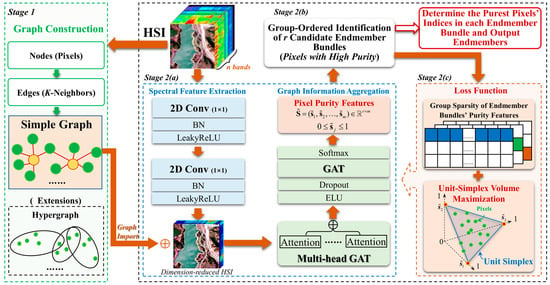
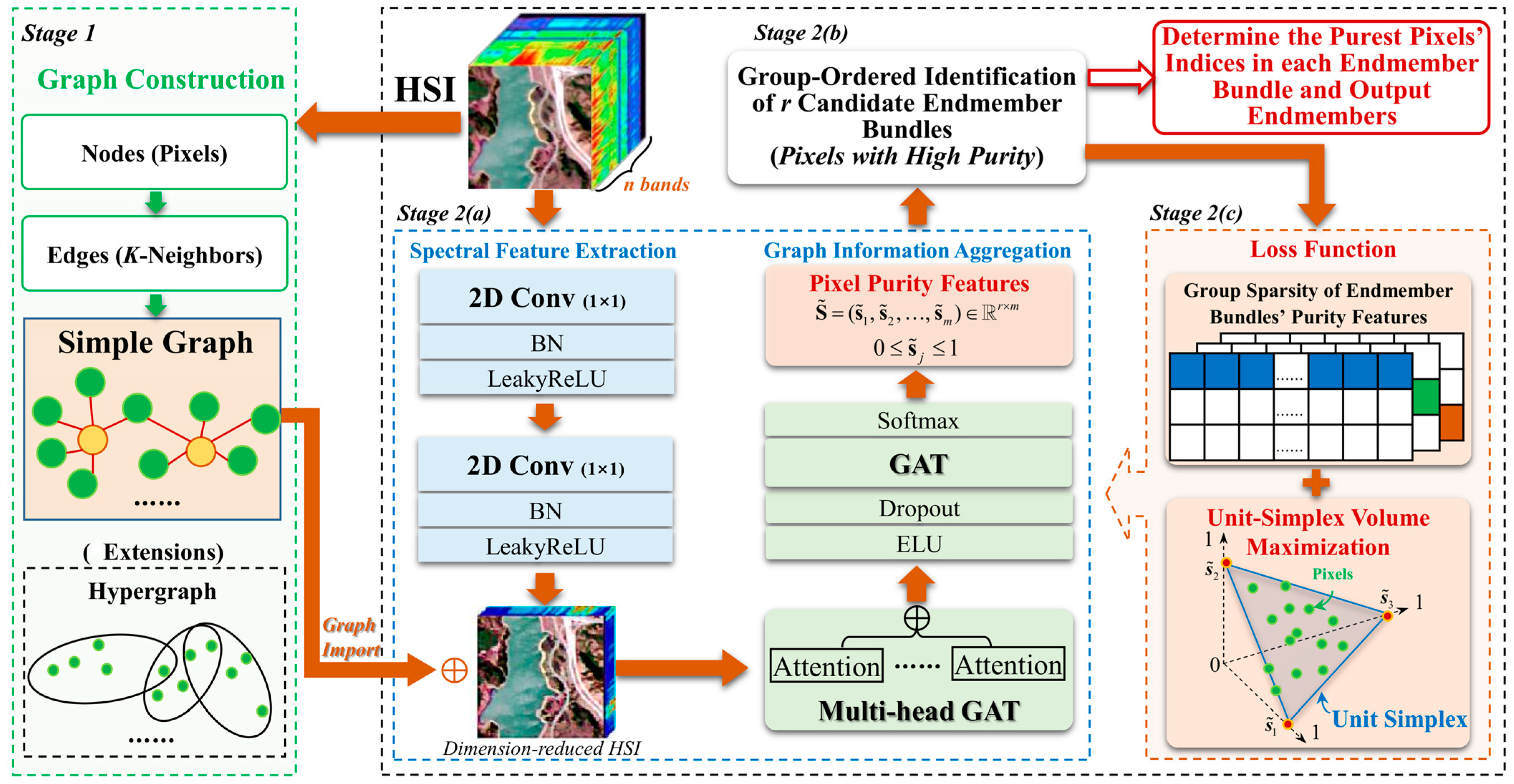
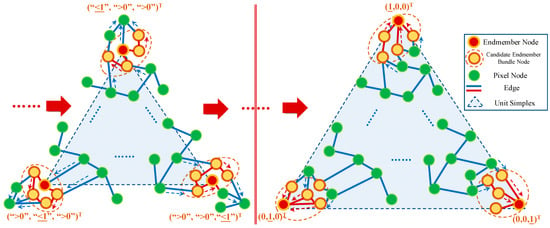
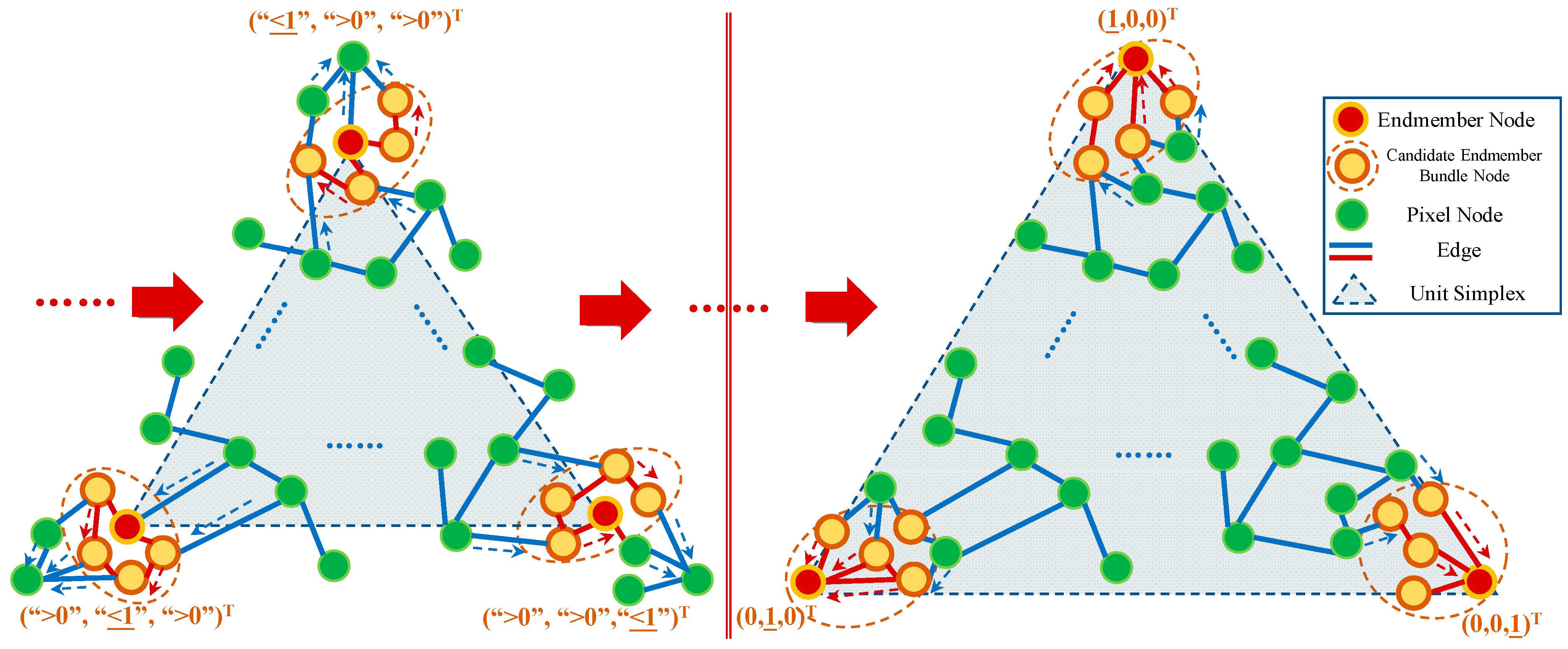
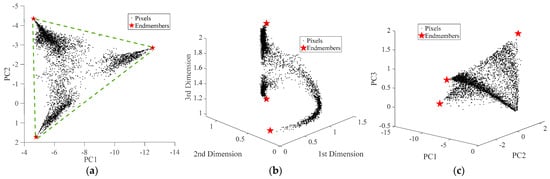
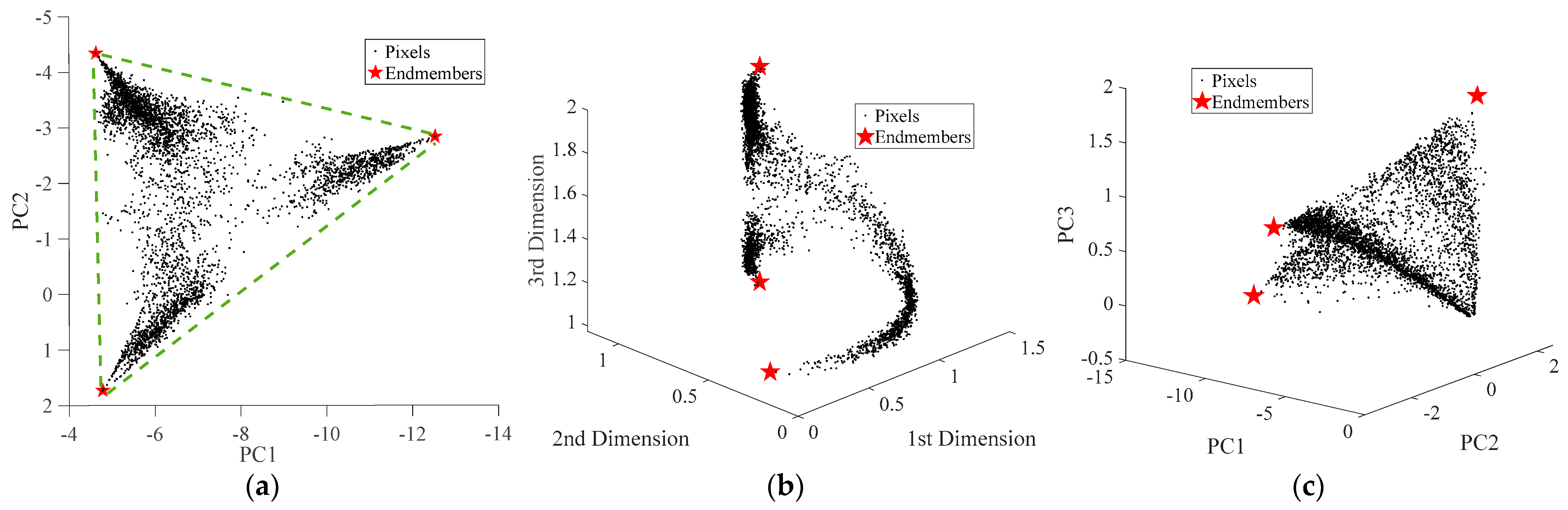
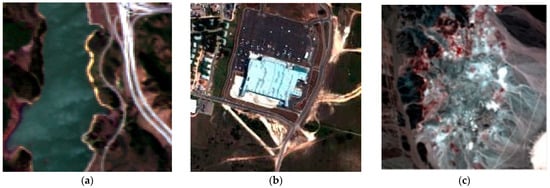
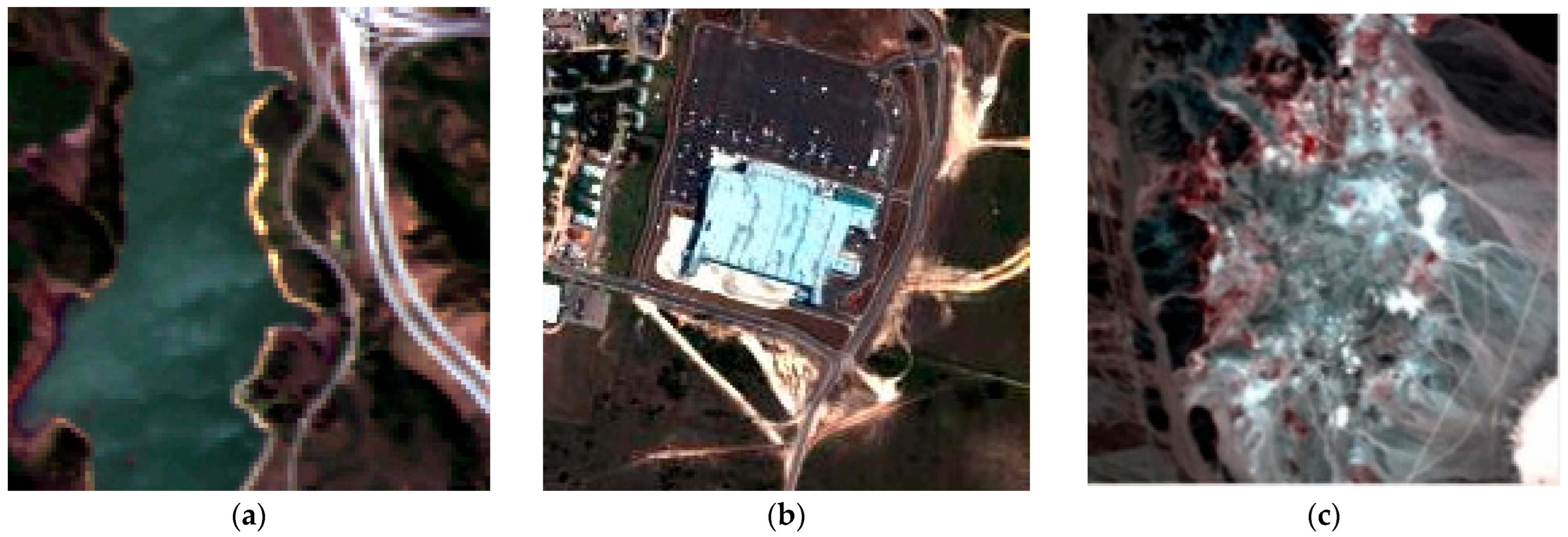
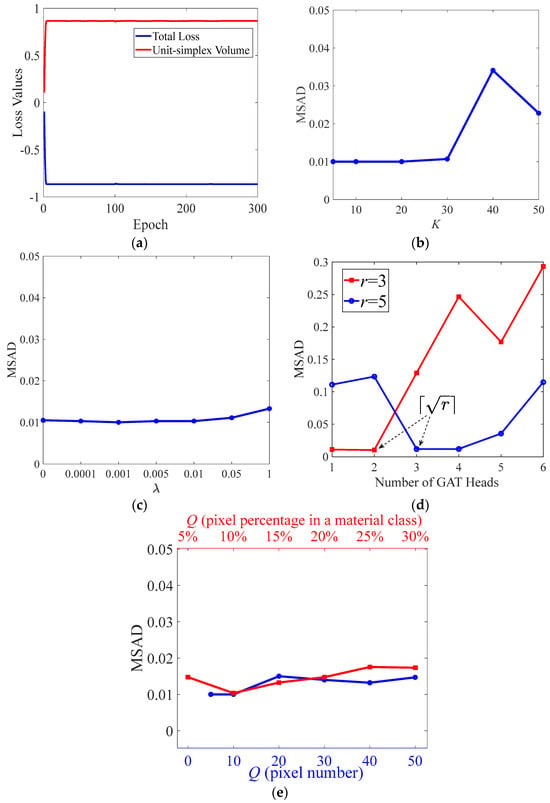
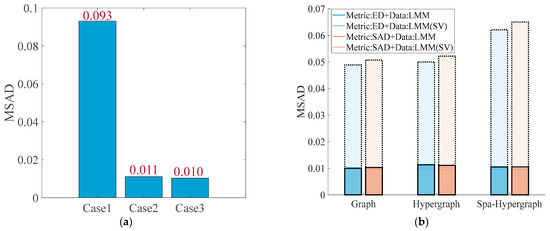
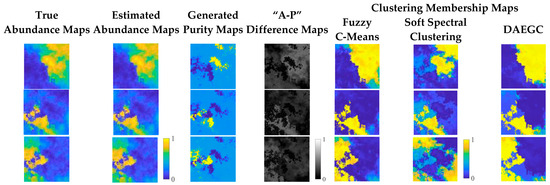
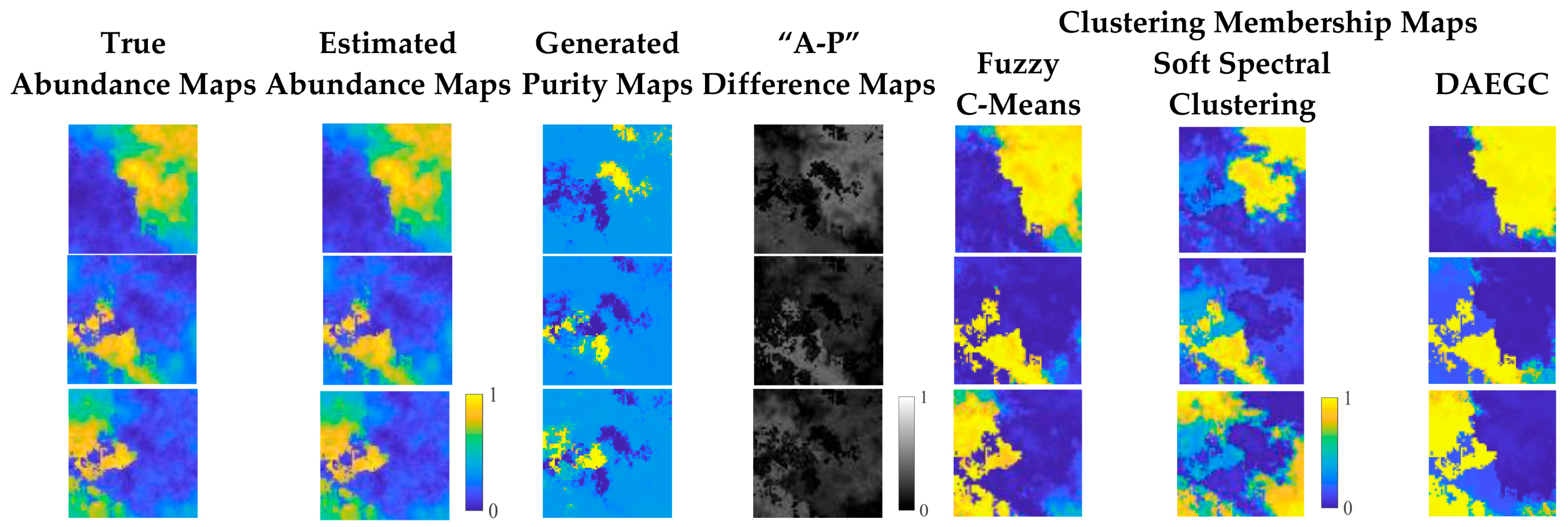
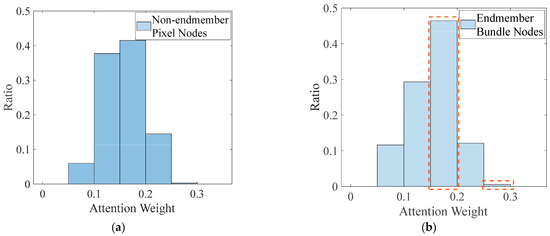
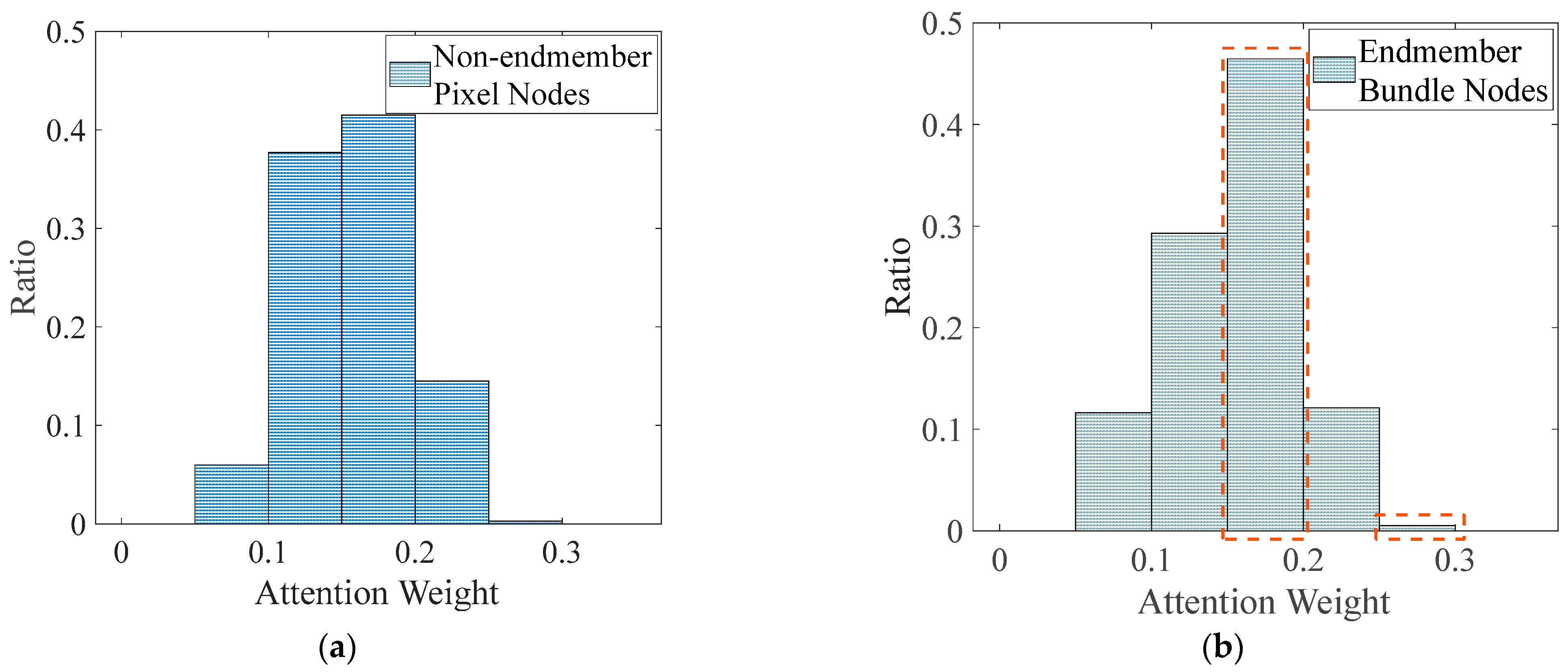
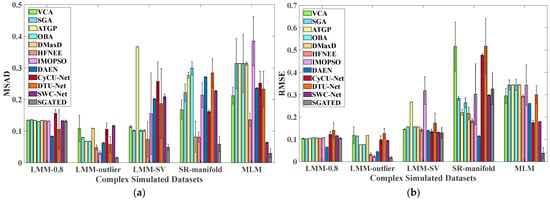
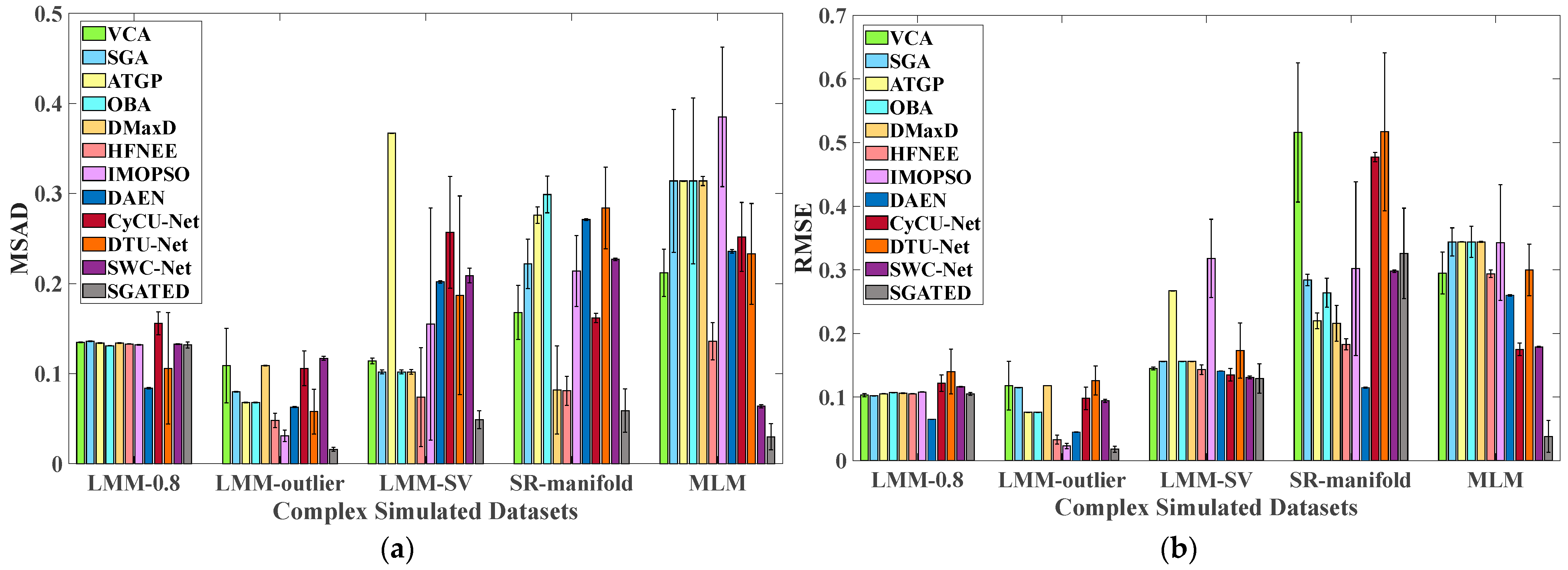
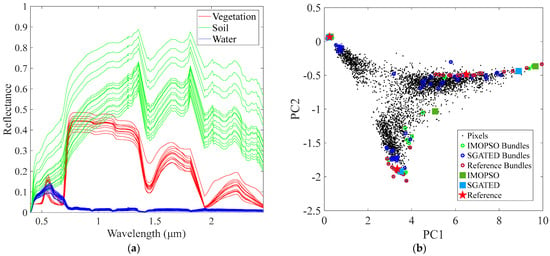
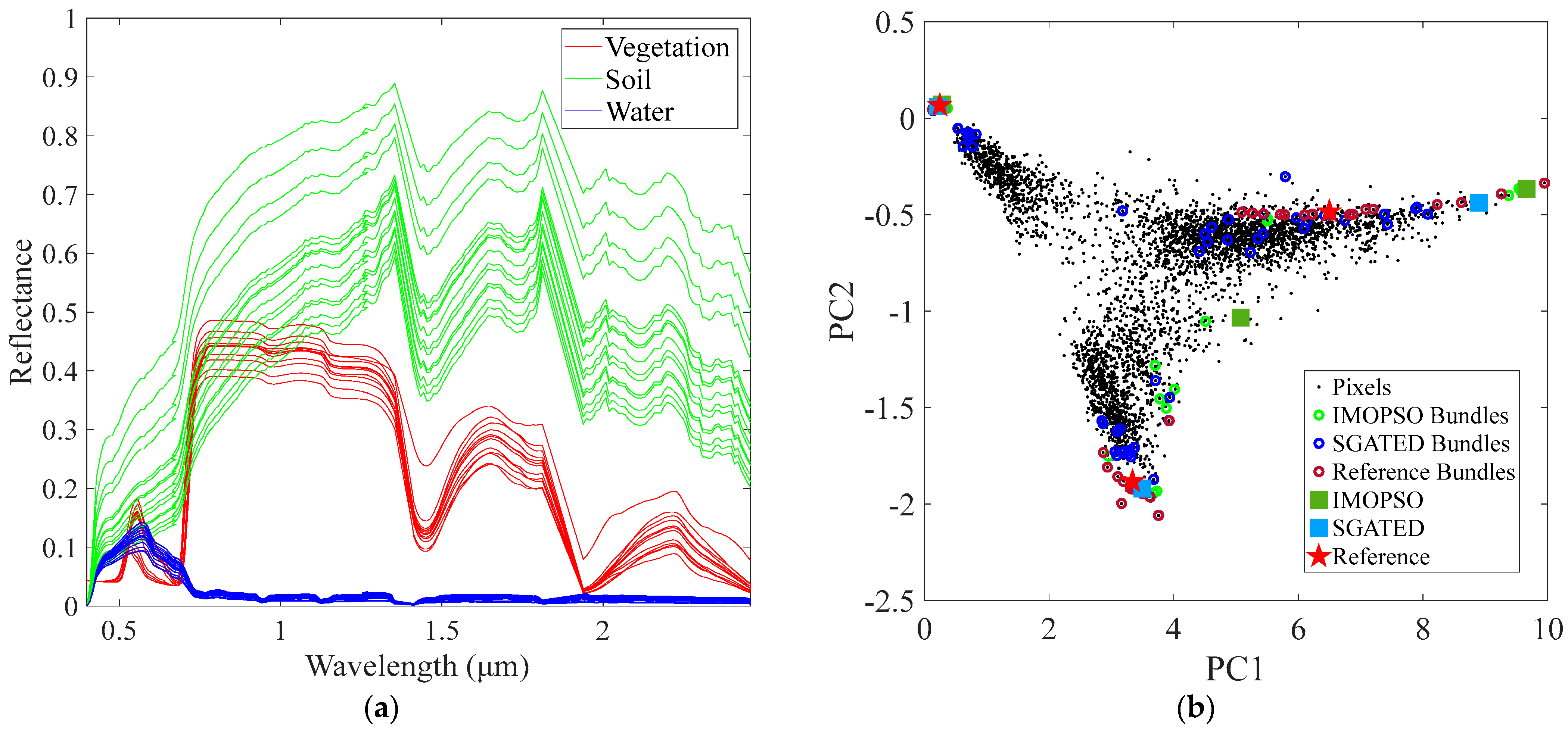
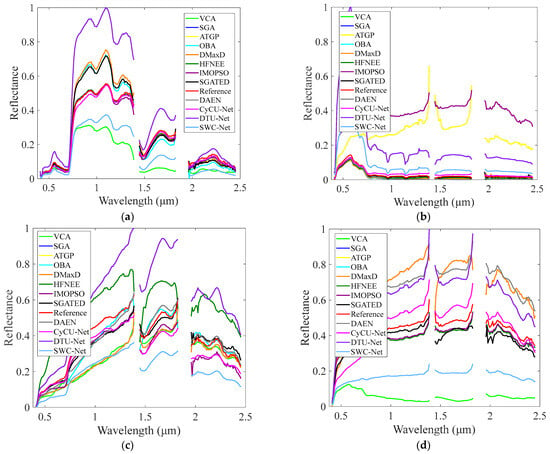
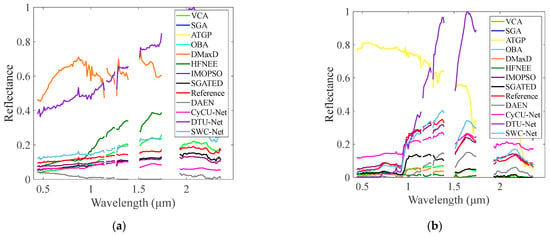
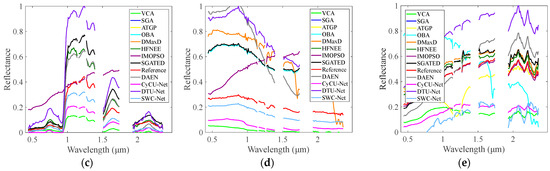
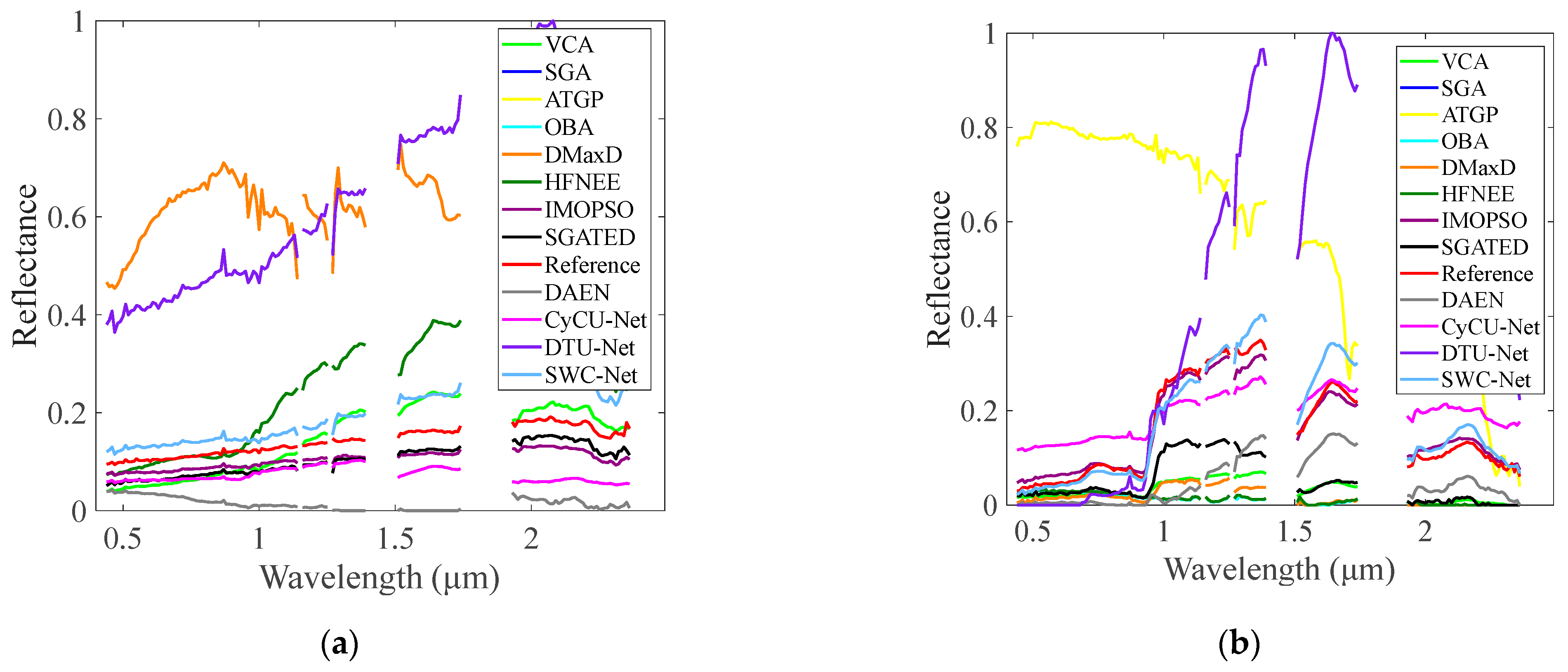
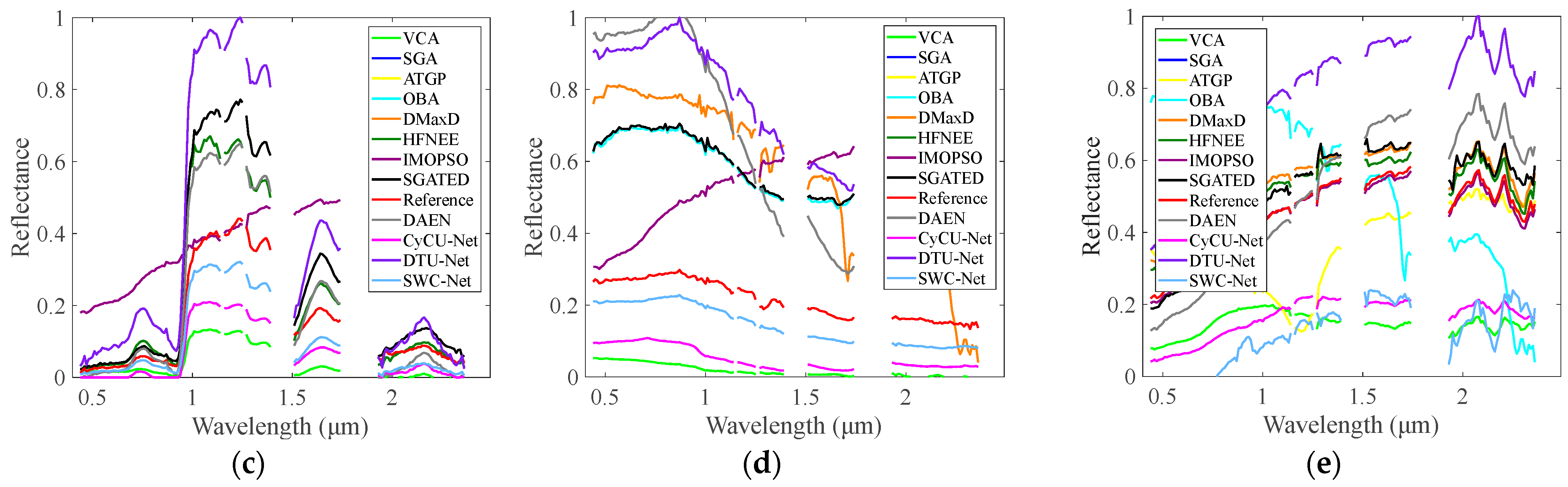
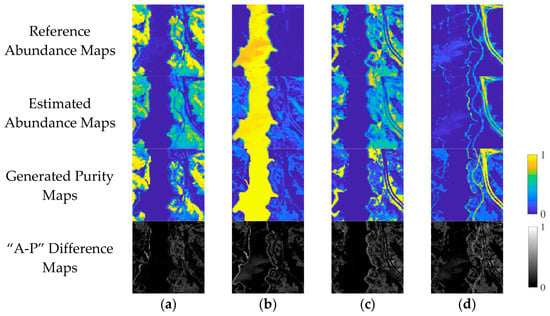
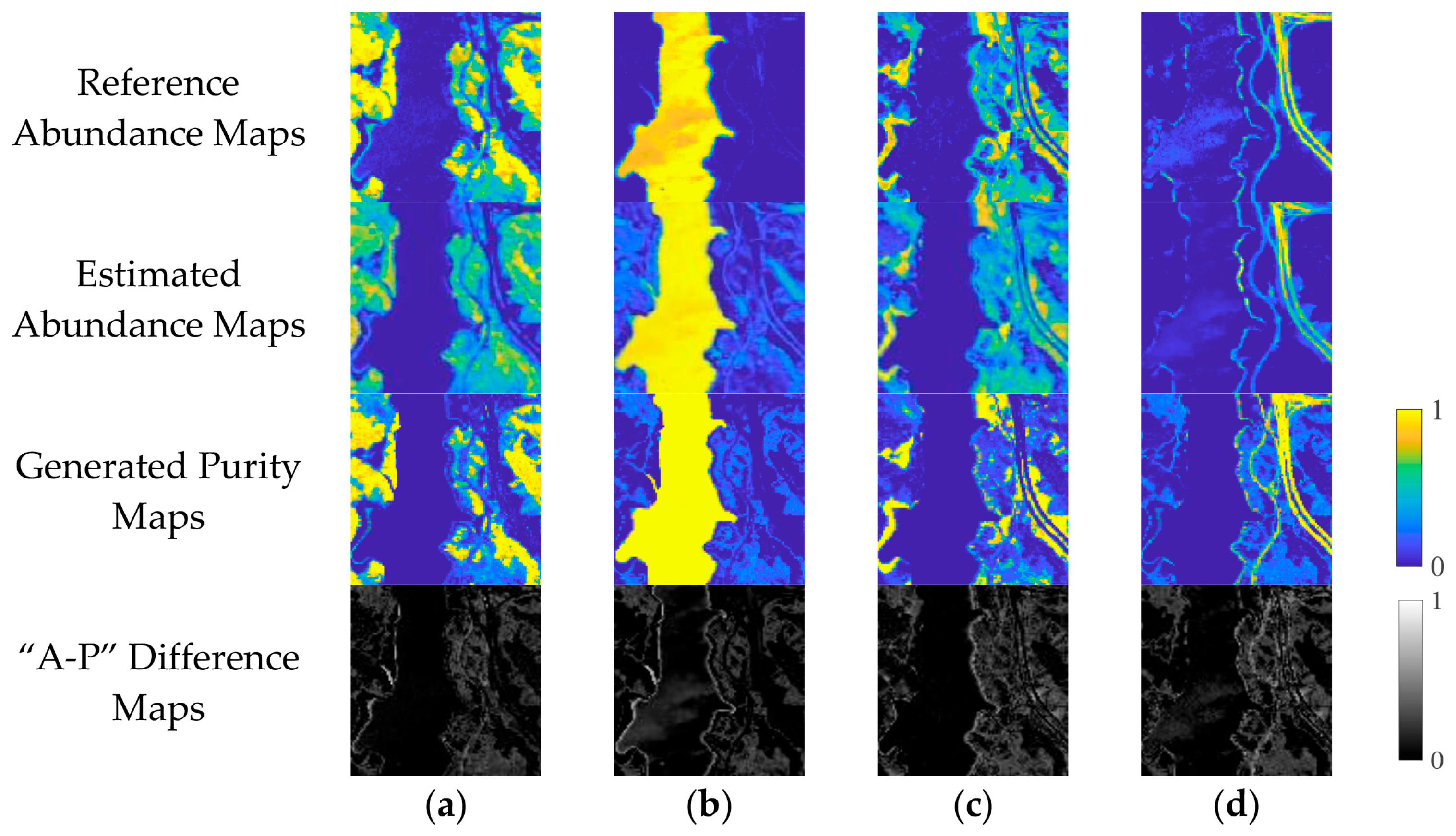
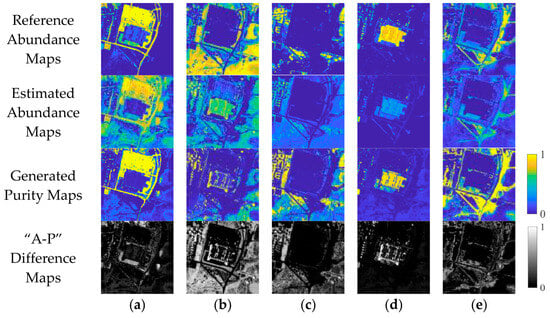
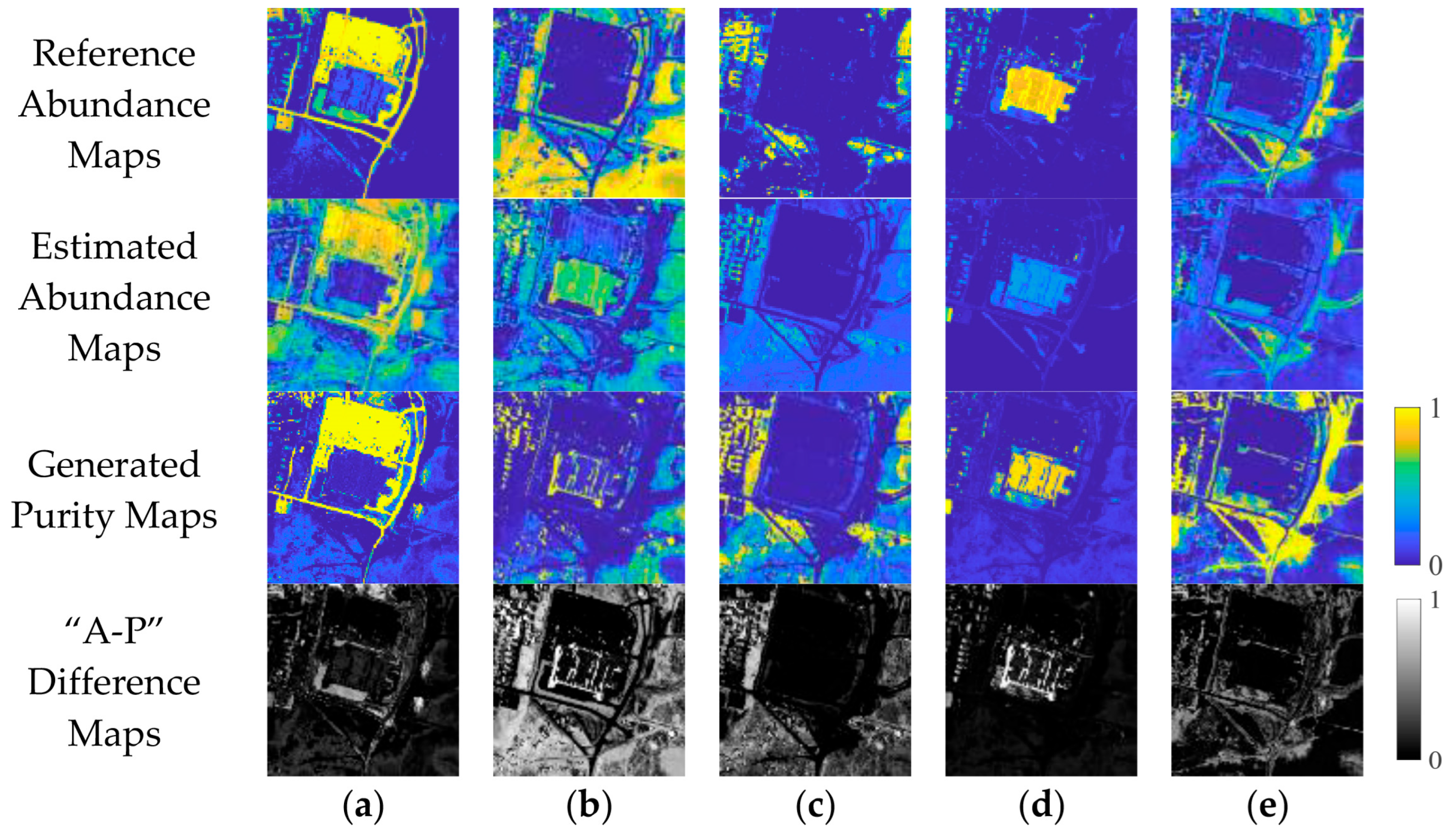
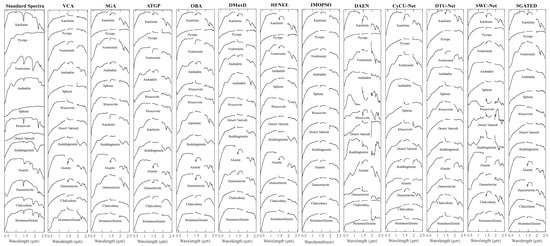
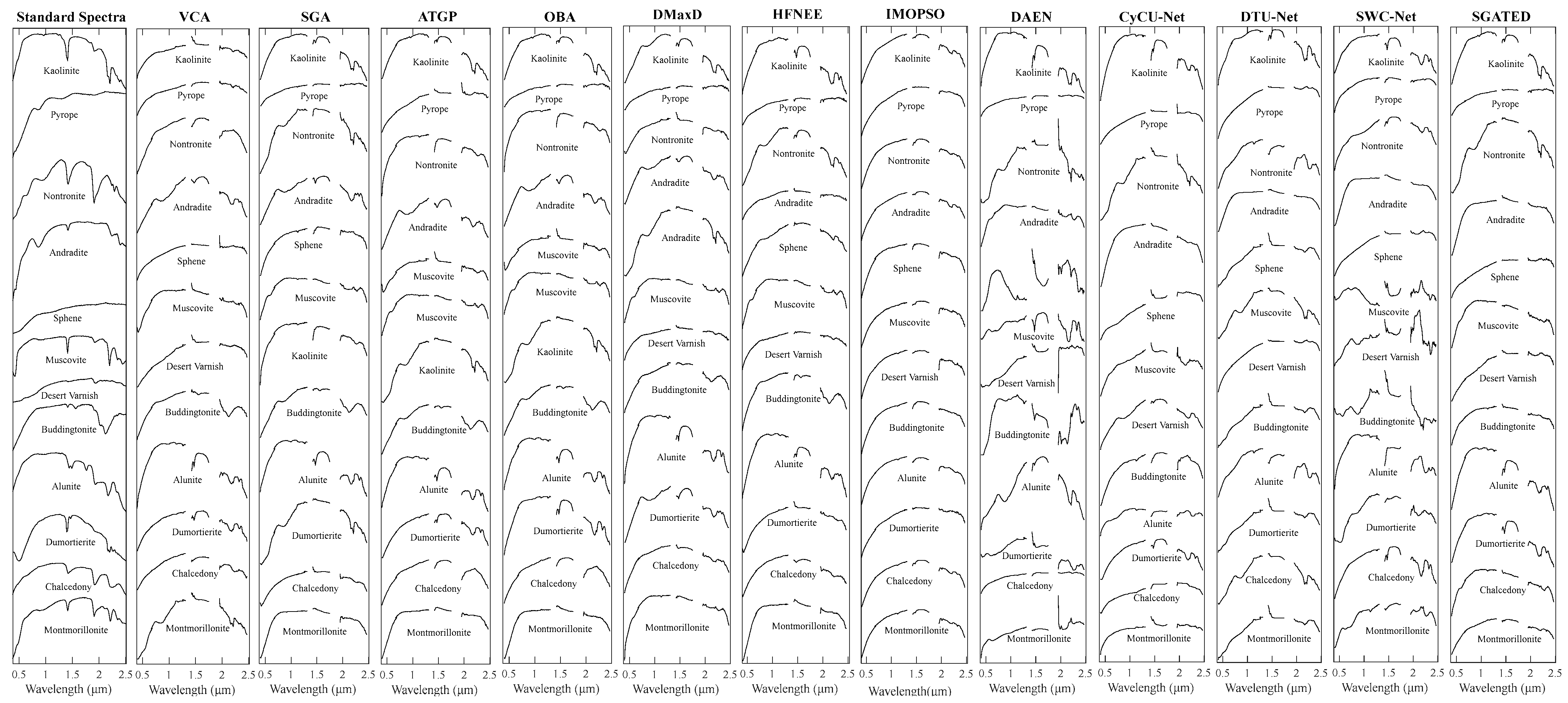
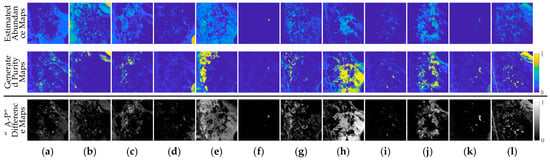
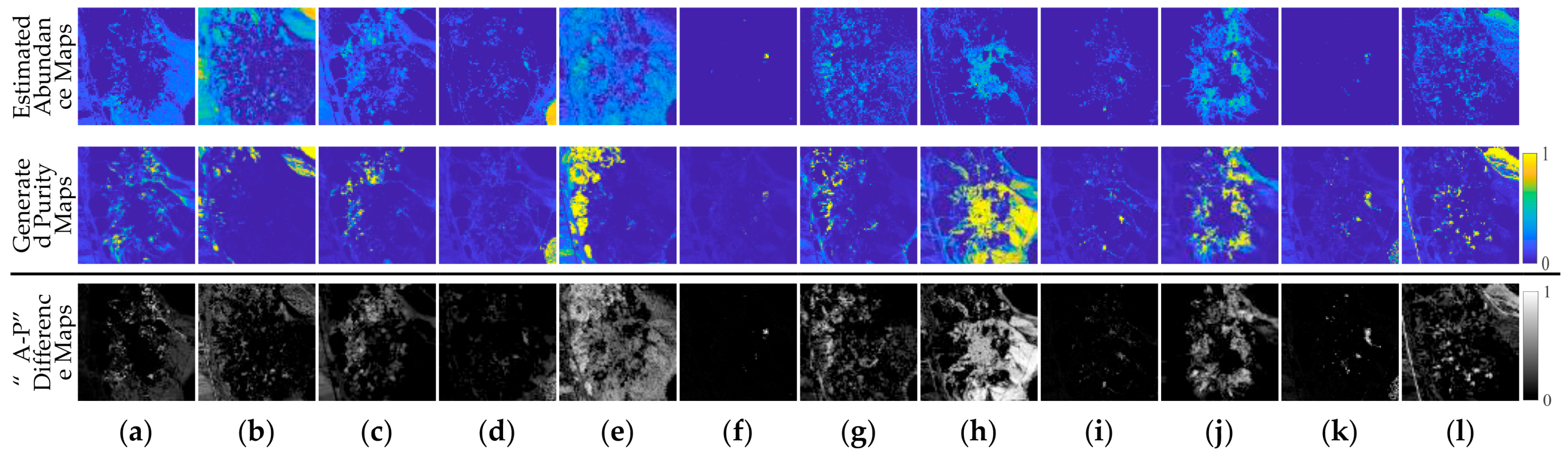

Disclaimer/Publisher’s Note: The statements, opinions and data contained in all publications are solely those of the individual author(s) and contributor(s) and not of MDPI and/or the editor(s). MDPI and/or the editor(s) disclaim responsibility for any injury to people or property resulting from any ideas, methods, instructions or products referred to in the content. |
© 2026 by the authors. Licensee MDPI, Basel, Switzerland. This article is an open access article distributed under the terms and conditions of the Creative Commons Attribution (CC BY) license.