


Abstract
Direct-seeded rice (Oryza sativa) (DSR) is gaining increasing acceptance worldwide because it saves both time and labor. A covering treatment is a simple method to improve early plant growth under direct-seeding conditions. Herein, field experiments were conducted to study the effects of different powdered organic covering materials, i.e., organic fertilizer, seedling substrate, nutrient soil A, and nutrient soil B. In addition, the effects of different covering thicknesses were studied, including 5, 10, 15, and 20 mm, on the germination and early growth of DSR varieties. The two rice varieties Wufengyou 286 and Zhongjiazao 17 were used for this study. The seedling substrate at 15 mm and nutrient soil A at 5 mm covering thickness significantly increased the rate of germination of Wufengyou 286 by 43.93% and 40.26%, respectively, compared to the control treatment. Organic fertilizer, seedling substrate, and nutrient soil A at covering thicknesses of 5 mm significantly increased the germination rate by 42.57%, 38.62%, and 40.10%, respectively, compared to the control. Notably, all the treatments increased the emergence rate, with Wufengyou 286 exhibiting the most pronounced effect. The seedling substrate at 10 mm covering thickness significantly increased the rate of emergence of Wufengyou286 by 15.42% compared to the control. Similarly, the seedling substrate at 10 mm covering thickness gave the best results by increasing the rate of emergence of Zhongjiazao 17 by 10.85% compared to the control. On average, the rate of emergence of Wufengyou 286 and Zhongjiazao 17 under the experimental treatment increased by 11.81% and 6.45%, respectively, compared to the control. The appropriate cover treatment enhanced the early growth of DSR by improving its morphological attributes, such as plant height and dry weight, and regulating the physio-biochemical responses, such as the production of antioxidants and photosynthetic pigments. The seedling growth rate of both varieties decreased as the thickness increased. This study elucidated the effects of different covering materials on the early growth of DSR, which can further guide their actual production.
1. Introduction
Rice (Oryza sativa) is a fundamental dietary component for more than half of the world’s population [1]. Direct-seeded rice (DSR) is gaining acceptance worldwide because it saves time and labor [2]. However, the large-scale implementation of DSR by farmers is hindered by numerous challenges under adverse environments [3]. Studies have hypothesized that the exposure of the seeds on the mud surface after direct-seeding often makes them susceptible to birds and pests. This exposure often hinders seedling growth and results in uneven plant population and development overall [4,5]. Moreover, direct-seeding leads to significant challenges in achieving uniform seedling growth because of the impact of rain erosion and extreme temperatures [6]. Therefore, it is important to address these issues during the process of seed germination and establishment of seedlings.
Various agronomic strategies to alleviate the challenges posed by the growth and yield of direct-seeding rice have been implemented in previous studies. These strategies include using growth regulatory substances, such as macro- and micro-elements, plant growth regulators, and chemical agents, which can all be applied as seed coatings [7,8,9,10,11]. The use of growth regulatory substances aids in protecting the seeds and enhancing their resistance to environmental stress, thereby improving the germination rate and growth rate of the seedlings [12]. In addition, seed priming in DSR has led to an acceleration in the germination and emergence process (within 1–3 days), which culminates in more consistent and robust seedling growth [13].
Covering the seeds is a simple method to improve early plant growth under direct-seeding conditions [14]. In particular, covering the seeds with soil enhances the plant’s resistance to lodging and bolsters the tolerance of rice to drought because the roots can absorb water from the deeper layers of the soil [15]. Although appropriate high sowing depths or cover thicknesses are favorable for improving germination and the establishment of rice seedlings, deeper sowing depths may also reduce germination and the establishment of seedlings [16]. The widespread use of direct-seeding technology is significantly hindered by poor emergence and weak seedling establishment that results from the deep soil covering conditions [17]. Thus, the covering treatment is a good way to improve the germination of seeds and the early plant growth of the seedlings under direct-seeding conditions.
Therefore, in this study, we conducted a field experiment to study the effects of different organic materials and the covering thicknesses of the organic materials on the germination and early growth of DSR. This study hypothesized that the different organic materials and their covering thicknesses impact the germination and early growth of seedlings. Thus, we complemented our analyses of the best management model for the covering thicknesses of the organic materials. The objective of this study was to determine the optimal organic material and covering thickness for DSR, which provides guidelines for the production of DSR.
2. Materials and Methods
2.1. Experimental Materials
The experimental materials for the mechanical DSR included organic fertilizers (O), seedling substrate (S), nutrient soil A (NA), and nutrient soil B (NB—a 2:1 mixture of nutrient soil A and organic fertilizer). The experimental materials were those usually used in the rice planting process in Jiangxi, China. The rice varieties used were the conventional rice variety Zhongjiazao 17 and the hybrid rice variety Wufengyou 286. Four different thicknesses of ditch openers with heights of 5 mm, 10 mm, 15 mm, and 20 mm were designed and processed using three-dimensional (3D) printing technology to produce different cover thicknesses of the organic materials. Frames of 40 mm × 500 mm were subsequently processed using acrylic boards of different thicknesses to ensure that the organic materials were uniformly covered.
2.2. Experimental Details
The field experiment was conducted in the Jiangxi Agricultural University experimental farm (Nanchang, China) in March and April 2023. The experimental field block was prepared following the requirements of a mechanical direct-seeded field block. Four different depths of seed furrows were opened on the mud surface before sowing using a ditch opener. The furrow length was 500 mm, in which 100 germinated rice seeds of the test variety were placed evenly in each of the four furrows. Acrylic frames of different thicknesses were placed in the seed furrows of their corresponding depth after sowing, followed by even covering using the four organic materials (organic fertilizer, seedling substrate, nutrient soil A, and nutrient soil B). Excess material on the surface was scraped off using a scraper. This study was conducted with two varieties (Zhongjiazao 17 and Wufengyou 286) and 17 treatments, which included the CK: no organic materials were applied; organic fertilizer with 5, 10, 15, and 20 covered depth denoted as O5, O10, O15, and O20; seedling substrate with 5, 10, 15, and 20 covered depth denoted as S5, S10, S15, and S20; nutrient soil A with 5, 10, 15, and 20 covered depth denoted as NA5, NA10, NA15, and NA20; and nutrient soil B with 5, 10, 15, and 20 covered depth denoted as NB5, NB10, NB15, and NB20. The plot area was 1 m2 per treatment. Mud surface sowing was used as the control, i.e., the plots were not covered (Figure 1).
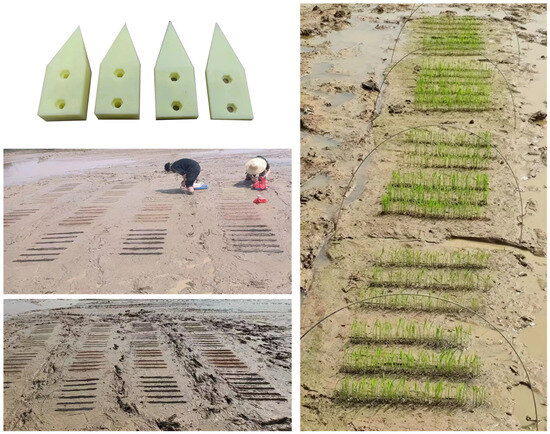
Figure 1.
Experimental site.
3. Sampling and Measurements
The seed germination and dynamics of emergence were checked daily after the seeds had been sown for 14 days. The seedling quality of different treatments was measured at the three-leaf-one-heart stage. The quality measurements included the dry weight of the roots, stems, and leaves, plant height, leaf age, and their physiological and biochemical indicators.
3.1. Determination of the Germination Rate and Morphological Traits
The germination traits were measured as previously described [7]. The germination rate was recorded daily after sowing until there was no significant change in the number. The germination rate of the control treatment was recorded when the roots and shoots of the seedlings reached 3 mm in length. When the treatments that had been covered with organic material cover sprouted, this was recorded when the seedlings emerged. Ten seedlings were randomly selected from each treatment, and there were six replicates during sampling. The morphological traits that were determined included the plant height, leaf age, dry weight of the seedlings, and dry weight per unit seedling height.
3.2. Determination of the Antioxidant Response Parameters
Fresh seedling samples were gathered and preserved at −80 °C for future use to measure the parameters of the antioxidant response. The samples were then pulverized in liquid nitrogen, and the plant extracts were isolated using phosphate buffer (pH 7.8). The plant extracts were kept below 4 °C, and the antioxidant enzyme activities and the contents of malondialdehyde (MDA) and soluble proteins were quantified as previously described [18]. In addition, the contents of hydrogen peroxide (H2O2) and ascorbic acid were quantified as previously described [19]. The activities of superoxide dismutase (SOD), peroxidase (POD), and catalase (CAT) were expressed as U min−1 g−1 FW. The contents of MDA, soluble protein, and ascorbic acid were expressed as µmol g−1 FW, mg g−1 FW, and µg g−1 FW, respectively.
3.3. Determination of the Contents of Chlorophyll and Carotenoids
The contents of chlorophyll and carotenoids were quantified as previously described [20]. Fresh seedling samples were immersed in 6 mL of 95% ethanol and incubated in the dark at 4 °C for 24 h. The samples were then centrifuged at 5000 rpm for 10 min at 4 °C. The absorbance of the supernatant was then measured at wavelengths of 665, 649, and 470 nm, respectively. The contents of chlorophyll and carotenoids were expressed as mg g−1 FW.
3.4. Statistical Analyses
All the data were documented in Microsoft Excel 2019 (Redmond, WA, USA) and subsequently subjected to a one-way analysis of variance (ANOVA) and multiple comparisons using Statistix 8.0 (Tallahassee, FL, USA). The average values of each treatment were compared using the Tukey HSD test at a 5% probability level. A correlation analysis was conducted using SPSS 21.0 (IBM, Inc., Armonk, NY, USA), and the figures were generated using Origin 2021 (OriginLab, Northampton, MA, USA).
4. Results
4.1. Germination Attributes
The variety (V), material (M), treatment (T), M × T, and V × M × T significantly affected the germination rate (Table 1). All the treatments of each material resulted in a significant increase in the germination rate for both varieties. The S5 and NA5 treatments significantly increased the germination rate of Wufengyou 286 by 43.93% and 40.26%, respectively, compared to the CK. The O5, S5, and NA5 treatments significantly increased the germination rate of Zhongjiazao 17 by 42.57%, 38.62%, and 40.10%, respectively, compared to the CK. Notably, the rate of seedling emergence decreased as the thickness of the different cover materials increased in both varieties (Table 2).

Table 1.
Analysis of variance (ANOVA) of the parameters studied.
Table 2.
The germination and rates of emergence of the direct-seeded rice under different cover materials and different cover thickness treatments.
The material (M) and treatment (T) significantly affected the rate of emergence (Table 1). All the treatments increased the rate of rice emergence, and the most pronounced rate was observed with Wufengyou 286. The S10 treatment significantly increased the rate of emergence of Wufengyou 286 by 15.42% compared to the CK. Similarly, the S10 treatment increased the rate of emergence of Zhongjiazao 17 by 10.85% compared to the CK (Table 2).
4.2. Morphological Attributes
The variety (V), material (M), treatment (T), V × T, and M × T significantly affected the plant height (Table 1). All the treatments of each material resulted in a significant increase in the height of Wufengyou 286, with the best results observed from the seedling substrate treatment. Notably, the S20 treatment significantly increased the plant height by 27.76% compared to the CK. All the treatments of each material except those with nutrient soil B resulted in a significant increase in the height of Zhongjiazao 17, and the seedling substrate treatment was the most effective. Similarly, the S20 treatment significantly increased the plant height by 17.98% compared to the CK (Table 3).
Table 3.
The plant height and leaf age of direct-seeded rice under different cover materials and different cover thickness treatments.
The material (M), treatment (T), and M × T significantly affected the leaf age (Table 1). The O5, S5, S10, and NA5 treatments significantly increased the leaf age of Wufengyou 286 compared to the CK, and the O5 treatment caused the largest increase of 21.98%. In contrast, all the treatments of each material resulted in a significant increase in the leaf age of Zhongjiazao17, and the S5 treatment caused the largest increase of 23.05% (Table 3).
The material (M), variety (V) × M, treatment (T), V × T, M × T, and V × M × T significantly affected the dry weight of the seedlings (Table 1). The treatments covered with seedling substrate positively affected the dry weight of Wufengyou286 seedlings, with S5 increasing the dry weight by 51.85% compared to the CK. The O5 and S5 treatments significantly increased the dry weight of Zhongjiazao 17 seedlings by 40.74% and 18.52%, respectively, compared to the CK (Table 4).
Table 4.
The dry weight of seedlings and dry weight per unit seedling height of direct-seeded rice under different cover materials and different cover thickness treatments.
Similarly, the material (M), variety (V), V × M, treatment (T), V × T, and V × M × T significantly affected the dry weight per unit seedling height (Table 1). The S5 treatment significantly increased the dry weight per unit seedling height of Wufengyou 286 by 19.05% compared to the CK. Similarly, the O5 treatment significantly increased the dry weight per unit seedling height of Zhongjiazao 17 by 15.00% compared to the CK (Table 4).
4.3. Attributes of the Antioxidant Response
Variety (V), material (M), treatment (T) V × M, V × T, M × T, and V × M × T significantly affected the activities of CAT, SOD, and POD (Table 1). The S5, S15, and S20 treatments significantly increased the CAT activity of Wufengyou286 by 36.58%, 11.71%, and 15.29%, respectively, compared to the CK. In contrast, the NB5 and NB10 treatments significantly reduced the CAT activity of Wufengyou 286 by 69.16% and 19.81%, respectively, compared to the CK. The S10, S15, and S20 treatments significantly increased the SOD activity of Wufengyou 286 by 54.00%, 15.09%, and 23.38%, respectively, compared to the CK. However, the NB5 and NB10 treatments significantly decreased the SOD activity of Wufengyou 286 by 18.93% and 17.85%, respectively, compared to the CK. The NB5 and NB10 treatments also significantly decreased the POD activity of Wufengyou 286 by 43.98% and 44.80%, respectively, compared to the CK. The S5, S10, S15, and S20 treatments significantly increased the CAT activity of Zhongjiazao 17 by 28.63%, 47.84%, 23.02%, and 21.65%, respectively, compared to the CK. In contrast, the O5, O10, O15, and O20 treatments significantly decreased the POD activity of Zhongjiazao 17 by 30.11%, 35.17%, 12.18%, and 23.20%, respectively, compared to the CK (Table 5).
Table 5.
The antioxidant enzyme activity of direct-seeded rice under different cover materials and different cover thickness treatments.
M, V × M, T, V × T, M × T, and V × M × T also significantly affected the contents of MDA, H2O2, soluble protein, and ascorbic acid (Table 1). All the treatments of NB significantly decreased the MDA content of Wufengyou 286 by 17.95%, 14.01%, 39.99%, and 47.82%, respectively, compared to the CK. However, NB in all the treatments led to a significant decrease in the contents of H2O2 and soluble protein. S in all the treatments significantly decreased the MDA contents of Zhongjiazao 17 compared to the CK. However, O10, O15, and O20 significantly increased the MDA content of Zhongjiazao17 by 84.16%, 24.66%, and 20.93%, respectively, compared to the CK. In the same line, S5, S10, and S20 significantly increased the soluble protein content by 54.32%, 68.36%, and 45.84%, respectively, compared to the CK (Table 6).
Table 6.
The MDA, H2O2, soluble protein, and ascorbic acid contents of the direct-seeded rice under different cover materials and cover thickness treatments.
4.4. Photosynthetic Pigments
The V (variety), M (material), V × M, T, V × T, M × T, and V × M × T significantly affected the contents of chlorophyll and carotenoids (Table 1). All the treatments significantly reduced the chlorophyll content of Wufengyou 286 compared to the CK. In contrast, S5 and NA5 significantly increased the total chlorophyll content of Zhongjiazao 17 by 19.99% and 30.41%, respectively, compared to the CK. Notably, the effect of this increase was the same for the contents of chlorophyll a and chlorophyll b. All the treatments decreased the chlorophyll a to chlorophyll b ratio in Wufengyou 286 but increased the ratio in Zhongjiazao 17. All the treatments also decreased the carotenoid contents of Wufengyou 286. However, the O20, S10, and NA15 treatments significantly increased the carotenoid contents of Wufengyou 286 by 29.94%, 42.94%, and 67.80%, respectively, compared to the CK (Table 7).
Table 7.
The contents of chlorophyll and carotenoids of the direct-seeded rice under different cover materials and different cover thickness treatments.
4.5. Correlation Analysis
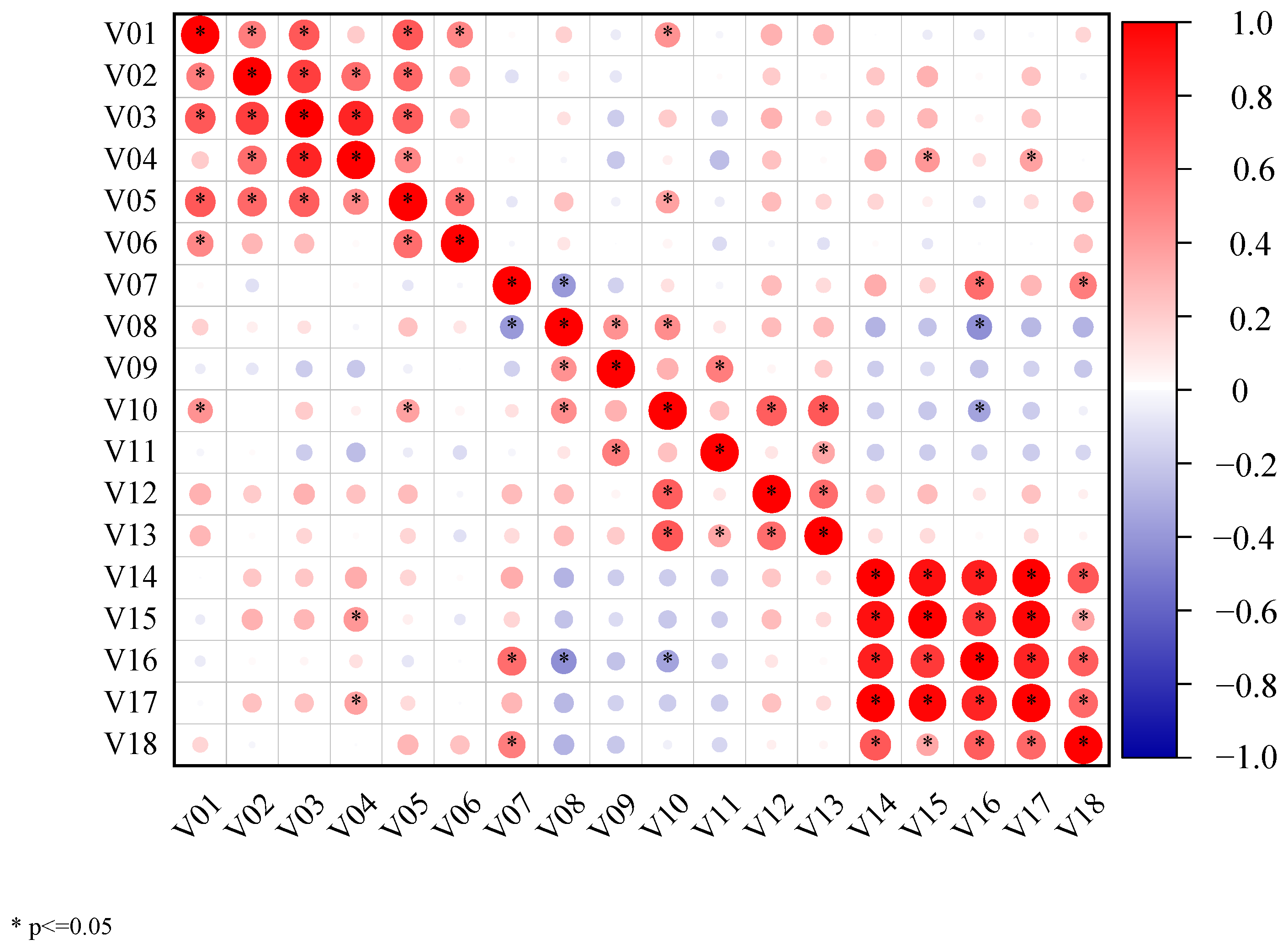
The plant height was significantly positively correlated with the leaf age, dry weight, germination rate, emergence rate, and POD activity. The germination rate was significantly positively correlated with the POD activity. Moreover, the dry weight per unit seedling height significantly positively correlated with the contents of chlorophyll b and total chlorophyll. However, the activities of SOD and POD significantly negatively correlated with the content of carotenoids (Figure 2).
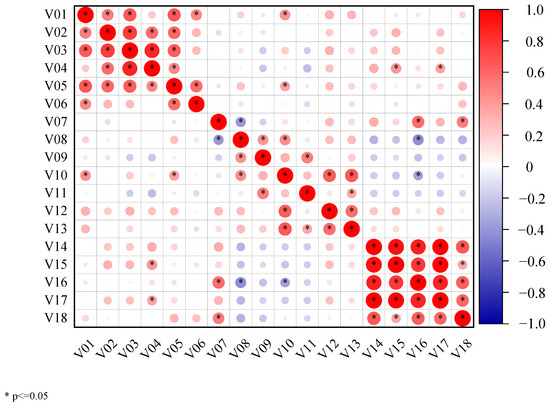
Figure 2.
Correlation analysis of the parameters studied. V01: Plant height (cm); V02: Leaf age; V03: Dry weight; V04: Dry weight per unit seedling height; V05: Germination rate; V06: Emergence rate; V07: CAT activity; V08: SOD activity; V09: MDA content; V10: POD activity; V11: H2O2 content; V12: soluble protein content; V13: ascorbic acid content; V14: chlorophyll a content; V15: chlorophyll b content; V16: carotenoid contents; V17: total chlorophyll content; V18: chlorophyll a/chlorophyll b. CAT, catalase; MDA, malondialdehyde; POD, peroxidase; SOD, superoxide dismutase.
5. Discussion
The direct-seeding of rice is increasingly being adopted by farmers because it is simple and saves labor and time [2]. The inherent complexities of the direct-seeding methodologies limit the establishment of uniform rice seedling growth, which is paramount for the maturation and productivity of DSR [7].
Appropriate high sowing depths or cover thickness enhance the germination and seedling establishment of rice seeds. However, deeper sowing depths may also limit germination and the establishment of seedlings [11]. In this study, the germination rates of the uncovered seeds of both varieties ranged between 50% and 60%. However, the germination rate increased to between 70% and 80% when the seeds were covered with 5 mm of the various materials. Of note, the seedling emergence rate of both varieties tended to decrease as the thickness of the different cover materials increased. This finding was consistent with that of a previous study. This phenomenon was attributed to covering material that was too thick, which limited the sufficient utilization of oxygen by the seeds; this affected germination and seedling formation [21]. This finding strongly suggested that an appropriate covering material thickness was a prerequisite to improve the germination and rate of emergence of the DSR.
In this study, the covering treatments increased the plant height in both varieties, which increased further with the increasing thickness of the cover material. Previous studies hypothesized that there was a significant increase in the contents of growth hormones and cytokinin during the seed breakthroughs [22]. Herein, there was a significant increase in leaf age and plant height with an increase in the thickness of the cover treatments, possibly because the thicker cover led to higher contents of the relevant hormones. Low oxygen stress induces an increase in the contents of ethylene and abscisic acid (ABA) in the root system, which inhibits the transport of aboveground indole acetic acid (IAA) to the roots, which leads to the accumulation of IAA in the aboveground organs [23]. In this study, the accumulation of IAA at the base of the stem promoted the elongation of stems in the covered treatments, which could potentially trigger short-term hypoxic stress and induce an increase in the height of rice seedlings after the treatment. Moreover, an increase in the thickness of the cover material prolonged the time of emergence of the rice seedlings, which led to a reduction in the leaf age and accumulation of the dry weight of the seedlings. These findings were consistent with the results of previous studies [11]. The reduction in leaf age and biomass was attributed to the low oxygen environment created by the covering, which limits root vigor and the respiration rate. This limitation leads to a decrease in the uptake of nutrients by the root system, thus, inhibiting the formation of tillers and the accumulation of biomass [24].
Reactive oxygen species (ROS) include substances, such as superoxide and peroxides, which create a chain reaction with unsaturated fatty acids in the cell membranes; thus, causing damage to the plant cells because the reactants destabilize the stable shape of the cell membranes [25]. Increasing the activity of antioxidant enzymes, including CAT, SOD, and POD, play an important role in suppressing extra ROS, thereby maintaining normal levels of these ROS [26]. Previous studies hypothesized that the activities of SOD and POD of the seedlings under the straw seedling board treated with the seedling substrate are higher than those of seedlings under natural soil treatment [27]. Herein, the physiological indicators of the Wufengyou 286 seedlings suggested that the respective activities of SOD and POD increased after treatment with the seedling substrate. Similarly, the CAT activity for Zhongjiazao 17 under the seedling substrate treatment was higher than that of the CK plants. These findings strongly suggested that the seedling substrates regulate the composition of the antioxidant system of rice seedlings [26]. The high activity of antioxidant enzymes in the rice seedlings under the seedling substrate treatment can be attributed to the enhancement of photosynthesis, biomass, and leaf age, which enhance the potential of directly seeded rice to adjust to an exposed growth environment.
ROS induce lipid peroxidation, which leads to the production of MDA, which can also aggravate the damage to the cell membranes [28]. Chen et al. reported a significant decrease in the MDA content in mechanically direct-seeding treatment groups [1]. In this study, the MDA content of Zhongjiazao 17 under all the substate treatments was lower than that of CK plants. Hydrogen peroxide (H2O2) is a type of ROS that is widely produced in many biological systems and is considered to be an important signaling molecule that mediates various physiological and biochemical processes in plants. The generation of H2O2 in plant cells results from normal metabolism from various sources [29]. Previous studies discovered an integrated regulatory network in which miR398b enhances the total SOD activity, which leads to an increase in the content of H2O2. Consequently, this improved disease resistance. Similarly, there was an increase in SOD activity and the content of H2O2 in the Wufengyou 286 seedlings under the seedling substrate 10 treatment compared to those under the CK treatment [30].
Soluble proteins act as osmoregulatory substances in plants, thereby maintaining the integrity of the cell structure and function under stress conditions [20]. Ascorbic acid is one of the most abundant water-soluble antioxidants in plants. It acts as a major redox buffer and regulates various physiological processes that control plant growth, development, and responses to stress [31]. The direct-seeding of rice results in a more active antioxidant stress response [1], which requires the enhanced osmoregulatory and antioxidant responses of the seedlings to adapt to the exposed growing conditions. Herein, the cover treatments of different materials significantly regulated the contents of soluble protein and ascorbic acid of the rice seedlings, which underscores their potential to improve the ability of rice to survive under adverse conditions by regulating their osmotic stability.
Chlorophyll is the primary pigment in plant photosynthesis and is responsible for transforming light energy into chemical energy and regulating various biochemical processes within plants [32]. Carotenoids serve a multitude of important functions in plants and are, thus, indispensable. They participate in photosynthesis, provide photoprotection, contribute to pigmentation, aid in phytohormone synthesis, and facilitate signaling [33]. In this study, the seedling substrate and nutrient soil A treatments significantly and partially increased the contents of chlorophyll and carotenoids in the seedlings compared to the CK plants. This increase was attributed to the nutrient soil and seedling substrate, which provided essential nutrients for the early growth of the rice seedlings by enhancing the biosynthesis of photosynthetic pigments. Previous studies postulated that the application of phosphorus and organic carbon favors photosynthesis, stomatal conductance, water use efficiency, and increased leaf water potential in rice [34].
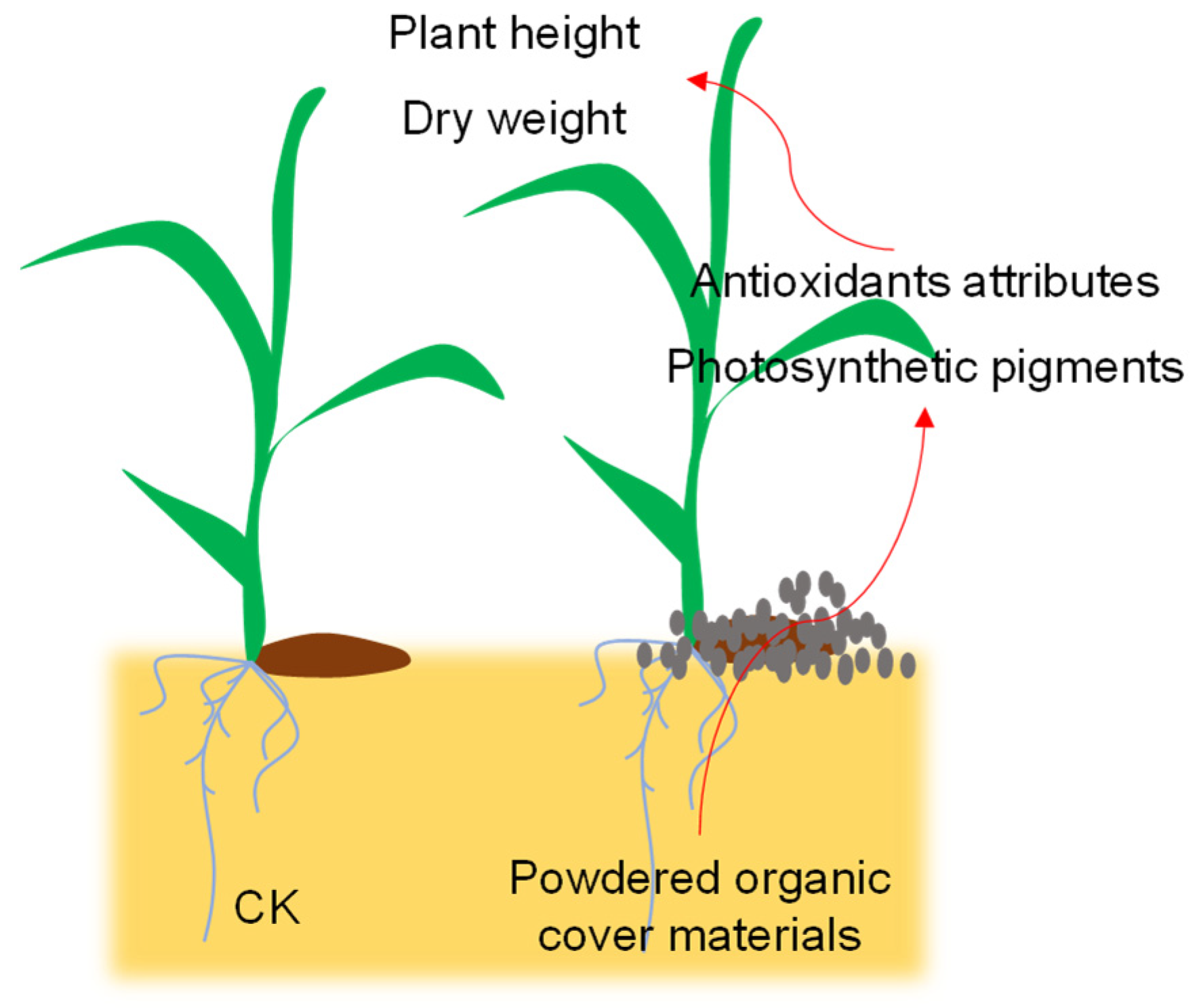
Overall, treatment with optimized covering materials enhances the early growth of DSR by improving the morphological attributes and regulating the physio-biochemical responses (Figure 3).
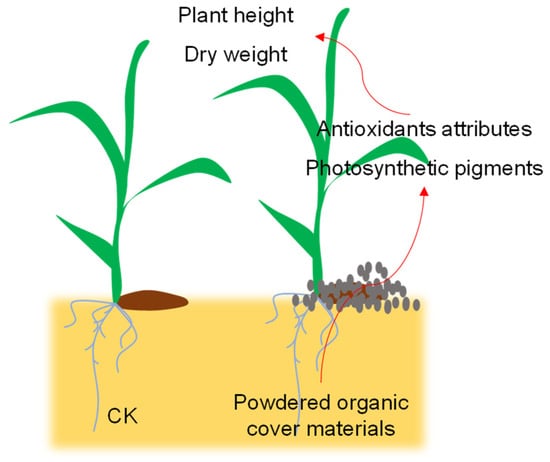
Figure 3.
Conceptual scheme depicts the effect of cover materials and different cover thickness treatments on the growth of direct-seeding rice.
6. Conclusions
An appropriate cover treatment enhances the early growth of the direct-seeded rice by improving its morphological attributes, such as plant height and dry weight, and regulating the physio-biochemical responses, such as antioxidants and photosynthetic pigments. The rate of seedling growth of both varieties decreased as the thickness of the different cover materials increased. Comparatively, using the organic fertilizer that covers the seedling substrate in the 5 mm treatments is the most effective for promoting early rice growth. This study elucidated the effects of different covering materials on the early growth of direct-seeded rice to further guide their actual production. However, the selection and matching of different covering materials and covering thicknesses require more in-depth research.
Author Contributions
X.C. designed the experiment; B.Z., J.Y., Z.M. and X.C. wrote the main manuscript text; B.Z., J.Y., M.L., J.L., G.Y., Z.L., L.X. and X.W. conducted the investigation; B.Z., J.Y., M.L., J.L., G.Y., Z.L., L.X., X.W., Z.M. and X.C. reviewed and edited the manuscript text. All authors have read and agreed to the published version of the manuscript.
Funding
This study was supported by the Jiangxi province main discipline academic and technical leader training program talent project (20225BCJ23013).
Data Availability Statement
The data sets supporting the results of this article are included within the article.
Conflicts of Interest
The authors declare no conflicts of interest.
References
- Chen, Y.-J.; Dai, L.; Cheng, S.-R.; Ren, Y.; Deng, H.-Z.; Wang, X.-Y.; Li, Y.-Z.; Tang, X.-R.; Wang, Z.-M.; Mo, Z.-W. Regulation of 2-acetyl-1-pyrroline and grain quality of early-season indica fragrant rice by nitrogen–silicon fertilization under different plantation methods. J. Integr. Agric. 2023. [Google Scholar] [CrossRef]
- Farooq, M.; Siddique, K.H.M.; Rehman, H.; Aziz, T.; Lee, D.J.; Wahid, A. Rice direct seeding: Experiences, challenges and opportunities. Soil Tillage Res. 2011, 111, 87–98. [Google Scholar] [CrossRef]
- Van Nguyen, N.; Ferrero, A. Meeting the challenges of global rice production. Paddy Water Environ. 2006, 4, 1–9. [Google Scholar] [CrossRef]
- Prot, J.C.; Soriano, I.R.; Matias, D.M. Major root-parasitic nematodes associated with irrigated rice in the Philippines. Fundam. Appl. Nematol. 1994, 17, 75–78. [Google Scholar]
- Savary, S.; Castilla, N.P.; Elazegui, F.A.; Teng, P.S. Multiple effects of two drivers of agricultural change, labour shortage and water scarcity, on rice pest profiles in tropical Asia. Field Crops Res. 2005, 91, 263–271. [Google Scholar] [CrossRef]
- Fahad, S.; Bajwa, A.A.; Nazir, U.; Anjum, S.A.; Farooq, A.; Zohaib, A.; Sadia, S.; Nasim, W.; Adkins, S.; Saud, S.; et al. Crop Production under Drought and Heat Stress: Plant Responses and Management Options. Front. Plant Sci. 2017, 8, 1147. [Google Scholar] [CrossRef]
- Yamane, K.; Garcia, R.; Imayoshi, K.; Mabesa-Telosa, R.C.; Kato, Y. Seed vigour contributes to yield improvement in dry direct-seeded rainfed lowland rice. Ann. Appl. Biol. 2018, 172, 100–110. [Google Scholar] [CrossRef]
- Hong, W.Y.; Chen, Y.J.; Huang, S.H.; Li, Y.Z.; Wang, Z.M.; Tang, X.R.; Pan, S.G.; Tian, H.; Mo, Z.W. Optimization of nitrogen-silicon (N-Si) fertilization for grain yield and lodging resistance of early-season indica fragrant rice under different planting methods. Eur. J. Agron. 2022, 136, 126508. [Google Scholar] [CrossRef]
- Mo, Z.W.; Ashraf, U.; Pan, S.G.; Kanu, A.S.; Li, W.; Duan, M.Y.; Tian, H.; Tang, X.R. Exogenous application of plant growth regulators induce chilling tolerance in direct seeded super and non-super rice seedlings through modulations in morpho-physiological attributes. Cereal Res. Commun. 2016, 44, 524–534. [Google Scholar] [CrossRef][Green Version]
- Chen, Q.; Peng, S.; Dong, H.; Wang, W.; Nie, L. Optimal nitrogen fertilizer management for direct seeding rice: A review. Int. J. Agric. Biol. 2018, 20, 1382–1390. [Google Scholar]
- Mahajan, G.; Chauhan, B.S. Performance of dry direct-seeded rice in response to genotype and seeding rate. Agron. J. 2016, 108, 257. [Google Scholar] [CrossRef]
- Yang, W.; Xu, D.; Li, S.; Tang, X.; Pan, S.; Chen, X.; Mo, Z. Emergence and Seedling Establishment of Rice Varieties at Different Sowing Depths. J. Plant Growth Regul. 2022, 41, 1672–1686. [Google Scholar] [CrossRef]
- Carrillo-Reche, J.; Vallejo-Marín, M.; Quilliam, R.S. Quantifying the potential of ‘on-farm’ seed priming to increase crop performance in developing countries. A meta-analysis. Agron. Sustain. Dev. 2018, 38, 64. [Google Scholar] [CrossRef]
- Lu, Q.; Zhang, M.; Niu, X.; Wang, C.; Xu, Q.; Feng, Y.; Wang, S.; Yuan, X.; Yu, H.; Wang, Y.; et al. Uncovering novel loci for mesocotyl elongation and shoot length in indica rice through genome-wide association mapping. Planta 2016, 243, 645–657. [Google Scholar] [CrossRef] [PubMed]
- Lin, J.R.; Zhang, G.H.; Wu, M.G.; Cao, L.Y.; Cheng, S.H. Genetic analysis of mesocotyl elongation in rice (Oryza sativa L. subsp. japonica). Acta Agron. Sin. 2006, 32, 249–252. [Google Scholar]
- Gealy, D.R.; Saldain, N.E.; Talbert, R.E. Emergence of Red Rice (Oryza sativa) Ecotypes Under Dry-Seeded Rice (Oryza sativa) Culture1. Weed Technol. 2000, 14, 406–412. [Google Scholar] [CrossRef]
- Zhao, Y.; Zhao, W.; Jiang, C.; Wang, X.; Xiong, H.; Todorovska, E.G.; Yin, Z.; Chen, Y.; Wang, X.; Xie, J.; et al. Genetic Architecture and Candidate Genes for Deep-Sowing Tolerance in Rice Revealed by Non-syn GWAS. Front. Plant Sci. 2018, 9, 332. [Google Scholar] [CrossRef]
- Li, Y.; Liang, L.; Li, W.; Ashraf, U.; Ma, L.; Tang, X.; Pan, S.; Tian, H.; Mo, Z. ZnO nanoparticle-based seed priming modulates early growth and enhances physio-biochemical and metabolic profiles of fragrant rice against cadmium toxicity. J. Nanobiotechnol. 2021, 19, 75. [Google Scholar] [CrossRef]
- Cho, S.-C.; Chao, Y.-Y.; Hong, C.-Y.; Kao, C.H. The role of hydrogen peroxide in cadmium-inhibited root growth of rice seedlings. Plant Growth Regul. 2012, 66, 27–35. [Google Scholar] [CrossRef]
- Sun, F.; Chen, W.; Ren, Y.; Cheng, S.; Ashraf, U.; Zheng, J.; Lin, L.; Ma, Y.; Tang, X.; Mo, Z. Nano-Priming with La2O3 Improves Early Growth and Regulates Physio-Biochemical Mechanisms in Fragrant Rice Against Cadmium Toxicity. J. Soil. Sci. Plant Nutr. 2023, 23, 4004–4020. [Google Scholar] [CrossRef]
- Carpenter, J.R.; Mitchell, C.A. Root Respiration Characteristics of Flood-tolerant and Intolerant Tree Species1. J. Am. Soc. Hortic. Sci. 1980, 105, 684–687. [Google Scholar] [CrossRef]
- Miransari, M.; Smith, D.L. Plant hormones and seed germination. Environ. Exp. Bot. 2014, 99, 110–121. [Google Scholar] [CrossRef]
- Su, P.-H.; Su, C.-H. Metabolic Responses of Luffa Roots to Long-term Flooding. J. Plant Physiol. 1996, 148, 735–740. [Google Scholar] [CrossRef]
- Wiedenroth, E.-M. Responses of roots to hypoxia: Their structural and energy relations with the whole plant. Environ. Exp. Bot. 1993, 33, 41–51. [Google Scholar] [CrossRef]
- Du, B.; Wang, W.; Jiang, S.; Xie, Y.; Cheng, Y.; Xu, J.; Xing, D. Silicon and selenium fertilizer management improved productivity and aroma of fragrant rice. Crop Sci. 2021, 61, 936–946. [Google Scholar] [CrossRef]
- Chen, W.; Liao, G.; Sun, F.; Ma, Y.; Chen, Z.; Chen, H.; Tang, X.; Mo, Z. Foliar spray of La2O3 nanoparticles regulates the growth, antioxidant parameters, and nitrogen metabolism of fragrant rice seedlings in wet and dry nurseries. Environ. Sci. Pollut. Res. 2023, 30, 80349–80363. [Google Scholar] [CrossRef]
- Lantian, R.; Bing, H.; Xiang, Z.; Qin, S.; Shanjun, S.; Shoucheng, H.; Hong, W.; Li, Y.; Congjun, Z. Effects of press-formed crop residue rice seedling tray on the physiological characteristics of machine-transplanted rice seedlings. Pak. J. Bot. 2020, 52, 769–1775. [Google Scholar] [CrossRef]
- Qing, B.; Jiang, Y.; Chen, Y.; Chen, J.; Xie, H.; Mo, Z. Nitrogen modulates early growth and physio-biochemical attributes in fragrant rice grown under cadmium and multiwall carbon nanotubes stresses. Environ. Sci. Pollut. Res. 2022, 29, 67837–67855. [Google Scholar] [CrossRef]
- Niu, L.; Liao, W. Hydrogen Peroxide Signaling in Plant Development and Abiotic Responses: Crosstalk with Nitric Oxide and Calcium. Front. Plant Sci. 2016, 7, 230. [Google Scholar] [CrossRef] [PubMed]
- Li, Y.; Cao, X.L.; Zhu, Y.; Yang, X.M.; Zhang, K.N.; Xiao, Z.Y.; Wang, H.; Zhao, J.H.; Zhang, L.L.; Li, G.B.; et al. Osa-miR398b boosts H2O2 production and rice blast disease-resistance via multiple superoxide dismutases. New Phytol. 2019, 222, 1507–1522. [Google Scholar] [CrossRef] [PubMed]
- Sariñana-Aldaco, O.; Sánchez-Chávez, E.; Troyo-Diéguez, E.; Tapia-Vargas, L.M.; Díaz-Pérez, J.C.; Preciado-Rangel, P. Foliar Aspersion of Salicylic Acid Improves Nutraceutical Quality and Fruit Yield in Tomato. Agriculture 2020, 10, 482. [Google Scholar] [CrossRef]
- Sardar, R.; Ahmed, S.; Yasin, N.A. Titanium dioxide nanoparticles mitigate cadmium toxicity in Coriandrum sativum L. through modulating antioxidant system, stress markers and reducing cadmium uptake. Environ. Pollut. 2022, 292 Pt A, 118373. [Google Scholar] [CrossRef]
- Sun, T.; Rao, S.; Zhou, X.; Li, L. Plant carotenoids: Recent advances and future perspectives. Mol. Hortic. 2022, 2, 3. [Google Scholar] [CrossRef]
- Shah, F.; Hussain, S.; Saud, S.; Hassan, S.; Tanveer, M.; Ihsan, M.Z.; Shah, A.N.; Ullah, A.; Nasrullah; Khan, F.; et al. A combined application of biochar and phosphorus alleviates heat-induced adversities on physiological, agronomical and quality attributes of rice. Plant Physiol. Biochem. 2016, 103, 191–198. [Google Scholar]
Disclaimer/Publisher’s Note: The statements, opinions and data contained in all publications are solely those of the individual author(s) and contributor(s) and not of MDPI and/or the editor(s). MDPI and/or the editor(s) disclaim responsibility for any injury to people or property resulting from any ideas, methods, instructions or products referred to in the content. |
© 2023 by the authors. Licensee MDPI, Basel, Switzerland. This article is an open access article distributed under the terms and conditions of the Creative Commons Attribution (CC BY) license (https://creativecommons.org/licenses/by/4.0/).