Primary breast osteosarcoma (PBO) is very rare, estimated to account for 12.5% of all breast sarcomas and less than 0.1% of breast cancers. Compared with traditional skeletal osteosarcoma, PBO is more common in older adult patients between age 60–80 years [
1,
2]. Case reports and small case series have been published in the literature, and cases evaluated with multiple modalities are extremely rare.
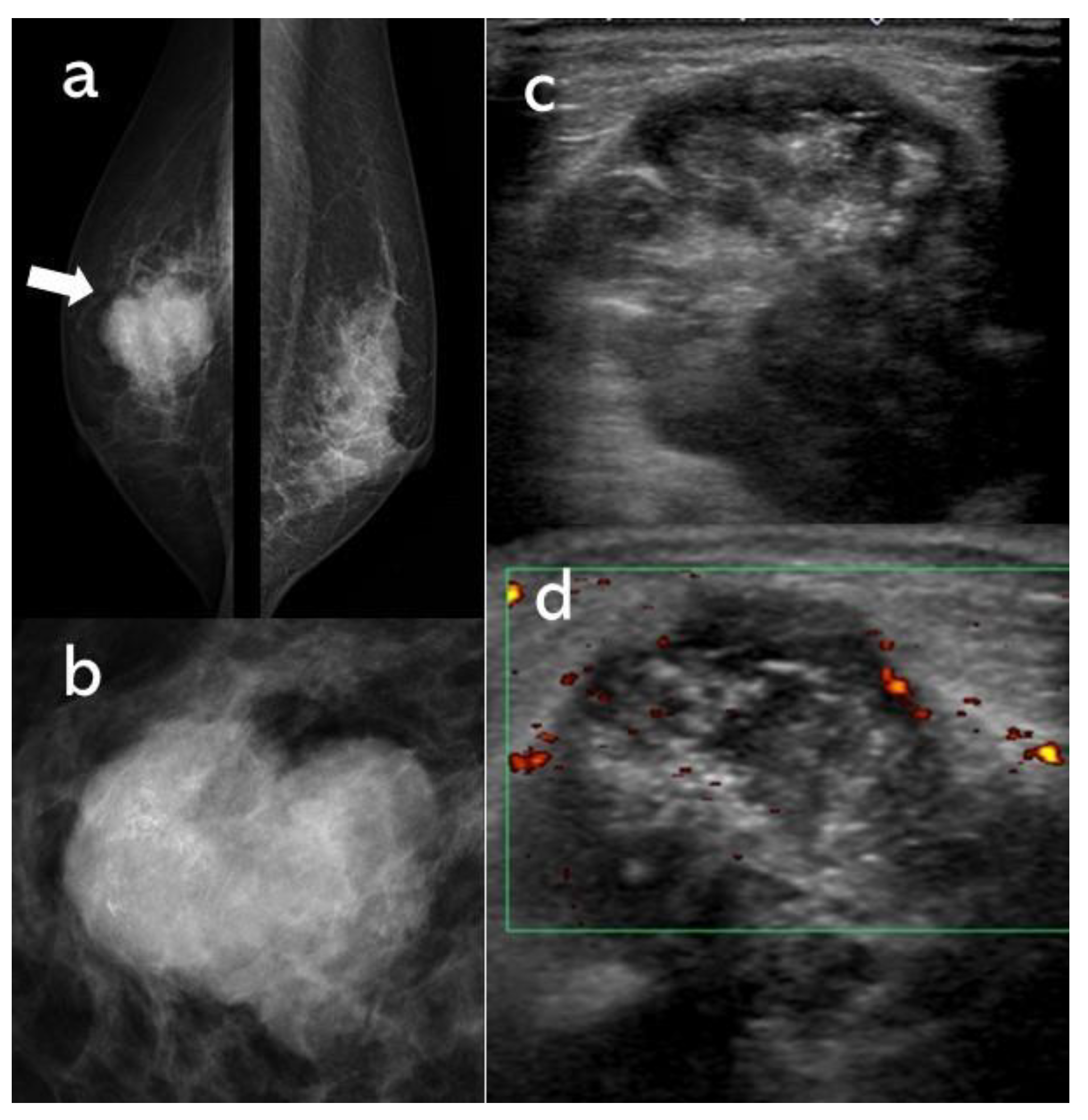
A woman in her 70s presented to the authors’ hospital with a mass of increasing size every month in her right breast. She had no significant medical history other than hypertension. In mammography, the right breast showed a 40-mm lobulated mass with relatively smooth borders containing coarse calcification, and the mass was scored as BI-RADS category 4 (
Figure 1). Breast ultrasonography likewise revealed a hypoechoic lobulated mass of 40 mm with relatively smooth borders. In power Doppler ultrasonography, the mass contained a punctate-to-coarse hyperechoic area within that corresponded to calcification and blood flow, mainly in the peripheral area of the tumor (
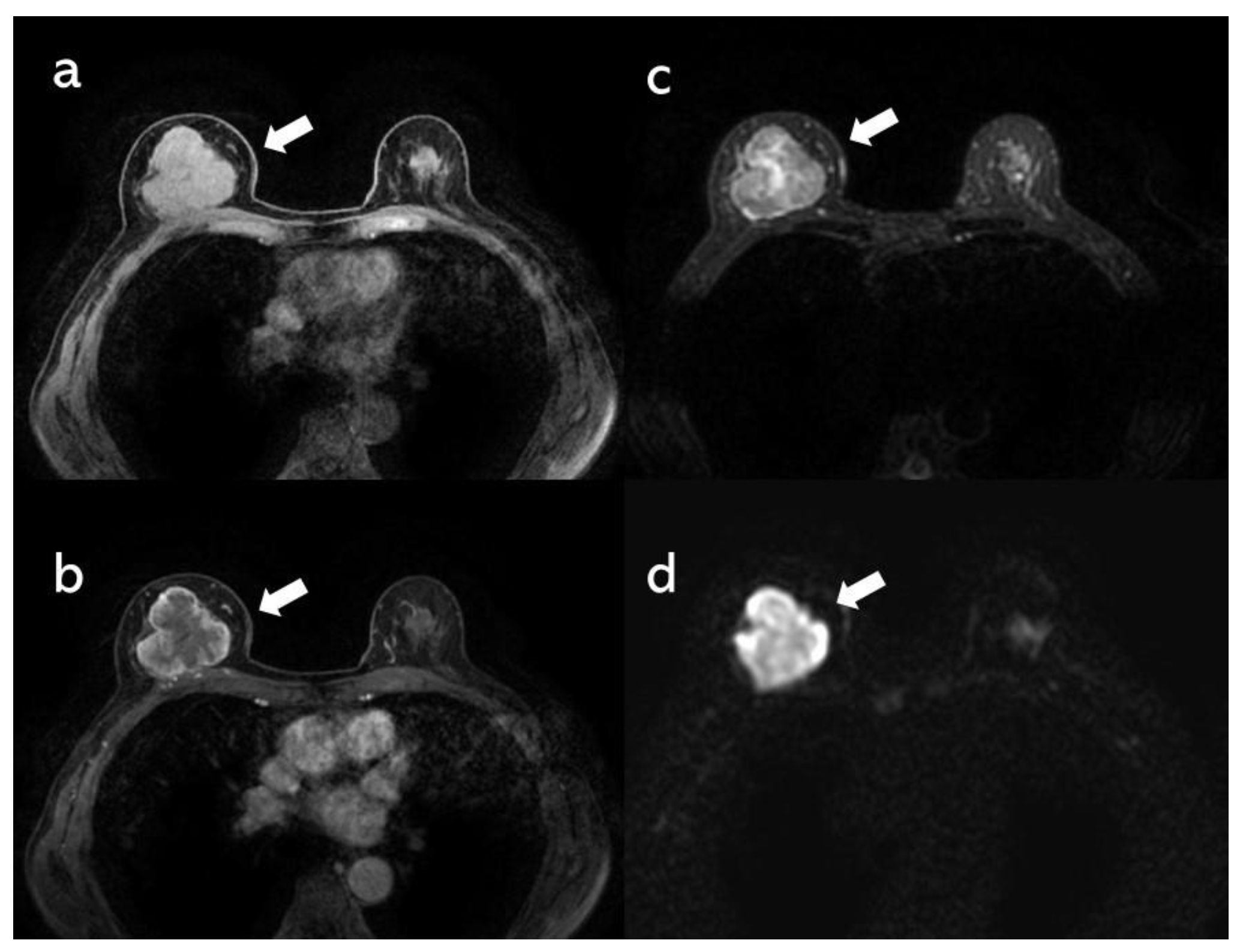
Figure 1). Magnetic resonance imaging showed a lobulated mass with strong contrast mainly on the tumor periphery on the contrast-enhanced T1-weighted image (TWI), a high signal in the center of the mass on T2WI and a high signal in the peripheral area on diffusion-weighted images (
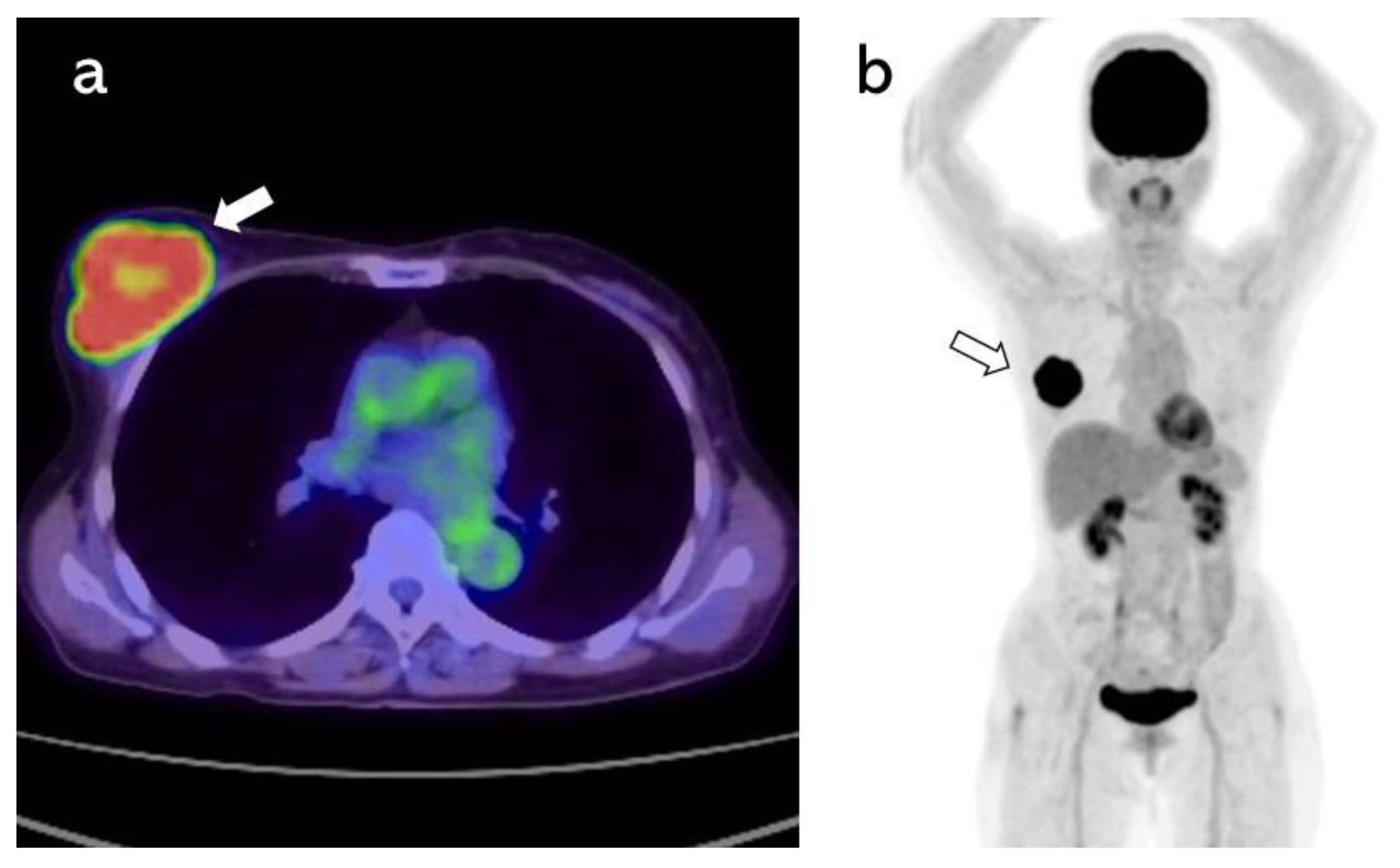
Figure 2). Additionally seen mainly on the tumor periphery, 18F-fluorodeoxyglucose positron-emission tomography (18F-FDG PET)/computed tomography showed high FDG uptake with a maximum standardized uptake value of 13.7. No other areas of uptake indicated a suspected distant metastasis (
Figure 3).
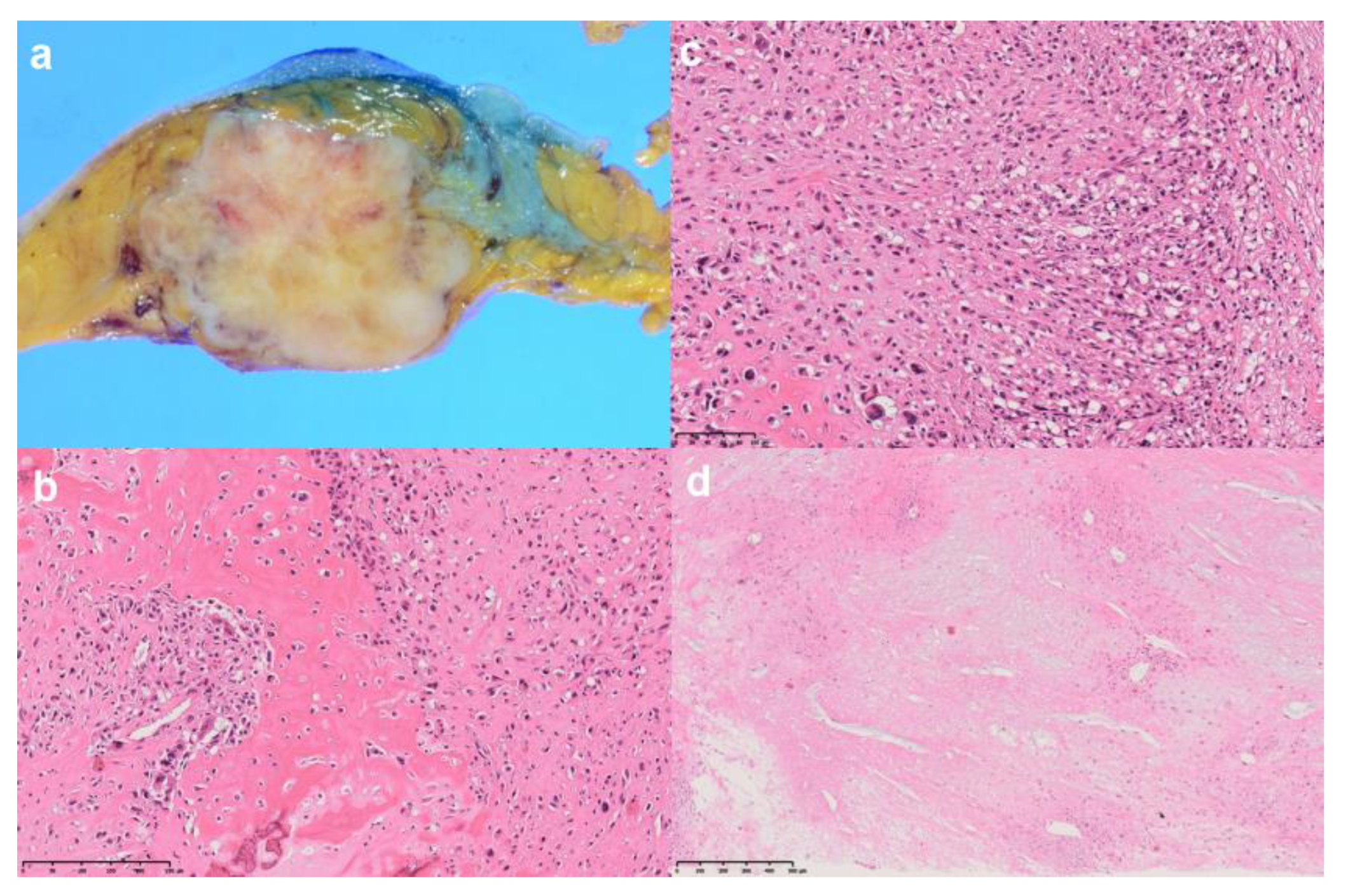
The patient underwent an ultrasound-guided core needle biopsy of the tumor. She was diagnosed with malignant pleomorphic neoplasm of the breast. The patient then underwent a right total mastectomy. Gross examination of the specimen showed a firm mass with a variegated appearance, which measured 5 cm × 4 cm in the upper and the lateral quadrants of the breast. Histologic examination revealed abundant osteoid formation, areas of calcification and moderately pleomorphic oval to spindle-shaped stromal cells. Scattered multinucleated osteoclastic giant cells were also present. Necrosis was found mainly in the central region of the tumor. Multiple sections were sampled, but no epithelial component was found. The patient was treated with successful R0 resection. Immunoreactivity was detected for vimentin but not for AE1/AE3 antibody, monoclonal antibody CAM5.2, smooth muscle α-actin, desmin, DC31, CD34 and the estrogen and progesterone receptors. No overexpression of the HER2/neu oncoprotein was found. The patient was finally diagnosed with PBO (
Figure 4).
PBO usually presents as a large, rapidly growing mass [
1,
2]. The tumor is usually heavily calcified, so dense calcification is seen on the mammogram and ultrasound [
3]. A large densely calcified mass is sometimes indistinguishable from a degenerative fibroadenoma [
3]. Reflecting the high degree of aggressiveness of this tumor, magnetic resonance imaging typically shows a strong enhancement effect and high signal on diffusion-weighted images, and 18F-FDG PET/computed tomography exhibits a high FDG uptake [
4,
5]. Although bone scintigraphy was not performed in this case, PBO shows intense uptake on bone scintigraphy [
6,
7]. The malignant extraskeletal new bone formation is the reason for the strong uptake in PBO [
7]. This case highlights the need to add PBO to the differential diagnosis for a patient who presents with a strongly aggressive tumor that increases in size and contains coarse calcification on imaging studies.
Author Contributions
T.F.: writing—original draft preparation. M.M., E.Y. and Y.Y.: writing—review and editing. I.O., J.O., K.Y., K.K. and U.T.: supervision. T.N. and G.O.: investigation. All authors have read and agreed to the published version of the manuscript.
Funding
This research received no external funding.
Institutional Review Board Statement
All procedures performed in this study involving the human participant were in accordance with the ethical standards of the institutional and/or national research committee and with the 1964 Declaration of Helsinki and its later amendments or comparable ethical standards.
Informed Consent Statement
Informed consent was obtained from the patient included in the study.
Conflicts of Interest
The authors declare no conflict of interest.
References
- Adem, C.; Reynolds, C.; Ingle, J.N.; Nascimento, A.G. Primary breast sarcoma: Clinicopathologic series from the Mayo Clinic and review of the literature. Br. J. Cancer 2004, 91, 237–241. [Google Scholar] [CrossRef]
- Silver, S.A.; Tavassoli, F.A. Primary osteogenic sarcoma of the breast: A clinicopathologic analysis of 50 cases. Am. J. Surg. Pathol. 1998, 22, 925–933. [Google Scholar] [CrossRef] [PubMed]
- Dekkers, I.A.; Cleven, A.; Lamb, H.J.; Kroon, H.M. Primary osteosarcoma of the breast. Radiographics 2019, 39, 626–629. [Google Scholar] [CrossRef] [PubMed]
- Kurata, K.; Anan, K.; Ishikawa, N.; Koga, K.; Saimura, M.; Nishihara, K.; Iwashita, T.; Mitsuyama, S.; Tamiya, S.; Watanabe, H.; et al. A case of primary extraskeletal osteosarcoma of the breast. Surg. Case Rep. 2018, 4, 121. [Google Scholar] [CrossRef] [PubMed] [Green Version]
- Cao, Q.; Lu, M.; Huebner, T.; Dilsizian, V.; Chen, W. 18F-FDG PET/CT in a rare malignant extraskeletal osteosarcoma. Clin. Nucl. Med. 2013, 38, e367–e369. [Google Scholar] [CrossRef]
- Burk, K.S.; Fang, Y.; Porembka, J.H. Diagnostic evaluation and treatment of primary breast osteosarcoma: A case report. Breast J. 2019, 25, 709–711. [Google Scholar] [CrossRef] [PubMed]
- Krishnamurthy, A. Primary breast osteosarcoma: A diagnostic challenge. Indian J. Nucl. Med. 2015, 30, 39–41. [Google Scholar] [CrossRef] [PubMed] [Green Version]
| Publisher’s Note: MDPI stays neutral with regard to jurisdictional claims in published maps and institutional affiliations. |
© 2021 by the authors. Licensee MDPI, Basel, Switzerland. This article is an open access article distributed under the terms and conditions of the Creative Commons Attribution (CC BY) license (https://creativecommons.org/licenses/by/4.0/).



 ,
,