


Abstract
The mushroom market has seen accelerated growth in today’s world. Despite advances in technology, harvesting is a more artisanal procedure. Countries such as Portugal and Brazil are not self-sufficient in mushroom production. Among the difficulties in the production of mushrooms is the question of acclimatization using temperature and relative humidity control. An experimental study was conducted. Energy analyzers were placed in the lighting, acclimatization, and water pumping system to produce 2200 kg of mushrooms in an acclimatized shed with an area of 100 m2. Energy consumptions of 48 kWh for lighting, 1575 kWh for air conditioning, and 9 kWh for pumping water were determined. A TEWI index of 0.7515 kWh/kg of Paris-type mushroom (Agaricus bisporus) was found. With equipment using R-454 B as a refrigerant, the estimated TEWI using the proposed HVAC equipment model was 0.537 kWh/kg, and CO2 emissions were reduced from 18,219 to 5324.81, a reduction of 70%. Thus, the proposed HVAC equipment model can potentially decrease greenhouse gas emissions and energy consumption in mushroom production, making a step towards achieving sustainability and mitigating climate change.
1. Introduction
With the increase in mushroom consumption, the market is thriving. In 2021, it was worth USD 58.8 billion, and it is estimated that it will reach USD 86.5 billion in the year 2027, requiring an average annual growth of 6.5% [1,2]. Mushroom consumption in China had reached 8 kg per year per inhabitant. In Brazil, it is 0.16 kg per inhabitant per year [3]. In Portugal, for example, this consumption is 1.2 kg per inhabitant per year. In Portugal, the growth in consumption of these fungi has grown in the order of 10 to 15% per year [4]. The reason for this worldwide growth in the use of these edible fungi is due to their richness in proteins and nutrients, active ingredients, and allergens; because they do not require large areas for cultivation; and they have many flavors and possess healthy benefits, in addition to having a lower greenhouse effect when, for example, compared to meat production [5,6]. Brazil is not self-sufficient in mushroom production. The largest marketed mushroom in Brazil is the Paris champignon (Agaricus bisporus) [7]. In Portugal, even with the growing market in the last decade, few producers have invested in production units that can control environmental factors [4].
One of the difficulties in producing mushrooms is the climatic conditions. To avoid contamination, they need to be produced in greenhouses. In addition to the issue of relative humidity and temperature control at each stage of the process [8], high humidity generates the need for accurate sensors and the accurate automation of the system [9,10,11].
Although the main reason for the growth in the use of mushrooms is their ecological appeal, equipment for acclimatization is necessary for this cultivation and requires several precision sensors for temperature and humidity control [12].
The environmental sustainability of current food and agriculture systems is very limited [13,14]. So, improvements in the sustainable development of agriculture via efficient resource consumption and emissions reduction in soil, air, and water is fundamental in the face of the required increases in agricultural production [15]. Energy efficiency is one of the most critical issues in sustainable agricultural development [16,17]. Methods can be applied to evaluate environmental impacts and energy expenditure to foster the adoption of more sustainable strategies [18,19,20,21]. These requirements mean considerable expenditure of energy and resources [22]. Energy evaluations, best practices, and efficient measures have been proposed depending on the specific agricultural product [23,24,25]. Generally, systems are adapted from conventional air conditioning systems with high-GWP (Global Warming Impact) refrigerants and which generate a high Total Equivalent Warming Impact (TEWI). The TEWI measures the direct and indirect environmental impacts of an air conditioning system. Actions to reduce CO2 emissions are important. For example, the agricultural sector accounts for about 15% of the total greenhouse gas emissions from human activities [26]. According to [27], 1 kg of mushroom results in 0.31 kg of CO2 emissions. This study suggests a system of lower energy consumption with a low environmental impact from the air-conditioning used for mushroom production. Energy analyzers were placed in a complete process of inoculation, incubation, fruiting, and harvesting. Measurements were made on a producer with an adapted conventional air-conditioning unit. Thus, climatic and energy parameters were measured on an artisanal system using adapted Heating, Ventilation, and Air Conditioning (HVAC) equipment versus a system tailored to the production requirements with a refrigerant with less environmental impact [12]. In addition to energy and CO2 emissions, there is the issue of water consumption. In mushroom production, the need for high relative humidity implies high water consumption. Water and energy are always connected since, to transport water, there is a need for pumping and treatment [28]. At the level of human consumption, it can be called the energy consumption of drinking water treatment plants (DWTPs). In the case of mushroom cultivation in Brazil, well water is used, but it requires pumping and treatment [29]. Additionally, in production, there is a large load of condensed water in cooling that is wasted. There are already studies on wastewater treatment plants (WWTPs). These water losses are related to energy, which, consequently, also relates to more indirect greenhouse gas (GHG) emissions [30]. The novelty and scientific contribution of the current research lies in the specific findings and results obtained from the experimental study, which demonstrate the potential of the proposed HVAC equipment model to address energy consumption, environmental impact, and greenhouse gas emissions in mushroom production. These findings contribute to the knowledge base in the field and offer practical insights for improving sustainability in the mushroom industry.
2. State-of-the-Art
There are four main steps in mushroom cultivation, which are [31]: (1) compost preparation and composting; (2) pasteurization and substrate conditioning; (3) inoculation and incubation; and (4) covering layer, induction, and fruiting. The emphasis in this study is not on composting and pasteurization, but on the process from incubation until harvest. Incubation is when the mycelium grows from spores to mycelium. At this stage, the formulation of the inputs is already set, implemented only in the cultivation and harvesting stages. The necessary structure is the shed, water, lighting or lack of it, and a climate control system. It is important to highlight that mushroom production is lower in dry climate conditions, which can see a production reduction of 84% compared to high-humidity conditions [32]. Specifically, Paris mushrooms must be produced in a straw compost, with a need for acclimatization with varying temperatures from 18 to 25 °C [33] and humidity levels from 80% to 90% [34,35], as shown in Table 1. The air-conditioning equipment wastes water and energy by unnecessarily dehumidifying. This study finds an optimal point of air flow and temperature range to reduce energy, water, and CO2 emissions.

Table 1.
Production conditions [36].
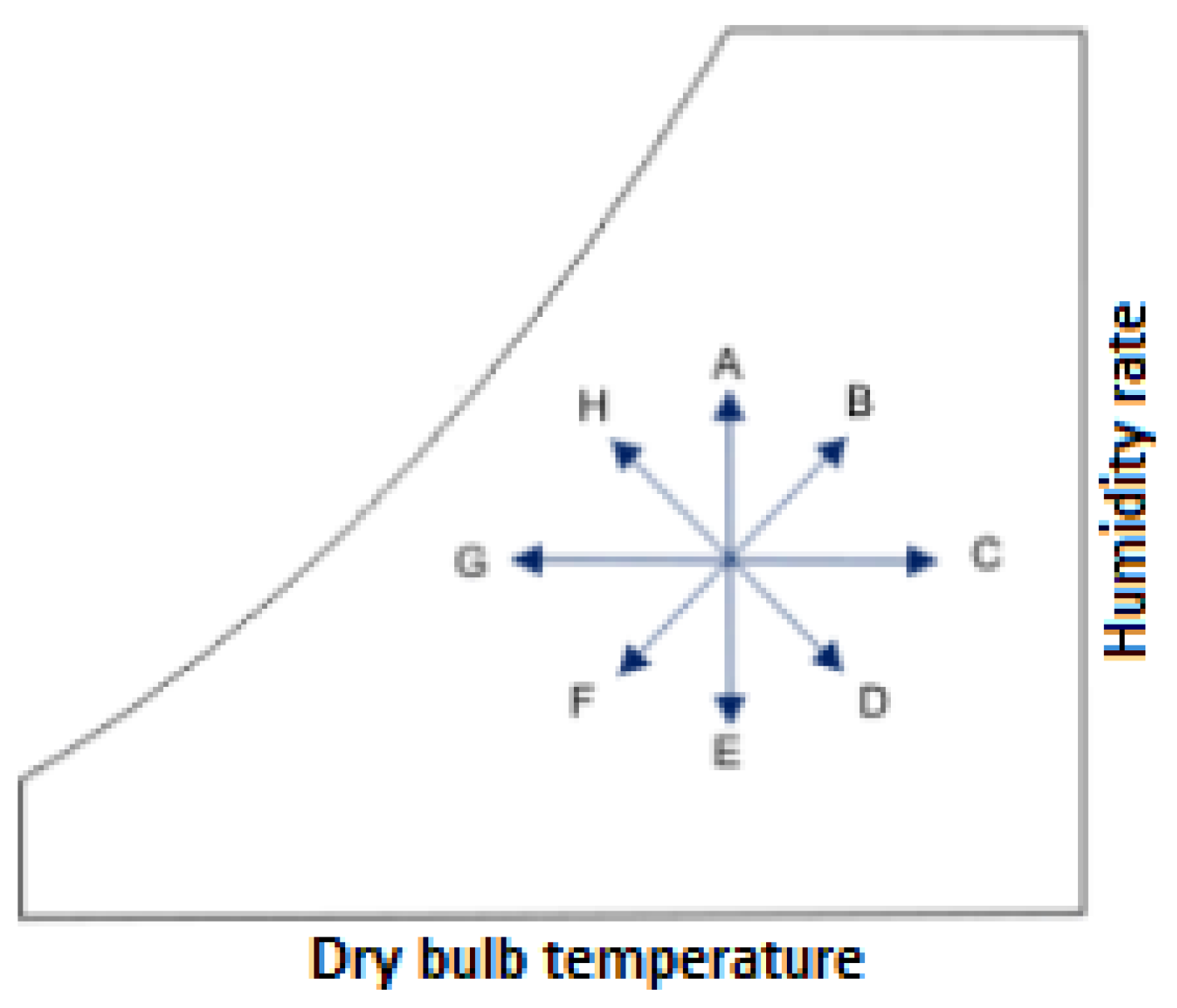
The water concentration of a mushroom, even in nature, is greater than 90%. The harvest involves low temperatures with a high level of humidity to avoid weight loss, so temperature and humidity control is essential for the success of the harvest in mushroom cultivation [37]. Typical air-conditioning equipment has in its remote controls a variety of hot and cold equipment capable of controlling the temperature in a range of 18 to 30 °C, which, in terms of temperature, is close to the range required for these processes [38]. However, there is the issue of relative humidity. Air conditioning equipment is built to reduce temperature and relative humidity. In psychrometry, refrigeration, that is, the reduction in temperature and relative humidity, is denoted by the letter “F”, as shown on the psychrometric chart in Figure 1.
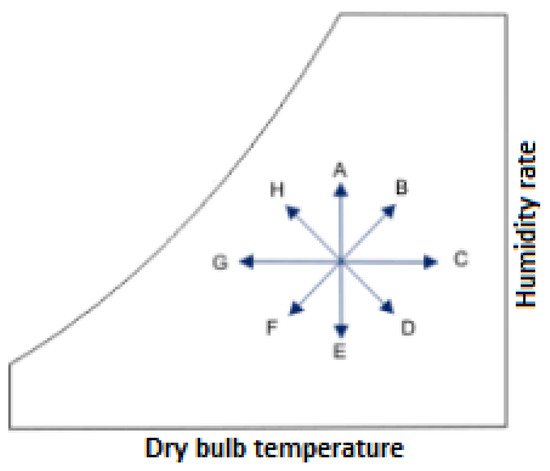
Figure 1.
Psychrometric chart, dry bulb temperature (°C), and humidity rate (g/kg).
Standard air conditioning (AC) equipment evaporates the refrigerant gas at a standard temperature of 0 °C for a discharge at 13.8 °C. Depending on the refrigeration balance, this value can reach 9 °C [39]. An adapted AC unit was used for mushroom production. The equipment has a refrigeration power of 10.55 kW, with an air return temperature of 25 °C and a discharge air temperature of 13.8 °C with a relative humidity of 90% and an airflow of 1500 m3/h. The mushroom production in this study is located in the city of Contenda (Brazil). Table 2 shows the climatic parameters of the AC system for the mushroom greenhouse.
Table 2.
Climatic parameters of the adapted AC system for mushroom production located in Contenda (Brazil).
For this condition, the thermal load of the equipment is 17.029 kW, divided into sensible load (5.281 kW) and latent load (11.748 kW). The equipment has a thermal capacity of 10.55 kW; thus, it would not be enough to meet the psychrometric requirements. There is no need to remove latent heat. The capacity is left over in the matter of sensible heat, which is needed in this case. The dehumidification rate is 18.7 kg/h, so this water must be replenished each hour to maintain, for example, a harvest condition. Equipment with more specific psychrometric characteristics can be created, for example, to produce a discharge temperature of 15°C (in the inoculation period), with a relative humidity of 97%. In these conditions, the climatic data of the mushroom greenhouse are shown in Table 3.
Table 3.
Climatic parameters of the specific AC system in the mushroom greenhouse located in Contenda (Brazil).
For these new conditions, the thermal load of the equipment is 14.4 kW, with 4.69 kW of sensible heat and 9.79 of kW latent heat. The dehumidification rate is 15.5 kg/h of water. Again, this water must be replenished each hour to maintain, for example, a harvest condition. In this case of a specific AC system, it would require replenishing 17.11% less water compared to the adapted AC system, in addition to the reduced thermal load of the same proportion. In addition to the issue of thermal load and energy efficiency, there is also the issue of the refrigerant. Old equipment operates with HCFC 22 refrigerant (older equipment) or HFC 410 A (more modern equipment). Both have high GWPs; specifically, according to AR4, GWPHCFC 22 = 1810 and GWPHFC 410 A = 2088. It is also important to remember that HCFC 22 also interferes with the ozone layer [40].
CO2 emissions are classified as direct (from fossil fuel combustion, methane emissions, and process emissions of the other greenhouse gases) and indirect (primarily from electricity use). An example is a sewage treatment plant that emits GHG (greenhouse gas) in the direct process and indirectly in the form of energy [41,42,43]. On the same principle, in the case of refrigeration, there is the TEWI, which is a global warming impact metric, with total emissions related to the GWP (Global Warming Impact) of the equipment being used and all off-gassing in the system, at the end of the system’s useful life. Direct and indirect emissions are considered in the TEWI [44].
- Direct Emissions—include losses that are not refrigerant gases released over the life of the equipment.
- Indirect Emissions—fossil fuels are used in the generation of electricity, which have an environmental impact from the CO2 emitted during the operation of equipment throughout its useful life.
The method of calculating the TEWI is provided in Equations (1) and (2):
where:
EOL = End of Life;
= Global Warming Potential of refrigerant, relative to CO2 (GWP CO2 = 1);
Lannual = Leakage rate p.a. (kg);
n = System operating life (yrs);
m = Refrigerant charge (kg);
αrecovery = Recovery/recycling factor from 0 to 1;
Eannual = Energy consumption per year (kWh p.a.);
β = Indirect emission factor (kg CO2/kWh).
The indirect emission factor, β, varies according to the energy matrix. In Brazil, the matrix of the energy system throughout the country is balanced. According to the BEM (National Energy Balance), Brazil emits 0.088 kg CO2/kWh [45].
3. Materials and Methods
For the experimental analysis, a 100 m2 greenhouse located in Contenda, a city in the state of Paraná, Brazil, was used. Table 4 shows the technical specifications of the greenhouse. The current air conditioning system is self-contained equipment with a built-in condenser (air-cooled), with a fixed compressor and expansion through a capillary tube. The humidification system works via nebulization, activated by a humidistat.
Table 4.
Greenhouse technical specifications.
In this location, the climatic conditions the local producer of the case study chooses for the process are shown in Table 5.
Table 5.
Process requirements.
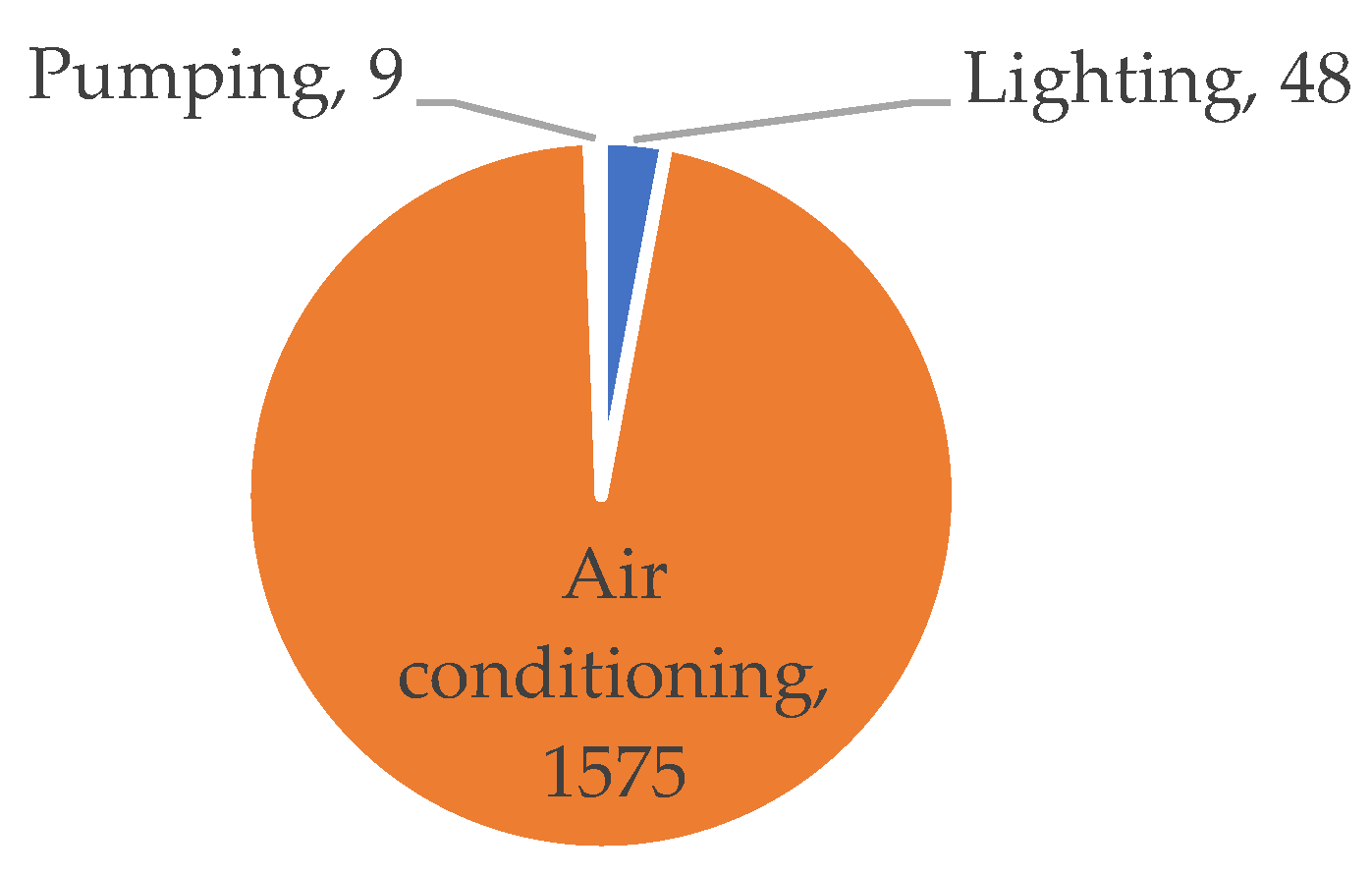
Manifolds and temperature gauges were placed in the air conditioning system of the site, where the evaporation temperature was set at 0 °C, the refrigerant gas used was HCFC 22, the suction pressure of the refrigerant gas was 4.22 kgf/cm2, the air supply temperature was 9 °C, and the return temperature varied according to the inoculation, incubation or harvesting process. The air conditioning system required three different operating conditions during the mushroom production period (21 days from inoculation to harvest): at high thermal load, two AC units were connected; one AC equipment was connected; and, according to the thermostat value, no equipment was connected. Three energy meters (wattmeters with dataloggers) were used during the production period. The power measured per source is shown in Figure 2. Air conditioning is, by far, the largest energy sink.
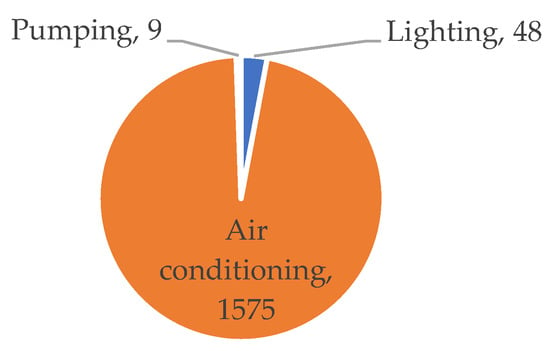
Figure 2.
Energy consumption (kWh) with datalogger per source.
The air conditioning system had different operating conditions during the production period according to the thermal load of the system, as shown in Table 6.
Table 6.
Operating conditions.
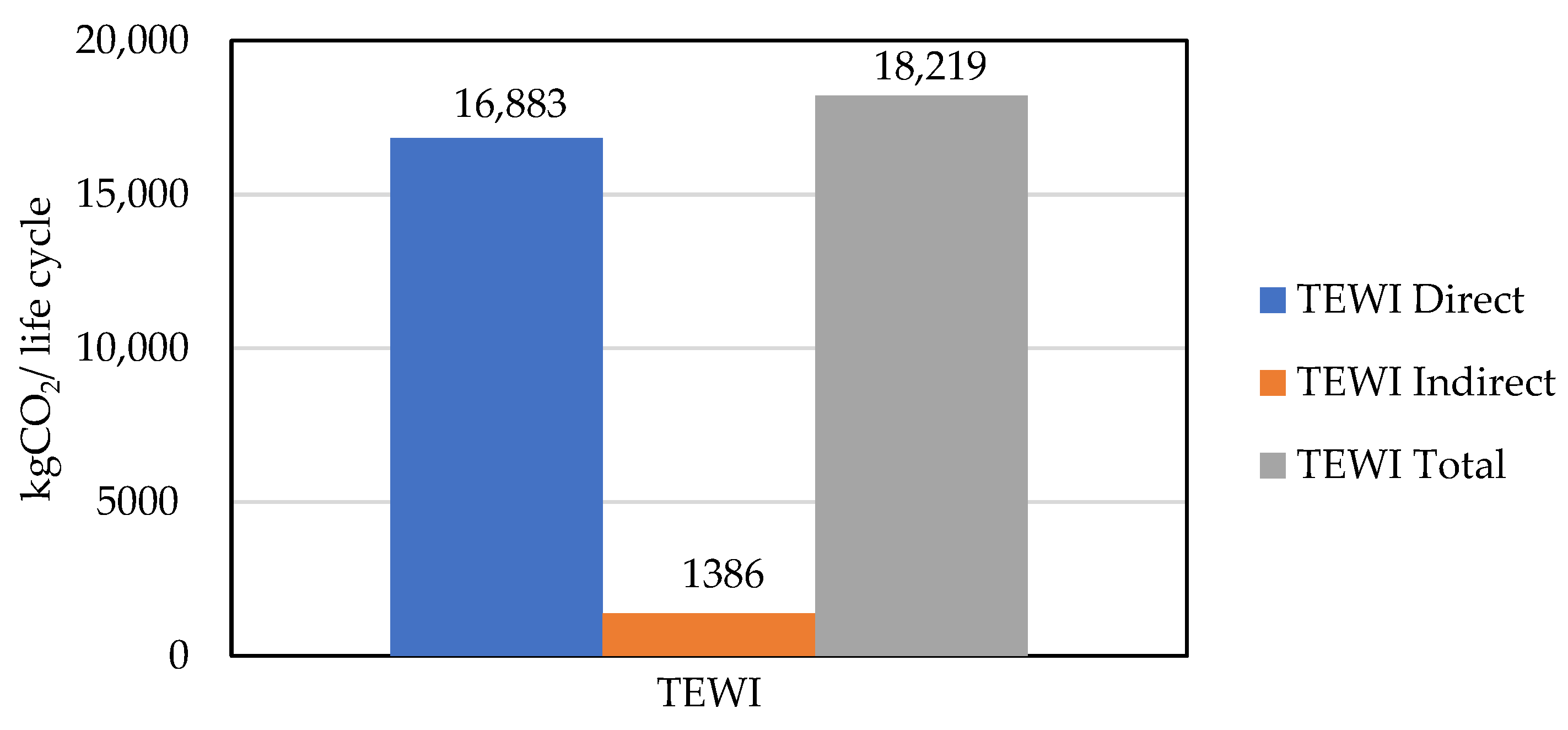
The thermal load added in the period of 21 days of using the air conditioning equipment was 4725 kW due to the conditions of a latent heat factor of the equipment in the field. The charge of the refrigerant found in the equipment was 3 kg of HCFC-22 per unit (the refrigerant was collected and weighed on a scale), thus totaling a total amount of 6 kg. Considering a 10-year equipment lifetime [46], a GWP of 1810 [47], a leak rate of 12.5%, and a recycling factor of 70%, with 12 annual cycles of 21 days of use, the TEWI value is given in Figure 3 [48].
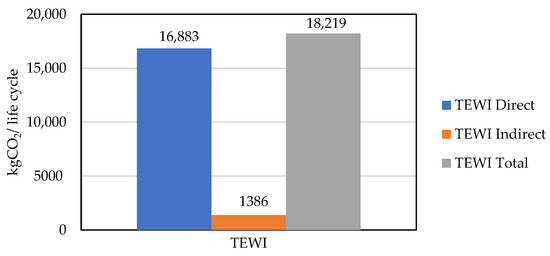
Figure 3.
TEWI values.
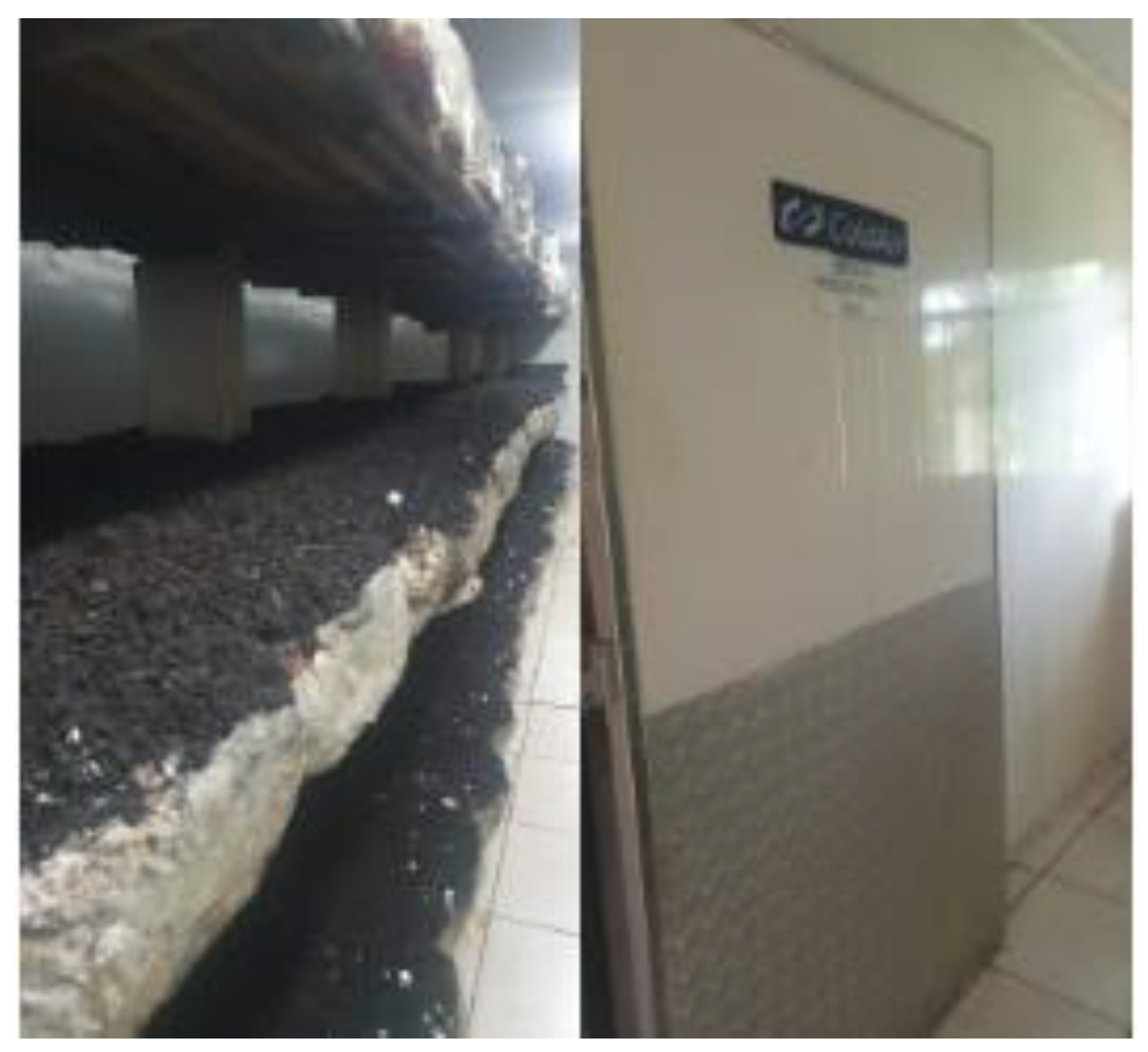
The enclosure is made up of 100 mm thick refrigerated thermo-panels. A view of the door and thermopanels and inside during the incubation period is shown in Figure 4.
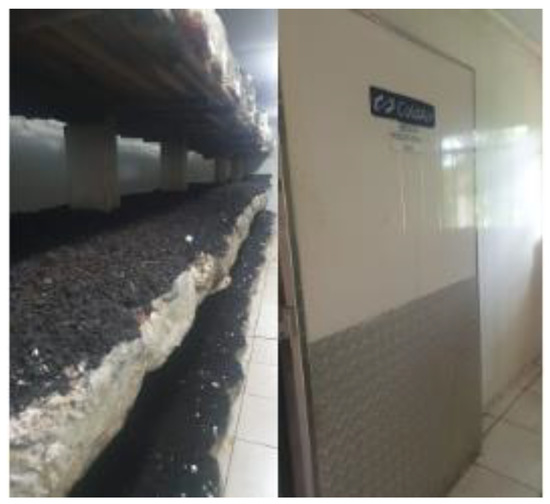
Figure 4.
View of the door and thermopanels and inside during the incubation period.
Before simulating the new conditions, it is important to point out that the equipment in the field had a capillary tube with an expansion element for the refrigerant gas, and it was not possible to achieve higher discharge temperatures, much less the AHRI conditions, since the overheating of the gas was very high. The psychrometric characteristics in the field condition are shown in Table 7.
Table 7.
Psychrometric data in the greenhouse.
The predominant condition of the sensible heat of the individual equipment was 4.7 kW, the latent heat was at 6.8 kW, and the total heat was at 11.5 kW, that is, very close to the total heat of the equipment at 10.55 kW. The latent heat generates a need to add 10.93 L of water per connected unit. The equipment used under these conditions had a latent heat removal capacity much higher than required. Measurements with an energy analyzer (21 days) were carried out in February 2023 (summer in Brazil), which is the predominantly warmest month. The maximum temperature was close to 31 °C, and the minimum was 20 °C.
4. Analysis and Discussion of Results
To reduce energy consumption and emissions, the psychrometric condition was initially recalculated between the air return and supply that could linearly reduce the thermal load within the envelope of the new equipment, as the emphasis is on sensible heat; the flow rate was increased to 3400 m3/h per unit of equipment. The greenhouse characteristics with recalculated data in a psychrometric condition are shown in Table 8.
Table 8.
Greenhouse characteristics with recalculated data in a psychrometric condition.
With this change, the sensible thermal load per unit remained at 4.7 kW, that is, there was no change in terms of temperature reduction, but the latent heat per equipment was 4.88 kW, a reduction of 28.23%. This reduction in latent heat had the positive effect of reducing the amount of replacement water in the system, which reduced from 10.93 L per hour per unit of equipment to 7.77 L per hour. In general, there was a reduction in the thermal load between the field and the new conditions of 16.7%. In addition to the issue of the new psychrometric characteristics of the AC equipment, another main issue is also the use of a refrigerant gas with a low environmental impact. For the simulation, the refrigerant gas R-454-B was chosen, and experiments have already been carried out with this refrigerant gas to replace the current R-410 A. This refrigerant has an SEER (seasonal energy efficiency index) [49] that is 7% higher than R-410 A [50]. In addition, this refrigerant has a low GWP = 466, as it is based on hydrofluoroolefin (HFO), so it has a low Global Warming Potential [51]. Based on these assumptions, the project using the new equipment was carried out with the individual characteristics shown in Table 9 [52,53].
Table 9.
Features of AC equipment sizing.
With these characteristics, using the Chemours Expert 1.0 software [54], the following results were obtained:
- COP (kW/kW) =4.28;
- Mass flow (kg/s) = 0.0472;
- Compression ratio = 2.7;
- Diameter of the gas line (mm) = 15.82;
- Suction speed (m/s) = 9;
- Liquid line diameter (mm) = 8.09;
- Discharge line speed (m/s) = 1.
At the service input of electrical energy for the evaporators, condenser, and condenser fans, the corrected COP was 3.495 kW/kW. In the inoculation condition, the evaporation temperature could be 10 °C, which could increase the COP, but this option was not used because these are smaller pieces of equipment and a return temperature of 15 °C of the refrigerant gas can lead to excessive overheating of the compressor oil. The air inlet temperature used in the condenser was 31 °C, close to the worst situation of field measurements to compare similar conditions in terms of the COP.
To compare the cost of energy between the systems, the already mentioned 16.7% reduction in the psychrometric conditions was applied to the thermal load of 4725 kW in the period of 21 days, resulting in a value of 3935.9 kW. Using the new COP value of 3.495, the new air conditioning energy consumption will be 1126.15 kW.
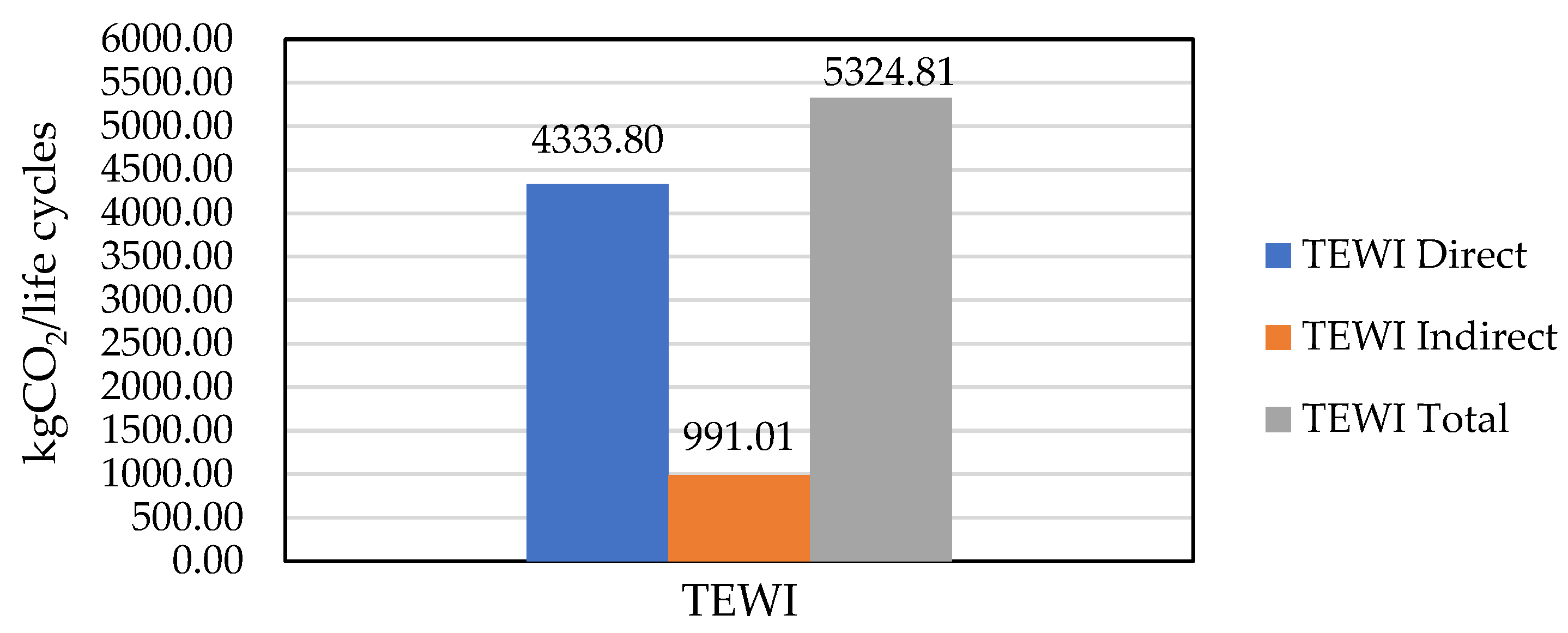
Recalculating the TEWI using the same methodology of 12 cycles of 21 days per year for a period of 10 years (10-year value is based on ASHRAE Equipment Life Expectancy chart for self-contained machines) [46] and with the refrigerant gas R-454 B, the results shown in Figure 5 were obtained.
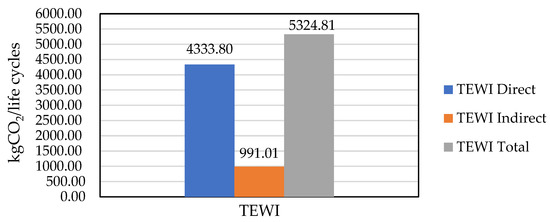
Figure 5.
TEWI with the methodology of 12 cycles of 21 days.
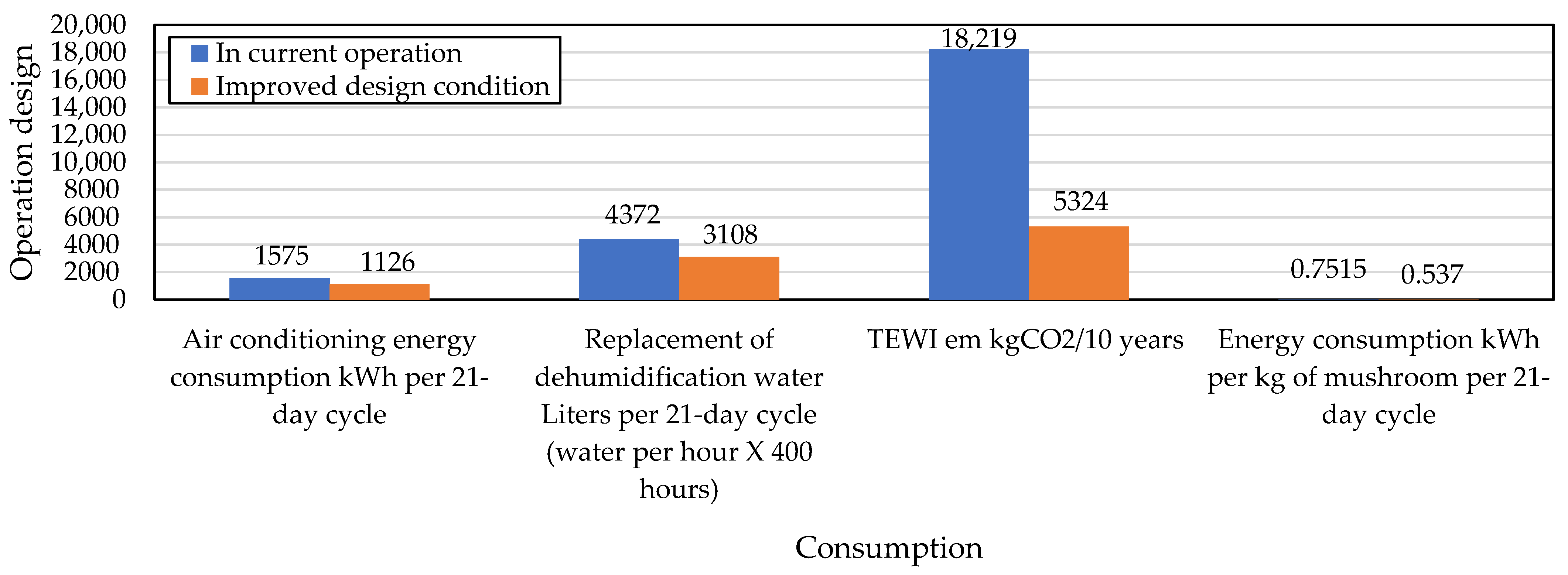
In general, there were reductions in energy consumption, water replacement, and environmental impact, as shown in Figure 6.
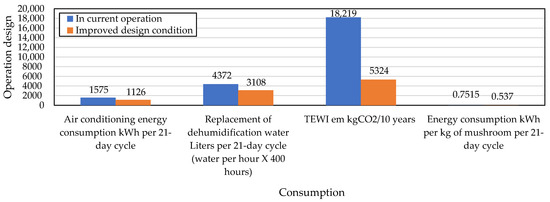
Figure 6.
Consumption reduction.
Under the new conditions, the total AC energy consumption in a 21-day cycle for 2200 kg was reduced from 1575 kWh to 1126.15 kWh, that is, a reduction of around 30%. Additionally, a reduction in replacement water in the same order (around 30%) was obtained. In contrast, the reduction in the TEWI index was from 18,219 to 5325, that is, a reduction of 70%. In addition to the TEWI, there is the TWI (Total Water Impact) index, which sums up the impacts of direct and indirect water consumption in an AC system (in water-cooled and/or air-cooled condenser systems) and is possible to calculate for mushrooms. The TWIM index (total impact of water for air conditioning systems in mushroom) is the sum of the water needed to replace the air conditioning (from dehumidification) and the indirect water arising, for example, from the evaporation of water in the hydroelectric reservoirs, in this case using the value of 0.011071 m3/kWh (indirect water from the energy source in Brazil per kWh). Direct and indirect water consumption in the existing system would be the sum of 4372 L per cycle added to 17,430 L, together generating 21,802 L per 21-day cycle. The proposed system would add up to 15,575 L of water, so each cycle would save 6227 L in the AC alone, that is, 2.83 L of savings per kg of mushroom. In this context, studies have been developed to conduct life cycle assessments along the production chain (from pre-farm to on-farm to post-farm) to quantify the environmental impacts of the food production system, to find the most impactful processes or procedures, and to simultaneously assess the advantages and disadvantages of circular economy procedures. It was also found the mushrooms have significant GHG emissions during pre-farm operations. The results of this study showed that the mushroom production systems have a GWP impact ranging from 2.13 to 2.95 kg CO2e/kg. The most impactful input is from the climate control due to the amount of energy (from electricity and/or fossil fuels) required to power the system, which runs continuously. In addition to energy consumption, compost materials, compost emissions, and transportation also have some contribution to the environmental impact [55,56,57,58,59].
For this case study, the results for the total period of the equipment’s 10-year useful life, performing 120 cycles of 21 days, are shown in Table 10.
Table 10.
Demonstration of consumption reduction in 120 cycles of 21 days.
The emissions of the improved project were less than 30% of the current situation. The difference in energy consumption was a reduction of almost 30%, and water consumption was reduced by almost 30%.
5. Conclusions
One of the most precise industries in agriculture is the production of mushrooms due to the need for strict control over humidity and temperature. The air conditioning system represents a predominant share of energy consumption, water, and CO2 emissions in mushroom production. A new system with a psychrometric design and using the new, more sustainable R-454B refrigerant gas was simulated. Compared to a typical AC system, the proposed design generates significant improvements in three indicators: energy consumption, water consumption, and a 70% reduction in CO2 emissions. This reduction can exceed the target of the EU Green Deal policies aimed at reducing net greenhouse gas emissions by at least 55% by 2030 [60]. It was predicted by the US Environmental Protection Agency that gradually decreasing HFCs could reduce global warming this century by up to 0.5 °C [61].
Water is one of the major indicators of sustainability and, in addition to CO2 and energy emissions, has become important. In climate control, water use was reduced by 2.83 L per kg of mushroom [62]. Water and energy are interconnected, generating a relationship called the water–energy nexus. Reducing water waste by increasing the evaporation temperature, in addition to reducing water consumption, is also capable of reducing energy consumption [62,63].
These actions of efficient equipment in the psychometric part and the use of a more sustainable refrigerant gas can decentralize the production of mushrooms, making countries such as Portugal and Brazil self-sufficient and competitive.
Author Contributions
Conceptualization, A.F.S.; methodology, A.F.S.; validation, A.F.S. and H.J.L.d.S.; formal analysis, A.F.S. and P.D.G.; investigation, A.F.S.; resources, H.J.L.d.S.; data curation, A.F.S. and P.D.G.; writing—original draft preparation, A.F.S. and H.J.L.d.S.; writing—review and editing, P.D.G.; visualization, H.J.L.d.S.; supervision, A.F.S.; project administration, A.F.S. All authors have read and agreed to the published version of the manuscript.
Funding
P.D.G. would like to express his gratitude to Fundação para a Ciência e Tecnologia (FCT) and C-MAST (Centre for Mechanical and Aerospace Science and Technologies) for their support in the form of funding, under the project UIDB/00151/2020.
Institutional Review Board Statement
Not applicable.
Informed Consent Statement
Not applicable.
Data Availability Statement
Data can be found in the references cited in the manuscript.
Conflicts of Interest
The authors declare no conflict of interest.
References
- Modern Forager. Sustainable Mushroom Picking. Available online: https://www.modern-forager.com/sustainable-mushroom-picking (accessed on 30 January 2023).
- Mushroom Market. Report Mushroom Market; IMARC Group: Brooklyn, NY, USA, 2022; 145p. [Google Scholar]
- Correio Braziliense. Consumo e Produção de Cogumelos No Brasil. Available online: https://www.correiobraziliense.com.br/app/noticia/economia/2018/01/29/internas_economia,656318/consumo-e-producao-de-cogumelos-no-brasil.shtml (accessed on 30 January 2023).
- Machado, H.; Sapata, M.M.; Ramos, A.R.; Barrento, M.J.; Bastidas, M.; Ferreira, M.; Coelho, R.; Banza, A.; Belchior, B.; Vitorino, C.; et al. Cogumelos em Portugal; Impressão: Europress—Indústria Gráfica Tiragem: 500 Nº Depósito Legal: 47993/21; Instituto Nacional de Investigação Agrária e Veterinária: Oeiras, Portugal, 2021; ISBN 978-972-579. [Google Scholar]
- Wang, M.; Zhao, R. A review on nutritional advantages of edible mushrooms and its industrialization development situation in protein meat analogs. J. Future Foods 2023, 3, 1–7. [Google Scholar] [CrossRef]
- The Times. Mushrooms the New Meat. Available online: https://www.thetimes.co.uk/article/are-mushrooms-the-new-meat-9r36366fm (accessed on 30 January 2023).
- Campo e Negócios. Producao de Cogumelos Comestíveis-No-Brasil-um-Mercado-em-Ascensao. Available online: https://revistacampoenegocios.com.br/producao-de-cogumelos-comestiveis-no-brasil-um-mercado-m-ascensao/ (accessed on 30 January 2023).
- Hamdane, S.; Pires, L.C.C.; Silva, P.D.; Gaspar, P.D. Evaluating the thermal performance and environmental impact of agricultural greenhouses using earth-to-air heat exchanger: An experimental study. Appl. Sci. 2023, 13, 1119. [Google Scholar] [CrossRef]
- Ten, S.T.; Krishnen, G.; Khulidin, K.A.; Tahir, M.A.M.; Hashim, M.H.; Khairudin, S. Automated Controlled Environment Mushroom House. Adv. Agric. Food Res. J. 2021, 2, 230. [Google Scholar] [CrossRef]
- Gaspar, P.D.; Fernandez, C.M.; Soares, V.N.G.J.; Caldeira, J.M.L.P.; Silva, H. Development of technological capabilities through the Internet of Things (IoT): Survey of opportunities and barriers for IoT implementation in Portugal’s agro-industry. Appl. Sci. 2021, 11, 3454. [Google Scholar] [CrossRef]
- Gaspar, P.D.; Soares, V.N.G.J.; Caldeira, J.M.L.P.; Andrade, L.P.; Soares, C.D. Technological modernization and innovation of traditional agri-food companies based on ICT solutions—The Portuguese case study. J. Food Process. Preserv. 2022, 46, e14271. [Google Scholar] [CrossRef]
- MSAE. Air conditioning systems for mushroom cultivation: Choosing the right sensors is crucial. In Advances in Agricultural and Food Research Journal (AAFRJ); Sociedade Malaia de Engenheiros Agrícolas e Alimentares (MSAE): Serdang, Malaysia, 2022; Volume 3. [Google Scholar]
- Jaiswal, B.; Agrawal, M. Carbon footprints of agriculture sector. Carbon Footpr. 2020, 81–99. [Google Scholar] [CrossRef]
- Dorr, E.; Koegler, M.; Gabrielle, B.; Aubry, C. Life cycle assessment of a circular, urban mushroom farm. J. Clean. Prod. 2021, 288, 125668. [Google Scholar] [CrossRef]
- Salehpour, T.; Khanali, M.; Rajabipour, A. Environmental impact assessment for ornamental plant greenhouse: Life cycle assessment approach for primrose production. Environ. Pollut. 2020, 266, 115258. [Google Scholar] [CrossRef] [PubMed]
- Khanali, M.; Kokei, D.; Aghbashlo, M.; Nasab, F.K.; Hosseinzadeh-Bandbafha, H.; Tabatabaei, M. Energy flow modeling and life cycle assessment of apple juice production: Recommendations for renewable energies implementation and climate change mitigation. J. Clean. Prod. 2020, 246, 118997. [Google Scholar] [CrossRef]
- Khanali, M.; Akram, A.; Behzadi, J.; Mostashari-Rad, F.; Saber, Z.; Chau, K.-w.; Nabavi-Pelesaraei, A. Multi-objective optimization of energy use and environmental emissions for walnut production using imperialist competitive algorithm. Appl. Energy 2021, 284, 116342. [Google Scholar] [CrossRef]
- Gaspar, J.P.; Gaspar, P.D.; Silva, P.D.; Simões, M.P.; Santo, C.E. Energy life-cycle assessment of fruit products-case study of Beira Interior’s Peach (Portugal). Sustainability 2018, 10, 3530. [Google Scholar] [CrossRef]
- Mostashari-Rad, F.; Ghasemi-Mobtaker, H.; Taki, M.; Ghahderijani, M.; Kaab, A.; Chau, K.-w.; Nabavi-Pelesaraei, A. Exergoenvironmental damages assessment of horticultural crops using ReCiPe2016 and cumulative exergy demand frameworks. J. Clean. Prod. 2021, 278, 123788. [Google Scholar] [CrossRef]
- Gaspar, P.D.; Godina, R.; Barrau, R. Influence of orchard cultural practices during the productive process of cherries through life cycle assessment. Processes 2021, 9, 1065. [Google Scholar] [CrossRef]
- Pakpahan, O.P.; Moreira, L.; Camelo, A.; Gaspar, P.D.; Santo, C.E. Evaluation of comparative scenarios from different sites of chestnut production using life cycle assessment (LCA): Case study in the Beira Interior region of Portugal. Heliyon 2023, 9, e12847. [Google Scholar] [CrossRef] [PubMed]
- El Kolaly, W.; Ma, W.; Li, M.; Darwesh, M. The investigation of energy production and mushroom yield in greenhouse production based on mono photovoltaic cells effect. Renew. Energy 2020, 159, 506–518. [Google Scholar] [CrossRef]
- Gaspar, P.D.; Silva, P.D.; Nunes, J.; Andrade, L.P. Characterization of the specific electrical energy consumption of agrifood industries in the central region of Portugal. Appl. Mech. Mater. 2014, 590, 878–882. [Google Scholar] [CrossRef]
- Silva, P.D.; Gaspar, P.D.; Nunes, J.; Andrade, L.P.A. Specific electrical energy consumption and CO2 emissions assessment of agrifood industries in the central region of Portugal. Appl. Mech. Mater. 2014, 675–677, 1880–1886. [Google Scholar] [CrossRef]
- Morais, D.; Gaspar, P.D.; Silva, P.D.; Andrade, L.P.; Nunes, J. Energy consumption and efficiency measures in the Portuguese food processing industry. J. Food Process. Preserv. 2022, 46, e14862. [Google Scholar] [CrossRef]
- Malhi, G.S.; Kaur, M.; Kaushik, P. Impact of climate change on agriculture and its mitigation strategies: A review. Sustainability 2021, 13, 1318. [Google Scholar] [CrossRef]
- SureHarvest. The Mushroom Sustainability Story: Water, Energy, and Climate Environmental Metrics. 2017. Available online: https://www.mushroomcouncil.com/wp-content/uploads/2017/12/Mushroom-Sustainability-Story-2017.pdf (accessed on 28 January 2023).
- Castellet, L.; Molinos-Senante, M. Efficiency assessment of wastewater treatment plants: A data envelopment analysis approach. integrating technical, economic, and environmental issues. J. Environ. Manag. 2016, 167, 160–166. [Google Scholar] [CrossRef]
- Ji, L.; Wu, T.; Xie, Y.; Huang, G.; Sun, L. A novel two-stage fuzzy stochastic model for water supply management from a water-energy nexus perspective. J. Clean. Prod. 2020, 277, 123386. [Google Scholar] [CrossRef]
- Yapıcıoğlu, P.; Yeşilnacar, M.İ. Energy cost optimization of groundwater treatment using biochar adsorption process: An experimental approach. Water Supply 2023, 23, 14–33. [Google Scholar] [CrossRef]
- Yapıcıoğlu, P.; Yeşilnacar, M.İ. Economic performance index assessment of an industrial wastewater treatment plant in terms of the European Green Deal: Effect of greenhouse gas emissions. J. Water Clim. Chang. 2022, 13, 3100–3118. [Google Scholar] [CrossRef]
- Silva, M.M. Cultivo de Cogumelos Comestíveis pela Técnica Jun-Cao; Instituto de Ciências Biológicas da Universidade Federal de Minas Gerais: Belo Horizonte, Brazil, 2011. [Google Scholar]
- Herrero, C.; Berraondo, I.; Bravo, F.; Pando, V.; Ordóñez, C.; Olaizola, J.; Martín-Pinto, P.; Oria de Rueda, J.A. Predicting Mushroom Productivity from Long-Term Field-Data Series in Mediterranean Pinus pinaster Ait. Forests in the Context of Climate Change. Forests 2019, 10, 206. [Google Scholar] [CrossRef]
- Bhandaria, R.; Dhunganab, R.; Neupane, P. Benefit-cost ratio analysis of pleurotus mushroom cultivation using dif-ferent substrates in campus of live sciences, Dang, Nepal. Food Agribus. Manag. 2021, 2, 85–87. [Google Scholar] [CrossRef]
- Figueirêdo, V.R.; Dias, E.S. Buton mushroom cultivation in function of temperature. Fitotécnica–Ciência Rural 2014, 44, 241–246. [Google Scholar] [CrossRef]
- Wahab, M.Z.; Manap, M.Z.I.A.; Ismail, A.E.; Ong, P. Investigation of temperature and humidity control system for mushroom house. Int. J. Integr. Eng. 2019, 11, 23–37. [Google Scholar] [CrossRef]
- Marzuki, A.; Ying, Y. Environmental monitoring and controlling system for mushroom farm with online interface. Int. J. Comput. Sci. Inf. Technol. 2017, 9, 17–28. [Google Scholar] [CrossRef]
- CAREL. Cultivo de Cogumelos. Available online: https://www.carelusa.com/environment/-/journal_content/56_INSTANCE_UlkJTljut2ly/10191/24161 (accessed on 8 March 2023).
- Urben, A.F. Produção de Cogumelos por Meio de Tecnologia Chinesa Modificada, 3rd ed.; Embrapa: Manaus, Brazil, 2017; 274p; ISBN 978-85-7035-651-2. [Google Scholar]
- AHRI Standard 210/240-2017; Performance Rating of Unitary Air Conditioning and Air Source Heat Pump Equipment (with Addendum 1). AHRI: Arlington, VA, USA, 2017.
- IPCC. Fifth Assessment Report; Intergovernmental Panel on Climate Change (IPCC): Geneva, Switzerland, 2014; Available online: https://www.ipcc.ch/report/ar5/syr/ (accessed on 30 January 2023).
- Yapıcıoğlu, P.; Demir, Ö. Minimizing greenhouse gas emissions of an industrial wastewater treatment plant in terms of water–energy nexus. Appl. Water Sci. 2021, 11, 180. [Google Scholar] [CrossRef]
- Demir, Ö.; Yapıcıoğlu, P. Investigation of GHG emission sources and reducing GHG emissions in a municipal wastewater treatment plant. Greenh. Gase Sci. Technol. 2019, 9, 948–964. [Google Scholar] [CrossRef]
- Santos, A.F.; Gaspar, P.D.; de Souza, H.J.L. Evaluating the energy efficiency and environmental impact of COVID-19 vaccines coolers through new optimization indexes: Comparison between refrigeration systems using hfc or natural refrigerants. Processes 2022, 10, 790. [Google Scholar] [CrossRef]
- EPE. Balanço Energético Nacional Relatório Síntese/Ano Base. Ministério de Minas e Energia—MME/Empresa de Pesquisa Ener-gética—EPE; República Federativa do Brasil: Brasilia, Brasil, 2019. Available online: https://www.epe.gov.br/sites-pt/publicacoes-dados-abertos/publicacoes/PublicacoesArquivos/publicacao-377/topico-470/Relat%C3%B3rio%20S%C3%ADntese%20BEN%202019%20Ano%20Base%202018.pdf (accessed on 30 January 2023).
- ASHRAE. ASHRAE Equipment Life Expectancy Chart; American Society of Heating, Refrigerating and Air-Conditioning Engineers Inc.: Atlanta, GA, USA, 2022; Available online: https://www.naturalhandyman.com/iip/infhvac/ASHRAE_Chart_HVAC_Life_Expectancy.pdf (accessed on 30 January 2023).
- IPCC. Four Assessment Report; Intergovernmental Panel on Climate Change (IPCC): Geneva, Switzerland, 2007; Available online: https://www.ipcc.ch/site/assets/uploads/2018/05/ar4_wg1_full_report-1.pdf (accessed on 16 February 2023).
- AIRHA. Best Practice Guideline: Methods of Calculating Total Equivalent Warming Impact (TEWI); The Australian Institute of Refrigeration, Air Conditioning and HeAting (AIRHA): Melbourne, Australia, 2012. [Google Scholar]
- Walter-Terrinoni, H. New U.S. Energy Efficiency Standards and Refrigerants for Residential ACs and Heat Pumps; Air Conditioning, Heating, and Refrigeration Institute (AHRI): Arlington, VA, USA, 2022. [Google Scholar]
- Shen, B.; Li, Z.; Gluesenkamp, K.R. Experimental study of R452B and R454B as drop-in replacement for R410A in split heat pumps having tube-fin and microchannel heat exchangers. Appl. Therm. Eng. 2022, 204, 117930. [Google Scholar] [CrossRef]
- OPTEON. Um Substituto de Refrigerante r-410a de Alto Desempenho e Ambientalmente Sustentável Para AC e Chillers. Available online: https://www.opteon.com/en/products/refrigerants/xl41 (accessed on 28 February 2023).
- HITACHIAIRCON. Manual de Instalação. Available online: https://www.hitachiaircon.com/br/downloads/primairy/tecnico-3/manual-de-instalacao-operacao-e-manutencao-primairy-hiom-cspar001-rev01-jun2021 (accessed on 13 January 2023).
- NBR16069 DE 04/2018; Segurança em Sistemas Frigoríficos em Sistemas Frigoríficos. Target Engenharia e Consultoria Ltda: São Paulo, Brasil, 2018.
- Chemours Refrigerants. Software Chemours Expert 1.0. Available online: https://pages.chemours.com/cre-chemours-refrigerants-expert-software.html. (accessed on 13 February 2023).
- ASHRAE. 2015 ASHRAE Handbook: HVAC Applications, SI ed.; American Society of Heating, Refrigerating and Air-Conditioning Engineers (ASHRAE): Atlanta, GA, USA, 2015; ISBN 9781936504947. [Google Scholar]
- Gunady, M.G.A.; Biswas, W.; Solah, V.A.; James, A.P. Evaluating the global warming potential of the fresh produce supply chain for strawberries, romaine/cos lettuces (Lactuca sativa), and button mushrooms (Agaricus bisporus) in Western Australia using life cycle assessment (LCA). J. Clean. Prod. 2012, 28, 81–87. [Google Scholar] [CrossRef]
- Robinson, B.; Winans, K.; Kendall, A.; Dlott, J.; Dlott, F. A life cycle assessment of Agaricus bisporus mushroom production in the USA. Int. J. Life Cycle Assess. 2019, 24, 456–467. [Google Scholar] [CrossRef]
- Leiva, F.J.; Saenz-Diez, J.C.; Martinez, E.; Jimenez, E.; Blanco, J. Environmental impact of Agaricus bisporus cultivation process. Eur. J. Agron. 2015, 71, 141–148. [Google Scholar] [CrossRef]
- Santos, A.F.; Gaspar, P.D.; de Souza, H.J.L. New HVAC Sustainability Index—TWI (Total Water Impact). Energies 2020, 13, 1590. [Google Scholar] [CrossRef]
- EC. Delivering the European Green Deal—The Decisive Decade. COM/2020/381 Final; Document 52020DC0381; European Commission (EC): Bruxels, Belgium, 2021; Available online: https://commission.europa.eu/strategy-and-policy/priorities-2019-2024/european-green-deal_en (accessed on 28 April 2023).
- Globo. EUA Agência Ambiental Propõe Regras para Reduzir Uso de Hidrofluorcarbonos. Available online: https://valor.globo.com/mundo/noticia/2021/05/03/eua-agencia-ambiental-propoe-regras-para-reduzir-uso-de-hidrofluorcarbonos.ghtm (accessed on 14 February 2023).
- Hunt, D.V.L.; Shahab, Z. Sustainable water use practices: Understanding and awareness of masters level students. Sustainability 2021, 13, 10499. [Google Scholar] [CrossRef]
- Yapıcıoğlu, P.; Yeşilnacar, M.İ. Investigating energy costs for a wastewater treatment plant in a meat processing industry regarding water-energy nexus. Environ. Sci. Pollut. Res. 2022, 29, 1301–1313. [Google Scholar] [CrossRef]
Disclaimer/Publisher’s Note: The statements, opinions and data contained in all publications are solely those of the individual author(s) and contributor(s) and not of MDPI and/or the editor(s). MDPI and/or the editor(s) disclaim responsibility for any injury to people or property resulting from any ideas, methods, instructions or products referred to in the content. |
© 2023 by the authors. Licensee MDPI, Basel, Switzerland. This article is an open access article distributed under the terms and conditions of the Creative Commons Attribution (CC BY) license (https://creativecommons.org/licenses/by/4.0/).