


Abstract
It is vital to analyze ship collision risk for preventing collisions and improving safety at sea. This paper takes Ningbo-Zhoushan Port, a typical complex navigable water, as the research object. Firstly, a probabilistic conflict detection method based on an AIS data-driven dynamic ship domain model is proposed to achieve effective ship conflict detection under uncertain environments. Then, a ship group identification method is proposed, which can extract the ship groups with conflict correlation and space compactness. Finally, according to the characteristics of ship traffic in complex navigable waters, the dynamic calculation of ship collision risk is carried out from individual, regional, and local multi-scale perspectives. The experimental results show that the proposed method can detect the collision risk in a timely, reliable, and effective manner under complex dynamic conditions. As such, they provide valuable insights into ship collision risk prediction and the development of risk mitigation measures.
1. Introduction
The growing shipping volume leads to higher traffic density and a more complex navigation environment, especially in hot areas such as complex navigable waters. Ship collision and grounding are the most common types of accidents [1]. Such accidents will cause serious economic losses, greatly threaten life safety and the marine environment, and seriously hinder the improvement and development of water transportation efficiency.
Ship navigation safety is the primary issue of global maritime development, and it is the most fundamental prerequisite for improving shipping efficiency, strengthening port operation and management, and ensuring the high-quality development of transportation [2]. Related research shows that the proportion of ship accidents caused by human factors reaches 83%, of which 71% of the human errors are caused by the drivers’ inaccurate perception of navigating risks [3]. Accurate, real-time, and dynamic navigation risk perception is an important basis for supervision from the perspective of water navigation management. Especially in the complex navigable waters with high ship density, various types of ships, significant interaction and interference between ships, and great differences in risks in different local waters, more and more attention has been paid to the accurate, real-time, and dynamic calculation of ship navigation risks.
At present, the research on ship navigation risk is mainly carried out along two paths [4]. One is from the perspective of ship navigation and maneuvering. This kind of method usually uses the geometric parameters between the ship and the nearby obstacles to construct risk modeling by carrying out the collision accident frequency and consequence estimation to realize the risk quantification. Second, it is carried out from the perspective of water navigation management, and this kind of method is based on “human–ship–environment management” to identify the risk factors of ship navigation, and construct a cognitive model of domain experts to quantify the risk.
The core port area of Ningbo-Zhoushan Port in was selected as the research water area. It is a unique deep-water port with the highest concentration of ship traffic in the world. There are more than 620 berths here, including about 170 large berths over 10,000 tons and more than 100 ultra-large deep-water berths over 50,000 tons. Restricted geographical area, diverse ship types, dynamic ship movement behavior, and complex navigation environment make ship traffic safety management in this region extremely challenging. Therefore, the waters are typical of complex port waters.
This paper takes complex navigable waters as the research object, conducts relevant research on the dynamic calculation of ship navigation risks, and proposes a ship group division method from the perspective of water navigation management based on the ship conflict probability detection method based on AIS data. It aims to establish a navigation risk quantification model for different local waters that comprehensively considers the spatiotemporal dynamics and uncertainty of ship movement, systematically forms a dynamic calculation theory of ship navigation risk, reduces the regulatory pressure of maritime authorities, and provides a valuable reference for more accurate and timely provision of appropriate control and management strategies based on real conflict situations.
The rest of the study is organized as follows: The second section summarizes the two current paths of studying the risk of ship collision. In the third section, the proposed dynamic calculation method of navigation risk is introduced in detail, including ship conflict probability detection, ship group extraction, and key ship identification. The fourth section gives the application results and performance test of the actual AIS data experiment. The fifth section gives the conclusion.
2. Literature Review
The risk of ship collision has always been a hot topic in the field of ship transportation. Many researchers have devoted themselves to quantifying the probability and risk of ship collision using various methods from different perspectives. This paper summarizes the current research situation at home and abroad based on the two major research paths of ship navigation risk: the navigation risk research based on the perspective of ship steering and the research on ship navigation risk from the perspective of water navigation management. The two research paths are relatively independent. The former is mainly suitable for ship navigation risk calculation in local waters, and its spatial scope is mostly the waters where ships avoid collision, so its scalability is poor. The latter is mostly based on the overall risk level of a specific regional water area, and its spatial scope is relatively wider, and the risk space–time granularity is larger.
2.1. Based on Ship Driving and Maneuvering Perspective
In recent years, the rapid development of various advanced equipment and technologies has improved the ability to collect, store, and process ship trajectory data, providing a rich data source for the detection and analysis of ship collision risks [5,6]. Various definitions and concepts, such as “traffic conflict” [7], “collision candidate” [8], and “near miss” [9], have been used to detect and characterize the collision risk between ships. The relevant risk detection methods can be divided into ship domain-based methods, comprehensive indicator methods, and danger zone-based methods.
Among them, the collision risk detection method based on the ship domain model is one of the most widely used methods at present [10]. The ship domain refers to the area around the ship where other ships or obstacles need to maintain a certain distance. At present, the development of various intelligent technologies and the continuous increase in AIS data sources have promoted the proposal of various ship domain models. These models have different shapes (such as circular [11], polygonal [12], quadruple [13], fuzzy [1], and risk-based [14] ship domains), adopt different theoretical methods (such as based on experience, knowledge, and analysis [15]), and consider different influencing factors (such as ship attributes, crew knowledge and fatigue status, ship maneuverability, traffic conditions, and navigation environment [16]). They perform collision risk assessment and detection based on the intrusion or overlap of ship domains and perform well in quantitatively examining encounter scenarios with collision possibilities and unexpected consequences and in collision warning.
The comprehensive index method usually adopts mathematical expressions or black box models to calculate the collision risk index by integrating relevant factors that characterize the spatiotemporal proximity of ships. Initially, the two most common indicators, namely, the distance to the closest point of approach (DCPA) and the time to the closest point of approach (TCPA), were fused by various technical means (such as binary state (i.e., safe/dangerous), weighted coefficients [17], linear regression [18], and fuzzy theory [19]) to measure the collision risk index (CRI). Subsequently, such methods have been improved and extended by considering more risk-influencing factors (e.g., distance, relative bearing, relative speed, ship maneuverability, and ship domain [20,21]) and adopting advanced fusion techniques (e.g., support vector machine [22], hierarchical analysis method, and Dempster–Shafer evidence theory [23]) to ensure that they are applicable to various complex encounter scenarios. However, most of the methods in such studies follow an assumption that the target ship will maintain its current speed and sail in a straight line in the near future. This assumption often leads to inaccurate or unreliable detection of collision risk, especially when the ship performs certain maneuvers (such as changes in heading or speed) during the encounter. In addition, the interaction between different risk factors makes it difficult for such methods to provide clear meaning and interpretation for the CRI results.
For the hazard area-based methods, they rely on collecting sets of own ship speeds and/or headings that cause a collision risk with the target ship, and if the real-time speed/heading of the own ship falls into these sets, a collision warning is issued. The typical hazard area identification methods include collision threat parameter area (CTPA) [24], projected obstacle area (POA) [25], velocity obstacle (VO) [26], etc., among which VO has been widely used due to its simple implementation and ability to effectively find conflict resolution solutions. Related application examples include combining the ship domain with VO [27], constructing nonlinear VO, probabilistic VO, and generalized VO algorithms by releasing the assumption of the linear motion of ships and considering the maneuverability of ship motion [28], considering the entire ship encounter process when detecting potential collisions [20], and estimating the time-varying collision risk by the percentage of overlapping area between the VO set and the achievable speed set [29]. These studies show that this type of research can detect real collision risks under dynamic traffic conditions and can be applied to various encounter scenarios. However, due to the non-negligible computational cost of mapping the spatiotemporal proximity between ships into velocity space, such methods are difficult to combine with complex danger zone models. Therefore, they are usually combined with some simple risk measurement models, such as constant minimum safety distance and circular ship field, to detect potential collision risks in real time. This leads to the insufficiency of such studies in revealing the differences in the collision risks of ships in different encounter situations.
2.2. From the Perspective of Water Navigation Management
Research on ship navigation risks from the perspective of water navigation management usually quantitatively describes the level of ship navigation risks in a specific navigation water area, which can provide a basis for water navigation management and decision making.
Statistical analysis of historical maritime accidents is one of the basic methods to determine the relationship between collision frequency (and possible accident consequences) and risk factors (such as ship attributes, environmental factors, human behavior, technical failures, and traffic conditions) [30]. Usually, such studies use information such as accident databases and accident investigation reports to support the analysis [31]. Techniques such as correlation analysis, logistic regression, and random process analysis are often used to predict the probability of accidents related to events and environments [32,33] in order to gain a deeper understanding of the conditions under which the probability of ship traffic accidents is higher. However, such studies are highly dependent on historical accident data, which is not always easy to obtain. Especially when studying small sea areas, the frequency of collision accidents is usually very low, which makes it difficult to conduct effective statistical analysis [34]. This problem is particularly prominent when focusing on the relationship between many risk-related factors and collision accidents. Therefore, in order to more clearly understand the formation mechanism of ship collision risk, it is necessary to adopt more data and information sources.
Compared with the statistical analysis of historical accidents, collision risk modeling integrates multiple information sources, such as expert knowledge, historical accident data, and computer simulation results, involving two important components: the frequency/probability of ship collision accidents and the corresponding potential consequences. The application methods of this type of research include Pedersen [35], fault tree [36], Bayesian network [37], and ordered probit model [38]. This type of research can be used to identify important influencing factors causing collision risk, estimate the causal probability of accidents, and analyze the relationship between factors. The relevant research results can help ship regulators understand the frequency and consequences of possible collisions under different traffic situations.
To sum up, almost all the collision risk estimation studies in the current maritime field are deterministic. The deterministic method maps the current state of the ship along a single trajectory to the future, that is, assuming that the future trajectory is fully known in advance. These methods are simple and clear, but ignore the trajectory deviation caused by various uncertainties, which will affect the result of conflict detection. The method adopted in this paper is probabilistic, using the probability density function (PDF) to describe the trajectory of potential uncertainty and calculate the probability of potential conflict. The collision risk under highly uncertain ship trajectories can be predicted more effectively.
In addition, the current research on ship dynamic group detection only focuses on the distance relationship between ships and fails to effectively consider the influence of factors such as the uneven spatial distribution of ships and the geographical characteristics of complex navigable waters. This paper comprehensively considers the risk relationship and spatial distance between ships and divides regional ship traffic into multiple dynamic groups, which helps to reduce the difficulty of understanding ship traffic situation in the whole water area, and further assists in identifying local high-risk/high-density multi-ship encounter scenarios.
3. Methodology: Dynamic Calculation of Navigation Risk
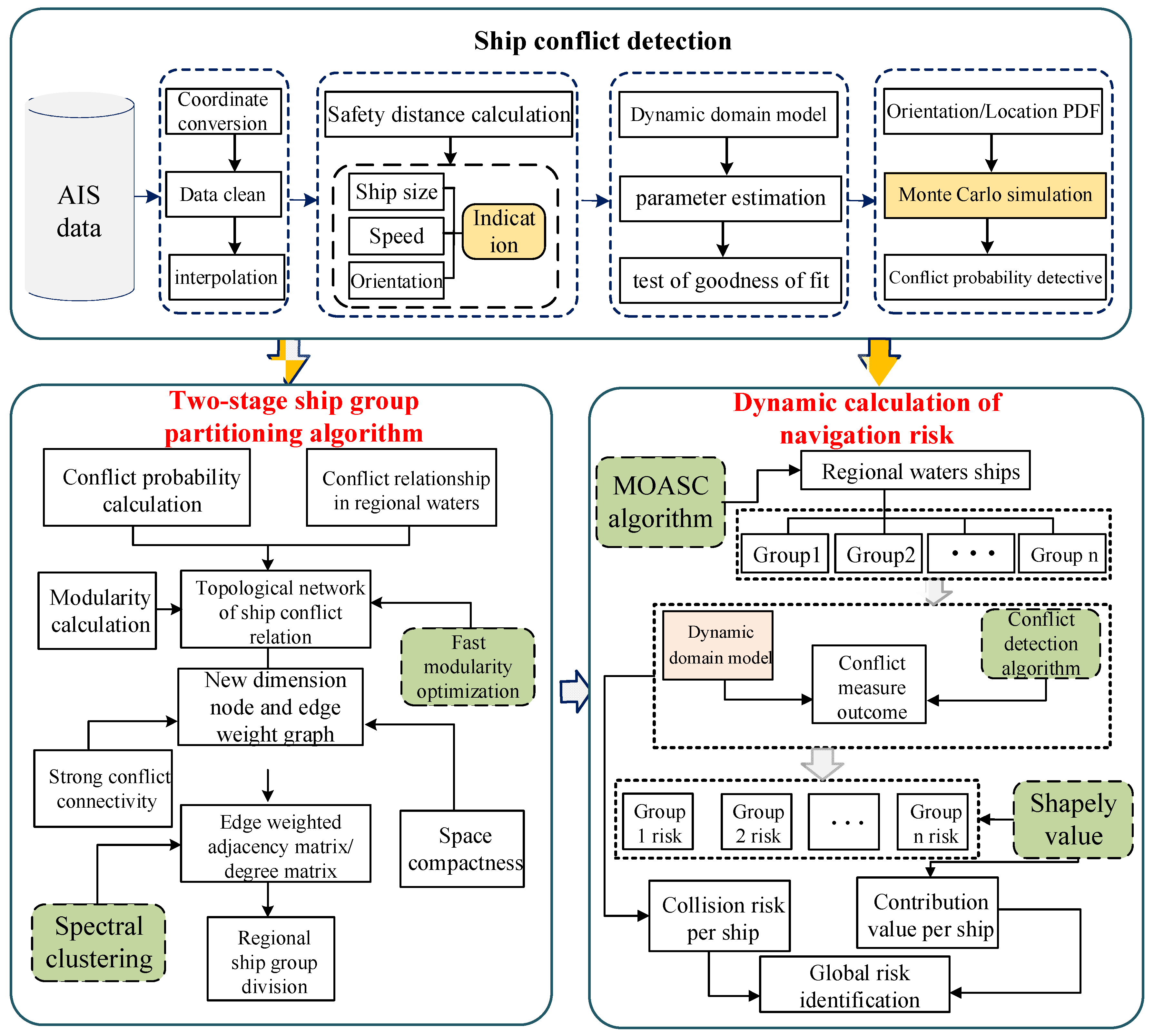
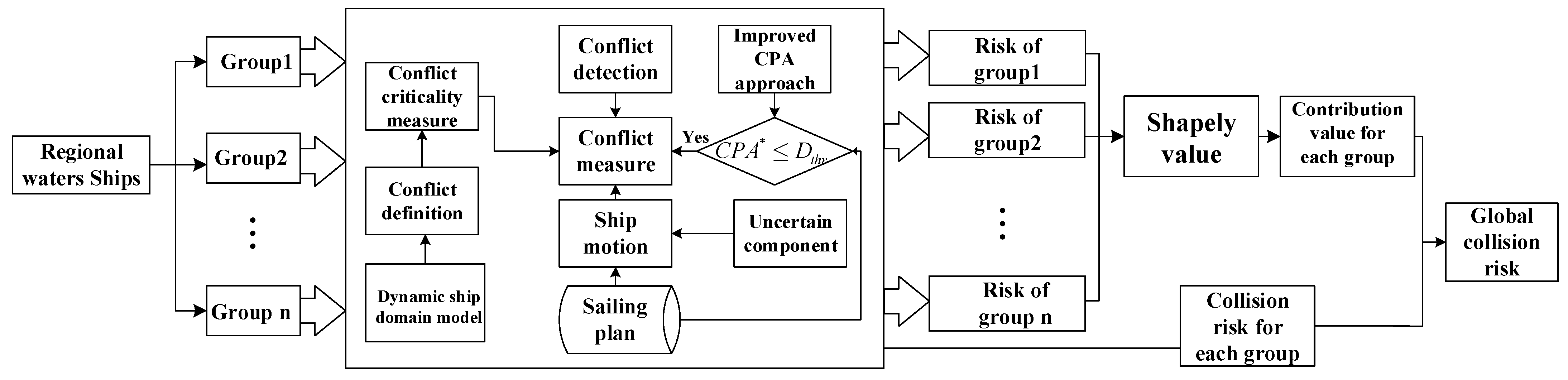
In this section, we systematically describe the dynamic calculation method of ship navigation risk. This method is divided into three interactive steps, each of which is associated with methods of high dependency (see Figure 1). Specifically, this step is achieved using a probabilistic conflict detection framework, which can accurately estimate the conflict criticality in the presence of ship motion dynamics and uncertainty. Secondly, we construct a ship group extraction method based on the conflict interaction between ships and define the ship set of navigation risk interaction. In addition, we realize the discretization of regional water risk assessment. Finally, the key influential ships in the regional traffic situation are identified. The critical supporting techniques in each step are elaborated in the subsequent subsections to demonstrate the logical flow of the methodology.
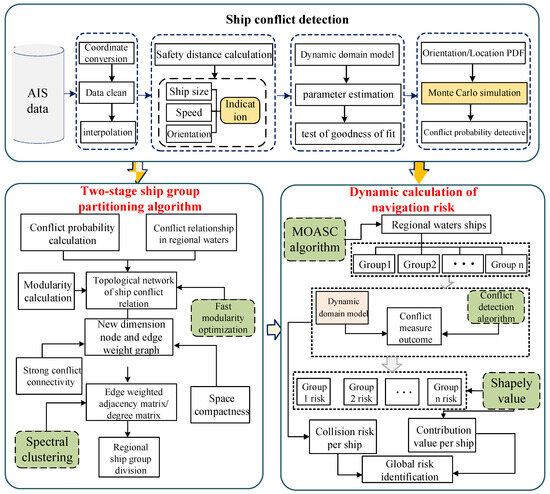
Figure 1.
Framework of this paper.
3.1. Probabilistic Conflict Detection
The conflict detection (CD) approach is first developed from a probabilistic risk viewpoint in which the influence of uncertainty related to various sources on the potential conflict is considered. It is designed to quantify the conflict criticality between ship pairs and provide essential functionality for extracting ship groups. The probabilistic CD approach is characterized by a conflict criticality measure and conflict probability estimation.
3.1.1. Conflict Criticality Measure
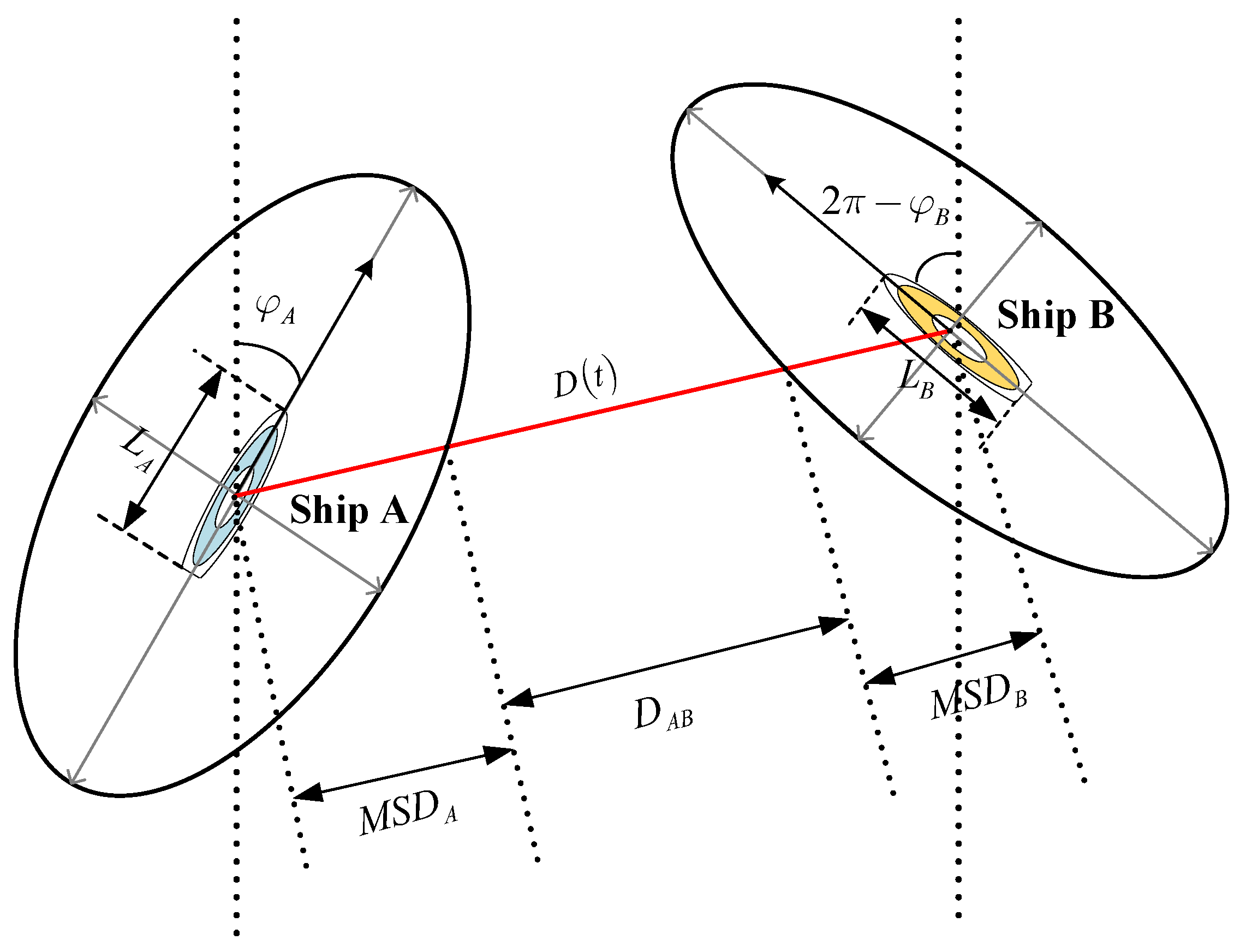
A conflict occurs when the predicted trajectories of two ships violate the specified separation distance. The paper defines ship conflict based on the MSD model [39]. The method of conflict identification is shown in Figure 2. If the sum of the MSD of the two ships and the distance between the two ships within the prediction time satisfy Formula (1), then ship A and ship B are considered to be in a conflict state:
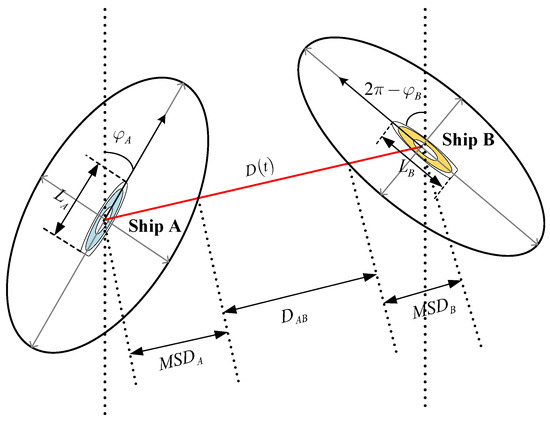
Figure 2.
Ship conflict illustration.
Where D(t) is the distance between the two ships, and represent the distances between the ship centers and their dynamic domain boundaries, respectively. Because we focus on identifying ship conflicts with ship motion uncertainty, inequality (1) is a probabilistic issue.
Given that the PDF for the unsafe separation (i.e., ) between the two ships at time t is denoted as , the instantaneous occurrence probability of a conflict is expressed as Formula (2):
where L(t) equals .
The maximum conflict probability within the predicted range is used to measure the severity of the conflict as shown in Formula (3):
3.1.2. Conflict Probability Estimation
The probabilistic CD is based on the prediction of ship trajectories with uncertainty. Therefore, considering the ship motion model with uncertain mode of ship heading and ship position, we use the Monte Carlo simulation algorithm which can accurately calculate the conflict probability to extend CD to the probability framework.
The initial position of the two ships is determined, but the ship is affected by many uncertain factors, such as the pilot’s maneuver and intention, wind and waves, mechanical failure, and so on. Considering the fluctuation of the ship’s trajectory, the equation of the ship’s motion is expressed as Formulas (4) and (5):
Among them, and are the heading angles of and , respectively. and are the errors of the ship’s predicted position. and are the error covariance matrixes related to trajectory uncertainty.
The probability of ship conflict depends on the relative motion between ships. The distance between ships at any time, that is, the relative position, can be expressed as Formula (6):
Among the top Formulas (7)–(9):
The dynamic domain boundary between ships has a significant influence on the severity of the conflict. The Formulas (10) and (11) are used to calculate the dynamic domain boundary distance of the ship in all directions at a certain time.
where are the predicted speeds of ships A and B at t time, respectively, and are assumed to be zero-mean Gaussian distribution. and represent the predicted relative position of the target ship relative to the own ship at time t.
Under the influence of various uncertain factors, the ship’s course will change (affecting the relative orientation between ships), thereby affecting the MSD. The uncertainty component of the course prediction is taken into account and is described as Formula (12):
represents the course prediction error component of the ship at time t.
In [40], the uncertainty distribution PDF of the ship’s course and position extracted based on the AIS data drive is used as the assumption of the uncertainty component of this article. It uses Kernel Density Estimation (KDE), a non-parametric estimation method, to identify the uncertain components of the PDF of a data set via the Formula (13):
Among them, is the kernel function with bandwidth h that satisfies and , and represents the number of elements in the data set within the bandwidth h.
Note that in the inequality and are functions of the position and heading prediction error components. Therefore, whether the equation is established as a probabilistic event, its occurrence probability needs to be determined by a probability-based calculation method.
Conflict probability calculation is an important part of probabilistic conflict detection in a practical environment. In this paper, Monte Carlo simulation is used to solve the problem. For Monte Carlo simulation, in the sampling iteration loop, N groups of random variable samples are generated according to the probability density function of the given random variable, and then each group of samples is inserted into the conflict quantization model to obtain a deterministic solution of whether there is a conflict. Further, an approximate result estimate can be obtained by using the set of all the sample deterministic solutions. That is the probability of conflict. The N value in the sampling iteration loop determines the accuracy of the approximate solution.
In general, in a limited time range, the collision probability of encountering ships tends to show a peak at some time periods and is relatively small in other time periods. Given that only the maximum conflict probability in the predicted time range needs to be accurately estimated, the time points with a high conflict probability can be roughly extracted before a large number of iterations are performed. Based on this principle, a two-stage Monte Carlo simulation algorithm is constructed to estimate the conflict severity effectively. At the same time, in order to determine how many iterations (N) are sufficient to guarantee the desired estimation accuracy, the Hoefffing inequality [40] is adopted to describe the relationship between N and approximation accuracy, as shown in Formula (14):
where ε represents the accuracy, 1 − δ represents the confidence, and a and b represent the lower and upper limits of the estimate. This inequality shows that for a finite number of iterations N, Monte Carlo simulation can ensure that the accuracy reaches ε with a confidence of 1 − δ. In this study, the prediction accuracy was designed to be 1% in order to provide accurate conflict warning for practical applications. It takes a total of 15,000 iterations with a confidence of 1–2 × 10⁻³ to achieve this accuracy. Algorithm 1 provides a detailed pseudo-code for a two-stage Monte Carlo simulation algorithm.
| Algorithm 1: MC simulation algorithm |
| Input: Probability density function of random variable at different time, Sampling frequency, Forecast time frame T Output: 1: Function Return 2: 3: //The moment with high probability of conflict is extracted from ship A 4: For do 5: Generate a random sample vector of position/course for each ship 6: For to do 7: 8: 9: Call function to calculate based on random sample vector 10: if then 11: 12: End if 13: 14: End for 15: |
3.2. Ship Group Extraction
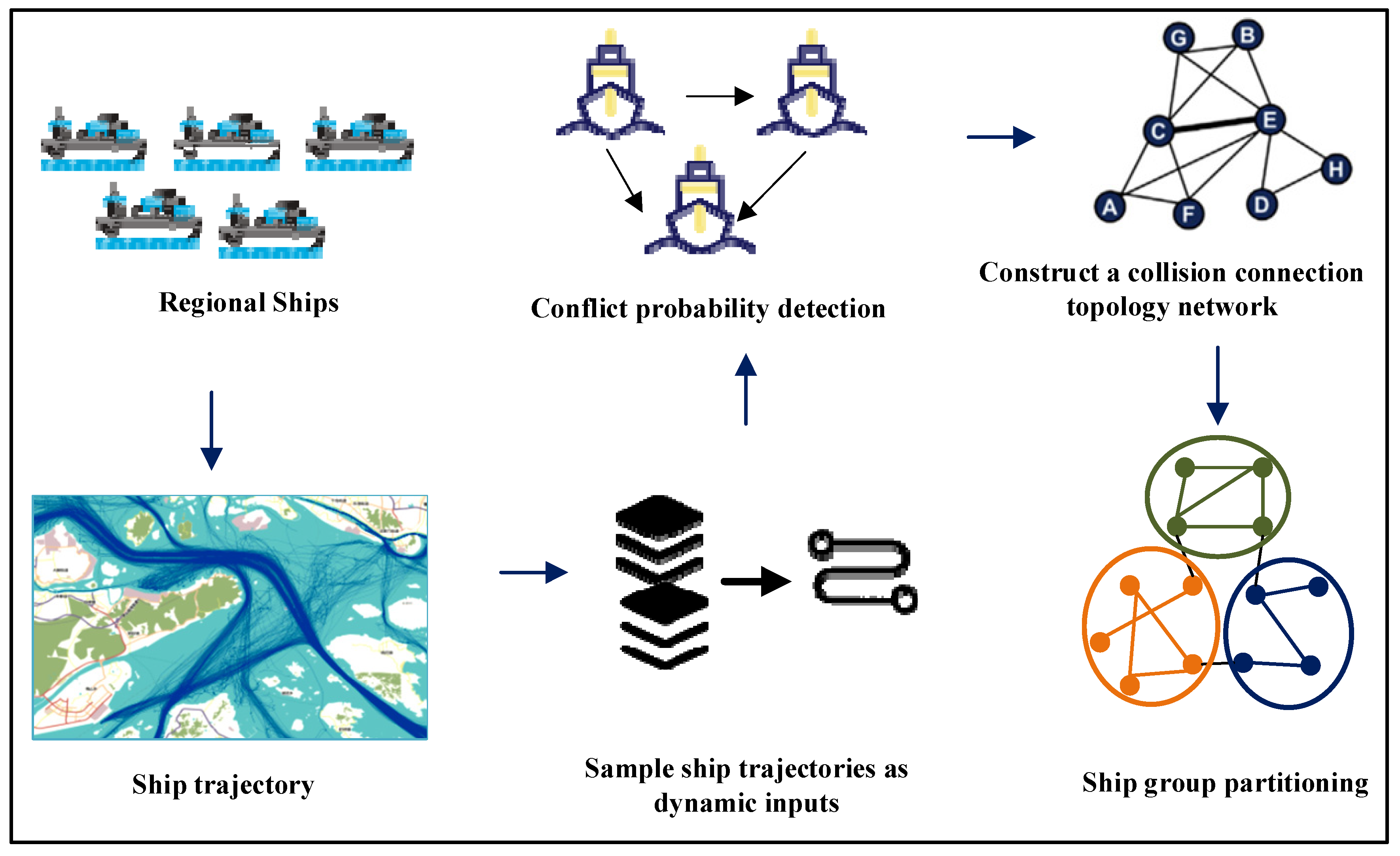
The framework for grouping regional ships is shown in Figure 3. First, the method proposed in Section 3.1 is used to detect conflicts between the ships in the core port area of Ningbo-Zhoushan Port. Secondly, a ship topology network is generated based on the conflict relationship between the ships. Then, coupled fast modularity optimization and spectral clustering (FMOASC) algorithms are used to group the regional ships.
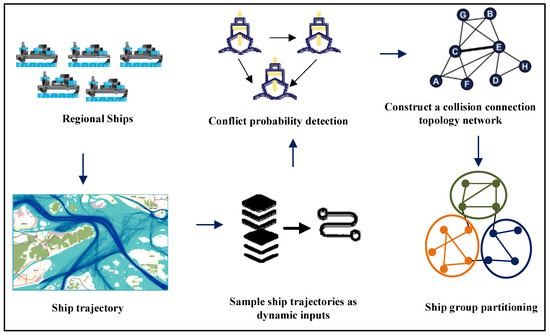
Figure 3.
Ship group division framework.
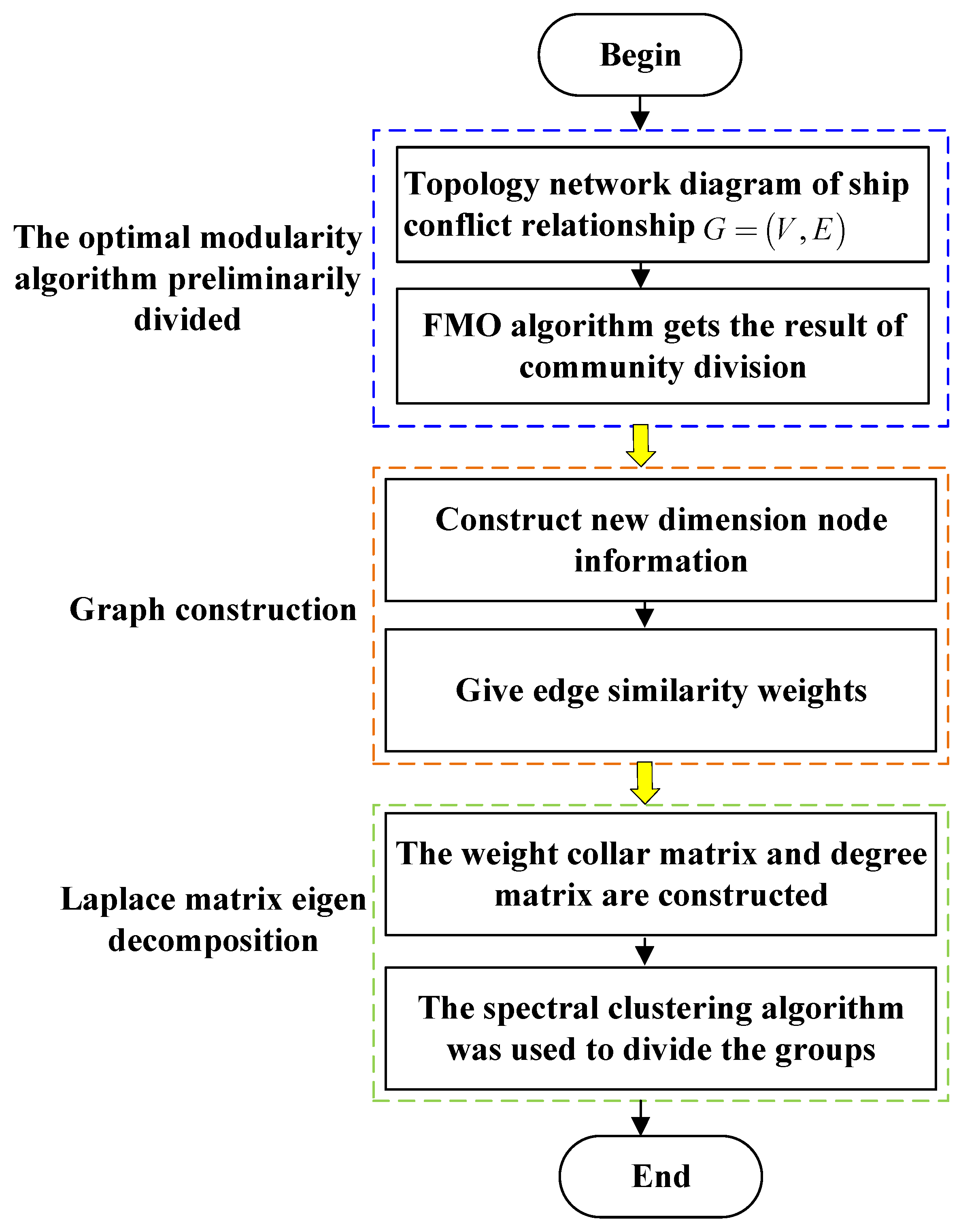
The implementation of FMOASC includes the following three steps: solving the optimal modularity, constructing the new dimension information graph of node and edge relationship, and extracting the features of Laplacian matrix and clustering, as shown in Figure 4:
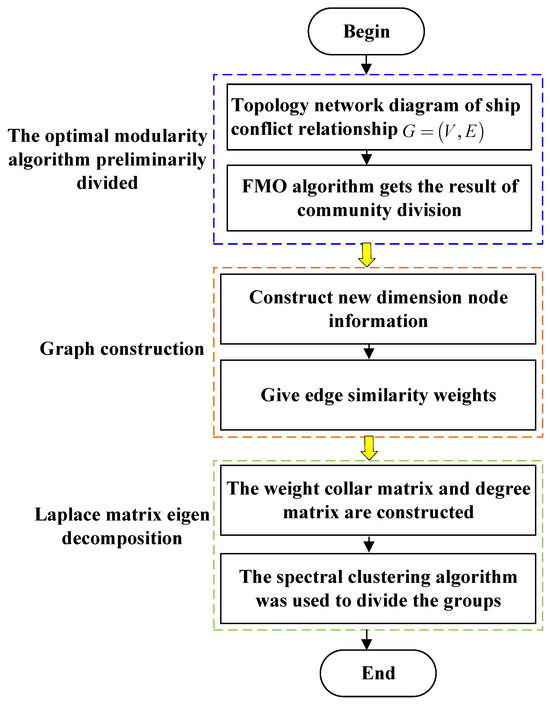
Figure 4.
FMOASC algorithm.
3.2.1. Preliminary Group Partition Based on FMO Algorithm
One of the principles of regional ship grouping is to find the ship combination with a strong conflict connection within the group and a relatively weak connection between different groups of ships. Based on the conflict connection relationship between the ships, the FMO algorithm is used to divide the regional ships into sub-communities. The preliminary division of the ship group is more concerned with the conflict connection between the ships, so grouping across spatial distances may occur.
Modularity is a strength index to measure the division of a network into sub-communities, which can be used to evaluate the division of communities. The calculation method of modularity is as shown in Formula (15):
where represents the edge weight between nodes and , is the sum of the edge weights attached to node , represents the community to which node is divided, is the sum of the edge weights in the network, and is defined as a simple incremental function as Formula (16):
In the regional ship undirected weighted graph , taking the ship as the node, as the node set, and as the ship node, the ship with conflict relationship is connected, is the edge set, , is the conflict relation edge, and the weight is the conflict probability value.
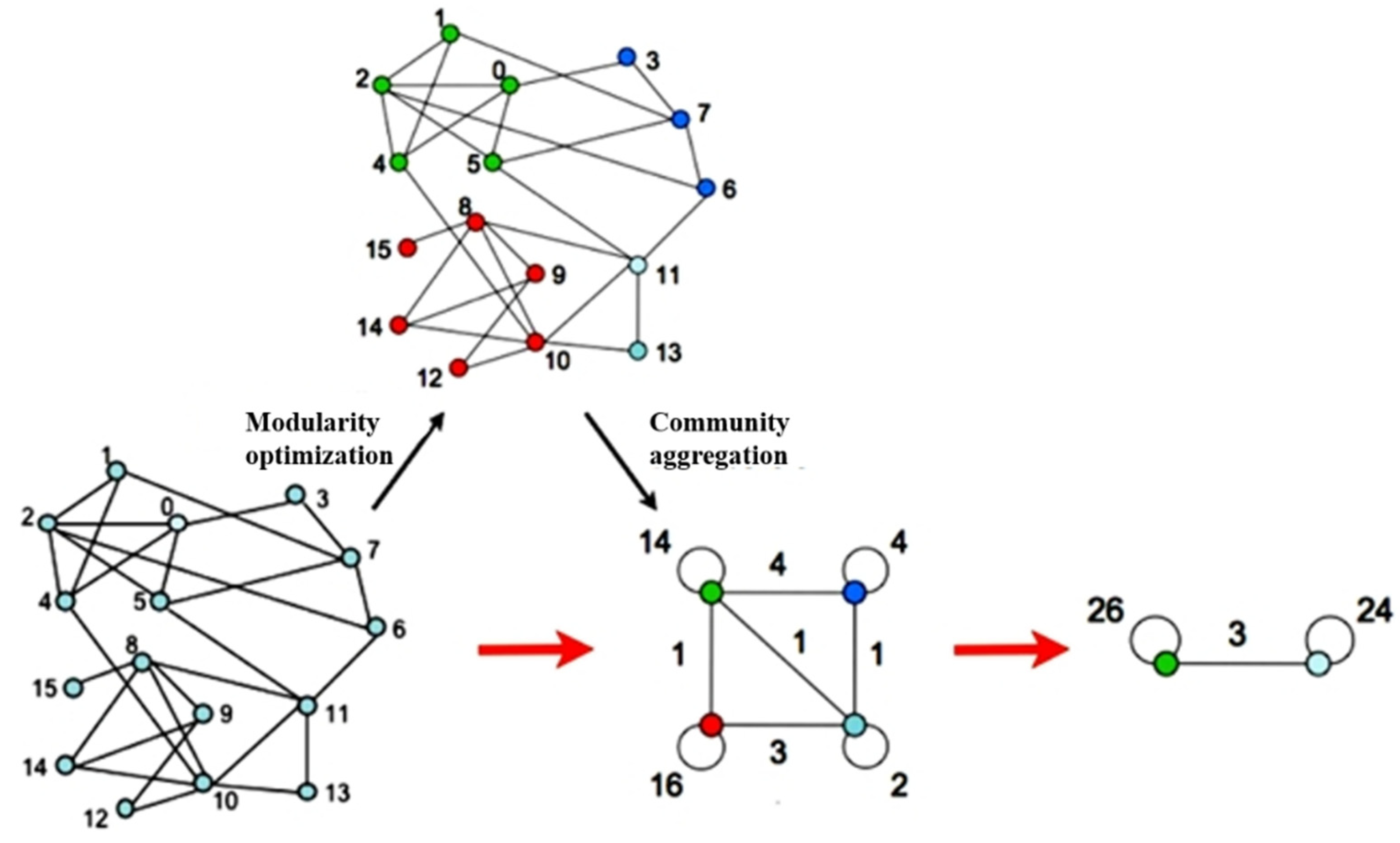
FMO can find the highly modular division of the network in a short time and show a complete hierarchical community structure. It is a bottom-up greedy optimization algorithm based on modularity maximization. Starting from each node as a community, the algorithm merges the neighboring communities in turn, calculates the modularity change , and continuously merges the communities along the direction of the maximum increase in modularity until the result of community division corresponding to the maximum modularity is obtained. The iterative process is shown in Figure 5.
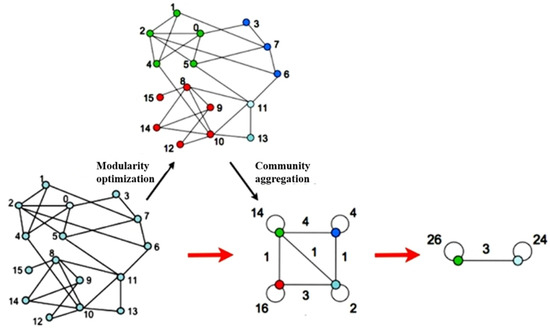
Figure 5.
Visual diagram of FMO algorithm iteration.
The modularity gain gained by moving the orphaned nodes to the community can be calculated by the following Formula (17):
Among them, is the sum of the weights of the connected edges in the community C, is the sum of the weights of the connections associated with the node in C, is the sum of the weights of the connections associated with the node , is the sum of the weights of the connected edges from the node to the nodes in C, and is the sum of the weights of all the connection relations in the network. When a node is removed from its community, expressions are used to evaluate the change in modularity.
Through the preliminary division of regional ships through the FMO algorithm, sub-communities based on the conflict connection relationships between ship nodes can be obtained. It is the basis for the subsequent optimal division using the SC algorithm, and the basis for constructing new dimensional information on the connection relationships between ships.
3.2.2. Optimal Group Partition Based on Spectral Clustering
Based on the preliminary grouping results of FMO, combined with the goal of conflict connectivity and spatial compactness, a new dimension of information is constructed to represent the edge weight between ship nodes. The function representation of the edge weight between ships is constructed according to the probability of conflict between ships and the spatial distance. The new dimension information graph is represented as , where is the node set, is the node, is the edge set, and is the edge of the graph.
In the second stage of group division, the grouping results obtained by the FMO algorithm need to be fine-tuned. The more important goal of this stage is to consider the influence of ship spatial distance on the basis of conflict relations. Therefore, it is necessary to weaken the influence of conflict connections between ships and obtain spatially compact grouping results. Based on the influence of weakening the conflict connection relationship, the distance between ships , the collision probability between ships, and the preliminary division group label are obtained, and the similarity feature vector is proposed, where is the group tag obtained based on the FMO algorithm. The calculation of is as shown in Formula (18):
Next, standardize each feature vector, that is, .
Among them, represents the standardized eigenvalues corresponding to each eigenvector; and are the eigenvalues and the average values of eigenvalues corresponding to each eigenvector, respectively; and is the standard deviation of the corresponding eigenvalues of all the eigenvectors. The Euclidean distance corresponding to the normalized feature vector between all the nodes is , and the edge weight is , where is the standard deviation of .
Through the feature extraction and decomposition of the Laplacian matrix L (the calculation formula is L = D − W. W is the adjacency matrix which represents the adjacency relationship between nodes. D is the degree matrix, and the concept of degree indicates how many edges of a node are connected to it) and K-means clustering, the optimal division result of ship group is obtained.
3.2.3. Group Quantity Adjustment Indicator
Using the FMOASC algorithm to divide the ship groups can obtain schemes with different numbers of groups. In order to select the ship group division scheme with excellent performance in terms of modularity and the number of noise points, an index I for the comprehensive evaluation of these two important considerations is introduced. The modularity and the number of noise points of each grouping scheme are used as the evaluation parameters, and the weighted normalization formula is used for calculation, as shown in Formulas (19)–(21):
Among them, and are the modularity and the number of noise points corresponding to the ship grouping scheme, respectively; and are the modularity and the number of noise points after normalization, respectively; and , are the weights corresponding to the modularity and the number of noise points, respectively.
By comparing the indicators under different grouping schemes, the number of ship groups is selected, and a balanced result in terms of modularity and the number of noise points is obtained.
3.3. Dynamic Calculation of Ship Navigation Risk
In order to identify the navigation risks of ships in different local waters and regions in complex navigable waters, explore the evolution law of ship navigation risks, and assist maritime regulatory authorities in tracking potential high-risk ships and grasping local high-risk waters, this section carries out the following work based on the ship conflict probability detection and the extraction of ship groups from the perspective of water navigation management: first, the problem of ship navigation risk assessment is described, and the framework of global risk assessment is explained; secondly, the Shapley value method based on the cooperative game is introduced to identify the contribution of each ship in a multi-ship encounter situation; and finally, the navigation risks of single ships, different local waters, and regions are quantified, and the navigation risks of the research waters are visualized using data visualization technology. This will help maritime regulatory authorities to have a more comprehensive understanding of real-time collision risks, effectively grasp the risks and traffic complexity of different local waters and regions, and thus have a deeper understanding of ship navigation risks, providing guidance for the formulation of risk mitigation measures.
3.3.1. Risk Assessment Framework
The ship navigation risk system is composed of a set of all the ships sailing in the research waters at a certain time, as shown in Figure 6. For example, if there are n ships in the system, the system can be represented by a graph , where S is a set of ships, represented as , and the elements in the set are each ship, where the edge set is , which represents the conflict relationship between the ships, and the edge weight is the conflict probability value between the ships. The conflict probability of ship and ship at time t is represented by only when there is a conflict between and at time t, , that is, when and only when , .
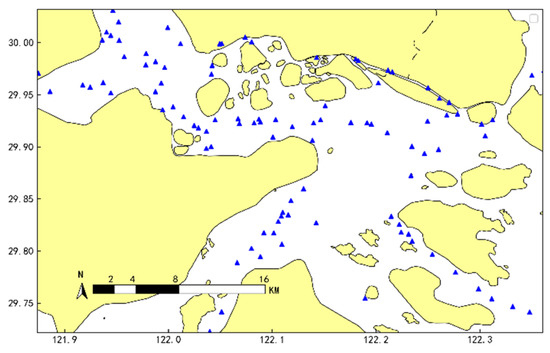
Figure 6.
Ship system diagram.
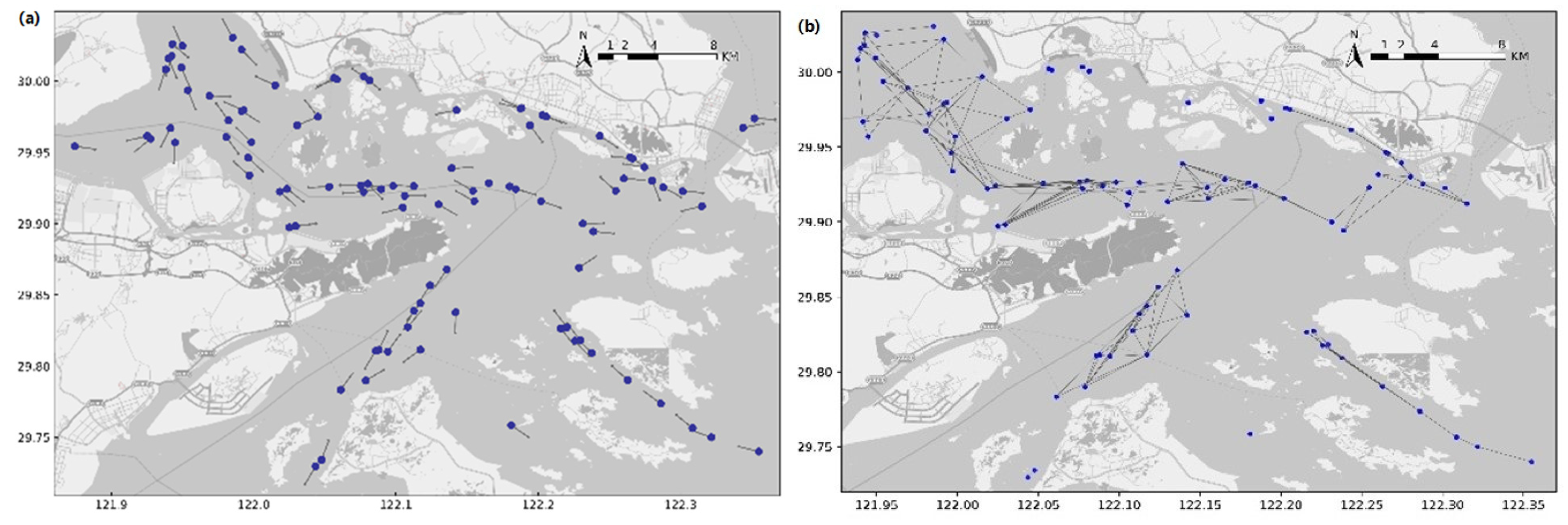
Figure 7a,b are the spatial position distribution and conflict connection relationship diagrams of ships at a certain moment. Combining Figure 7a,b, we can see that at a certain moment, there is no connection between the ships that are far away or even close but have a tendency to move away from each other. Therefore, the ship system graph is not connected but is divided into several subgraphs. Assume is a connected subgraph of , a subgraph (that is, a ship group divided according to the FMOASC algorithm) is a subset (subsystem) of the ship system, and m is the number of subsystems. The relationship between the ship navigation risk system and subsystems in the study waters is . For any two subgraphs and , there exists .
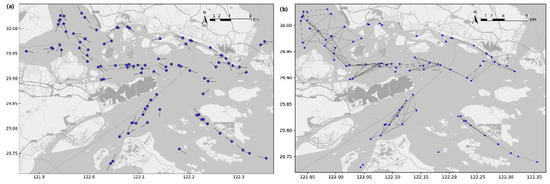
Figure 7.
Ship position distribution and conflict connection diagram: (a) spatial position distribution and heading; (b) ship conflict connection.
The collision risk of the kth (represents the KTH ship subsystem in a ship system, where k is a positive integer) subsystem is represented by . For any pair of ships with a non-zero collision probability, the risk of the subsystem in which they are located will be affected by the collision probability between them, which in turn affects the system risk of the regional ship composition. This paper will model as the function of , that is , where and .
3.3.2. Global Risk Assessment
The process of evaluating global collision risk is shown in Figure 8:
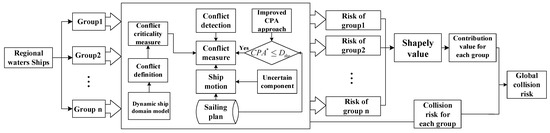
Figure 8.
Global collision risk assessment process. (where, CPA* represents the nearest encounter point calculated in the case of turning point considered in this paper).
It is assumed that the global collision risk of a multi-ship encounter is composed of the collision risk of each ship in the situation. However, due to the different encounter types and collision avoidance maneuvers between different ships, the contribution of each ship to the global collision risk will also be different. Based on the above assumptions, the global collision risk (GCR) of a multi-ship encounter can be expressed by the following Formula (22):
Among them, and refer to the collision risk and contribution of the ship in the multi-ship encounter scenario, respectively.
In order to evaluate the global collision risk in multi-ship encounters, it is necessary to first determine the collision risk of each ship in the encounter and its contribution. For complex navigable waters with high ship density, a large number of ships will be in the same waters at the same time. The calculation of the global collision risk needs to traverse all the ships in the waters at the same time. Therefore, the calculation complexity is very large. In order to simplify the calculation, this paper adopts the ship group division method from the perspective of the water navigation management proposed in Section 3.2, divides the ships in the study waters into different ship groups, and then identifies the collision risk of each ship based on the ship conflict probability detection method proposed in Section 3.1. Subsequently, the Shapley value method in the cooperative game (to be introduced in the next subsection) is used to determine the contribution of each ship. The collision risk within the ship group is calculated according to Formula (22). On this basis, all the collision risks of the different ship groups are integrated through Formula (23) to obtain the Regional Collision Risk (RCR).
Among them, is the collision risk of each group, and is the contribution of each ship group.
3.3.3. Local/Regional Navigation Risk Quantification
The scope of the ship navigation risk events discussed is aimed at two or more ships; that is, at least two ships are the system objects of the ship navigation risk events. The navigation status of the ship can be obtained based on AIS data, and the probability of conflict between ships can be obtained using the ship conflict probability detection method proposed in Section 3.1. This degree of conflict is a measure of the severity of the conflict from the perspective of each ship. The forms of local and regional system risks are characterized by and , respectively.
3.3.4. Contribution Determination
The Shapley value method was proposed by Shapley L.S. in 1953 to solve the problem of the conflicts caused by the distribution of benefits among multiple participants in the process of cooperation. It is a solution method in the field of cooperative games. The Shapley value method represents the contribution of each participant to the entire group. A major advantage of applying the Shapley value is that the benefits are distributed according to the marginal contribution rate of the members to the combination. This solves the problem of benefit distribution because the method distributes the cooperation amount by estimating the contribution of each participant. This method is used to calculate the contribution of each ship to the navigation risk in multi-ship encounters. The general form of the Shapley value is as shown in Formula (24):
Among them, refers to the participants in the game, refers to the combination consisting of participants , refers to the number of participants in the combination , refers to the number of participants in the entire group, refers to the amount generated by the combination , refers to the amount generated by the combination before the participants join , and refers to the Shapley value corresponding to the participants .
When applying the Shapley value method, the multi-ship encounter is regarded as a cooperative game, each ship in the encounter scenario is regarded as a game subject, and its collision risk is regarded as the game amount. Ships can form different combinations through permutations and combinations. According to Formula (23), when calculating the Shapley value of each ship, it is first necessary to find the risk of each combination. The number of combinations is the sum of all the permutations of the encountering ships, expressed as Formula (25):
Among them, refers to the collision risk of the ship in an n-ship encounter.
Each ship’s contribution is calculated as follows:
- Find out all the ship combinations by arranging them.
- For each combination, the combined risk value is calculated by summing the risk of each ship according to Formula (24).
- Calculate the Shapley value of each ship according to Equation (23).
- Normalize the Shapley value to obtain the contribution degree of each ship to the global collision risk.
In addition to the vessels with a high risk of collision, VTS supervisors also need to focus on the vessels with a high Shapley value, which is essential for the control and management of global collision risk because the reduction in the collision risk of ships with a high Shapley value is conducive to the mitigation of global collision risk.
4. Applications and Case Study Results
In this section, we apply and evaluate the performance of the proposed dynamic calculation method for ship navigation risk. Section 4.1 presents the case study and the relevant AIS data. Section 4.2 presents the experimental results of ship probabilistic conflict detection. Section 4.3 presents the experimental analysis of the ship grouping method. Section 4.4 quantifies and statistically analyzes the navigation risk in different local waters.
4.1. Study Area and Data Description
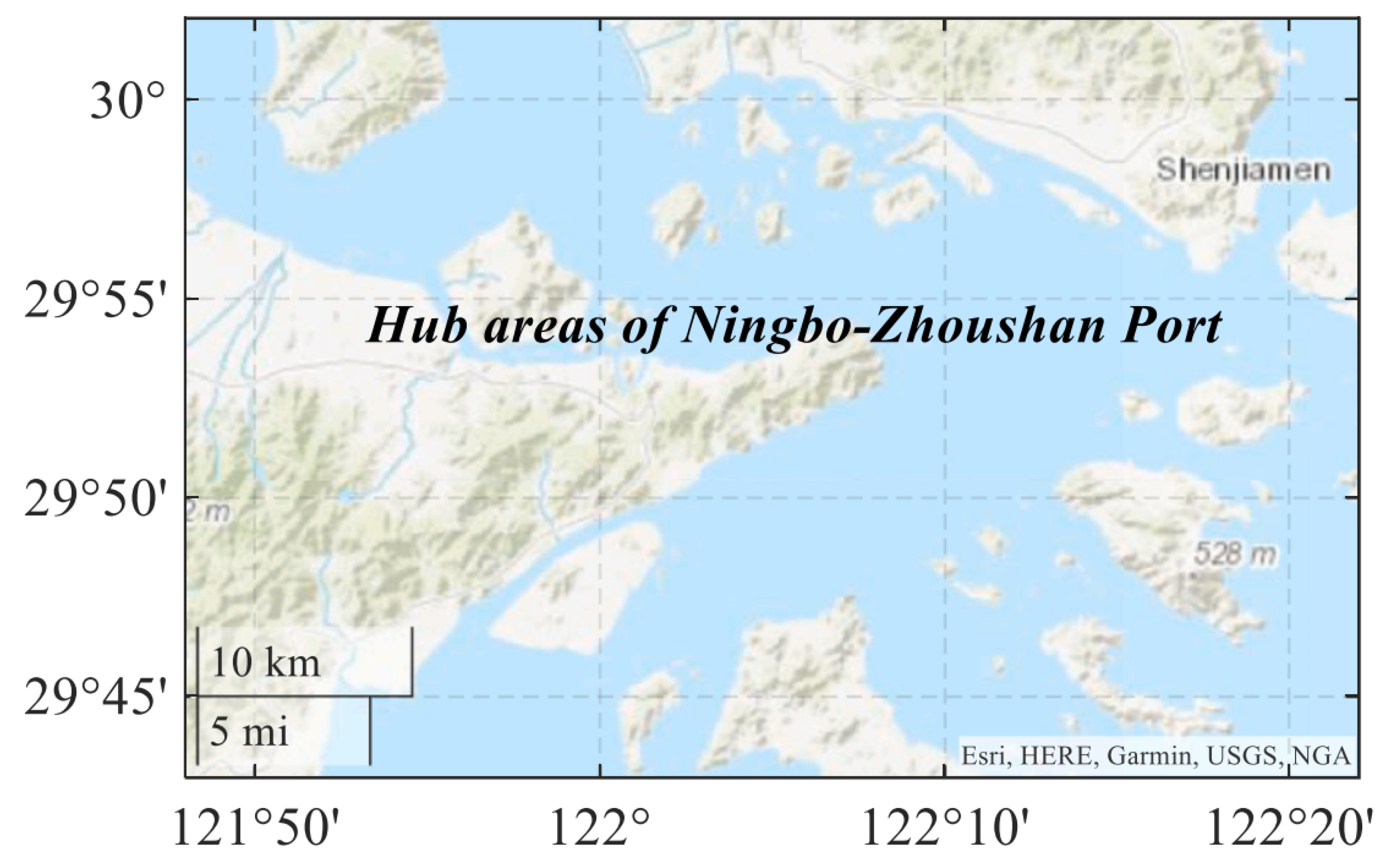
Ningbo-Zhoushan Port was selected as the experimental research area to test the dynamic calculation method of ship navigation risk proposed in this paper. In terms of cargo throughput, the port is the largest port in the world with high traffic density, limited navigable waters, and complex spatiotemporal uncertainty in ship movement. Therefore, the port is a representative of complex waters. AIS data for one month were collected from the port. The region for evaluation is bounded between the longitudes 122°06 E–122°16 E and latitudes 29°49 N–29°57 N (see Figure 9). Since ships such as fishing vessels, pilot boats, and tugboats often coexist to perform tasks and may not comply with conventional maritime safety rules, the experimental analysis used AIS data from general commercial ships including cargo ships and tankers. Although AIS provides a powerful and easily accessible data source for maritime traffic research, the collected data often have problems such as missing data or incorrect position and speed information due to various technical failures. Therefore, the AIS data preprocessing module is crucial to improve data quality. This study adopts a systematic preprocessing procedure to clean the data; in this way, we can remove possible noise and reconstruct clean and reliable trajectory data for the experimental analysis. In other words, this data-cleaning process is a prerequisite for real-time analysis.
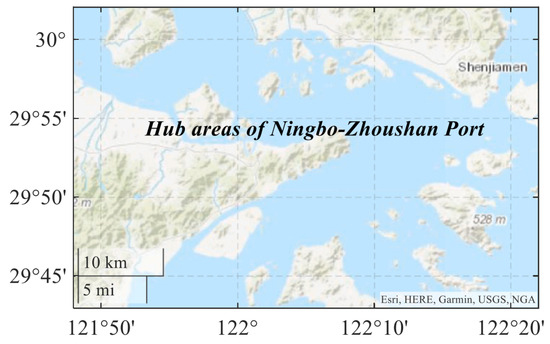
Figure 9.
Ningbo-Zhoushan Port, China.
4.2. Conflict Probability Detection Based on Ship Encounter Scenarios
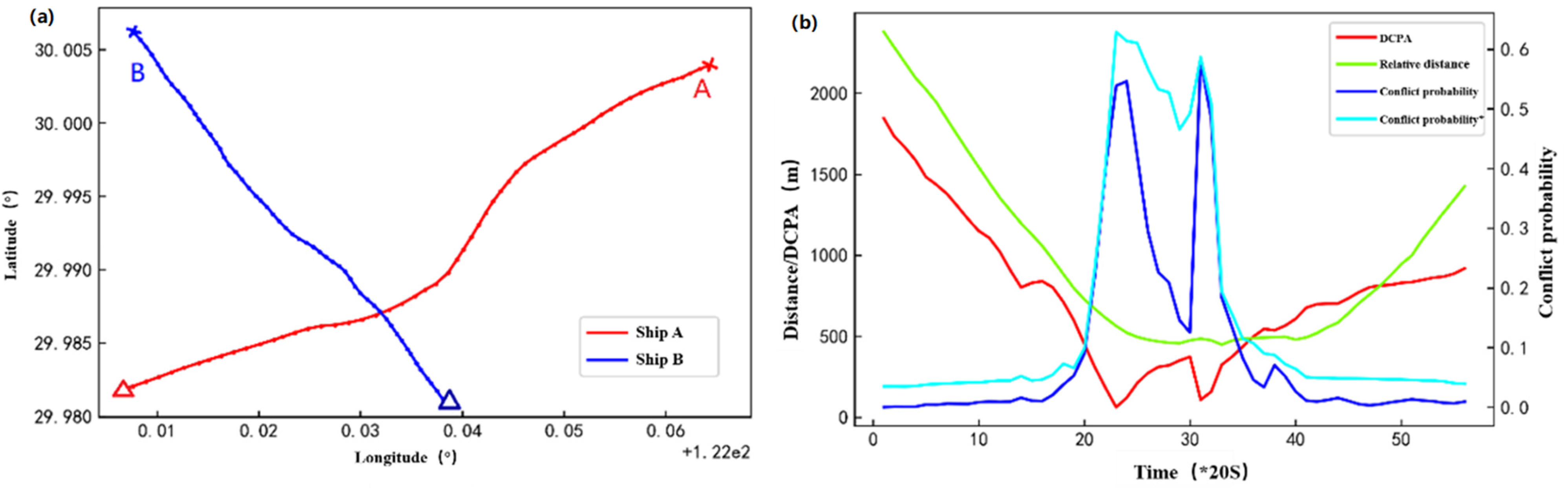
To test the performance of the proposed approach under the condition that the encountering ships have changeable spatiotemporal motion behaviors, a ship-pair encounter scenario derived from the historical data is presented (see Figure 10). The lines in Figure 10 are the trajectories of the ship pair involved in the encounter, where “x” marks the ships’ starting locations and “△” are their final locations. It can be seen that one ship basically sails linearly, while another one has a turning behavior during the encounter. The data of the ships at corresponding times are input into the conflict probability calculation model to obtain the ship conflict analysis diagram, as shown in Figure 10b.
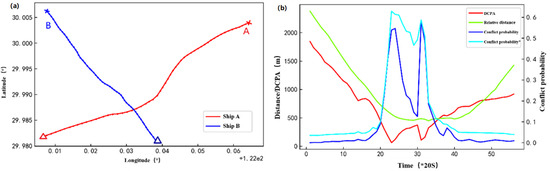
Figure 10.
Ship collision probability detection: (a) ship trajectory; (b) DCPA/relative distance and conflict probability.
Figure 10b shows the change in the conflict probability with and without considering the turning point in the encounter scenario (where the conflict probability * curve is the conflict probability detection result obtained based on the method proposed in this paper). Due to the turning behavior of ship A, DCPA has two troughs during the encounter. Figure 10b shows that without considering the turning point, the conflict probability value fluctuates greatly with the change in DCPA, which may confuse the marine navigator when identifying the collision risk. Obviously, conflict identification without considering the turning point becomes invalid in this encounter scenario. This is because DCPA assumes that the ship sails linearly without changing its heading and speed. Therefore, traditional collision risk assessment methods based on DCPA may provide false alarms, hindering their application in highly dynamic traffic environments.
In addition, it can be noted from Figure 10b that due to the turning behavior, the traditional risk detection method will fluctuate due to the decrease in DCPA even when ships tend to move away from each other, while the method proposed in this paper can detect risks stably. When two ships are approaching, the probability of conflict increases and reaches a high level because of the potential conflict caused by the uncertainty inherent in the space–time movement of ships. Therefore, the proposed collision detection method can detect potential conflicts in advance by considering the dynamic and uncertain characteristics of ship motion, so as to provide accurate and timely collision warning.
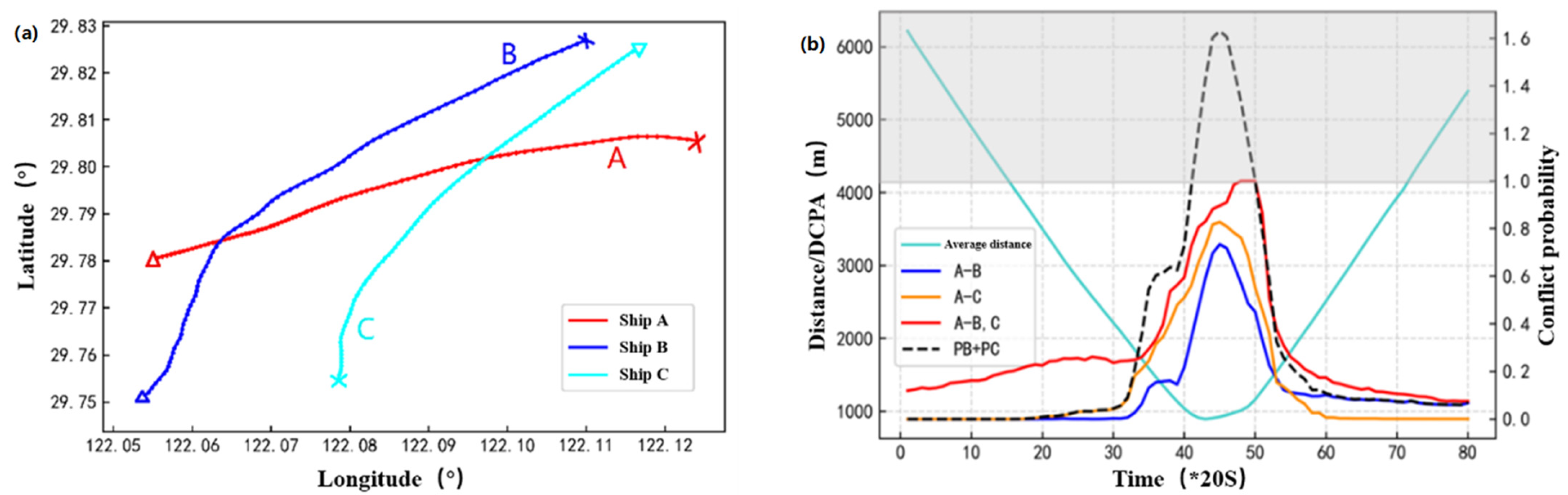
In order to further verify the effectiveness of the proposed conflict probability detection method in multi-ship encounter scenarios, a three-ship encounter scenario extracted from real AIS data was selected for the experiment. The ship navigation trajectory is shown in Figure 11a. This paper measures the distance between multiple ships using the average ship spacing, as shown in Formula (26):
where is the distance between ship and ship . The change in conflict probability and average distance over time in the multi-ship encounter scenario is shown in Figure 11b. The red curve is the total value of ship A and the other two ships in the multi-ship encounter scenario, and the blue curve and orange curve represent the conflict probability values and of ship A and ship B and ship A and ship C, respectively. The dotted line is the sum. It can be observed that the total value is higher than that of any single target ship. This finding is consistent with the general understanding of collision risk; that is, ships participating in multi-ship encounters usually face greater risks than two-ship encounters. It can be seen from Figure 11b that the average distance between the ships is negatively correlated with the conflict probability. In addition, by comparing the red curve and the black dotted line, it is found that the total value of ship A with ship B and ship C is not the sum of it and each target ship. Therefore, the proposed conflict probability detection method can not only detect the conflict probability of the ship when multiple ships encounter, but also provide the probability of the occurrence of multi-ship conflicts.
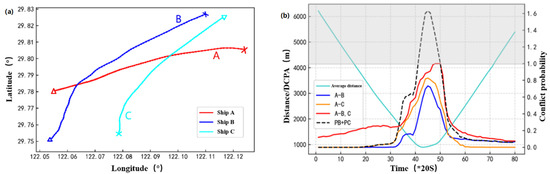
Figure 11.
Multi-ship collision probability detection: (a) ship trajectory; (b) DCPA/relative distance and conflict probability.
The conflict probability provides a criticality measure that can be used to distinguish between the conflicts that can be ignored (below the conflict probability detection standard threshold) and the conflicts that need to be avoided (above the conflict detection standard threshold). In addition, the conflict probability can also be used to determine the priority of conflict resolution.
4.3. Ship Grouping Experiment
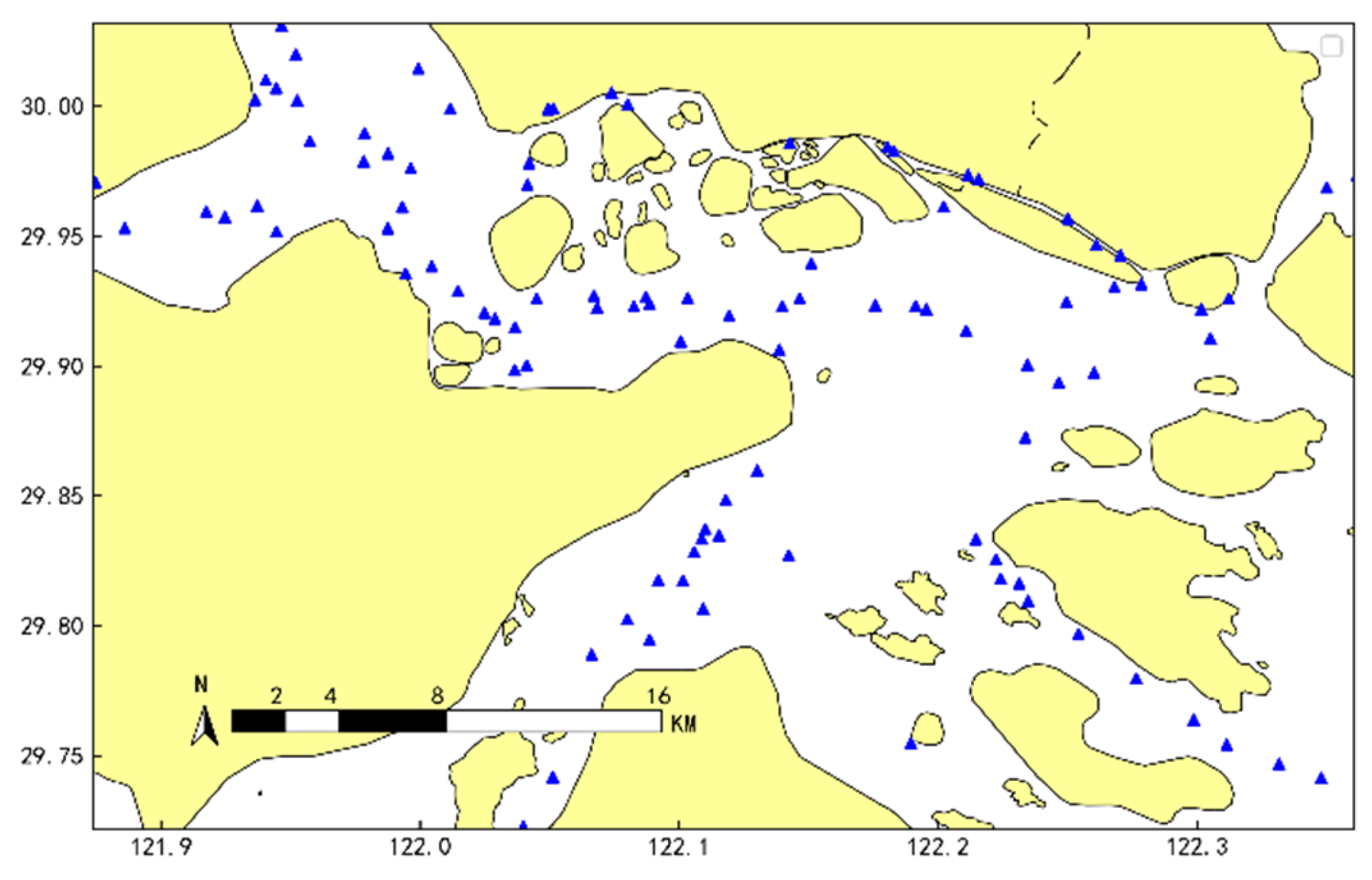
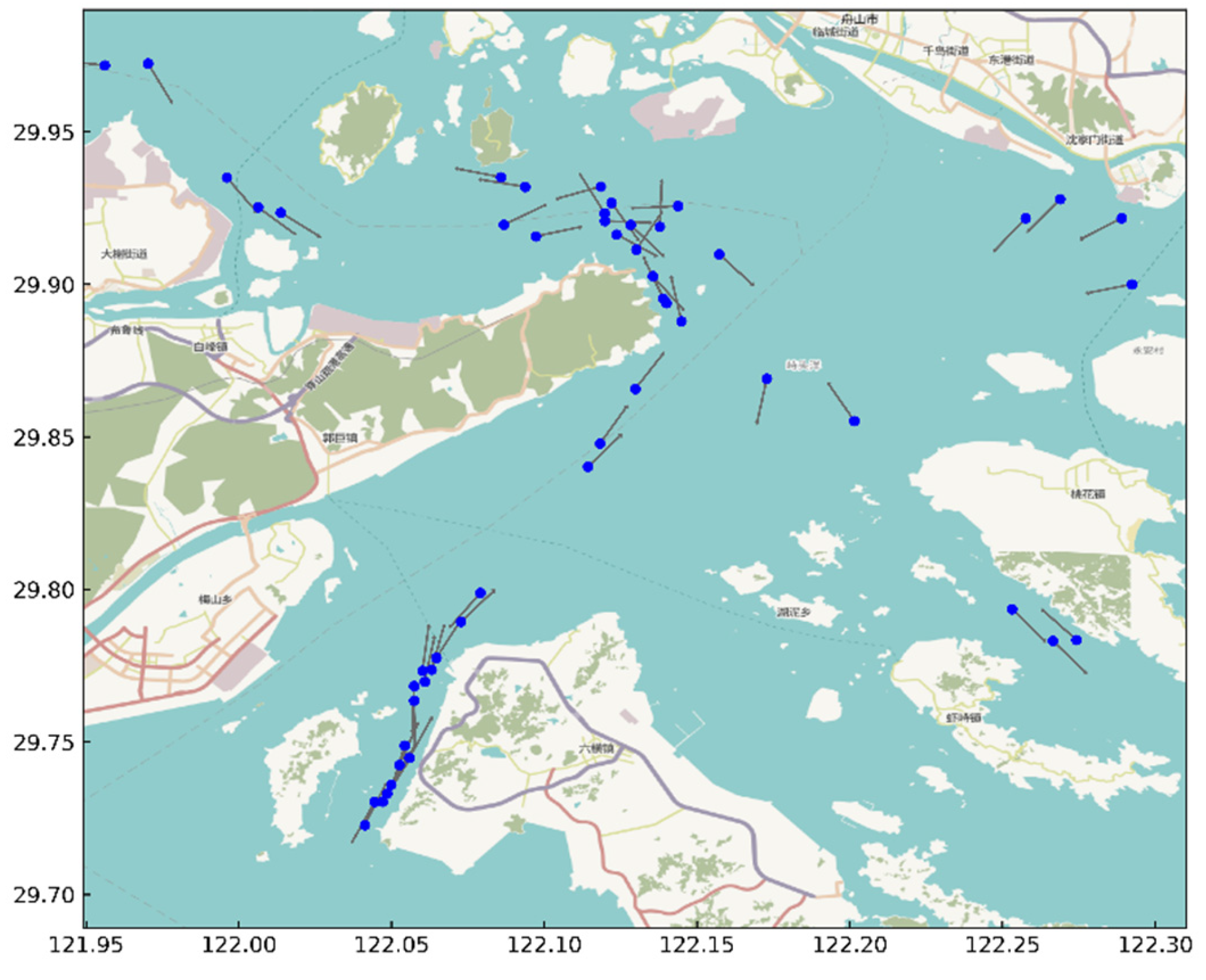
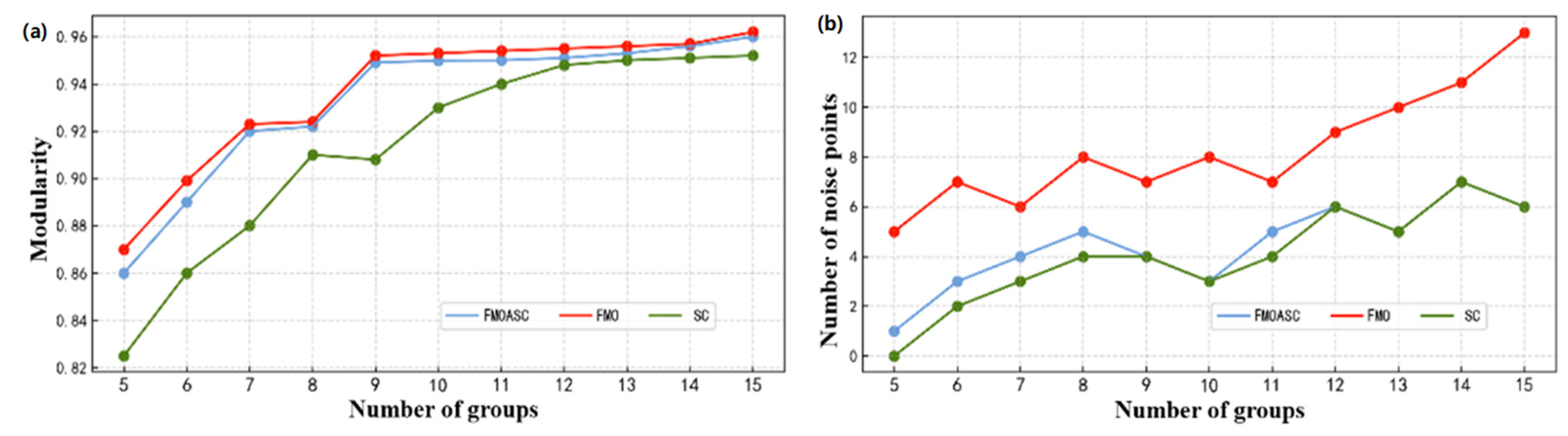
The ships in the research waters at a certain moment (as shown in Figure 12) were grouped using the FMO, SC, and FMOASC algorithms, and a comparative experiment was conducted using modularity and the number of noise points as grouping indicators. FMOASC was used as the experimental group, and FMO and SC were used as the control group. The results are shown in Figure 13.
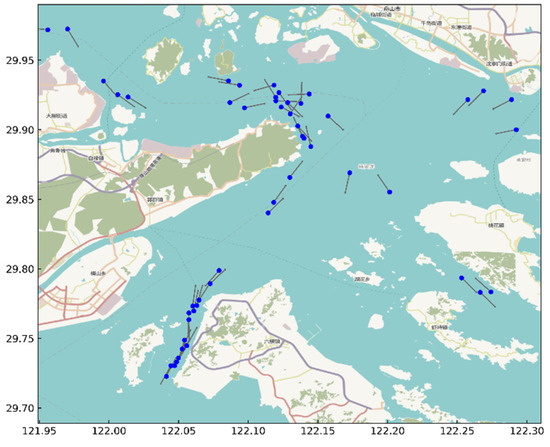
Figure 12.
Spatial distribution of ships at a certain time.
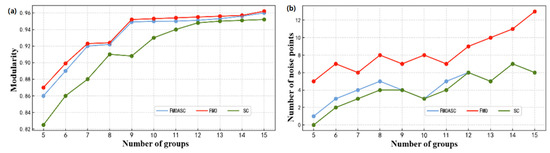
Figure 13.
Comparison of experimental results: (a) modularity; (b) number of noise points.
As can be seen from Figure 13a, in terms of the modularity index, the results of the FMO and SC algorithms are quite different, especially when the number of groups is small. Overall, the modularity of SC is also lower than that of FMO. The FMOASC algorithm proposed in this paper combines the advantages of both the FMO and SC algorithms, so the modularity of the FMOASC algorithm can be maintained at a high level. From the curve corresponding to the FMOASC algorithm, it can be seen that since the algorithm comprehensively considers the topological connection relationship and spatial characteristics of ship conflicts, as the number of groups decreases, the modularity of the FMOASC algorithm decreases significantly slower than that of the SC algorithm, indicating that the loss value of the modularity of the algorithm will not be large when the number of groups is small. The modularity value of FMOASC becomes closer and closer to that of FMO as the number of groups increases until it almost completely overlaps. Therefore, the modularity of the grouping results obtained by the FMOASC algorithm proposed in this paper is high, which can achieve the effect of division with close connections within the group and sparse connections between groups.
It can be seen from Figure 13b that the number of noise points of the SC algorithm is significantly lower than that of the FMO, while the number of noise points obtained by the FMOASC algorithm proposed in this paper is very close to that of the SC algorithm. As the number of groups increases, especially when the number of groups is 10 or more, the noise point number curves of FMOASC and SC almost overlap, so the number of noise points obtained by FMOASC is small. FMOASC combines the FMO and SC algorithms to divide the ship groups. The algorithm integrates the advantages of the two algorithms, which can not only maintain a high modularity, but also minimize the number of noise points, and has a balanced performance in modularity and the number of noise points.
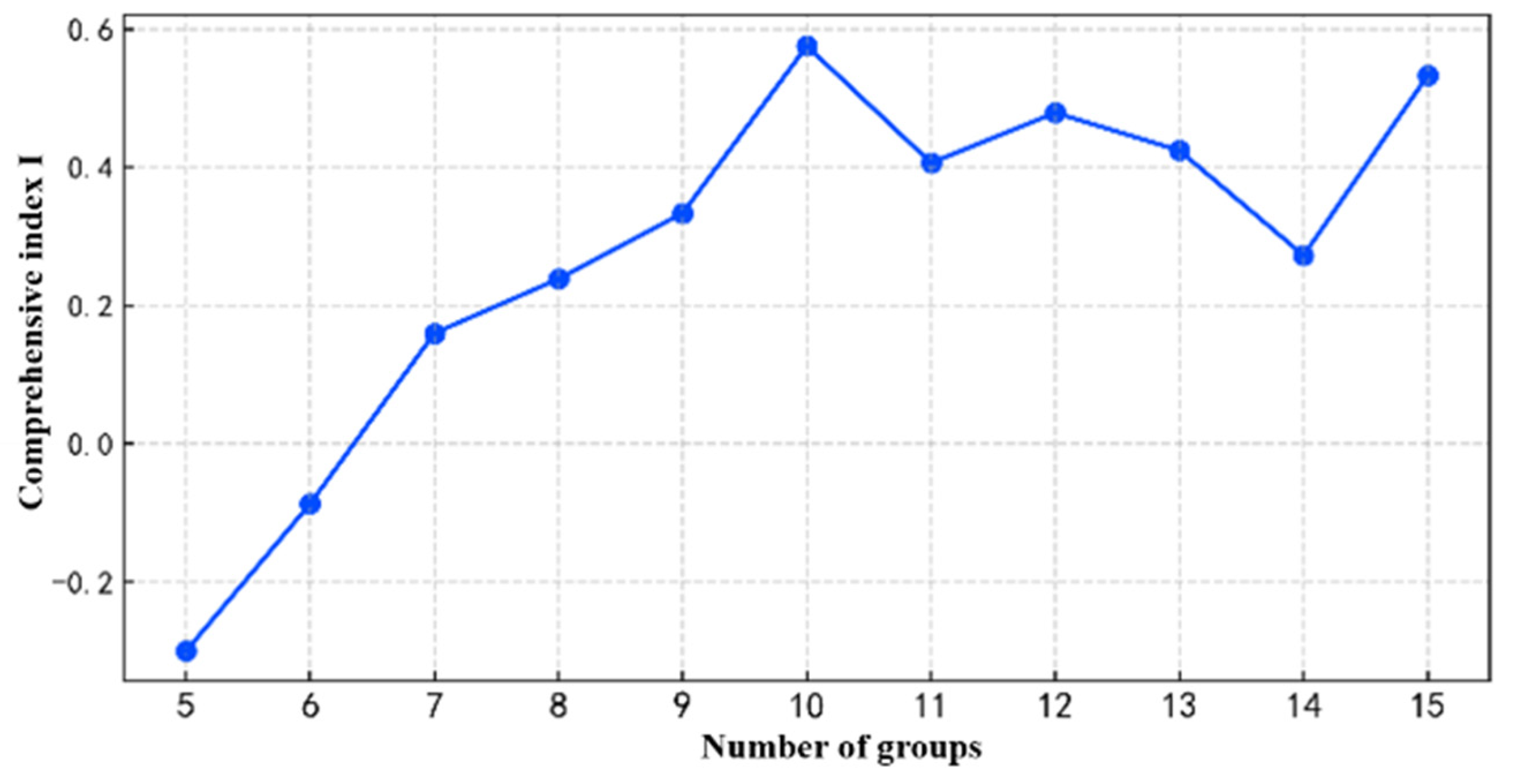
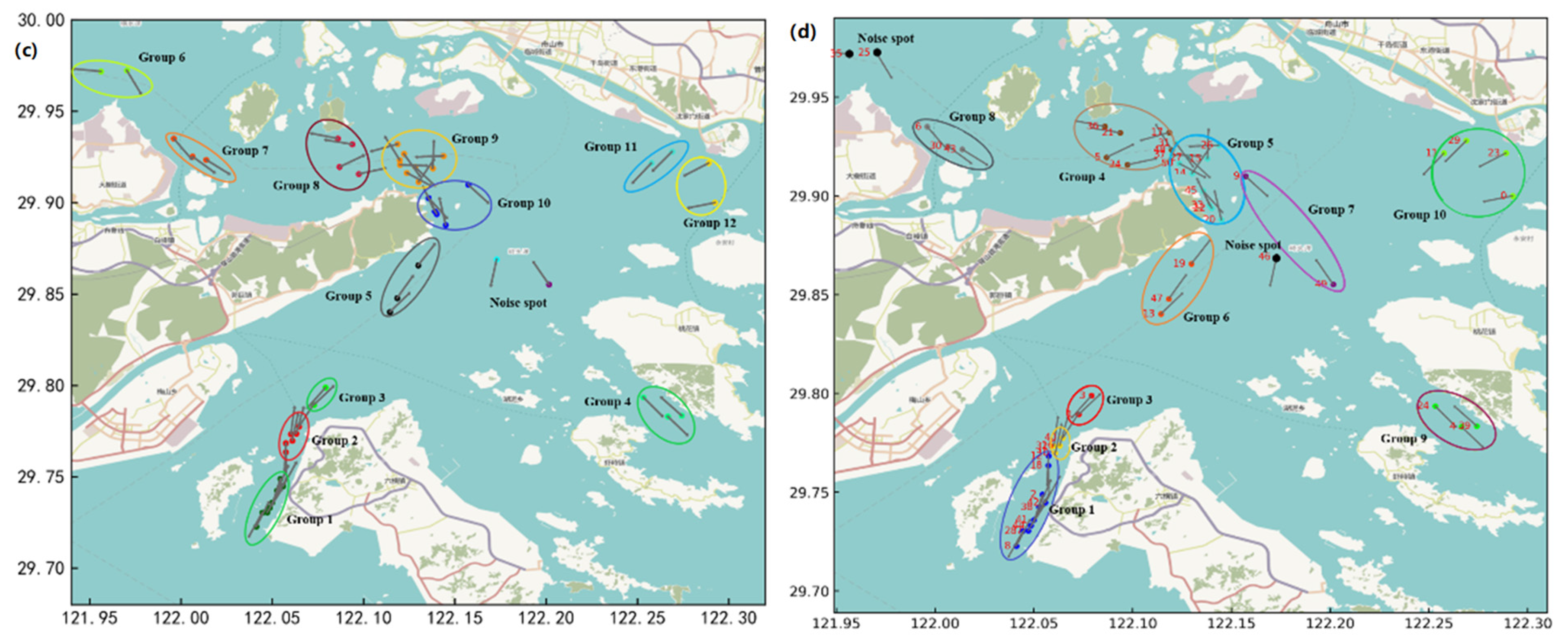
Figure 14 shows the comprehensive evaluation index values of the different grouping schemes when the ships in the study area (shown in Figure 9) are divided into ship groups using the FMOASC algorithm. By analyzing Figure 14, it can be found that the highest comprehensive evaluation value (I = 0.5828) is the division scheme with 10 ship groups, so this division scheme is adopted. The ship group division results obtained by the three algorithms are shown in Figure 15.
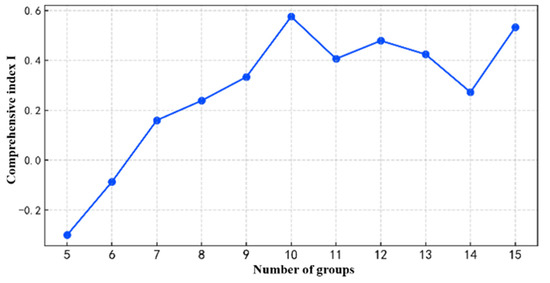
Figure 14.
Ship group division comprehensive evaluation index.
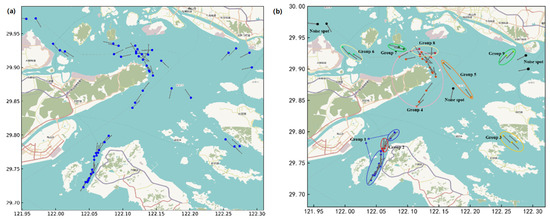
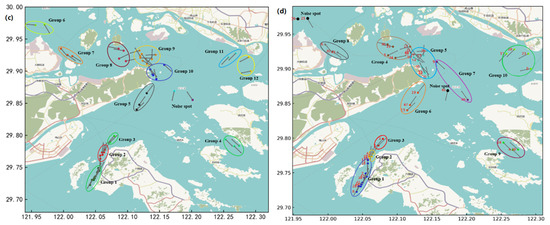
Figure 15.
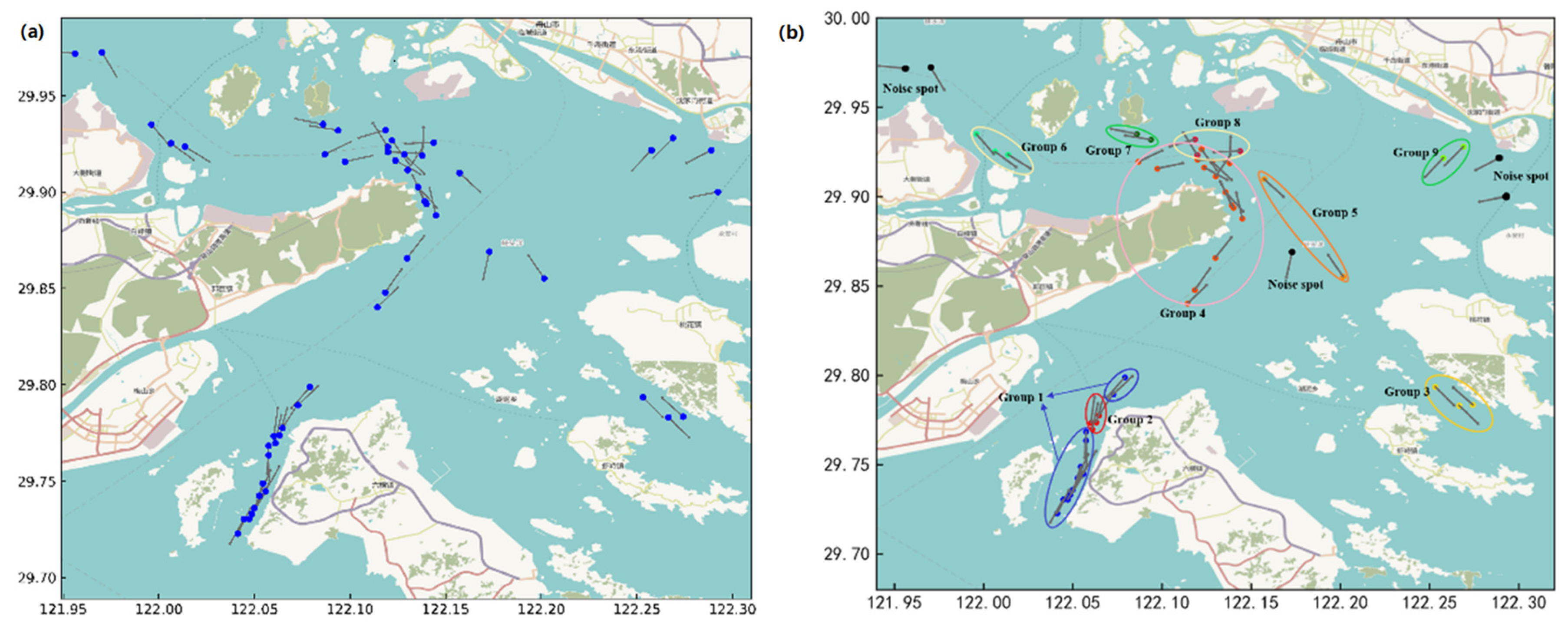
Results of ship group division based on three algorithms: (a) spatial distribution of ships; (b) FMO algorithm group partitioning; (c) SC algorithm group partitioning; (d) FMOASC algorithm group partitioning.
Figure 15a shows the position distribution and heading of ships in the research waters at a certain moment. The ellipses in Figure 15b–d represent different groups. As can be seen from Figure 15b, Group 4 spans the spatial distance. This is because FMO only considers the conflict relationship between ships and does not consider the spatial position of ships. Considering only the current conflict relationship has another disadvantage. Some ships do not have a conflict relationship currently, but they have a tendency to approach each other and should be put in one group for comprehensive consideration. The advantage is that the FMO algorithm can divide ships that are close in spatial distance but have a tendency to move away from each other (no conflict relationship) into different groups.
By observing the results of the SC algorithm, we can find two types of situations that do not meet the principles of group division proposed in this paper. The first type: the distance between ships is close but they are already in a state of leaving each other and do not pose a risk. The SC algorithm will classify such ships into a group. It is not meaningful to manage such ships as a group. The second type: there is a conflict relationship between ships, but the ships that are far apart at the moment are not classified into a group. Such ships should be classified into a group for management so as to timely discover the risks of ship navigation. These two types of divisions occur because the SC algorithm only uses the spatial distance between ships as the edge weight and constructs a similarity matrix to divide ships into groups. The FMOASC algorithm proposed in this paper divides ship groups by comprehensively considering the conflict connection relationship and spatial position between ships. On the basis of considering the conflict connection relationship, the spatial position of the ship is considered so that a more ideal group division result can be obtained from the perspective of water navigation management.
4.4. Quantifying Risks in Different Local Waters
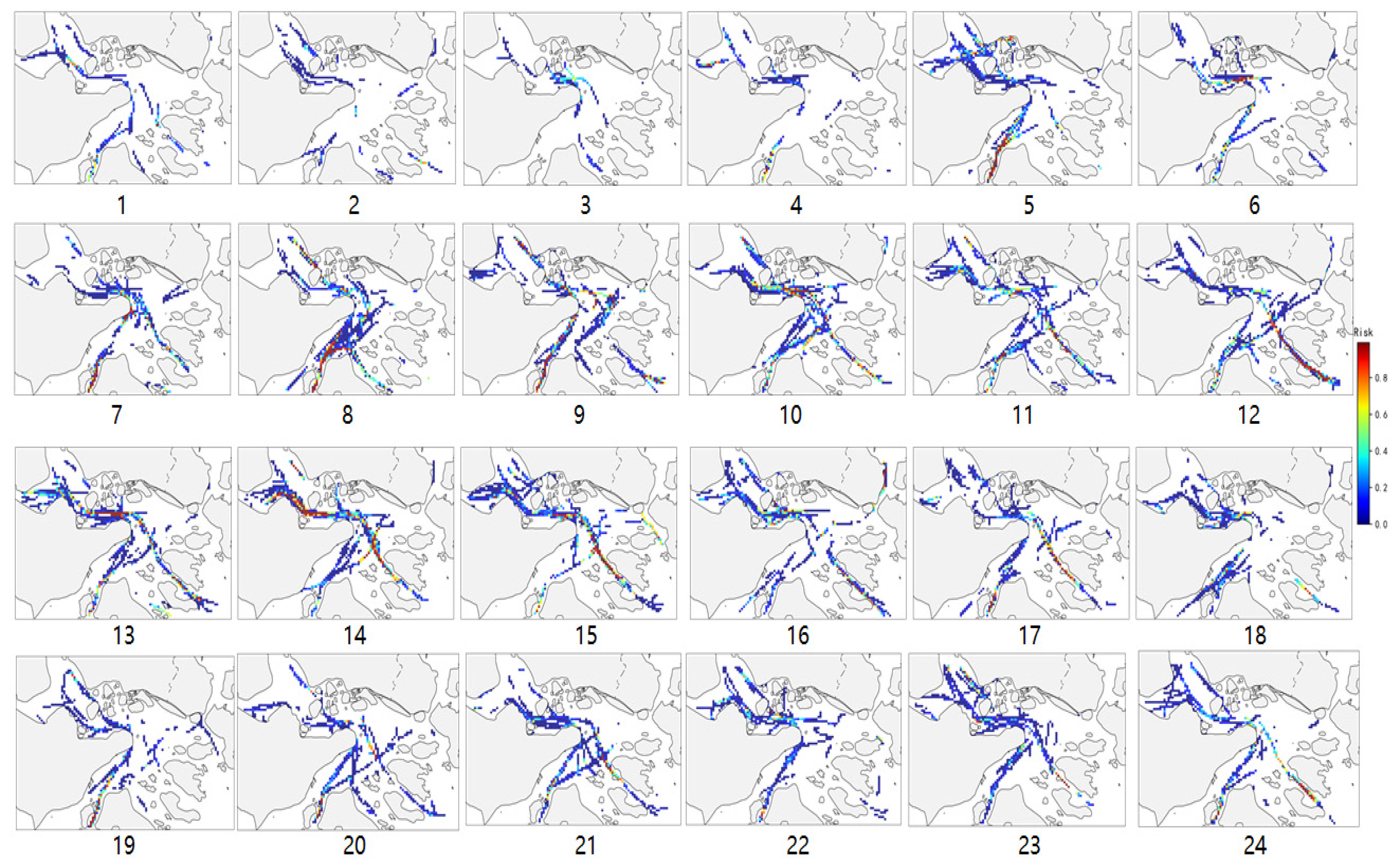
Using 7,680,496 AIS data from the study area for one month, conflict data were calculated. The conflict distribution visualization diagram for each hour is shown in Figure 16. The numbers under each sub-figure in the figure represent 24 time periods, such as “1” which represents the conflict distribution during the 00:00–01:00 time period. As shown in Figure 16(1–4), the number of ship conflicts during the 00:00–04:00 time period is relatively small; in Figure 16(5–15), the conflict distribution area is wider and is roughly distributed in the Fudu Waterway, Luotou Waterway, and Xiazhimen Channel. Among them, the frequency of ship conflicts in the Luotou Waterway and Xiazhimen Channel is higher. The reason for the higher frequency of conflicts in the Luotou Waterway is that ship traffic from other directions converges in this water area, increasing the frequency of multiple ship encounters. In addition, ship turning due to terrain geometric constraints in this water area may also be one of the reasons for this result. In fact, the Luotou Waterway is an official warning area issued by the Ningbo-Zhoushan VTS Center, which to some extent verifies the effectiveness of the conflict probability detection method proposed in this paper in identifying high collision risk areas. The Xiazhimen Channel is the main channel for large ships to enter and leave the port, but the navigation width is narrow, so it becomes one of the areas with high collision risk. One possible reason for the high frequency of ship conflicts in the Fudu Waterway is that the traffic width in this water area is narrow, resulting in a reduction in the minimum passing distance between encountering ships, and so, many high-severity conflicts occur. The degree and distribution range of ship conflicts are expanding in the time period of 20:00–24:00, which may be due to the increase in the number of ship conflicts caused by the reduced visibility at night.
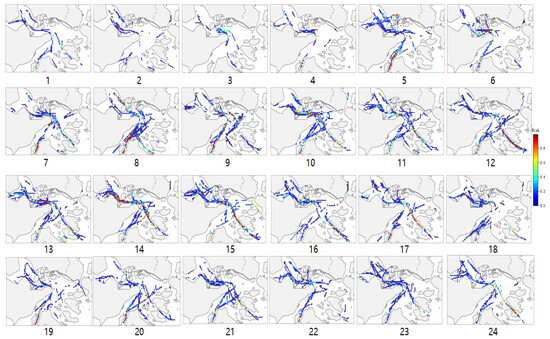
Figure 16.
Hourly conflict distribution visualization.
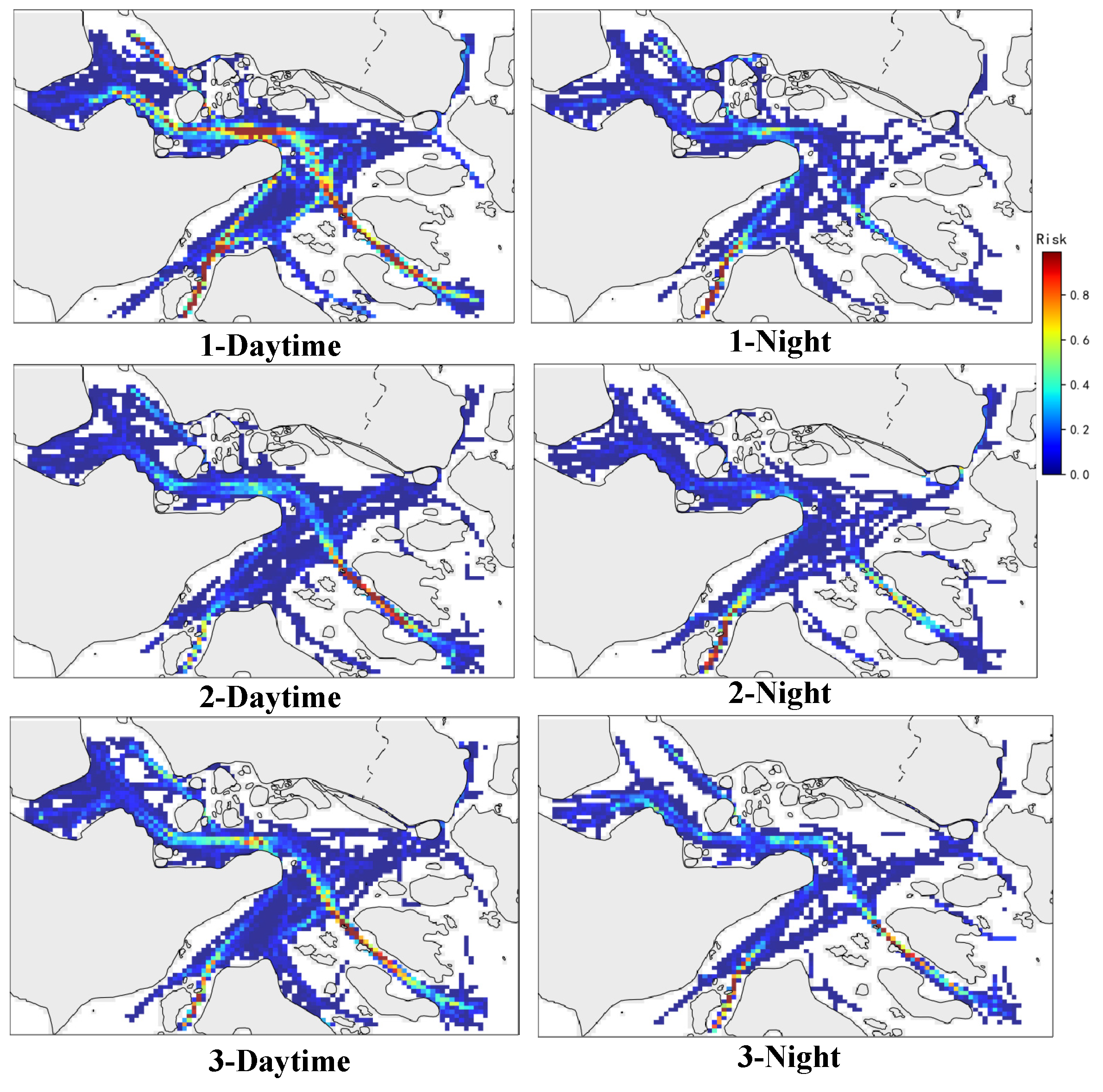
The distribution of ship conflicts during the day and at night is explored; that is, the ship conflicts in the time periods of 06:00–18:00 and 18:00–06:00 are counted, and two conflict distribution images are generated every 10 days, as shown in Figure 17, where “Daytime” in the sub-image represents the conflict distribution in the time period of 06:00–18:00, and “Night” represents the conflict distribution image in the time period of 18:00–06:00. As can be seen from the figure, the degree of conflict is more severe during the day than at night, the number of conflicts is larger, and the high-risk areas are concentrated in the waters of the intersection of the Luotou Waterway and Zhitouyang, Fodu Waterway, Xiazhimen Channel, and the southern part of Damao Island. Among them, the waters south of Damao Island are the main roads connecting the port hub with offshore ship traffic. It is the area with the highest ship traffic density and the highest frequency of ship encounters in the port; the intersection of the Luotou Waterway and Zhitouyang waters, and the intersection of the Xiazhimen Channel and Zhitouyang waters are both navigation warning areas officially established by the maritime department, which verifies the accuracy and effectiveness of this article’s conflict research at the micro-time and space scale.
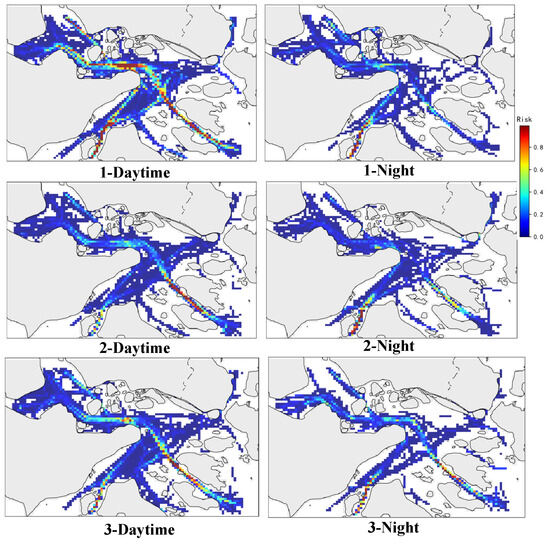
Figure 17.
Visualization of conflict distribution every 12 h.
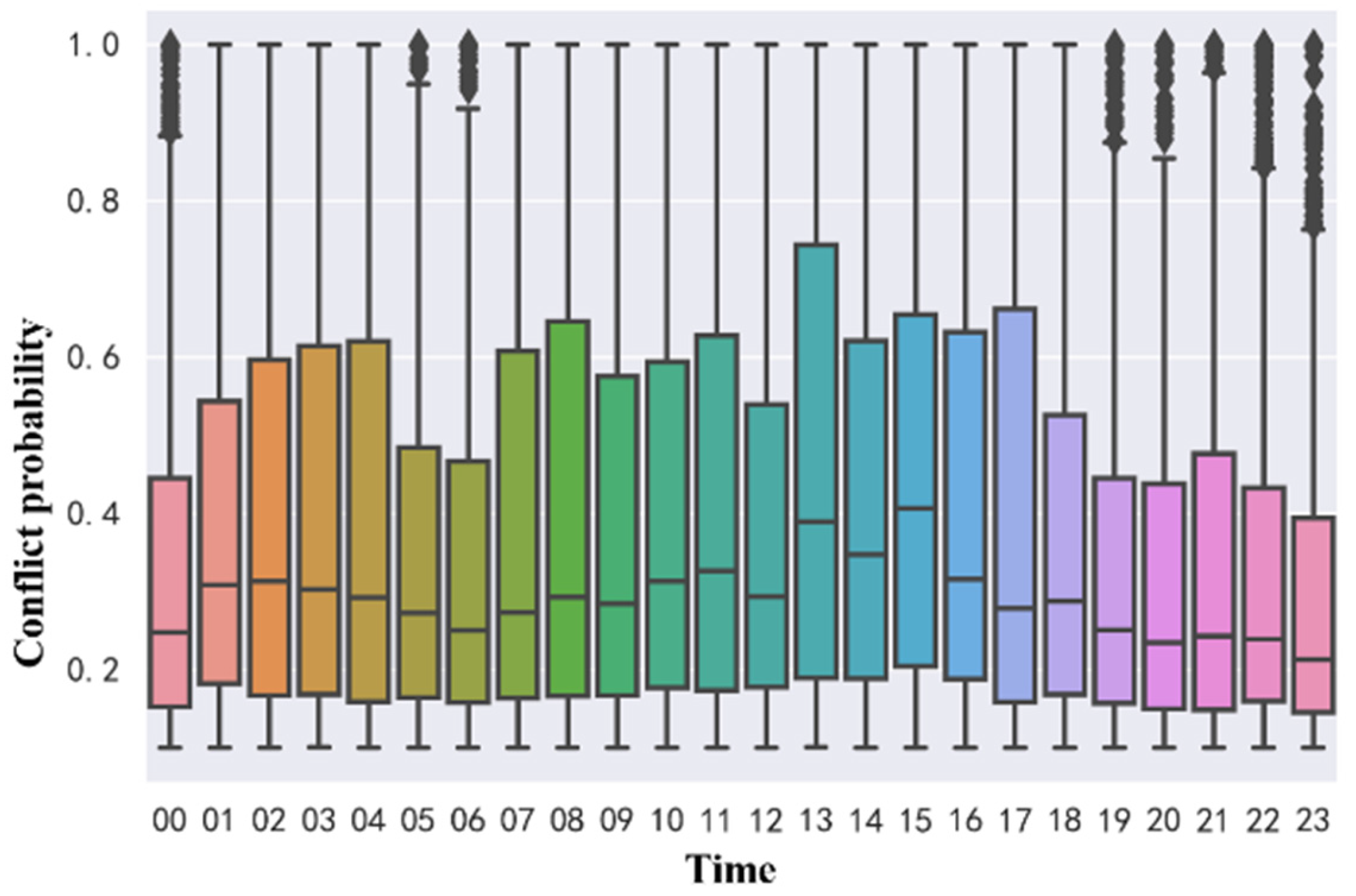
Figure 18 shows the characteristics of the distribution of the hourly conflict probability values in the study waters. It can be observed that the median conflict probability fluctuates slightly over time. In the 11:00–15:00 time period, the median of conflicts between ships is larger than that in the other time periods. The possible reason is that the ship traffic volume in this time period is large and the possibility of dangerous encounters between ships is high. The maximum conflict probability is basically maintained at 1, which means that ship encounters with high conflict severity will occur at every time period. VTS centers can use indicators such as the median and maximum values to more comprehensively understand the real-time collision risks and traffic complexity in the region, thereby improving their ability to deal with dangerous encounters caused by high traffic intensity.
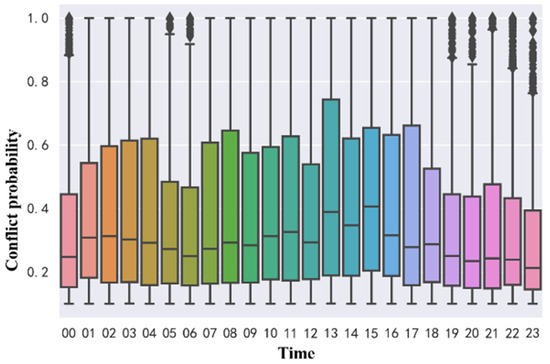
Figure 18.
Time distribution of conflict.
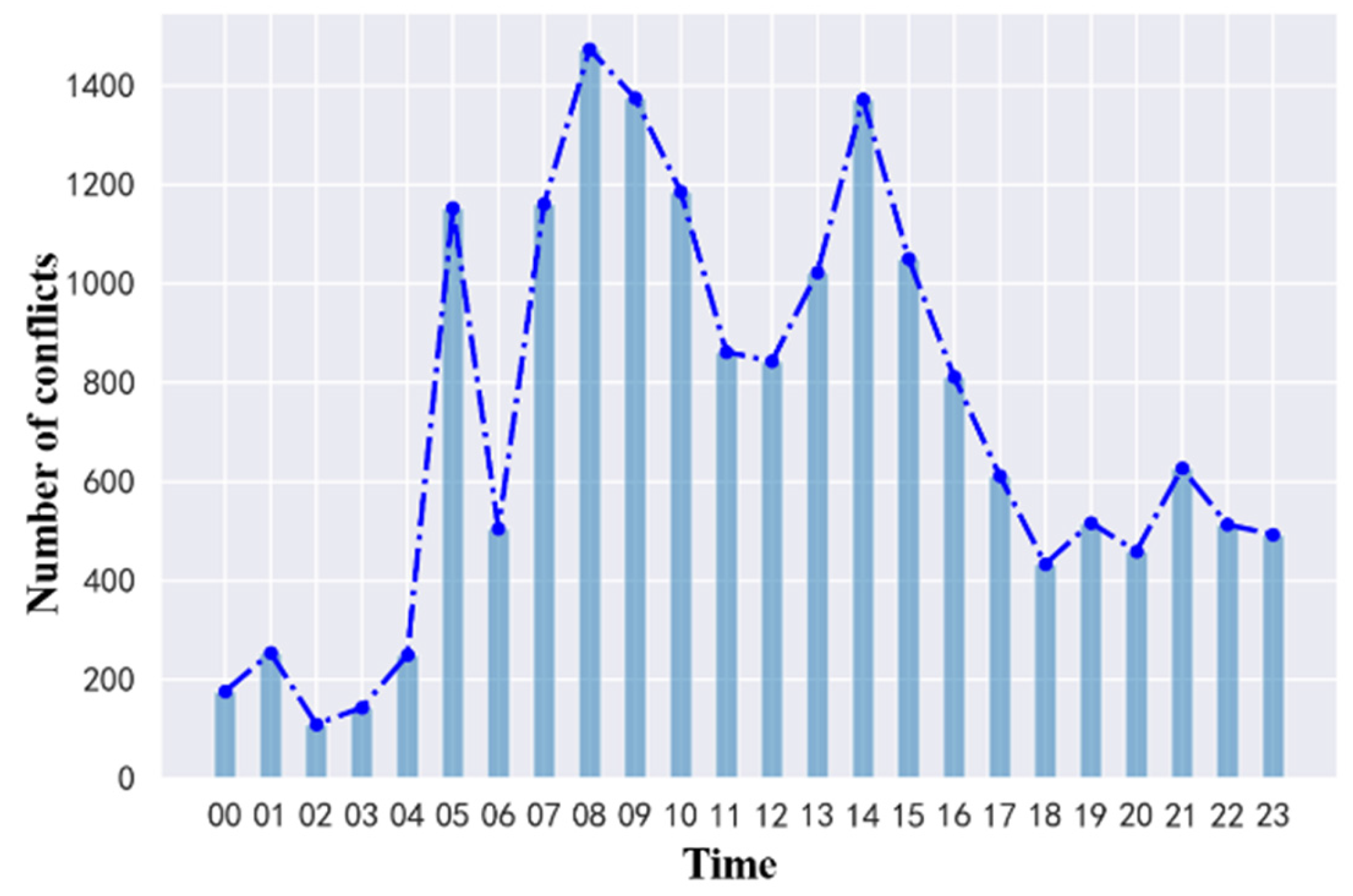
Figure 19 shows the number of conflicts per hour in the study waters. It can be seen that ship conflicts occur more frequently in the time periods of 05:00, 07:00–11:00, and 13:00–17:00, which is consistent with the actual traffic conditions in the study waters, because the ship traffic density is higher during the day. Based on the identification results of the conflict distribution in time and space, marine navigators and maritime departments can have a deeper understanding of when and where to enhance situational awareness during the navigation process of ships, providing a valuable reference for traffic regulatory departments to formulate and implement appropriate regulatory strategies.
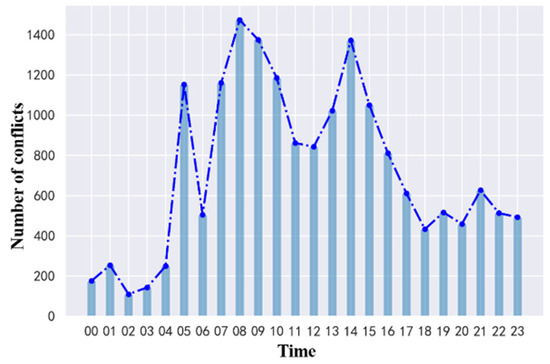
Figure 19.
Time distribution of the number of conflicts.
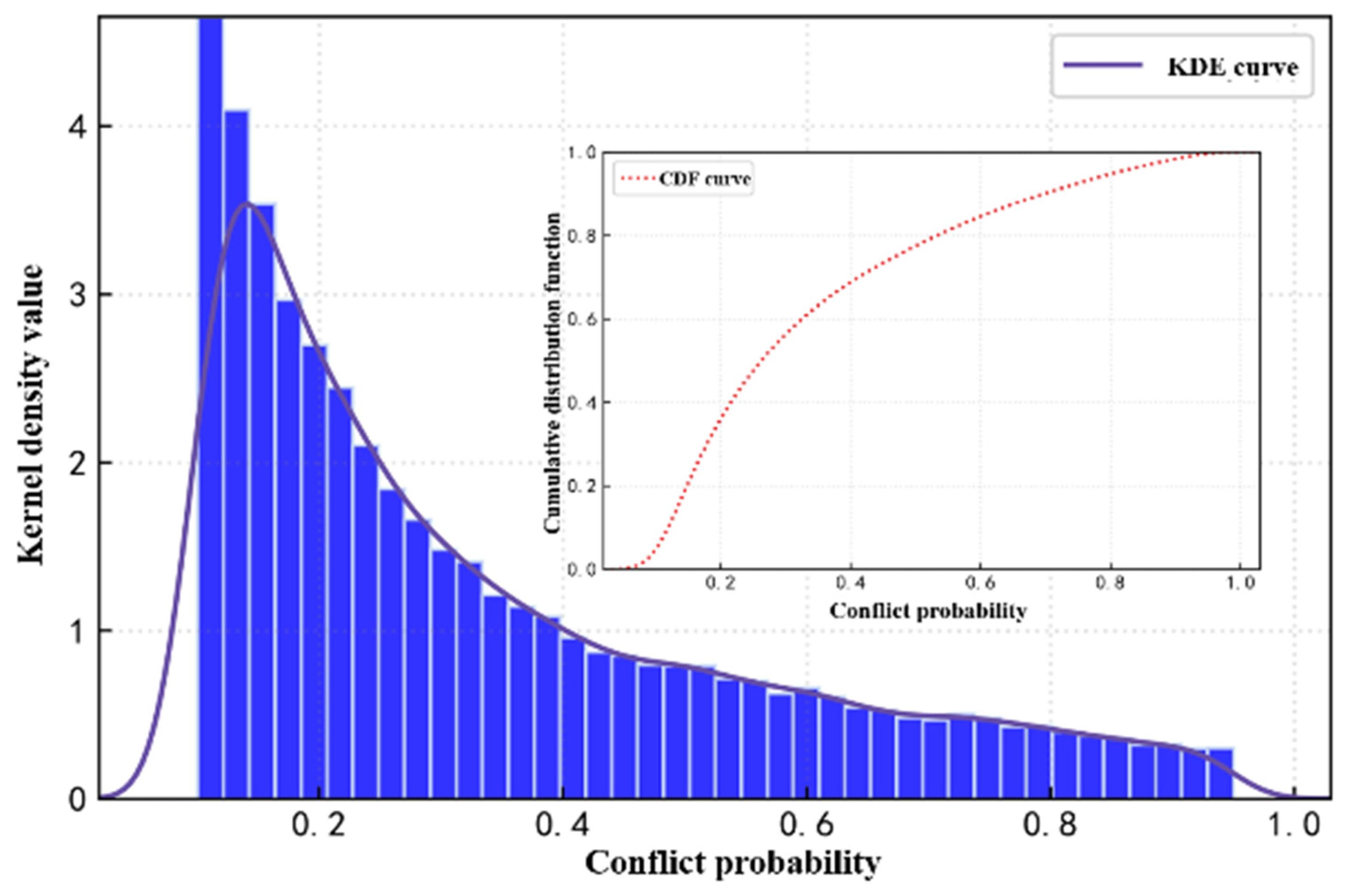
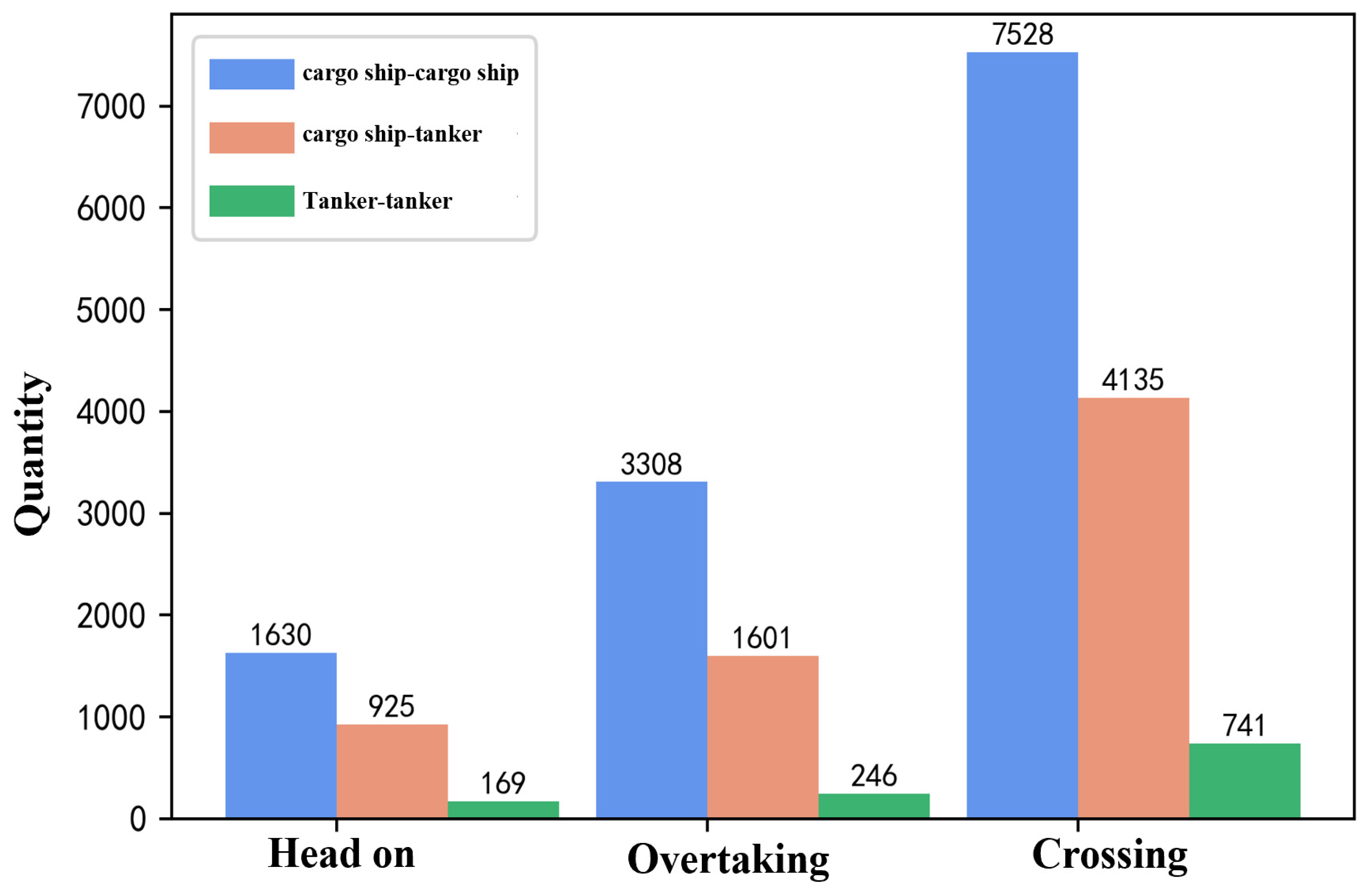
The distribution of conflict severity and the corresponding cumulative probability distribution are shown in Figure 20. It can be seen from the figure that the severity of most conflicts is below 0.2, which indicates that the probability of a ship being involved in a higher conflict is much lower than the probability of it being involved in a minor conflict. In order to further demonstrate the characteristics of the detected conflicts, Figure 21 shows the number of different conflict types among the different ship types. It can be seen that the number of crossing encounter conflict types is the largest, followed by overtaking, and then head-on. Compared with overtaking and head-on conflicts, the proportion of conflicts in crossing encounter scenarios is higher mainly because the relatively large angle range is classified as crossing encounters. In addition, the number of conflicts between cargo ships in the three encounter scenarios is much higher than that of the other ships, which may be due to the large number of cargo ships in the study waters and the frequent encounters.
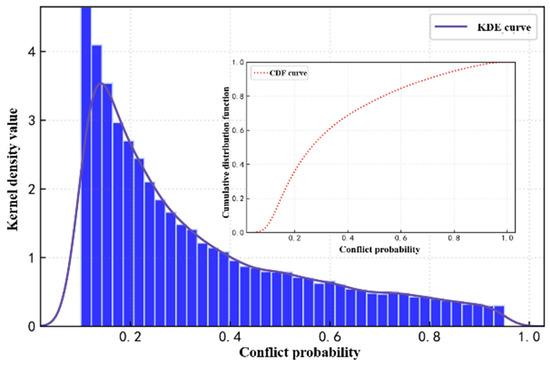
Figure 20.
Conflict severity and CDF.
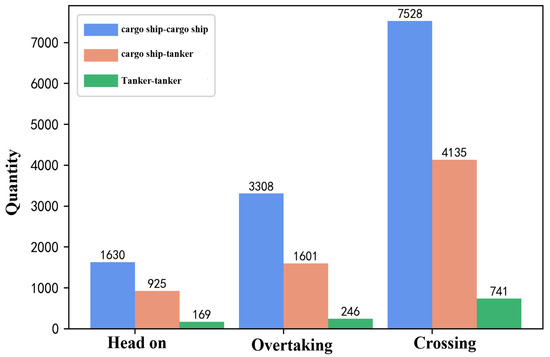
Figure 21.
Number of conflicts between ship types.
In order to verify the effectiveness and feasibility of the global risk assessment method proposed in this paper, the complexity of maritime traffic is introduced as a collision risk indicator for evaluation. The complexity of maritime traffic is used to indicate the degree of traffic conditions, including the degree of congestion and risk. Although the traffic complexity model is not a traditional risk assessment model, it can reflect the instantaneous collision risk to a certain extent. Generally speaking, the higher the traffic complexity, the higher the collision risk, because when the traffic situation becomes complicated, the difficulty of avoiding collision increases. In addition, compared with simple indicators such as traffic density and ship distance, it can more fully reflect the risk of ship collision. Therefore, this paper uses traffic complexity as an indicator of the effectiveness of the global risk assessment framework.
The definition of the maritime traffic complexity model includes two parts: the traffic density factor and the traffic conflict factor. The traffic density factor is described by the relative distance between ships, and the traffic conflict factor is described by the length, speed, and relative orientation of the ship. The traffic complexity is expressed as Formulas (27) and (28):
Among them, , , and are the traffic complexity, traffic density complexity, and traffic conflict complexity of the ship and ship , respectively. are the relative distance, relative speed, and relative orientation between the ship and ship , respectively; is the traffic complexity of the ship , which is the average of the sum of all the complexities involving ship .
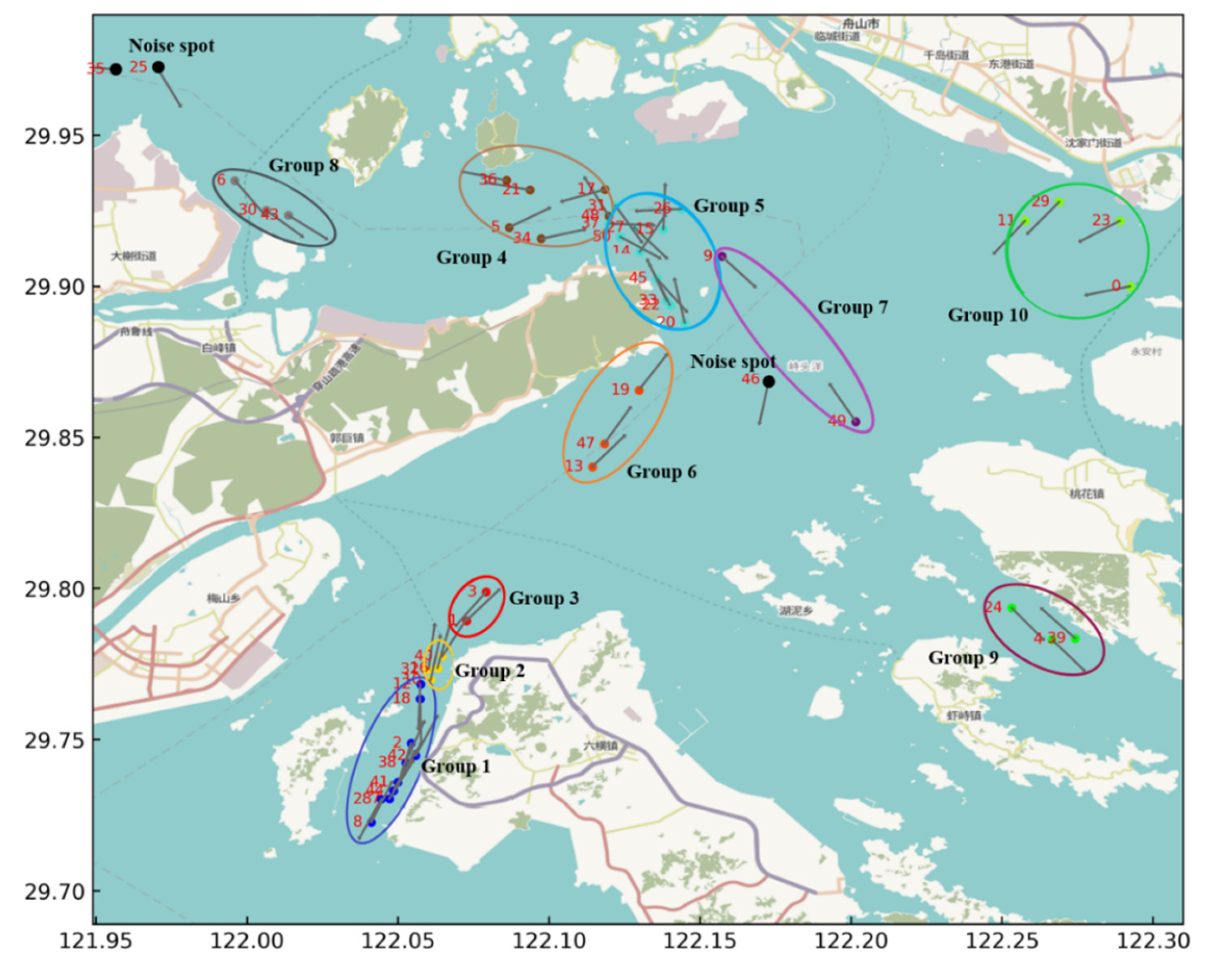
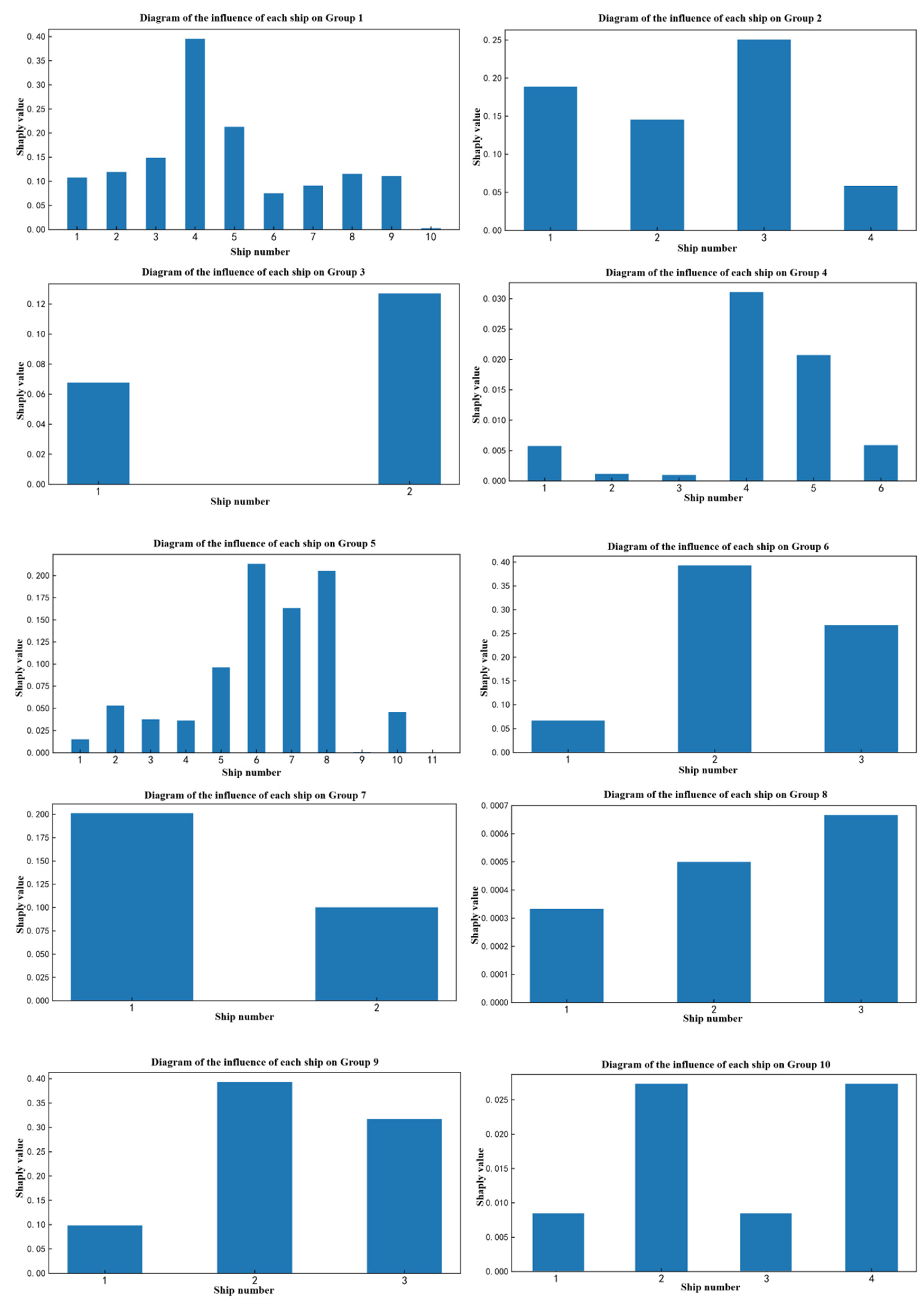
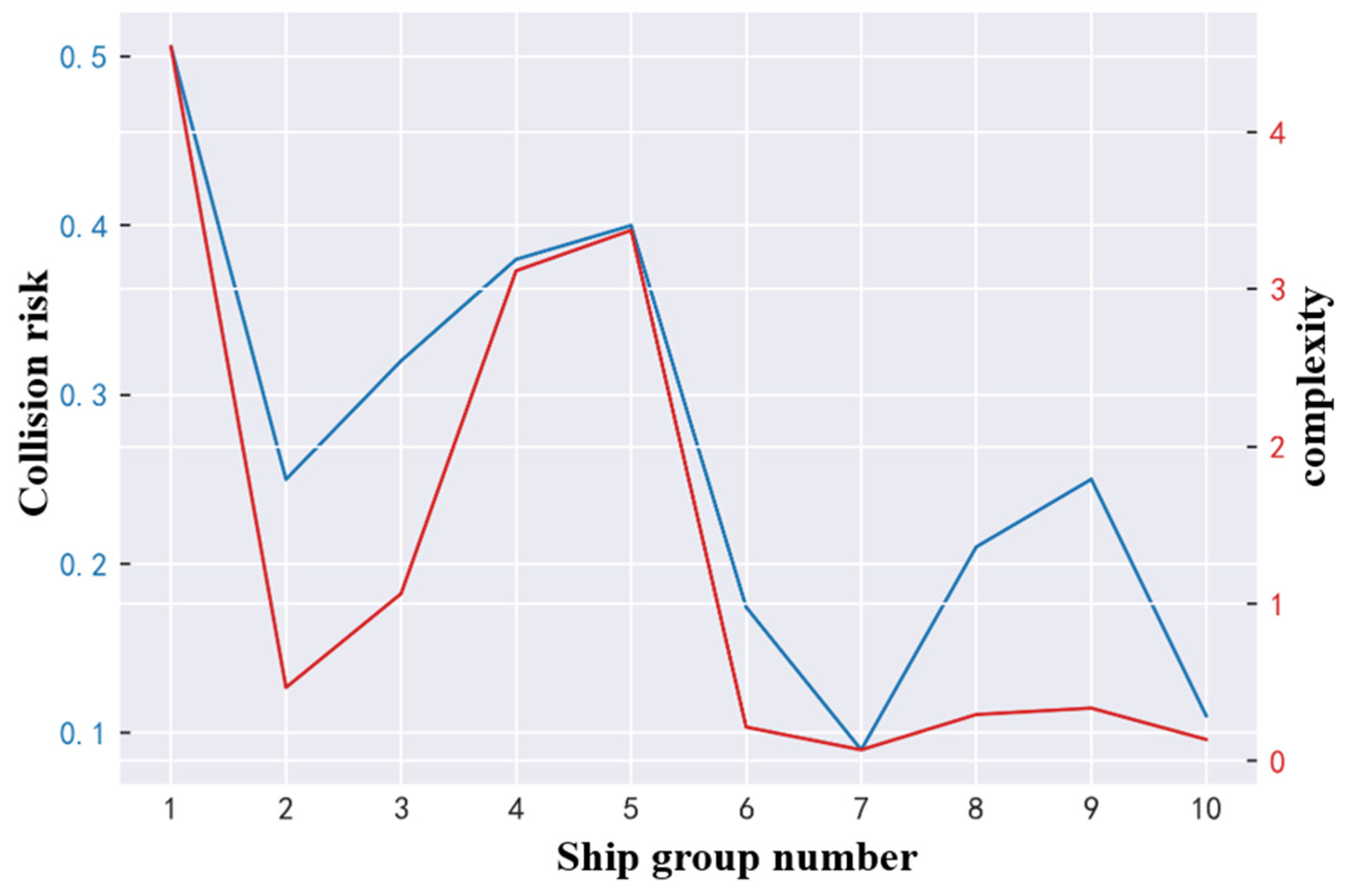
According to the ship group extraction algorithm proposed in this paper, the ships in the study waters at a certain time are divided into 10 ship groups, as shown in Figure 22. The contribution value of each ship in each ship group obtained by the Shapley value method in the cooperative game is shown in Figure 23. The collision risk and traffic complexity of each ship group are shown in Figure 24.
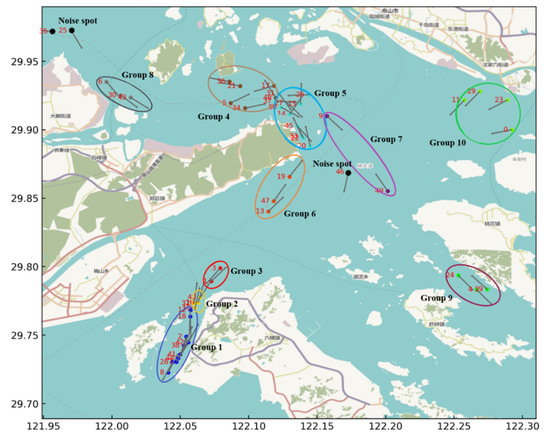
Figure 22.
Results of ship group division.
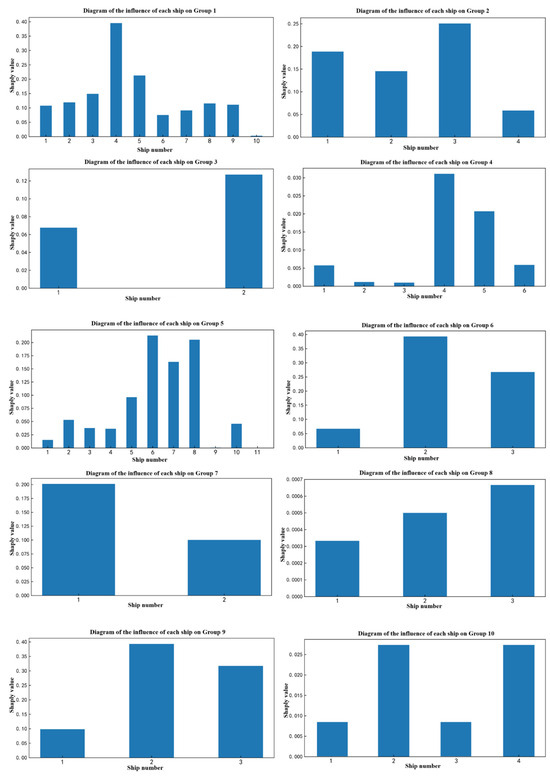
Figure 23.
The contribution of each ship in each group.
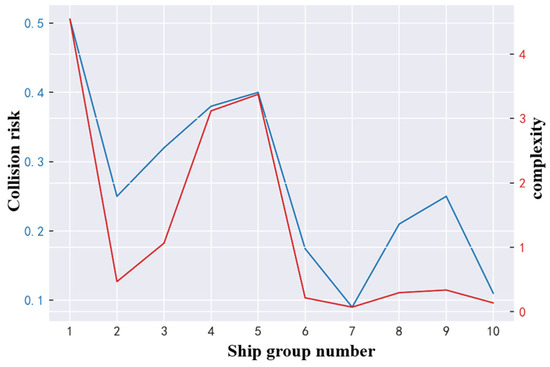
Figure 24.
Collision risk and traffic complexity for each group.
It can be seen from Figure 24 that the group with the highest collision risk is Group 1, which reaches 0.5058. It can be seen that the ship traffic density in Group 1 is large, there are many ship conflicts, and the narrow channel width leads to a reduced passing distance between the ships, resulting in a high risk within the group; Group 7 has the lowest collision risk of 0.09, and the distance between the ships in the group is relatively large, resulting in a conflict of lower severity; and the collision risk in Group 3 is significantly greater than that in Group 7. This is because the distance between the ships in Group 3 is much smaller than that in Group 7. When approaching each other, the distance is negatively correlated with the collision risk. Therefore, the collision risk calculated according to this framework is consistent with the actual traffic conditions in the study waters. In addition, it can be seen from Figure 24 that the traffic complexity curve and collision risk curve of each group have the same change trend. In order to quantitatively analyze the correlation between the change trend in collision risk and traffic complexity of the 10 ship groups, a Pearson correlation analysis was performed. The analysis results show that at a confidence level of 99%, the change trend in collision risk of the 10 ship groups is strongly correlated with the change trend in traffic complexity, with a correlation coefficient of 0.923 and a p-value of less than 0.001. Therefore, it can be proved that the collision risk of different ship groups in the waters calculated according to the proposed framework is effective.
5. Conclusions
The main contributions of this paper are summarized as follows:
- (1)
- Aiming at the effective perception of ship collision risk in the dynamic navigation scene of complex navigable waters, we propose a novel calculation method for conflict probability. This method can detect the probability of ship conflict in a complex dynamic environment in a timely and accurate manner, and provide valuable information for the quantification of ship collision risks and safety supervision from the perspective of water navigation management.
- (2)
- In order to realize the fast and accurate grouping of ships in complex navigable waters and facilitate the safety supervision of different local waters, we propose a two-stage algorithm of ship group division based on fast modularity optimization and spectral clustering algorithm. It is convenient for maritime regulatory authorities to more comprehensively and clearly grasp the internal connection and attributes between ships involved in decision making, which helps regulatory personnel to effectively capture high-risk traffic clusters, better understand the risk status of different local waters, and provide targeted supervision and management plans to improve ship traffic safety and efficiency.
- (3)
- Based on the ship conflict detection method and the ship group extraction from the perspective of water navigation management, the regional ships are detected for conflict probability and contribution identification, and the risks of different local waters and regions are quantified.
Despite the advantages mentioned above, the proposed approach still exposes some limitations. This study needs to be further improved from the following aspects:
The ship trajectory prediction method needs to be developed. Therefore, one of the future research directions is to combine trajectory data mining methods to build a hybrid trajectory prediction model to support conflict probability estimation with both cooperative and non-cooperative ships.
The method emphasizes the estimation of the probability of conflict occurrence. However, since the potential consequences are not explicitly considered in the probability of conflict, a comprehensive assessment of navigational risk may not be sufficient. In fact, once a collision occurs, there are a large number of possible accident scenarios with different probabilities and consequences. Therefore, an improved model that takes into account both the probability of occurrence and the consequences can help shipowners and maritime safety authorities better understand the actual risk level of traffic conditions.
In the future, the space–time evolution trend in ship groups can be analyzed to help understand the process of their formation, development, contraction, merger, decomposition, and disappearance. An in-depth study of these evolutionary laws can provide a basis for the risk prediction of local dynamic groups in the future, thus providing a prerequisite for issuing early collision warnings and responding to risk management.
Author Contributions
Conceptualization, Y.C. and Q.Y.; methodology, Y.C.; software, W.W.; validation, W.W., X.W. and Y.C.; formal analysis, Y.C.; investigation, Q.Y.; resources, Q.Y.; data curation, Q.Y.; writing—original draft preparation, Y.C.; writing—review and editing, Y.C.; visualization, Y.C.; supervision, X.W.; project administration, Q.Y.; funding acquisition, Q.Y. All authors have read and agreed to the published version of the manuscript.
Funding
This research was funded by the National Natural Science Foundation of China (Grant No. 52201412), China. This research was supported by the university-level Young and Middle-aged Research Fund of Xiamen Institute of Technology (No. KYT2023001).
Institutional Review Board Statement
Not applicable.
Informed Consent Statement
Not applicable.
Data Availability Statement
The data in this paper are from the course group of the author.
Conflicts of Interest
The authors declare no conflicts of interest.
References
- Goerlandt, F.; Montewka, J. Maritime Transportation Risk Analysis: Review and Analysis in Light of Some Foundational Issues. Reliab. Eng. Syst. Saf. 2015, 138, 115–134. [Google Scholar] [CrossRef]
- Liu, Z.; Li, Y.; Zhang, Z.; Yu, W.; Han, B.; Du, Y. Spatial Modeling and Analysis Approach for Ship-Encounters Dynamic Spatial–Temporal Domain. Ocean Eng. 2023, 278, 114373. [Google Scholar] [CrossRef]
- Yim, J.-B.; Kim, D.-S.; Park, D.-J. Modeling Perceived Collision Risk in Vessel Encounter Situations. Ocean Eng. 2018, 166, 64–75. [Google Scholar] [CrossRef]
- Chen, P.; Huang, Y.; Mou, J.; van Gelder, P.H.A.J.M. Probabilistic Risk Analysis for Ship-Ship Collision: State-of-the-Art. Saf. Sci. 2019, 117, 108–122. [Google Scholar] [CrossRef]
- Zhao, Y.; Suo, Y.; Xian, B. Ship Encounter Scenario and Maneuvering Behavior Mining Based on AIS Data. In International Conference on Wireless Communications, Networking and Applications; Springer Nature Singapore: Singapore, 2022; pp. 58–65. [Google Scholar]
- Liu, J.; Zhang, J.; Yang, Z.; Wan, C.; Zhang, M. A Novel Data-Driven Method of Ship Collision Risk Evolution Evaluation during Real Encounter Situations. Reliab. Eng. Syst. Saf. 2024, 249, 110228. [Google Scholar] [CrossRef]
- Lei, P.-R. Mining Maritime Traffic Conflict Trajectories from a Massive AIS Data. Knowl. Inf. Syst. 2020, 62, 259–285. [Google Scholar] [CrossRef]
- Chen, P.; Huang, Y.; Mou, J.; van Gelder, P.H.A.J.M. Ship Collision Candidate Detection Method: A Velocity Obstacle Approach. Ocean Eng. 2018, 170, 186–198. [Google Scholar] [CrossRef]
- Zhang, W.; Goerlandt, F.; Kujala, P.; Wang, Y. An Advanced Method for Detecting Possible near Miss Ship Collisions from AIS Data. Ocean Eng. 2016, 124, 141–156. [Google Scholar] [CrossRef]
- Kundakçı, B.; Nas, S.; Gucma, L. Prediction of Ship Domain on Coastal Waters by Using AIS Data. Ocean Eng. 2023, 273, 113921. [Google Scholar] [CrossRef]
- Fujii, Y.; Tanaka, K. Traffic Capacity. J. Navig. 1971, 24, 543–552. [Google Scholar] [CrossRef]
- Wang, Y.; Chin, H.-C. An Empirically-Calibrated Ship Domain as a Safety Criterion for Navigation in Confined Waters. J. Navig. 2016, 69, 257–276. [Google Scholar] [CrossRef]
- Wang, N. A Novel Analytical Framework for Dynamic Quaternion Ship Domains. J. Navig. 2013, 66, 265–281. [Google Scholar] [CrossRef]
- Zhang, L.; Meng, Q. Probabilistic Ship Domain with Applications to Ship Collision Risk Assessment. Ocean Eng. 2019, 186, 106130. [Google Scholar] [CrossRef]
- Szłapczyński, R.; Niksa-Rynkiewicz, T. A Framework of A Ship Domain-Based Near-Miss Detection Method Using Mamdani Neuro-Fuzzy Classification. Pol. Marit. Res. 2018, 25, 14–21. [Google Scholar] [CrossRef]
- Dinh, G.H.; Im, N. The Combination of Analytical and Statistical Method to Define Polygonal Ship Domain and Reflect Human Experiences in Estimating Dangerous Area. Int. J. e-Navig. Marit. Econ. 2016, 4, 97–108. [Google Scholar] [CrossRef]
- Zhen, R.; Riveiro, M.; Jin, Y. A Novel Analytic Framework of Real-Time Multi-Vessel Collision Risk Assessment for Maritime Traffic Surveillance. Ocean Eng. 2017, 145, 492–501. [Google Scholar] [CrossRef]
- Chin, H.C.; Debnath, A.K. Modeling Perceived Collision Risk in Port Water Navigation. Saf. Sci. 2009, 47, 1410–1416. [Google Scholar] [CrossRef]
- Wang, N.; Yuen, K.F.; Yuan, J.; Li, D. Ship Collision Risk Assessment: A Multi-Criteria Decision-Making Framework Based on Dempster–Shafer Evidence Theory. Appl. Soft Comput. 2024, 162, 111823. [Google Scholar] [CrossRef]
- Zhang, M.; Montewka, J.; Manderbacka, T.; Kujala, P.; Hirdaris, S. A Big Data Analytics Method for the Evaluation of Ship—Ship Collision Risk Reflecting Hydrometeorological Conditions. Reliab. Eng. Syst. Saf. 2021, 213, 107674. [Google Scholar] [CrossRef]
- Gil, M.; Montewka, J.; Krata, P.; Hinz, T.; Hirdaris, S. Determination of the Dynamic Critical Maneuvering Area in an Encounter between Two Vessels: Operation with Negligible Environmental Disruption. Ocean Eng. 2020, 213, 107709. [Google Scholar] [CrossRef]
- Gang, L.; Wang, Y.; Sun, Y.; Zhou, L.; Zhang, M. Estimation of Vessel Collision Risk Index Based on Support Vector Machine. Adv. Mech. Eng. 2016, 8, 168781401667125. [Google Scholar] [CrossRef]
- Li, B.; Pang, F.-W. An Approach of Vessel Collision Risk Assessment Based on the D–S Evidence Theory. Ocean Eng. 2013, 74, 16–21. [Google Scholar] [CrossRef]
- Lenart, A.S. Analysis of Collision Threat Parameters and Criteria. J. Navig. 2015, 68, 887–896. [Google Scholar] [CrossRef]
- Larson, J.; Bruch, M.; Ebken, J. Autonomous Navigation and Obstacle Avoidance for Unmanned Surface Vehicles. In Unmanned systems technology VIII; Gerhart, G.R., Shoemaker, C.M., Gage, D.W., Eds.; SPIE: San Diego, CA, USA, 2006; p. 623007. [Google Scholar]
- Huang, Y.; van Gelder, P.H.A.J.M.; Wen, Y. Velocity Obstacle Algorithms for Collision Prevention at Sea. Ocean Eng. 2018, 151, 308–321. [Google Scholar] [CrossRef]
- Szlapczynski, R.; Szlapczynska, J. A Target Information Display for Visualizing Collision Avoidance Maneuvers in Various Visibility Conditions. J. Navig. 2015, 68, 1041–1055. [Google Scholar] [CrossRef]
- Huang, Y.; Chen, L.; van Gelder, P.H.A.J.M. Generalized Velocity Obstacle Algorithm for Preventing Ship Collisions at Sea. Ocean Eng. 2019, 173, 142–156. [Google Scholar] [CrossRef]
- Huang, Y.; van Gelder, P.H.A.J.M. Time-Varying Risk Measurement for Ship Collision Prevention. Risk Anal. 2020, 40, 24–42. [Google Scholar] [CrossRef]
- Idiri, B.; Napoli, A. The Automatic Identification System of Maritime Accident Risk Using Rule-Based Reasoning. In Proceedings of the 2012 7th International Conference on System of Systems Engineering (SoSE), Genova, Italy, 16–19 July 2012; IEEE: Piscataway, NJ, USA, 2012; pp. 125–130. [Google Scholar]
- Hänninen, M. Bayesian Networks for Maritime Traffic Accident Prevention: Benefits and Challenges. Accid. Anal. Prev. 2014, 73, 305–312. [Google Scholar] [CrossRef]
- Kujala, P.; Hänninen, M.; Arola, T.; Ylitalo, J. Analysis of the Marine Traffic Safety in the Gulf of Finland. Reliab. Eng. Syst. Saf. 2009, 94, 1349–1357. [Google Scholar] [CrossRef]
- Bye, R.J.; Aalberg, A.L. Maritime Navigation Accidents and Risk Indicators: An Exploratory Statistical Analysis Using AIS Data and Accident Reports. Reliab. Eng. Syst. Saf. 2018, 176, 174–186. [Google Scholar] [CrossRef]
- Du, L.; Goerlandt, F.; Kujala, P. Review and Analysis of Methods for Assessing Maritime Waterway Risk Based on Non-Accident Critical Events Detected from AIS Data. Reliab. Eng. Syst. Saf. 2020, 200, 106933. [Google Scholar] [CrossRef]
- Terndrup Pedersen, P. Collision and Grounding Mechanics. Proc. WEMT 1995, 95, 125–157. [Google Scholar]
- Martins, M.R.; Maturana, M.C. Application of Bayesian Belief Networks to the Human Reliability Analysis of an Oil Tanker Operation Focusing on Collision Accidents. Reliab. Eng. Syst. Saf. 2013, 110, 89–109. [Google Scholar] [CrossRef]
- Fan, S.; Blanco-Davis, E.; Yang, Z.; Zhang, J.; Yan, X. Incorporation of Human Factors into Maritime Accident Analysis Using a Data-Driven Bayesian Network. Reliab. Eng. Syst. Saf. 2020, 203, 107070. [Google Scholar] [CrossRef]
- Weng, J.; Li, G.; Chai, T.; Yang, D. Evaluation of Two-Ship Collision Severity Using Ordered Probit Approaches. J. Navig. 2018, 71, 822–836. [Google Scholar] [CrossRef]
- Chen, Y.; Liu, K.; Xin, X.; Miao, P.; Zhang, M. Ship collision probability detection method based on AIS data. Chin. Nav. 2022, 45, 15–22. [Google Scholar]
- Xin, X.; Liu, K.; Yang, Z.; Zhang, J.; Wu, X. A Probabilistic Risk Approach for the Collision Detection of Multi-Ships under Spatiotemporal Movement Uncertainty. Reliab. Eng. Syst. Saf. 2021, 215, 107772. [Google Scholar] [CrossRef]
Disclaimer/Publisher’s Note: The statements, opinions and data contained in all publications are solely those of the individual author(s) and contributor(s) and not of MDPI and/or the editor(s). MDPI and/or the editor(s) disclaim responsibility for any injury to people or property resulting from any ideas, methods, instructions or products referred to in the content. |
© 2024 by the authors. Licensee MDPI, Basel, Switzerland. This article is an open access article distributed under the terms and conditions of the Creative Commons Attribution (CC BY) license (https://creativecommons.org/licenses/by/4.0/).