
Next Article in Journal
Methods of Identification Coherent Structures in Atmospheric Numerical Data
Previous Article in Journal
Bioclimatic Change Impacts on Tourist Destinations in the Mediterranean, by Means of the Assessment of Human Thermal Perception
 
 
Environmental Sciences Proceedings concluded publication with Volume 29, Issue 1. It has been succeeded by Environmental and Earth Sciences Proceedings, which has a revised scope and a new editorial direction and is now published here. To preserve historical data integrity, the information on this webpage is retained but will no longer be updated.
Proceeding Paper

How Do Aerosol Influence Cloud Formation and Evolution? †
by
Rodanthi-Elisavet Mamouri
1,2,*,
Albert Ansmann
3,
Argyro Nisantzi
1,2,
Dragoş Ene
1 and
Diofantos Gl. Hadjimitsis
1,2
1
ERATOSTHENES Centre of Excellence, Limassol 3012, Cyprus
2
Department of Civil Engineering and Geomatics, Cyprus University of Technology, Limassol 3036, Cyprus
3
Leibniz Institute for Tropospheric Research (TROPOS), 04318 Leipzig, Germany
*
Author to whom correspondence should be addressed.
Presented at the 16th International Conference on Meteorology, Climatology and Atmospheric Physics—COMECAP 2023, Athens, Greece, 25–29 September 2023.
Environ. Sci. Proc. 2023, 26(1), 197; https://doi.org/10.3390/environsciproc2023026197

Published: 19 September 2023

Abstract

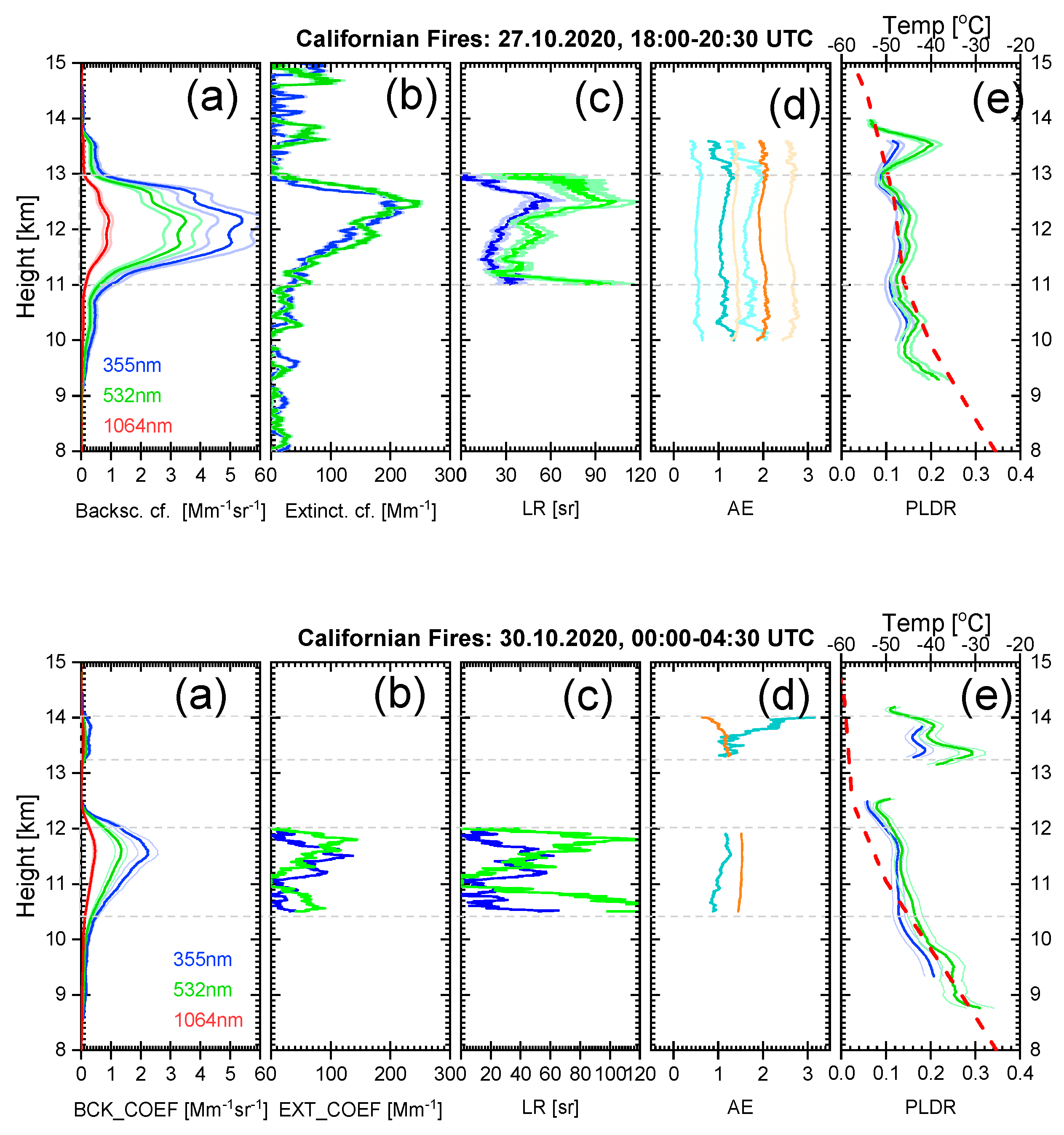
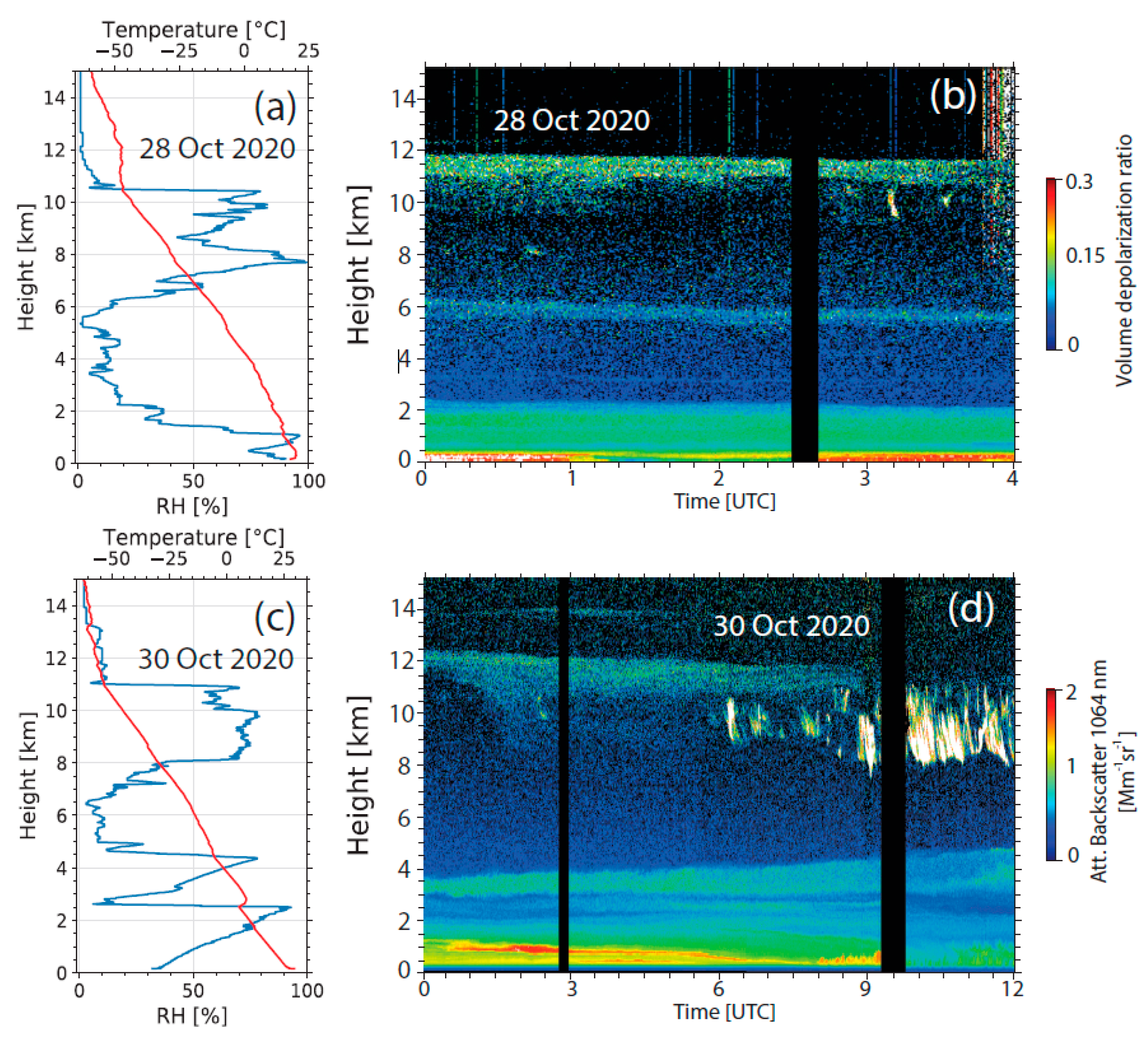
The remote sensing ground-based platform for atmospheric research hosted by the ERATOSTHENES Centre of Excellence will be the key research infrastructure of the Cyprus Atmospheric Remote Sensing Observatory (CARO) in Limassol, Cyprus. Between the 27th of October to the 1st of November 2020, the lidar system observed a pronounced and well-aged stratospheric aerosol layer with a backscatter maximum around 10 km asl and clear wildfire smoke signatures. The observed smoke plume was caused by extreme wildfires on the west coast of the U.S. Long-range aerosol transport events observed over Limassol are used for the study of the influence of organic aerosol particles (serving as ice-nucleating particles, INPs) in a cirrus formation in the upper troposphere.
Keywords: lidar; clouds; smoke; cirrus; ice clouds; long-range transport lidar; clouds; smoke; cirrus; ice clouds; long-range transport