



MicroRNAs, tRNA Fragments, Long Non-coding and Circular RNAs: Pivotal Regulators of Gene Expression and Their Roles in Human Physiology and Disease

A topical collection in Biomedicines (ISSN 2227-9059). This collection belongs to the section "Cell Biology and Pathology".

Viewed by 23995

Editor


E-Mail Website
Collection Editor
Department of Biochemistry and Molecular Biology, Faculty of Biology, National and Kapodistrian University of Athens, Panepistimiopolis, GR-15701 Athens, Greece
Interests: colorectal cancer; leukemia; tumor biomarkers; anticancer drugs; apoptosis; BCL2 family; alternative splicing; kallikrein-related peptidases (KLKs); nanopore sequencing; next-generation sequencing (NGS)
Special Issues, Collections and Topics in MDPI journals

Topical Collection Information

Dear Colleagues,

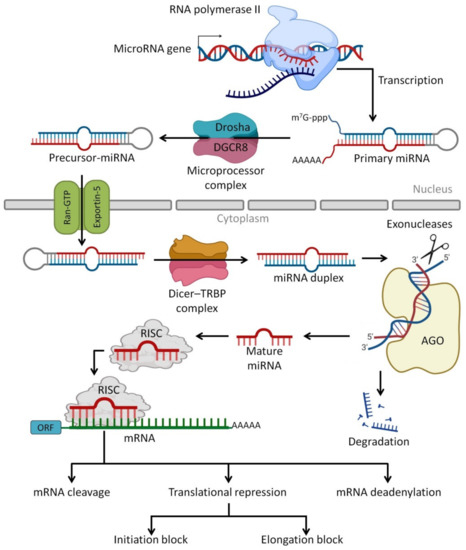
MicroRNAs (miRNAs) are single-stranded, small non-coding RNA molecules that epigenetically regulate gene expression, mostly through binding to the 3′ untranslated region (3′ UTR) of targeted messenger RNA (mRNA) molecules and, hence, mediating translational repression, usually combined with or followed by mRNA degradation. The human genome can produce more than a thousand of different miRNAs, which regulate approximately 70% of protein-coding genes, thereby controlling the activity and function of key signaling pathways and cellular processes such as cell proliferation, apoptosis, cell differentiation, and response to hypoxia. In fact, miRNAs can function either as oncogenes or tumor suppressors. From a clinical perspective, particular miRNAs can also serve as molecular biomarkers and therapeutic targets for several human diseases.

tRNA-derived RNA fragments are small non-coding RNAs specifically cleaved from transfer RNA (tRNAs), with a length of 14–48 nucleotides. They are classified into three main classes, namely the tRNA fragments (tRFs), the stress induced tRNA derived RNA fragments (tiRNAs), and the toxic small tRNA derived RNA fragments (tsRNAs). The tRNA molecules present a high differentiation in their cleavage sites, thus leading to several tRNA-derived RNA fragments varying in length and having distinct functions. They participate in translation regulation and gene silencing with a subsequent effect on cell viability and proliferation. Furthermore, they play a pivotal role in stress-induced situations.

Circular RNAs (circRNAs) are a neglected RNA type deriving from back-splicing. Initially, they were characterized as by-products of alternative splicing. However, the high-throughput analysis revolution uncovered their widespread expression, arousing the scientific interest. circRNAs have been designated as crucial modulators in several aspects of cell life, both in physiological and pathological states. CircRNAs are heavily involved in biological processes by acting either as sponges of miRNAs and RNA-binding proteins (RBPs) or by encoding for peptides. Especially, their miRNA-sponging activity implies that circRNAs can affect post-transcriptional gene regulation mediated by miRNAs. As studies regarding the intricate functions of circRNAs emerged, their association with multiple regulatory networks became evident, proving that these molecules play key roles in human disease development and may have wide clinical application.

Long noncoding RNAs (lncRNAs) are abundantly transcribed by the human genome. During the last decade, it has become evident that mutations and dysregulation of expression of lncRNAs significantly contribute to many human diseases. Alterations in the primary structure, secondary structure, and expression levels of lncRNAs as well as their cognate RNA-binding proteins have been shown to underlie the pathobiology of cancer, neurodegenerative, and cardiovascular diseases. Thus, recent scientific progress suggests that the involvement of lncRNAs in human diseases could be far more prevalent than previously thought.

This topic collection focuses on the information of the readers regarding the potential of miRNAs, tRNA-derived RNA fragments, circRNAs and other long non-coding RNAs to regulate protein-coding gene expression at a post-transcriptional level, in human physiological and pathological states. The authors are encouraged to submit their original research studies concerning this topic. Review articles will also be taken into consideration. We hope that this topic collection regarding the identity, biological role, and/or clinical utility of miRNAs, tRNA fragments, lncRNAs and circRNAs will arise the interest of the readers of this journal.

Dr. Christos K. Kontos
Guest Editor

Manuscript Submission Information

Manuscripts should be submitted online at www.mdpi.com by registering and logging in to this website. Once you are registered, click here to go to the submission form. All submissions that pass pre-check are peer-reviewed. Accepted papers will be published continuously in the journal (as soon as accepted) and will be listed together on the collection website. Research articles, review articles as well as short communications are invited. For planned papers, a title and short abstract (about 250 words) can be sent to the Editorial Office for assessment.

Submitted manuscripts should not have been published previously, nor be under consideration for publication elsewhere (except conference proceedings papers). All manuscripts are thoroughly refereed through a single-blind peer-review process. A guide for authors and other relevant information for submission of manuscripts is available on the Instructions for Authors page. Biomedicines is an international peer-reviewed open access monthly journal published by MDPI.

Please visit the Instructions for Authors page before submitting a manuscript. The Article Processing Charge (APC) for publication in this open access journal is 2600 CHF (Swiss Francs). Submitted papers should be well formatted and use good English. Authors may use MDPI's English editing service prior to publication or during author revisions.

Keywords

  • circular RNAs (circRNAs)
  • long non-coding RNAs (lncRNAs)
  • microRNAs (miRNAs)
  • tRNA fragments (tRFs or tiRNAs)
  • transcriptomics
  • cancer pathobiology
  • solid tumors
  • hematological malignancies
  • molecular biomarkers
  • therapeutic targets

Published Papers (3 papers)

2026

Jump to: 2023, 2022

19 pages, 6097 KB  
Article
Circuitous Ways of EWS::FLI1 Using Circular RNA ZNF609 to Evade Translational Repression by miR-145 in Ewing’s Sarcoma
by Aakash Koppula, Ahmed Abdelgawad, Brigette Romero, Victoria Beringer, Vijay Parashar and Mona Batish
Biomedicines 2026, 14(1), 129; https://doi.org/10.3390/biomedicines14010129 - 8 Jan 2026
Cited by 1 | Viewed by 850
Abstract
Background: Ewing’s sarcoma (EwS) is a pediatric bone and soft tissue cancer driven by the oncogenic fusion protein EWS::FLI1. Currently, EwS lacks targeted therapies, necessitating the identification of novel regulatory mechanisms. While the role of microRNAs and long non-coding RNAs has been explored [...] Read more.
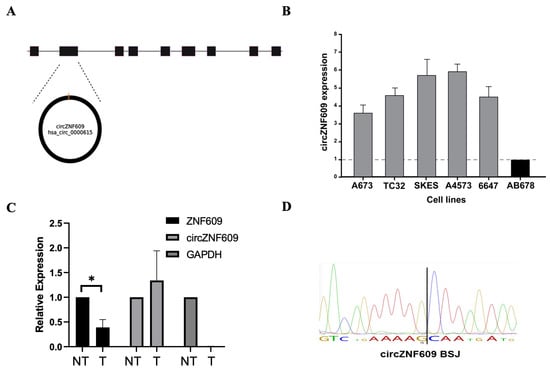
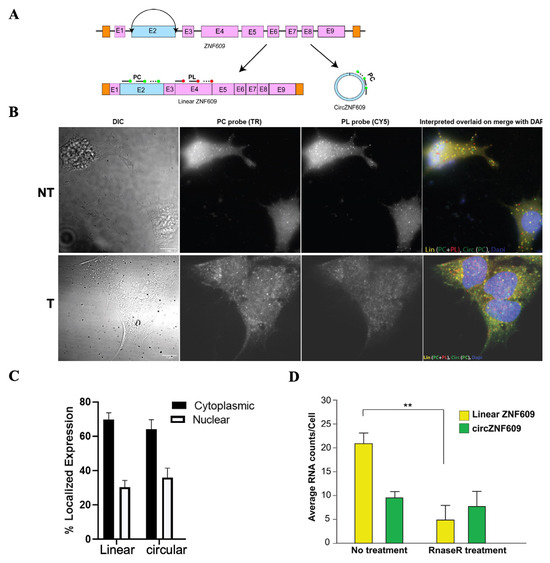
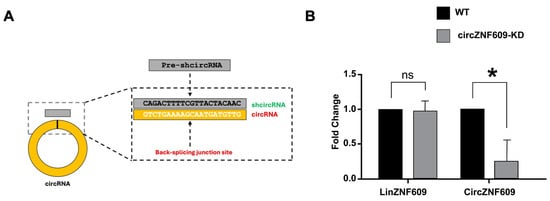
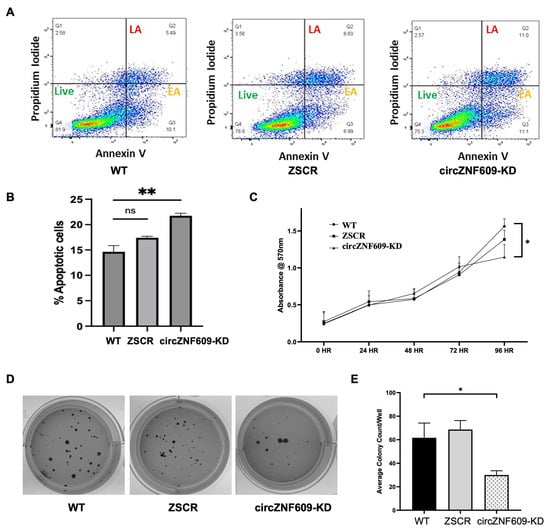
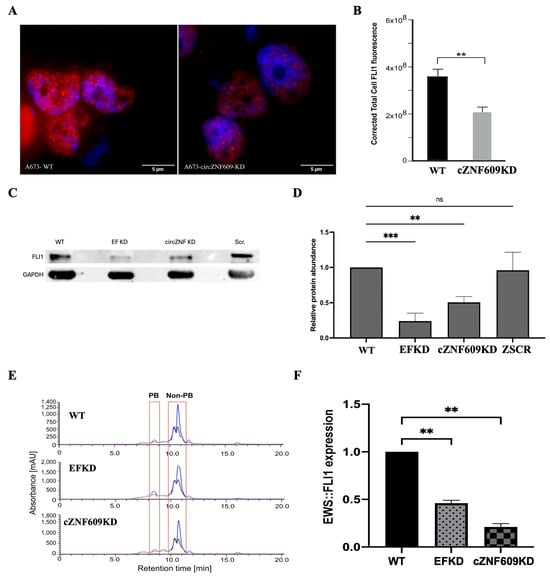
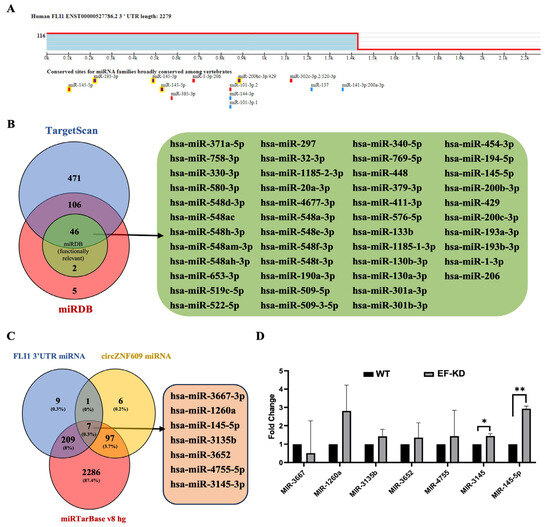
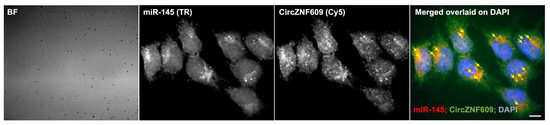
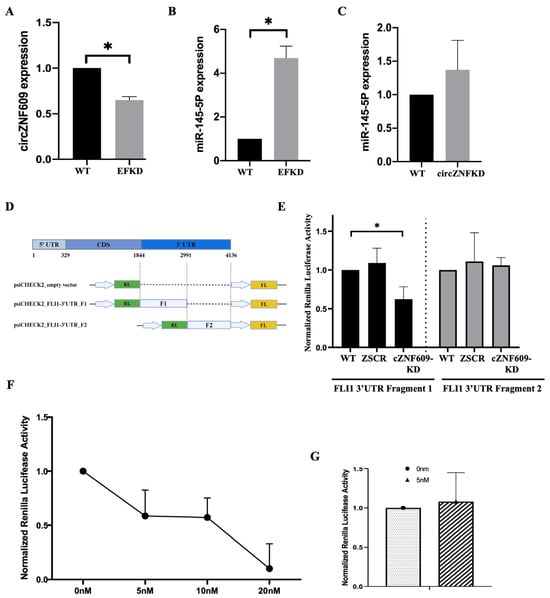
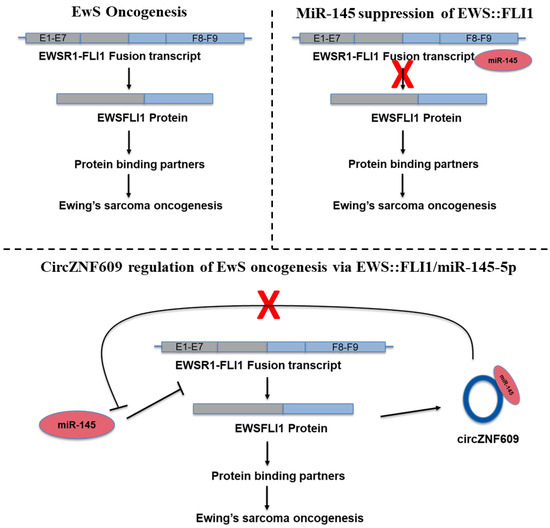
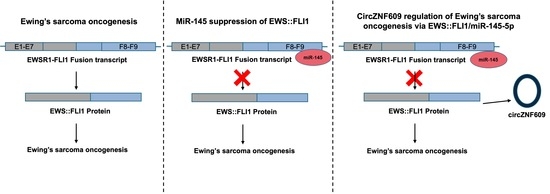
Background: Ewing’s sarcoma (EwS) is a pediatric bone and soft tissue cancer driven by the oncogenic fusion protein EWS::FLI1. Currently, EwS lacks targeted therapies, necessitating the identification of novel regulatory mechanisms. While the role of microRNAs and long non-coding RNAs has been explored in EwS, the presence and functional significance of circular RNAs (circRNAs) in EwS is not reported. This is the first study to report the presence and role of oncogenic circRNA, circZNF609 in EwS tumor progression. Methods: Expression of circZNF609 was validated in 5 different EwS cell lines using qPCR. Cellular localization of circZNF609 was identified using circFISH. Functional assays for proliferation, migration and apoptosis were performed in wild type and circZNF609 knocked down (KD) cell lines to confirm its oncogenic role. The impact of circZNF609 on EWS::FLI1 protein levels was confirmed using western blots, immunofluorescence, and polysome fractionation. Mechanistic insights were gained utilizing bioinformatic, dual-luciferase reporter assays, rescue experiments, and microscopy to identify and validate the circRNA-miRNA-mRNA regulatory axis. Results: We report the first identification of circZNF609 in EwS, demonstrating that its expression is EWS::FLI1-dependent. Functional analysis reveals that circZNF609 promotes cell proliferation and metastasis while inhibiting apoptosis. Mechanistically, circZNF609 acts as a molecular sponge for miR-145-5p. By sequestering this miRNA, circZNF609 prevents the translational repression of EWS::FLI1, thereby sustaining oncogenic signaling. Conclusions: These findings identify circZNF609 as a novel post-transcriptional regulator of EWS::FLI1 and establish its critical role in EwS pathogenesis. Our results suggest that targeting the circZNF609/miR-145-5p/EWS::FLI1 axis may offer a promising therapeutic strategy for EwS. Full article
Show Figures

Graphical abstract
2023

Jump to: 2026, 2022

13 pages, 1303 KB  
Article
High Intratumoral i-tRF-GlyGCC Expression Predicts Short-Term Relapse and Poor Overall Survival of Colorectal Cancer Patients, Independent of the TNM Stage
by Spyridon Christodoulou, Katerina Katsaraki, Panteleimon Vassiliu, Nikolaos Danias, Nikolaos Michalopoulos, Georgios Tzikos, Diamantis C. Sideris and Nikolaos Arkadopoulos
Biomedicines 2023, 11(7), 1945; https://doi.org/10.3390/biomedicines11071945 - 8 Jul 2023
Cited by 8 | Viewed by 2509
Abstract
Colorectal cancer (CRC), one of the most prevalent types of cancer, requires the discovery of new tumor biomarkers for accurate patient prognosis. In this work, the prognostic value of the tRNA fragment i-tRF-GlyGCC in CRC was examined. Total RNA extraction from 211 [...] Read more.
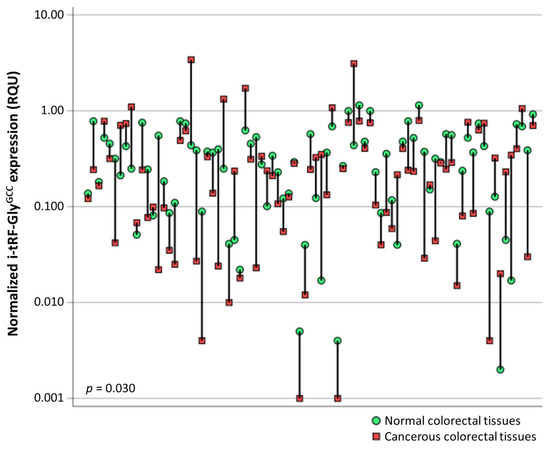
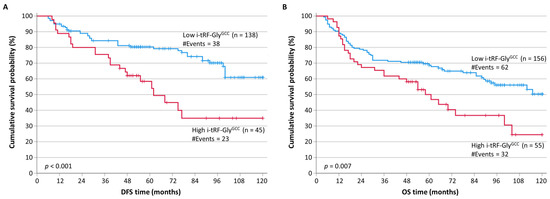
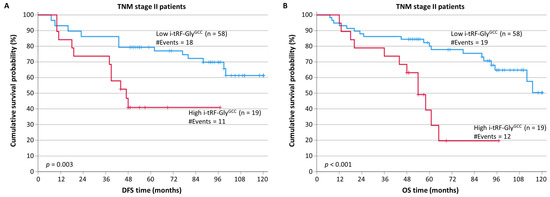
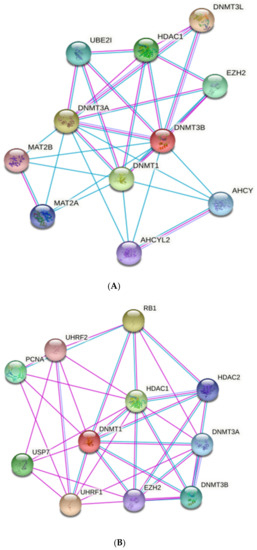
Colorectal cancer (CRC), one of the most prevalent types of cancer, requires the discovery of new tumor biomarkers for accurate patient prognosis. In this work, the prognostic value of the tRNA fragment i-tRF-GlyGCC in CRC was examined. Total RNA extraction from 211 CRC patient cancer tissue specimens and 83 adjacent normal tissues was conducted. Each RNA extract was subjected to in vitro polyadenylation and reverse transcription. A real-time quantitative PCR assay was used to quantify i-tRF-GlyGCC in all samples. Extensive biostatics analysis showed that i-tRF-GlyGCC levels in CRC tissues were significantly lower than in matched normal colorectal tissues. Additionally, the disease-free survival (DFS) and overall survival (OS) time intervals were considerably shorter in CRC patients with high i-tRF-GlyGCC expression. i-tRF-GlyGCC expression maintained its prognostic value independently of other established prognostic factors, as shown by the multivariate Cox regression analysis. Additionally, survival analysis after TNM stage stratification revealed that higher i-tRF-GlyGCC levels were linked to shorter DFS time intervals in patients with TNM stage II tumors, as well as an increased probability of having a worse OS for patients in TNM stage II. In conclusion, i-tRF-GlyGCC has the potential to be a useful molecular tissue biomarker in CRC, independent of other clinicopathological variables. Full article
Show Figures

Figure 1

2022

Jump to: 2026, 2023

63 pages, 7850 KB  
Review
Immunomodulatory Properties of Human Breast Milk: MicroRNA Contents and Potential Epigenetic Effects
by Ma’mon M. Hatmal, Mohammad A. I. Al-Hatamleh, Amin N. Olaimat, Walhan Alshaer, Hanan Hasan, Khaled A. Albakri, Enas Alkhafaji, Nada N. Issa, Murad A. Al-Holy, Salim M. Abderrahman, Atiyeh M. Abdallah and Rohimah Mohamud
Biomedicines 2022, 10(6), 1219; https://doi.org/10.3390/biomedicines10061219 - 24 May 2022
Cited by 56 | Viewed by 19159
Abstract
Infants who are exclusively breastfed in the first six months of age receive adequate nutrients, achieving optimal immune protection and growth. In addition to the known nutritional components of human breast milk (HBM), i.e., water, carbohydrates, fats and proteins, it is also a [...] Read more.
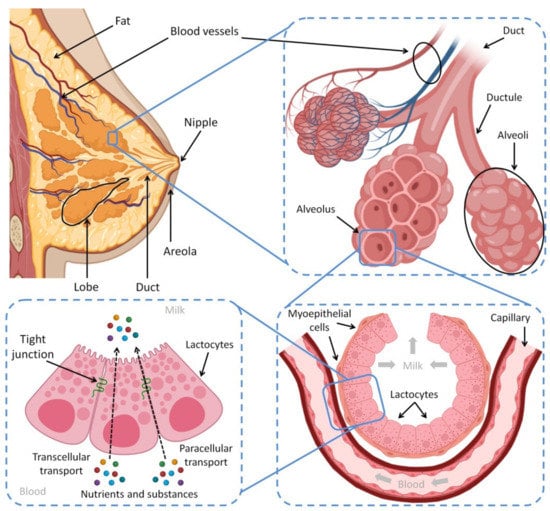
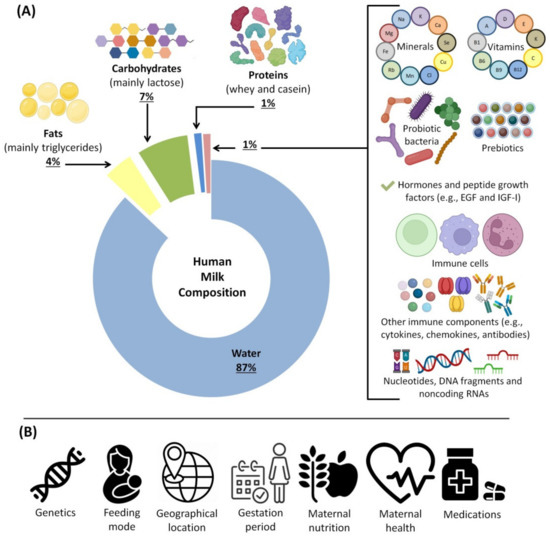
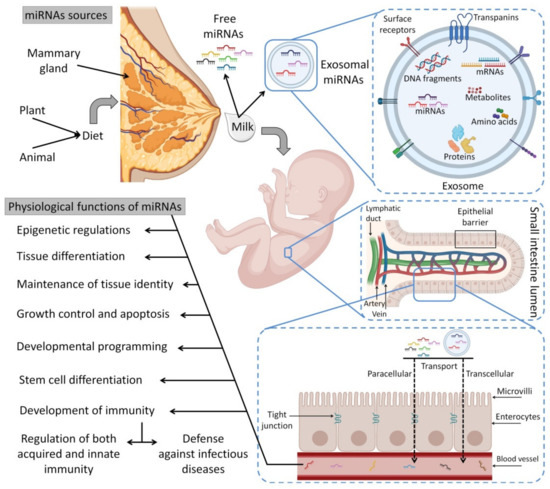
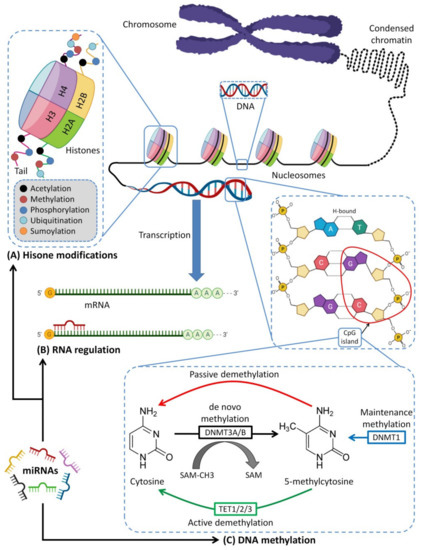
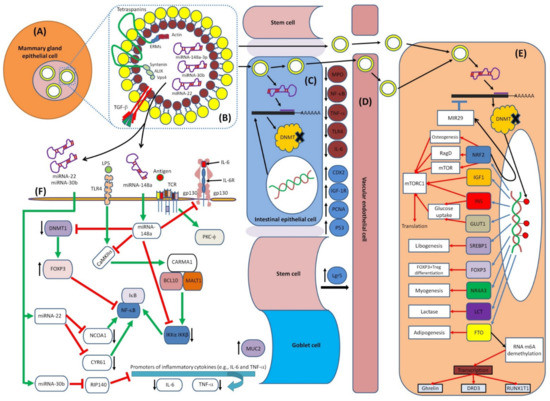
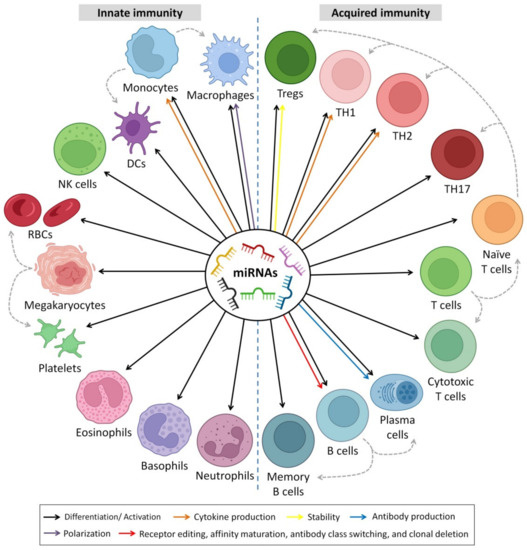
Infants who are exclusively breastfed in the first six months of age receive adequate nutrients, achieving optimal immune protection and growth. In addition to the known nutritional components of human breast milk (HBM), i.e., water, carbohydrates, fats and proteins, it is also a rich source of microRNAs, which impact epigenetic mechanisms. This comprehensive work presents an up-to-date overview of the immunomodulatory constituents of HBM, highlighting its content of circulating microRNAs. The epigenetic effects of HBM are discussed, especially those regulated by miRNAs. HBM contains more than 1400 microRNAs. The majority of these microRNAs originate from the lactating gland and are based on the remodeling of cells in the gland during breastfeeding. These miRNAs can affect epigenetic patterns by several mechanisms, including DNA methylation, histone modifications and RNA regulation, which could ultimately result in alterations in gene expressions. Therefore, the unique microRNA profile of HBM, including exosomal microRNAs, is implicated in the regulation of the genes responsible for a variety of immunological and physiological functions, such as FTO, INS, IGF1, NRF2, GLUT1 and FOXP3 genes. Hence, studying the HBM miRNA composition is important for improving the nutritional approaches for pregnancy and infant’s early life and preventing diseases that could occur in the future. Interestingly, the composition of miRNAs in HBM is affected by multiple factors, including diet, environmental and genetic factors. Full article
Show Figures

Figure 1

Back to TopTop