



Journal Description
Biomedicines
Biomedicines
is an international, peer-reviewed, open access journal on biomedicines published monthly online by MDPI.
- Open Access— free for readers, with article processing charges (APC) paid by authors or their institutions.
- High Visibility: indexed within Scopus, SCIE (Web of Science), PubMed, PMC, CAPlus / SciFinder, and other databases.
- Journal Rank: JCR - Q1 (Pharmacology and Pharmacy) / CiteScore - Q1 (Medicine (miscellaneous))
- Rapid Publication: manuscripts are peer-reviewed and a first decision is provided to authors approximately 17 days after submission; acceptance to publication is undertaken in 2.9 days (median values for papers published in this journal in the first half of 2025).
- Recognition of Reviewers: reviewers who provide timely, thorough peer-review reports receive vouchers entitling them to a discount on the APC of their next publication in any MDPI journal, in appreciation of the work done.
- Companion journals for Biomedicines include: IJTM, BioMed, Anesthesia Research and Emergency Care and Medicine.
Impact Factor:
3.9 (2024);
5-Year Impact Factor:
4.2 (2024)
Latest Articles
Genomic Organization, Evolutionary Conservation and Expression of Ataxin-2 and Ataxin-2-like Genes Underscore the Suitability of Zebrafish as a Model Organism for SCA2 and Related Diseases
Biomedicines 2025, 13(12), 2974; https://doi.org/10.3390/biomedicines13122974 - 3 Dec 2025
Abstract
Background/Objectives: The Ataxin-2 protein (ATXN2) plays an essential role in RNA metabolism and many cellular processes. Dysregulation or mutation of the Ataxin-2 gene (ATXN2) can lead to neurodegenerative diseases such as spinocerebellar ataxia type 2 (SCA2) and amyotrophic lateral sclerosis (ALS).
[...] Read more.
Background/Objectives: The Ataxin-2 protein (ATXN2) plays an essential role in RNA metabolism and many cellular processes. Dysregulation or mutation of the Ataxin-2 gene (ATXN2) can lead to neurodegenerative diseases such as spinocerebellar ataxia type 2 (SCA2) and amyotrophic lateral sclerosis (ALS). Despite numerous efforts in this field in other animal models, little is known about Atxn2 in zebrafish. In this study, we aim to investigate the potential suitability of zebrafish as a model for Atxn2-related diseases by performing basic analyses on Atxn2. Methods: We performed a bioinformatic protein analysis of Atxn2 from zebrafish and its paralog Atxn2l in relation to human and other vertebrate homologues. Based on a structural analysis of the atxn2 and atxn2l genes, the expression of the predicted transcripts was detected by RT-PCR and the spatiotemporal expression pattern was determined by whole-mount in situ hybridization. Results: We found similarities between the protein sequences of Atxn2 and Atxn2l in zebrafish and their functional domains with those of orthologs in humans and other vertebrates. The predicted transcripts of atxn2 and atxn2l were experimentally verified and their spatiotemporal expression patterns were determined during zebrafish development. Splicing variants were detected for both genes, suggesting a different role for the isoforms in different tissues. Conclusions: These findings provide new insights into the atxn2 and atxn2l genes, suggesting the zebrafish as a suitable animal model for functional studies and research on disease modeling of SCA2 and ALS.
Full article
(This article belongs to the Special Issue Animal Models of Human Pathology: Revision, Relevance and Refinements (4th Edition))
►
Show Figures
Open AccessReview
Cardioprotective Signaling: Outline and Future Directions
by
Aleksandar Jovanović
Biomedicines 2025, 13(12), 2973; https://doi.org/10.3390/biomedicines13122973 - 3 Dec 2025
Abstract
Cardioprotection refers to the natural capacity of heart tissue to resist damage under conditions such as ischemia–reperfusion and various metabolic stresses. First identified in the phenomenon of ischemic preconditioning, the concept has since broadened to encompass other triggers of protective signaling, including hypoxia,
[...] Read more.
Cardioprotection refers to the natural capacity of heart tissue to resist damage under conditions such as ischemia–reperfusion and various metabolic stresses. First identified in the phenomenon of ischemic preconditioning, the concept has since broadened to encompass other triggers of protective signaling, including hypoxia, temperature shifts, and a wide range of pharmacological compounds. This expansion indicates the presence of common molecular pathways and defense mechanisms. Known intracellular contributors to cardioprotection involve numerous factors, such as protein kinases, the reperfusion injury salvage kinase (RISK) cascade, the Survivor Activating Factor Enhancement (SAFE) pathway, hypoxia-inducible factor-1α (HIF1α), microRNAs, and Connexin 43, among others. These components are crucial in initiating downstream signaling, promoting the expression of protective genes, optimizing mitochondrial function, and regulating cytosolic and protein processes to maintain cardiac resilience. Key end-effectors include SUR2A, a regulatory subunit of sarcolemmal ATP-sensitive potassium (KATP) channels, autophagy, and mitochondria. Central mechanisms, such as modulation of the mitochondrial permeability transition pore and activation of KATP channels, play essential roles in the cardioprotective response. Although significant progress has been made in mapping these networks, many facets remain poorly understood. One of the most pressing challenges is to translate this knowledge into practical therapies and eventually create clinically applicable strategies to protect the heart.
Full article
(This article belongs to the Special Issue New Advances in Cardiovascular Drugs: In Memory of Professor Akira Endo)
►▼
Show Figures

Figure 1
Open AccessArticle
New Insights into Complex PTSD Treatment: Focus on TAAR1 Agonists
by
David-Mandl V. Tseilikman, Vadim E. Tseilikman, Vladislav A. Shatilov, Daria A. Obukhova, Ilya S. Zhukov, Ivan V. Yatsyk, Victoria A. Maistrenko, Vladimir A. Shipelin, Nikita V. Trusov, Marina N. Karpenko, Olga B. Tseilikman, Raul R. Gainetdinov and Jurica Novak
Biomedicines 2025, 13(12), 2972; https://doi.org/10.3390/biomedicines13122972 - 3 Dec 2025
Abstract
Background/Objectives: The therapeutic potential of selective trace amine-associated receptor 1 (TAAR1) agonists has been established in multiple animal models of depression and anxiety. PTSD is a debilitating psychiatric disorder frequently characterized by anxiety and often comorbid with major depressive disorder. Complex PTSD represents
[...] Read more.
Background/Objectives: The therapeutic potential of selective trace amine-associated receptor 1 (TAAR1) agonists has been established in multiple animal models of depression and anxiety. PTSD is a debilitating psychiatric disorder frequently characterized by anxiety and often comorbid with major depressive disorder. Complex PTSD represents an even more severe clinical presentation, emerging from prolonged or repeated exposure to traumatic events. Recent studies indicate that TAAR1 agonists can attenuate anxiety-like behaviors in experimental models of PTSD; however, the molecular mechanisms underlying this effect remain poorly understood. In this study, we evaluated whether TAAR1 agonism modulates PTSD-related neurochemical and molecular changes within the hippocampus and striatum. Methods: Post-traumatic stress was modeled using predator stress, a validated experimental paradigm relevant to complex PTSD. Treatment consisted of intraperitoneal administration of the TAAR1 agonist LK00764. Monoamine neurotransmitters and their metabolites were quantified, and the expression of genes implicated in noradrenergic, dopaminergic, and serotonergic signaling pathways was assessed. In addition, gene network reconstruction was performed using artificial intelligence to identify TAAR1-dependent regulatory interactions. Results: Treatment with a TAAR1 agonist fully prevented behavioral abnormalities in the experimental model of complex PTSD. Neurochemical analyses revealed decreased 5-HT levels in the hippocampus and reduced dopamine and metabolite concentrations in the striatum following TAAR1 agonism. Moreover, TAAR1 activation was associated with increased expression of the neurotrophic factor BDNF in the striatum. Gene network reconstruction identified a distinct molecular hub within the PTSD network, comprising TAAR1-coexpressed genes, their encoded proteins, and interconnected signaling pathways, suggesting a tightly regulated feedback loop. Conclusions: These findings provide novel evidence that TAAR1 agonists exert protective effects against complex PTSD-related behavioral and neurochemical abnormalities. The reconstructed TAAR1-centered gene network offers mechanistic insight into receptor-dependent regulation of monoaminergic signaling and neuroplasticity, supporting further exploration of TAAR1 agonists as promising therapeutic candidates for PTSD.
Full article
(This article belongs to the Special Issue Medicinal Chemistry in Drug Design and Discovery, 2nd Edition)
►▼
Show Figures

Figure 1
Open AccessEditorial
Autoimmune Diseases and Immune Modulation: Current Research and Future Outlook
by
Giuseppe Murdaca, Francesca Paladin and Sebastiano Gangemi
Biomedicines 2025, 13(12), 2971; https://doi.org/10.3390/biomedicines13122971 - 3 Dec 2025
Abstract
Autoimmune diseases (ADs), such as rheumatoid arthritis (RA), Sjogren’s disease (SS), and Systemic Lupus Erythematosus (SLE), have a significant impact on patients’ quality of life and impose significant economic and psychological burdens on society and families [...]
Full article
(This article belongs to the Special Issue Autoimmune Diseases and Immune Modulation: Current Research and Future Outlook)
Open AccessReview
Human Blood Exosomes: Isolation and Characterization Methods, Variability, and the Need for Standardized Protocols—A Review
by
Elena Sánchez-Vizcaíno Mengual, Laura Cordero and Hernán Pinto
Biomedicines 2025, 13(12), 2970; https://doi.org/10.3390/biomedicines13122970 - 3 Dec 2025
Abstract
Background/Objectives: As bioactive extracellular vesicles, exosomes participate in cellular communication and disease mechanisms, yet their structural complexity continues to challenge standard analytical methodologies. This review summarizes published studies reporting exosome concentrations in human plasma, serum, and platelet-rich plasma from healthy individuals and
[...] Read more.
Background/Objectives: As bioactive extracellular vesicles, exosomes participate in cellular communication and disease mechanisms, yet their structural complexity continues to challenge standard analytical methodologies. This review summarizes published studies reporting exosome concentrations in human plasma, serum, and platelet-rich plasma from healthy individuals and highlights methodological differences. Methods: A comprehensive PubMed search (1986–31 August 2025) was performed using terms related to exosomes and their quantification, excluding cancer- and disease-related studies. Eligible articles reported exosome concentrations in plasma, serum, or platelet-rich plasma using particle-counting techniques such as nanoparticle tracking analysis, flow cytometry, or tunable resistive pulse sensing. Results: Twenty-two articles, including 167 healthy donors, met the inclusion criteria. The following mean concentration ranges were reported: plasma (n = 18), ranged from 4.50 × 10⁸ to 6.70 × 10¹¹ particles/mL with differences by quantification method; serum (n = 10), from 5.30 × 10⁸ to 2.13 × 10¹¹ particles/mL; non-activated platelet-rich plasma (n = 1), 7.52 × 10⁹ particles/mL; activated platelet-rich plasma (n = 3), 4.87 × 10¹⁰ to 7.16 × 10¹⁰ particles/mL; and preconditioned platelet-rich plasma with photothermal biomodulation (n = 2), 2.53 × 10¹¹ to 2.99 × 10¹¹ particles/mL. Conclusions: Isolation and quantification methods exhibit high variability, which strongly influences the overall quantity and quality of the exosomes obtained. Characteristics, including cargo composition, purity, and exosome integrity, must be considered when developing validated methods. Furthermore, emerging evidence suggests that PTBM preconditioning can increase exosome release from cells. In summary, rigorous standardization of protocols is essential to advance the scientific understanding and the clinical potential of exosome-based therapies.
Full article
(This article belongs to the Special Issue Exosomes in Medicine: Recent Advances in Drug Delivery, Diagnostics, and Therapeutics)
►▼
Show Figures

Figure 1
Open AccessReview
Therapeutic Potential of Leptin in Neurodegenerative Disease
by
Jenni Harvey
Biomedicines 2025, 13(12), 2969; https://doi.org/10.3390/biomedicines13122969 - 3 Dec 2025
Abstract
Alzheimer’s disease (AD) is an age-related neurodegenerative disorder, characterised by the build-up of amyloid beta (Aβ) plaques and neurofibrillary tangles comprising hyper-phosphorylated tau. Increasing evidence indicates that in the early stages of AD, elevated levels of oligomeric forms of Aβ and phosphorylated tau
[...] Read more.
Alzheimer’s disease (AD) is an age-related neurodegenerative disorder, characterised by the build-up of amyloid beta (Aβ) plaques and neurofibrillary tangles comprising hyper-phosphorylated tau. Increasing evidence indicates that in the early stages of AD, elevated levels of oligomeric forms of Aβ and phosphorylated tau (p-tau) gives rise to impaired synaptic function which ultimately drives AD-associated cognitive abnormalities. Thus, developing drugs that can limit the synaptic impairments that occur early in AD may have therapeutic benefits. Clinical evidence increasingly supports a link between lifestyle choices and AD risk. Indeed, there is an association between the circulating levels of the metabolic hormone leptin, mid-life obesity and disease risk, which has in turn stimulated interest in targeting the leptin system to treat AD. It is well-established that leptin readily accesses the brain, with the hippocampus, a key region that degenerates in AD, identified as a prime target for this hormone. Within the hippocampus, leptin has cognitive enhancing properties as it markedly influences the cellular events underlying hippocampal-dependent learning and memory, with significant impact on synaptic plasticity and trafficking of glutamate receptors at hippocampal excitatory CA1 synapses. Moreover, studies using a range of cell-based systems and animal models of disease indicate not only that leptin has powerful pro-cognitive effects, but also that leptin protects against the unwanted synapto-toxic effects of Aβ and tau, as well as enhancing neuronal cell viability. Moreover, recent studies have demonstrated that smaller leptin-based molecules replicate the full repertoire of protective features of whole leptin. Here we review the evidence that the leptin system is a potential novel avenue for drug discovery in AD.
Full article
(This article belongs to the Special Issue New Molecular Insights into the Pathogenesis and Drug Development of Neurodegenerative Diseases: 2nd Edition)
►▼
Show Figures

Figure 1
Open AccessArticle
Comparison of Intraneural FacilitationTM Therapy and Exercise on Patients with Type 2 Diabetes: A Single-Blind Randomized Trial
by
Kyan Sahba, Christopher G. Wilson, Evelen Gonzales, Jamie Hankins, Hailey Jahromi, Mark Ghamsary and Mark Bussell
Biomedicines 2025, 13(12), 2968; https://doi.org/10.3390/biomedicines13122968 - 3 Dec 2025
Abstract
Background: Diabetic peripheral neuropathy (DPN) is a prevalent complication of type 2 diabetes (T2D), associated with microvascular dysfunction and significant morbidity. Exercise is a cornerstone of diabetes care and has demonstrated benefits for neuropathic pain, whereas Intraneural FacilitationTM (INF®) therapy
[...] Read more.
Background: Diabetic peripheral neuropathy (DPN) is a prevalent complication of type 2 diabetes (T2D), associated with microvascular dysfunction and significant morbidity. Exercise is a cornerstone of diabetes care and has demonstrated benefits for neuropathic pain, whereas Intraneural FacilitationTM (INF®) therapy is a manual technique designed to enhance intraneural perfusion. This study compared the effects of INF® therapy and exercise on neuropathic pain qualities in adults with DPN. Methods: In this single-blinded randomized controlled trial, 38 adults with T2D and moderate to severe DPN were randomized to INF® therapy (n = 20) or standardized exercise (n = 18). Participants completed nine 60-min sessions over a period of six weeks. Neuropathic pain qualities were assessed using the Pain Quality Assessment Scale (PQAS) at baseline and post-treatment. Paired t tests, independent t tests, and linear mixed models adjusted for age and body-mass index (BMI) evaluated within- and between-group changes. Results: Both treatment groups demonstrated significant reductions in total PQAS scores (p = 0.001). INF® therapy produced improvements across paroxysmal, superficial, and deep pain domains, with reductions in descriptors such as shooting, sharp, electrical, numb, and unpleasant pain. Exercise led to selective improvements, including sharp, electrical, numb, sensitive, and unpleasant sensations associated with pain. Between-group analyses and mixed-effects models revealed no significant differences after adjusting for confounding factors. Conclusions: Both INF® therapy and exercise improved neuropathic pain qualities in adults with DPN. INF® therapy demonstrated broader within-group effects, suggesting its potential as a passive adjunct or alternative for patients unable to tolerate active exercise.
Full article
(This article belongs to the Special Issue Molecular and Histopathological Background of Diabetic Neuropathy)
►▼
Show Figures

Figure 1
Open AccessArticle
Melatonin Modulates Astrocyte Inflammatory Response and Nrf2/SIRT1 Signaling Pathways in Adult Rat Cortical Cultures
by
Ester Rezena, Matheus Sinhorelli Cioccari, Aline Daniel Moreira de Moraes, Giancarlo Tomazzoni de Oliveira, Vanessa-Fernanda Da Silva, Izaviany Schmitz, Guilhian Leipnitz, Carlos-Alberto Gonçalves, Carmem Gottfried, Larissa Daniele Bobermin and André Quincozes-Santos
Biomedicines 2025, 13(12), 2967; https://doi.org/10.3390/biomedicines13122967 - 2 Dec 2025
Abstract
Background/Objectives: The cerebral cortex is critical for neurological functions that are strongly affected by the aging process. Astrocytes play a central role in maintaining neurotransmitter balance and regulating antioxidant and anti-inflammatory responses, but these physiological functions may also decline with age. This study
[...] Read more.
Background/Objectives: The cerebral cortex is critical for neurological functions that are strongly affected by the aging process. Astrocytes play a central role in maintaining neurotransmitter balance and regulating antioxidant and anti-inflammatory responses, but these physiological functions may also decline with age. This study aimed to investigate the effects of melatonin, a molecule with known antioxidant, anti-inflammatory and neuroprotective properties, on astrocytes of mature cortical tissue obtained from adult Wistar rats. Methods: Primary cortical astrocyte cultures were obtained from neonatal and 90-day-old Wistar rats and treated with melatonin (300 µM for 24 h). We assessed cell viability and metabolism (MTT and extracellular lactate levels), glutamine synthetase (GS) activity, glutathione (GSH) content, release of cytokines, and the expression of genes and proteins associated with oxidative stress and inflammation by RT-qPCR and Western blotting. Results: Melatonin did not affect cell viability or lactate production. Moreover, there were no changes in GS activity, a key enzyme in glutamate metabolism, or in GSH levels, an antioxidant defense molecule synthesized by astrocytes. However, melatonin significantly reduced the expression of the nuclear factor NFκB, cyclooxygenase 2 (COX-2), and inducible nitric oxide synthase (iNOS), while increasing interleukin 6 and 10 levels. Melatonin also upregulated the gene expression of the transcriptional factors Nrf2 and sirtuin 1 (SIRT1) and downregulated AMP-activated protein kinase (AMPK) and peroxisome proliferator-activated receptor gamma coactivator-1 alpha (PGC-1α), while PGC-1α protein levels remained unchanged. A complementary analysis of astrocytes obtained from neonatal rats showed that melatonin did not change metabolic or redox parameters under basal conditions. Conclusions: Melatonin exerted anti-inflammatory effects on adult astrocyte cultures, likely through modulation of protective signaling pathways, such as Nrf2/SIRT1. These findings highlight the potential role of melatonin in preserving astrocytic function and mitigating age-related neuroinflammatory processes.
Full article
(This article belongs to the Special Issue Central Role of Mitochondrial Oxidative Stress in the Pathophysiology of Disorders (2nd Edition))
►▼
Show Figures

Figure 1
Open AccessArticle
An Immune Gene Signature Stratifies Breast Cancer Prognosis Through iCAF-Driven Immunosuppressive Microenvironment
by
Sibin Mei, Chenhao Bai, Huijuan Wang, Kainan Lin, Tianyuan Pan, Yunkun Lu and Qian Cao
Biomedicines 2025, 13(12), 2966; https://doi.org/10.3390/biomedicines13122966 - 2 Dec 2025
Abstract
Background/Objectives: Breast cancer is the leading cause of cancer-related mortality in women, highlighting the urgent need for robust prognostic tools to enable individualized risk stratification. Methods: Transcriptomic data from 1075 breast cancer and 113 adjacent normal tissues in The Cancer Genome Atlas
[...] Read more.
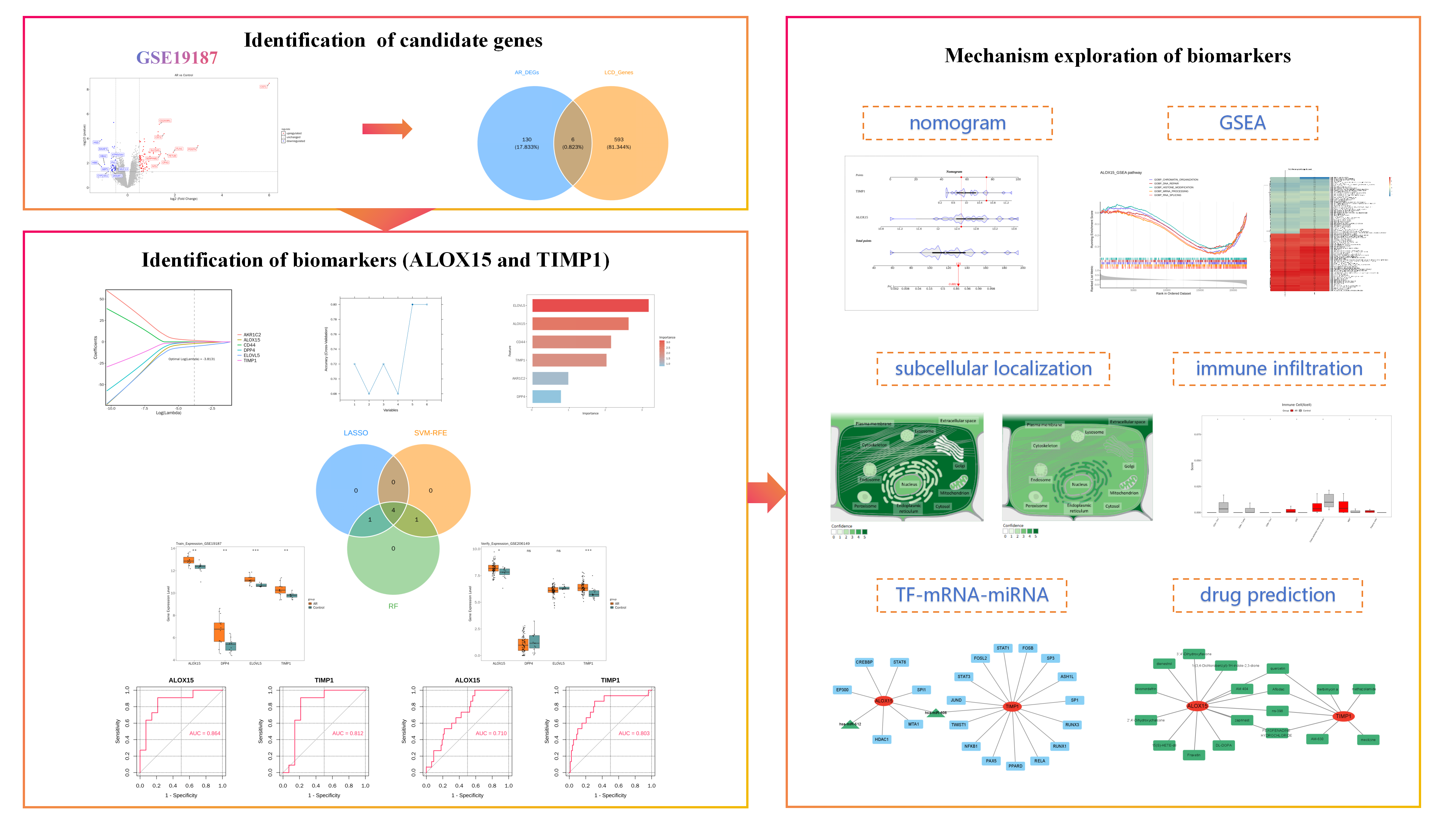
Background/Objectives: Breast cancer is the leading cause of cancer-related mortality in women, highlighting the urgent need for robust prognostic tools to enable individualized risk stratification. Methods: Transcriptomic data from 1075 breast cancer and 113 adjacent normal tissues in The Cancer Genome Atlas (TCGA) were integrated with clinical information. Differential expression analysis identified 531 immune-related genes, which were further selected by univariate Cox regression and Least Absolute Shrinkage and Selection Operator (LASSO) regression to construct a 13-gene prognostic signature. The model was validated in an independent cohort (n = 327). Tumor immune microenvironment and single-cell RNA sequencing data were analyzed to explore underlying biological differences. Results: The 13-gene signature effectively stratified patients into low- and high-risk groups with significantly different overall survival in both the TCGA cohort (log-rank p < 0.0001; C-index = 0.678; 5-year AUC = 0.72) and the validation cohort (log-rank p < 0.0001; C-index = 0.703; 3-year AUC = 0.81). Low-risk tumors exhibited an antitumor immune microenvironment enriched in CD8+ T cells, T follicular helper (Tfh) cells, and M1 macrophages, whereas high-risk tumors were dominated by immunosuppressive regulatory T cells and M2 macrophages (all p < 0.0001). Single-cell analysis revealed expansion of malignant epithelial cells and inflammatory cancer-associated fibroblasts (iCAFs) in high-risk tumors, with higher iCAF scores significantly associated with poorer survival (log-rank p = 0.00036). Conclusions: Collectively, this study delivers a rigorously validated 13-gene immune signature whose prognostic utility is rooted in distinct immune microenvironmental features, while unveiling iCAF-targeted therapeutic strategies as a promising intervention avenue.
Full article
(This article belongs to the Special Issue Breast Cancer: New Diagnostic and Therapeutic Approaches)
►▼
Show Figures

Graphical abstract
Open AccessArticle
Comparative Investigation of the Effects of Adenosine Triphosphate, Melatonin, and Thiamine Pyrophosphate on Amiodarone-Induced Neuropathy and Neuropathic Pain in Male Rats
by
Agah Abdullah Kahramanlar, Habip Burak Ozgodek, Ramazan Ince, Bulent Yavuzer, Ozlem Admis, Ali Sefa Mendil, Bilge Ekinci and Halis Suleyman
Biomedicines 2025, 13(12), 2965; https://doi.org/10.3390/biomedicines13122965 - 2 Dec 2025
Abstract
Background: Amiodarone is a widely used class III antiarrhythmic agent, but its use can lead to peripheral neuropathy mediated by mitochondrial dysfunction, oxidative stress, and neuroinflammatory injury, while effective preventive options remain limited. Agents that support mitochondrial energy metabolism, sustain redox balance, and
[...] Read more.
Background: Amiodarone is a widely used class III antiarrhythmic agent, but its use can lead to peripheral neuropathy mediated by mitochondrial dysfunction, oxidative stress, and neuroinflammatory injury, while effective preventive options remain limited. Agents that support mitochondrial energy metabolism, sustain redox balance, and modulate inflammation, including adenosine triphosphate (ATP), melatonin, and thiamine pyrophosphate (TPP), may counteract these mechanisms; however, their relative neuroprotective potential in amiodarone-induced neuropathy remains unclear. This study aimed to comparatively evaluate the effects of ATP, melatonin, and TPP on amiodarone-induced peripheral neuropathy and neuropathic pain in rats. Methods: Thirty male albino Wistar rats were assigned to five groups: healthy; amiodarone (50 mg/kg/orally); amiodarone + ATP (5 mg/kg/intraperitoneally); amiodarone + melatonin (10 mg/kg/orally); or amiodarone + TPP (20 mg/kg/intraperitoneally). Treatments were given once daily for 14 days. Oxidative stress indices (malondialdehyde (MDA), total glutathione (tGSH), superoxide dismutase (SOD), catalase (CAT)) and proinflammatory cytokines (tumor necrosis factor-alpha (TNF-α), interleukin-1 Beta (IL-1β), interleukin-6 (IL-6)) were quantified in sciatic nerve by Enzyme-Linked Immunosorbent Assay (ELISA). Paw withdrawal thresholds were measured with the Randall-Selitto test before and after treatment. Histopathology was performed using Hematoxylin-eosin staining. Results: Amiodarone exposure resulted in pronounced elevations in MDA and proinflammatory cytokine levels, accompanied by significant reductions in tGSH, SOD, CAT activities, and paw withdrawal thresholds. ATP, melatonin and TPP ameliorated these alterations to varying degrees. Among them, TPP provided the most robust antioxidant and anti-inflammatory effects, followed by ATP and melatonin. Histopathological examination confirmed most severe axonal degeneration, interstitial edema and Schwann cell proliferation in the amiodarone group, with substantial amelioration in the TPP-treated rats. Conclusions: Amiodarone induces neuropathic pain through oxidative and inflammatory injury to peripheral nerves. TPP exhibited superior neuroprotective efficacy compared with ATP and melatonin, highlighting its potential as a candidate therapeutic agent for amiodarone-related neuropathy. Further clinical research is warranted to support translational application of these findings.
Full article
(This article belongs to the Special Issue Advanced Research in Neuroprotection)
►▼
Show Figures

Graphical abstract
Open AccessArticle
Explaining Risk Stratification in Differentiated Thyroid Cancer Using SHAP and Machine Learning Approaches
by
Mallika Khwanmuang, Watcharaporn Cholamjiak and Pasa Sukson
Biomedicines 2025, 13(12), 2964; https://doi.org/10.3390/biomedicines13122964 - 2 Dec 2025
Abstract
Background/Objectives: Differentiated thyroid cancer (DTC) represents over 90% of all hyroid malignancies and typically has a favorable prognosis. However, approximately 30% of patients experience recurrence within 10 years after initial treatment. Conventional risk classification frameworks such as the American Thyroid Association (ATA)
[...] Read more.
Background/Objectives: Differentiated thyroid cancer (DTC) represents over 90% of all hyroid malignancies and typically has a favorable prognosis. However, approximately 30% of patients experience recurrence within 10 years after initial treatment. Conventional risk classification frameworks such as the American Thyroid Association (ATA) and AJCC TNM systems rely heavily on pathological interpretation, which may introduce observer variability and incomplete documentation. This study aimed to develop an interpretable machine-learning framework for risk stratification in DTC and to identify major clinical predictors using SHapley Additive exPlanations (SHAP). Methods: A retrospective dataset of 345 patients was obtained from the UCI Machine Learning Repository. Thirteen clinicopathological features were analyzed, including Age, Gender, T, N, M, Hx Radiotherapy, Focality, Adenopathy, Pathology, and Response. Statistical analysis and feature selection (ReliefF and mRMR) were applied to identify the most influential variables. Two modeling scenarios were tested using an optimizable neural network classifier: (1) all 10 core features and (2) reduced features selected from machine learning criteria. SHAP analysis was used to explain model predictions and determine feature impact for each risk category. Results: Reducing the input features from 10 to 6 led to improved performance in the explainable neural network model (AUC = 0.94, accuracy = 92%), confirming that T, N, Response, Age, M, and Hx Radiotherapy were the most informative predictors. SHAP analysis highlighted N and T as the dominant drivers of high-risk classification, while Response enhanced postoperative biological interpretation. Notably, when Response was excluded (Scenario III), the optimizable tree model still achieved strong predictive performance (AUC = 0.93–0.96), demonstrating that accurate preoperative risk estimation can be achieved using only clinical baseline features. Conclusions: The proposed interpretable neural network model effectively stratifies recurrence risk in DTC while reducing dependence on subjective pathological interpretation. SHAP-based feature attribution enhances clinical transparency, supporting integration of explainable machine learning into thyroid cancer follow-up and personalized management.
Full article
(This article belongs to the Special Issue Pathological Biomarkers in Precision Medicine)
►▼
Show Figures

Figure 1
Open AccessArticle
piR-hsa-022095 Drives Hypertrophic Scar Formation via KLF11-Dependent Fibroblast Proliferation
by
Rongxin Ren, Wenjiang Qian, Hongyi Zhao, Di Wang, Yanxia Xiao and Yajun Lin
Biomedicines 2025, 13(12), 2963; https://doi.org/10.3390/biomedicines13122963 - 2 Dec 2025
Abstract
Background/Objectives: Hypertrophic scar (HS) is a fibroproliferative disorder characterized by excessive fibroblast activation and collagen deposition. The role of PIWI-interacting RNAs (piRNAs) in HS pathogenesis has not been defined. This study aimed to identify HS-related piRNAs, clarify their molecular mechanisms, and evaluate their
[...] Read more.
Background/Objectives: Hypertrophic scar (HS) is a fibroproliferative disorder characterized by excessive fibroblast activation and collagen deposition. The role of PIWI-interacting RNAs (piRNAs) in HS pathogenesis has not been defined. This study aimed to identify HS-related piRNAs, clarify their molecular mechanisms, and evaluate their therapeutic potential. Methods: High-throughput piRNA sequencing was performed on hypertrophic scar and matched normal tissues, followed by validation in patient-derived samples and dermal fibroblasts using quantitative reverse transcription PCR. Functional assays, including proliferation, apoptosis, migration, and invasion assays, were conducted after transfection with piRNA mimics or inhibitors. RNA sequencing, Gene Ontology, and Kyoto Encyclopedia of Genes and Genomes enrichment analyses, as well as dual-luciferase reporter and rescue assays, were used to identify and confirm molecular targets. Results: Sequencing revealed piR-hsa-022095 as one of the most significantly upregulated piRNAs in HS. Its inhibition suppressed fibroblast viability, migration, and invasion while inducing apoptosis and G0/G1 arrest. Transcriptomic profiling identified cell-cycle–related genes as major downstream targets, with KLF11 emerging as the principal effector. piR-hsa-022095 targets the 3′ UTR of KLF11, repressing its expression and thereby facilitating fibroblast proliferation. Restoration of KLF11 reversed the pro-fibrotic effects of piR-hsa-022095, confirming its functional role in HS pathogenesis. Conclusions: This study identifies piR-hsa-022095 as a novel regulator implicated in HS formation through repression of KLF11. The piR-hsa-022095–KLF11 axis may represent a previously unrecognized regulatory pathway involved in hypertrophic scar formation, providing new insights into the molecular mechanisms underlying HS pathogenesis.
Full article
(This article belongs to the Section Cell Biology and Pathology)
►▼
Show Figures

Figure 1
Open AccessArticle
Perioperative Profiles of Immune Cells in Patients with Postoperative Delirium After Cardiac Surgery with Cardiopulmonary Bypass
by
Juan Wu, Zhenzhen Cheng, Xinyi Liao, Ping Yang, Qinjuan Wu, Tingting Wang, Wentong Meng, Zongcheng Tang and Lei Du
Biomedicines 2025, 13(12), 2962; https://doi.org/10.3390/biomedicines13122962 - 1 Dec 2025
Abstract
Background: Postoperative delirium (POD) is known to involve systemic inflammatory responses, but the characteristics of the immune cell types involved in these responses are unclear. Methods: In this prospective study, we compared relative abundances and transcriptomes of circulating immune cells between patients who
[...] Read more.
Background: Postoperative delirium (POD) is known to involve systemic inflammatory responses, but the characteristics of the immune cell types involved in these responses are unclear. Methods: In this prospective study, we compared relative abundances and transcriptomes of circulating immune cells between patients who experienced POD (n = 11) or not (n = 109) within 7 days after elective cardiac surgery with cardiopulmonary bypass. Blood was sampled before and at 24 h after surgery; features of immune cells were profiled using multi-channel spectral flow cytometry, 10× single-cell RNA sequencing, and measurement of plasma levels of cytokines. Results: Patients with POD were older and with higher incidence of congestive heart failure than patients without POD, and these risk factors in turn positively correlated with preoperative proportion of CD40+/HLA-DR+ monocytes and CD69+CD8+ T cells. In addition, preoperative activation of antigen presentation in monocytes and chemotaxis in CD8+ T cells, as well as elevated plasma levels of chemokines CCL3 and CXCL8, were detected in patients with POD. After cardiac surgery, activation of antigen presentation and chemotaxis were also found in patients with POD. Conclusions: This study described the perioperative landscape of immune cells in POD and found possible links between preoperative immune dysfunction and risk factors, which may guide future research to explore how the immune system contributes to POD and to design preventive strategies.
Full article
(This article belongs to the Special Issue Chronic Vascular Impairment in Heart, Brain, and Kidney Disorders: Molecular Mechanisms and Therapeutic Strategies)
►▼
Show Figures

Figure 1
Open AccessArticle
Circulating miR-223-3p as an Independent Biomarker of Recurrent Thrombotic Risk After Ischemic Stroke
by
Bence Balczó, Katalin Maricza, Krisztina Molnár, Zsuzsanna Elek, Zsófia Bánlaki, Réka Kovács-Nagy, Gergely Keszler, Zsolt Rónai, Abigél Molnár and Tihamér Molnár
Biomedicines 2025, 13(12), 2961; https://doi.org/10.3390/biomedicines13122961 - 1 Dec 2025
Abstract
Background: Circulating microRNAs (miRNAs) have emerged as potential biomarkers of platelet reactivity and thrombotic risk. Among them, miR-223-3p regulates P2Y12 receptor expression and may influence response to antiplatelet therapy. This study aimed to evaluate the prognostic value of selected circulating miRNAs in post-stroke
[...] Read more.
Background: Circulating microRNAs (miRNAs) have emerged as potential biomarkers of platelet reactivity and thrombotic risk. Among them, miR-223-3p regulates P2Y12 receptor expression and may influence response to antiplatelet therapy. This study aimed to evaluate the prognostic value of selected circulating miRNAs in post-stroke patients receiving antiplatelet treatment. Methods: Sixty ischemic stroke survivors were prospectively enrolled and followed for 18 months for recurrent vascular events (stroke, transient ischemic attack, or myocardial infarction). Plasma levels of miR-126-3p, miR-223-3p, miR-24-3p, and miR-199a-5p were quantified using reverse transcription real-time PCR. Clinical data, antiplatelet regimen, statin use, and Essen Stroke Risk Scores (ESRS) were recorded. Logistic regression was applied to identify independent predictors of thrombotic events. Results: Expression of all examined miRNAs differed significantly across treatment groups. The dual antiplatelet therapy (DAPT) group showed the highest levels of miR-126-3p and miR-199a-5p (p < 0.01). Within the statin-naïve DAPT subgroup, lower miR-199a-5p levels (p < 0.001) were observed among patients who experienced ischemic events (n = 7/60; 12%; stroke = 4, TIA = 2, ACS = 1) during 18 months of follow-up. In multivariate analysis, reduced miR-223-3p remained the only independent predictor of recurrent thrombotic events (OR 1.18, 95% CI 1.01–1.37, p = 0.036), independent of ESRS and platelet reactivity. Elevated miR-126-3p and miR-199a-5p were associated with favorable treatment response, particularly among statin users. Conclusions: This study identifies low circulating miR-223-3p as an independent biomarker of thrombotic risk in post-stroke patients, potentially reflecting enhanced platelet activation via P2Y12 signaling. In contrast, higher miR-126-3p and miR-199a-5p levels may indicate more effective antiplatelet response. These findings support the potential utility of miRNA profiling for individualized antiplatelet therapy and long-term risk stratification after ischemic stroke.
Full article
(This article belongs to the Special Issue Advances in Cardiovascular Diseases: Pathophysiological Insights, Therapeutic Strategies and Future Directions)
►▼
Show Figures

Figure 1
Open AccessArticle
Prediction Model for eGFR Thresholds Guiding the Optimal Timing of Hemodialysis Preparation in Chronic Kidney Disease
by
Geo Neul Park, Yoonwon Choi, Ji Eun Moon, Seon Min Kim, Jin Kuk Kim, Moo Yong Park, Soo Jeong Choi and Byung Chul Yu
Biomedicines 2025, 13(12), 2960; https://doi.org/10.3390/biomedicines13122960 - 1 Dec 2025
Abstract
Background/Objectives: The progression of chronic kidney disease (CKD) is influenced by multiple factors, complicating the determination of the optimal timing for hemodialysis preparation. The aim of this study was to identify predictive factors and develop a model to guide this timing in
[...] Read more.
Background/Objectives: The progression of chronic kidney disease (CKD) is influenced by multiple factors, complicating the determination of the optimal timing for hemodialysis preparation. The aim of this study was to identify predictive factors and develop a model to guide this timing in patients with CKD. Methods: This retrospective study included patients who progressed to end-stage kidney disease (ESKD) and initiated hemodialysis after at least one year of follow-up at a single tertiary hospital between January 2011 and June 2024. The estimated glomerular filtration rate at 6 months before hemodialysis initiation (eGFR_6M), indicating timing for vascular access creation, and its decline trajectory were retrospectively analyzed according to underlying diseases and clinical conditions. A regression model was developed, and its performance was evaluated in internal and external validation cohorts. Results: Among 507 patients, the mean eGFR_6M was 11.7 ± 4.9 mL/min/1.73 m2, with higher values observed in patients with diabetes mellitus (DM), cardiovascular disease (CVD), stroke, dementia, liver cirrhosis (LC), nephrotic-range proteinuria, or hypoalbuminemia. The mean eGFR_6M decline rate was 8.3 ± 9.6 mL/min/1.73 m2/year, with more rapid declines observed in patients with DM, LC, nephrotic range proteinuria, and hypoalbuminemia. The model was developed using significant predictors—sex, impaired mobility, DM, CVD, left ventricular ejection fraction, blood urea nitrogen, and phosphate levels—and showed acceptable performance in both validation cohorts, with P30 ranging from 70% to 75%. Conclusions: This study provides nephrologists with an objective reference to guide the timing of dialysis preparation, supporting personalized ESKD life planning and improving patient outcomes.
Full article
(This article belongs to the Section Molecular and Translational Medicine)
►▼
Show Figures

Figure 1
Open AccessArticle
Impact of COVID-19 on Renal Function: Analysis of Acute Kidney Injury Across Three Pandemic Waves
by
Mihai Lazar, Cristina Emilia Chitu, Mihaela Cristina Olariu and Ecaterina Constanta Barbu
Biomedicines 2025, 13(12), 2959; https://doi.org/10.3390/biomedicines13122959 - 1 Dec 2025
Abstract
Background/Objectives: Coronavirus disease 2019 (COVID-19) has emerged as a multisystem disorder, with acute kidney injury (AKI) representing a frequent and severe complication associated with poor outcomes. This study assessed the incidence, risk factors, and outcomes of AKI in patients with severe COVID-19 across
[...] Read more.
Background/Objectives: Coronavirus disease 2019 (COVID-19) has emerged as a multisystem disorder, with acute kidney injury (AKI) representing a frequent and severe complication associated with poor outcomes. This study assessed the incidence, risk factors, and outcomes of AKI in patients with severe COVID-19 across three pandemic waves. Methods: We retrospectively analyzed 561 patients with severe COVID-19 admitted to a tertiary hospital between March 2020 and December 2021. AKI was defined and staged according to KDIGO 2012 criteria. Demographic, clinical, laboratory, and imaging data were evaluated using univariate and multivariable logistic regression and ROC curve analyses to identify predictors of AKI. Results: AKI occurred in 71 patients (12.65%), most frequently during the third wave (40.9%). Stage 1 accounted for 62% of cases, while 23.9% progressed to stage 3 and 10% required dialysis. Compared with patients without AKI, those with AKI had longer hospital stays (15 vs. 11 days), more intense inflammatory responses (CRP 91.7 vs. 63.3 mg/L, p = 0.002), and higher mortality (35.2% vs. 10.2%, p < 0.001). Multivariable analysis identified elevated serum myoglobin (OR = 1.010, p = 0.001), prolonged corticosteroid therapy (OR = 1.096, p = 0.035), and lower hemoglobin (OR = 0.375, p < 0.001) as independent factors of AKI. Conclusions: AKI in severe COVID-19 is multifactorial, reflecting the interplay of systemic inflammation, cytolysis, coagulopathy, and renal microvascular dysfunction. The risk increases with higher myoglobin levels, longer corticosteroid exposure, and lower hemoglobin, highlighting the need for early identification and preventive strategies in high-risk patients.
Full article
(This article belongs to the Special Issue Mechanisms, Implications, and Therapeutic Targets in Infectious Diseases)
►▼
Show Figures

Figure 1
Open AccessArticle
Podocalyxin, Isthmin-1, and Pentraxin-3 Immunoreactivities as Emerging Immunohistochemical Markers of Fibrosis in Chronic Hepatitis B
by
Müge Özgüler, Serhat Hançer, Özgen Arslan Solmaz and Tuncay Kuloğlu
Biomedicines 2025, 13(12), 2958; https://doi.org/10.3390/biomedicines13122958 - 1 Dec 2025
Abstract
Introduction and Objectives: Persistent hepatic inflammation serves as a key driver of fibrogenesis in chronic hepatitis B. Fibrosis is a complex molecular and cellular process. Podocalyxin is a type I transmembrane sialomucin, and physiological expression of podocalyxin has been identified in the liver.
[...] Read more.
Introduction and Objectives: Persistent hepatic inflammation serves as a key driver of fibrogenesis in chronic hepatitis B. Fibrosis is a complex molecular and cellular process. Podocalyxin is a type I transmembrane sialomucin, and physiological expression of podocalyxin has been identified in the liver. Pentraxin 3 plays a crucial role in humoral innate immune responses. Isthmin-1 has been associated with metabolic regulation and immune response modulation. We aimed to evaluate the immunoreactivities of podocalyxin, Isthmin-1, and pentraxin-3 in the liver tissue of patients with chronic hepatitis B. Materials and Methods: Power analysis was performed (effect size (f = 0.5), (α) = 0.05 and statistical power of 0.80). Sample size was calculated to be a total of 63 samples, with 21 samples per group. Individuals with negative hepatitis serology and normal liver histopathology, from whom liver tissue was obtained for any reason, were designated as the control group. Liver specimens of chronic hepatitis B were categorized into F0–F2 (no or mild fibrosis) and ≥F3 (advanced fibrosis). Immunohistochemical staining was performed to assess the expression and immunoreactivity of Podocalyxin, Isthmin-1, and Pentraxin-3. A histoscore was created based on the prevalence of staining immunoreactivity (0.1: <25%, 0.4: 26–50%, 0.6: 51–75%, 0.9: 76–100%) and intensity (0: none, +0.5: very low, +1: low, +2: moderate, +3: severe). Results: A statistically significant increase in Podocalyxin, Pentraxin-3, and Isthmin-1 immunoreactivities was found in fibrotic liver tissue compared to normal liver tissue and mild fibrotic groups (p < 0.05). Conclusions: We concluded that our findings suggest these proteins may have an additional role in the progression of liver fibrosis in chronic hepatitis B.
Full article
(This article belongs to the Special Issue Pathogenesis, Diagnosis and Treatment of Infectious Diseases)
►▼
Show Figures

Figure 1
Open AccessArticle
Alveolar and Bronchial Nitric Oxide Parameters in Pre-Capillary Pulmonary Hypertension
by
Balázs Csoma, Gergő Szűcs, András Bikov, Zsolt Dezső Rozgonyi, Alexandra Nagy, Zsombor Matics, Veronika Müller, Kristóf Karlócai, Györgyi Csósza and Zsófia Lázár
Biomedicines 2025, 13(12), 2957; https://doi.org/10.3390/biomedicines13122957 - 1 Dec 2025
Abstract
Background: Exhaled NO concentrations at different flow rates can be used to calculate pulmonary NO dynamics in the conductive and peripheral airways and can be described by the total bronchial flux of NO (JawNO) and alveolar NO concentration (CANO),
[...] Read more.
Background: Exhaled NO concentrations at different flow rates can be used to calculate pulmonary NO dynamics in the conductive and peripheral airways and can be described by the total bronchial flux of NO (JawNO) and alveolar NO concentration (CANO), respectively. Changes in these parameters have been shown in pre-capillary pulmonary hypertension (PH); however, data from studies with low sample sizes are controversial and did not prospectively assess JawNO and CANO after adequate therapy. Methods: Patients with untreated pre-capillary PH (group 1: N = 23, group 3: N = 11, group 4: N = 18) and control subjects (N = 27) were recruited in a single-center observational study. Patients with group 1 (N = 15) and group 4 PH (N = 13) also attended a single follow-up visit when on pulmonary vasodilators or following interventions. Exhaled NO concentrations were measured at 50 mL/s and 100–250 mL/s expiratory flows and the two-compartment linear model was used for the calculation of JawNO and CANO. Results: CANO was higher in patients (median (interquartile range) 3.84 (2.64–7.29) ppb) than in control subjects (2.70 (1.85–4.29) ppb, p < 0.01; Mann–Whitney test) without a difference among PH groups or an association with survival. CANO showed moderate negative associations with the diffusion capacity of the lung for carbon monoxide (Spearman r = −0.41, p < 0.01) and a trend for mortality risk categories in groups 1 and 4 (r = −0.30, p = 0.06). Only JawNO changed at follow-up (0.69 (0.14–1.10) vs. 0.91 (0.40–1.68) nL/s, p = 0.02; Wilcoxon test), and there was a positive correlation between its increase and the improvement in 6 min walk distance (r = 0.40, p = 0.04). Conclusions: Alveolar NO concentration is increased in patients with pre-capillary PH, and the change in JawNO is related to the improvement in exercise capacity in PH groups 1 and 4. This is the first study implying that JawNO might be a non-invasive marker responsive to improved pulmonary hemodynamics in PH.
Full article
(This article belongs to the Special Issue Cardiac and Vascular Diseases: Pathogenesis, Pharmacological Treatments, Advances in Therapies (3rd Edition))
►▼
Show Figures

Graphical abstract
Open AccessArticle
Tacrolimus Inhibits Human Tenon’s Fibroblast Migration, Proliferation, and Transdifferentiation
by
Woojune Hur, Jeongeun Park, Jae-Hyuck Lee, Ho-Seok Chung, Jin-A Shin, Hun Lee, Hungwon Tchah and Jae-Yong Kim
Biomedicines 2025, 13(12), 2956; https://doi.org/10.3390/biomedicines13122956 - 1 Dec 2025
Abstract
Background/Objectives: We aimed to investigate the effects of tacrolimus on human Tenon’s fibroblast (HTF) migration, proliferation, and transdifferentiation in vitro. Methods: HTF cells were subcultured and serum-starved for 24 h before being treated with 10 ng/mL tacrolimus. After 1 h, 30
[...] Read more.
Background/Objectives: We aimed to investigate the effects of tacrolimus on human Tenon’s fibroblast (HTF) migration, proliferation, and transdifferentiation in vitro. Methods: HTF cells were subcultured and serum-starved for 24 h before being treated with 10 ng/mL tacrolimus. After 1 h, 30 ng/mL platelet-derived growth factor (PDGF) or 10 ng/mL transforming growth factor beta-1 (TGF-β1) was administered to the HTFs. Migration, proliferation, and transdifferentiation were assessed using WST-1 assays, scratch-induced directional wounding, and western blot analysis. The involvement of the TGF-β signaling pathway was examined via western blotting to measure phosphorylated Smad2, Smad3, ERK, and Akt levels. Results: TGF-β1 and PDGF enhanced HTF migration, proliferation, and transdifferentiation, whereas tacrolimus inhibited these effects. Tacrolimus also inhibited the TGF-β1-induced upregulation of phosphorylated Smad2 and Smad3, suggesting its inhibitory effects occur through TGF-β1 signaling. Conclusions: Overall, tacrolimus can inhibit PDGF- and TGF-β1-induced HTF migration, proliferation, and transdifferentiation, primarily through the Smad-dependent TGF-β signaling pathway. To develop a new therapeutic modality, further longitudinal in vivo studies and human clinical trials are warranted.
Full article
(This article belongs to the Special Issue The Role of Cytokines in Health and Disease: 3rd Edition)
►▼
Show Figures

Figure 1
Open AccessArticle
What Is the Value of DXA in Predicting Fracture Risk in Postmenopausal Women? A 10-Year Follow-Up Study in the Małopolska Region
by
Przemysław Borowy, Bogdan Batko, Alicja Kamińska, Patrycja Major, Katarzyna Gołojuch, Jakub Smyk, Krzysztof Batko and Edward Czerwiński
Biomedicines 2025, 13(12), 2955; https://doi.org/10.3390/biomedicines13122955 - 1 Dec 2025
Abstract
Background: Bone mineral density (BMD) assessed by DXA is a well-established predictor of osteoporotic fracture risk. However, data regarding the Polish female population remains limited. Objective: To evaluate the predictive value of BMD measurements for vertebral, hip, and all low-energy fractures in women
[...] Read more.
Background: Bone mineral density (BMD) assessed by DXA is a well-established predictor of osteoporotic fracture risk. However, data regarding the Polish female population remains limited. Objective: To evaluate the predictive value of BMD measurements for vertebral, hip, and all low-energy fractures in women aged 50 years and older. Methods: A total of 1.311 women from the Małopolska region underwent BMD assessment at the femoral neck, lumbar spine. The average follow-up period was 10.2 years, during which 479 osteoporotic fractures were recorded. Results: DXA measurements at the femoral neck showed the strongest correlation with hip fracture risk. Each one standard deviation decrease in the femoral neck T-score increased the risk of hip fracture by 2.1 times (HR 2.10; 95% CI 1.28–3.46; p = 0.003), after adjusting for age, but is not linear. A 1 SD decrease in the hip T-score was associated with a 28% increase in the risk of all osteoporotic fractures (HR 1.28; CI 1.17–1.40; p < 0.001), 53% increase in vertebral (HR 1.53; CI 1.13–2.08; p = 0.006) and 30% in hip (HR 1.30; CI 0.81–2.09; p = 0.278). The AUC values for hip BMD and hip T-score had the highest predictive value—AUC (area under the curve was 0.732 and 0.720, p < 0.01). Conclusions: BMD at the femoral neck proved to be a stronger predictor of hip fractures than measurements at the spine, radius. The risk increase associated with BMD/T-score reduction was non-linear. These findings confirm results from other benchmark studies.
Full article
(This article belongs to the Special Issue Pathogenesis, Diagnostics, and Therapeutics for Rheumatic Diseases)
►▼
Show Figures

Figure 1
Journal Menu
► ▼ Journal Menu-
- Biomedicines Home
- Aims & Scope
- Editorial Board
- Reviewer Board
- Instructions for Authors
- Special Issues
- Topics
- Sections & Collections
- Article Processing Charge
- Indexing & Archiving
- Editor’s Choice Articles
- Most Cited & Viewed
- Journal Statistics
- Journal History
- Journal Awards
- Conferences
- Editorial Office
Journal Browser
► ▼ Journal BrowserHighly Accessed Articles
Latest Books
E-Mail Alert
News
Topics
Topic in
Dentistry Journal, JCM, Materials, Biomedicines, Life
Medical and Dental Care, Photobiomodulation and Photomedicine
Topic Editors: Samir Nammour, Chukuka Samuel Enwemeka, Aldo Brugnera JuniorDeadline: 31 December 2025
Topic in
Biomedicines, Diagnostics, Endocrines, JCM, JPM, IJMS
Development of Diagnosis and Treatment Modalities in Obstetrics and Gynecology
Topic Editors: Osamu Hiraike, Fuminori TaniguchiDeadline: 20 March 2026
Topic in
IJMS, Metabolites, Molecules, Proteomes, Biomedicines, IJTM
Liquid Biopsy: A Modern Method Transforming Biomedicine
Topic Editors: Michele Costanzo, Marianna CaterinoDeadline: 31 March 2026
Topic in
Biomedicines, Cancers, JCM, Nanomaterials, Pharmaceutics, JNT
Application of Nanomaterials and Nanobiotechnology in Cancer
Topic Editors: Ayan Kumar Barui, Susheel Kumar NethiDeadline: 31 May 2026
Conferences
Special Issues
Special Issue in
Biomedicines
Advances in Fabry Disease: From Molecular Insights to Innovative Therapeutics
Guest Editors: Yuri Battaglia, Concetto SessaDeadline: 10 December 2025
Special Issue in
Biomedicines
Hepatotoxicity: From Pathology to Novel Therapeutic Approaches (2nd Edition)
Guest Editor: Sanda WinDeadline: 15 December 2025
Special Issue in
Biomedicines
State-of-the-Art Hepatic and Gastrointestinal Diseases in Germany
Guest Editor: Christa BüchlerDeadline: 15 December 2025
Special Issue in
Biomedicines
Extracellular Matrix in Health and Disorders (2nd Edition)
Guest Editor: Caterina LiciniDeadline: 15 December 2025
Topical Collections
Topical Collection in
Biomedicines
Feature Papers in Drug Discovery and Development
Collection Editor: Jun Lu
Topical Collection in
Biomedicines
Advances in Leukocyte Biology
Collection Editors: Galina F. Sud’ina, Mihnea Zdrenghea
Topical Collection in
Biomedicines
MicroRNAs, tRNA Fragments, Long Non-coding and Circular RNAs: Pivotal Regulators of Gene Expression and Their Roles in Human Physiology and Disease
Collection Editor: Christos K. Kontos
Topical Collection in
Biomedicines
Recent Advances in Cancer Stem Cells
Collection Editor: Xiaoyan Jiang