The rapid development of medical technologies requires architects to implement a future-proofing approach while designing medical facilities, despite the inherent uncertainty of long-term change. This challenge is particularly visible within hospital emergency departments (HEDs), which play a critical role as first-contact units and
[...] Read more.
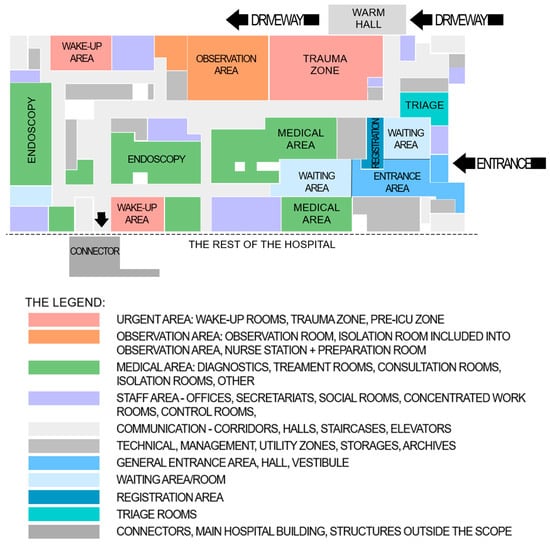
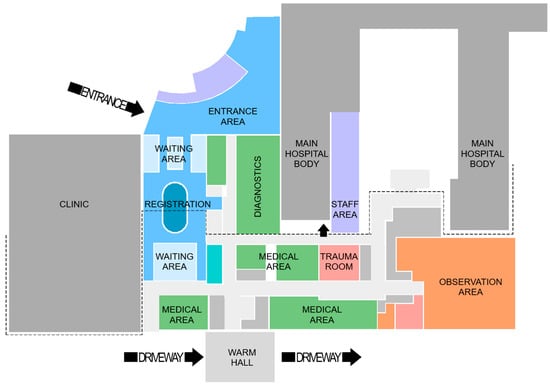
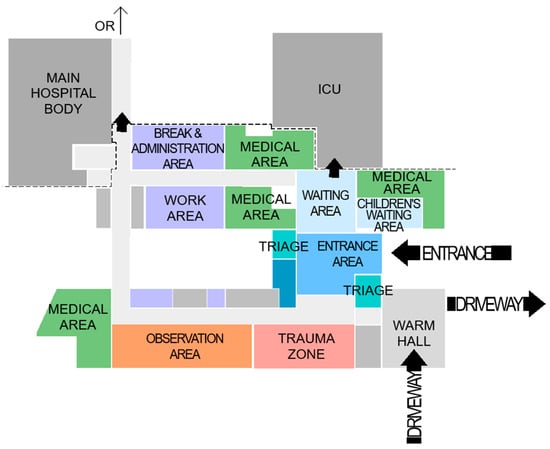
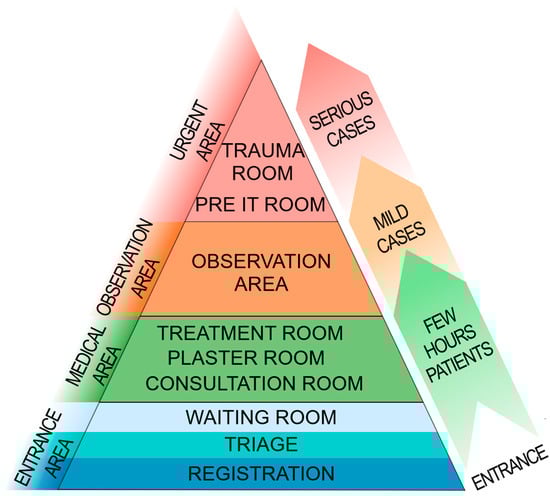
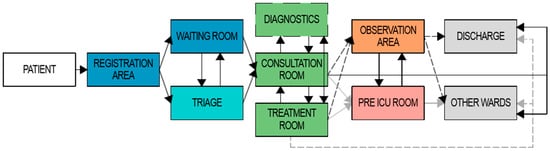
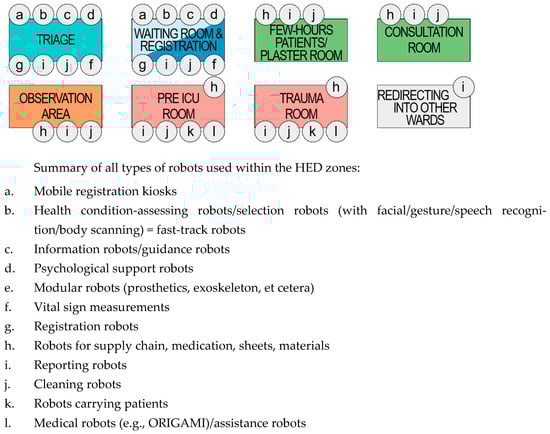
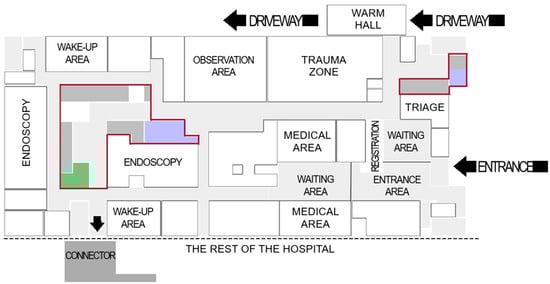
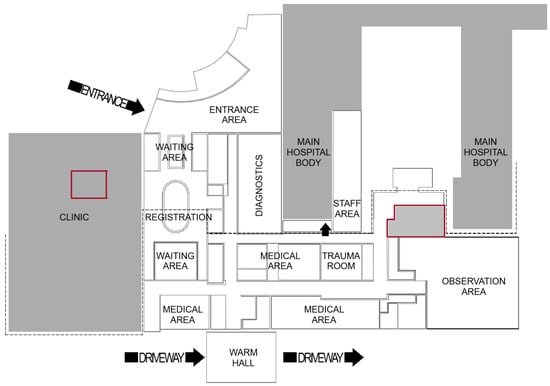
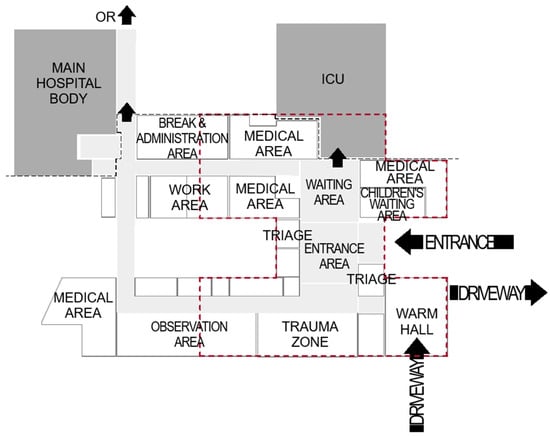
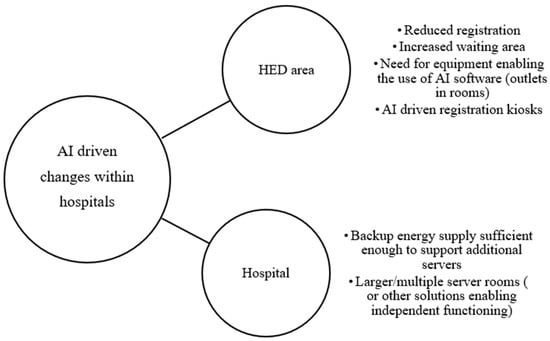
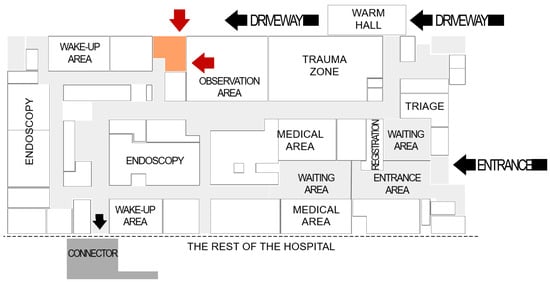
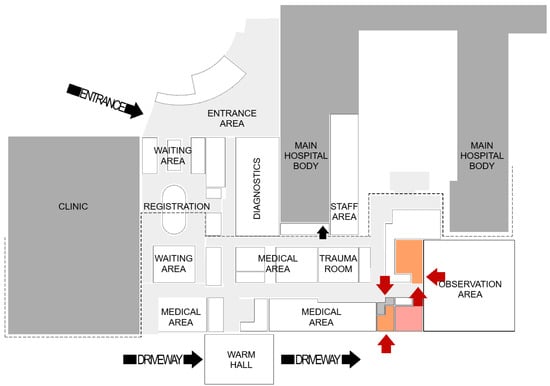
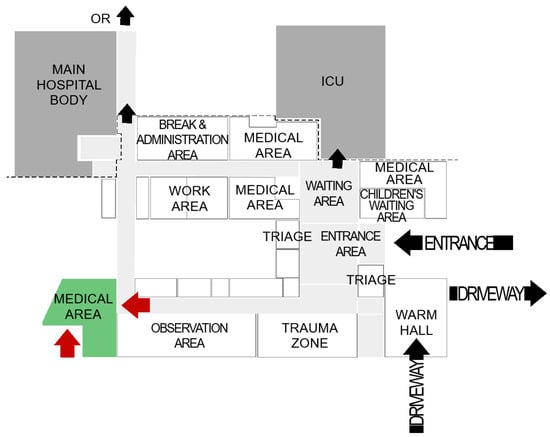
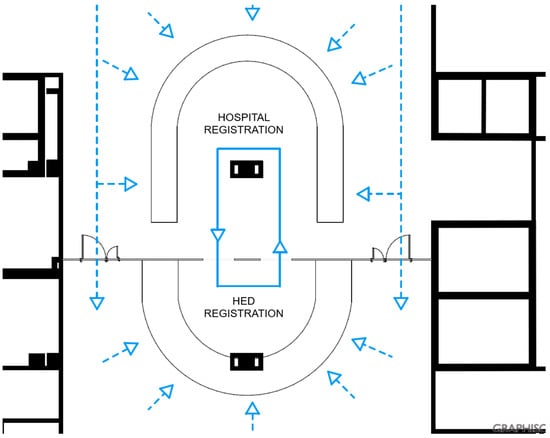
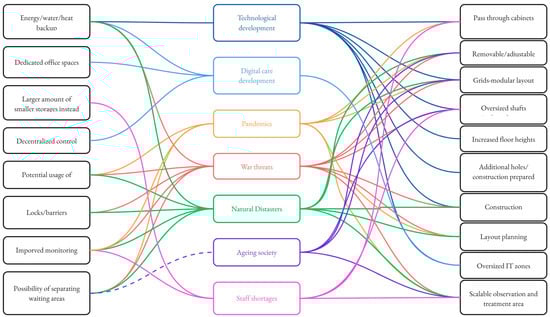
The rapid development of medical technologies requires architects to implement a future-proofing approach while designing medical facilities, despite the inherent uncertainty of long-term change. This challenge is particularly visible within hospital emergency departments (HEDs), which play a critical role as first-contact units and life-saving infrastructures. Due to their specific function, HEDs are a challenging environment for implementing new solutions, as they rely on proven frameworks designed to ensure continuity of care and operational efficiency. This raises the key question: how can modern technologies and architectural strategies streamline workflows in HEDs without overwhelming medical staff? Considering current challenges, an equally important factor in the development of emergency departments is their preparedness for crisis situations, such as pandemics, war threats and natural disasters. How can architectural design enable the implementation of given design strategies, aiming to ensure opportunities for development while simultaneously preparing for all-hazard scenarios? The authors gathered existing trends and solutions aimed at preparing hospital emergency departments for future challenges: positive/neutral, such as technological development, but also negative, such as currently ongoing war threats or risk of the next pandemic. Despite the apparent thematic extremity, certain systematic architectural solutions using a transdisciplinary approach may be the answer to these occurrences. The mentioned architectural solutions and factors were synthesized and subjected to design-oriented review based on existing case studies of a few Polish hospitals, which are simultaneously studied as case studies for broader doctoral research in the field of effectiveness assessment. The selected Polish hospital emergency departments are used as an illustrative, analytical reference to support the interpretation and synthesis of the reviewed literature. The contextual analysis enables the identification of transferable, design-oriented strategies relevant to broader emergence medicine architecture and applicable within European units. Examples from Polish units in particular are used as reference and background for discussion, rather than as empirical case studies. The study provides an overview of contemporary and future-oriented solutions in hospital architecture, focusing on the impact and feasibility within the hospital emergency departments. The synthesis highlights the importance of designing flexible spaces prepared for future technological advances, such as oversized service shafts, increased floor heights, and modular layouts. Additionally, the study focuses on the spatial connotations of emerging technologies like medical robotics, their maintenance areas and possible challenges. All of this is interrelated to social, demographic, and economic trends. These include the development of hospital networks, the evolving patient profile, inter-hospital information flow, and the growing role of highly specialized medical units. In terms of rapid challenges like wars or armed threats, factors revealed within the review indicate levels of HED readiness to face the conflict, mainly in terms of surge capacity but also structural durability and reserve resources. The post-pandemic context, in turn, assumes rapid expansion of the hospital into temporary and flexible structures and reversible zoning allowing for patient segregation and separation. Together, these insights outline pathways for creating resilient, adaptable, and efficient emergency care environments resilient to unforeseen challenges. Considering future scenarios of emergency departments, two main scenarios were identified: “the hospital of the future”, continuing overall development and adapting to rapid technological innovations, and “the crisis-resilient hospital”, resistant to various crisis scenarios, such as pandemics or war threats. The optimal development of the unit assumes both openness to technological changes and preparation of key zones for all-hazard scenarios. This review aims to synthesize architectural implications of technological and socio-demographic changes, not to provide a full empirical study. Adopting an exploratory framework, the review refers to technological innovations and crisis preparedness as external drivers shaping the spatial organization of hospital emergency departments and their adaptability to future challenges. Because of various inhibitors (economic, political, hierarchical), not all hospitals can introduce the described improvements, but the synthesis may serve as a knowledge source for future investments. The review was also conducted to support design decisions under conditions of uncertainty. The choice to address all the external factors collectively was induced to provide transferability of solutions and coherence of possible scenarios, which may happen simultaneously.
Full article