



Plant Tissue Culture

A topical collection in Plants (ISSN 2223-7747).

Viewed by 4330

Editor


E-Mail Website
Collection Editor

Topical Collection Information

Dear Colleagues,

We are excited to invite submissions to our upcoming topical collection on plant tissue culture. This vital scientific technique involves cultivating plant cells, tissues, and organs on artificial media in controlled environments. By utilizing the totipotency of plant cells, researchers can regenerate entire plants or specific parts, fostering advancements in biochemistry, cytology, embryology, molecular biology, and physiology.

Significant progress has been made in plant tissue culture, particularly in areas such as germplasm conservation, genetic modification, somatic embryogenesis, and the production of disease-free plants. The incorporation of nanomaterials into this field has opened new avenues for genetic transformation, the establishment of sterile cultures, and the enhancement of morphogenetic potential in explants, as well as the production of bioactive compounds.

This innovative approach not only improves the efficiency of tissue culture techniques but also plays a crucial role in producing secondary metabolites that enhance plant quality and nutritional value. We look forward to your contributions to the investigation of this important subject.

We invite submissions that cover a wide range of topics. Discussions may include, but are not limited to, the following areas:

- Micropropagation

- Organogenesis

- Somatic embryogenesis

- Sterilization methods

- Gene transformation

- Protoplast culture

- Virus-free plants

- Cryopreservation

- Conservation

- Cell suspension culture

- Hairy root culture

- Secondary metabolites

- Bioreactor

- Temporary immersion systems

- In vitro breeding

- Induced mutation

- Light quality

- Nanomaterials

Dr. Iyyakkannu Sivanesan
Collection Editor

Manuscript Submission Information

Manuscripts should be submitted online at www.mdpi.com by registering and logging in to this website. Once you are registered, click here to go to the submission form. All submissions that pass pre-check are peer-reviewed. Accepted papers will be published continuously in the journal (as soon as accepted) and will be listed together on the collection website. Research articles, review articles as well as short communications are invited. For planned papers, a title and short abstract (about 250 words) can be sent to the Editorial Office for assessment.

Submitted manuscripts should not have been published previously, nor be under consideration for publication elsewhere (except conference proceedings papers). All manuscripts are thoroughly refereed through a single-blind peer-review process. A guide for authors and other relevant information for submission of manuscripts is available on the Instructions for Authors page. Plants is an international peer-reviewed open access semimonthly journal published by MDPI.

Please visit the Instructions for Authors page before submitting a manuscript. The Article Processing Charge (APC) for publication in this open access journal is 2700 CHF (Swiss Francs). Submitted papers should be well formatted and use good English. Authors may use MDPI's English editing service prior to publication or during author revisions.

Keywords

  • micropropagation
  • organogenesis
  • somatic embryogenesis
  • sterilization methods
  • gene transformation
  • protoplast culture
  • virus-free plants
  • cryopreservation
  • conservation
  • cell suspension culture
  • hairy root culture
  • secondary metabolites
  • bioreactor
  • temporary immersion systems
  • in vitro breeding
  • induced mutation
  • light quality
  • nanomaterials

Published Papers (4 papers)

2026

Jump to: 2025

12 pages, 3775 KB  
Article
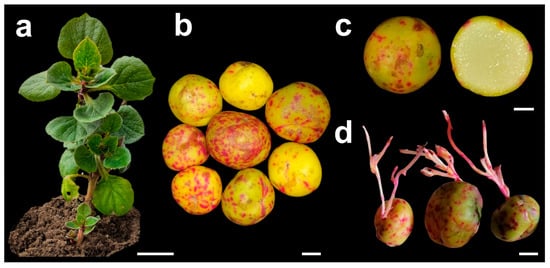
In Vitro Micropropagation of Native Ulluco (Ullucus tuberosus Caldas) from the Amazonas Region of Peru
by Deyli Mailita Fernández-Poquioma, Erika Llaja-Zuta, Angel David Hernández-Amasifuen and Jorge Alberto Condori-Apfata
Plants 2026, 15(6), 959; https://doi.org/10.3390/plants15060959 - 20 Mar 2026
Viewed by 502
Abstract
Ulluco (Ullucus tuberosus Caldas) is an Andean tuber crop of high nutritional and genetic importance. However, its vegetative propagation promotes the accumulation of pathogens and limits the availability of uniform, high-quality planting material. In this study, an efficient and reproducible in vitro [...] Read more.
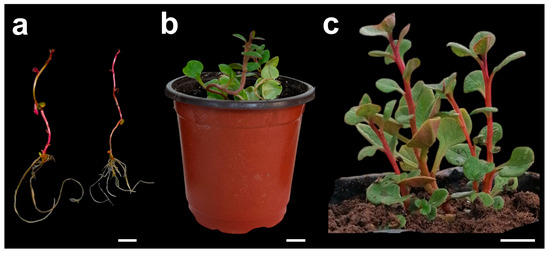
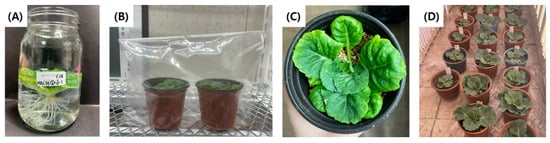
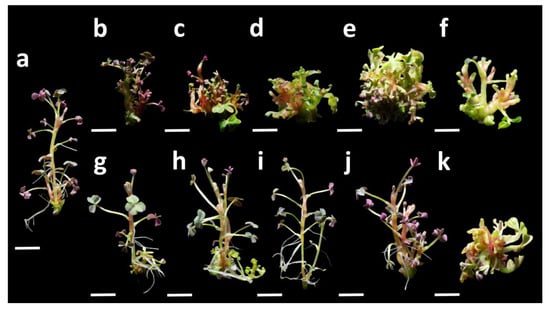
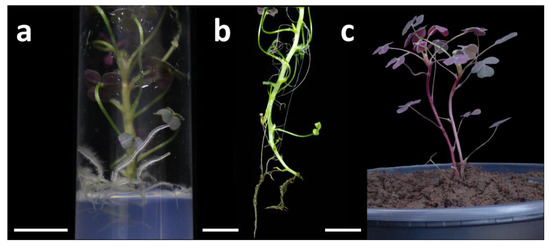
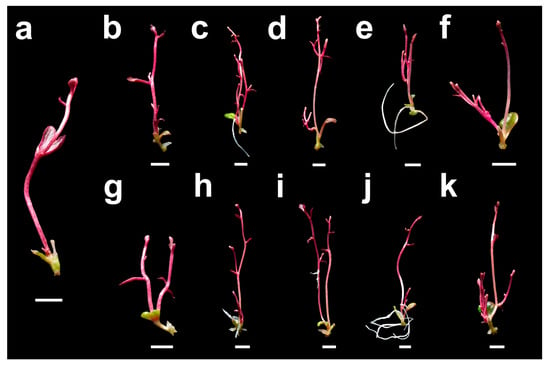
Ulluco (Ullucus tuberosus Caldas) is an Andean tuber crop of high nutritional and genetic importance. However, its vegetative propagation promotes the accumulation of pathogens and limits the availability of uniform, high-quality planting material. In this study, an efficient and reproducible in vitro micropropagation protocol was established for an ulluco genotype from the Amazonas region of Peru. Nodal segments were cultured on MS (Murashige and Skoog) medium supplemented with 6-benzylaminopurine (BAP) or kinetin (KIN) at increasing concentrations (0.0–2.0 mg L−1). For rooting, in vitro-derived shoots were transferred to MS medium supplemented with indole-3-butyric acid (IBA) or 1-naphthaleneacetic acid (NAA) at the same concentration range (0.0–2.0 mg L−1). The explants exhibited a high basal morphogenetic capacity; however, the addition of cytokinins significantly enhanced the response. KIN at 2.0 mg L−1 achieved 100% regeneration, whereas BAP at 0.2 mg L−1 maximized shoot proliferation, producing 2.07 shoots per explant. Shoot elongation was greater with KIN at 1.0 mg L−1, reaching 39.15 mm. In the rooting phase, the response varied depending on the type and concentration of auxin. NAA at 0.1 mg L−1 resulted in 100% rooting and produced the greatest root length (41.93 mm), whereas IBA at 0.1 mg L−1 maximized the number of roots (4.67), although roots were shorter. Rooted plantlets exhibited 100% survival after eight weeks of acclimatization. This protocol provides an effective system for the rapid production of vigorous and uniform clonal plants and represents a useful tool for the propagation, conservation, and future biotechnological improvement of ulluco. Full article
Show Figures

Figure 1

18 pages, 4943 KB  
Article
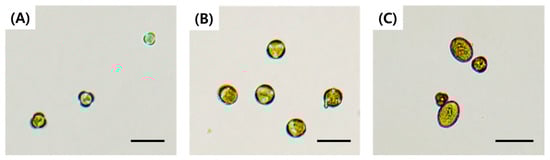
Induction and Regeneration of Microspore-Derived Embryos for Doubled Haploid Production in Cabbage (Brassica oleracea var. capitata)
by Su Bin Choi, Suk Yeon Mo and Han Yong Park
Plants 2026, 15(2), 221; https://doi.org/10.3390/plants15020221 - 10 Jan 2026
Viewed by 1004
Abstract
Cabbage (Brassica oleracea L. var. capitata) is an important leafy vegetable crop, and the development of homozygous parental lines is essential for F1 hybrid breeding. Isolated microspore culture (IMC) provides a rapid approach for producing haploid and doubled haploid (DH) [...] Read more.
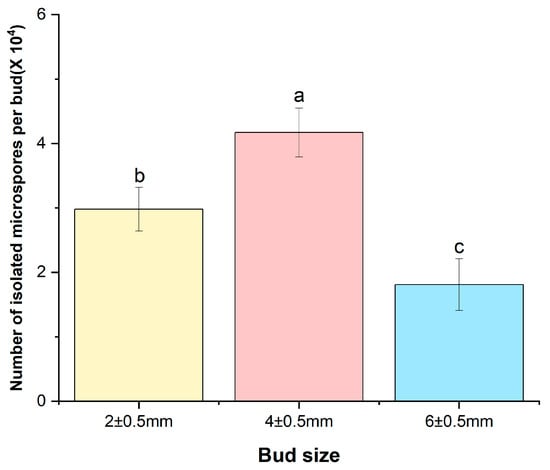
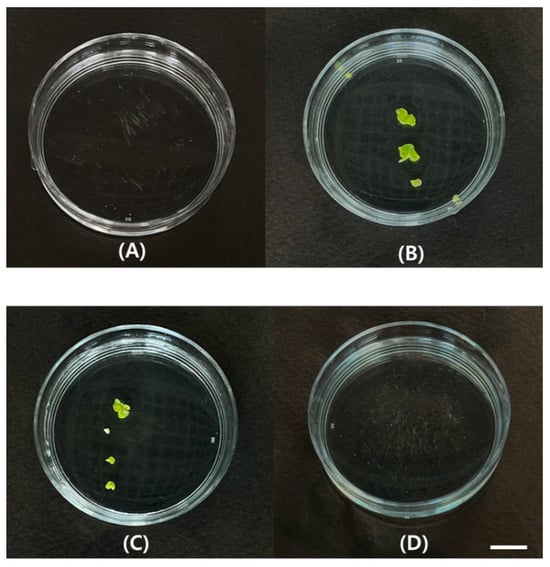
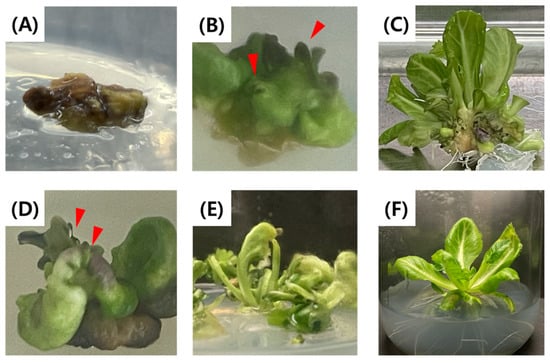
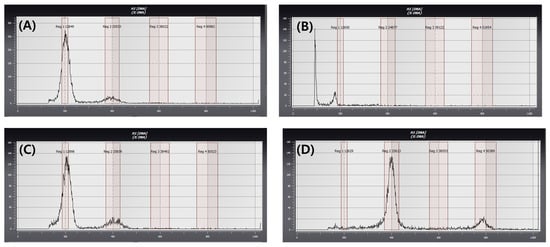
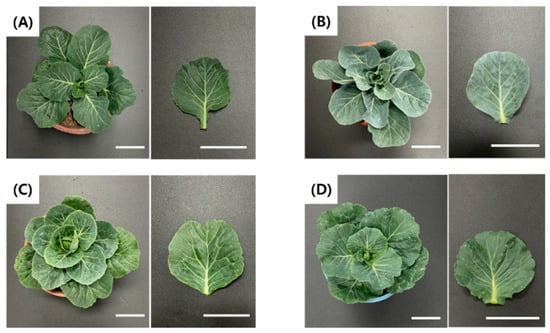
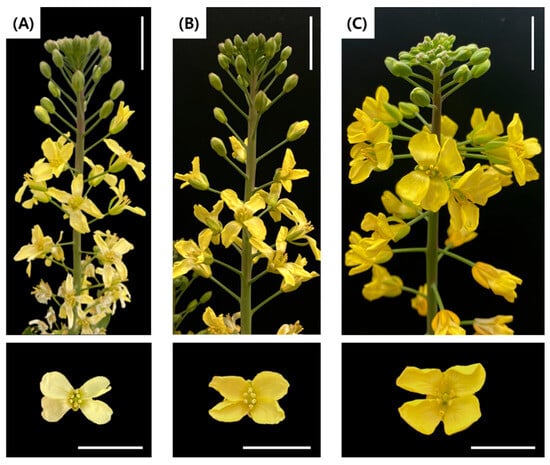
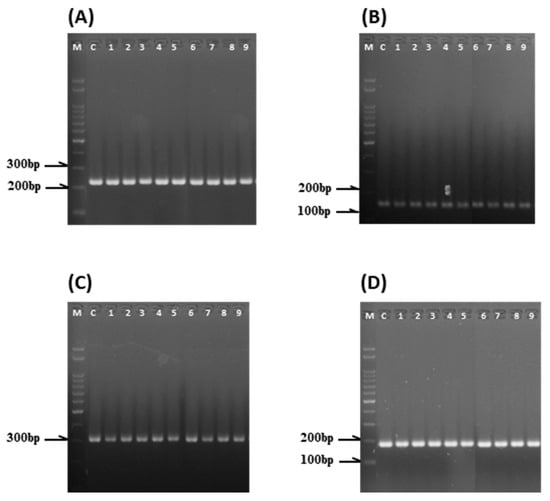
Cabbage (Brassica oleracea L. var. capitata) is an important leafy vegetable crop, and the development of homozygous parental lines is essential for F1 hybrid breeding. Isolated microspore culture (IMC) provides a rapid approach for producing haploid and doubled haploid (DH) lines. However, its efficiency in cabbage remains highly dependent on genotype, donor plant growth conditions, and culture conditions. This study aimed to optimize key factors affecting microspore embryogenesis and plant regeneration in a Korean green cabbage (‘SJ-Ca 13’) and to evaluate the ploidy and genetic characteristics of regenerated plants. Microspore yield and embryogenesis were strongly influenced by flower bud size. Bud size of 4.0 ± 0.5 mm yielded the highest number of microspores (4.17 × 10⁴ per bud) and exclusively produced microspore-derived embryos (2.33 embryos per Petri dish), whereas smaller or larger buds failed to induce embryogenesis. Heat shock treatment at 32.5 °C was essential for embryogenesis, with 24 or 48 h of treatment inducing embryo formation, while prolonged exposure (72 h) completely inhibited embryogenesis. Efficient shoot regeneration was achieved when microspore-derived embryos were cultured on semi-solid MS medium with reduced salt strength (1/3×) and higher agar concentration (1.0%), resulting in the highest shoot regeneration rate. Ploidy test revealed that 50% of regenerated plants were spontaneous doubled haploids. SSR analysis using 26 markers detected no genetic polymorphism among regenerated plants. Overall, this study establishes an efficient IMC and regeneration system for cabbage and demonstrates its potential for rapid DH line production to support cabbage breeding programs. Full article
Show Figures

Figure 1

2025

Jump to: 2026

12 pages, 812 KB  
Article
In Vitro Micropropagation of Oca (Oxalis tuberosa Mol.): An Important Plant Genetic Resource from the High Andean Region
by Erika Llaja-Zuta, Deyli Mailita Fernández-Poquioma, Biverly Añazco-Urbina, Angel David Hernández-Amasifuen and Jorge Alberto Condori-Apfata
Plants 2026, 15(1), 62; https://doi.org/10.3390/plants15010062 - 25 Dec 2025
Cited by 2 | Viewed by 814
Abstract
Oca (Oxalis tuberosa Mol.) is an Andean crop with high nutritional and cultural value; however, its vegetative propagation makes it challenging to ensure a continuous supply of high-quality planting material. In this study, an efficient and reproducible in vitro propagation protocol was [...] Read more.
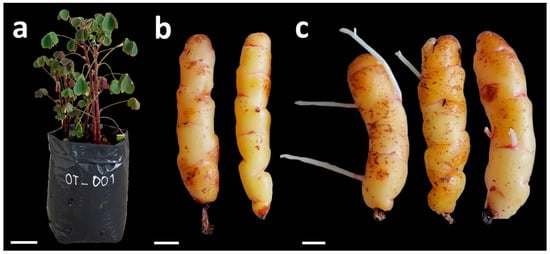
Oca (Oxalis tuberosa Mol.) is an Andean crop with high nutritional and cultural value; however, its vegetative propagation makes it challenging to ensure a continuous supply of high-quality planting material. In this study, an efficient and reproducible in vitro propagation protocol was established for the oca genotype OT–001 (Amazonas, Peru), integrating shoot multiplication, rooting, and acclimatization. One-centimeter nodal segments were cultured in MS medium supplemented with 6-benzylaminopurine (BAP) or kinetin (KIN) at increasing concentrations ranging from 0.1 to 2.0 mg L−1. For rooting, one-centimeter shoots were transferred to MS medium supplemented with indole-3-butyric acid (IBA) or 1-naphthaleneacetic acid (NAA) at increasing concentrations ranging from 0.1 to 2.0 mg L−1. The variables evaluated four weeks after treatment initiation were regeneration percentage, rooting percentage, number of shoots per explant, number of roots per explant, number of nodes, and shoot length. The regeneration rate reached 100% with both BAP and KIN treatments; however, shoot proliferation was highest with 1.0 mg L−1 BAP, producing an average of 7.4 shoots per explant compared to 2.3 shoots in the control. Meanwhile, KIN concentrations of 0.2–0.5 mg L−1 promoted the development of longer shoots (up to 31.4 mm). In rooting, although the control achieved 93.3%, auxin supplementation improved root architecture. IBA at 0.1 mg L−1 achieved 100% rooting with the longest roots (23.9 mm), while 2.0 mg L−1 IBA maximized the number of roots (14.2 roots per explant). With NAA, the root systems were dense but shorter. The in vitro-regenerated plantlets exhibited 100% survival after 15 and 30 days of acclimatization in sterile agricultural soil, demonstrating the high quality of the plant material obtained. The protocol enables the production of homogeneous and vigorous plantlets throughout the year and provides a practical foundation for the ex situ conservation of oca germplasm and its commercial propagation. It also establishes the basis for advanced applications such as genetic transformation and gene editing. Full article
Show Figures

Figure 1

17 pages, 6040 KB  
Article
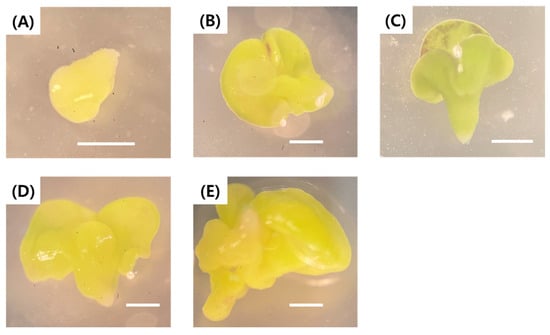
Optimizing Rhizome Quality in Ligusticum chuanxiong Hort. Through High Maltose Concentration
by Hui-Yeong Jeong, Ho-Jun Son, Jun-Won Kang and Ji-Ah Kim
Plants 2025, 14(20), 3125; https://doi.org/10.3390/plants14203125 - 10 Oct 2025
Viewed by 1158
Abstract
Ligusticum chuanxiong Hort. (L. chuanxiong) is a traditional medicinal food in East Asia. This study provides a comprehensive analysis of the effects of various carbohydrates on L. chuanxiong. It covers rhizome induction, acclimatization, and field growth. In the context of [...] Read more.
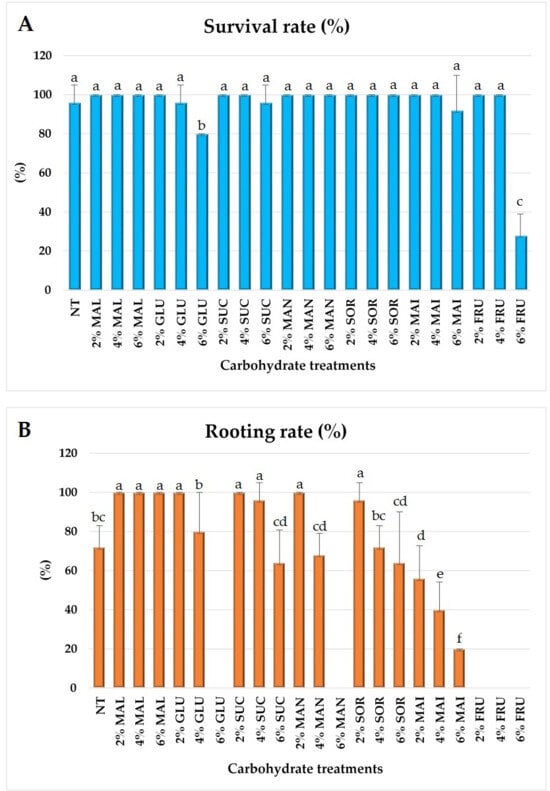
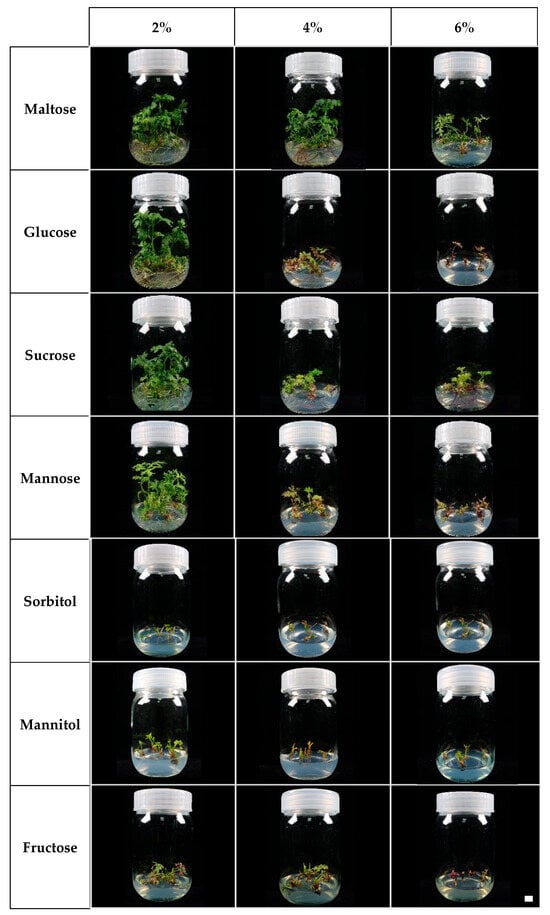
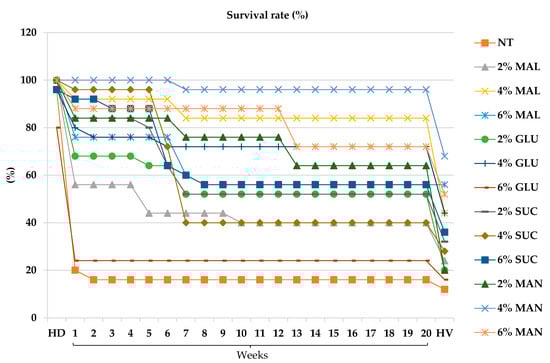
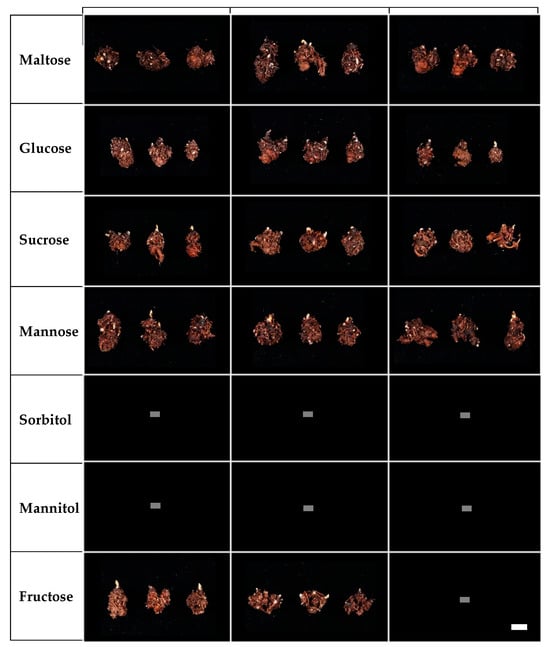
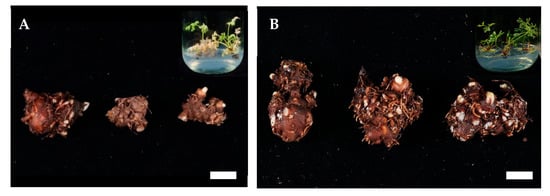
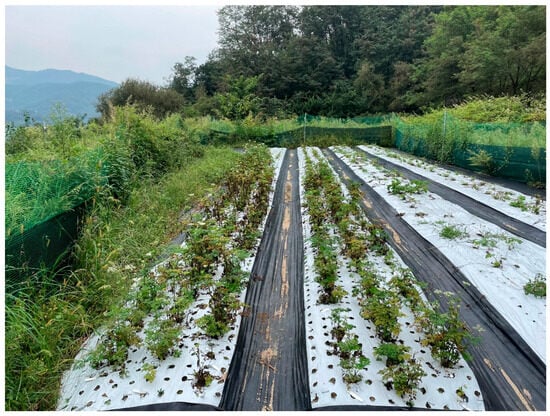
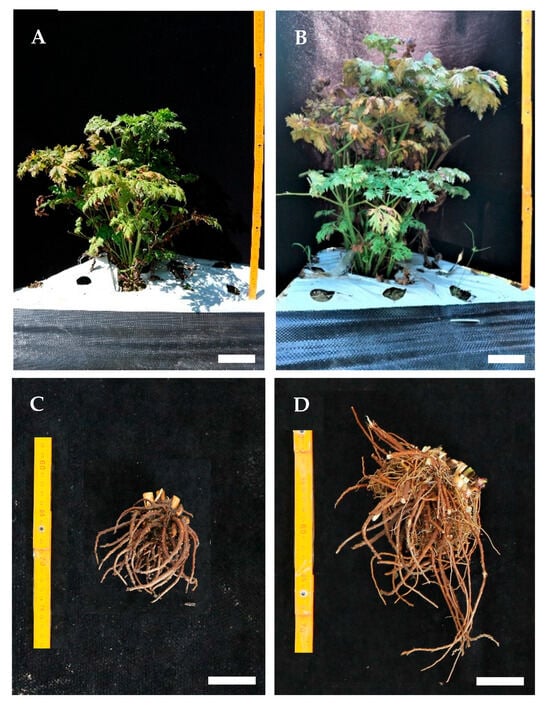
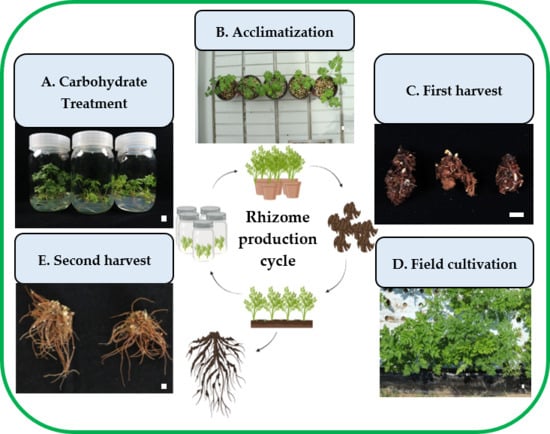
Ligusticum chuanxiong Hort. (L. chuanxiong) is a traditional medicinal food in East Asia. This study provides a comprehensive analysis of the effects of various carbohydrates on L. chuanxiong. It covers rhizome induction, acclimatization, and field growth. In the context of this study, the most effective carbohydrates for promoting rhizome induction in vitro to field growth ex vitro of L. chuanxiong were identified as maltose treatments with a concentration of 4% and 6%. It has been demonstrated that, particularly at a concentration of 4%, this treatment is particularly beneficial for in vitro rhizome development of L. chuanxiong. Following acclimatization, the 6% maltose treatments exhibited the highest fresh weight (3.3 ± 0.2 g). Following the process of field growth, there was a significant increase in the fresh weight of the rhizome under the 6% maltose treatment (160.8 ± 22.2 g) in comparison with the other treatments. This investigation is the first study on rhizome production of L. chuanxiong. It is clear that the appropriate carbohydrate treatment protocol is key to optimizing rhizome production and providing fundamental data for the best propagation of L. chuanxiong. Full article
Show Figures

Figure 1

Back to TopTop