


Abstract
Background/Purpose: Malnutrition is a significant global public health burden with greater concern among children under five years in Sub-Saharan Africa (SSA). To effectively address the problem of malnutrition, especially in resource-scarce communities, knowing the prevalence, causes and risk factors associated with it are essential steps. This scoping review aimed to identify the existing literature that uses classical regression analysis on nationally representative health survey data sets to find the individual socioeconomic, demographic and contextual risk factors associated with malnutrition among children under five years of age in Sub-Sahara Africa (SSA). Methods: The electronic databases searched include EMBASE (OVID platform), PubMed (MEDLINE), Cumulative Index to Nursing and Allied Health Literature (CINAHL), Scopus, Web of Science (WoS) and Cochrane Library. Only papers written in the English language, and for which the publication date was between 1 January 1990 and 31 July 2020, were included. Results: A total of 229 papers were identified, of which 26 were studies that have been included in the review. The risk factors for malnutrition identified were classified as child-related, parental/household-related and community or area-related. Conclusions: Study-interest bias toward stunting over other anthropometric indicators of malnutrition could be addressed with a holistic research approach to equally address the various dimension of the anthropometric indicators of malnutrition in a population.
1. Introduction
Malnutrition is the intake of an insufficient, surplus or disproportionate amount of energy and/or nutrients [1]. Malnutrition is a significant global public health burden with greater concern among children under five years [2]. In an attempt to address this global challenge of malnutrition, the World Health Organization (WHO) member states recently signed into effect a commitment to nine global targets by 2025, including a 40% reduction in childhood stunting, a less than 5% prevalence of childhood wasting, to ensure no increase in the number of children who are overweight [3], and to end all forms of malnutrition by 2030 [3,4]. With less than five years to the target date, the progress has remained relatively slow, with no country working toward full actualization of the nine targets [5]. Though there has been considerable global decline that has been noticed in childhood stunting, there are over 150 million, 50 million and 38 million children remaining stunted, wasted and overweight, respectively [5]. However, contrary to the expectation and in line with a global target on malnutrition to keep the rate of overweight in children constant, in 2018 there were over 40 million children under five who were overweight [6], indicating a gradual global increase in overweight children. There is the possibility that the number of overweight children will increase further in the aftermath of covid-19 global lockdown. Just as most countries are witnessing multiple forms of malnutrition indices, in the same way, individual children are found to suffer from two or more forms of malnutrition indicators globally [5].
In recent times, Sub-Saharan Africa (SSA) has had so much to grapple with in terms of the malnutrition burden. In 2015, SSA accounted for more than 30% of global underweight children [7]. Additionally, in 2018, despite a worldwide decline in childhood stunting, the African region witnessed a rise in the relative figure from 50.3 million to 58.8 million children [6]. Interestingly, the 7.1% prevalence of children under five wasting in Africa is lower than the global rate of 7.3% [8]. Within the SSA region, sub-regional variations in malnutrition are reported in the literature. Akombi et al. [9] concluded in their study that countries in East and West Africa bore the greatest burden of malnutrition in the SSA region. Malnutrition is expressed through either undernutrition (the most common in less developed countries), a situation of low protein-energy intake [10] (which usually manifests at different anthropometric indices in stunting, wasting and underweight), and/or overnutrition, which is commonly associated with too great an intake of protein-energy (a situation widely associated with developed society, but of less concern in the developing countries [11], perhaps a dangerous position to assume especially in Africa).
Beside the SSA region, malnutrition has posed some serious public health challenges in other regions of the world. For instance, in Asia, though considerable steps have made towards the global target, there are lapses in achieving the targets that still exist. The region has experienced a prevalence of overweight among children under five years, which is less than the global average, but it also experienced more than the global average in stunting and wasting, which stood at 22.7% and 9.4%, respectively [5]. Similarly, the Latin American region has in the last three decades been working to deal with the burden of malnutrition, and is yet to achieve significant progress in some parts of the region. UNICEF’s 2019 report states that almost 20% of children under five in Latin America and the Caribbean were either suffering from any of the indices of malnutrition or overlapping in any two of them [12]. Galasco and Wagstaff stated that by 2030, and with the current space for an annual reduction rate in stunting, Brazil, Costa Rica, the Dominican Republic and Mexico are on course to reduce the stunting rate by 50% [13]. Overnutrition is a burden in most developed regions of the world. In 2017, more than a quarter of children in more than 80% of the states in America were either overweight or obese due to inconsistent access to good food. The public health outcomes of malnutrition, manifesting in stunting, wasting, underweight, marasmus, kwashiorkor, edema and perhaps death, are functions of macronutrients and micronutrients missing from the child’s meal [14].
Generally, malnutrition can lead to cognitive and physical impairment in children, especially those under five years old, with a high rate of morbidity and mortality [15,16]. A child’s fundamental right to a higher level of physical and mental health development worldwide is boosted with access to good nutrition [13]. Martinez and Fernandez identified three analytical areas of concerns in addressing the burden of malnutrition. First is the analyses of the capacity of any society to be self-sufficient in terms of food security for all. Secondly, they look at how variations in the demographic and epidemiological set-up have affected the nutrition status of the population, and thirdly, they look at how the life-style of the people has affected their nutrition status [13]. To effectively address the problem of malnutrition, especially in resource-scarce communities, knowing the prevalence, causes and risk factors associated with it are essential steps. This review is part of a doctoral degree work on multi-morbidities in children of under five years in Nigeria. Studies that have addressed malnutrition in Nigeria with a nationally representative sample are few, and this has necessitated a broader coverage in this scoping review to other areas with similar socio-economic and demographic set-ups as in SSA. Additionally, the methodology involved in the scoping review includes qualitatively reviewing the content of study, with a view to identifying the study gaps in the outcomes of interest, the analytical methods and the study population, which have all influenced the use of a scoping review in this study.
The Aim of the Scoping Review
This scoping review aimed to identify existing literature that used classical regression analysis, (analysis that is based on frequentist statistics), on nationally representative health survey data sets to find the individual socioeconomic, demographic and contextual risk factors associated with malnutrition among children under five years of age in Sub-Sahara Africa (SSA).
2. Methodology
2.1. Design
The methodological pattern used in this scoping review followed Arkey and O’Malley [17], Lecac et al. [18], and the Agency for Healthcare Research and Quality (AHRQ) [19]-enhanced framework, recommendations and guidelines, respectively. The steps include the following: (1) identify the research question, (2) identify the relevant study sources, (3) select sources of evidence and eligibility criteria, and (4) chart data [20]. However, the pattern of reporting the results in this scoping review follows the Preferred Reporting Items for Systematic Reviews and Meta-Analyses extension for Scoping Reviews (PRISMA-ScR) guidelines [21,22].
2.2. Protocol and Registration Declaration
There was no review protocol and registration done for this scoping review.
2.3. Identification of the Research Questions
The research question was stated having been guided by PICOTS (population, intervention, comparators, outcomes, timing and study design) framework of Agency for Healthcare Research and Quality (AHRQ) [19].
The primary research question for this scoping review is what risk factors are associated with the malnutrition status of children less than five years of age in Sub-Saharan Africa countries that used classical regression methods to analyze a nationally representative survey data set?
Other secondary research questions are:
- What are the existing examples of evidence of individual and contextual risk factors associated with the malnutrition status of children under five years in Sub-Saharan Africa countries?
- What evidence exists in the use of classical regression analysis methods to determine the risk factors related to the malnutrition of children under five years in Sub-Saharan African countries?
2.4. Eligibility Criteria
The studies included in the review followed the PICOTS (population, interventions, comparators, outcomes, timing and study design) criteria enumerated and defined in Table 1 below.

Table 1.
Structure for eligibility criteria in malnutrition studies.
2.5. Identify the Relevant Sources of Evidence
Information Sources
The first author (PEO) of the School of Health and Related Research (ScHARR), the University of Sheffield, United Kingdom, carried out the literature search. The process was done at least twice on each of the databases consulted and we compared the outcomes to ensure that relevant papers were not excluded. The selection of bibliographies for screening was done on the basis of keywords and subject headings. The electronic databases searched include EMBASE (OVID platform), PubMed (MEDLINE), Cumulative Index to Nursing and Allied Health Literature (CINAHL), Scopus, Web of Science (WoS) and Cochrane Library. Only papers written in the English language, and published between 1 January 1990 and 31 July 2020, were included.
2.6. Selection of Sources for Evidence and Eligibility Criteria
Search Strategy
In this scoping review the search strategy involved searching for key terms or text words individually. The phrases were first searched in EMBASE (OVID platform) using “map terms to subject heading”. The search terms applied were derived from the PICOTS categories and they include the variants of Sub-Saharan Africa, under five years, the determinants or risk factors, malnutrition status, and (with/without) regression techniques. These various terms were used with appropriate Boolean connectors, ‘AND/OR’, and with publication dates and research designs applied as restrictions. The sample of the search strategy in EMBASE is displayed in Table 2 below.
Table 2.
Draft search strategy and terms for EMBASE (OVID).
In the EMBASE search strategy result (Table 2), the publication period was set as ‘limit to last 30 years’, (because the default search time was set at 1974 to July 2020). However, for other electronic databases, the publication period was restricted to between 1990 and 2020. The timing was informed over the periods when (i) Demographics and Health Surveys had been conducted in Nigeria, (ii) the UNICEF conceptual framework on causes of malnutrition began, (iii) the Millennium Development Goals were in effect, (iv) the WHO nine targets for malnutrition were on course, and (v) the Sustainable Development Goals were in progress. The search was conducted in the last week of July 2020.
2.7. Selection Process
The reviewer, PEO, screened all the selected literature for titles and abstracts using the inclusion and extraction criteria as a benchmark (Table 1). This process was also done twice in two citation managers platforms (Endnote and Zotero). Any discrepancy observed was resolved by examining them more closely. A full-text reading was conducted for all the selected articles. Papers excluded were noted with reasons. Three overseeing team members vetted this process.
2.8. Data Charting Management
Initially the data extracted from the included articles were deposited into a Microsoft Excel spreadsheet designed by the reviewer specifically for this review. The relevant information obtained includes authors/year of publication, the survey type, the sample size, classical regression type and country of study. Other information includes the study aim, the outcomes (malnutrition status), the prevalence, various predictor variables assessed (child-related variables, parental/household-related variables and contextual or community-related variables), significant risk factors found for each of the malnutrition-related indicators, the specific conclusion reached, and the statistical software used for computation.
3. Results
The results section reports the profile of the quantitative analysis of risk factors associated with malnutrition in under five children in SSA following the Preferred Reporting Items for Systematic Reviews and Meta-Analyses extension for Scoping Reviews (PRISMA-ScR) checklists [21,22].
3.1. Selection of Sources of Evidence
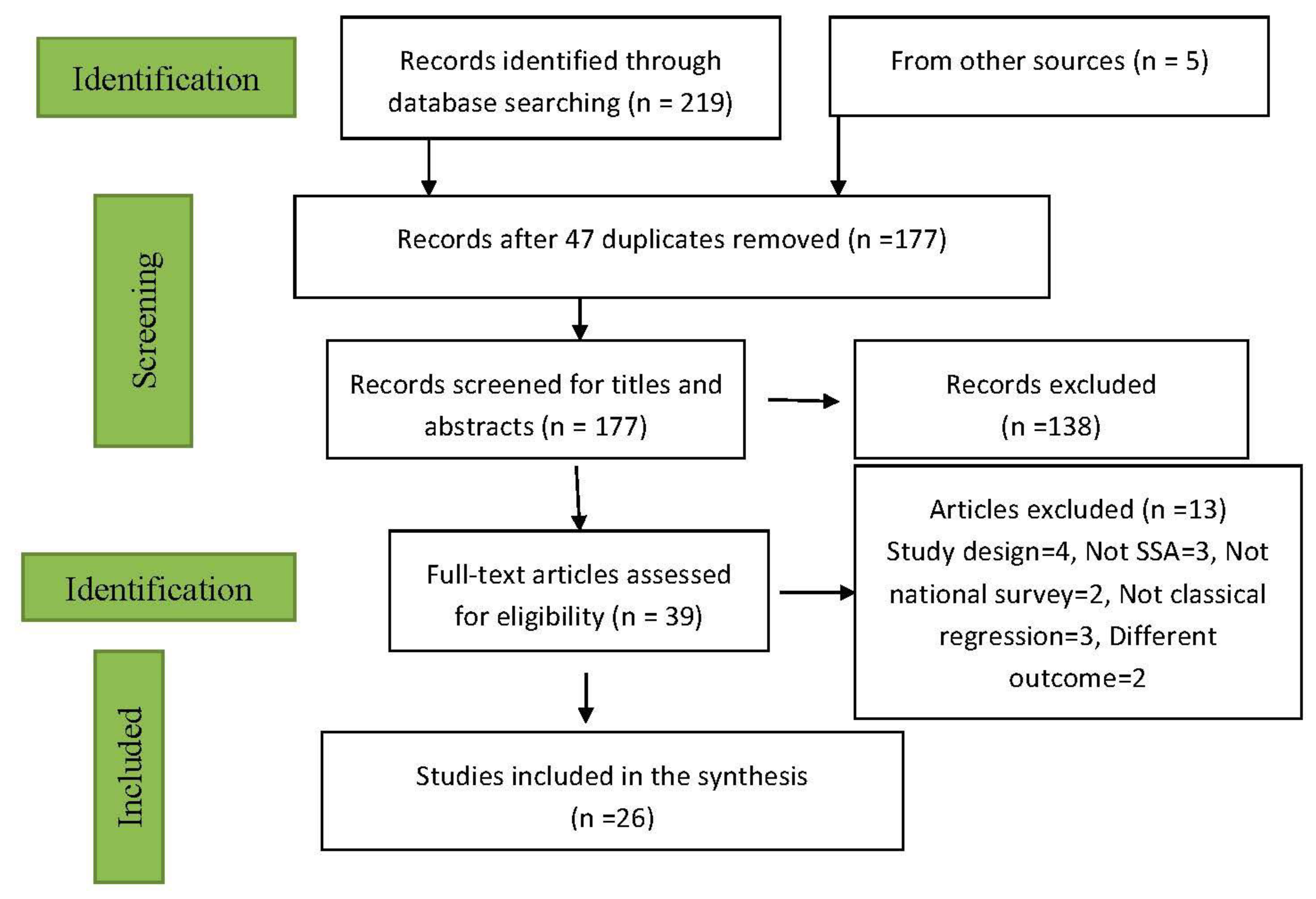
Figure 1 represents the flowchart of the included studies. A total of 224 unique papers were identified from the various electronic databases (EMBASE = 12, PUBMED = 18, WOS = 74, Scopus = 103, Cochran Library = 0, CINAHL = 12). Additionally, five other studies were retrieved from others sources (the reviewer’s files).
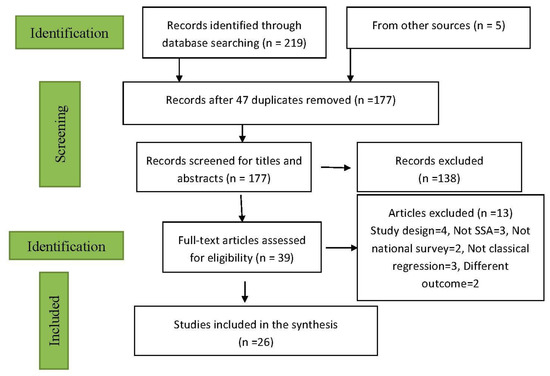
Figure 1.
Flowchart of inclusion of studies for malnutrition review.
Twenty-five studies were duplicated in the search at different times (twice, thrice, four or five times). The duplication led to the removal of 47 titles. Out of a total of 177 studies screened for titles and abstract, 138 studies were removed for not meeting the inclusion criteria. A total of 26 studies were finally selected for this study after excluding 13 papers. The reasons for excluding these papers are listed in the chart above (Figure 1).
3.2. Characteristics of Sources of Evidence
To answer the questions raised in this scoping review, the relevant information was extracted from the selected papers and is presented in Table 3 and Table 4. This section describes the characteristics of the sources of evidence.
Table 3.
Characteristics of the 26 studies included in the review/synthesis.
Table 4.
Characteristics of outcomes of interest.
3.2.1. Characteristics of Study Setting
Table 3 includes elements of the study setting. The unit of analysis in this scoping review is the country of study. Though there were 26 articles selected in this review, two studies (Kennedy et al., 2006 and Ntoimo et al., 2014) analyzed the data separately for three countries each, resulting in risk factor estimates for 30 country unique studies (and16 unique countries). The highest number of publications came from Nigeria, having five studies representing 16.7% [15,23,24,25,26], followed by Ethiopia [27,28,29,30], and articles with multi-countries [31,32,33,34] have four studies each. The multi-country articles are studies that focused on more than one country, with the countries’ data sets pooled together and analyzed as one study. Ten countries (Swaziland, Senegal, Rwanda, Malawi, Kenya, Ghana, Equatorial Guinea, Democratic Republic of Congo (DRC), Cameroon, and Central Africa Republic (CAR)) had one study each.
3.2.2. Characteristics of Study Analytical Methods
One of the inclusion criteria for this scoping review was that the statistical analytical techniques must be classical statistical regression methods. Table 3 contains the listing of various statistical analysis techniques used for each study. The most frequently used technique was logistic regression (LR). There were 21 studies (70%) out of the 30 selected country-based studies that used one form of LR or another (multivariate LR, multiple LR, ordinal LR or conditional LR). Five studies applied multilevel regression analysis, two studies used multinomial regression analysis and two other studies, including Aheto [36], used a relatively unpopular statistical approach, Simultaneous Quantile Regression (SQR), a technique used in modeling regression concerning quantiles (or percentiles) instead of the usual modeling about the mean (mean regression), while Takele et al. [30] used a Generalized Linear Mixed Model (GLMM).
3.2.3. Characteristics of Study Outcomes
In Table 4, it was observed that the most studied outcome was stunting. It was the focus of 28 (representing 93.3%) out of the 30 country-based articles (with stunting appearing in 16 publications as the only outcome variable and 12 studies paired with other malnutrition indicators). Wasting and underweight appeared in 13 reports, while overweight was only included in two papers. Furthermore, undernutrition (stunting, wasting and undernutrition) was the outcome of interest in six studies. However, there was only one study that focused on all the four indicators of malnutrition (stunting, wasting, underweight and overweight) [45].
3.2.4. Characteristics of Significant Risk Factors
Table 4 also contains the list of predictor variables considered for each study selected for this scoping review. It lists the significant risk factors concerning stunting, wasting, underweight and overweight of children less than five years old. The choice of predictor variables studied in some of the articles selected was guided by the UNICEF framework of causes of undernutrition in children [46]. These were classified as child-related (CR), parental/household-related (PHR) and community- or area-related factors (AR).
Among the child-related risk factors, gender and age (in months categories) were the most frequent significant predictors of stunting (13 studies), wasting (four reports), underweight (4 studies), overweight (no study) and stunting (12 articles), wasting (six reports), underweight (4 studies) and overweight (1 study), respectively. In the parental category, maternal education was the most active predictor in 14, 3, 5 and 1 studies for stunting, wasting, underweight and overweight, respectively. Out of the 28 studies that investigated stunting, 16 reported a significant association of household wealth status with stunting. Place of residence from the community-related category was significant in stunting (five studies), wasting (three studies) and underweight (one study). Significant comorbidity was found for a child having diarrhea in the last two weeks before the survey with stunting (four studies) and underweight (two studies) captured in this review.
4. Discussion
This scoping review aimed to identify the existing literature that used classical regression analysis on nationally representative health survey data sets to find the individual socioeconomic, demographic and contextual risk factors associated with malnutrition among children under five years of age in Sub-Sahara Africa (SSA). The review identified 26 studies and the risk factors for malnutrition, which were classified as child-related, parental/household-related and community or area-related factors. The risk factors for malnutrition identified included age, gender, comorbidities (such as diarrhoea), maternal education, household wealth and place of residence.
This scoping review has demonstrated the importance researchers have attached to studying malnutrition (especially in children under five years) in order to provide a basis for evidence-based decision-making toward meeting the WHO’s nine targets on malnutrition by 2025. Some of the most common determinants of malnutrition indicators include child’s age, sex, birth size, breastfeeding status, and whether the child had a fever in the last two weeks before the survey. Other indicators are the mother’s age, education level, Body Mass Index, and father’s education level. In the household category, wealth status, number of children under five years in the household, source of information, and improved building materials, and from the community-related category, place and region of residence, and Gross Domestic Product (GDP). However, there are a few issues from these studies that need to be discussed here.
Firstly, malnutrition in children is a situation where children are either undernourished (less necessary energy and nutrient intake) or ‘over-nourished’ (too much necessary energy and nutrient intake) [1]. The authors believed that ‘malnutrition’ and ‘malnourished’ are two different things. Malnourishment (or undernourished or undernutrition) is a component of malnutrition. However, most studies often show some inconsistencies in the classification of malnutrition in this direction. The anthropometric indices generally used by the World Health Organization to measure nutritional status stipulate height-for-age, weight-for-height and weight-for-age for measuring stunting, wasting and underweight, respectively. These indices are computed as ‘standard deviation units (Z-scores) from the median of the reference population’ [47]. In the 2018 NDHS, for instance, malnutrition was classified into four areas, as follows: (i) stunting in a child too short for his/her age with a height-for-age Z-score less than minus two standard deviations (−2SD) from the median; (ii) wasting in a child is acute undernutrition status, which describes a child’s status whose weight-for-height Z-score is less than minus two standard deviations (−2SD) from the median; (iii) underweight is a composite extraction of both stunting and wasting, giving a weight-for-age Z-score of below minus two standard deviations (−2SD) from the median; and (iv) overweight, in this case, refers to a child whose weight-for-height Z-score is above two standard deviations (+2SD) from the median of the reference population [47]. So, most studies that focused on malnutrition have always considered stunting, wasting and underweight as only proxies for nutritional status without including overweight [48]. Some of these studies that have excluded overweight in their nutritional status often used the word ‘undernutrition’, while others used ‘malnutrition’, and some used the terms interchangeably [48,49]. The argument here surrounds the exclusion of overweight when determining the nutritional or malnutrition status of children in a population. Magadi et al. [32] reported that overweight was excluded from among the malnutrition indicators because it is not of greater importance in the least developed countries. This measure of excluding overweight in effect can lead to underestimating the nutrition status of the population under study. In a recent paper, WHO grouped malnutrition into three essential areas, as follows: undernutrition, micronutrient deficiency and overweight related malnutrition [1]. Undernutrition involves not getting the adequate nutrients necessary for daily activities, while overnutrition is getting more nutrients than you can utilize daily [50]. So, malnutrition is a composite of undernutrition and overnutrition [49]; as such, we submit that overweight should always be included when determining the malnutrition status. In our opinion, the reasons why researchers often exclude overweight in nutritional (or malnutrition) status is that the analysis involves some statistical manipulations, and the fact that overweight’s anthropometric measures obviously connect with those of wasting. Resolving the problem in computation is done by including overweight into the application of ‘Composite Index of Anthropometric Failure (CIAF)’ [51], or by simple use of ‘composite index’ computation [52].
The second issue of concern from some of the studies in the scoping review is in the attention given to stunting over other anthropometric indices of malnutrition. This scoping review identified that for every ten studies on malnutrition, at least nine studies are investigating stunting. This trend in studying stunting may be related to the need to meet the WHO target of 40% reduction in stunting prevalence by 2025 [5], and stunting’s obvious association with poverty and hunger, which are major characteristics of the least developed and war/conflict-torn nations. These reasons, however, cannot justify the almost absence of equal attention being paid to other malnutrition indicators, especially overweight, which is seen to be increasing in some populations [53], and may increase further in the aftermath of covid-19 global lockdown.
The third issue of concern is the multiple overlaps in the malnutrition indicators. Though few studies have focused on two or more anthropometric indicators of malnutrition, they were analyzed individually using classical logistic regression methods. In some populations, there are tendencies for multiple forms of malnutrition indicators in children [5,51,54]. Not many of the studies considered in this review evaluated the multiple overlaps in these anthropometric indices. This observation is a gap in the study. However, with appropriate statistical techniques, it becomes easy to determine the prevalence of the simultaneous occurrence of anthropometric indices among children in a population [51], thereby determining their risk factors in a population. There are over 3.6% and 1.8% children under five globally who are both stunted and wasted, and stunted and overweight, respectively [5]. However, wasting and overweight are mutually exclusive; as such, we do not expect multiple overlaps in them.
Finally, the issue of inconsistencies found in some studies concerns the proper way of categorizing undernutrition indicators (stunting, wasting and underweight) into moderate and severe undernourishment [24,32,47].
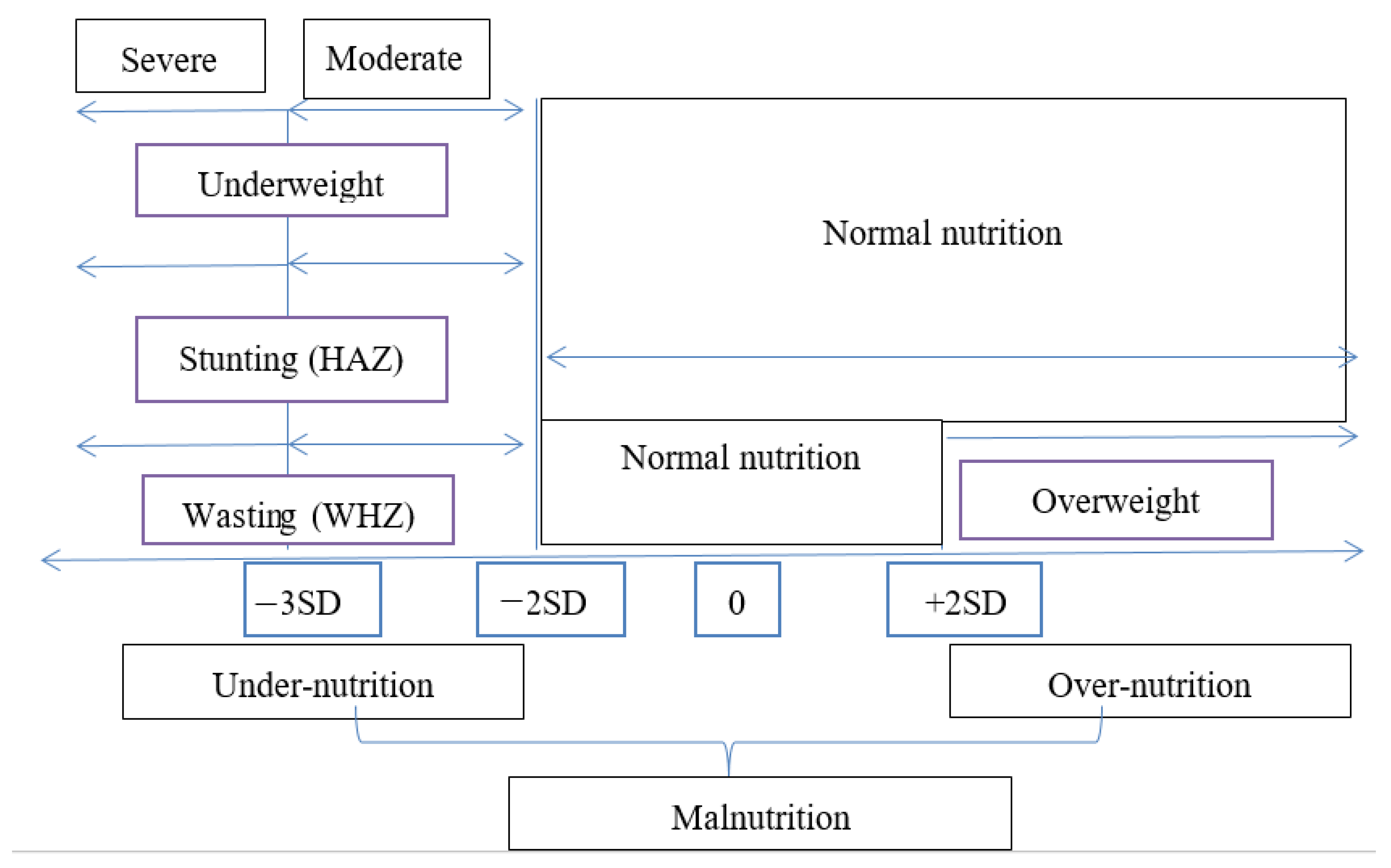
For instance, a stunted child has height-for-age (HAZ < −2SD), on a scale, a severely stunted child has HAZ < −3SD. Since stunted is moderate plus severe, then the moderately stunted child is −3SD ≤ HAZ ≤ −2SD. The same classification holds for other anthropometric indicators for undernutrition as displayed in the chart above (Figure 2).

Figure 2.
Showing the classifications of Anthropometric indicators of malnutrition.
5. Strengths and Limitations
This scoping review has some level of strengths. (i) This study is about the first scoping review on risk factors associated with malnutrition in children under five in SSA countries that used classical statistical regression modeling techniques on nationally representative survey samples. (ii) The identification of some grey areas that urgently need research cover, especially in the field of using appropriate statistical methods that will compositely determine the actual index of malnutrition in a population. However, there are some limitations, which include but are not restricted to the following: (i) Some potential studies may have been excluded due to the search strategies adopted. (ii) The grey literature search to seek for possible papers was not done. (iii) The references of the included publications were not searched through to ascertain more pieces of evidence. (iv) SSA countries include other countries that are not English-speaking, so some potential papers not written in English from these countries may have been lost to our search. (v) The studies included had analytical techniques restricted to classical statistics regression methods (analysis based on frequentist statistical methods); therefore, potential papers that used Bayesian statistical methods in their analyses were excluded. (vi) Linear regression as an analytic technique was omitted in the search and this may have excluded some potential papers. (vii) There was no assessment of the potential risk or publication bias conducted.
6. Future Work
Areas not covered in this review, especially to satisfy the limitations highlighted above, are potential work for future studies. More important is a review that will map out a piece of study evidence on malnutrition that used either classical regression analysis or Bayesian analysis methods, or both. In addition, studies that include overweight and/or micronutrient deficiencies as part of the indicators of malnutrition among children under five years are urgently needed. Furthermore, studies that will explore the interrelationship between malnutrition and other childhood diseases using appropriate statistical techniques while recognizing the interdependencies of these diseases are areas of future interest.
7. Conclusions
In this scoping review, we have identified several significant risk factors that predict the probability that a child under five years of age in an SSA country will develop malnutrition status. These factors were classified as child-related (CR), parental/household-related (PHR) and area-related (AR) variables. The CR include child’s age, sex, birth weight, type of birth, birth type, diarrhoeal, and place delivered. Factors related to parental/household include mother’s education, breastfeeding, BMI, birth interval, mother’s health-seeking status, mother’s age, household wealth status, improved sanitation, number of children under 5 years in the household, maternal health insurance, type of toilet facilities and cooking fuel, while among the area-related (AR) variables were forest cover lost, community region, and community illiteracy rate. To prevent the wide spread of malnutrition in developing countries, these significant risk factors must be taken into consideration when developing practice and policy formulation. Central to these controls are the maternal education and health status. Pregnant and nursing mothers should have access to a balanced diet.
The review also discovered that there was a study-interest bias toward stunting as an index over other anthropometric indicators of malnutrition. Furthermore, the review also identified some limitations in the current studies reviewed when overweight and/or micronutrient deficiencies were excluded as indices of malnutrition. In the authors’ opinion, the exclusion may be partly related to the methodological complications involved in determining the true status of malnutrition when these indices are included. Some of the nationally representative surveys used in the studies reviewed collected information regarding the overweight and/or micronutrient status of children under five years. Micronutrient deficiencies in children of under five years in developing countries are measured by the levels of iron, iodine and vitamin A intake [55]. Apart from iron, which was measured through a biomarker examination of blood samples to establish the anaemia status, iodine and vitamin A were determined subjectively through examining the nature of the foods the child consumed a day before the survey [47]. This cannot give an objective assessment of the status of the micronutrients present in a child. As such, researchers often find it difficult to include them while determining the true malnutrition status of children under five years old in developing countries. In addition, the review identified some inconsistences in the sub classifications of the malnutrition indicators into severe, moderate and mild, while applying the WHO anthropometric cut off points.
Finally, barely five years to the set date of achieving the WHO’s nine targets of malnutrition in children, in this scoping review we conclude that a holistic research approach to equally address the various dimensions of anthropometric indicators of malnutrition in a population is needed. Evidence from such findings will be valuable documents in the hands of many planners/policymakers for informed decision making.
Author Contributions
The conceptualization of this study was carried out by P.E.O. and K.K.; the formal literature searching, screening and drafting of manuscript were done by P.E.O.; S.J.W., R.J. and K.K. supervised, revised and edited the manuscript. All authors have read and agreed to the published version of the manuscript.
Funding
This study is an integral part of Phillips’ doctoral study at the School of Health and Related Research (ScHARR) of the University of Sheffield, United Kingdom. The funding for the doctoral study was granted by TETFUND (Nigeria). The publication received an APC waiver from MDPI.
Acknowledgments
The authors recognized the contributions of some members of the ScHARR community. Also, Phillips would like to appreciate the Rector and Management staff of Niger State Polytechnic, Nigeria for the nomination and receipt of TETFUND (Nigeria) sponsorship for the doctoral program.
Conflicts of Interest
The authors declare no conflict of interest.
References
- World Health Organisation Fact Sheets—Malnutrition. Available online: https://www.who.int/news-room/fact-sheets/detail/malnutrition (accessed on 31 May 2020).
- Simonyan, H.; Sargsyan, A.; Balalian, A.A.; Davtyan, K.; Gupte, H.A. Short-term nutrition and growth indicators in 6-month to 6-year-old children are improved following implementation of a multidisciplinary community-based programme in a chronic conflict setting. Public Health Nutr. 2020, 23, 134–145. [Google Scholar] [CrossRef] [PubMed]
- World Health Organisation WHO|Global Targets 2025. Available online: http://www.who.int/nutrition/global-target-2025/en/ (accessed on 11 August 2020).
- Martin Goal 2: Zero Hunger. Available online: https://www.un.org/sustainabledevelopment/hunger/ (accessed on 6 August 2020).
- Global Nutrition Report The Burden of Malnutrition. Available online: https://globalnutritionreport.org/reports/global-nutrition-report-2018/burden-malnutrition/ (accessed on 25 June 2020).
- UNICEF/WHO/World Bank Group Levels and Trends in Child Malnutrition: Key Findings of the 2019 Edition. Available online: https://www.who.int/nutgrowthdb/jme-2019-key-findings.pdf?ua=1 (accessed on 8 March 2020).
- Doctor, H.V.; Nkhana-Salimu, S. Trends and Determinants of Child Growth Indicators in Malawi and Implications for the Sustainable Development Goals. AIMS Public Health 2017, 4, 590. [Google Scholar] [CrossRef] [PubMed]
- Global Nutrition Report Africa Nutrition Profile. Available online: https://globalnutritionreport.org/resources/nutrition-profiles/ (accessed on 6 August 2020).
- Akombi, B.J.; Agho, K.E.; Hall, J.J.; Wali, N.; Renzaho, A.M.N.; Merom, D. Stunting, wasting and underweight in Sub-Saharan Africa: A systematic review. Int. J. Environ. Res. Public Health 2017, 14, 863. [Google Scholar] [CrossRef]
- Akombi, B.J.; Agho, K.E.; Hall, J.J.; Merom, D.; Astell-Burt, T.; Renzaho, A.M. Stunting and severe stunting among children under-5 years in Nigeria: A multilevel analysis. BMC Pediatrics 2017, 17, 15. [Google Scholar] [CrossRef]
- McKenna, C.G.; Bartels, S.A.; Pablo, L.A.; Walker, M. Women’s decision-making power and undernutrition in their children under age five in the Democratic Republic of the Congo: A cross-sectional study. PLoS ONE 2019, 14, e0226041. [Google Scholar] [CrossRef]
- UNICEF 1 in 5 Children under Five Are Not Growing Well Due to Malnutrition in Latin America and the Caribbean, Warns UNICEF. Available online: https://www.unicef.org/lac/en/press-releases/1-in-5-children-under-five-are-not-growing-well-due-to-malnutrition-in-LAC (accessed on 21 November 2020).
- Amalia, P. Malnutrition among Children in Latin America and the Caribbean. Available online: https://www.cepal.org/en/insights/malnutrition-among-children-latin-america-and-caribbean (accessed on 21 November 2020).
- Institute of Child Health Micronutrient Malnutrition—Detection, Measurement and Intervention: A Training Package for Field Staff. Available online: https://www.unhcr.org/uk/45fa6dad2.pdf (accessed on 21 November 2020).
- Akombi, B.J.; Agho, K.E.; Merom, D.; Hall, J.J.; Renzaho, A.M. Multilevel Analysis of Factors Associated with Wasting and Underweight among Children Under-Five Years in Nigeria. Nutrients 2017, 9, 44. [Google Scholar] [CrossRef]
- World Health Organization. Guideline: Updates on the Management of Severe Acute Malnutrition in infants and Chldren; World Health Organization: Geneva, Switzerland, 2013; ISBN 978-92-4-150203-0. [Google Scholar]
- Arksey, H.; O’Malley, L. Scoping studies: Towards a methodological framework. Int. J. Soc. Res. Methodol. 2005, 8, 19–32. [Google Scholar] [CrossRef]
- Levac, D.; Colquhoun, H.; O’Brien, K.K. Scoping studies: Advancing the methodology. Implement. Sci. 2010, 5, 69. [Google Scholar] [CrossRef]
- FDA Media Using the PICOTS Framework to Strengthen Evidence Gathered in Clinical Trials—Guidance from the AHRQ’s Evidence-based Practice Centers Program. Available online: https://www.fda.gov/media/109448/download (accessed on 21 November 2020).
- Maphosa, T.P.; Mulqueeny, D.M.; Osei, E.; Kuupiel, D.; Mashamba-Thompson, T.P. Mapping evidence on malnutrition screening tools for children under 5 years in sub-Saharan Africa: A scoping review protocol. Syst. Rev. 2020, 9, 52. [Google Scholar] [CrossRef] [PubMed]
- Larissa Shamseer, D.M. Preferred reporting items for systematic review and meta-analysis protocols (PRISMA-P) 2015: Elaboration and explanation. BMJ 2015, 349. [Google Scholar] [CrossRef]
- Tricco, A.C.; Lillie, E.; Zarin, W.; O’Brien, K.K.; Colquhoun, H.; Levac, D.; Moher, D.; Peters, M.D.J.; Horsley, T.; Weeks, L.; et al. PRISMA Extension for Scoping Reviews (PRISMA-ScR): Checklist and Explanation. Ann. Intern Med. 2018, 169, 467–473. [Google Scholar] [CrossRef] [PubMed]
- Adekanmbi, V.T.; Kayode, G.A.; Uthman, O.A. Individual and contextual factors associated with childhood stunting in Nigeria: A multilevel analysis. Matern. Child Nutr. 2013, 9, 244–259. [Google Scholar] [CrossRef] [PubMed]
- Akombi, B.J.; Agho, K.E.; Renzaho, A.M.; Hall, J.J.; Merom, D.R. Trends in socioeconomic inequalities in child undernutrition: Evidence from Nigeria Demographic and Health Survey (2003–2013). PLoS ONE 2019, 14, e0211883. [Google Scholar] [CrossRef] [PubMed]
- Ntoimo, L.F.C.; Odimegwu, C.O. Health effects of single motherhood on children in sub-Saharan Africa: A cross-sectional study. BMC Public Health 2014, 14, 1145. [Google Scholar] [CrossRef] [PubMed]
- Ukwuani, F.A.; Suchindran, C.M. Implications of women’s work for child nutritional status in sub-Saharan Africa: A case study of Nigeria. Soc. Sci. Med. 2003, 56, 2109–2121. [Google Scholar] [CrossRef]
- Amare, Z.Y.; Ahmed, M.E.; Mehari, A.B. Determinants of nutritional status among children under age 5 in Ethiopia: Further analysis of the 2016 Ethiopia demographic and health survey. Glob. Health 2019, 15, 62. [Google Scholar] [CrossRef]
- Gebru, K.F.; Haileselassie, W.M.; Temesgen, A.H.; Seid, A.O.; Mulugeta, B.A. Determinants of stunting among under-five children in Ethiopia: A multilevel mixed-effects analysis of 2016 Ethiopian demographic and health survey data. BMC Pediatrics 2019, 19, 176. [Google Scholar]
- Kuche, D.; Moss, C.; Eshetu, S.; Ayana, G.; Salasibew, M.; Dangour, A.D.; Allen, E. Factors associated with dietary diversity and length-for-age z-score in rural Ethiopian children aged 6–23 months: A novel approach to the analysis of baseline data from the Sustainable Undernutrition Reduction in Ethiopia evaluation. Matern. Child Nutr. 2020, 16. [Google Scholar] [CrossRef]
- Takele, K.; Zewotir, T.; Ndanguza, D. Understanding correlates of child stunting in Ethiopia using generalized linear mixed models. BMC Public Health 2019, 19, 626. [Google Scholar] [CrossRef]
- Acharya, Y.; Naz, S.; Galway, L.P.; Jones, A.D. Deforestation and Household- and Individual-Level Double Burden of Malnutrition in Sub-saharan Africa. Front. Sustain. Food Syst. 2020, 4. [Google Scholar] [CrossRef]
- Magadi, M.A. Household and community HIV/AIDS status and child malnutrition in sub-Saharan Africa: Evidence from the demographic and health surveys. Soc. Sci. Med. 2011, 73, 436–446. [Google Scholar] [CrossRef] [PubMed]
- Tusting, L.S.; Gething, P.W.; Gibson, H.S.; Greenwood, B.; Knudsen, J.; Lindsay, S.W.; Bhatt, S. Housing and child health in sub-Saharan Africa: A cross-sectional analysis. PLoS Med. 2020, 17, 1–18. [Google Scholar] [CrossRef] [PubMed]
- Yaya, S.; Uthman, O.A.; Ekholuenetale, M.; Bishwajit, G.; Adjiwanou, V. Effects of birth spacing on adverse childhood health outcomes: Evidence from 34 countries in sub-Saharan Africa. J. Matern. Fetal. Neonatal. Med. 2019, 1–8. [Google Scholar] [CrossRef] [PubMed]
- Agadjanian, V.; Prata, N. Civil war and child health: Regional and ethnic dimensions of child immunization and malnutrition in Angola. Soc. Sci. Med. 2003, 56, 2515–2527. [Google Scholar] [CrossRef]
- Aheto, J.M.K. Simultaneous quantile regression and determinants of under-five severe chronic malnutrition in Ghana. BMC Public Health 2020, 20. [Google Scholar] [CrossRef]
- Amaral, M.M.; Herrin, W.E.; Gulere, G.B. Using the Uganda National Panel Survey to analyze the effect of staple food consumption on undernourishment in Ugandan children. BMC Public Health 2017, 18, 32. [Google Scholar] [CrossRef]
- Custodio, E.; Descalzo, M.A.; Roche, J.; Sánchez, I.; Molina, L.; Lwanga, M.; Bernis, C.; Villamor, E.; Baylin, A. Nutritional status and its correlates in Equatorial Guinean preschool children: Results from a nationally representative survey. Food Nutr. Bull. 2008, 29, 49–58. [Google Scholar] [CrossRef]
- Kennedy, G.; Nantel, G.; Brouwer, I.D.; Kok, F.J. Does living in an urban environment confer advantages for childhood nutritional status? Analysis of disparities in nutritional status by wealth and residence in Angola, Central African Republic and Senegal. Public Health Nutr. 2006, 9, 187–193. [Google Scholar] [CrossRef][Green Version]
- Machisa, M.; Wichmann, J.; Nyasulu, P.S. Biomass fuel use for household cooking in Swaziland: Is there an association with anaemia and stunting in children aged 6–36 months? Trans. R. Soc. Trop. Med. Hyg. 2013, 107, 535–544. [Google Scholar] [CrossRef]
- Miller, C.M.; Gruskin, S.; Subramanian, S.V.; Heymann, J. Emerging health disparities in Botswana: Examining the situation of orphans during the AIDS epidemic. Soc. Sci. Med. 2007, 64, 2476–2486. [Google Scholar] [CrossRef]
- Nankinga, O.; Kwagala, B.; Walakira, E. Maternal Employment and Child Nutritional Status in Uganda. Available online: https://www.ncbi.nlm.nih.gov/pmc/articles/PMC6922416/ (accessed on 11 August 2020).
- Nshimyiryo, A.; Hedt-Gauthier, B.; Mutaganzwa, C.; Kirk, C.M.; Beck, K.; Ndayisaba, A.; Mubiligi, J.; Kateera, F.; El-Khatib, Z. Risk factors for stunting among children under five years: A cross-sectional population-based study in Rwanda using the 2015 Demographic and Health Survey. BMC Public Health 2019, 19, 175. [Google Scholar] [CrossRef] [PubMed]
- Mishra, V.; Retherford, R.D. Does biofuel smoke contribute to anaemia and stunting in early childhood? Int. J. Epidemiol. 2007, 36, 117–129. [Google Scholar] [CrossRef] [PubMed]
- Yaya, S.; Uthman, O.A.; Amouzou, A.; Bishwajit, G. Mass media exposure and its impact on malaria prevention behaviour among adult women in sub-Saharan Africa: Results from malaria indicator surveys. Glob. Health Res. Policy 2018, 3, 20. [Google Scholar] [CrossRef] [PubMed]
- United Nations Children’s Fund UNICEF’s Approach to Scaling up Nutrition for Mothers and their Children; Discussion Paper; Programme Division; UNICEF: New York, NY, USA, 2015.
- National Population Commission (NPC); ICF International. Nigeria Demographic and Health Survey 2018; NPC: Abuja, Nigeria; ICF International: Rockville, MD, USA, 2019.
- Hien, N.N.; Kam, S. Nutritional status and the characteristics related to malnutrition in children under five years of age in Nghean, Vietnam. J. Prev. Med. Public Health 2008, 41, 232–240. [Google Scholar] [CrossRef] [PubMed]
- Seetharaman, N.; Chacko, T.V.; Shankar, S.L.R.; Mathew, A.C. Measuring malnutrition -The role of Z scores and the composite index of anthropometric failure (CIAF). Indian J. Community Med. 2007, 32, 35. [Google Scholar] [CrossRef]
- Lehman, S. The Different Types of Malnutrition and Your Health: Overnutrition and Undernutrition of Nutrient. Available online: https://www.verywellfit.com/understanding-malnutrition-2507055 (accessed on 19 August 2020).
- Nandy, S.; Jaime Miranda, J. Overlooking undernutrition? Using a composite index of anthropometric failure to assess how underweight misses and misleads the assessment of undernutrition in young children. Soc. Sci. Med. 2008, 66, 1963–1966. [Google Scholar] [CrossRef]
- Bamiwuye, S.O.; Wet, N.D.; Adedini, S.A. Linkages between autonomy, poverty and contraceptive use in two sub-Saharan African countries. Afr. Popul. Stud. 2013, 27, 164–173. [Google Scholar] [CrossRef]
- Sakwe, N.; Bigoga, J.; Ngondi, J.; Njeambosay, B.; Esemu, L.; Kouambeng, C.; Nyonglema, P.; Seumen, C.; Gouado, I.; Oben, J. Relationship between malaria, anaemia, nutritional and socio-economic status amongst under-ten children, in the North Region of Cameroon: A cross-sectional assessment. PLoS ONE 2019, 14, e0218442. [Google Scholar] [CrossRef]
- Nandy, S.; Daoud, A.; Gordon, D. Examining the changing profile of undernutrition in the context of food price rises and greater inequality. Soc. Sci. Med. 2016, 149, 153–163. [Google Scholar] [CrossRef]
- Gorstein, J.; Sullivan, K.M.; Parvanta, I.; Begin, F. Indicators and Methods for Cross-Sectional Surveys of Vitamin and Mineral Status of Populations; The Micronutrient Initiative: Ottawa, ON, Canada; The Centers for Disease Control and Prevention: Atlanta, GA, USA, 2007; p. 155.
Publisher’s Note: MDPI stays neutral with regard to jurisdictional claims in published maps and institutional affiliations. |
© 2020 by the authors. Licensee MDPI, Basel, Switzerland. This article is an open access article distributed under the terms and conditions of the Creative Commons Attribution (CC BY) license (http://creativecommons.org/licenses/by/4.0/).