Journal Description
Astronomy
Astronomy
is an international, peer-reviewed, open access journal on observational astronomy, theoretical astronomy and other specific subfields published quarterly online by MDPI.
- Open Access— free for readers, with article processing charges (APC) paid by authors or their institutions.
- High Visibility: indexed within Scopus and other databases.
- Rapid Publication: manuscripts are peer-reviewed and a first decision is provided to authors approximately 30.2 days after submission; acceptance to publication is undertaken in 7.8 days (median values for papers published in this journal in the second half of 2025).
- Recognition of Reviewers: APC discount vouchers, optional signed peer review, and reviewer names published annually in the journal.
- Journal Cluster of Gravitation, Cosmology and Astrophysics: Universe, Galaxies, Particles and Astronomy.
Latest Articles
Induced-Gravity Palatini-like Higgs Inflation in Supergravity Confronts ACT DR6
Astronomy 2026, 5(2), 9; https://doi.org/10.3390/astronomy5020009 (registering DOI) - 22 May 2026
Abstract
We formulate within Supergravity a model of induced-gravity inflation, excellently consistent with ACT DR6, inspired by the Palatini gravity. The inflaton belongs in the decomposition of a conjugate pair of Higgs superfields which lead to the spontaneous breaking of a
[...] Read more.
We formulate within Supergravity a model of induced-gravity inflation, excellently consistent with ACT DR6, inspired by the Palatini gravity. The inflaton belongs in the decomposition of a conjugate pair of Higgs superfields which lead to the spontaneous breaking of a symmetry at a scale close to the range (0.145–8.35)×10 . The inflaton field is canonically normalized thanks to one real and shift-symmetric contribution into the Kähler potential. It also includes two separate holomorphic and antiholomorphic logarithmic terms, the argument of which can be interpreted as the coupling of the inflaton to the Ricci scalar. The attainment of inflation allows for subplanckian inflaton values and energy scales below the cut-off scale of the corresponding effective theory. Embedding the model in a extension of the MSSM we show how the parameter can be generated and non-thermal leptogenesis can be successfully realized. An outcome of our scheme is split SUSY with gravitino mass in the range (40–60) , which is consistent with the results of LHC on the Higgs boson mass.
Full article
(This article belongs to the Special Issue Current Trends in Cosmology)
Open AccessReview
Cometary Dynamics—Formation and Evolution of the Oort Cloud
by
Hans Rickman
Astronomy 2026, 5(2), 8; https://doi.org/10.3390/astronomy5020008 - 14 Apr 2026
Abstract
►▼
Show Figures
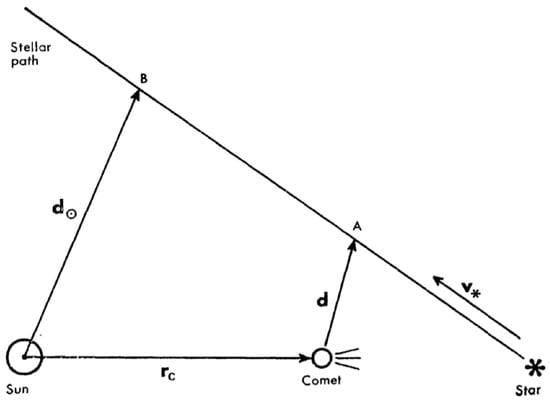
In this review, the formation of the Oort Cloud is illuminated from several aspects. One is the history of the subject with an outline of the fundamental discoveries by Öpik, Oort and Hills. It is argued that the basic reason for judging Oort
[...] Read more.
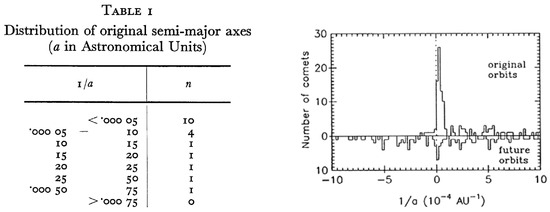
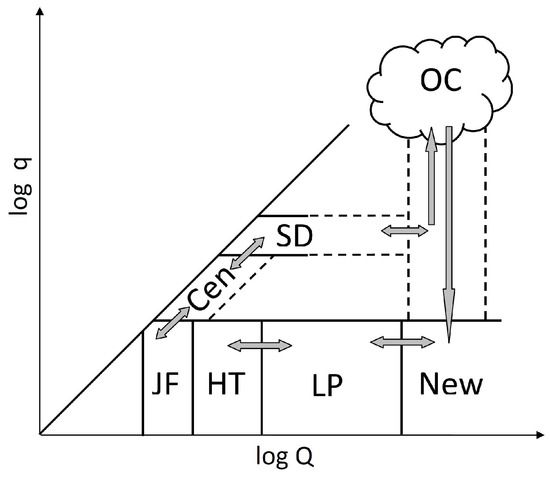
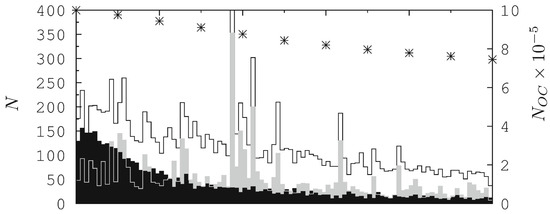
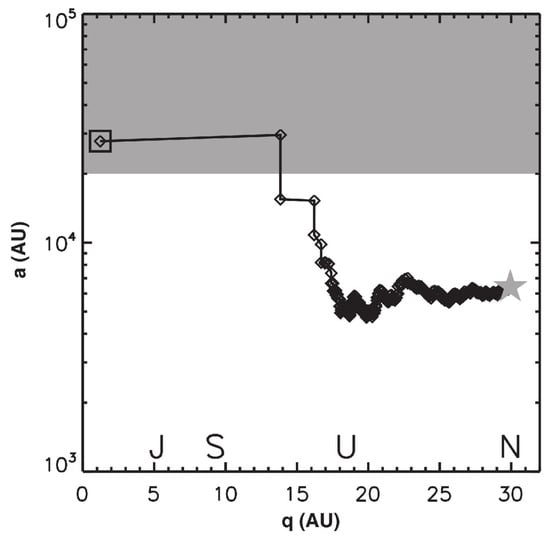
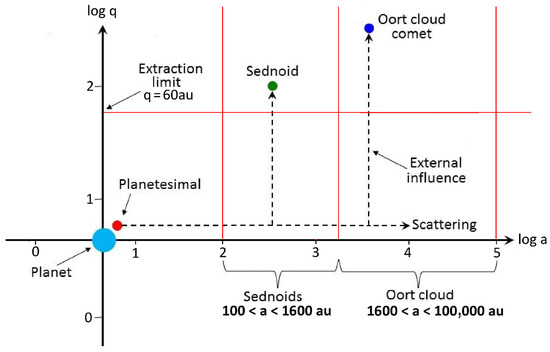
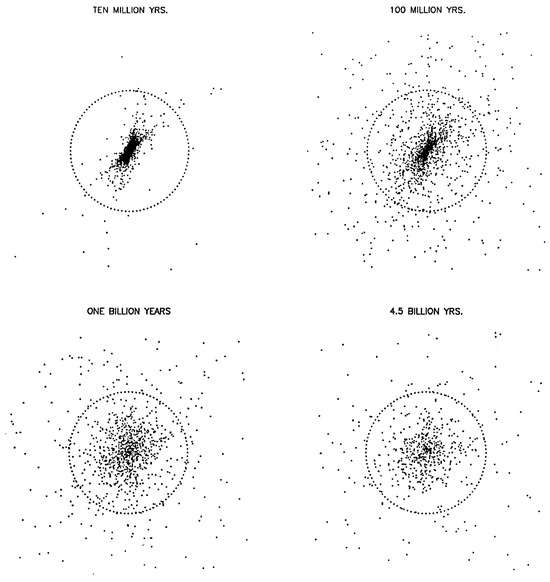
In this review, the formation of the Oort Cloud is illuminated from several aspects. One is the history of the subject with an outline of the fundamental discoveries by Öpik, Oort and Hills. It is argued that the basic reason for judging Oort as the real discoverer is that he had access to observational data in the form of original orbits of long period comets. Further landmarks are identified, like the exploration of the role of the Galactic tide in the supply of observable comets by Heisler and Tremaine, the clarification of a synergy between tide and stars as the reason for a continued, efficient supply by Rickman et al., the discovery by Kaib and Quinn that inner core comets become observable due to planetary perturbations, disguised as new comets, and the demonstration of how Oort Cloud formation may work in the realm of the Nice Model by Brasser and Morbidelli. Further discussions refer to the possible role of the Grand Tack model in Oort Cloud formation and recent developments like Pan-STARRS in obtaining better data on very distant comets and Gaia in identifying stellar encounters in the close past and future with ensuing, important modifications of the Oort Cloud. It is finally argued that an important Galactic sculpting has occurred since the primordial Oort Cloud was formed by means of global shake-up events resulting from impulses imparted to the Sun by external perturbers like massive stars or Giant Molecular Clouds, and that this may be the real reason for the survival of an outer halo that reveals the existence of the Oort Cloud through the Oort spike.
Full article

Figure 1
Open AccessArticle
A Statistical Study of the Jet Structure of Gamma-Ray Bursts
by
Mao Liao, Zhao-Yang Peng and Jia-Ming Chen
Astronomy 2026, 5(2), 7; https://doi.org/10.3390/astronomy5020007 - 3 Apr 2026
Abstract
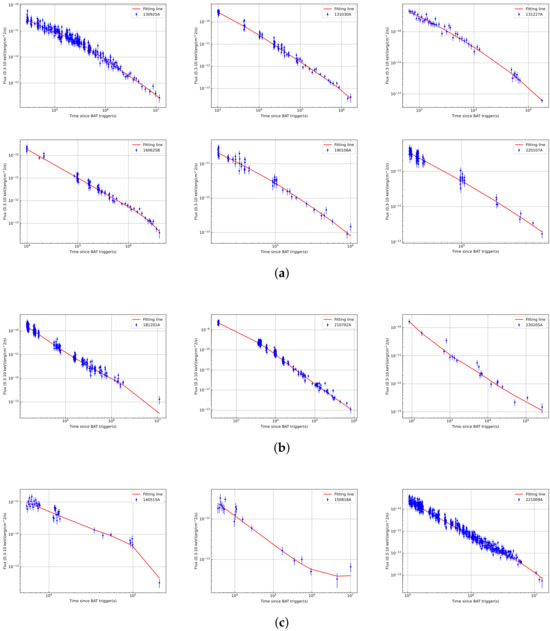
The jet structure plays an important role in both the prompt and afterglow emission phases of gamma-ray bursts (GRBs). Whether GRB jets are better described by uniform (top-hat) or structured models remains an open question. We use the afterglowpy Python package to numerically
[...] Read more.
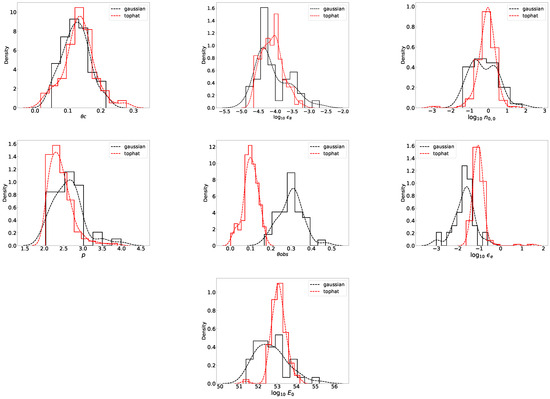
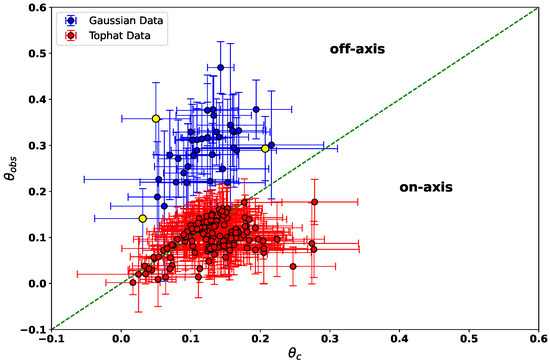
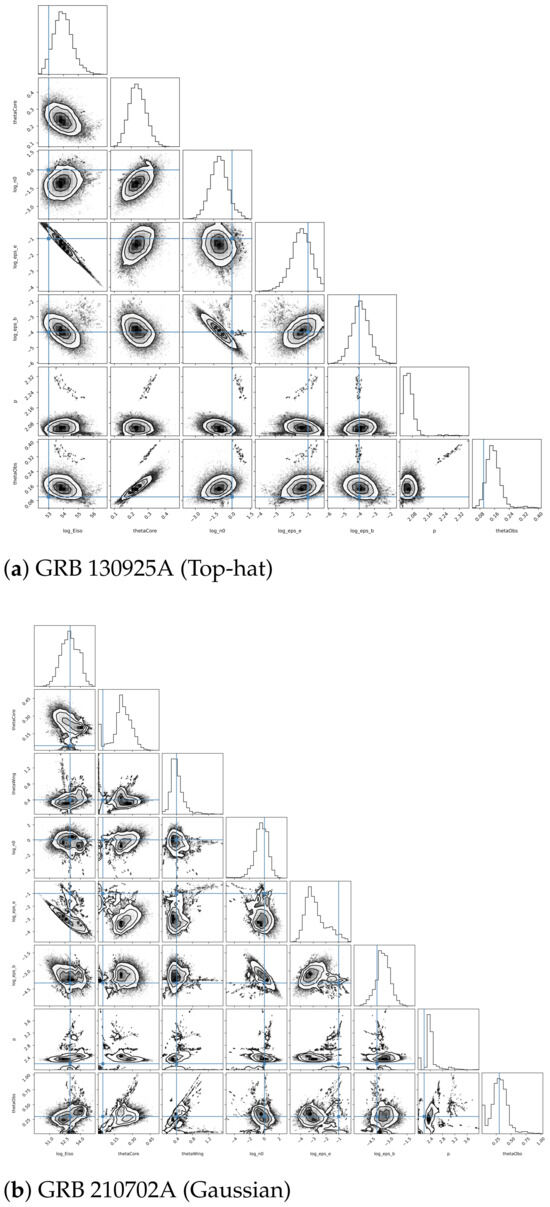
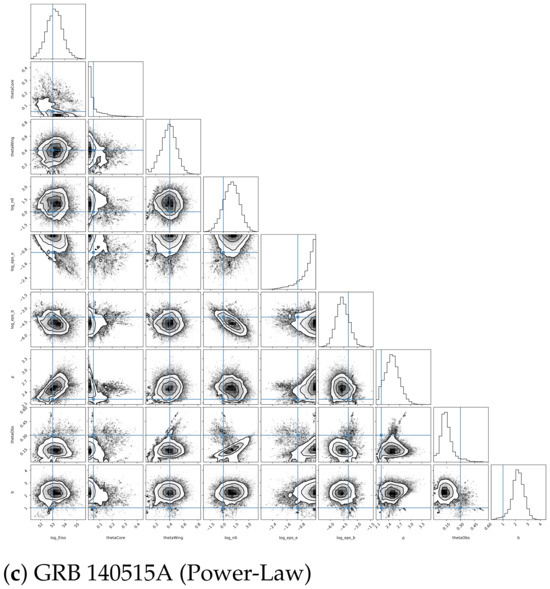
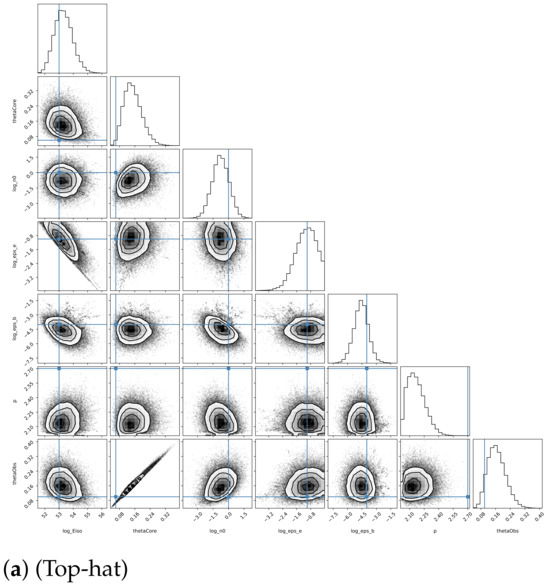
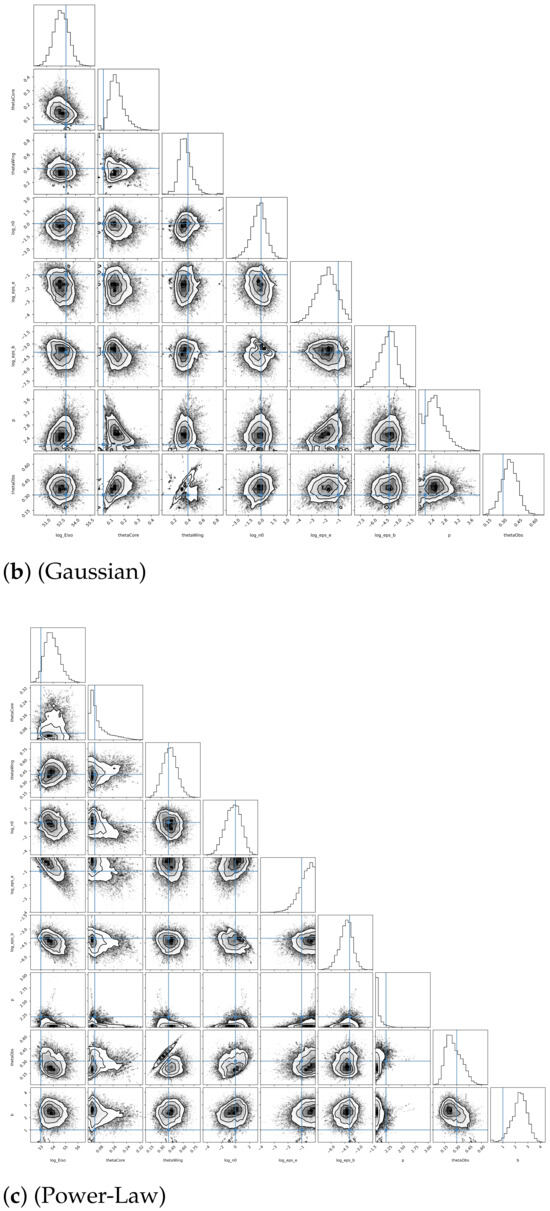
The jet structure plays an important role in both the prompt and afterglow emission phases of gamma-ray bursts (GRBs). Whether GRB jets are better described by uniform (top-hat) or structured models remains an open question. We use the afterglowpy Python package to numerically model the late X-ray afterglow light curves of a large sample of long and short GRBs, and apply the Bayesian Information Criterion (BIC) to compare the performance of top-hat and Gaussian structured jet models. Within our adopted modeling framework, we find that the top-hat model is preferred by the BIC for ∼78.9% (150/190) of long GRBs and 70% (7/10) of short GRBs. GRB 180205A and GRB 140515A exhibit BIC < 2 for all three model comparisons, indicating that top-hat, Gaussian, and power-law jets provide equivalent fits to their afterglow light curves. This large-sample analysis suggests that uniform jets may be more common than structured jets in the observed GRB population, although this conclusion is subject to the limitations of our model assumptions and the BIC-based model selection criterion. Furthermore, we find that the best-fit distributions of observer angle , electron energy fraction , and isotropic equivalent energy differ significantly between the top-hat and Gaussian jet models, with showing the most pronounced distinction.
Full article
(This article belongs to the Special Issue Current Trends in Cosmology)
►▼
Show Figures

Figure 1
Open AccessArticle
RadioObservations of Microquasars with FAST
by
Botao Li and Wei Wang
Astronomy 2026, 5(1), 6; https://doi.org/10.3390/astronomy5010006 - 6 Mar 2026
Abstract
►▼
Show Figures
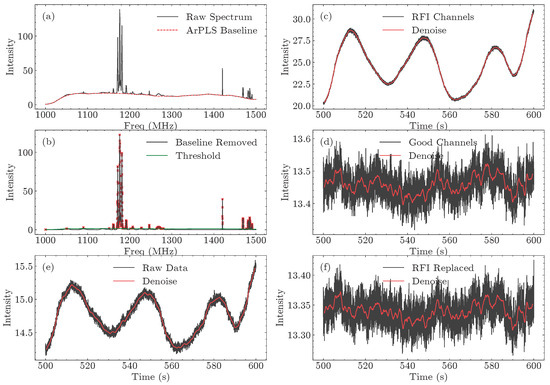
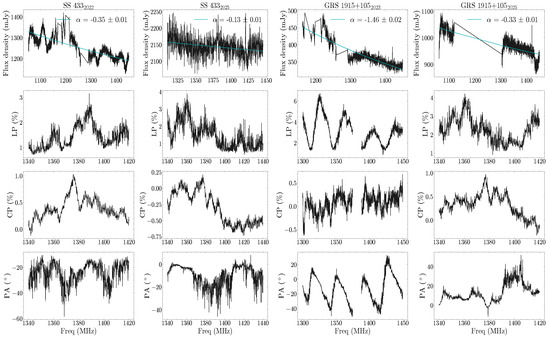
We report six radio observations of four microquasars—SS 433, GRS 1915+105, Cyg X-3 and MAXI J1820+070—conducted between 2022 and 2025 with the Five-hundred-meter Aperture Spherical radio Telescope (FAST) using its pulsar backend, achieving a time resolution of 98.304 s across an effective
[...] Read more.
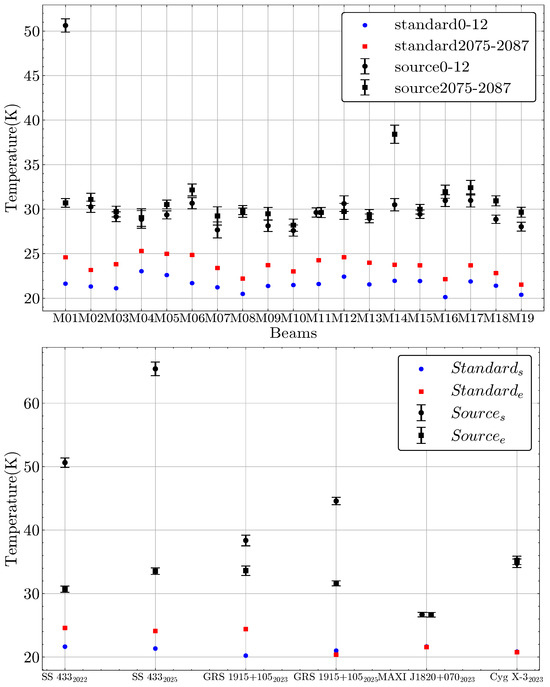
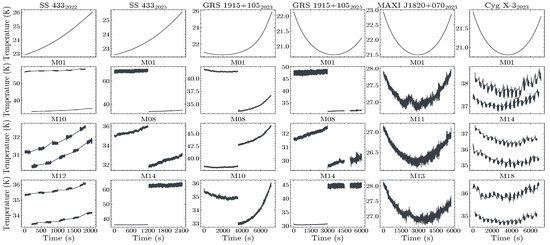
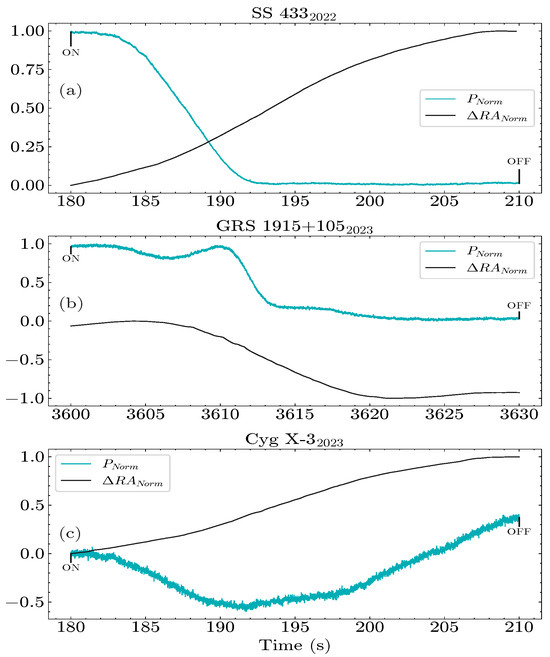
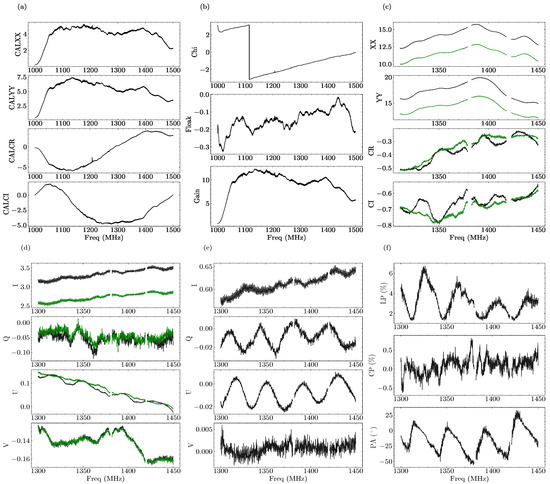
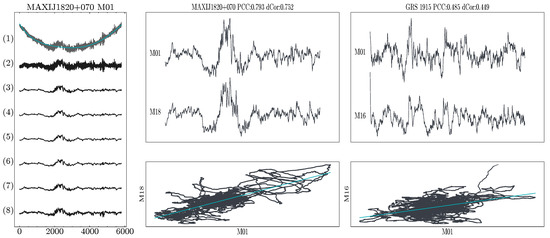
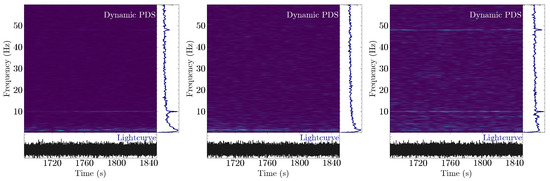
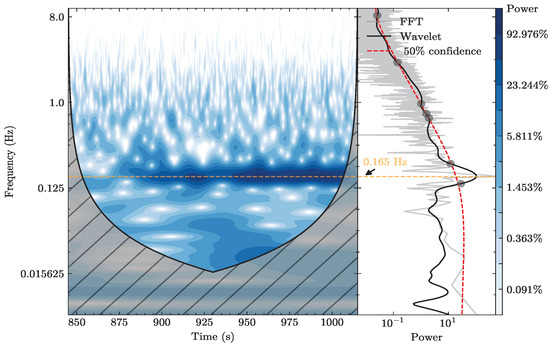
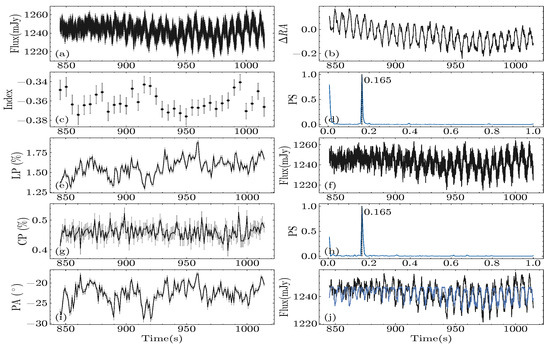
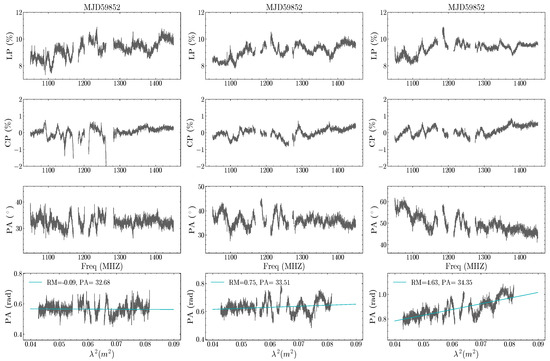
We report six radio observations of four microquasars—SS 433, GRS 1915+105, Cyg X-3 and MAXI J1820+070—conducted between 2022 and 2025 with the Five-hundred-meter Aperture Spherical radio Telescope (FAST) using its pulsar backend, achieving a time resolution of 98.304 s across an effective feed range of 1.04–1.45 GHz. A major focus of this work is the development of a standardized calibration pipeline for microquasar observations, including RFI mitigation, flux density, and polarization calibration, as well as multi-beam correlation inspections. Using On–Off mode and cross-beam verification, radio activity was detected in SS 433, GRS 1915+105 and Cyg X-3, while MAXI J1820+070 remained inactive. Both SS 433 and GRS 1915+105 show low linear polarization degrees of only a few percent. No credible quasi-periodic oscillations (QPOs) were detected in the 0.01–100 Hz range, suggesting that radio QPOs within this frequency range are relatively rare compared to those observed in the X-ray band. We therefore highlight the importance of future monitoring with high–time-resolution and high–sensitivity radio telescopes such as FAST, which will be crucial for revealing the correlation between jet and accretion processes and for uncovering the physical origin of QPOs.
Full article

Figure 1
Open AccessArticle
Cosmological Viability of Linear and Power-Law Models in f(T,B,𝓣) Gravity Universe
by
Yahia Al-Omar, Majida Nahili and Nidal Chamoun
Astronomy 2026, 5(1), 5; https://doi.org/10.3390/astronomy5010005 - 2 Mar 2026
Abstract
►▼
Show Figures
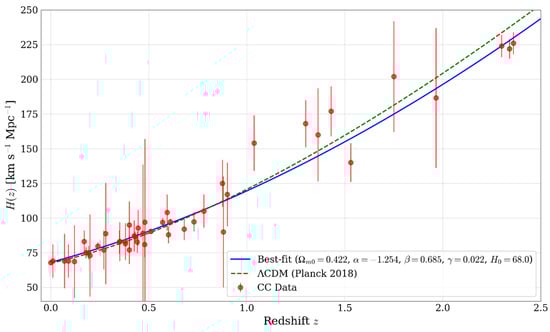
We investigate the cosmological implications of torsion–boundary gravity with explicit matter coupling in f(T,B,𝓣) gravity. The purpose is to examine if such couplings offer observationally viable extensions to standard cosmology. Focusing on linear and power-law model realizations, we
[...] Read more.
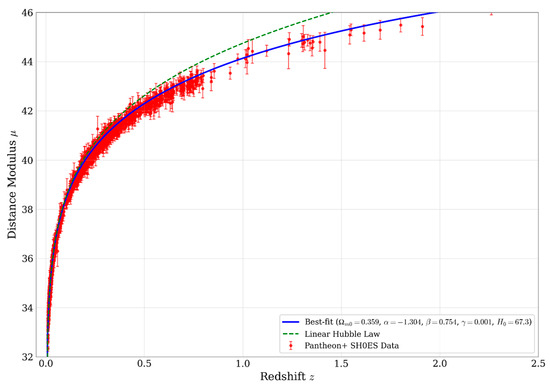
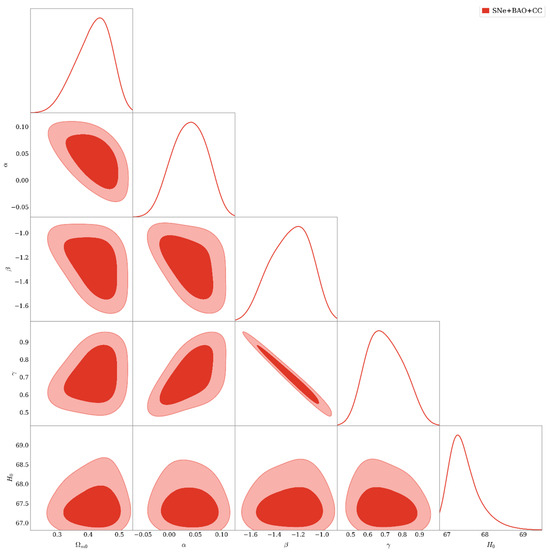
We investigate the cosmological implications of torsion–boundary gravity with explicit matter coupling in f(T,B,𝓣) gravity. The purpose is to examine if such couplings offer observationally viable extensions to standard cosmology. Focusing on linear and power-law model realizations, we derive the modified Friedmann equations and analyze the resulting background dynamics. Using a combination of late-time datasets—including Cosmic Chronometers, Type Ia Supernovae, and Baryon Acoustic Oscillations—we perform a joint likelihood analysis to constrain the model parameters. Our results show that both f(T,B,𝓣) models remain compatible with current observations and effectively reduce to the ΛCDM paradigm in their appropriate parameter limits. While the power-law model exhibits mild dynamical deviations at intermediate redshifts, it remains statistically indistinguishable from the standard cosmological model. We conclude that f(T,B,𝓣) gravity represents a viable and robust extension of torsional modified gravity, motivating further study of non-minimal matter–geometry couplings in cosmology.
Full article

Figure 1
Open AccessArticle
A Small Patch Hypothesis in Cosmology
by
Meir Shimon
Astronomy 2026, 5(1), 4; https://doi.org/10.3390/astronomy5010004 - 9 Feb 2026
Abstract
If our observable Universe is only a tiny region of a vastly larger and conformally older spacetime, then the usual formulations of the classical flatness and horizon problems of the Hot Big Bang can be reinterpreted as artifacts manifesting an observational selection effect;
[...] Read more.
If our observable Universe is only a tiny region of a vastly larger and conformally older spacetime, then the usual formulations of the classical flatness and horizon problems of the Hot Big Bang can be reinterpreted as artifacts manifesting an observational selection effect; we occupy a small causal domain of a much larger causally-connected and possibly non-flat spacetime. A sufficiently large positive cosmological constant, , sets the future asymptotic horizon scale of the observable Universe, ∼ , thereby implying that the observable Universe may simply be a minute patch of a far larger pre-existing one, hereafter a Small Patch Hypothesis. Importantly, this observational bound is purely geometric; regardless of when the Universe is observed, the maximum accessible scale is finite and fixed by , independent of inflationary dynamics, anthropic arguments, or assumptions about the global hosting spacetime. The externally possibly frozen past-eternal state implied by a pre-existing, causally connected spacetime motivates, but does not strictly require, viewing the perturbation field as being in (or arbitrarily close to) a coarse-grained maximum-entropy—equilibrium—configuration. Conditionalizing only on fixed mean and variance, a Gaussian distribution uniquely emerges, while the absence of entropy gradients corresponds to adiabaticity. In this work these features are therefore treated as plausible maximum-ignorance priors for super-horizon perturbations, rather than as rigorously derived consequences of a fully developed microscopic notion of gravitational entropy. In this sense, inflation becomes one viable realization of the proposed Small Patch Hypothesis. Here, one particular non-inflationary alternative is considered for illustrative purposes in which a primordial spectrum of the gauge-invariant perturbation that pre-dates the Big Bang grows logarithmically toward large scales, , and in fact diverges at some finite . If , then our local cosmic patch probes only the regime where and appears exceptionally smooth. Over the comparatively narrow observable window, this mimics a slightly red-tilted, inflation-like spectrum. Rather than introducing high-energy new fields, this perspective frames large-scale homogeneity, isotropy, Gaussianity, adiabaticity, and the observed thermodynamic Arrow of Time as possible consequences of restricted observational access to a much larger Universe in equilibrium, rather than signatures of a unique early-Universe mechanism. Current observations cannot distinguish this logarithmically running spectrum from the standard power-law one, but future probes—for example high-resolution 21-cm measurements of the Dark Ages—may be able to falsify it.
Full article
Open AccessArticle
Orbital Parameters and Planetary Radius of 55 Cancri e from TESS Data
by
David Joffe and Matt Bonvissuto
Astronomy 2026, 5(1), 3; https://doi.org/10.3390/astronomy5010003 - 6 Feb 2026
Abstract
►▼
Show Figures
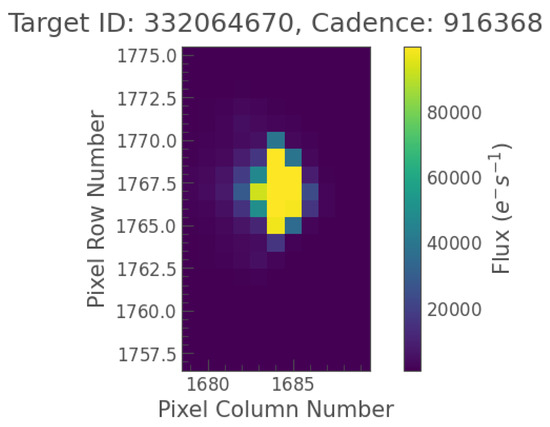
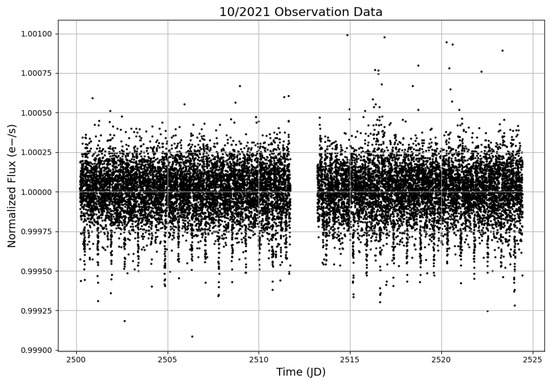
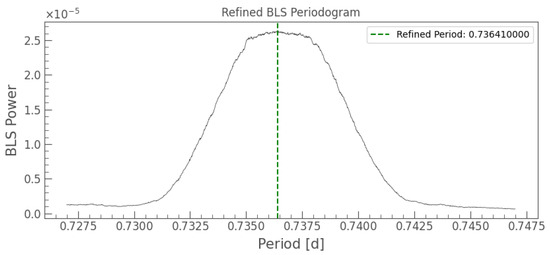
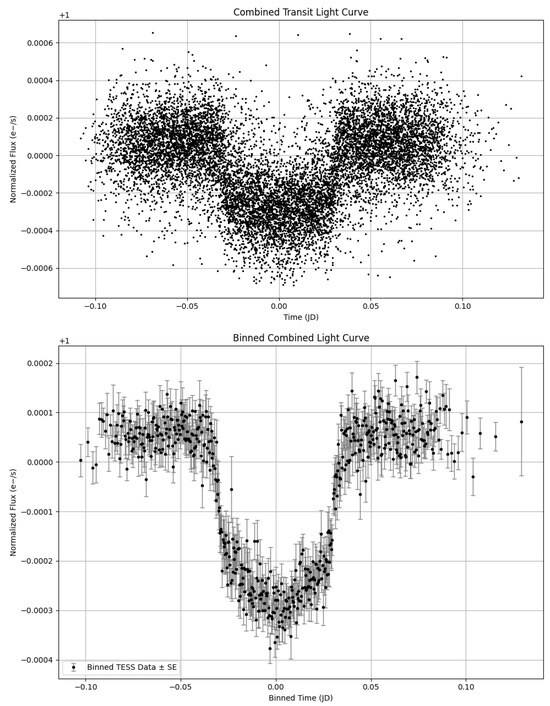
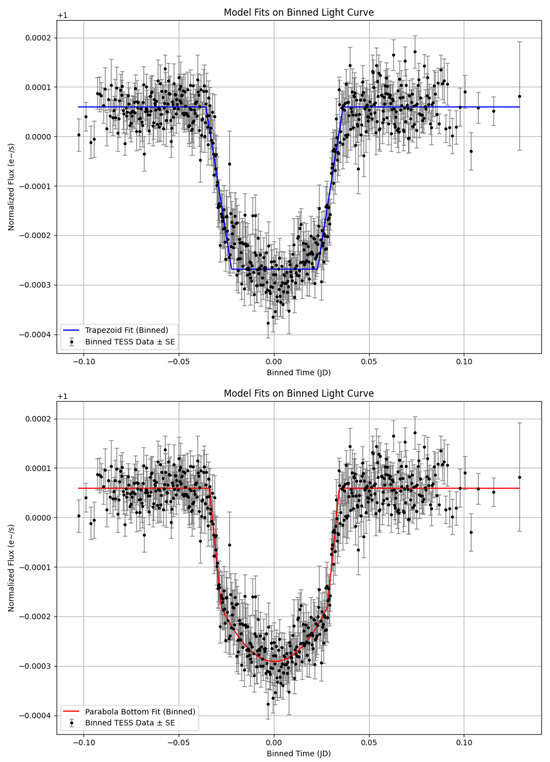
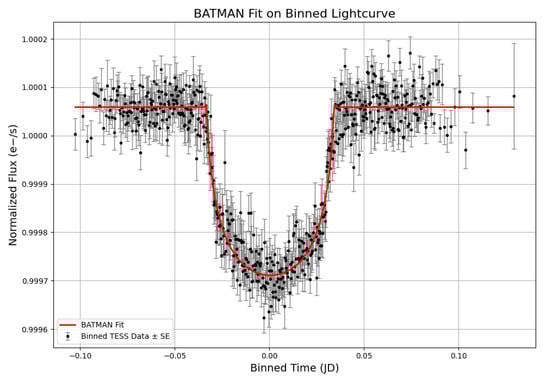
A large number of transits have been observed by TESS from the rapidly orbiting exoplanet 55 Cancri e. This amount of transit data, combined with the relatively high frequency of TESS observations, allows for a direct measurement of not only the planetary radius
[...] Read more.
A large number of transits have been observed by TESS from the rapidly orbiting exoplanet 55 Cancri e. This amount of transit data, combined with the relatively high frequency of TESS observations, allows for a direct measurement of not only the planetary radius and orbital parameters but also the limb darkening coefficients of the host star. We obtain a planetary radius of earth radii, an orbital radius of AU, and an orbital inclination of degrees. For the quadratic limb darkening coefficients and we report measurements of and , and discuss strategies to reduce the uncertainty in the measurement. We also measured the curvature of the transit depth as a function of time using an effective parametrization , and found in units of relative intensity per day squared. This parametrization resulted in a higher goodness-of-fit value than the quadratic model, with a reduced of 1.153 rather than 1.201 for the quadratic model, and a of 31.75 in favor of the effective parametrization.
Full article

Figure 1
Open AccessArticle
Detailed Analysis of the Dynamics of Two Point Masses Under Gravitational Interaction
by
Luigi Sirignano, Pierluigi Sirignano and Roberto Guarino
Astronomy 2026, 5(1), 2; https://doi.org/10.3390/astronomy5010002 - 21 Jan 2026
Abstract
►▼
Show Figures
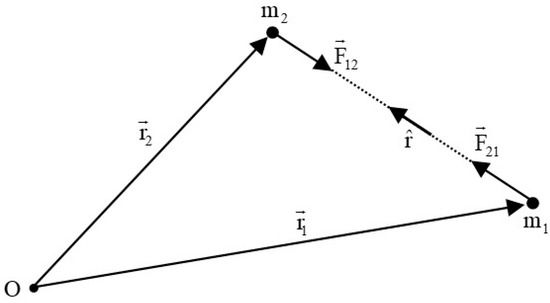
The dynamics of two point masses interacting in a gravitational field has been the object of several scientific works. However, the complete explicit solution of the two-body problem is, to the best of our knowledge, not always available in the scientific literature. In
[...] Read more.
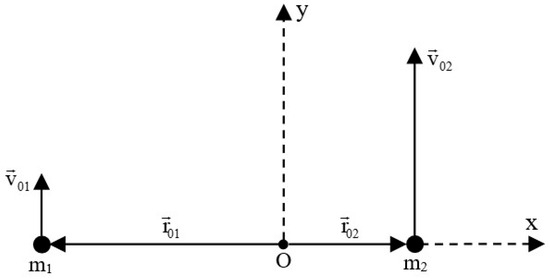
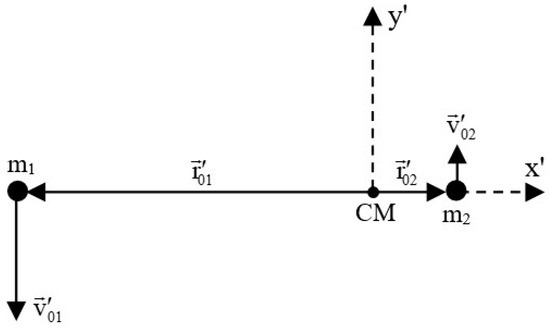
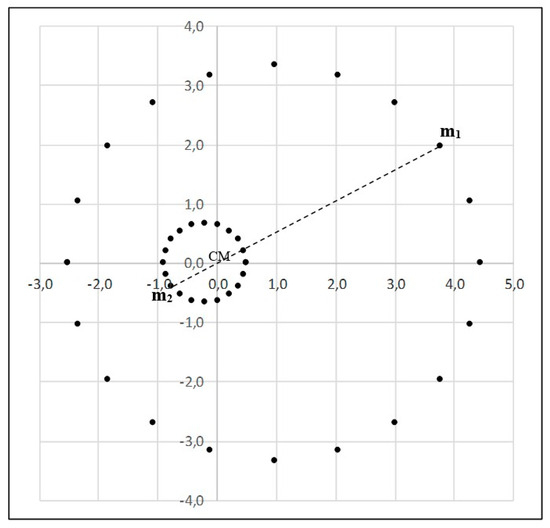
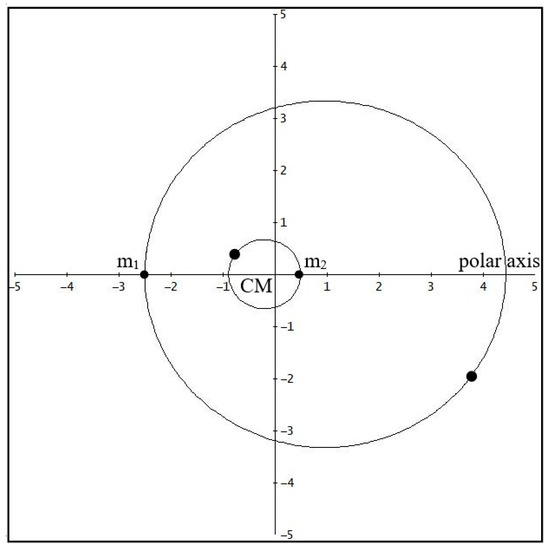
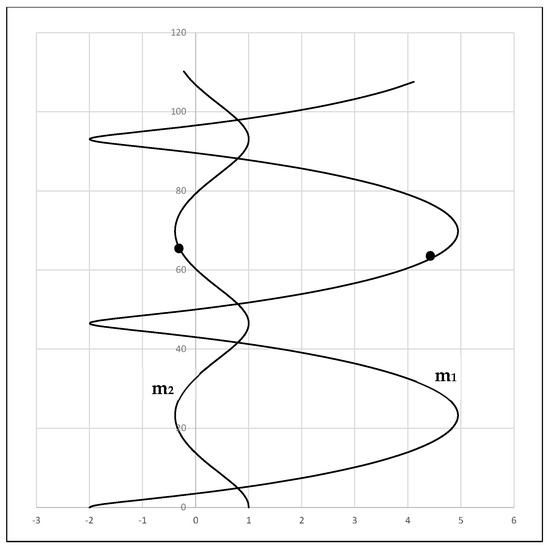
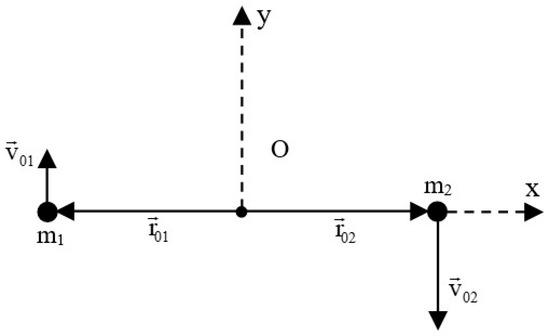
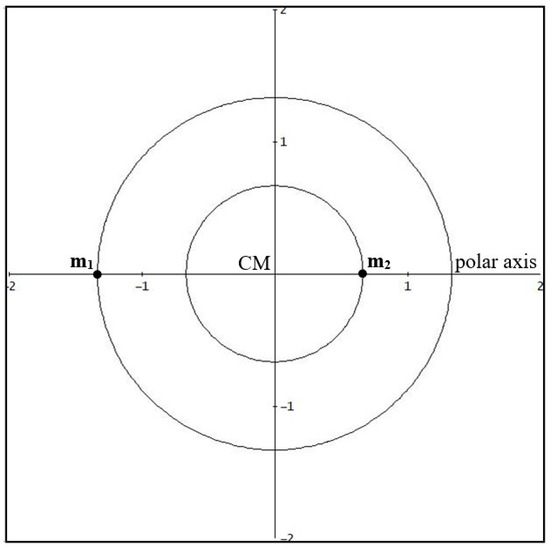
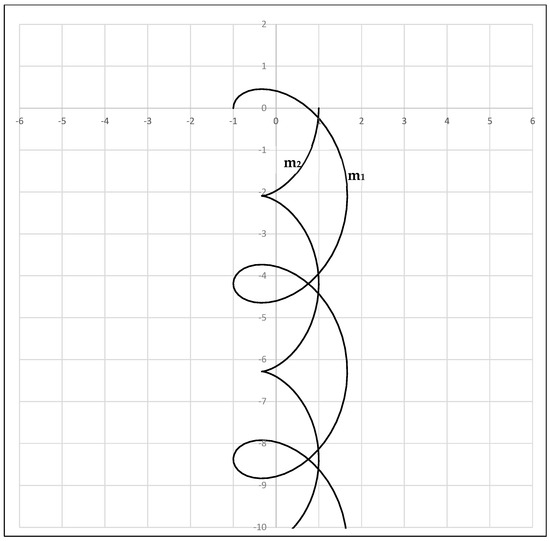
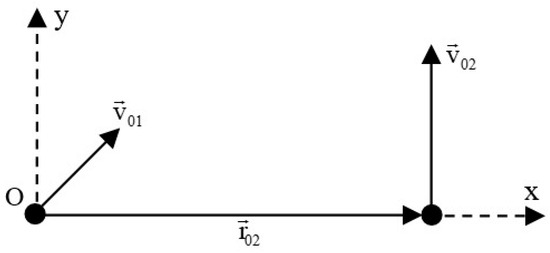
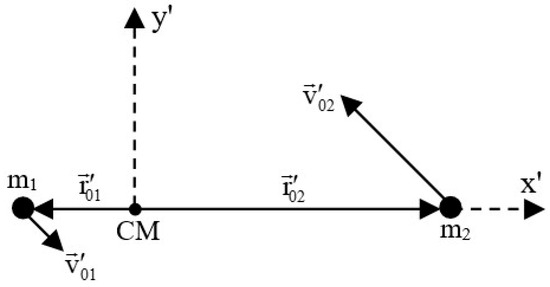
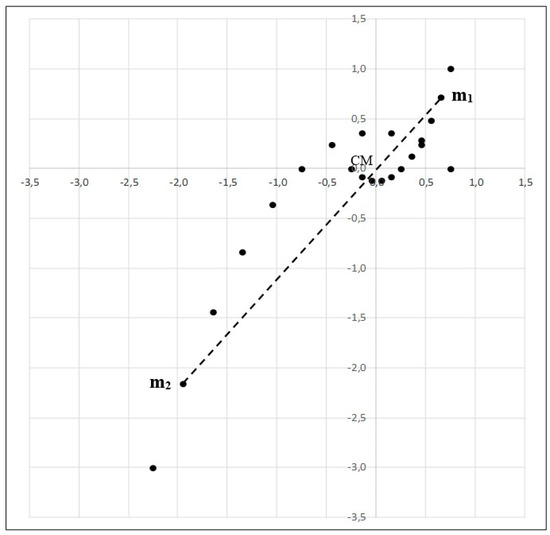
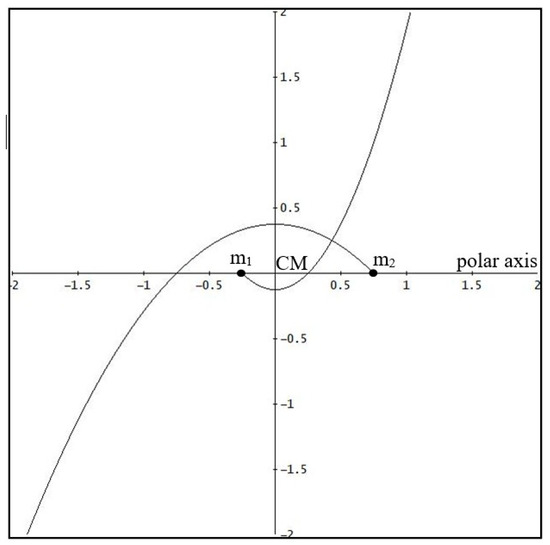
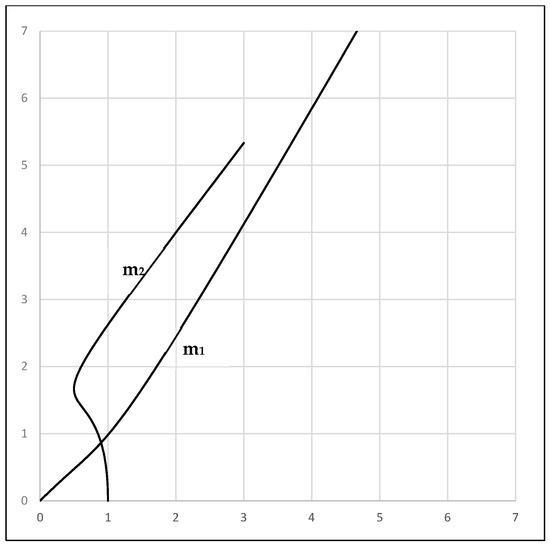
The dynamics of two point masses interacting in a gravitational field has been the object of several scientific works. However, the complete explicit solution of the two-body problem is, to the best of our knowledge, not always available in the scientific literature. In this work, we describe the dynamics of a two-body system with that of an equivalent single-body with a reduced mass. Then, we solve the specific problems for elliptical, circular and parabolic trajectories, starting from different initial conditions. Through detailed analytical calculations, we write the Cartesian equations of the trajectories and the equations of motion both in the reference system of the centre of mass and in the original reference system. The proposed methodology is a simple but rigorous way to analyse the two-body dynamics under gravitational interactions, and can be applied also to more complex cases, such as the motion in a perturbed Newtonian potential and/or precession problems. The treatment presented in this work is particularly suitable to undergraduate students.
Full article

Figure 1
Open AccessBrief Report
Jupiter Mass Binary Objects Show a Minimum Acceleration
by
Michael E. McCulloch
Astronomy 2026, 5(1), 1; https://doi.org/10.3390/astronomy5010001 - 26 Dec 2025
Abstract
►▼
Show Figures
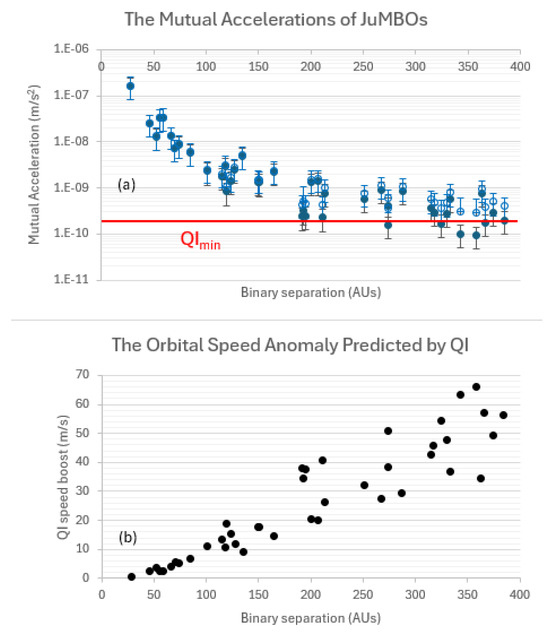
Forty-two Jupiter Mass Binary Objects (JuMBOs) have been discovered in the Trapezium Cluster: either brown dwarf stars or planets mutually orbiting in pairs. Here it is shown that, just as in galaxies and wide binaries, the mutual orbits of the objects in each
[...] Read more.
Forty-two Jupiter Mass Binary Objects (JuMBOs) have been discovered in the Trapezium Cluster: either brown dwarf stars or planets mutually orbiting in pairs. Here it is shown that, just as in galaxies and wide binaries, the mutual orbits of the objects in each of these twin systems deviate from the Newtonian and level off around a mutual acceleration of m/s2 supporting the minimum acceleration predicted by Quantised Inertia (QI), a theory that attributes inertial mass to an interaction between information horizons and quantum fields and predicts galaxy rotation without the need for dark matter. QI further predicts that the JuMBOs with separations of 400 AU should show orbital anomalies of 70 m/s. This could be tested using spectral Doppler data.
Full article

Figure 1
Open AccessArticle
Chandra Observations of the X-Ray Binary Population in the Field of the Dwarf Galaxy IC 10
by
Sayantan Bhattacharya, Silas G. T. Laycock, Breanna A. Binder and Dimitris M. Christodoulou
Astronomy 2025, 4(4), 26; https://doi.org/10.3390/astronomy4040026 - 13 Dec 2025
Abstract
►▼
Show Figures
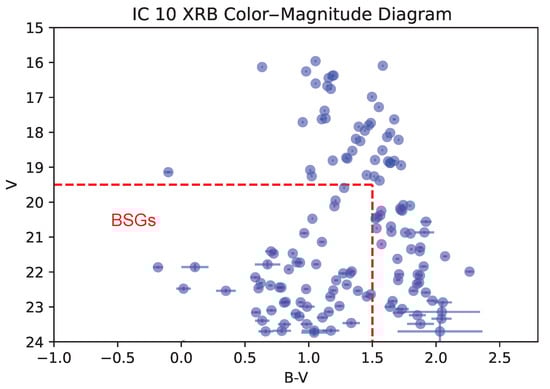
IC 10 is a dwarf galaxy in Cassiopeia, located at a distance of 660 kpc, and hosts a young stellar population, a large number of Wolf–Rayet stars, and a large number of massive stars in general. Utilizing a series of 11 Chandra observations
[...] Read more.
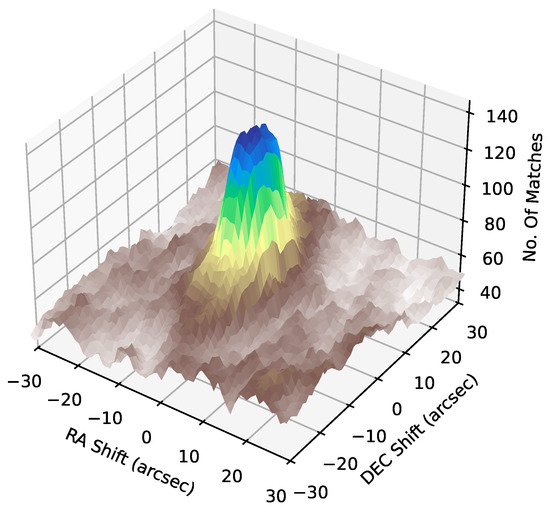
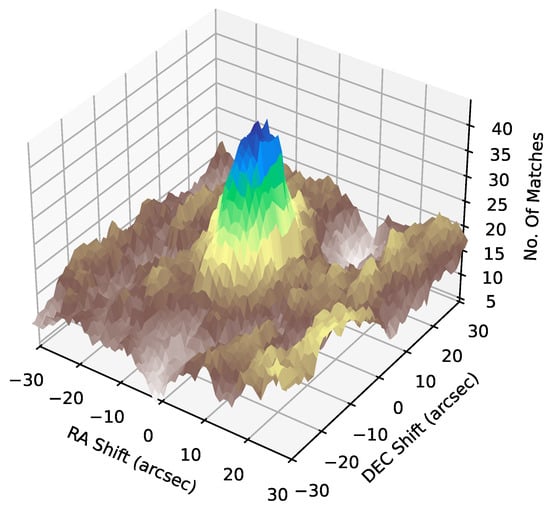
IC 10 is a dwarf galaxy in Cassiopeia, located at a distance of 660 kpc, and hosts a young stellar population, a large number of Wolf–Rayet stars, and a large number of massive stars in general. Utilizing a series of 11 Chandra observations (spanning 2003–2021, with a total exposure of 235.1 ks), 375 point sources of X-ray emission were detected. Similar studies have been conducted earlier in the central region of IC 10. Here, we consider all regions covered by Chandra-ACIS. By comparing our catalog of X-ray sources with a published optical catalog, we found that 146 sources have optical counterparts. We also created a list of 60 blue supergiant (SG) candidates with X-ray binary (XRB) companions by using an optical color–magnitude selection criterion to isolate the blue SGs. Blue SG-XRBs form a major class of progenitors of double-degenerate binaries. Hence, their numbers are an important factor in modeling the rate of gravitational-wave sources. Identifying the nature of individual sources is necessary as it paves the way toward a comprehensive census of XRBs in IC 10, thus enabling meaningful comparisons with other Local Group galaxies exhibiting starbursts, such as the Magellanic Clouds.
Full article

Figure 1
Open AccessArticle
Disentangling the Cosmic/Comoving Duality: The Cognitive Stability and Typicality Tests
by
Meir Shimon
Astronomy 2025, 4(4), 25; https://doi.org/10.3390/astronomy4040025 - 8 Dec 2025
Abstract
Cosmological scenarios wherein the cumulative number of spontaneously formed, cognitively impaired, disembodied transient observers is vastly larger than the corresponding number of atypical ‘ordinary observers’ (OOs) formed in the conventional way—essentially via cosmic evolution and gravitational instability—are disqualified in modern cosmology on the
[...] Read more.
Cosmological scenarios wherein the cumulative number of spontaneously formed, cognitively impaired, disembodied transient observers is vastly larger than the corresponding number of atypical ‘ordinary observers’ (OOs) formed in the conventional way—essentially via cosmic evolution and gravitational instability—are disqualified in modern cosmology on the grounds of Cognitive Instability—the untrustworsiness of one own’s reasoning—let alone the atypicality of OOs like us. According to the concordance ΛCDM cosmological model—when described in the (expanding) ‘cosmic frame’—the cosmological expansion is future-eternal. In this frame we are atypical OOs, which are vastly outnumbered by typical Boltzmann Brains (BBs) that spontaneously form via sheer thermal fluctuations in the future-eternal asymptotic de Sitter spacetime. In the case that dark energy (DE) ultimately decays, the cumulative number of transient ‘Freak Observers’ (FOs) formed and destroyed spontaneously by virtue of the quantum uncertainty principle ultimately overwhelms that of OOs. Either possibility is unacceptable. We argue that these unsettling conclusions are artifacts of employing the (default) cosmic frame description in which space expands. When analyzed in the comoving frame, OOs overwhelmingly outnumber both BBs and FOs. This suggests that the dual comoving description is the cognitively stable preferred framework for describing our evolving Universe. In this frame, space is globally static, masses monotonically increase, and the space describing gravitationally bounded objects monotonically contracts.
Full article
Open AccessReview
Constraints on the Hubble and Matter Density Parameters with and Without Modelling the CMB Anisotropies
by
Indranil Banik and Nick Samaras
Astronomy 2025, 4(4), 24; https://doi.org/10.3390/astronomy4040024 - 19 Nov 2025
Cited by 3
Abstract
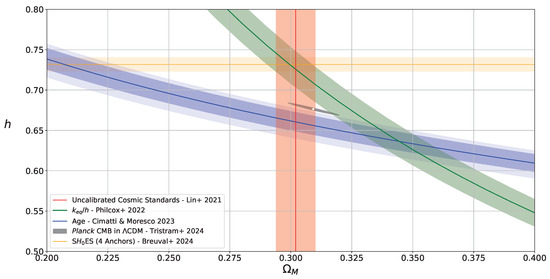
We consider constraints on the Hubble parameter and the matter density parameter from the following: (i) the age of the Universe based on old stars and stellar populations in the Galactic disc and halo; (ii) the turnover scale in
[...] Read more.
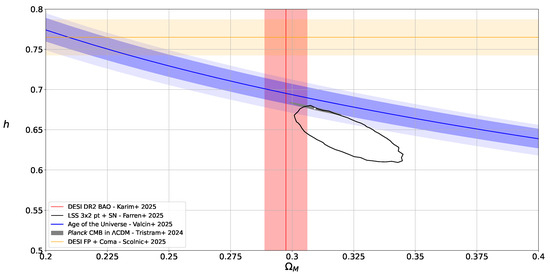
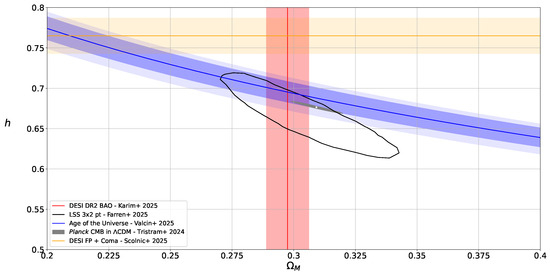
We consider constraints on the Hubble parameter and the matter density parameter from the following: (i) the age of the Universe based on old stars and stellar populations in the Galactic disc and halo; (ii) the turnover scale in the matter power spectrum, which tells us the cosmological horizon at the epoch of matter-radiation equality; and (iii) the shape of the expansion history from supernovae (SNe) and baryon acoustic oscillations (BAOs) with no absolute calibration of either, a technique known as uncalibrated cosmic standards (UCS). A narrow region is consistent with all three constraints just outside their uncertainties. Although this region is defined by techniques unrelated to the physics of recombination and the sound horizon then, the standard Planck fit to the CMB anisotropies falls precisely in this region. This concordance argues against early-time explanations for the anomalously high local estimate of (the ‘Hubble tension’), which can only be reconciled with the age constraint at an implausibly low . We suggest instead that outflow from the local KBC supervoid inflates redshifts in the nearby universe and, thus, the apparent local . Given the difficulties with solutions in the early universe, we argue that the most promising alternative to a local void is a modification to the expansion history at late times, perhaps due to a changing dark energy density.
Full article
(This article belongs to the Special Issue Current Trends in Cosmology)
►▼
Show Figures

Figure 1
Open AccessArticle
Solar Flare Forecast: A Comparative Analysis of Machine Learning Algorithms for Predicting Solar Flare Classes
by
Julia Bringewald and Olivier Parisot
Astronomy 2025, 4(4), 23; https://doi.org/10.3390/astronomy4040023 - 13 Nov 2025
Cited by 2
Abstract
►▼
Show Figures
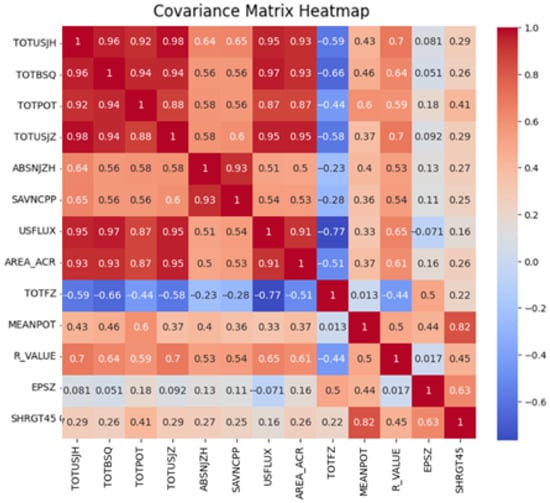
Solar flares are among the most powerful and dynamic events in the solar system, resulting from the sudden release of magnetic energy stored in the Sun’s atmosphere. These energetic bursts of electromagnetic radiation can release up to erg of energy, impacting
[...] Read more.
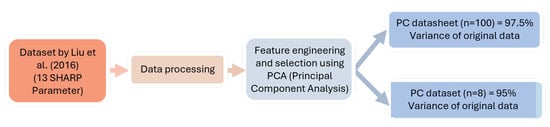
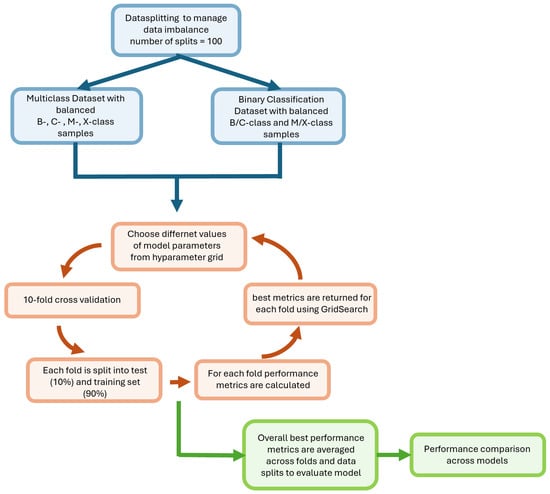
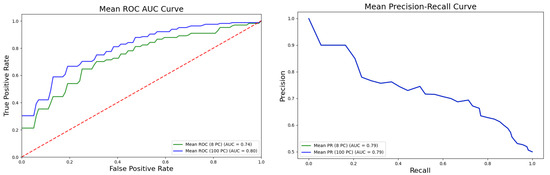
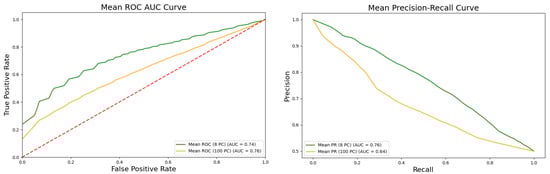
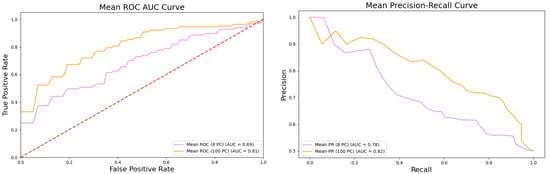
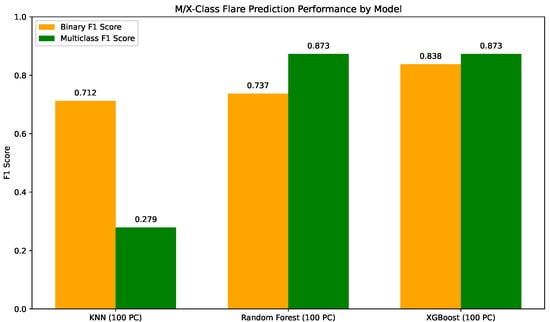
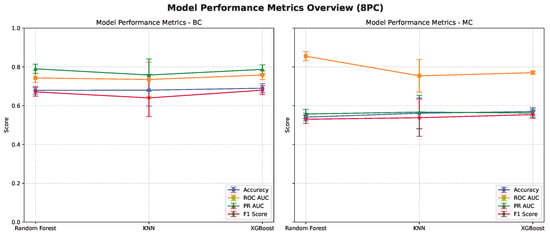
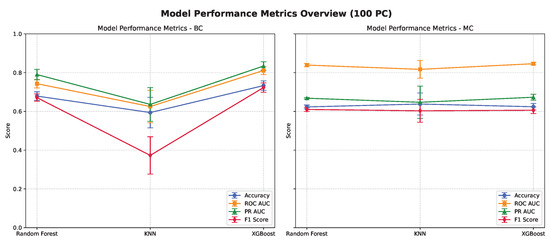
Solar flares are among the most powerful and dynamic events in the solar system, resulting from the sudden release of magnetic energy stored in the Sun’s atmosphere. These energetic bursts of electromagnetic radiation can release up to erg of energy, impacting space weather and posing risks to technological infrastructure and therefore require accurate forecasting of solar flare occurrences and intensities. This study evaluates the predictive performance of three machine learning algorithms—Random Forest (RF), k-Nearest Neighbors (kNN), and Extreme Gradient Boosting (XGBoost)—for classifying solar flares into four categories (B, C, M, X). Using 13 parameters of the SHARP dataset, the effectiveness of the models was evaluated in binary and multiclass classification tasks. The analysis utilized 8 principal components (PCs), capturing 95% of data variance, and 100 PCs, capturing 97.5% of variance. Our approach uniquely combines binary and multiclass classification with different levels of dimensionality reduction, an innovative methodology not previously explored in the context of solar flare prediction. Employing a 10-fold stratified cross-validation and grid search for hyperparameter tuning ensured robust model evaluation. Our findings indicate that RF and XGBoost consistently demonstrate strong performance across all metrics, benefiting significantly from increased dimensionality. The insights of this study enhance future research by optimizing dimensionality reduction techniques and informing model selection for astrophysical tasks. By integrating this newly acquired knowledge into future research, more accurate space weather forecasting systems can be developed, along with a deeper understanding of solar physics.
Full article

Figure 1
Open AccessArticle
A Study of Four Distinct Photonic Crystal Fibers for the Maximization of the Optical Hawking Effect in Analog Models of the Event Horizon
by
Alfonso González Jiménez, Enderson Falcón Gómez, Isabel Carnoto Amat and Luis Enrique García Muñoz
Astronomy 2025, 4(4), 22; https://doi.org/10.3390/astronomy4040022 - 10 Nov 2025
Abstract
►▼
Show Figures
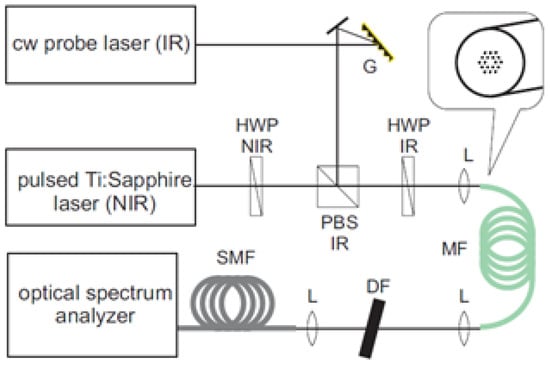
This work aims to maximize the Hawking emission temperature arising in the optical analog model of the event horizon of an astrophysical black hole. A weak probe wave interacts with an intense ultrashort optical pulse via the Kerr effect in a photonic crystal
[...] Read more.
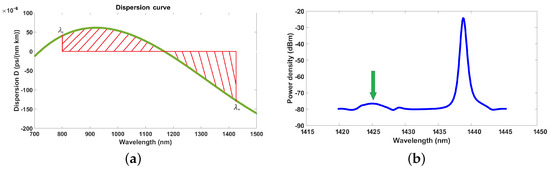
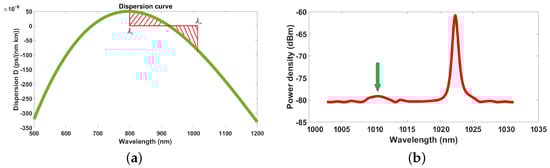
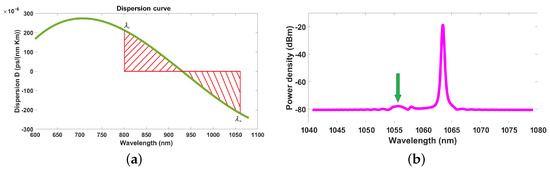
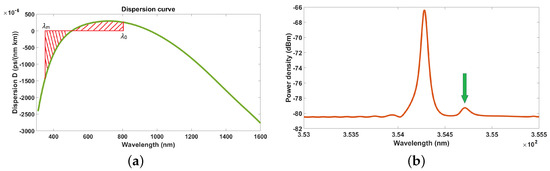
This work aims to maximize the Hawking emission temperature arising in the optical analog model of the event horizon of an astrophysical black hole. A weak probe wave interacts with an intense ultrashort optical pulse via the Kerr effect in a photonic crystal fiber. This interaction causes the probe wave to experience an effective spacetime geometry characterized by the presence of an optical event horizon, where the analogous Hawking radiation effect arises. Here we refer to the simulated or classical version of the analog of Hawking radiation. This study considers four distinct types of photonic crystal fibers with anomalous dispersion curves that allow for maximizing the effect. Our first three numerical simulations indicate that a Hawking emission temperature of up to 361 K can be achieved with a photonic crystal fiber with two zero-dispersion wavelengths, while the emission temperature values in the original investigation are lower than 244 K. And in the fourth, we can see that we have a configuration in which the temperature can be improved up to 1027 K. Moreover, these results also emphasize the feasibility of using analog models to test the quantum effects of gravity, such as Hawking radiation produced by typical black holes, whose magnitude is far below the temperature of the cosmic microwave background (2.7 K).
Full article

Figure 1
Open AccessArticle
General Relativistic Effect on Sitnikov Three-Body Problem: Restricted Case
by
Hideyoshi Arakida
Astronomy 2025, 4(4), 21; https://doi.org/10.3390/astronomy4040021 - 3 Nov 2025
Abstract
►▼
Show Figures
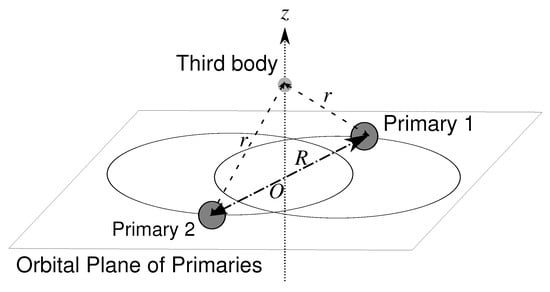
We investigate the effect of general relativity on the Sitnikov problem. The Sitnikov problem is one of the simplest three-body problems, in which the two primary bodies (a binary system) have equal mass m and orbit their barycenter, while the third body is
[...] Read more.
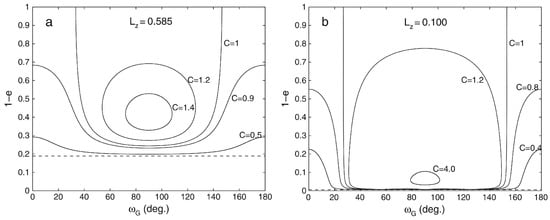
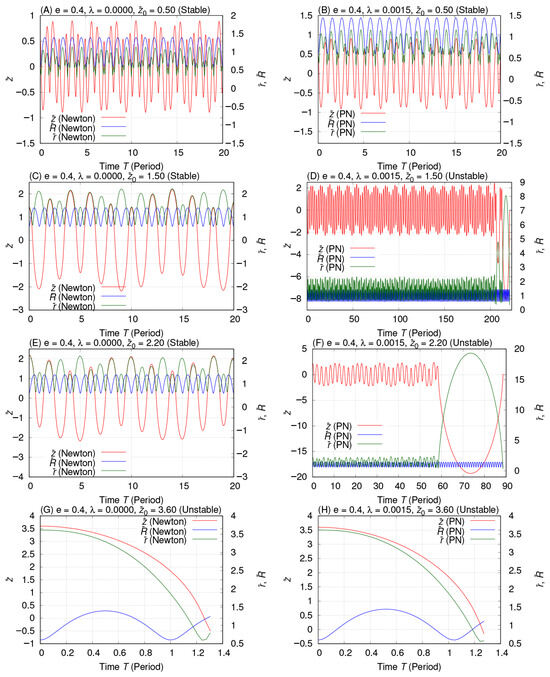
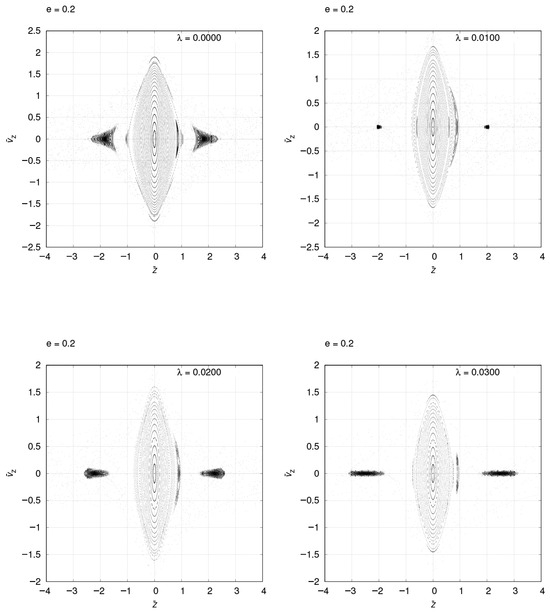
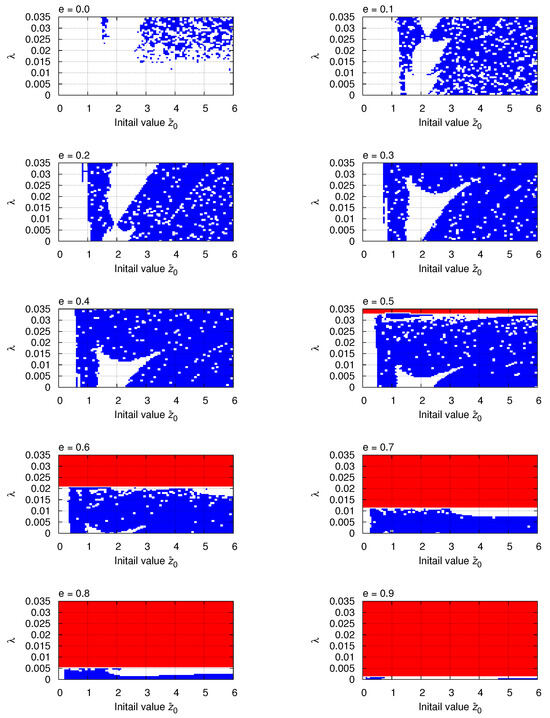
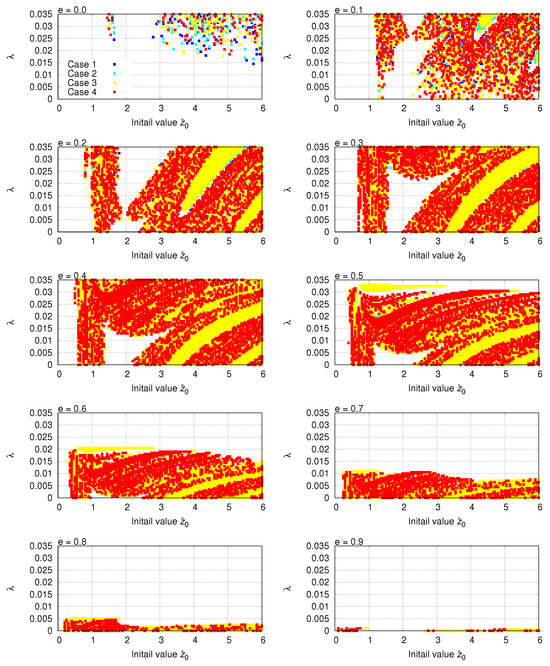
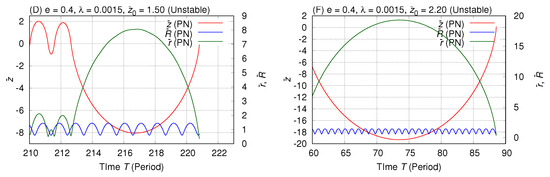
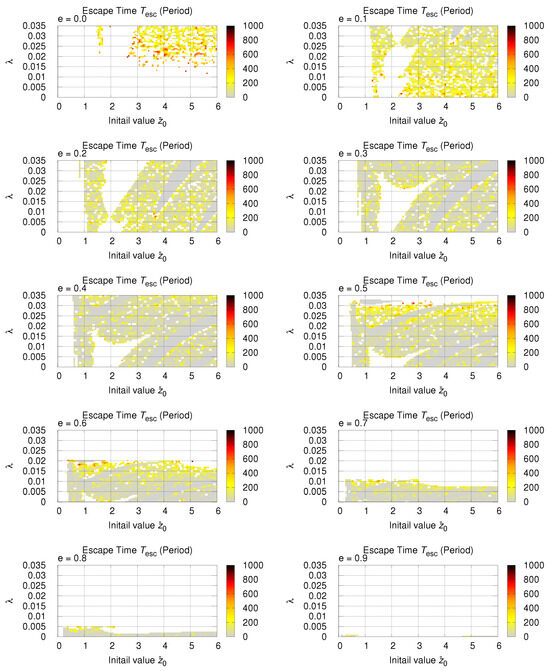
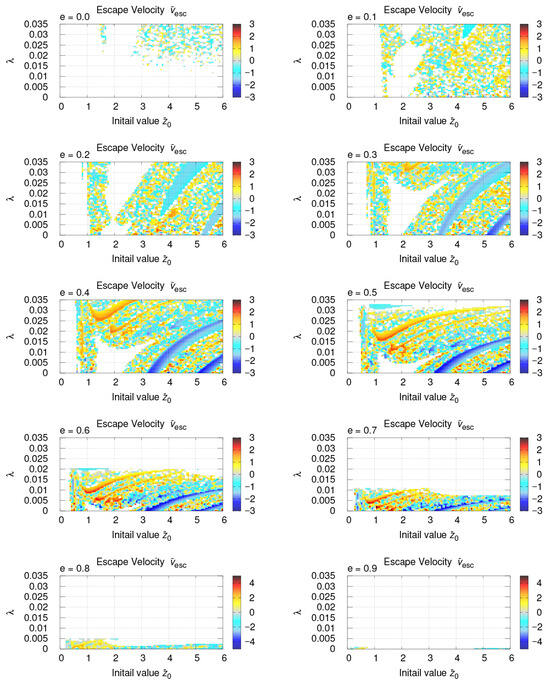
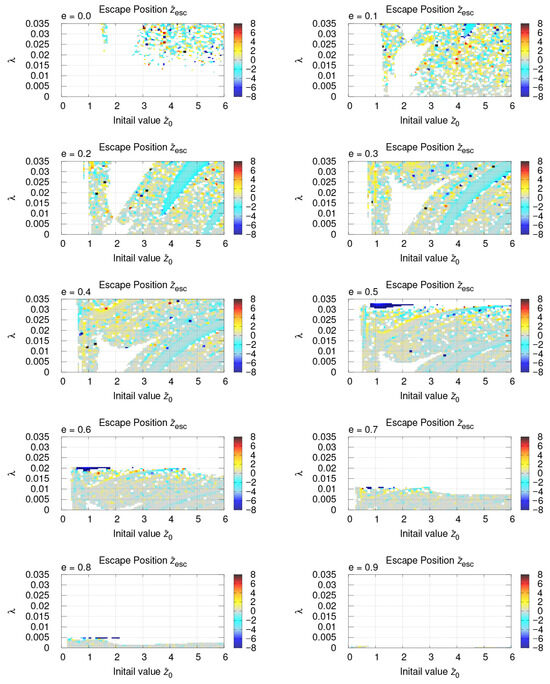
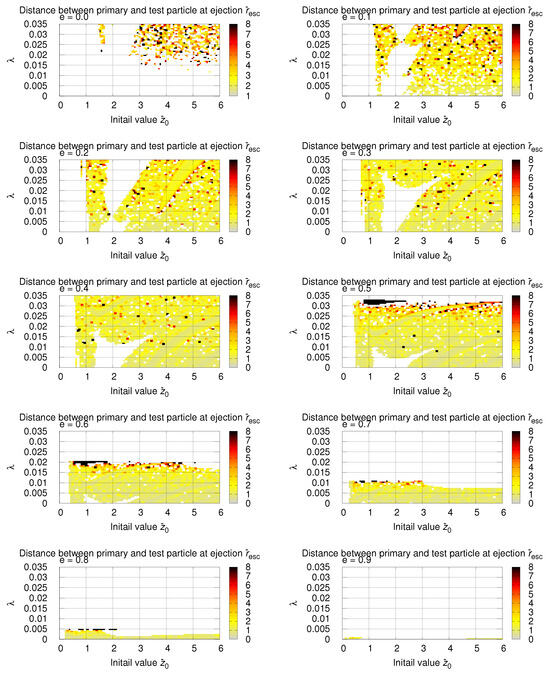
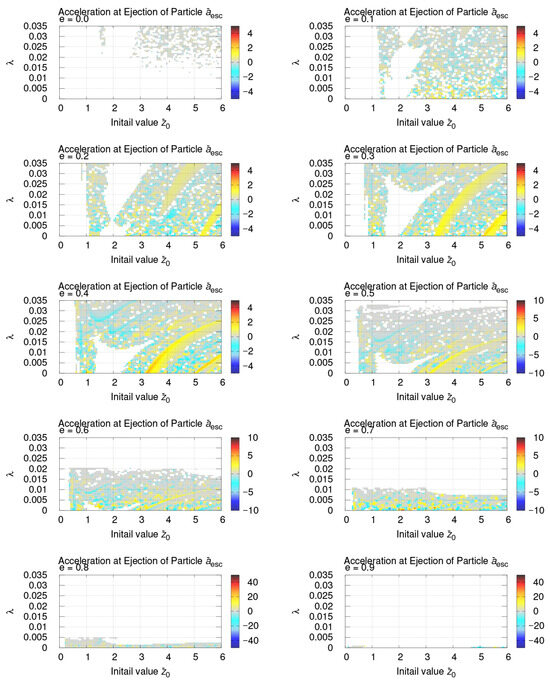
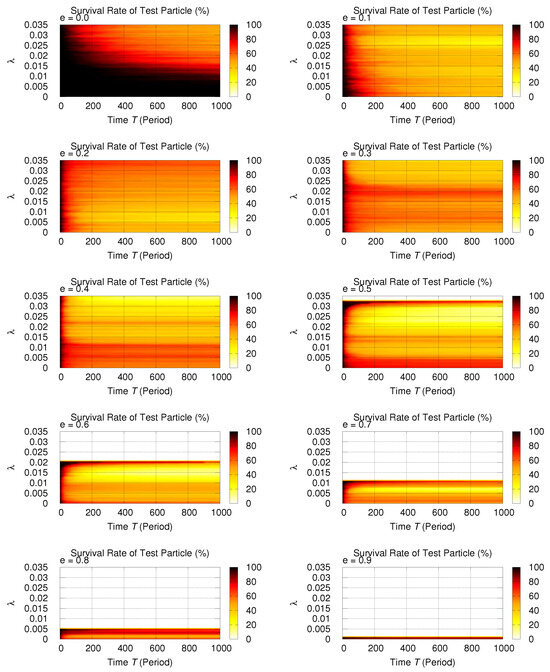
We investigate the effect of general relativity on the Sitnikov problem. The Sitnikov problem is one of the simplest three-body problems, in which the two primary bodies (a binary system) have equal mass m and orbit their barycenter, while the third body is treated as a test particle under Newtonian gravity. The trajectory of the test particle is perpendicular to the orbital plane of the binary (along z-axis) and passes through the barycenter of the two primaries. To study the general relativistic contributions, we first derive the equations of motion for both the binary and the test particle based on the first post-Newtonian Einstein–Infeld–Hoffmann equation, and integrate these equations numerically. We examine the behavior of the test particle (third body) as a function of the orbital eccentricity of the central binary e, the dimensionless gravitational radius , which characterizes the strength of general relativistic effect, and the initial position of the test particle . Our numerical calculations reveal the following; as general relativistic effects increase and the eccentricity e of the binary orbit grows, the distance between the test particle and the primary star undergoes complicated oscillations over time. Consequently, the gravitational force acting on the test particle also varies in a complex manner. This leads to a resonance state between the position of the test particle and the distance , causing the energy E of the test particle to become . This triggers the effective ejection of the test particle due to the gravitational slingshot effect. In this paper, we shall refer to this ejection mechanism of test particle as the “Sitnikov mechanism.” As a concrete phenomenon that becomes noticeable, the increase in general relativistic effects and the eccentricity of the binary orbit leads to the following: (a) ejection of test particles from the system in a shorter time, and (b) increasing escape velocity of the test particle from the system. As an astrophysical application, we point out that the high-velocity ejection of test particles induced by the Sitnikov mechanism could contribute to elucidating the formation processes of astrophysical jets and hyper-velocity stars.
Full article

Figure 1
Open AccessArticle
A Census of Chemically Peculiar Stars in Stellar Associations
by
Lukas Kueß and Ernst Paunzen
Astronomy 2025, 4(4), 20; https://doi.org/10.3390/astronomy4040020 - 22 Oct 2025
Cited by 1
Abstract
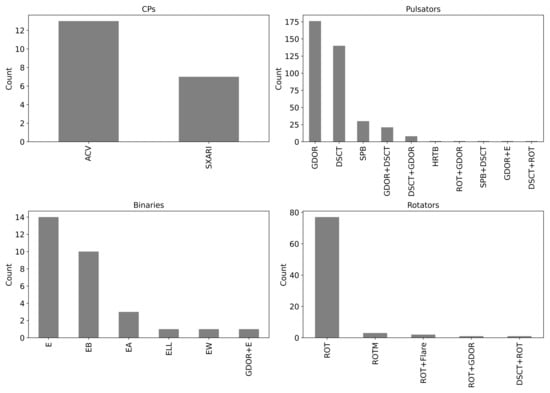
►▼
Show Figures
The pre-main-sequence evolution of the chemically peculiar (CP) stars on the upper main sequence is still a vast mystery and not well understood. Our analysis of young associations and open clusters aims to find (very) young CP stars to try to put a
[...] Read more.
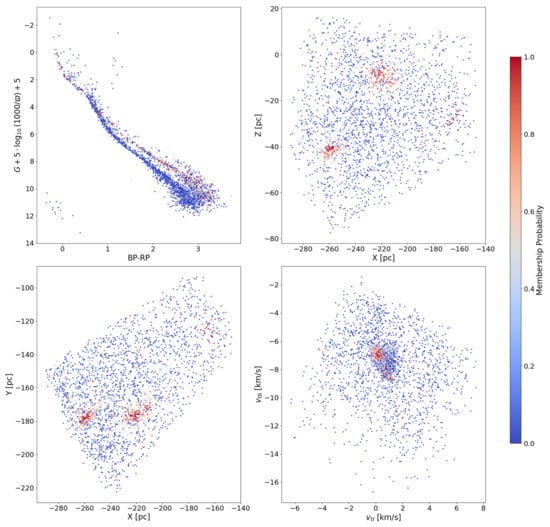
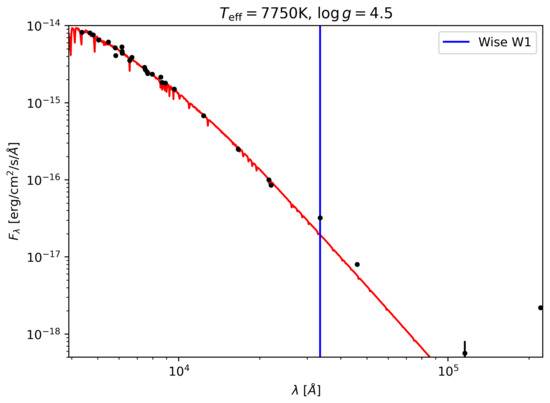
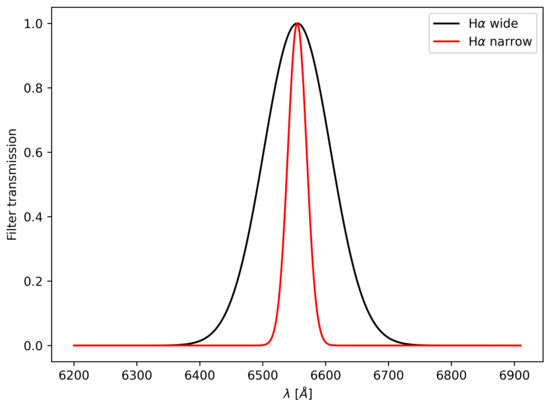
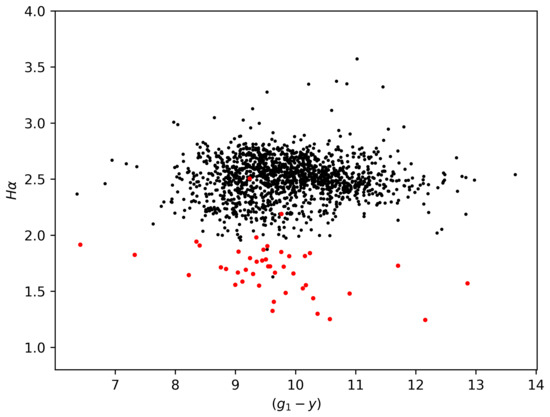
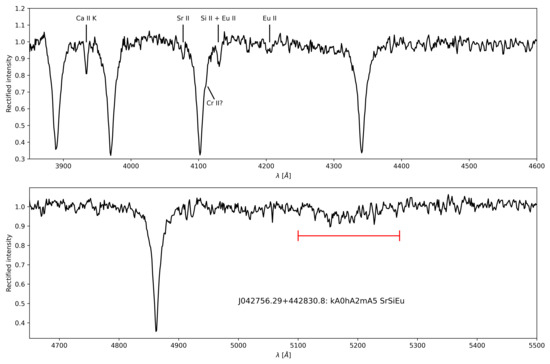
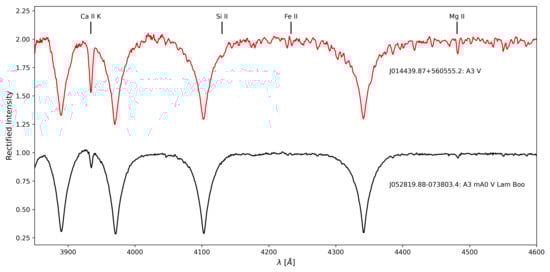
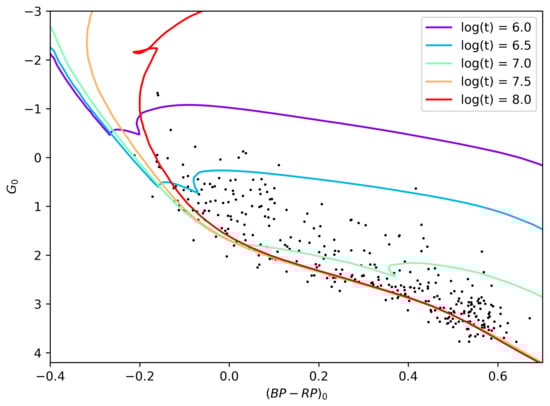
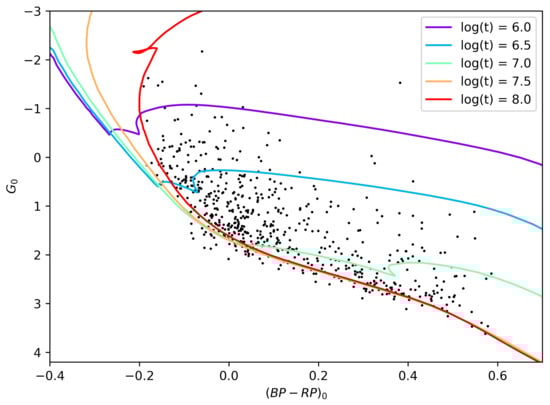
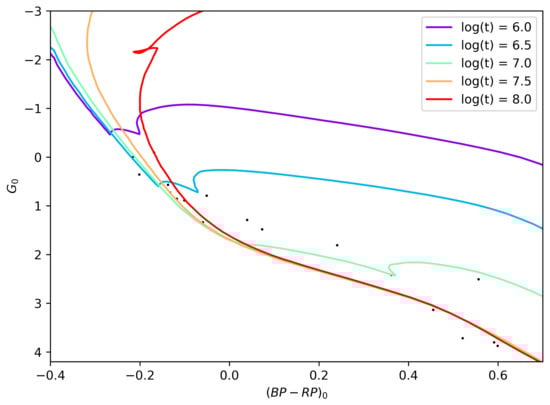
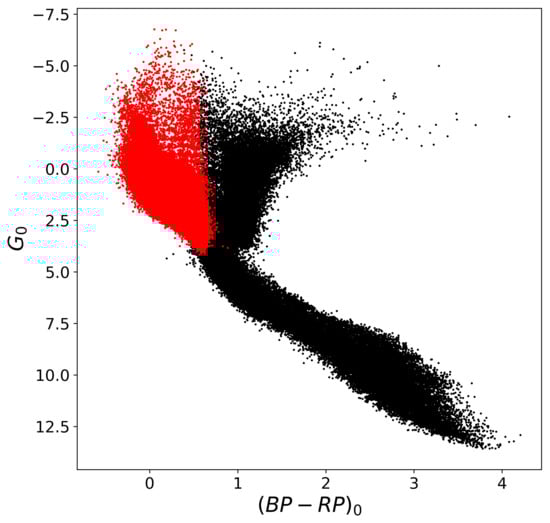
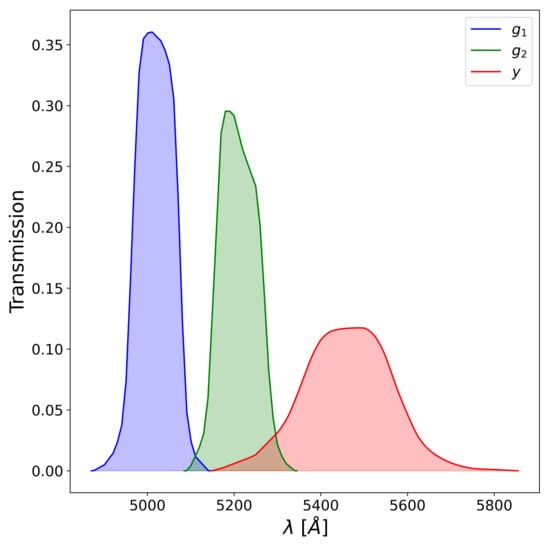
The pre-main-sequence evolution of the chemically peculiar (CP) stars on the upper main sequence is still a vast mystery and not well understood. Our analysis of young associations and open clusters aims to find (very) young CP stars to try to put a lower boundary on the age of such objects. Using three catalogues of open clusters and associations, we determined membership probabilities using HDBSCAN. The hot stars from this selection were submitted to synthetic photometry, spectral, and light curve classification to determine which ones are CP stars and candidates. Subsequently, we used spectral energy distribution fitting and emission line analysis to check for possible PMS CP stars. The results were compared to the literature. We detected 971 CP stars and candidates in 217 clusters and associations. A relatively large fraction, ∼10% of those, show characteristics of PMS CP stars. This significantly expands the known list of candidate PMS CP stars, bringing us closer to solving the mystery of their origin.
Full article

Figure 1
Open AccessReview
Time Markers for SETI in Binary Systems: History and Prospects
by
Jacob Haqq-Misra
Astronomy 2025, 4(4), 19; https://doi.org/10.3390/astronomy4040019 - 22 Oct 2025
Abstract
Contemporary surveys in the search for extraterrestrial intelligence (SETI) typically make one-off “spot scans” across the sky to search planetary systems for narrow-band radio signals that would indicate the presence of intelligent life. Spot scans may span a duration of seconds to minutes
[...] Read more.
Contemporary surveys in the search for extraterrestrial intelligence (SETI) typically make one-off “spot scans” across the sky to search planetary systems for narrow-band radio signals that would indicate the presence of intelligent life. Spot scans may span a duration of seconds to minutes in order to observe a large number of targets with limited resources, but such a strategy does not necessarily consider the timing of exactly when to listen for extraterrestrial signals. Several ideas for possible time markers were suggested in the first few decades of SETI, such as the use of recurrent supernovae, gamma ray bursts, or pulsars as a way of establishing directionality and attracting attention toward an extraterrestrial beacon. Civilizations in binary systems might even choose the points of periastron and apastron in its host system to send transmissions to other single-star civilizations. However, all of these timing considerations were developed prior to the age of exoplanets, which enables a more detailed assessment of targets suitable for SETI. This paper suggests SETI strategies for circumbinary and circumprimary planets based upon the timing of orbital events in such systems. Events such as orbital extremes could represent a logical time marker for extraterrestrial civilizations to transmit, if they desire to be detected. Likewise, a transiting binary pair with inhabited planets around each star could yield maximum detectability of leakage radiation when both stars eclipse within our field of view. As planets in binary systems continue to be discovered, limited-duration SETI surveys should selectively target such systems based upon the occurrence of reasonable time markers.
Full article
Open AccessArticle
On the Possible Nature of White Holes
by
Mikhail Pekker and Mikhail N. Shneider
Astronomy 2025, 4(4), 18; https://doi.org/10.3390/astronomy4040018 - 10 Oct 2025
Abstract
►▼
Show Figures
This paper considers non-singular black holes. It discusses the observation of particles falling onto ordinary and non-singular black holes from the perspective of a distant observer. It is demonstrated that, during a stage in the evolution of non-singular black holes, powerful energy fluxes
[...] Read more.
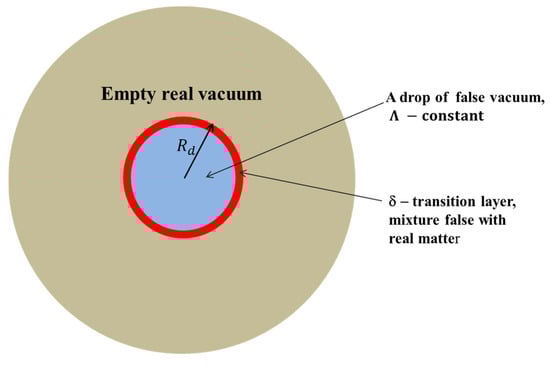
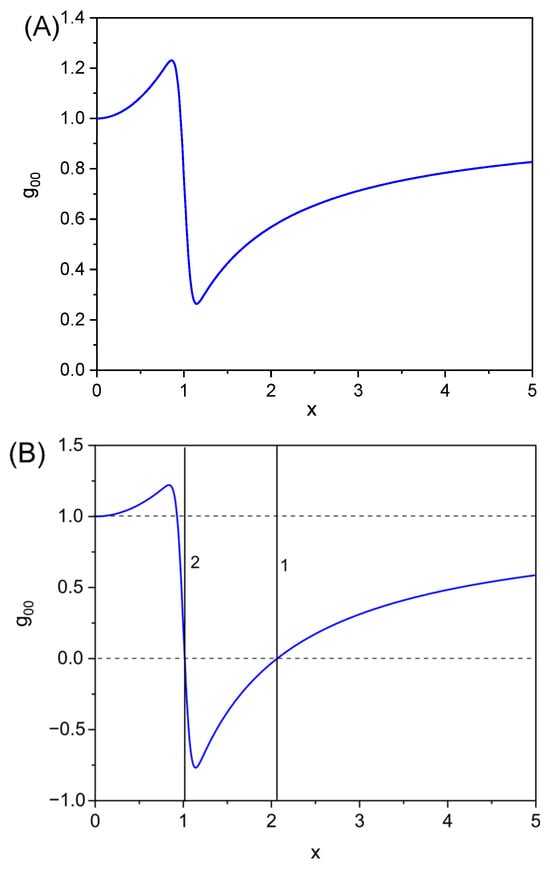
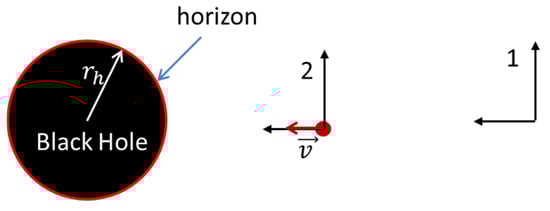
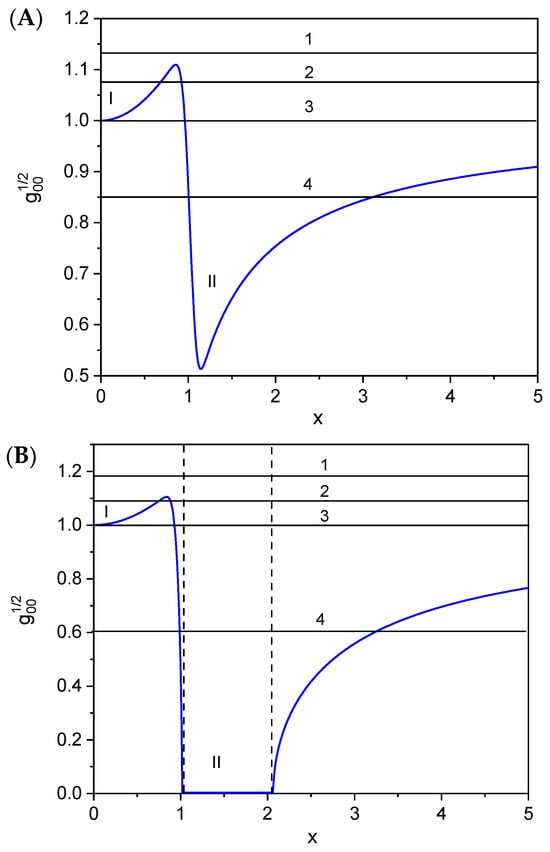
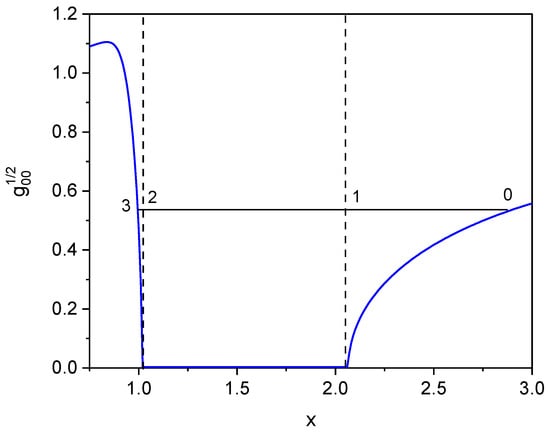
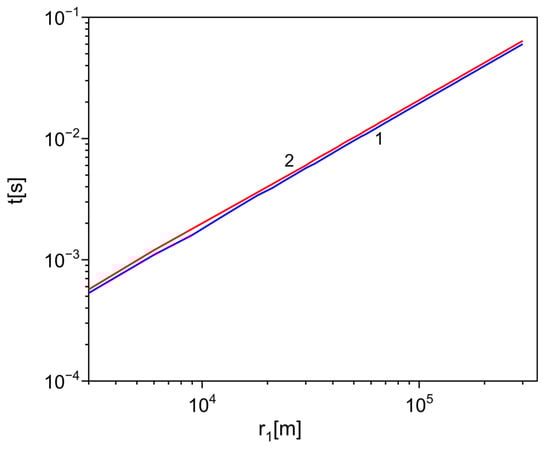
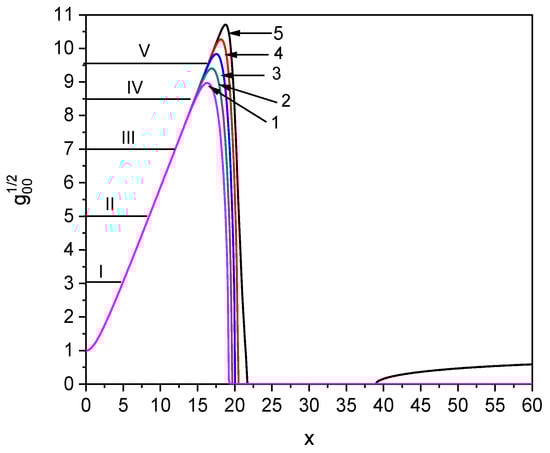
This paper considers non-singular black holes. It discusses the observation of particles falling onto ordinary and non-singular black holes from the perspective of a distant observer. It is demonstrated that, during a stage in the evolution of non-singular black holes, powerful energy fluxes can be emitted. Distant observers may interpret these fluxes as white holes.
Full article

Figure 1
Open AccessEditor’s ChoiceArticle
Cosmic-Ray Boosted Diffuse Supernova Neutrinos
by
Alexander Sandrock
Astronomy 2025, 4(3), 17; https://doi.org/10.3390/astronomy4030017 - 12 Sep 2025
Cited by 1
Abstract
►▼
Show Figures
The subject of boosted fluxes of dark matter or cosmic relic neutrinos via scattering on cosmic rays has received considerable attention recently. This article investigates the boosted neutrino flux from the scattering of cosmic rays and the so-far undetected diffuse supernova neutrino background,
[...] Read more.
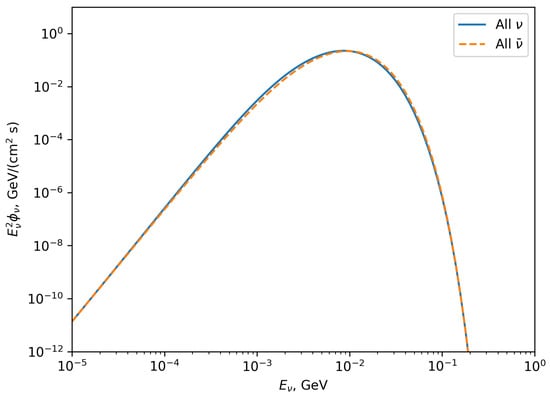
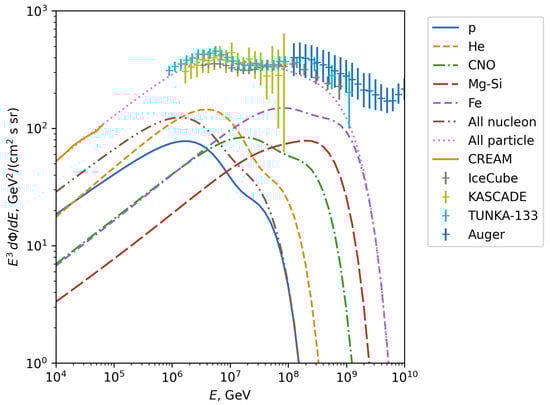
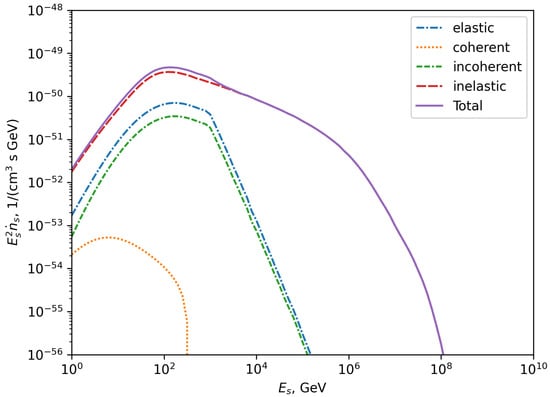
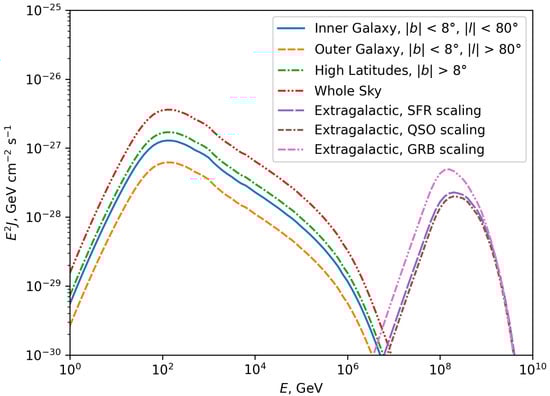
The subject of boosted fluxes of dark matter or cosmic relic neutrinos via scattering on cosmic rays has received considerable attention recently. This article investigates the boosted neutrino flux from the scattering of cosmic rays and the so-far undetected diffuse supernova neutrino background, taking into account both galactic and extragalactic cosmic rays. The calculated flux is many orders of magnitude smaller than either the galactic diffuse neutrino emission, the extragalactic astrophysical flux measured by IceCube, or the cosmogenic neutrino flux expected at the highest energies.
Full article

Figure 1
Open AccessArticle
Extending the Quantum Memory Matrix to Dark Energy: Residual Vacuum Imprint and Slow-Roll Entropy Fields
by
Florian Neukart, Eike Marx and Valerii Vinokur
Astronomy 2025, 4(3), 16; https://doi.org/10.3390/astronomy4030016 - 10 Sep 2025
Cited by 3
Abstract
►▼
Show Figures
We extend the Quantum Memory Matrix (QMM) framework—previously shown to unify gauge interactions and reproduce cold dark matter phenomenology—to account for the observed late-time cosmic acceleration. In QMM, each Planck-scale cell carries a finite-dimensional Hilbert space of quantum imprints. We show that (1)
[...] Read more.
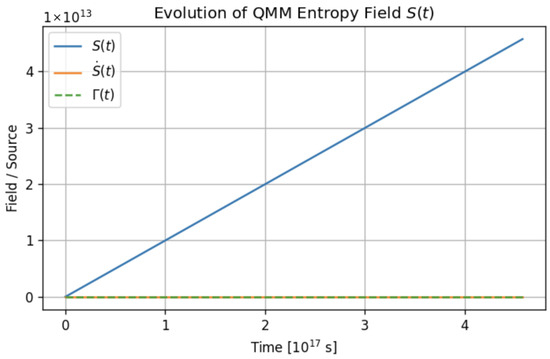
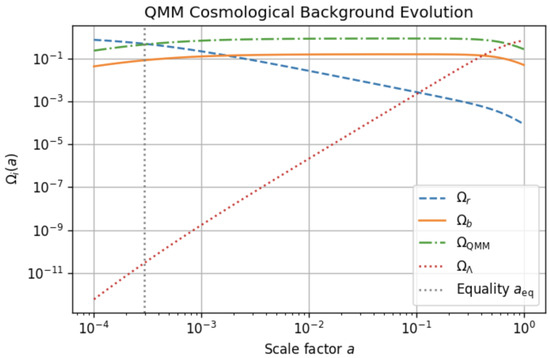
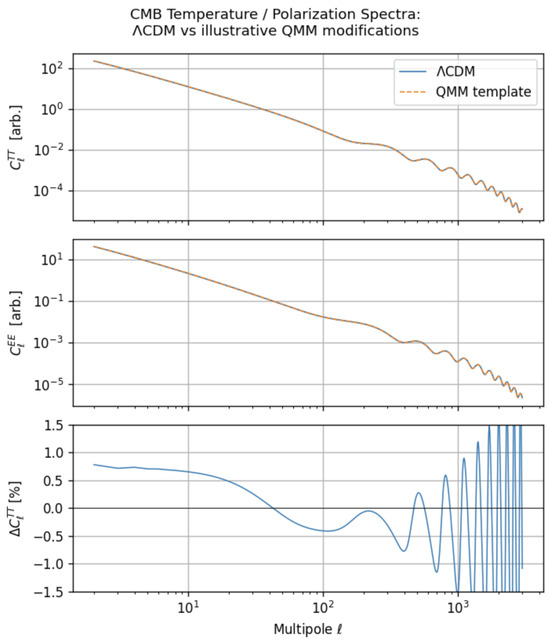
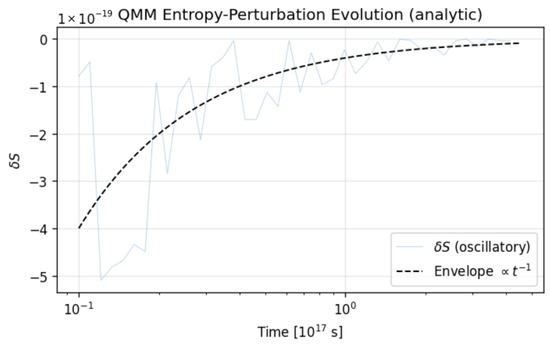
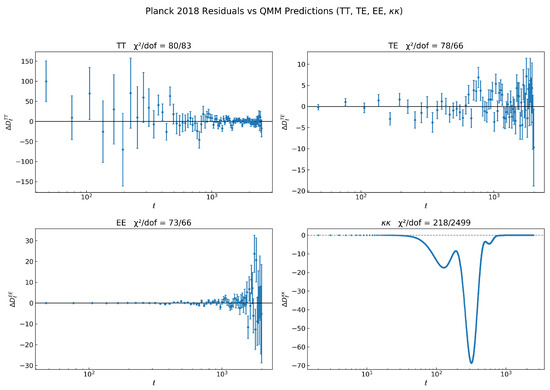
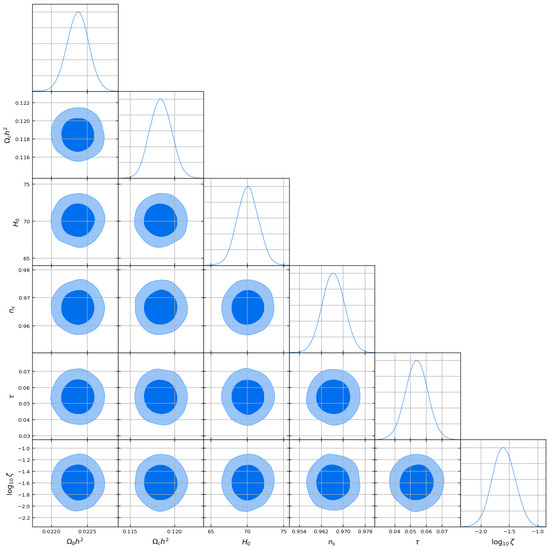
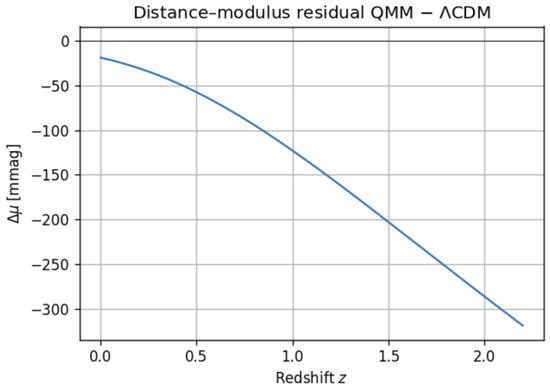
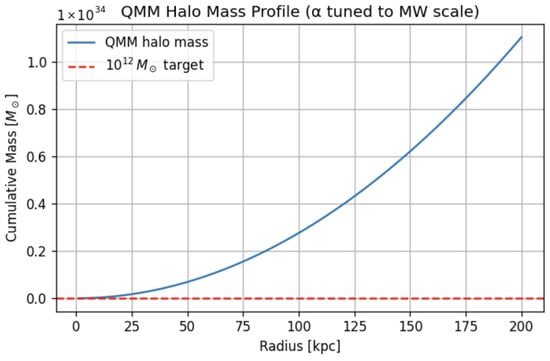
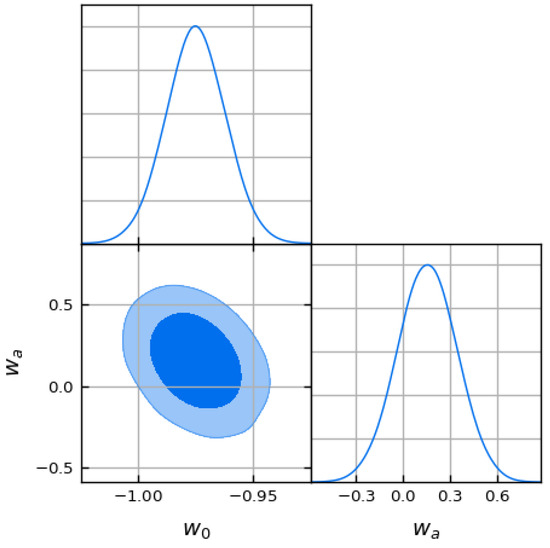
We extend the Quantum Memory Matrix (QMM) framework—previously shown to unify gauge interactions and reproduce cold dark matter phenomenology—to account for the observed late-time cosmic acceleration. In QMM, each Planck-scale cell carries a finite-dimensional Hilbert space of quantum imprints. We show that (1) once local unitary evolution saturates the available micro-states, a uniform residual “vacuum-imprint energy” remains; its stress–energy tensor is of pure cosmological-constant form, with magnitude suppressed by the cell capacity, naturally yielding ; and (2) if imprint writes continue but are overdamped by cosmic expansion, the coarse-grained entropy field undergoes slow-roll evolution, generating an effective equation of state that is testable by DESI, Euclid, and Roman. We derive the modified Friedmann equations, linear perturbations, and joint constraints from Planck 2018, BAO, and Pantheon +, finding that the QMM imprint model reproduces the observed TT, TE, and EE spectra without introducing additional free parameters and alleviates the tension while remaining consistent with the large-scale structure. In this picture, dark matter and dark energy arise as gradient-dominated and potential-dominated limits of the same underlying information field, completing the QMM cosmological sector with predictive power and internal consistency.
Full article

Figure 1
Highly Accessed Articles
Latest Books
E-Mail Alert
News
Topics
Topic in
Symmetry, Galaxies, Universe, Particles, Astronomy
Dark Matter, Dark Energy and Cosmological Anisotropy
Topic Editors: Kazuharu Bamba, Panayiotis Stavrinos, Ivan De MartinoDeadline: 31 December 2026
Special Issues
Special Issue in
Astronomy
Current Trends in Cosmology
Guest Editor: Paolo SalucciDeadline: 31 December 2026
Special Issue in
Astronomy
The Populations, Structures, and Dynamics of the Milky Way and the Local Universe
Guest Editor: Haifeng WangDeadline: 15 October 2027