


Abstract
The present study seeks to select the most important articles and reviews from the Web of Science database that approached alternative fuels towards the decarbonization of the maritime sector. Through a systematic review methodology, a combination of keywords and manual refining found a contribution of 103 works worldwide, the European continent accounting for 57% of all publications. Twenty-two types of fuels were cited by the authors, liquefied natural gas (LNG), hydrogen, and biodiesel contributing to 49% of the mentions. Greenhouse gases, sulfur oxide, nitrogen oxide, and particulate matter reductions are some of the main advantages of cleaner sources if used by the vessels. Nevertheless, there is a lack of practical research on new standards, engine performance, cost, and regulations from the academy to direct more stakeholders towards low carbon intensity in the shipping sector.
1. Introduction
In past centuries the maritime sector has proved to be the most important means of transport of world goods, transporting more than 1 billion tons of products by sea worldwide, growing at an average rate of 3% per year since 1970 [1]. Although sea transportation is the best indicator of the world economic growth, the side effect has been the impact regarding the complexity of decarbonization measures.
Nowadays, maritime fossil fuel consumption accounts for around 2.2 million barrels of oil equivalent (MBOE), which represents almost 1000 million tons of equivalent carbon dioxide (MtCO2eq), reflecting 3% of global emissions [2]. Moreover, the so-called bunker fuel has a very low quality, impacting high emissions of sulfur oxide (SOx), nitrogen oxide (NOx), and particulate matter (PM) [3,4].
The Sulfur Emission Control Areas (SECA) entered into force in 2015 to reduce the sulfur content from 4.5% to 0.1% in the Baltic Sea and American coast and 0.5% elsewhere in 2020. The NOx emission reduction regulations have also been in place since 2016 [5].
The demand for low emissions for such compounds triggered a trend toward cleaner fuels, as well as the concerns over the greenhouse gases (GHG) emission reductions, which have drawn the attention of governments worldwide.
Since 2011, the International Maritime Organization (IMO) has implemented a regulatory measure of energy efficiency requirements for all ships globally to reduce gas emissions from the shipping sector, through programs such as the Energy Efficiency Design Index Standards (EEDI) and the Ship Energy Efficiency Management Plan (SEEMP) [6,7,8,9]. However, several measures are still needed to achieve the target of 50% lower emissions by 2050 [9].
The International Energy Agency scenario proposed a number of activities that must enter into force immediately to meet the expected targets, which includes the use of alternative fuels.
There are currently several studies and research connecting the maritime sector to low emissions. Nevertheless, only LNG has been widely discussed while other alternatives are hardly mentioned. Therefore, the systematic review emerges as an important methodology to quantify the number of research, regions, and authors that are addressing low carbon options for the maritime sector.
The systematic review methodology is frequently used in clinical research and social sciences. However, it has been constantly used in other research fields as well [10,11,12]. We looked up several papers and reviews in the Web of Science (WoS) database with specific selected keywords related to low carbon fuels in the maritime sector to understand the proposed research questions (RQ) in statistical terms: What is the number of alternative low carbon fuel publications? (RQ1); What are the largest country contributors? (RQ2) Who have been the most important authors? (RQ3); Which journal has contributed the most in number of publications? (RQ4); and What have been the most cited alternative fuels (RQ5).
This study assesses the main publications (articles and reviews) in the currently available literature on the Web of Science (WoS) database to identify the most relevant cleaner alternative fuels as decarbonization sources in the maritime sector, highlighting their advantages and disadvantages as well as identifying the gaps to overcome in future research. Moreover, we will make a descriptive statistical analysis of the selected paper to identify the most influential and productive authors, regions, and journals that have contributed highly to this hot topic over time. The article is arranged as follows. Section 2 presents the general review of vessel types, current fuel grades used, and the emissions concerns of IMO. Section 3 sets out the methodology to perform the review, delineating the keywords and refining procedure. Section 4 presents the analysis executed, highlighting the production over time, main journals, regions, countries’ collaborations, most cited alternative fuels as low carbon options, and the barriers to be overcome. Section 5 presents the conclusions, discussion, and suggestions for the future.
2. General Review of Vessel Types and Current Fuels
2.1. Cargo Ship Classification and Propulsion
Nowadays, around 52,000 cargo ships transport goods across the world. They are bulk carriers, oil tankers, and container ships [12]. Marine diesel engines are fundamentally the same as that of road vehicles, yet they are commonly bigger and work with higher efficiency. About 75% of all marine diesel engines are four-stroke; notwithstanding, 75% of the introduced power is delivered by two-stroke engines [13,14]. All of these ships represent 500 GW of engine capacity [12], more than all installed renewable (428 GW) and fossil (365 GW) power in Europe [15]. In order to comprehend the dimension of the shipping sector which has an exclusive demand for fossil fuels, Figure 1 compares the different sources of the European electricity capacity (renewable and nonrenewable) versus the world maritime engine capacity.
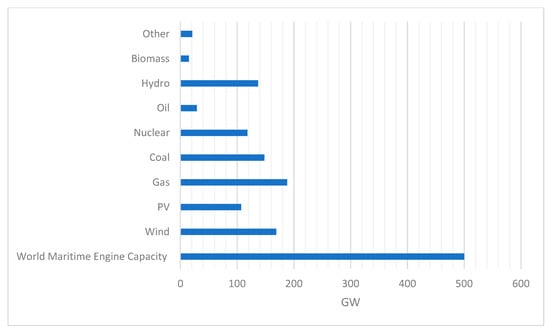
Figure 1.
World maritime engine power compared to European installed power (The figure was constructed based on data captured from Balcombe et.al (2019) [12] and Statista (2020) [15].
There are essentially three categories of marine engines: slow speed, medium speed, and high-speed, normally classified in knots (15–25 knots) [12,16]. The category choice depends on the size, engine speed, and purpose. Moderate speed engines regularly function under 350 revolutions per minute (rpm) and have exceptionally low fuel utilization. As far as size is concerned, slow-speed engines are the largest engines on the planet that use heavy fuel oil (HFO) for ignition [13,17].
2.2. Marine Bunker Classification
Marine fuel can be classified as distillate, intermediate, and residual (Table 1). The distillate classes are named marine gas oil (MGO) or marine distillate oil (MDO) which have different grades (DMA, DMB, DMX, DMZ). The letters “A”, “B”…“Z”, refer to the particular properties under the product specification, ISO 8217:2017 [18,19].

Table 1.
Classification of marine fuels (the table was constructed based on data available in studies of Mohd Noor et al. (2018) [13] and Vermiere (2021) [19]).
The intermediate fuel oil (IFO) is divided into grades 180 and 380, these numbers correspond to the maximum kinematic viscosity of the residual fuel, in square millimeters per second (mm2/s) at 50 °C [19].
Residual fuels, also called residual marine fuels (RMA, RMB, RMD, RME, RMG, RMK) or heavy fuel oil (HFO), in particular, are of very low quality, lower cost, and are the most used, and in different grades [19]. As the distillate class, the letter refers to their properties under International Organization for Standardization (ISO) 8217:2017 [19].
2.3. International Shipping Emissions: Current and Forecast Scenarios
Most CO2 emissions from international shipping are produced by bulk carriers, container ships, and oil tankers (15%, 18%, and 11% of the total shipping emissions, respectively). The high emissions of these vessels are directly connected with the long journeys for delivering their cargo across seas and continents [12,20].
The share of consumption by fuel type is 72% of HFO, 26% of marine gas oil, and 2% of LNG [12,21]. The main concern of HFO consumed by the shipping sector is the sulfur content estimated at 13% of the world’s sulfur emissions [12,22]. SOx emissions contribute to several environmental problems, such as acidification of the water and soil, and human health issues [12,23].
The new regulations already in force imposed by Annex VI of the IMO have limited the sulfur content in Emission Control Areas (ECA) (0.1%) (0.1% m/m) and non-ECA areas (0.5% m/m), replacing the HFO with MGO or LNG [12]. The ECA areas are comprised of the Baltic Sea, North Sea, East and West coasts of the United States, and the Caribbean Sea within a distance of 200 nautical miles [24], while non-ECA areas represent the rest of the world.
Concerning NOx emissions, Tier I came into force in 2000 with standards ranging from approximately 10 to 17 g/kWh, according to speed engines, Tier 2 (in 2011) fostered 20% NOx reduction below Tier 1, and Tier 3 standards applied to the NOx Emission Control Area (NECA) (The same regions of ECA areas as sulfur control) for engines installed after 1 January 2016, with 80% NOx reduction below Tier 1 [25]. Regulation 13 of Marpol Annex VI stipulates that the emission control for all ship engines is designed for powers above 130 kilowatts (kW) [26]. Although regulations regarding SOx and NOx are stricter, the CO2 emission reduction measures are still weak and insufficient.
The International Renewable Energy Agency (IRENA) [27] recently published a report projecting the fuel demand in the shipping sector in 7.9–12.4 EJ by 2050, listing the most relevant contributing factors: global economic growth, economic growth in emerging markets, shift toward cleaner cooking fuels, strong growth in the petrochemical sector, regional trade agreements, and cleaner energy transition.
2.4. Maritime Sector and CO2 Emissions
CO2 emissions in the maritime sector are forecast to reach values two-fold higher than current levels by 2050. This scenario raised IMO concerns to plan effective measures against the uncontrolled emissions of the sector. The 72nd Marine Environment Protection Committee (MEPC) resolution of the IMO set the goal of reducing emissions by half in the next three decades [24].
The scenarios in Figure 2 predict the GHG emissions by 2050, those data were constructed by the IMO in the Third Greenhouse Gases Study of IMO [20], following the assumptions below:
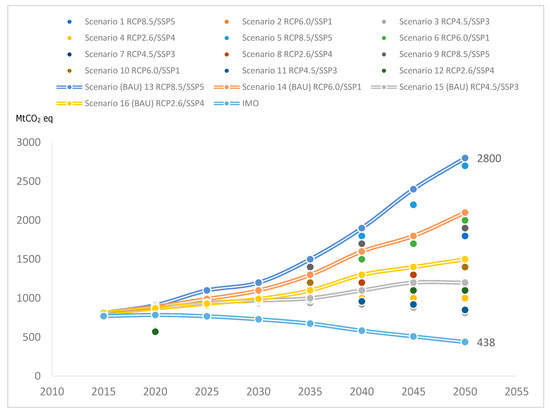
Figure 2.
GHG long-term scenario (The figure was adjusted on data available in Third Greenhouse Gas Study 2014) [20].
- Combinations of the Representative Concentration Pathways (RCP) (the RCPs (RCP2.6, RCP4.5, RCP6, and RCP8.5) are projections adopted by the Intergovernmental Panel of Climate Change (IPCC) which represents the range of radiative forcing caused by the GHG emissions in the year 2100 (2.6, 4.5, 6, and 8.5 W/m2, respectively) [20]), and the Shared Socioeconomic Pathway (SSP) (the SSPs are projections until the year 2100 utilized by the IPCC which forecasts social-economic global changes and draws the GHG emissions in five scenarios with different climate policies: SSP1 (sustainability), SSP2 (intermediate challenge), SSP3 (regional rivalry), SSP4 (inequality), and SSP5 (fossil-fueled development) [20]) in all scenarios.
- Scenarios 1–4 were simulated by combining the RCP and SSP with high penetration of liquefied natural gas (LNG) and high improvement in energy efficiency (60%) over the 2012 fleet average by 2050.
- Scenarios 5–8 were simulated by combining the RCP and SSP with high penetration of LNG and lower improvement in energy efficiency (40%) over the 2012 fleet average by 2050.
- Scenarios 9–12 were simulated by combining the RCP and SSP with low penetration of LNG and high improvement in energy efficiency (60%) over the 2012 fleet average by 2050.
- Scenarios 13–16 are the business as usual scenario (BAU) which were simulated by combining the RCP and SSP with low penetration of LNG and lower improvement in energy efficiency (40%) over the 2012 fleet average by 2050.
- The dotted line is the ambitious target of 438 MtCO2eq by 2050 proposed by IMO.
Recently the IMO assumed that the measures to reduce emissions must be implemented as early as possible for this century, setting ambition levels and guiding principles [24].
GHG reductions are still only based on the Energy Efficiency Design Index (EEDI) and the Ship Energy Efficiency Management Plan (SEEMP), which are in line with the technical and operational categories [28,29]. Technical measures focus on design and improvement in energy efficiency, propulsion, power system, and low carbon fuels. Some actions can be implemented through retrofitting of existing ships, while others only in new ships [28]. Even so, alternatives are required and the sector has turned its attention to alternative options.
Next, we outline the methods of the approach and the most recent studies that cite alternative sources as one of the decarbonizing measures to be applied in the maritime sector.
3. Material and Methods
At the moment there are several studies regarding low carbon alternative fuels, nevertheless few of them apply to the maritime sector.
To highlight important articles and reviews, a systematic analysis was made of the Web of Knowledge online database service by Thomson Reuters Inc. Studies were adapted [30] from the similar study already available in the literature [31]. Based on a combination of words to find papers which mention cleaner fuels as an alternative to decarbonize the maritime sector.
Refining
The refining method will be elaborated on in 3 steps. The 1st step is taken in the advanced search by applying the field tag displayed in Table 2 below.
Table 2.
Keywords refining.
TS represents the topic and the binary variables OR, AND relate the keywords with the intention of finding papers on the Web of Science database.
The 2nd step is to relate only papers and reviews, in the English, during the period from January 2000 to January 2022.
The 3rd step is conducted manually, the papers which approach alternative fuels as cleaner sources for the maritime decarbonization.
4. Result and Discussion
4.1. Selected Papers and Descriptive Statistics
Figure 3 displays the three steps suggested, as well as their research criteria. The first selected studies reached an overall combination of 328 articles, reviews, proceedings papers, and book chapters, with papers and reviews accounting for 91% of the total. Nevertheless, it was necessary to carry our manual refining for the decarbonization of the maritime sector and alternative and low carbon fuels.
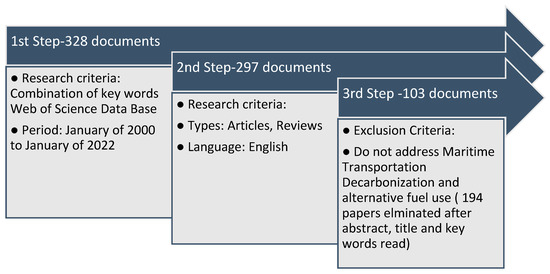
Figure 3.
Related documents on refined steps.
After manual refining, the RQ1 can be answered, where 91 papers and 12 reviews (Figure 3) were selected as a baseline for part of the state of the art. The growth in publications in 2018 (Figure 4) was evident, from only 3 (2.91% of total) in 2017 to 29 (28.16% of total) in 2021. The years from 2020 to 2022 correspond to 65% of the papers concerned, driven by the IMO’s recent mandatory requirements for greenhouse gas emissions which gained prominence due to real intentions of reduction recently.
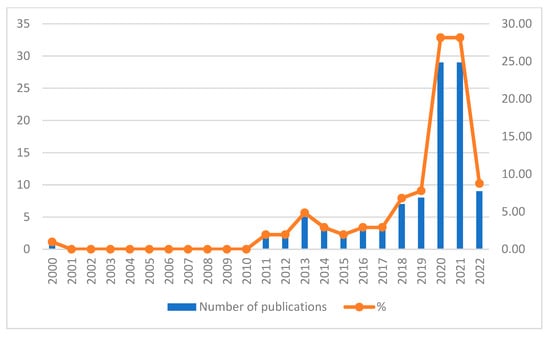
Figure 4.
Publications over the years.
We find the answer to RQ2 in the selected works, which highlight the high contribution of the European countries (57%) (Table 3), probably driven by the strict rules in place since 2015 in the Baltic, the North Sea, and North American coast regarding SOx and NOx. Moreover, Europe has a high energy dependence, thus there is a commitment to reduce not only the emissions associated with fossil sources used in the maritime sector but also to reduce the dependence on external energy. Regarding the ranking by country, 41 countries showed contributions, the first 5 countries accounting for 49% of the total. England and the USA accounted for the highest proportion (18%), followed by China and Norway (14%), Germany and Sweden (12%), and the Netherlands (5%). The remaining countries accounted for 4% or less.
Table 3.
Number of studies per country.
Concerning authors (RQ3), a total of 446 authors wrote 103 articles (Appendix A). Four percent of the articles were written by individual authors, while 19.42% were written by two authors, 16.50% by three authors, and 60.19% involved a team of four or more authors (Table 4). Furthermore, Table 5 shows the list of the most productive authors. Linstad, E. and Xing, H. wrote 3 articles each. At the same time, the other authors published either two papers or one paper each. Therefore, Bouman, EA. and Balcombe, P. have the most cited papers—7% and 14% respectively—out of a total of 1600 cited papers.
Table 4.
Number of authors per paper.
Table 5.
Most productive and cited authors.
Table 6 highlights the frequency of the papers published in the journals (RQ4). The Journal of Cleaner Production, Sustainability, and Transportation Research Part D stand out, with twenty-one percent of all published papers (21%), followed by Energies and Energy (12%), the International Journal of Hydrogen Energy, and Renewable & Sustainable Energy Reviews (10%). The remaining journals published only four papers or less.
Table 6.
Journals with most publications.
The first ten papers (10% of the total) listed in Table 7 corresponded to 768 citations (48% of the total) which is almost half of the selected documents, probably for the reason they are one of the first references for alternative fuel use as an option to reduce GHG emissions and other pollutant gases. The major findings from those studies are summarized in sequence (Table 7).
Table 7.
Most important studies and major findings.
4.1.1. Alternative Fuels
The current SOx, NOx, and GHG regulations have pressured international maritime transportation to adopt lower-emission fuels. Alternative fuels have received strong attention due to the fact they can be cleaner and environmentally friendly and, in some options, similar to the HFO and MGO used [5,40,41].
In the present study, the 103 selected papers cited 22 different types of alternative sources to replace the current conventional fossil fuels (Figure 5). Out of a total of 234 mentions, the 10 first alternative fuels contain 90% of citations, with particular reference to LNG (18.8%), hydrogen (16.2%), and biodiesel (14.5%) (Figure 5), where the first two can be obtained from renewable and non-renewable sources (RQ5).
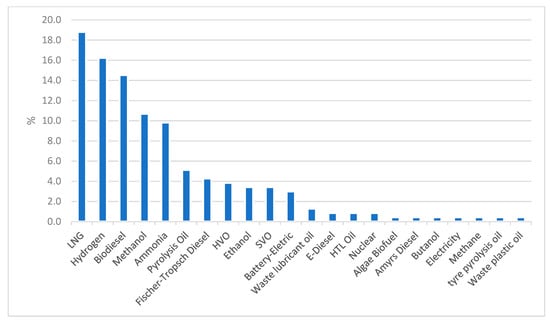
Figure 5.
Alternative fuels cited (the figure was constructed based on the selected papers of this present study taken from the web of science database) [30].
4.1.2. Biodiesel
Biodiesel is highlighted as the main option to replace HFO and MGO due to the fact they have similar properties [33,40,42,43]. However, their sustainability depends on the feedstock used, which might increase problems associated with competition for land, food/feed production, and indirect land use.
In the studies by Lin (2013) [44], the biodiesel blend stood out as an important source of reducing the sulfur content when applied up to 20%, in line with the current specifications. However, the author did not mention GHG emissions.
In another publication by Lin (2013) [45], the author raised concerns about the main obstacles to introducing biodiesel into the maritime sector, such as high production to meet maritime demand, high feedstock cost, and lack of standards for biodiesel applied to marine engines. To overcome some barriers the author put forward some strategies.
- establishing a standardized marine-grade biodiesel
- comprehensive field testing of the biodiesel blend in maritime transportation
- enhancing price competitiveness of marine-grade biodiesel by reducing manufacturing costs
- expanding the use of biodiesel in marine diesel engines by reducing feedstock costs
- applying suitable methods or technologies to improve the low-temperature fluidity of biodiesel blends
- reducing biodiesel costs by generating additional income from the production of purified glycerol for use in cosmetics, pharmaceuticals, and other relevant industries.
4.1.3. LNG
The LNG has been pointed out as the best fossil option to replace HFO and MGO, with 30% less GHG emissions and free from SOX and NOX [46]. The first LNG vessel was built in 2000, but there are currently 55 worldwide. Their activities are more concentrated in Europe (57%) and North America (38%) due to the ECA regulations [12].
LNG-powered engines use internal combustion and the gas must be stored at minus 162 °C [12,47]. However, LNG is still mainly obtained from fossil sources.
Bio-LNG has been discussed in the literature as a potential renewable source of decarbonization. Biomass can be transformed into biomethane in two ways: Anaerobic digestion called bio-methane, and thermochemical gasification called bio-synthetic natural gas (bio-SNG) [48,49] followed by the liquefaction process to be stored in tanks and used in the LNG terminals.
Anaerobic digestion has been successfully demonstrated worldwide, mainly in Europe and North America. Nevertheless, the thermochemical route through the gasification process is still under development [4,40].
The environmental concerns about the bio liquified natural gas (bio-LNG) pertained to the unburned losses. Methane’s global warming potential is 25 times more powerful than CO2 [4]. The methane slip can be partially fixed with the oxidation catalyst, but this technology is only described in the literature [4,50].
An environmental advantage is the impact of possible LNG spills, which can be lower compared to heavy fuel oil spills and they do not remain on the water surface [30,39].
4.1.4. Methanol
Methanol has emerged as a cleaner alternative source, with seven methanol ships operating to date. The emissions can be reduced to 99% SOX, 60% NOX, 95% PM, and 25% CO2, in line with ECA regulations [12,51]. However, methanol is obtained from fossil sources mainly from natural gas through catalytic hydrogenation. The current study found that 10.7% cited methanol as an alternative source.
Bio-methanol can be obtained from gasification and Fischer–Tropsch conversion. There are plenty of studies on bio-methanol production. Nevertheless, there is a lack of information in the current literature. Some studies are modestly mentioning it as a promising source, albeit only in the long run [4], due to the fact that conversion technologies are still highly expensive in comparison with consolidated routes of biofuels and fossil marine fuel.
4.1.5. Pyrolysis Oil
Pyrolysis oil has been considered as a substitute alternative to HFO in the maritime sector and can be burned directly in low and medium-speed combustion engines. Moreover, it is compatible with the current diesel infrastructure [12]. Some experts suggested upgrading processing of bio-pyrolysis oil might be made in the current refinery infrastructure. However, the possibility of using pyrolysis oil in the maritime sector comes up against some specifications [4].
Pyrolysis oil has some negative characteristics, such as acidity, low calorific power 17–23 gigajoule per tonne (GJ/t) of fuel, which is about half of the HFO. It cannot be stored for a long time due to phase separation, the amount of water can reach around 30%, and the stage of development of the transformation route is also very low [4]. Due to all of the constraints mentioned above, pyrolysis oil can be used as a substitute, albeit with many restrictions, and the lack of testing for use in ship engines makes its use impossible at the moment. The disadvantages cited before can probably explain the small number of studies, i.e., 5.1% of all studies mentioned.
4.1.6. Fischer-Tropsch Diesel
In recent studies, Horvath et al. (2018) [52] analyzed the production of FT-diesel from seawater electrolysis in a 2030–2040 scenario, among other options. In the studies by Carvalho et al., (2021) [43] FT-diesel simulations in four different continents had costs ranging between 30 and 60 EUR/GJ.
The publication by Tanzer, Posada, Geraedts, and Ramírez (2019) [53] crafted a simulation of FT-diesel derived from biomass in Brazil and Sweden in an integrated screening model to estimate fuel prices and environmental impacts of 33 marine biofuel supply chains. FT-diesel presented the worst option due to the economic results led by the high equipment costs and the gas cleaning process.
Balcombe et al. (2019) [12] only cited FT-diesel as an option for future replacement of fossil fuels in a long-term period and made available the GHG indicator of around 50 g of equivalent carbon dioxide per kilowatt-hour (gCO2eq/kWh).
Although Fischer–Tropsch diesel is derived from old technology, mostly used in World War 2 by the German army and in South Africa in the 1950s during the Apartheid embargo [54,55], FT-diesel derived from biomass still lacks technology that made it highly expensive with a long way to go as far as research and development (R&D) is concerned to become feasible. Only 4.3% of the mentions in the present study cited this as an alternative source to be used in the maritime sector.
4.1.7. Hydrogen
Fuel cells operating with hydrogen have been widely discussed among experts from industry and academy due to indirect GHG emissions [56]. Hydrogen is an energy carrier capable of being produced from renewable resources through electrolysis of natural gas reforming or biomass gasification [12,46].
Hydrogen represents the second-highest rate of mentions (16.2%) by the authors as a potential source for the maritime sector. Currently, there are a few projects of hydrogen fuel cell ships operating in the world, including a civilian ship called Viking Lady that has been retrofitted with an LNG internal combustion engine (ICE) with the support of fuel cells that use methanol or hydrogen [12,57].
One of the bottlenecks in the storage capacity of hydrogen is the pressure of the storage tanks (under 700 PSA) [12].
Another negative point is that hydrogen may not be transported under the International Code for Construction and Equipment of Ships Carrying Liquefied Gases in Bulk (IGC code). Thus, the nations which want to operate with this source must enter into an international agreement [46,58]
High investment costs in production and infrastructure are the major barriers to hydrogen implementation on international maritime cargo ships. The current retail cost of hydrogen is 1.5–6 times higher than conventional HFO, thus making use of this resource unfeasible [12,59].
4.1.8. Ammonia
Recently, ammonia (NH3) has been widely discussed as an alternative fuel due to the fact that it does not have direct CO2 emissions [60]. It is capable of being used in internal combustion engines (ICE) or fuel cells [61,62,63]. However, ammonia is mostly produced from fossil sources.
Studies on international shipping have assessed the possibility of using hydrogen combined with ammonia as a potential source of 70% CO2 emission reduction by 2035 [63,64]. While Hansson et al. (2020) developed a scenario of carbon neutrality for Danish maritime cargo until 2050 [65,66]. Nevertheless, Hanssson et al. (2020) mentioned some factors that must be considered, such as safety distribution and development of fuel cells [66].
Hansson et al. (2020) [66] explored the multi-criteria decision analysis (MCDA) and concluded that reduction in CO2 emissions using hydrogen in the maritime sector can be more cost-effective than ammonia in the long term. The MCDA methodology used by the author is based on the analytic hierarchy process (AHP), assessing four different criteria (economic, technical, environmental, and social) on a scale of 1 (lowest value) to 4 (highest) consulting different stakeholders (ship-owners, engine manufacturers, fuel producers, Swedish government authority representatives, and relevant researchers).
Yusuf (2018) [42] concluded that ammonia use in dual-fuel marine engines can decrease to 33.5% of the total GHG emissions (using geothermal-based ammonia). However, the concern is high NOx emissions [66]. Furthermore, the study concluded that not only ammonia, but hydrogen use in maritime transportation could significantly impact GHG emission levels. Ammonia accounted for 9.8% of the total mentions in the selected papers.
4.1.9. HVO, SVO and Ethanol
Hydrotreated vegetable oil (HVO), straight vegetable oil (SVO), and bioethanol are mentioned as the main biofuel options in the short and medium-term with 3.8%, 3.4%, and 3.4% mentions, respectively. These biofuels are already commercialized on a large scale and can use the current marine fossil fuel infrastructure. However, there are sustainability concerns for HVO, SVO, and bioethanol in their large-scale production feedstock, needing considerable croplands area sizes which can constrain deforestation in some regions, compete with food and feed production and road transport, which already use this fuel source [31].
4.1.10. GHG Impacts
International shipping is the most problematic sector to apply any policy or regulation due to the fact that the oceans are international areas and each region is governed by individual rules. Moreover, there is strong resistance to new options for the decarbonization of the sector.
The current big merchant ships are designed to use liquid fossil fuels only in their engines. Including alternative fuels as an option could balance the emissions [12,67]. Nevertheless, a carbon footprint assessment of those cleaner sources must take into account measuring other powerful gases, such as methane (CH4), nitrous oxide (N2O), and fluorinated gases, which must be included to assess their direct or indirect global warming potential (GWP) on a temporal scale [67].
Conventional biofuels, such as SVO, biodiesel, and HVO, have considerably lower GHG impacts (Table 8) and could certainly reduce the problems associated with their use. However, the main concern is the feedstock (food and feed) and CO2 emissions of direct and indirect use on land [12].
Table 8.
GHG emissions of different fuels (the table was constructed based on data available in Balcombe et.al (2019) studies [12].
Advanced biofuels, such as advanced bio-methanol, bio-methane, FT-diesel, and pyrolysis oil can impact the CO2eq carbon footprint further (Table 8) due to the fact that they do not compete with food and feed production since the feedstock comes mainly from waste [12].
The studies by Bouman et al. (2017) [28] presented biofuels as displaying the biggest potential for reducing GHG emissions in the maritime sector. Furthermore, their biodegradability is an advantage regarding accidental spills [12,68]. Serra and Fancello (2020) [69] cited the advantages of biofuels in connection with their biodegradability. However, the authors highlighted the attention of constraints on the emissions associated with direct and indirect land use.
In studies by Law et al. [70] the importance of the life cycle assessment (well-to-wake) over the alternative fuel use is mentioned. The entire supply chain must ensure that all the impacts some fuels can cause and a well-to-wake energy assessment of marine fuels still lacking consideration in literature be accounted for. From several biofuel types and routes, biodiesel and bio-methanol were cited as good options in terms of costs, availability, and level of technology. However, the main problems concern NOx, SOx, and PM. The author also concluded that hydrogen and ammonia are the worst options due to the overall energy consumed and high costs of production.
Prussi et al. [71] also mentioned that zero-emission in alternative fuels only occurs from a tank-to-wake perspective, since many emissions and impacts may occur before their production and other GHG methodologies must be used (well-to-tank). The author also commented that if alternative options do not come from a renewable basis, the carbon footprint can be higher than the conventional fossil sources already used.
The supply chain of alternative fuels assessment is a determinant to verify how clean some fuels can be, and the full life cycle assessment is the most important tool cited by some authors to quantify the many impacts caused by different energy source options.
4.1.11. Maritime Biofuel Use and Barriers
The new mandatory rules concerning maritime transport can increase the cost considerably for the sector by around USD 60 billion per annum. The fuel expenditure represents almost half of the operating cost, and it can reflect an increase of 10% of the equivalent of the twenty-foot unit (TEU) cost transported [69,72].
Only a few alternative options are currently available and LNG appears to be the best transitory option. However, the paradigm is in bunker suppliers, who do not want to make investments until sufficient demand is guaranteed, and the ship-owners do not make investments if there are no refueling points [69,73]. This observation can also apply to the alternative fuel options.
The search for new and mandatory measures has awakened the concerns about the rebound effect they can produce [69,74]. For example, some studies suggest that, if the new ECA regulations are applied in the Mediterranean Sea, they can increase the cost of maritime transport by about 6.95 EUR/GJ [69,75,76] and foster a modal shift to land transport, contributing to increasing CO2 emissions [64,69].
Another real problem is the split of incentives between shipowners and charterers. The cost of investments in cleaner alternatives is only feasible if the former directly operate their ships or make better agreements with charterers, splitting the economic advantages and disadvantages of greener decisions.
As agreed between ship-owners and the port operators, GHG emission reduction is subject to three main kinds of risks: business, technical, and external [69,77]. The first concerns the payback period, the second is attributed to the lack of reliability of the rules applied, and the third refers to the cost of fuel, policy, and regulations.
An important observation has been made by Machado (2019) in Brazil [78]. The implementation of the new rules concerning 0.5% less sulfur emissions can impact the cost of the diesel used in road transport. Due to this fact, distilled marine fuel is similar to the diesel used in road transportation. The high demand can impact the lack of fuel and consequently increase the price.
It can have the same impact on first-generation biofuel, which is already being used in blends for road transport in many parts of the world.
This concern mentioned before opens up the way for advanced biofuels and alternative fuel exploration. However, the low development of this source makes it highly expensive and discourages its use.
5. Conclusions and Suggestions for the Future
The study selected high-standard papers in the Web of Science database to identify the contribution of academia in the literature to the use of alternative fuels in the shipping sector as a low carbon option. Several assessments was done to analyze factors as number of papers, the most authors, the main regions and how cited those articles and reviews have been employed to contribute to reduce the GHG emissions in maritime sector.
The research was important for understanding which resources have contributed most to the scenario, how they have developed, what is expected for the future, and why they are important. Based on keyword combination, 103 articles were found that mention biofuels or low carbon alternatives used in the maritime sector.
The LNG is undoubtedly the main low carbon alternative with many ships already operating with this source in the world. Eighty-eight percent of the papers referred to LNG as an important source in the maritime sector for GHG reduction. Moreover, it can significantly reduce other emissions, such as SOx, NOx, and PM. Nevertheless, the methane slip (methane that escapes into the atmosphere) is one of the drawbacks due to its high GHG potential. Bio-LNG could be a potential option, but production is still too low to meet the high demand in the shipping sector.
Hydrogen is one of the most cited options (16.2%). In a tank-to-wheel assessment, H2 from fossil sources has nil GHG emissions, which can also be highly carbon-intensive when analyzed from a well-to-wheel perspective. Renewable hydrogen or green hydrogen has been widely discussed for the medium- and long-term, but the current stage of development and use in the shipping sector is still low.
Biodiesel is a renewable and low carbon source, which represented 14.5% of total mentions. This option, together with HVO (3.8%) and SVO (3.4%) are sources that can be blended into the current marine engines without further modification. Nevertheless, the main feedstock comes from food/feed sources and from deforested areas, which can raise other issues.
Methanol accounted for 23.8% of mentions in the assessed studies. The largest barrier is its production, which is consolidated only through fossil resources, and a modest number of vessels are already running on this alternative fuel.
A new recent resource widely discussed in academia is ammonia. This fuel (fossil or renewable) is capable to be employed in ICE or full cells. The resource received 9.8% of mentions in the assessed papers. However, it still appears as a promising hope for the future since it is still limited to the research field.
The advanced route of alternative fuel production had an expressionless contribution. Pyrolysis oil and Fischer–Tropsch diesel accounted for 5.1 and 4.3% of citations, respectively, in the selected papers. Although they have an expressive contribution to GHG emission reductions, the drawback is the low development level of those technologies, lack of standards, and high cost of production.
In all cases mentioned before, the cleaner fuels are still not sufficiently representativity in the maritime sector. Probably due to the lack of incentives from the production and consumer demand. Moreover, there is a lot of resistance from the shipping industry. The study concluded that several barriers, such as low technology development, cost and accessibility, shipping industry, charterer acceptance, and lack of homogeneous regulations over international waters, hamper the development of new fuel sources.
Some alternatives can be used as a blend in current fuels, such as LNG, biodiesel, and methanol. Moreover, lignocellulosic residues can increase their availability without constraining food and feed production, nor the competition with biofuels already used in the road sector [63].
In terms of trends, Ampah et al. [31] concluded, that LNG has been the most investigated alternative source, mainly driven by the fact that it is an abundant cleaner fuel; furthermore, their production, transportation, storage, and final use hold consolidated technologies with cost-competitiveness. However, the author also concluded that there is a new research tendency over methanol, ammonia, and hydrogen.
Top experts believe that implementation may be difficult due to the associated high cost. Nevertheless, high cost compared to what? It is clear that fossil fuel still accounts for expressive subsidies in the world, and the maritime sector uses the cheapest fuel compared to other transport modes. Consequently, the question one must ask is what price will we pay in the future? This study has been important to show the lack of in-depth studies on cleaner fuel options in the maritime sector. The private sector and governments must start acting now to stimulate research and development, which, consequently, will soon spread to the shipping industry.
The study review herein has not included practical studies on the alternative production and tests, where all of them are limited only in theory. Practical studies are essential to gain the reliability and confidence of the shipping industry.
Other studies, i.e., on the break-even level of oil price, could be carried out to assay at which price level of oil would the cleaner sources be comparable to the current fossil fuels. The development of the carbon market will also be an important measure for stimulating maritime sector decarbonization.
Author Contributions
V.A.d.S.: conceptualization, methodology, investigation, writing—original draft, writing—review and editing; P.P.d.S.: resources, conceptualization, validation, supervision, writing—review and editing; L.M.V.S.: resources, conceptualization, validation, supervision, writing—review and editing. All authors have read and agreed to the published version of the manuscript.
Funding
This Research was funded by the Science and Technology Foundation (FCT), Ministry of Science and Higher Education (MCTES), European Social Fund (FSE), and Europe Union (EU), under the grant number PD/BD/142848/2018.
Institutional Review Board Statement
Not applicable.
Informed Consent Statement
Not applicable.
Data Availability Statement
Not applicable.
Acknowledgments
The author would like to acknowledge the financial support received from the Science and Technology Foundation (FCT), Ministry of Science and Higher Education (MCTES), European Social Fund (FSE), and Europe Union (EU), under the grant number PD/BD/142848/2018. Patrícia P. Silva acknowledges that this work has been partially supported by the European Regional Development Fund in the framework of COMPETE 2020 Programme and the FCT though project T4ENERTEC (POCI-01-0145-FEDER-029820), by the FCT under projects UID/MULTI/00308/2020 and UIDB/05037/2020 and by the Energy for Sustainability Initiative of the University of Coimbra.
Conflicts of Interest
The authors declare that they have no known competing financial interests or personal relationships that could have appeared to influence the work reported in this paper.
Abbreviations
| € | Euros |
| BAU | Business-as-usual |
| Bio-LNG | Bio liquefied natural gas |
| Bio-SNG | Bio synthetic natural gas |
| CO2 | Carbon dioxide |
| CH4 | Methane |
| DMA | Destilate marine oil A |
| DMB | Destilate marine oil B |
| DMX | Distillate marine oil X |
| DMZ | Distillate marine oil Z |
| EEDI | Energy Efficiency Design Index |
| FT-diesel | Fischer–Tropsch diesel |
| gCO2eq | Gram of equivalent carbon dioxide |
| GHG | Greenhouse gases |
| GHG | Greenhouse gases |
| GJ | Gigajoule |
| GW | Gigawatt |
| HFO | Heavy fuel oil |
| HVO | Hydrotreated vegetable oil |
| ICE | Internal combustion engine |
| IEA | International Energy Agency |
| IFO | Intermediate fuel oil |
| IGC | International Code of the Construction and Equipment of Ships Carrying Liquefied Gases in Bulk |
| IRENA | International Renewable Energy Agency |
| IMF | Intermediate marine fuel |
| IMO | International Maritime Organization |
| ISO | International Organization for Standardization |
| kWh | Kilowatt-hour |
| LNG | Liquified natural gas |
| Marpol | International Convention for the Prevention of Pollution from Ships |
| MBOE | Million barrel of oil equivalent |
| MCDA | Multi-criteria decision analysis |
| MDO | Marine distillate oil |
| LNG | Liquified natural gas |
| MBOE | Million Barrel of Oil Equivalent |
| MCDA | multi-criteria decision analysis |
| MDO | Marine distillate oil |
| MtCO2eq | Million tons of equivalent carbon dioxide |
| N2O | Nitrous oxide |
| RMA | Residue marine oil A |
| RMB | Residual marine oil B |
| RMD | Residual marine oil D |
| RME | Residual marine oil E |
| RMF | Residue marine Fuel |
| RMG | Residual marine oil G |
| RMK | Residual marine oil K |
| RPM | Revolution per minute |
| RQ | Research question |
| s | Second |
| SECA | Sulfur Emissions Control Area |
| SEEMP | Ship Energy Efficiency Management Plan |
| SOx | Sulfur oxide |
| SVO | Straight vegetable oil |
| SSP | Shared socio-economic pathway |
| t | Tonne |
| TEU | Twenty equivalent units |
| USA | United States of America |
| USD | US Dollar |
| WoS | Web of Science |
Appendix A
Table A1.
Selected articles.
Table A1.
Selected articles.
| Number | Article Title | Authors |
|---|---|---|
| 1 | Retrofitting towards a greener marine shipping future: Reassembling ship fuels and liquefied natural gas in Norway | [79] |
| 2 | Study on characteristics of marine heavy fuel oil and low carbon alcohol blended fuels at different temperatures | [80] |
| 3 | Life cycle assessment of diesel and hydrogen power systems in tugboats | [81] |
| 4 | Carbon abatement cost of hydrogen-based synthetic fuels-A general framework exemplarily applied to the maritime sector | [82] |
| 5 | Decision support methods for sustainable ship energy systems: A state-of-the-art review | [83] |
| 6 | Biogas upgrading to biomethane as a local source of renewable energy to power light marine transport: Profitability analysis for the county of Cornwall | [84] |
| 7 | Blending of Hydrothermal Liquefaction Biocrude with Residual Marine Fuel: An Experimental Assessment | [85] |
| 8 | Possibilities of Ammonia as Both Fuel and NOx Reductant in Marine Engines: A Numerical Study | [86] |
| 9 | Influence of waste oil-biodiesel on toxic pollutants from marine engine coupled with emission reduction measures at various loads | [87] |
| 10 | Global futures of trade impacting the challenge to decarbonize the international shipping sector | [88] |
| 11 | Prospects for carbon-neutral maritime fuel production in Brazil | [89] |
| 12 | A Comparison of Alternative Fuels for Shipping in Terms of Lifecycle Energy and Cost | [70] |
| 13 | Reduction of maritime GHG emissions and the potential role of E-fuels | [90] |
| 14 | Particle-Gaseous pollutant emissions and cost of global biomass supply chain via maritime transportation: Full-scale synergy model | [91] |
| 15 | Reviewing two decades of cleaner alternative marine fuels: Towards IMO’s decarbonization of the maritime transport sector | [31] |
| 16 | Challenges and opportunities of marine propulsion with alternative fuels | [92] |
| 17 | Techno-economic and Environmental Comparison of Internal Combustion Engines and Solid Oxide Fuel Cells for Ship Applications | [93] |
| 18 | A Study into the Availability, Costs and GHG Reduction in Drop-In Biofuels for Shipping under Different Regimes between 2020 and 2050 | [94] |
| 19 | Environmental impact assessment of hydrogen-based auxiliary power system onboard | [95] |
| 20 | Biofuels for Maritime Transportation: A Spatial, Techno-Economic, and Logistic Analysis in Brazil, Europe, South Africa, and the USA | [96] |
| 21 | Perspective Use of Fast Pyrolysis Bio-Oil (FPBO) in Maritime Transport: The Case of Brazil | [97] |
| 22 | Power-to-Ships: Future electricity and hydrogen demands for shipping on the Atlantic coast of Europe in 2050 | [98] |
| 23 | How can LNG-fuelled ships meet decarbonisation targets? An environmental and economic analysis | [46] |
| 24 | Technical reliability of shipboard technologies for the application of alternative fuels | [99] |
| 25 | Decarbonization of Marine Fuels-The Future of Shipping | [100] |
| 26 | Biofuel Options for Marine Applications: Technoeconomic and Life-Cycle Analyses | [101] |
| 27 | Alternative fuel options for low carbon maritime transportation: Pathways to 2050 | [102] |
| 28 | The Position of Ammonia in Decarbonising Maritime Industry: An Overview and Perspectives: Part I Technological advantages and the momentum towards ammonia-propelled shipping | [103] |
| 29 | Blending new and old in sustainability transitions: Technological alignment between fossil fuels and biofuels in Norwegian coastal shipping | [104] |
| 30 | Liquefied Natural Gas as Ship Fuel: A Maltese Regulatory Gap Analysis | [105] |
| 31 | Can Market-based Measures Stimulate Investments in Green Technologies for the Abatement of GHG Emissions from Shipping? A Review of Proposed Market-based Measures | [106] |
| 32 | Decarbonization in Shipping Industry: A Review of Research, Technology Development, and Innovation Proposals | [107] |
| 33 | Potential and limiting factors in the use of alternative fuels in the European maritime sector | [71] |
| 34 | Production of alternative marine fuels in Brazil: An integrated assessment perspective | [43] |
| 35 | Green hydrogen as an alternative fuel for the shipping industry | [108] |
| 36 | Net Zero for the International Shipping Sector? An Analysis of the Implementation and Regulatory Challenges of the IMO Strategy on Reduction of GHG Emissions | [109] |
| 37 | Analysis and Modeling the Energy System of a Chemical Tanker by LEAP | [110] |
| 38 | Fuel Cell Power Systems for Maritime Applications: Progress and Perspectives | [111] |
| 39 | Energy efficiency of integrated electric propulsion for ships—A review | [112] |
| 40 | Life-cycle cost assessment of alternative marine fuels to reduce the carbon footprint in short-sea shipping: A case study of Croatia | [113] |
| 41 | A comprehensive review on countermeasures for CO2 emissions from ships | [114] |
| 42 | Numerical analysis of economic and environmental benefits of marine fuel conversion from diesel oil to natural gas for container ships | [115] |
| 43 | A Perspective on Biofuels Use and CCS for GHG Mitigation in the Marine Sector | [116] |
| 44 | Decarbonizing Maritime Transport: The Importance of Engine Technology and Regulations for LNG to Serve as a Transition Fuel | [117] |
| 45 | Renewable Ammonia as an Energy Fuel for Ocean Exploration and Transportation | [118] |
| 46 | Exhaust emissions and engine performance analysis of a marine diesel engine fuelled with Parinari polyandra biodiesel-diesel blends | [119] |
| 47 | Comprehensive analysis of the air quality impacts of switching a marine vessel from diesel fuel to natural gas | [120] |
| 48 | Decarbonising the critical sectors of aviation, shipping, road freight and industry to limit warming to 1.5–2 °C | [121] |
| 49 | Implementing maritime battery-electric and hydrogen solutions: A technological innovation systems analysis | [122] |
| 50 | Life-cycle cost assessments of different power system configurations to reduce the carbon footprint in the Croatian short-sea shipping sector | [123] |
| 51 | Investigation to meet China II emission legislation for marine diesel engine with diesel methanol compound combustion technology | [124] |
| 52 | Life Cycle Assessment of Alternative Ship Fuels for Coastal Ferry Operating in Republic of Korea | [125] |
| 53 | Characterization of Biomethanol-Biodiesel-Diesel Blends as Alternative Fuel for Marine Applications | [126] |
| 54 | Assessment of fuel cell types for ships: Based on multi-criteria decision analysis | [127] |
| 55 | An evaluation of the cost-competitiveness of maritime fuels—a comparison of heavy fuel oil and methanol (renewable and natural gas) in Iceland | [128] |
| 56 | Vegetable oils as renewable fuels for power plants based on low and medium speed diesel engines | [129] |
| 57 | Process and Economic Evaluation of an Onboard Capture System for LNG-Fueled CO2 Carriers | [130] |
| 58 | Sustainability in Maritime Sector: Waste Management Alternatives Evaluated in a Circular Carbon Economy Perspective | [131] |
| 59 | The Potential Role of Ammonia as Marine Fuel-Based on Energy Systems Modeling and Multi-Criteria Decision Analysis | [66] |
| 60 | Towards the IMO’s GHG Goals: A Critical Overview of the Perspectives and Challenges of the Main Options for Decarbonizing International Shipping | [69] |
| 61 | LNG and Cruise Ships, an Easy Way to Fulfil Regulations-Versus the Need for Reducing GHG Emissions | [132] |
| 62 | Environmental and Economic Evaluation of Fuel Choices for Short Sea Shipping | [133] |
| 63 | Decarbonization of Maritime Transport: Analysis of External Costs | [56] |
| 64 | Challenges and opportunities of zero emission shipping in smart islands: A study of zero emission ferry lines | [134] |
| 65 | Hybrid fuel cell and battery propulsion system modelling and multi-objective optimisation for a coastal ferry | [135] |
| 66 | Characterization of particulate matter emitted by a marine engine operated with liquefied natural gas and diesel fuels | [136] |
| 67 | High energy density storage of gaseous marine fuels: An innovative concept and its application to a hydrogen powered ferry | [137] |
| 68 | Pathways to climate-neutral shipping: A Danish case study | [65] |
| 69 | Lignocellulosic marine biofuel: Technoeconomic and environmental assessment for production in Brazil and Sweden | [53] |
| 70 | Hybrid solar PV/PEM fuel Cell/Diesel Generator power system for cruise ship: A case study in Stockholm, Sweden | [36] |
| 71 | Pollution Tradeoffs for Conventional and Natural Gas-Based Marine Fuels | [138] |
| 72 | Biofuel as an alternative shipping fuel: technological, environmental and economic assessment | [4] |
| 73 | Fuel demand and emissions for maritime sector in Fiji: Current status and low-carbon strategies | [139] |
| 74 | How to decarbonise international shipping: Options for fuels, technologies and policies | [12] |
| 75 | Performance of marine diesel engine in propulsion mode with a waste oil-based alternative fuel | [140] |
| 76 | Well-to-wheel assessment of natural gas vehicles and their fuel supply infrastructures—Perspectives on gas in transport in Denmark | [141] |
| 77 | Well-to-wheel greenhouse gas emissions of battery electric vehicles in countries dependent on the import of fuels through maritime transportation: A South Korean case study | [142] |
| 78 | Alternative fuels for shipping : Optimising fleet composition under environmental and economic constraints | [143] |
| 79 | Techno-economic analysis of a decarbonized shipping sector: Technology suggestions for a fleet in 2030 and 2040 | [52] |
| 80 | Environmental impact categories of hydrogen and ammonia driven transoceanic maritime vehicles: A comparative evaluation | [42] |
| 81 | Assessment of full life-cycle air emissions of alternative shipping fuels | [33] |
| 82 | Application of Alternative Maritime Power (AMP) Supply to Cruise Port | [144] |
| 83 | Global energy scenarios and their implications for future shipped trade | [145] |
| 84 | Greenhouse gas emissions from ships in ports—Case studies in four continents | [34] |
| 85 | State-of-the-art technologies, measures, and potential for reducing GHG emissions from shipping—A review | [28] |
| 86 | Waste oil-based alternative fuels for marine diesel engines | [146] |
| 87 | Evaluation of pollutant emissions from two-stroke marine diesel engine fueled with biodiesel produced from various waste oils and diesel blends | [147] |
| 88 | Sustainable transport by use of alternative marine and aviation fuels-A well-to-tank analysis to assess interactions with Singapore’s energy system | [148] |
| 89 | Reducing GHG emissions from ships in port areas | [32] |
| 90 | Emission Reductions of Nitrogen Oxides, Particulate Matter and Polycyclic Aromatic Hydrocarbons by Using Microalgae Biodiesel, Butanol and Water in Diesel Engine | [149] |
| 91 | Effect of hydrogen addition on criteria and greenhouse gas emissions for a marine diesel engine | [150] |
| 92 | Impact of Sugarcane Renewable Fuel on In-Use Gaseous and Particulate Matter Emissions from a Marine Vessel | [151] |
| 93 | Considerations on the potential use of Nuclear Small Modular Reactor (SMR) technology for merchant marine propulsion | [37] |
| 94 | Vessel optimisation for low carbon shipping | [35] |
| 95 | Effects of Biodiesel Blend on Marine Fuel Characteristics for Marine Vessels | [44] |
| 96 | Strategies for promoting biodiesel use in marine vessels | [45] |
| 97 | Natural gas as a fuel alternative for sustainable domestic passenger shipping in Greece | [152] |
| 98 | Emission characteristics of GTL fuel as an alternative to conventional marine gas oil | [153] |
| 99 | Impact of Algae Biofuel on In-Use Gaseous and Particulate Emissions from a Marine Vessel | [154] |
| 100 | Investigation of engine performance and emissions of a diesel engine with a blend of marine gas oil and synthetic diesel fuel | [155] |
| 101 | Operation of Marine Diesel Engines on Biogenic Fuels: Modification of Emissions and Resulting Climate Effects | [38] |
| 102 | Climate Impact of Biofuels in Shipping: Global Model Studies of the Aerosol Indirect Effect | [39] |
| 103 | Use of soy-derived fuel for environmental impact reduction in marine engine applications | [156] |
References
- Sirimanne, S.N.; Hoffman, J.; Juan, W.; Asariotis, R.; Assaf, M.; Ayala, G.; Benamara, H.; Chantrel, D.; Hoffmann, J.; Premti, A. Review of Maritime Transport 2019; UNCTAD: New York, NY, USA, 2019; ISBN 978-92-112858-8. [Google Scholar]
- IEA. Commentary: International Maritime Organization Agrees to First Long-Term Plan to Curb Emissions. 2018. Available online: https://www.iea.org/newsroom/news/2018/april/commentary-imo-agrees-to-first-long-term-plan-to-curb-shipping-emissions.html (accessed on 10 March 2019).
- Bengtsson, S.K.; Fridell, E.; Andersson, K.E. Fuels for short sea shipping: A comparative assessment with focus on environmental impact. J. Eng. Marit. Environ. 2015, 228, 44–54. [Google Scholar] [CrossRef]
- Kesieme, U.; Pazouki, K.; Murphy, A.; Chrysanthou, A. Biofuel as an alternative shipping fuel: Technological, environmental and economic assessment. Sustain. Energy Fuels 2019, 3, 899–909. [Google Scholar] [CrossRef] [Green Version]
- Kesieme, U.; Pazouki, K.; Murphy, A.; Chrysanthou, A. Attributional life cycle assessment of biofuels for shipping: Addressing alternative geographical locations and cultivation systems. J. Environ. Manag. 2019, 235, 96–104. [Google Scholar] [CrossRef] [PubMed] [Green Version]
- Acomi, N.; Acomi, O.C. Improving the Voyage Energy Efficiency by Using EEOI. Procedia-Soc. Behav. Sci. 2014, 138, 531–536. [Google Scholar] [CrossRef] [Green Version]
- Ančić, I.; Šestan, A. Influence of the required EEDI reduction factor on the CO2 emission from bulk carriers. Energy Policy 2015, 84, 107–116. [Google Scholar] [CrossRef]
- Johnson, H.; Johansson, M.; Andersson, K.; Södahl, B. Will the ship energy efficiency management plan reduce CO2 emissions? A comparison with ISO 50001 and the ISM code. Marit. Policy Manag. 2013, 40, 177–190. [Google Scholar] [CrossRef]
- IMO. Resolution Mepc. 2011. Available online: https://www.imo.org/en/KnowledgeCentre/IndexofIMOResolutions/Pages/MEPC-2010-11.aspx (accessed on 5 January 2022).
- Gilbody, S.; Wilson, P.; Watt, I. Benefits and harms of direct to consumer advertising: A systematic review. Qual. Saf. Health Care 2005, 14, 246–250. [Google Scholar] [CrossRef]
- Peričić, T.P.; Tanveer, S. Why Systematic Reviews Matter—A Brief History, Overview and Practical Guide for Authors. 2019. Available online: https://www.elsevier.com/connect/authors-update/why-systematic-reviews-matter (accessed on 12 December 2021).
- Balcombe, P.; Brierley, J.; Lewis, C.; Skatvedt, L.; Speirs, J.; Hawkes, A.; Staffell, I. How to decarbonise international shipping: Options for fuels, technologies and policies. Energy Convers. Manag. 2019, 182, 72–88. [Google Scholar] [CrossRef]
- Noor, C.W.M.; Noor, M.M.; Mamat, R. Biodiesel as alternative fuel for marine diesel engine applications: A review. Renew. Sustain. Energy Rev. 2018, 94, 127–142. [Google Scholar] [CrossRef]
- Palocz-Andresen, M. Decreasing Fuel Consumption and Exhaust Gas Emissions in Transportation; Springer: Cham, Switzerland, 2012; ISBN 978-3-642-11976-7. [Google Scholar]
- Statista. Installed Power Capacity in the European Union (EU-28) in 2005 and 2017, by Generation Type. 2020. Available online: https://www.statista.com/statistics/807675/installed-power-capacity-european-union-eu-28/ (accessed on 19 December 2021).
- Maloni, M.; Paul, J.A.; Gligor, D.M. Slow steaming impacts on ocean carriers and shippers. Marit. Econ. Logist. 2013, 15, 151–171. [Google Scholar] [CrossRef] [Green Version]
- Zamiatina, N. Comparative Overview of Marine Fuel Quality on Diesel Engine Operation. Procedia Eng. 2016, 134, 157–164. [Google Scholar] [CrossRef] [Green Version]
- Bijleveld, T. From Lignin to Marine Biofuel; Universiteit Utrecht/GoodFuels: Utrecht, The Netherlands, 2016. [Google Scholar]
- Vermiere, M.B. Everything You Need to Know About Marine Fuels. Ghent, Belgium. 2021. Available online: https://www.chevronmarineproducts.com/content/dam/chevron-marine/Brochures/Chevron_EverythingYouNeedToKnowAboutFuels_v3_1a_DESKTOP.pdf (accessed on 2 March 2022).
- IMO. Third IMO Greenhouse Gas Study 2014. London—International Maritime Organization. 2014. Available online: https://www.imo.org/en/OurWork/Environment/Pages/Greenhouse-Gas-Studies-2014.aspx#:~:text=The%20Third%20IMO%20GHG%20Study%202014%20used%20qualitative%20information%20from,evaluate%20global%20domestic%20fuel%20consumption (accessed on 25 January 2022).
- Olmer, N.; Comer, B.; Roy, B.; Mao, X.; Rutherford, D. Greenhouse Gas Emissions From Global Shipping, 2013–2015. The International Council on Clean Transportation—ICCT—Whashington—USA. 2017. Available online: https://www.theicct.org/sites/default/files/publications/Global-shipping-GHG-emissions-2013-2015_ICCT-Report_17102017_vF.pdf (accessed on 29 January 2022).
- Deniz, C.; Zincir, B. Environmental and economical assessment of alternative marine fuels. J. Clean. Prod. 2016, 113, 438–449. [Google Scholar] [CrossRef]
- Jiang, L.; Kronbak, J.; Pil, L. The costs and benefits of sulphur reduction measures: Sulphur scrubbers versus marine gas oil. ransp. Res. Part D Transp. Environ. 2014, 28, 19–27. [Google Scholar] [CrossRef]
- IMO. Adoption of the Initial IMO Strategy on Reduction of GHG Emissions from Ships and Existing IMO Activity Related to Reducing GHG Emissions in the Shipping Sector. London—International Maritime Organization, p. 27. 2018. Available online: https://unfccc.int/sites/default/files/resource/250_IMO%20submission_Talanoa%20Dialogue_April%202018.pdf (accessed on 11 February 2022).
- Karl, M.; Bieser, J.; Geyer, B.; Matthias, V.; Jalkanen, J.-P.; Johansson, L.; Fridell, E. Impact of a nitrogen emission control area (NECA) on the future air quality and nitrogen deposition to seawater in the Baltic Sea region. Atmos. Chem. Phys. 2019, 19, 1721–1752. [Google Scholar] [CrossRef] [Green Version]
- Van, T.C.; Ramirez, J.; Rainey, T.; Ristovski, Z.; Brown, R.J. Global impacts of recent IMO regulations on marine fuel oil refining processes and ship emissions. Transp. Res. Part D Transp. Environ. 2019, 70, 123–134. [Google Scholar] [CrossRef]
- IRENA. A Pathway to Decarbonize the Shipping Sector. Abu Dhabi—United Arab Emirates. 2021. Available online: www.irena.org (accessed on 20 April 2022).
- Bouman, E.A.; Lindstad, E.; Rialland, A.I.; Strømman, A.H. State-of-the-art technologies, measures, and potential for reducing GHG emissions from shipping—A review. Transp. Res. Part D Transp. Environ. 2017, 52, 408–421. [Google Scholar] [CrossRef]
- Psaraftis, H.N.; Kontovas, C.A. Balancing the economic and environmental performance of maritime transportation. Transp. Res. Part D Transp. Environ. 2010, 15, 458–462. [Google Scholar] [CrossRef]
- Web of Science. Web of Science. 2022. Available online: http://login.webofknowledge.com/error/Error?Error=IPError&PathInfo=%2F&RouterURL=http%3A%2F%2Fwww.webofknowledge.com%2F&Domain=.webofknowledge.com&Src=IP&Alias=WOK5 (accessed on 20 September 2020).
- Ampah, J.D.; Yusuf, A.A.; Afrane, S.; Jin, C.; Liu, H. Reviewing two decades of cleaner alternative marine fuels: Towards IMO’s decarbonization of the maritime transport sector. J. Clean. Prod. 2021, 320, 128871. [Google Scholar] [CrossRef]
- Winnes, H.; Styhre, L.; Fridell, E. Reducing GHG emissions from ships in port areas. Res. Transp. Bus. Manag. 2015, 17, 73–82. [Google Scholar] [CrossRef] [Green Version]
- Gilbert, P.; Walsh, C.; Traut, M.; Kesieme, U.; Pazouki, K.; Murphy, A. Assessment of full life-cycle air emissions of alternative shipping fuels. J. Clean. Prod. 2020, 172, 855–866. [Google Scholar] [CrossRef]
- Styhre, L.; Winnes, H.; Black, J.; Lee, J.; Le-Griffin, H. Greenhouse gas emissions from ships in ports—Case studies in four continents. Transp. Res. Part D Transp. Environ. 2017, 54, 212–224. [Google Scholar] [CrossRef]
- Armstrong, V.N. Vessel optimisation for low carbon shipping. Ocean Eng. 2013, 73, 195–207. [Google Scholar] [CrossRef]
- Ghenai, C.; Bettayeb, M.; Brdjanin, B.; Hamid, A.K. Hybrid solar PV/PEM fuel Cell/Diesel Generator power system for cruise ship: A case study in Stockholm, Sweden. Case Stud. Therm. Eng. 2019, 14, 100497. [Google Scholar] [CrossRef]
- Hirdaris, S.; Cheng, Y.; Shallcross, P.; Bonafoux, J.; Carlson, D.; Prince, B.; Sarris, G. Considerations on the potential use of Nuclear Small Modular Reactor (SMR) technology for merchant marine propulsion. Ocean Eng. 2014, 79, 101–130. [Google Scholar] [CrossRef]
- Petzold, A.; Lauer, P.; Fritsche, U.; Hasselbach, J.; Lichtenstern, M.; Schlager, H.; Fleischer, F. Operation of marine diesel engines on biogenic fuels: Modification of emissions and resulting climate effects. Environ. Sci. Technol. 2011, 45, 10394–10400. [Google Scholar] [CrossRef] [Green Version]
- Righi, M.; Klinger, C.; Eyring, V.; Hendricks, J.; Lauer, A.; Petzold, A. Climate impact of biofuels in shipping: Global model studies of the aerosol indirect effect. Environ. Sci. Technol. 2011, 45, 3519–3525. [Google Scholar] [CrossRef]
- Bengtsson, S.; Andersson, K.; Fridell, E. A comparative life cycle assessment of marine fuels: Liquefied natural gas and three other fossil fuels. Proc. Inst. Mech. Eng. Part M J. Eng. Marit. Environ. 2011, 225, 97–110. [Google Scholar] [CrossRef]
- Elgohary, M.M.; Seddiek, I.S.; Salem, A.M. Overview of alternative fuels with emphasis on the potential of liquefied natural gas as future marine fuel. Proc. Inst. Mech. Eng. Part M J. Eng. Marit. Environ. 2015, 229, 365–375. [Google Scholar] [CrossRef]
- Bicer, Y.; Dincer, I. Environmental impact categories of hydrogen and ammonia driven transoceanic maritime vehicles: A comparative evaluation. Int. J. Hydrogen Energy 2018, 43, 4583–4596. [Google Scholar] [CrossRef]
- Müller-Casseres, E.; Carvalho, F.; Nogueira, T.; Fonte, C.; Império, M.; Poggio, M.; Wei, H.K.; Portugal-Pereira, J.; Rochedo, P.R.; Szklo, A.; et al. Production of alternative marine fuels in Brazil: An integrated assessment perspective. Energy 2021, 219, 119444. [Google Scholar] [CrossRef]
- Lin, C.Y. Effects of biodiesel blend on marine fuel characteristics for marine vessels. Energies 2013, 6, 4945–4955. [Google Scholar] [CrossRef] [Green Version]
- Lin, C.Y. Strategies for promoting biodiesel use in marine vessels. Mar. Policy 2013, 40, 84–90. [Google Scholar] [CrossRef]
- Balcombe, P.; Staffell, I.; Kerdan, I.G.; Speirs, J.F.; Brandon, N.P.; Hawkes, A.D. How can LNG-fuelled ships meet decarbonisation targets? An environmental and economic analysis. Energy 2021, 227, 120462. [Google Scholar] [CrossRef]
- Bernatik, A.; Senovsky, P.; Pitt, M. LNG as a potential alternative fuel—Safety and security of storage facilities. J. Loss Prev. Process Ind. 2011, 24, 19–24. [Google Scholar] [CrossRef] [Green Version]
- Billig, E.; Thrän, D.; Persson, T.; Svensson, L.M.; Daniel-Gromke, J.; Ponitka, J.; Baldwin, J. Biomethane Status and Factors Affecting Market Development and Trade; International Energy Agency: Paris, France, 2014; ISBN 978-1-910154-10-6. [Google Scholar]
- Wetterlund, E. System Studies of Forest-Based Biomass Gasification. Ph.D. Thesis, University of Linkoping, Linkoping, Sweden, 2012. [Google Scholar]
- Ferreira, S.; Buller, L.; Berni, M.; Carneiro, T. Environmental impact assessment of end-uses of biomethane. J. Clen. Prod. 2019, 230, 613–621. [Google Scholar] [CrossRef]
- Methanex. Methanex Posts Regional Contract Methanol Prices for North America, Europe and Asia. 2019. Available online: https://www.methanex.com/our-business/pricing (accessed on 2 May 2019).
- Horvath, S.; Fasihi, M.; Breyer, C. Techno-economic analysis of a decarbonized shipping sector: Technology suggestions for a fleet in 2030 and 2040. Energy Convers. Manag. 2018, 164, 230–241. [Google Scholar] [CrossRef]
- Tanzer, S.E.; Posada, J.; Geraedts, S.; Ramírez, A. Lignocellulosic marine biofuel: Technoeconomic and environmental assessment for production in Brazil and Sweden. J. Clean. Prod. 2019, 239, 117845. [Google Scholar] [CrossRef]
- Geerlings, J.J.C.; Wilson, J.H.; Kramer, G.J.; Kuipers, H.P.C.E.; Hoek, A.; Huisman, H.M. Fischer—Tropsch technology—From active site to commercial process. Appl. Caralysis 1999, 186, 27–40. [Google Scholar] [CrossRef]
- Knott, D. Gas-to-liquids projects gaining momentum as process list grows. Oil Gas J. 1997, 95, 16–21. [Google Scholar]
- Czermański, E.; Pawłowska, B.; Oniszczuk-Jastrząbek, A.; Cirella, G.T. Decarbonization of Maritime Transport: Analysis of External Costs. Front. Energy Res. 2020, 8, 28. [Google Scholar] [CrossRef] [Green Version]
- Tronstad, T.; Anstrand, H.H.; Haugon, G.P.; Langfeldt, L. Study on the Use of Fuel Cells in Shipping; European Maritime Safety Agency: Hamburg, Germany, 2017. [Google Scholar]
- Australian Maritime Safety Authority. Australia and Japan Develop Safety Standards for Shipping Liquid Hydrogen. 2017. Available online: https://www.amsa.gov.au/news-community/news-and-media-releases/australia-and-japan-develop-safety-standards-shipping-liquid (accessed on 27 December 2021).
- Sadler, D.; Cargill, A.; Crowther, M.; Rennie, A.; Watt, J.; Burton, S.; Haines, M.; Trapps, J.; Hand, M.; Pomroy, R.; et al. Leeds City Gate; Wales and West Ulitlities: Leeds, UK, 2016. [Google Scholar]
- Bicer, Y.; Dincer, I. ScienceDirect Clean fuel options with hydrogen for sea transportation: A life cycle approach. Int. J. Hydrogen Energy 2017, 43, 1179–1193. [Google Scholar] [CrossRef]
- Ahlgren, S.; Bauer, F.; Hulteberg, C. Produktion av Kvävegödsel Baserad på Förnybar Energi En översikt av Teknik, Miljeffekter och Eonomi för; Lund University: Lund, Sweden, 2015. [Google Scholar]
- Giddey, S.; Badwal, S.P.S.; Munnings, C.; Dolan, M. Ammonia as a Renewable Energy Transportation Media. ACS Sustain. Chem. Eng. 2017, 5, 10231–10239. [Google Scholar] [CrossRef]
- Hansson, J.; Månsson, S.; Brynolf, S.; Grahn, M. Alternative marine fuels: Prospects based on multi-criteria decision analysis involving Swedish stakeholders. Biomass Bioenergy 2019, 126, 159–173. [Google Scholar] [CrossRef]
- Halim, R.A.; Kirstein, L.; Merk, O.; Martinez, L.M. Decarbonization pathways for international maritime transport: A model-based policy impact assessment. Sustainability 2018, 10, 2243. [Google Scholar] [CrossRef] [Green Version]
- Brahim, T.; Wiese, F.; Münster, M. Pathways to climate-neutral shipping: A Danish case study. Energy 2019, 188, 116009. [Google Scholar] [CrossRef]
- Hansson, J.; Brynolf, S.; Fridell, E.; Lehtveer, M. The potential role of ammonia as marine fuel-based on energy systems modeling and multi-criteria decision analysis. Sustainability 2020, 12, 3265. [Google Scholar] [CrossRef] [Green Version]
- Hsieh, C.-W.C.; Felby, C. Biofuels for the Marine Shipping Sector—An Overview and Analysis of Sector Infrastructure, Fuel Technologies and Regulations. Copenhagen-Denmark. 2017. Available online: http://task39.sites.olt.ubc.ca/files/2013/05/Marine-biofuel-report-final-Oct-2017.pdf (accessed on 4 May 2021).
- Florentinus, A.; Hamelinck, C.; van den Bos, A.; Winkel, R.; Maarten, C. Potential of Biofuels for Shipping. Final Report. 2012. Available online: http://webcache.googleusercontent.com/search?q=cache:41uL68qimRMJ:www.emsa.europa.eu/fc-default-view/download/1626/1376/23.html+&cd=2&hl=pt-BR&ct=clnk&gl=br (accessed on 22 May 2021).
- Serra, P.; Fancello, G. Towards the IMO’s GHG goals: A critical overview of the perspectives and challenges of the main options for decarbonizing international shipping. Sustainability 2020, 12, 3220. [Google Scholar] [CrossRef] [Green Version]
- Law, L.C.; Foscoli, B.; Mastorakos, E.; Evans, S. A comparison of alternative fuels for shipping in terms of lifecycle energy and cost. Energies 2021, 14, 8502. [Google Scholar] [CrossRef]
- Prussi, M.; Scarlat, N.; Acciaro, M.; Kosmas, V. Potential and limiting factors in the use of alternative fuels in the European maritime sector. J. Clean. Prod. 2021, 291, 125849. [Google Scholar] [CrossRef]
- WoodMackenzie. IMO 2020 Regulation Could Cost Shippers Extra US$60 Billion a Year. 2017. Available online: https://www.woodmac.com/press-releases/imo-2020-regulation-shippers-us$60-billion-year/ (accessed on 20 January 2021).
- Wang, S.; Notteboom, T. Transport Reviews: A Transnational The Adoption of Liquefied Natural Gas as a Ship Fuel: A Systematic Review of Perspectives and Challenges. Transp. Rev. A Transnatl. Transdiscipl. J. 2014, 34, 749–774. [Google Scholar] [CrossRef]
- Kotrikla, A.M. Green versus sustainable: The case of shipping. In Proceedings of the 15th International Conference on Environmental Science and Technology, Rhodes, Greece, 31 August–2 September 2017. [Google Scholar]
- Panagakos, G.P.; Stamatopoulou, E.V.; Psaraftis, H.N. The possible designation of the Mediterranean Sea as a SECA: A case study. Transp. Res. Part D Transp. Environ. 2014, 28, 74–90. [Google Scholar] [CrossRef]
- Zis, T.P.V.; Psaraftis, H.N.; Panagakos, G.; Kronbak, J. Policy measures to avert possible modal shifts caused by sulphur regulation in the European Ro-Ro sector. Transp. Res. Part D 2019, 70, 1–17. [Google Scholar] [CrossRef]
- Sorrell, S.; Schleich, J.; Scott, S.; Malley, E.O.; Boede, U.; Koewener, D.; Mannsbart, W.; Ostertag, K.; Radgen, P.; Trace, F. Reducing Barriers to Energy Efficiency in Private and Public Organisations; Fraunhofer Institute for Systems and Innovation Research: Karlsruhe, Germany, 2000. [Google Scholar]
- Machado, A. O Transporte Marítimo Internacional e a Regra IMO 2020 (Parte 1). Porto Mar. 2019. Available online: https://www.ambientelegal.com.br/o-transporte-maritimo-internacional-e-a-regra-imo-2020-reflexos-na-infraestrutura-portuaria-parte-1/ (accessed on 5 July 2021).
- Tvedten, I.Ø.; Bauer, S. Retrofitting towards a greener marine shipping future: Reassembling ship fuels and liquefied natural gas in Norway. Energy Res. Soc. Sci. 2022, 86, 102423. [Google Scholar] [CrossRef]
- Ampah, J.D.; Liu, X.; Sun, X.; Pan, X.; Xu, L.; Jin, C.; Sun, T.; Geng, Z.; Afrane, S.; Liu, H. Study on characteristics of marine heavy fuel oil and low carbon alcohol blended fuels at different temperatures. Fuel 2021, 310, 122307. [Google Scholar] [CrossRef]
- Chen, Z.S.; Lam, J.S.L. Life cycle assessment of diesel and hydrogen power systems in tugboats. Transp. Res. Part D Transp. Environ. 2022, 103, 103192. [Google Scholar] [CrossRef]
- Wahl, J.; Kallo, J. Carbon abatement cost of hydrogen based synthetic fuels-A general framework exemplarily applied to the maritime sector. Int. J. Hydrogen Energy 2022, 47, 3515–3531. [Google Scholar] [CrossRef]
- Trivyza, N.L.; Rentizelas, A.; Theotokatos, G.; Boulougouris, E. Decision support methods for sustainable ship energy systems: A state-of-the-art review. Energy 2021, 239, 122288. [Google Scholar] [CrossRef]
- González-Arias, J.; Baena-Moreno, F.M.; Pastor-Pérez, L.; Sebastia-Saez, D.; Fernández, L.M.G.; Reina, T.R. Biogas upgrading to biomethane as a local source of renewable energy to power light marine transport: Profitability analysis for the county of Cornwall. Waste Manag. 2021, 137, 81–88. [Google Scholar] [CrossRef]
- Rizzo, A.M.; Chiaramonti, D. Blending of Hydrothermal Liquefaction Biocrude with Residual Marine Fuel: An Experimental Assessment. Energies 2022, 15, 450. [Google Scholar] [CrossRef]
- Rodríguez, C.G.; Lamas, M.I.; Rodríguez, J.d.; Abbas, A. Possibilities of Ammonia as Both Fuel and NOx Reductant in Marine Engines: A Numerical Study. J. Mar. Sci. Eng. 2022, 10, 43. [Google Scholar] [CrossRef]
- Yusuf, A.A.; Yusuf, D.A.; Jie, Z.; Bello, T.Y.; Tambaya, M.; Abdullahi, B.; Muhammed-Dabo, I.A.; Yahuza, I.; Dandakouta, H. Influence of waste oil-biodiesel on toxic pollutants from marine engine coupled with emission reduction measures at various loads. Atmos. Pollut. Res. 2022, 13, 101258. [Google Scholar] [CrossRef]
- Müller-Casseres, E.; Edelenbosch, O.Y.; Szklo, A.; Schaeffer, R.; van Vuuren, D.P. Global futures of trade impacting the challenge to decarbonize the international shipping sector. Energy 2021, 237, 121547. [Google Scholar] [CrossRef]
- Carvalho, F.; Müller-Casseres, E.; Poggio, M.; Nogueira, T.; Fonte, C.; Wei, H.K.; Portugal-Pereira, J.; Rochedo, P.R.R.; Szklo, A.; Schaeffer, R. Prospects for carbon-neutral maritime fuels production in Brazil. J. Clean. Prod. 2021, 326, 129385. [Google Scholar] [CrossRef]
- Lindstad, E.; Lagemann, B.; Rialland, A.; Gamlem, G.M.; Valland, A. Reduction of maritime GHG emissions and the potential role of E-fuels. Transp. Res. Part D Transp. Environ. 2021, 101, 103075. [Google Scholar] [CrossRef]
- Zahraee, S.M.; Golroudbary, S.R.; Shiwakoti, N.; Stasinopoulos, P. Particle-Gaseous pollutant emissions and cost of global biomass supply chain via maritime transportation: Full-scale synergy model. Appl. Energy 2021, 303, 117687. [Google Scholar] [CrossRef]
- Chiong, M.C.; Kang, H.-S.; Shaharuddin, N.M.R.; Mat, S.; Quen, L.K.; Ten, K.-H.; Ong, M.C. Challenges and opportunities of marine propulsion with alternative fuels. Renew. Sustain. Energy Rev. 2021, 149, 111397. [Google Scholar] [CrossRef]
- Kistner, L.; Schubert, F.L.; Minke, C.; Bensmann, A.; Hanke-Rauschenbach, R. Techno-economic and Environmental Comparison of Internal Combustion Engines and Solid Oxide Fuel Cells for Ship Applications. J. Power Sources 2021, 508, 230328. [Google Scholar] [CrossRef]
- van der Kroft, D.F.A.; Pruyn, J.F.J. A study into the availability, costs and GHG reduction in drop-in biofuels for shipping under different regimes between 2020 and 2050. Sustainability 2021, 13, 9900. [Google Scholar] [CrossRef]
- Sarı, A.; Sulukan, E.; Özkan, D.; Uyar, T.S. Environmental impact assessment of hydrogen-based auxiliary power system onboard. Int. J. Hydrogen Energy 2021, 46, 29680–29693. [Google Scholar] [CrossRef]
- Carvalho, F.; Portugal-pereira, J.; Junginger, M.; Szklo, A. Biofuels for maritime transportation: A spatial, techno-economic, and logistic analysis in brazil, europe, south africa, and the usa. Energies 2021, 14, 4980. [Google Scholar] [CrossRef]
- Cortez, L.; Franco, T.T.; Valença, G.; Rosillo-Calle, F. Perspective use of fast pyrolysis bio-oil (Fpbo) in maritime transport: The case of Brazil. Energies 2021, 14, 4779. [Google Scholar] [CrossRef]
- Ortiz-Imedio, R.; Caglayan, D.G.; Ortiz, A.; Heinrichs, H.; Robinius, M.; Stolten, D.; Ortiz, I. Power-to-Ships: Future electricity and hydrogen demands for shipping on the Atlantic coast of Europe in 2050. Energy 2021, 228, 120660. [Google Scholar] [CrossRef]
- Popp, L.; Müller, K. Technical reliability of shipboard technologies for the application of alternative fuels. Energy. Sustain. Soc. 2021, 11, 23. [Google Scholar] [CrossRef]
- Herdzik, J. Decarbonization of marine fuels—The future of shipping. Energies 2021, 14, 4311. [Google Scholar] [CrossRef]
- Tan, E.C.; Hawkins, T.R.; Lee, U.; Tao, L.; Meyer, P.A.; Wang, M.; Thompson, T. Biofuel Options for Marine Applications: Technoeconomic and Life-Cycle Analyses. Environ. Sci. Technol. 2021, 55, 7561–7570. [Google Scholar] [CrossRef]
- Xing, H.; Stuart, C.; Spence, S.; Chen, H. Alternative fuel options for low carbon maritime transportation: Pathways to 2050. J. Clean. Prod. 2021, 297, 126651. [Google Scholar] [CrossRef]
- Ayvalı, T.; Tsang, S.C.; Van Vrijaldenhoven, T. The Position of Ammonia in Decarbonising Maritime Industry: An Overview and Perspectives: Part I Technological Advantages and the Momentum towards Ammonia—Propelled Shipping—Web of Science Core Collection. Johns. Matthey Technol. Rev. 2021, 65, 275–290. Available online: https://www.webofscience.com/wos/woscc/full-record/WOS:000654244300010 (accessed on 3 March 2022). [CrossRef]
- Bach, H.; Mäkitie, T.; Hansen, T.; Steen, M. Blending new and old in sustainability transitions: Technological alignment between fossil fuels and biofuels in Norwegian coastal shipping. Energy Res. Soc. Sci. 2021, 74, 101957. [Google Scholar] [CrossRef]
- Cassar, M.P.; Dalaklis, D.; Ballini, F.; Vakili, S. Liquefied natural gas as ship fuel: A maltese regulatory gap analysis. Trans. Marit. Sci. 2021, 10, 247–259. [Google Scholar] [CrossRef]
- Christodoulou, A.; Dalaklis, D.; Ölcer, A.; Ballini, F. Can market-based measures stimulate investments in green technologies for the abatement of ghg emissions from shipping? A review of proposed market-based measures. Trans. Marit. Sci. 2021, 10, 208–215. [Google Scholar] [CrossRef]
- Mallouppas, G.; Yfantis, E.A. Decarbonization in Shipping industry: A review of research, technology development, and innovation proposals. J. Mar. Sci. Eng. 2021, 9, 415. [Google Scholar] [CrossRef]
- Atilhan, S.; Park, S.; El-Halwagi, M.M.; Atilhan, M.; Moore, M.; Nielsen, R.B. Green hydrogen as an alternative fuel for the shipping industry. Curr. Opin. Chem. Eng. 2021, 31, 100668. [Google Scholar] [CrossRef]
- Garcia, B.; Foerster, A.; Lin, J. Net Zero for the International Shipping Sector? An Analysis of the Implementation and Regulatory Challenges of the IMO Strategy on Reduction of GHG Emissions. J. Environ. Law 2021, 33, 85–112. [Google Scholar] [CrossRef]
- Sari, A.; Sulukan, E.; Özkan, D. Analysis and modeling the energy system of a chemical tanker by leap. J. Sh. Prod. Des. 2021, 37, 45–53. [Google Scholar] [CrossRef]
- Xing, H.; Stuart, C.; Spence, S.; Chen, H. Fuel cell power systems for maritime applications: Progress and perspectives. Sustainability 2021, 13, 1213. [Google Scholar] [CrossRef]
- Nuchturee, C.; Li, T.; Xia, H. Energy efficiency of integrated electric propulsion for ships—A review. Renew. Sustain. Energy Rev. 2020, 134, 110145. [Google Scholar] [CrossRef]
- Perčić, M.; Vladimir, N.; Fan, A. Life-cycle cost assessment of alternative marine fuels to reduce the carbon footprint in short-sea shipping: A case study of Croatia. Appl. Energy 2020, 279, 115848. [Google Scholar] [CrossRef]
- Xing, H.; Spence, S.; Chen, H. A comprehensive review on countermeasures for CO2 emissions from ships. Renew. Sustain. Energy Rev. 2020, 134, 110222. [Google Scholar] [CrossRef]
- Elkafas, A.G.; Elgohary, M.M.; Shouman, M.R. Numerical analysis of economic and environmental benefits of marine fuel conversion from diesel oil to natural gas for container ships. Environ. Sci. Pollut. Res. 2021, 28, 15210–15222. [Google Scholar] [CrossRef]
- Mukherjee, A.; Bruijnincx, P.; Junginger, M. A Perspective on Biofuels Use and CCS for GHG Mitigation in the Marine Sector. iScience 2020, 23, 101758. [Google Scholar] [CrossRef] [PubMed]
- Lindstad, E.; Eskeland, G.S.; Rialland, A.; Valland, A. Decarbonizing maritime transport: The importance of engine technology and regulations for LNG to serve as a transition fuel. Sustainability 2020, 12, 8793. [Google Scholar] [CrossRef]
- Liu, J.; Cavagnaro, R.J.; Deng, Z.D.; Shao, Y.; Kuo, L.J.; Nguyen, M.T.; Glezakou, V. Renewable Ammonia as an Energy Fuel for Ocean Exploration and Transportation-Web of Science Core Collection. Mar. Technol. Soc. J. 2020, 54, 126–136. Available online: https://www.webofscience.com/wos/woscc/full-record/WOS:000607452200013 (accessed on 3 March 2022). [CrossRef]
- Ogunkunle, O.; Ahmed, N.A. Exhaust emissions and engine performance analysis of a marine diesel engine fuelledwith Parinari polyandra biodiesel–diesel blends. Energy Rep. 2020, 6, 2999–3007. [Google Scholar] [CrossRef]
- Peng, W.; Yang, J.; Corbin, J.; Trivanovic, U.; Lobo, P.; Kirchen, P.; Rogak, S.; Gagné, S.; Miller, J.W.; Cocker, D. Comprehensive analysis of the air quality impacts of switching a marine vessel from diesel fuel to natural gas. Environ. Pollut. 2020, 266, 115404. [Google Scholar] [CrossRef]
- Sharmina, M.; Edelenbosch, O.Y.; Wilson, C.; Freeman, R.; Gernaat, D.E.H.J.; Gilbert, P.; Larkin, A.; Littleton, E.W.; Traut, M.; van Vuuren, D.P.; et al. Decarbonising the critical sectors of aviation, shipping, road freight and industry to limit warming to 1.5–2 °C. Clim. Policy 2021, 21, 455–474. [Google Scholar] [CrossRef]
- Bach, H.; Bergek, A.; Bjørgum, Ø.; Hansen, T.; Kenzhegaliyeva, A.; Steen, M. Implementing maritime battery-electric and hydrogen solutions: A technological innovation systems analysis. Transp. Res. Part D Transp. Environ. 2020, 87, 102492. [Google Scholar] [CrossRef]
- Perčić, M.; Ančić, I.; Vladimir, N. Life-cycle cost assessments of different power system configurations to reduce the carbon footprint in the Croatian short-sea shipping sector. Renew. Sustain. Energy Rev. 2020, 131, 110028. [Google Scholar] [CrossRef]
- Wang, H.; Yao, A.; Yao, C.; Wang, B.; Wu, T.; Chen, C. Investigation to meet China II emission legislation for marine diesel engine with diesel methanol compound combustion technology. J. Environ. Sci. 2020, 96, 99–108. [Google Scholar] [CrossRef]
- Hwang, S.S.; Gil, S.J.; Lee, G.N.; Lee, J.W.; Park, H.; Jung, K.H.; Suh, S.B. Life cycle assessment of alternative ship fuels for coastal ferry operating in republic of Korea. J. Mar. Sci. Eng. 2020, 8, 660. [Google Scholar] [CrossRef]
- Wang, Z.; Paulauskiene, T.; Uebe, J.; Bucas, M. Characterization of biomethanol-biodiesel-diesel blends as alternative fuel for marine applications. J. Mar. Sci. Eng. 2020, 8, 730. [Google Scholar] [CrossRef]
- Inal, O.B.; Deniz, C. Assessment of fuel cell types for ships: Based on multi-criteria decision analysis. J. Clean. Prod. 2020, 265, 121734. [Google Scholar] [CrossRef]
- Helgason, R.; Cook, D.; Davíðsdóttir, B. An evaluation of the cost-competitiveness of maritime fuels—A comparison of heavy fuel oil and methanol (renewable and natural gas) in Iceland. Sustain. Prod. Consum. 2020, 23, 236–248. [Google Scholar] [CrossRef]
- Torres-García, M.; García-Martín, J.F.; Aguilar, F.J.J.-E.; Barbin, D.F.; Álvarez-Mateos, P. Vegetable oils as renewable fuels for power plants based on low and medium speed diesel engines. J. Energy Inst. 2020, 93, 953–961. [Google Scholar] [CrossRef]
- Awoyomi, A.; Patchigolla, K.; Anthony, E.J. Process and Economic Evaluation of an Onboard Capture System for LNG-Fueled CO2 Carriers. Ind. Eng. Chem. Res. 2020, 59, 6951–6960. [Google Scholar] [CrossRef]
- Gallo, M.; Moreschi, L.; Mazzoccoli, M.; Marotta, V.; del Borghi, A. Sustainability in maritime sector: Waste management alternatives evaluated in a circular carbon economy perspective. Resources 2020, 9, 41. [Google Scholar] [CrossRef] [Green Version]
- Lindstad, E.; Rialland, A. LNG and cruise ships, an easy way to fulfil regulations-versus the need for reducing GHG emissions. Sustainability 2020, 12, 2080. [Google Scholar] [CrossRef] [Green Version]
- Spoof-Tuomi, K.; Niemi, S. Environmental and Economic Evaluation of Fuel Choices for Short Sea Shipping. Clean Technol. 2020, 2, 34–52. [Google Scholar] [CrossRef] [Green Version]
- Pfeifer, A.; Prebeg, P.; Duić, N. Challenges and opportunities of zero emission shipping in smart islands: A study of zero emission ferry lines. eTransportation 2020, 3, 100048. [Google Scholar] [CrossRef]
- Wu, P.; Bucknall, R. Hybrid fuel cell and battery propulsion system modelling and multi-objective optimisation for a coastal ferry. Int. J. Hydrogen Energy 2020, 45, 3193–3208. [Google Scholar] [CrossRef]
- Corbin, J.C.; Peng, W.; Yang, J.; Sommer, D.E.; Trivanovic, U.; Kirchen, P.; Miller, J.W.; Rogak, S.; Cocker, D.R.; Smallwood, G.J.; et al. Characterization of particulate matter emitted by a marine engine operated with liquefied natural gas and diesel fuels. Atmos. Environ. 2020, 220, 117030. [Google Scholar] [CrossRef]
- Taccani, R.; Malabotti, S.; Dall’Armi, C.; Micheli, D. High energy density storage of gaseous marine fuels: An innovative concept and its application to a hydrogen powered ferry. Int. Shipbuild. Prog. 2020, 67, 29–52. [Google Scholar] [CrossRef]
- Winebrake, J.J.; Corbett, J.J.; Umar, F.; Yuska, D. Pollution tradeoffs for conventional and natural gas-based marine fuels. Sustainability 2019, 11, 2235. [Google Scholar] [CrossRef] [Green Version]
- Prasad, R.D.; Raturi, A. Fuel demand and emissions for maritime sector in Fiji: Current status and low-carbon strategies. Mar. Policy 2019, 102, 40–50. [Google Scholar] [CrossRef]
- Gabiña, G.; Martin, L.; Basurko, O.C.; Clemente, M.; Aldekoa, S.; Uriondo, Z. Performance of marine diesel engine in propulsion mode with a waste oil-based alternative fuel. Fuel 2019, 235, 259–268. [Google Scholar] [CrossRef]
- Hagos, D.A.; Ahlgren, E.O. Well-to-wheel assessment of natural gas vehicles and their fuel supply infrastructures—Perspectives on gas in transport in Denmark. Transp. Res. Part D Transp. Environ. 2018, 65, 14–35. [Google Scholar] [CrossRef]
- Choi, W.; Song, H.H. Well-to-wheel greenhouse gas emissions of battery electric vehicles in countries dependent on the import of fuels through maritime transportation: A South Korean case study. Appl. Energy 2018, 230, 135–147. [Google Scholar] [CrossRef]
- Nair, A.; Acciaro, M. Alternative fuels for shipping: Optimising fleet composition under environmental and economic constraints. Int. J. Transp. Econ. 2018, 45, 439–460. [Google Scholar] [CrossRef]
- Pekşen, D.Y.; Alkan, G. Application of Alternative Maritime Power (AMP) Supply to Cruise Port. J. ETA Marit. Sci. 2018, 6, 307–318. [Google Scholar] [CrossRef]
- Sharmina, M.; McGlade, C.; Gilbert, P.; Larkin, A. Global energy scenarios and their implications for future shipped trade. Mar. Policy 2017, 84, 12–21. [Google Scholar] [CrossRef]
- Gabiña, G.; Martin, L.; Basurko, O.C.; Clemente, M.; Aldekoa, S.; Uriondo, Z. Waste oil-based alternative fuels for marine diesel engines. Fuel Process. Technol. 2016, 153, 28–36. [Google Scholar] [CrossRef]
- Nikolic, D.; Marstijepovic, N.; Cvrk, S.; Gagic, R.; Filipovic, I. Evaluation of pollutant emissions from two-stroke marine diesel engine fueled with biodiesel produced from various waste oils and diesel blends. Brodogradnja 2016, 67, 81–90. [Google Scholar] [CrossRef] [Green Version]
- Schönsteiner, K.; Massier, T.; Hamacher, T. Sustainable transport by use of alternative marine and aviation fuels—A well-to-tank analysis to assess interactions with Singapore’s energy system. Renew. Sustain. Energy Rev. 2016, 65, 853–871. [Google Scholar] [CrossRef]
- Mwangi, J.K.; Lee, W.J.; Tsai, J.H.; Wu, T.S. Emission reductions of nitrogen oxides, particulate matter and polycyclic aromatic hydrocarbons by using microalgae biodiesel, butanol and water in diesel engine. Aerosol Air Qual. Res. 2015, 15, 901–914. [Google Scholar] [CrossRef]
- Pan, H.; Pournazeri, S.; Princevac, M.; Miller, J.W.; Mahalingam, S.; Khan, M.Y.; Jayaram, V.; Welch, W.A. Effect of hydrogen addition on criteria and greenhouse gas emissions for a marine diesel engine. Int. J. Hydrogen Energy 2014, 39, 11336–11345. [Google Scholar] [CrossRef] [Green Version]
- Gysel, N.R.; Russell, R.L.; Welch, W.A.; Cocker, D.R.; Ghosh, S. Impact of sugarcane renewable fuel on in-use gaseous and particulate matter emissions from a marine vessel. Energy and Fuels 2014, 28, 4177–4182. [Google Scholar] [CrossRef]
- Tzannatos, E.; Nikitakos, N. Natural gas as a fuel alternative for sustainable domestic passenger shipping in Greece. Int. J. Sustain. Energy 2013, 32, 724–734. [Google Scholar] [CrossRef]
- Ushakov, S.; Halvorsen, N.G.M.; Valland, H.; Williksen, D.H.; Æsøy, V. Emission characteristics of GTL fuel as an alternative to conventional marine gas oil. Transp. Res. Part D Transp. Environ. 2013, 18, 31–38. [Google Scholar] [CrossRef]
- Khan, M.Y.; Russell, R.L.; Welch, W.A.; Cocker, D.R.; Ghosh, S. Impact of algae biofuel on in-use gaseous and particulate emissions from a marine vessel. Energy Fuels 2012, 26, 6137–6143. [Google Scholar] [CrossRef]
- Nabi, M.N.; Hustad, J.E. Investigation of engine performance and emissions of a diesel engine with a blend of marine gas oil and synthetic diesel fuel. Environ. Technol. 2012, 33, 9–15. [Google Scholar] [CrossRef]
- Nine, R.D.; Clark, N.N.; Mace, B.E.; Morrison, R.W.; Lowe, P.C.; Remcho, V.T.; McLaughlin, L.W. Use of soy-derived fuel for environmental impact reduction in marine engine applications. Trans. ASAE 2000, 43, 1383–1391. [Google Scholar] [CrossRef]
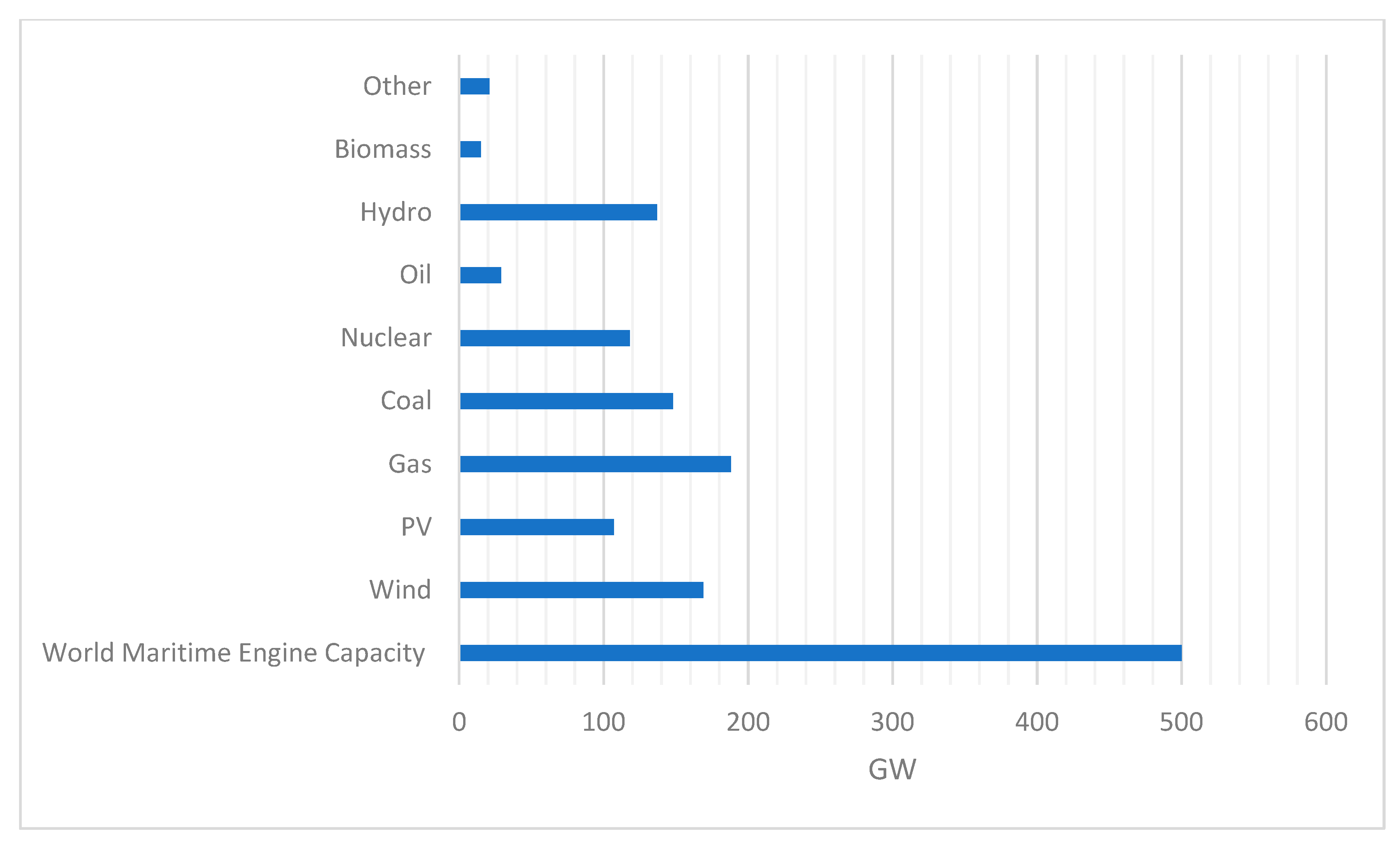
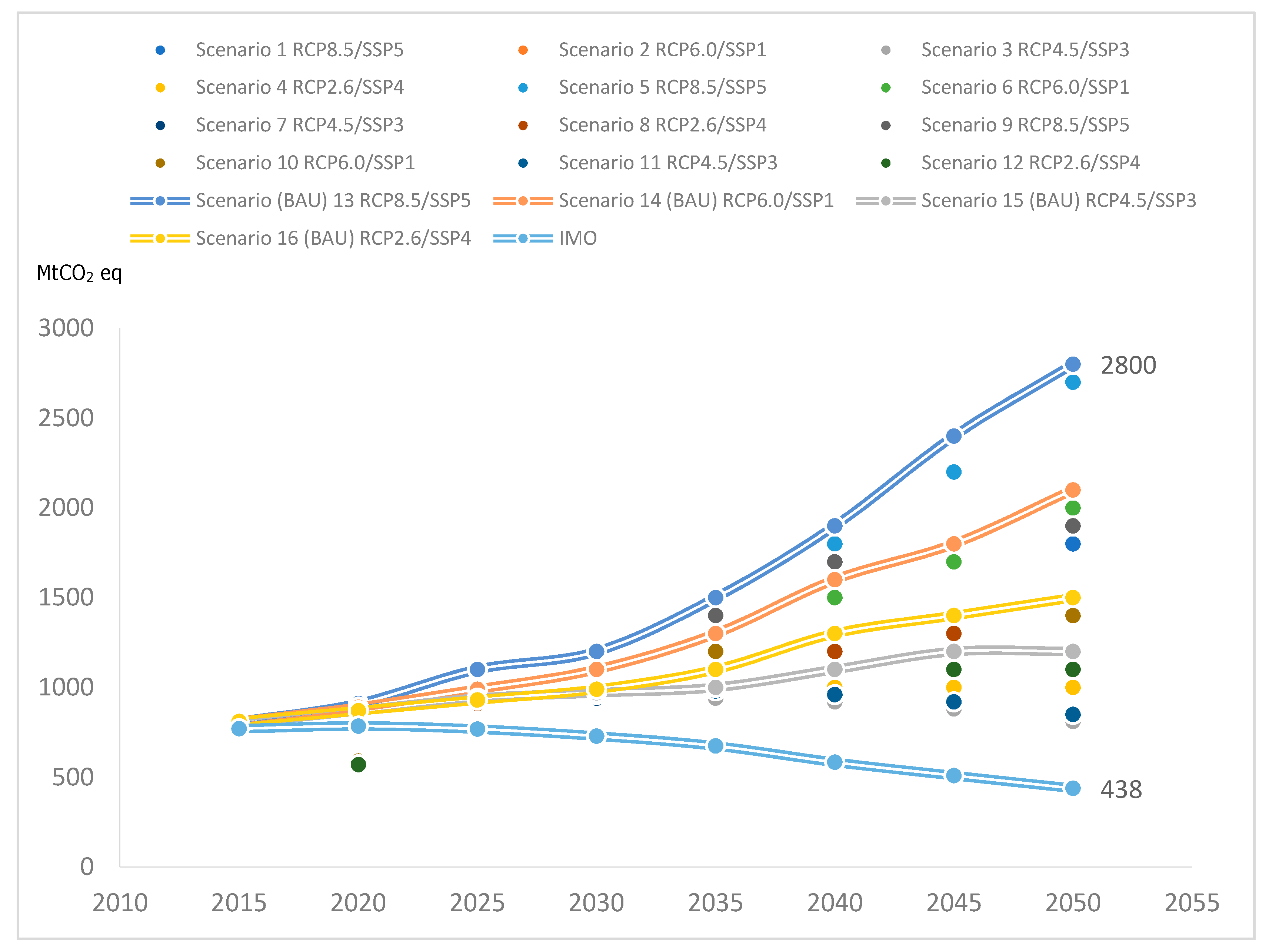
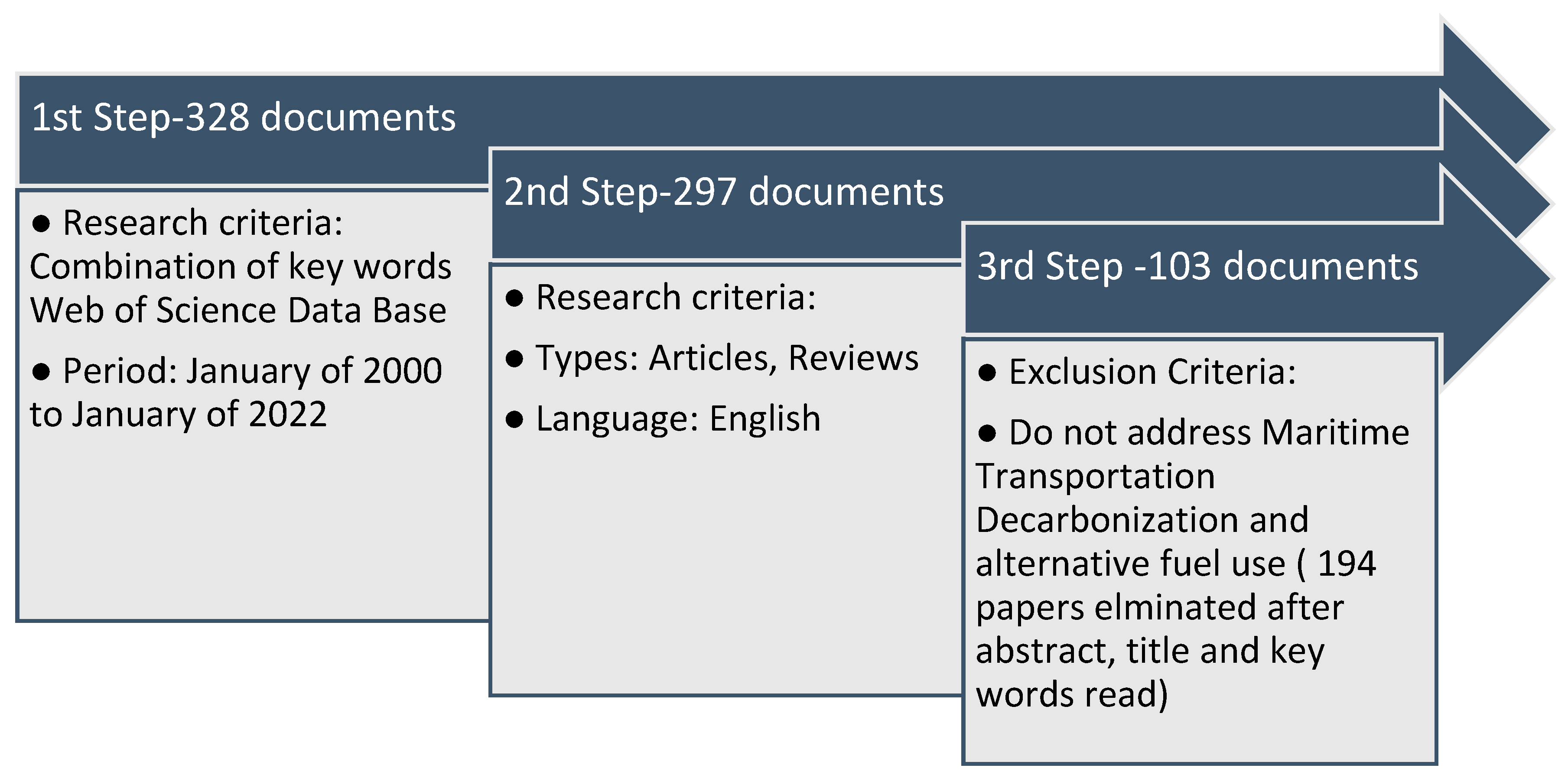
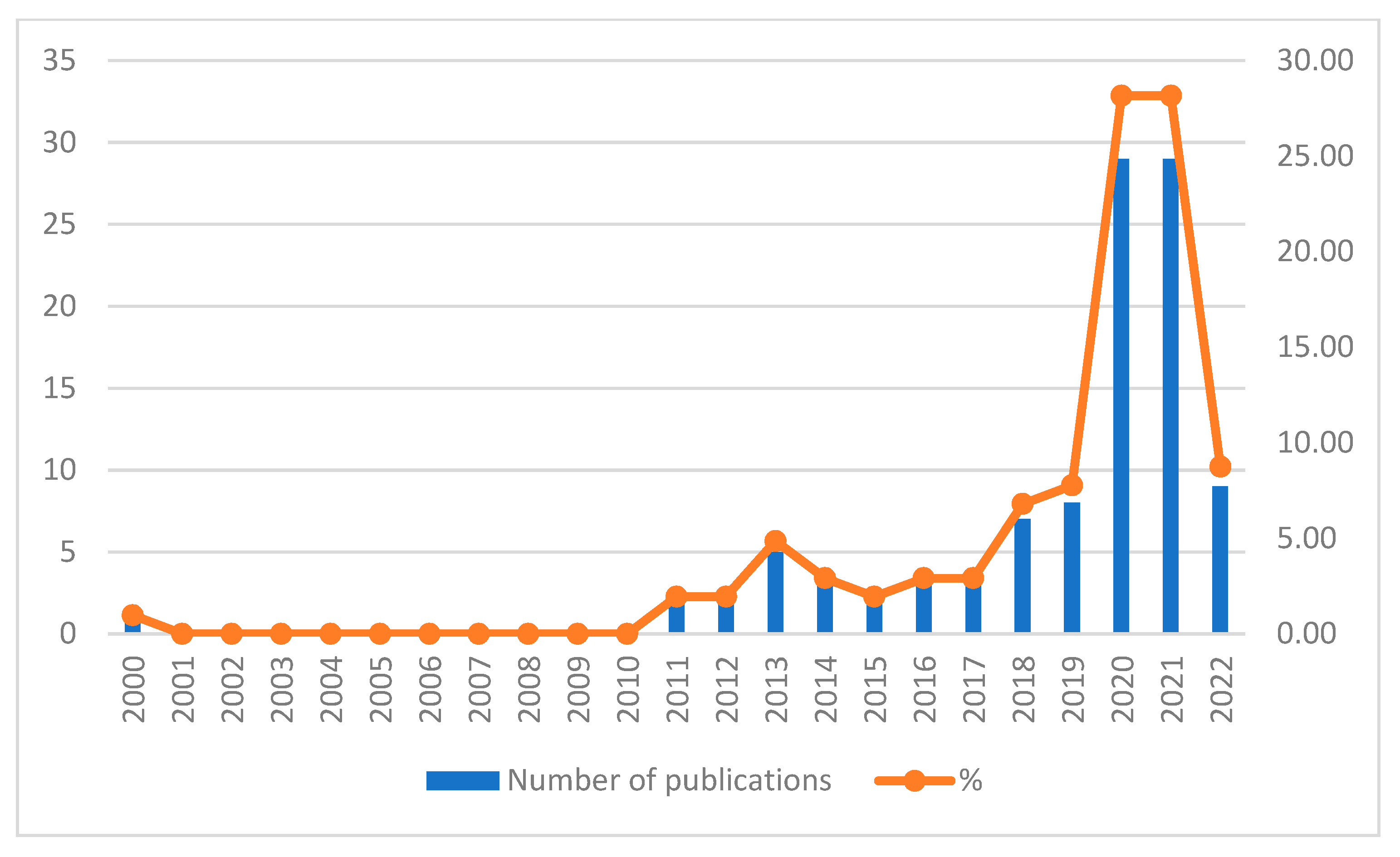
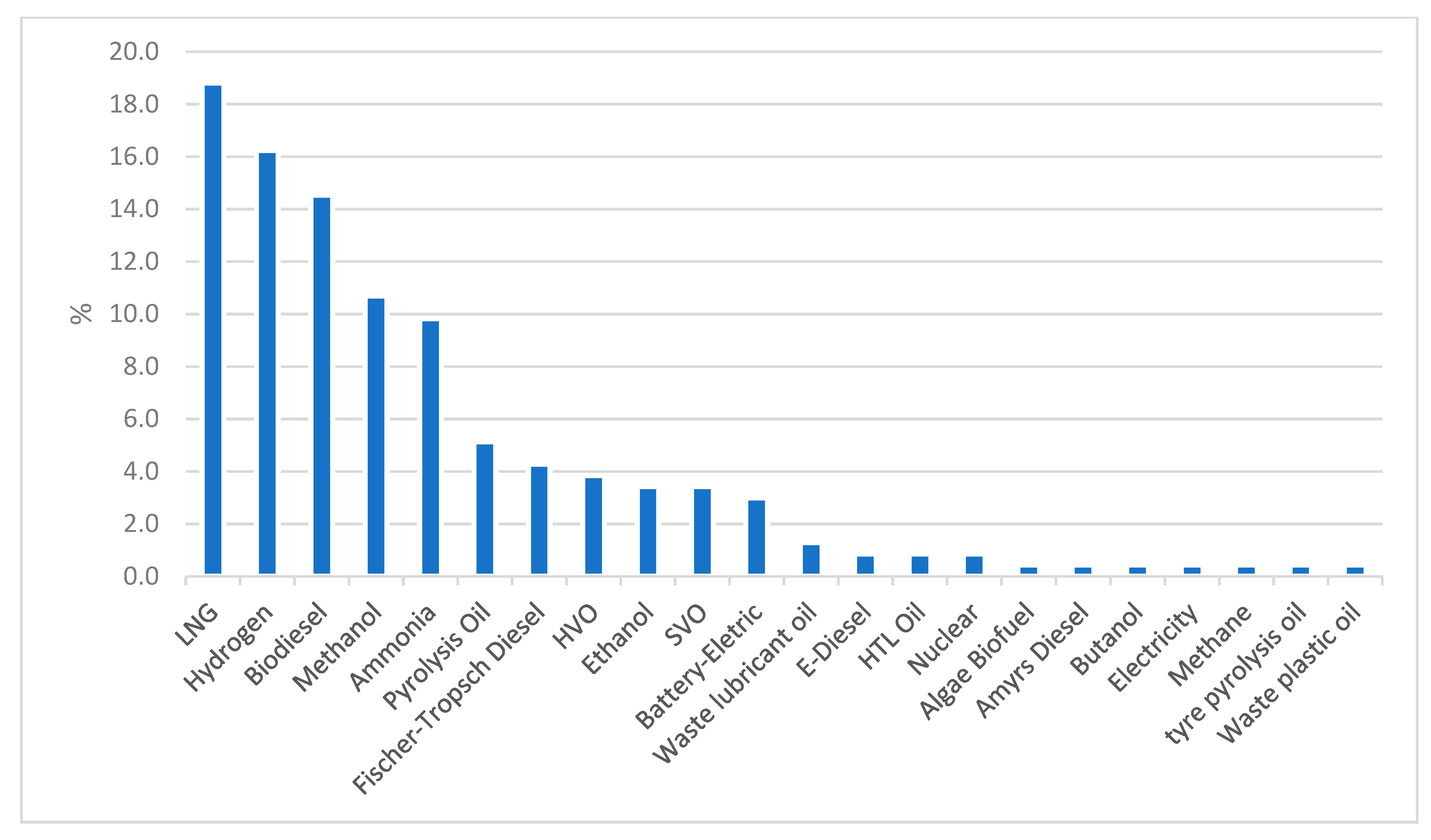
Publisher’s Note: MDPI stays neutral with regard to jurisdictional claims in published maps and institutional affiliations. |
© 2022 by the authors. Licensee MDPI, Basel, Switzerland. This article is an open access article distributed under the terms and conditions of the Creative Commons Attribution (CC BY) license (https://creativecommons.org/licenses/by/4.0/).