


Abstract
Worldwide, the combination of cutting potato seeds and spoon-type seed-metering devices holds a dominant position in the development of potato planters. In this context, miss-seeding and multi-seeding caused by the seed spoon are important factors contributing to consequent yield reductions. These issues have become key concerns in the precision seeding of potatoes in recent years. This study first analyzes existing research into the monitoring and inhibition of spoon-style potato seed-metering defects. Then, the main problems of spoon-type precision potato planters are analyzed independently in depth, including the lack of monitoring methods, insufficient active inhibition of potato seed-metering defects, unexplored deep additional impacts of the ‘catching-up compensation’ effect, and limited research into multi-picking monitoring and inhibition methods. On this basis, four strategies are proposed: (1) improving the reliability of the seed-metering monitoring system, (2) simplifying the practicality of the miss-picking compensation system, (3) reducing multi-picking based on the trajectory abrupt change in potato seeds, and (4) researching the deep additional effects of the ‘catching-up compensation’ strategy and utilizing multi-means coupling simulation to assist in active seed-metering defect inhibition. Subsequently, relevant conclusions based on the existing literature and in-depth analyses are presented. Finally, prospects for the future development of potato seed-metering technology are discussed. This study aims to provide effective references for achieving intelligent, precise, and information-based potato seed-metering.
1. Introduction
The spoon-type seed-metering device occupies a dominant position in potato planter technology, the performance of which affects the quality and efficiency of seeding operations [1,2,3]. On a global scale, cutting potato seeds are easy to produce, cost-effective, and easy to carry in large quantities. Therefore, they are widely used as a seed type in the context of mechanized potato seeding [4,5,6]. However, due to the natural distribution of the shape and size of potato seeds, their mobility is poor, leading to a high degree of randomness in seed picking. The miss-picking and multi-picking by the seed spoon will inevitably lead to miss-seeding and multi-seeding, which are important factors contributing to consequent potato yield reductions that should be given full attention. Taking data from 2021 as an example, the potato planting area in China was about 4.6 million hectares, with a yield of about 91.5 million tons, ranking first in the world [7]. On this basis, considering miss-seeding and multi-seeding rates of 7%, the annual yield reduction in China would exceed 8 million tons. After conversion, this is equivalent to the annual food supply for an ordinary developing country with a population of 8 million. Similar yield reductions worldwide would be even more astonishing.
Although the impacts of these issues cannot be ignored, the basic mechanisms underlying miss-picking and multi-picking have not yet been deeply explored. Therefore, a significant reduction in miss-seeding and multi-seeding rates has not yet been achieved. The latest concepts, such as ‘catching-up compensation,’ still have unknown effects on the seeding system. Consequently, the high incidence of miss-seeding and multi-seeding, the difficulty of seed-metering monitoring, and the lack of mature inhibition strategies are still the main obstacles hindering improvements in the quality of mechanized potato seeding with spoon-type seed-metering devices. Furthermore, research into the monitoring and inhibition of seed-metering defects has mainly focused on miss-picking, while multi-picking has not received sufficient attention.
Therefore, this review first provides a brief overview of the research status on spoon-type potato seed-metering defect monitoring and inhibition (Section 2). Then, in Section 3, the main problems associated with spoon-type potato planters are analyzed. In Section 4, targeted solutions are proposed and, finally, conclusions are drawn and several future prospects regarding the technology in this field are discussed.
2. Research Status and Development Trends of Spoon-Type Potato Seed-Metering Defect Monitoring and Inhibition
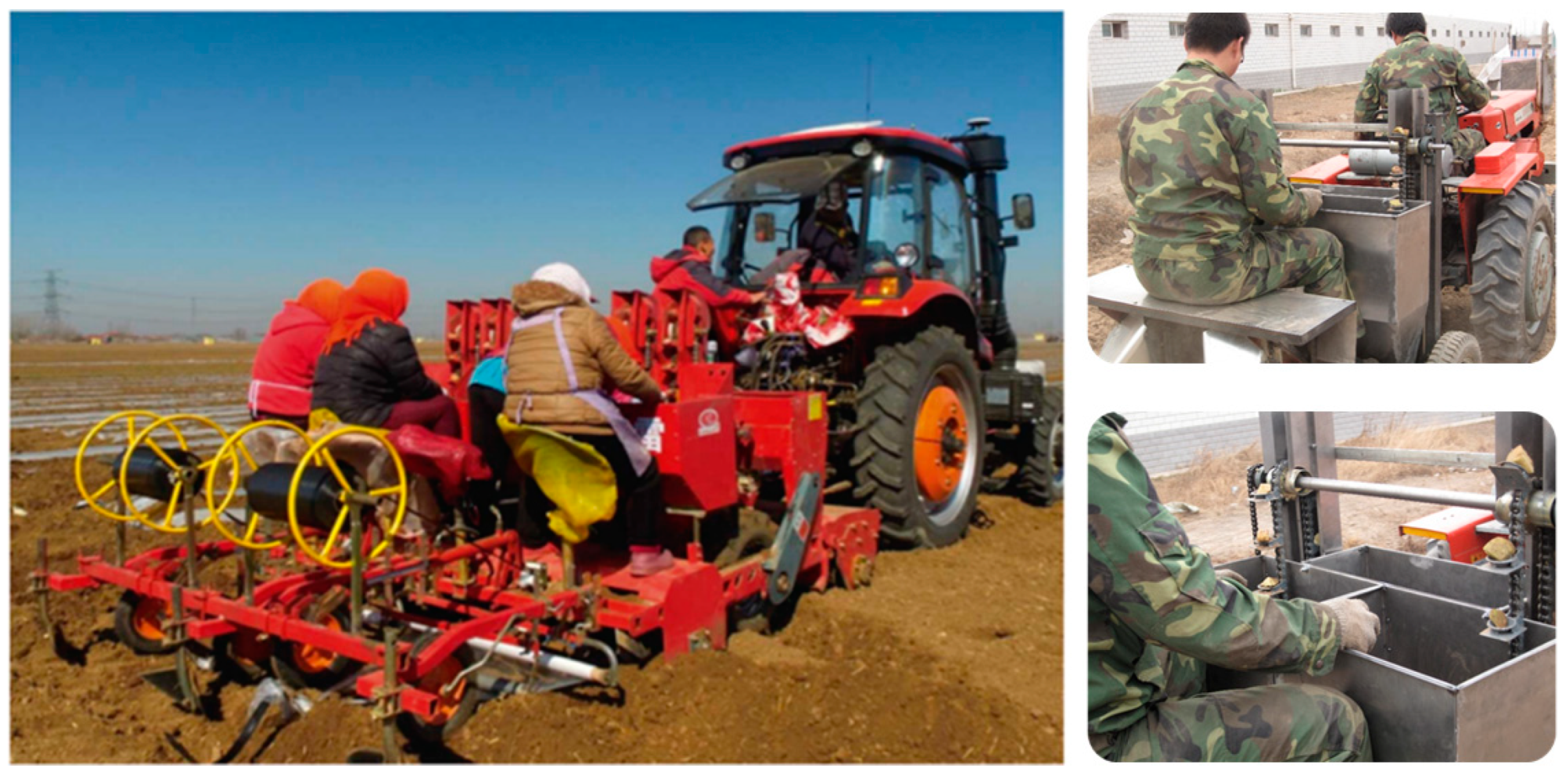
To address miss-picking and multi-picking, the simplest approach is manual rectification [8,9] (some cases are shown in Figure 1). However, this method is labor-intensive, has a low success rate, and incurs considerable costs. Measures, such as improving the structure of potato planters, can also be taken to reduce seed-metering defects; however, these improvements often make the system more complex, having a significant effect on the large-scale machinery used for whole potato seeding [7,8]. However, for small- and medium-sized machines, the results are still not good enough, as even improved planters present miss-picking and multi-picking rates of about 7% [10,11,12]. As a result, an effective way to solve this problem is to add automatic detection and rectification devices to potato planters [13,14,15]. This approach aligns with the booming field of precision agriculture [16,17] and further belongs to the category of precision seed-metering [13,14,15,18,19].
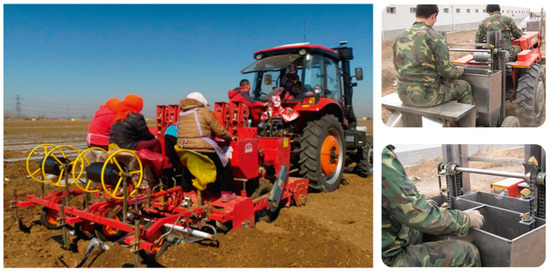
Figure 1.
Basic situation of manual rectification operation.
From a global perspective, the pursuit of precision seeding has a long history. As early as the 1940s, European and American countries took the lead in developing precision seeding machinery for traditional bulk crops, such as corn and soybeans. At present, these crops can not only be precision seeded but also constantly drive the development of new technologies that adapt to the different natural conditions and production requirements of different regions [20,21]. In terms of potato seed-metering, large agricultural machinery has been widely adopted in European and American countries, which have a large seed box volume, high filling surface, and a relatively large seed block volume (especially for whole potato seed-metering). The widespread use of optimization iterations and simple monitoring measures in the design of seed-metering systems has already caused the total miss-seeding rate and multi-seeding rate to drop to less than 5% [22]. In addition, the abovementioned countries have small population sizes and vast land areas, so the impacts of these innate production reductions are not considered significant. Therefore, most of these developed economies only conduct the routine monitoring of potato planting defects, and research on defect suppression is not urgent, leading to few reports on achievements in this area. However, the situation in China is completely different. First, the mechanization of potato seeding in China is developing rapidly, with many technologies yet to be finalized. The potato planters used are mainly small- and medium-sized, with generally low technological content, resulting in more significant yield reductions due to miss-seeding and multi-seeding. Second, we must consider all issues related to national food security, especially staple crops, from the perspective of ‘only 7% of the world’s land to feed 18.3% of the world’s population’ [7]. Third, China’s potato planting area is close to 1/3 of that worldwide, but its yield only accounts for 1/5 [15].
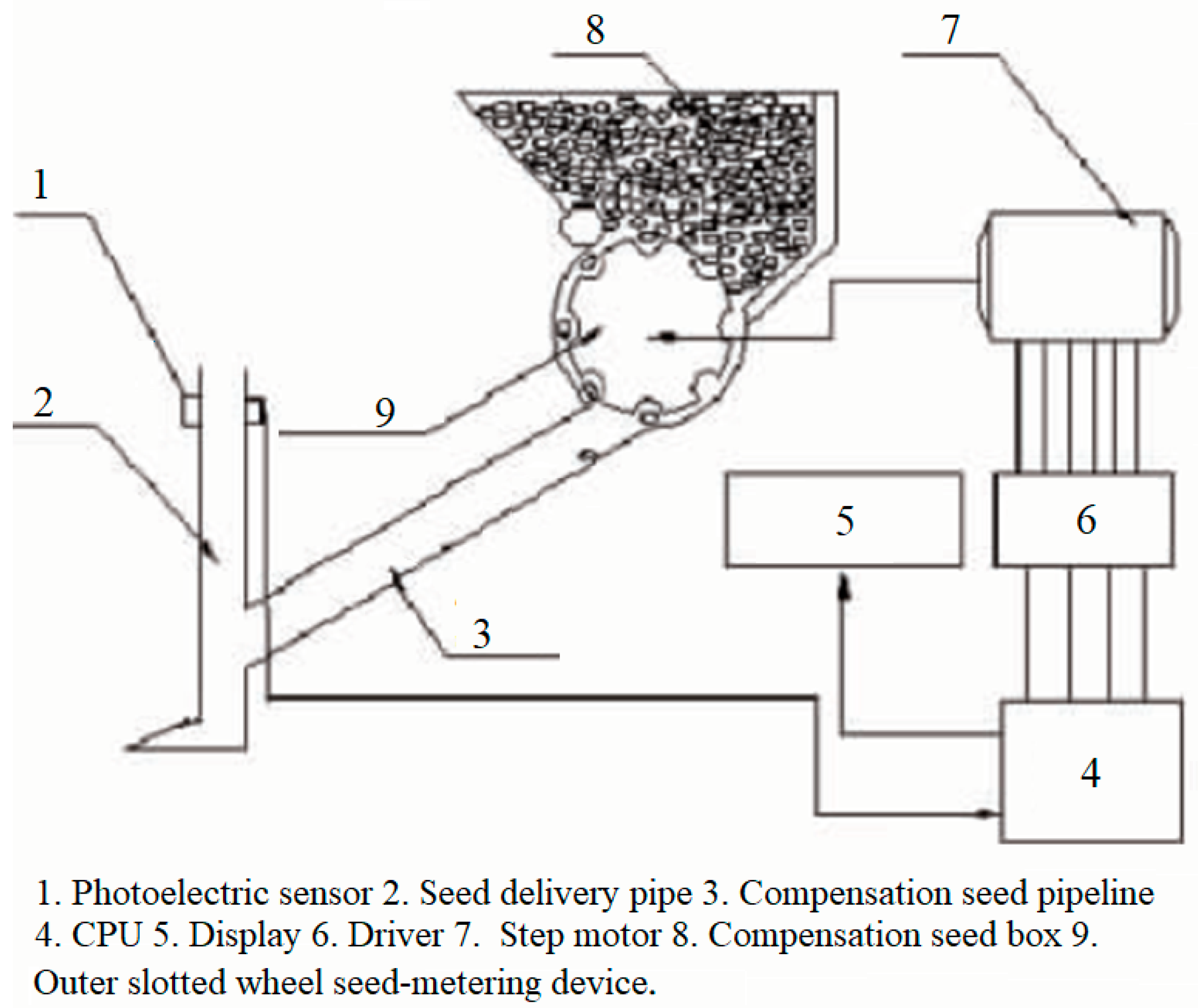
Research into precision seeding in China has mainly focused on corn [23,24], wheat [25,26], rapeseed [27,28], and other similar crops. While these seeding monitoring schemes can be used for reference, their principles and methods are difficult to apply directly to potato seed-metering. Therefore, Zhang et al. [29] first proposed an automatic compensation system composed of infrared photoelectric sensors, microcontrollers (CPU), stepper motors, and other components. The miss-picking detection system consists of eight pairs of infrared emitting-receiving diodes combined with a microcontroller located at the bottom of the main seed-metering tube. The system is equipped with a compensation seed box on the upper part of the outer slotted wheel seed-metering device, and its outlet is connected to the main planter through a compensation seed delivery pipe (as shown in Figure 2). Normal potato seeds fall from the seed delivery pipe (2). The photoelectric sensor (1) sends the seeding signal to the CPU (4), and relevant statistical signals can be shown on a display (5). If miss-seeding is detected, the compensation drive signal is sent to the driver (6), and a step motor (7) is driven to rotate for a certain period of time. Then, the outer slotted wheel seed-metering device rotates at a certain angle (9), and one potato seed enters the compensation seed pipeline (3), thus compensating for the miss-seeding. Although this miss-picking detection scheme is relatively primitive, it lacks reliability, and the compensation scheme is complex and slow, it opened the way for research on the monitoring and suppression of seed-metering defects in China.
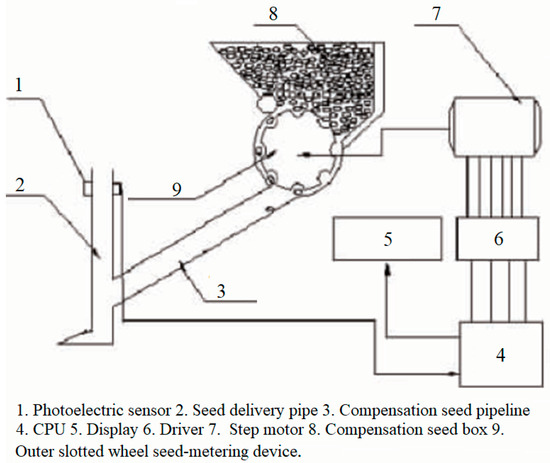
Figure 2.
Miss-seeding detection and compensation system proposed by Zhang et al. [29].
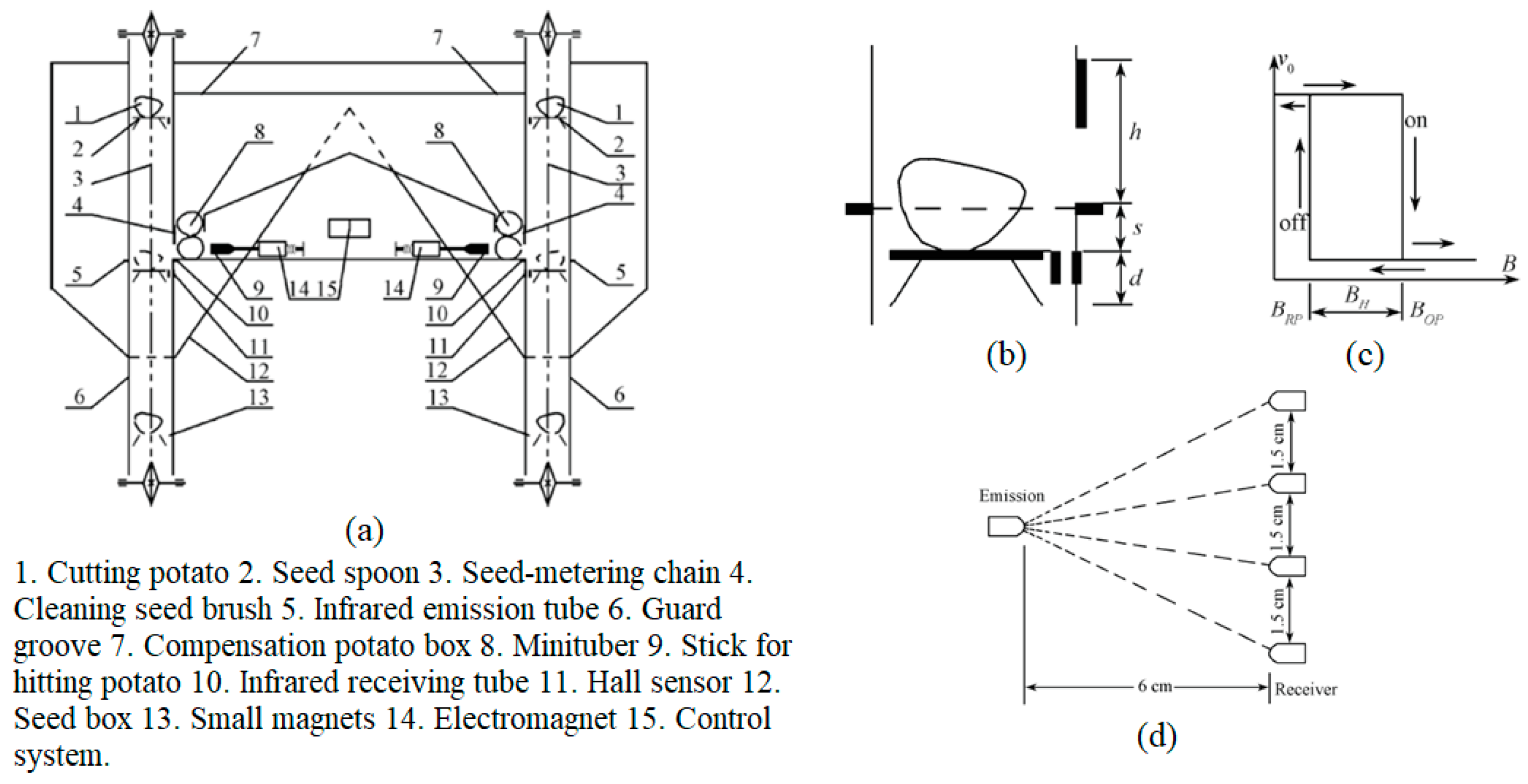
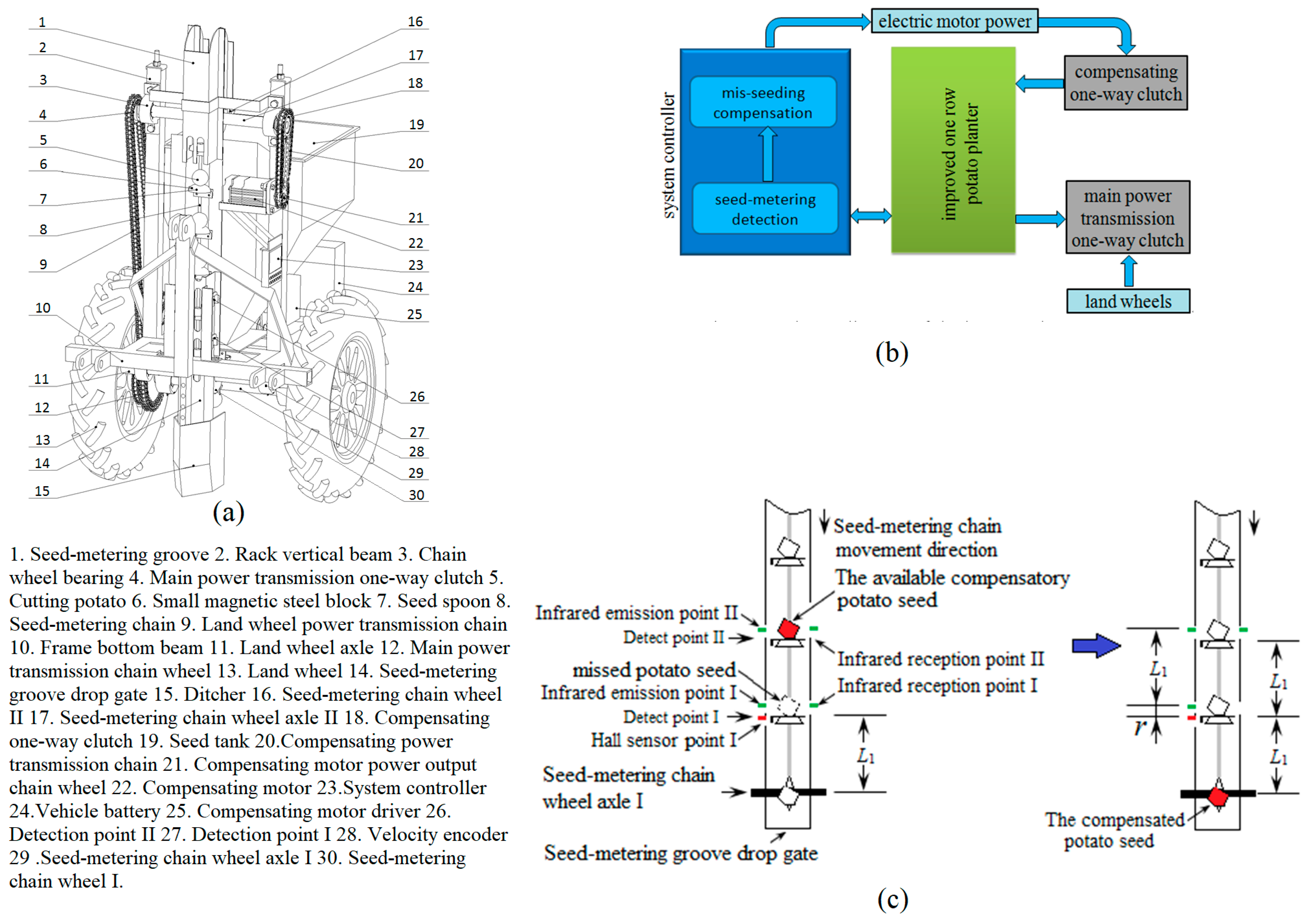
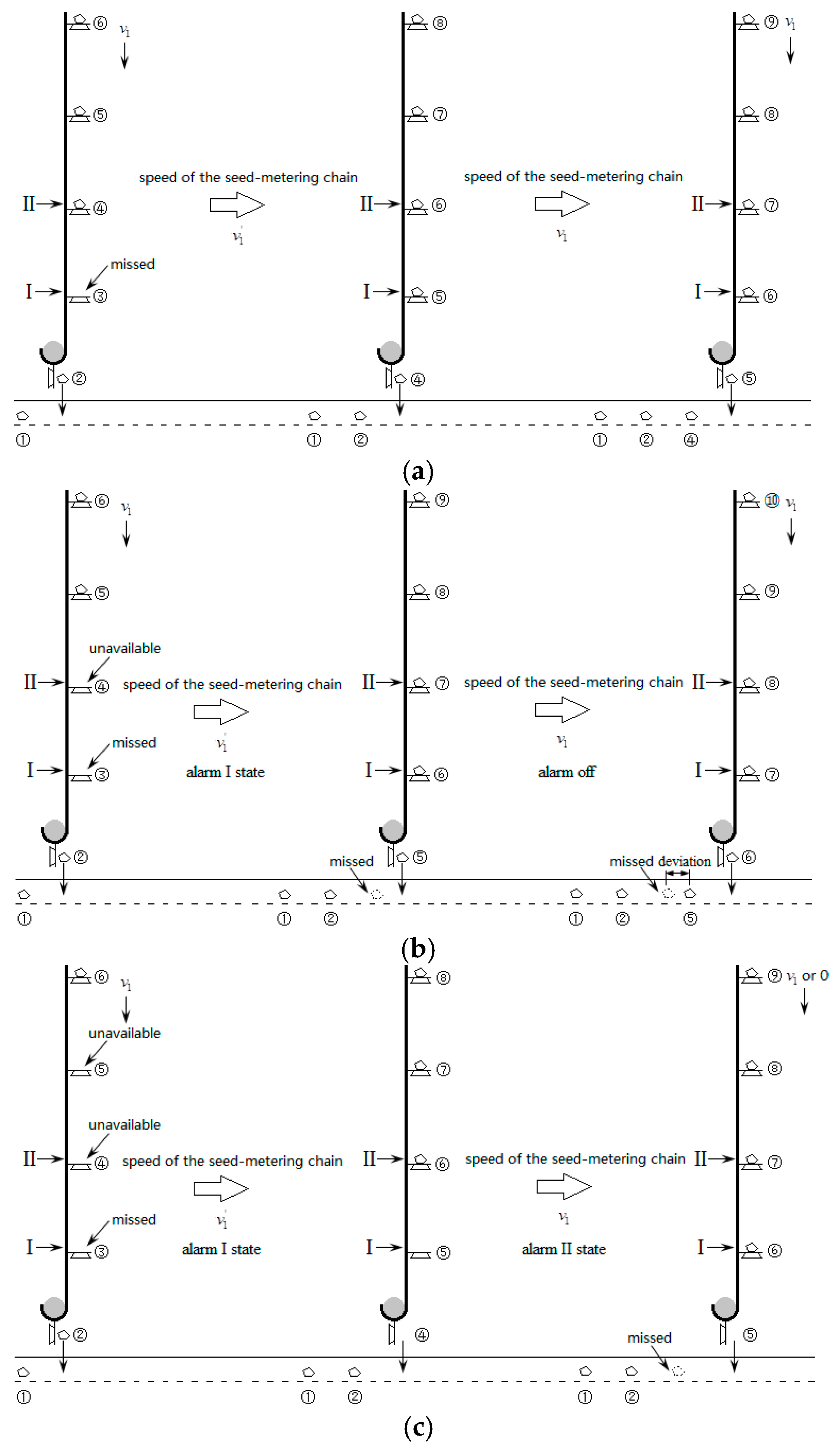
On this basis, Liu et al. [30] and Sun et al. [31] have clearly proposed a scheme (shown in Figure 3) using a position sensor (Hall sensor, 11, Figure 3a) to induce a microcontroller to achieve infrared photoelectric detection, in order to determine whether a miss-picking event has occurred (working principle shown in Figure 3c). They also provided detailed hardware implementation cases (e.g., the most important photoelectric sensors—5, 10 in Figure 3a—and their layout is shown in Figure 3b,d) and software programming strategies, which significantly improved the reliability of miss-picking detection. In terms of the miss-seeding compensation scheme—either the crank-connecting rod strike [30] or the electromagnetic-thrust-hit [31] type—they are both characterized by a simple, direct, and fast quick strike and effectively cause the seed potato to be compensated for at the target position. However, the condition is that the compensating potato seeds need to be positioned in advance reliably and the channel is not blocked; therefore, the premise is strict and its practicality still needs to be improved. Inspired by the abovementioned scheme [30,31], Wang et al. [32] proposed a scheme that uses a reed relay to trigger infrared miss-picking detection and a socket–roller seed-metering system for miss-seeding compensation. The accuracy of this miss-picking detection system is comparable to that of the schemes in [30,31]; however, the compensation system structure is simplified, the re-seeding distance is shorter, and the action is faster. However, a disadvantage is that the phenomenon of potato seeds being pinched by socket–roller groove wheels is quite frequent. From 2018 to 2022, based on their mature infrared miss-picking detection scheme [14,15,31,32], Professor Wang’s team at Gansu Agricultural University proposed a new solution, named ‘A planting and compensating integrated potato planter with dual one-way clutch cooperation’ [14], in which they conducted preliminary tests and achieved good results [33,34]. This scheme fully utilizes the principle that the one-way clutch can prioritize the connection of faster running power (as shown in Figure 4 and Figure 5). When a miss-seeding incident occurs, the seed-metering power will be replaced by the compensatory motor through the compensating one-way clutch at a higher speed. In this way, the latter potato seed can be accelerated to catch up with the vacant target position; it must be emphasized that the time cost of this approach is exactly the same as the original speed. Accordingly, this scheme was named ‘catching-up compensation.’ Afterwards, the motor power quickly decreases, and the ground wheel power continues to drive the normal seeding again. This idea not only shares the same channel for planting and re-seeding but also does not require the installation of additional compensation seed boxes. However, it requires the addition of a power switching device and a dedicated compensation power motor. Overall, it greatly simplifies the composition of the potato miss-seeding compensation system, and the position deviation of the compensated potato seeds can be optimized using software; therefore, the practicality of the system presents a qualitative leap.
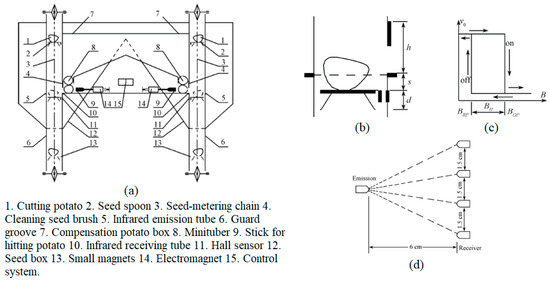
Figure 3.
Structural diagram of chain-spoon potato planter and the miss-picking core monitoring system [31]. (a) Structural diagram of potato planter, (b) sensor arrangement, (c) the working characteristics of A04E, (d) infrared emission system and receiving tube arrangement.
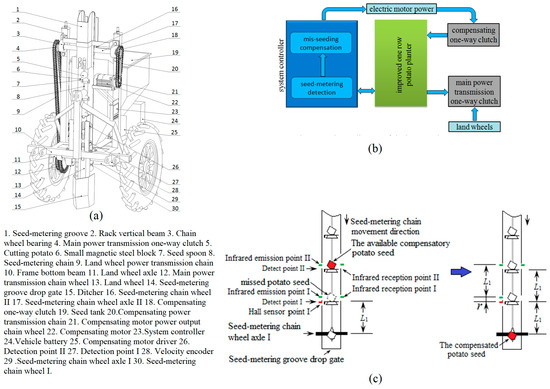
Figure 4.
System composition scheme of a planting and compensating integrated potato planter with dual one-way clutch cooperation [33,34]. (a) System mechanical structural diagram, (b) power composition diagram of the whole machine, (c) diagram of catching-up compensation principle.
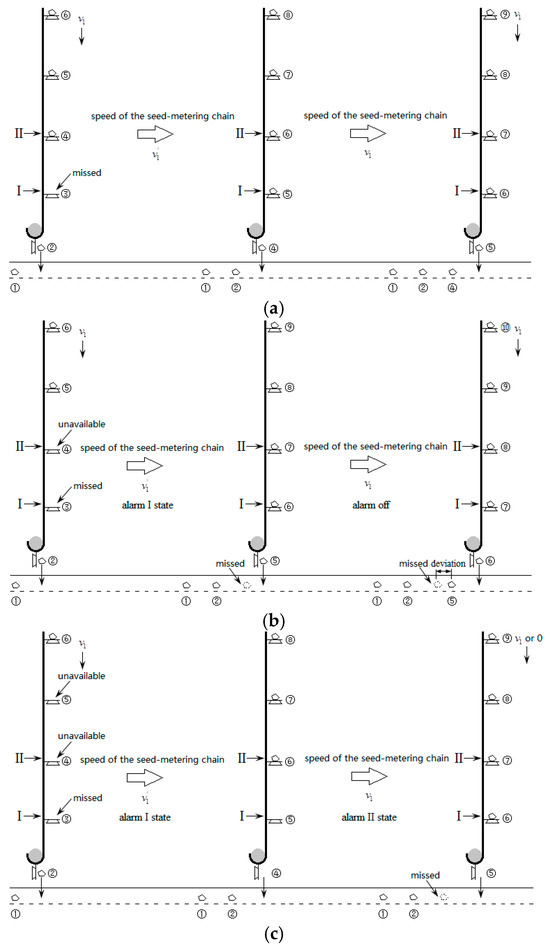
Figure 5.
Miss-seeding compensation control schemes [33,34]: (a) miss-picking occurs, compensation condition is available; (b) miss-picking occurs, compensation condition is unavailable, but compensation is still executed; (c) miss-picking occurs, compensation condition is unavailable, and the compensation was not executed, ultimately resulting in miss-seeding.
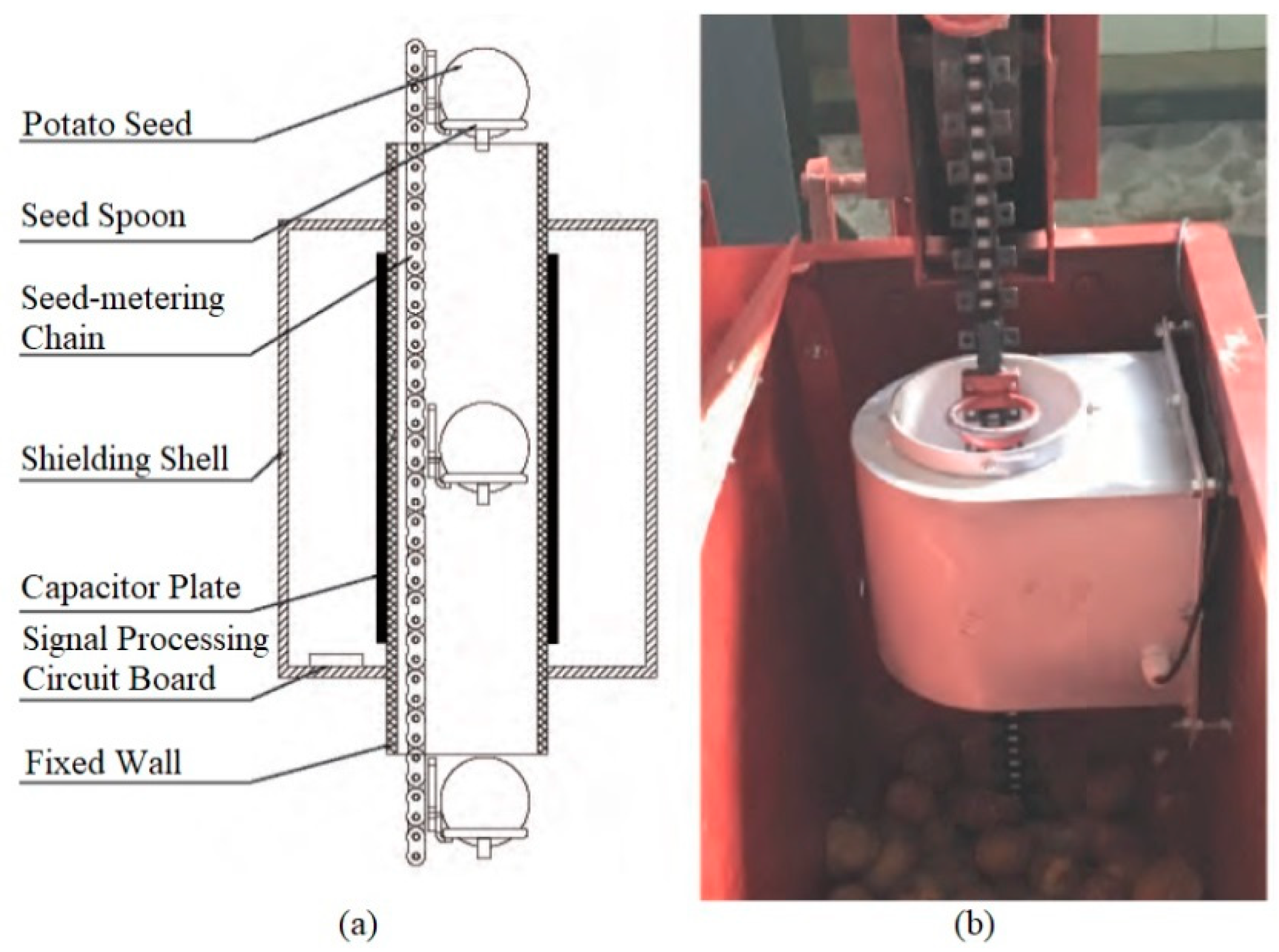
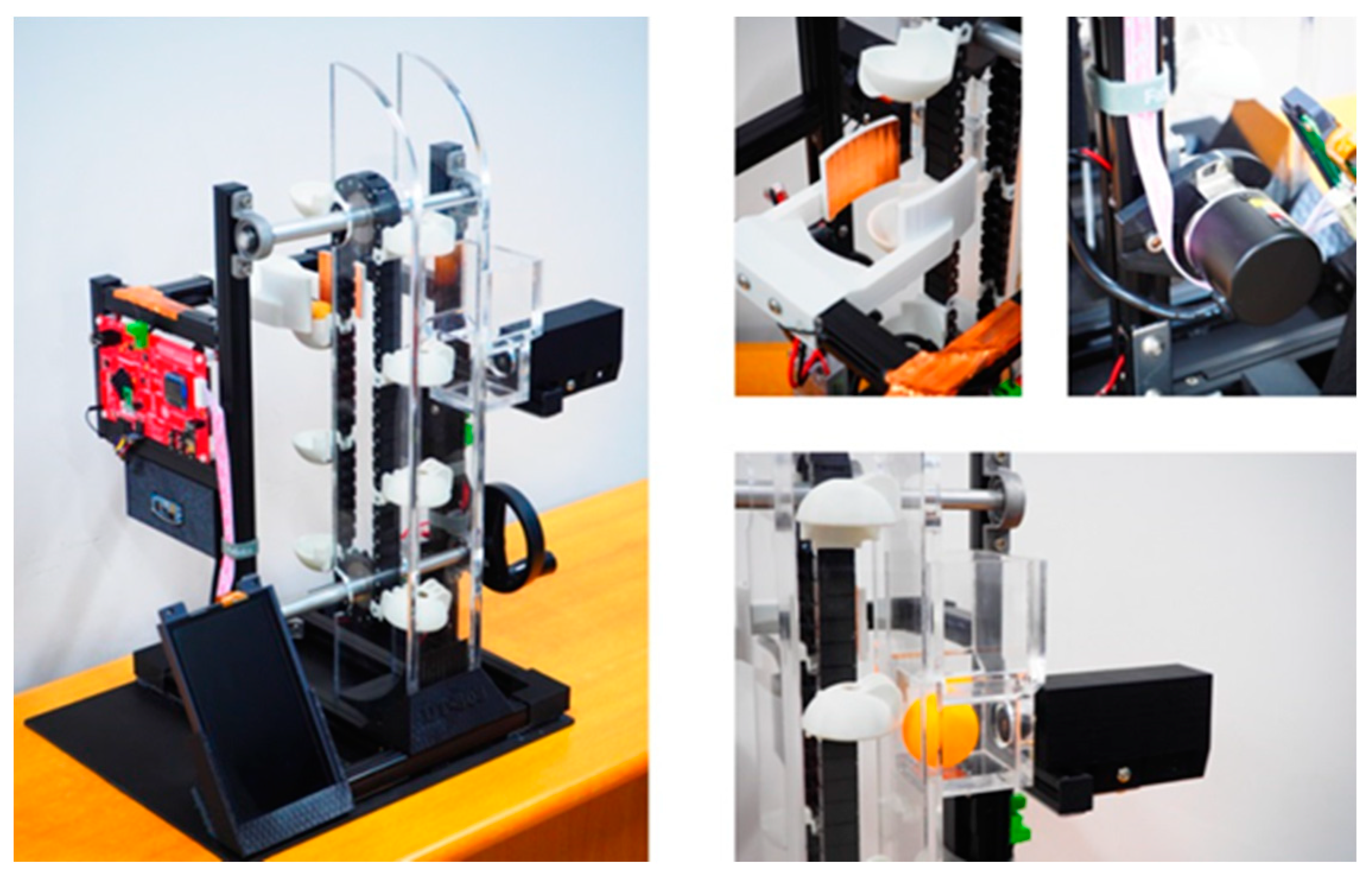
Due to the varying degrees of influence of the high-dust environment and sunlight exposure on infrared photoelectric detection, non-photoelectric technology for potato seed-metering defect detection has received increasing attention in recent years. For example, as early as 2009–2010, Zhou et al. [35] identified faults, such as interruptions and blockages, in wheat seeding systems based on changes in capacitance sensor signals. Later, they improved the scheme and further applied this idea to corn seeding monitoring, which not only provided reliable seeding statistics but also effectively achieved multi-picking identification [36]. Encouraged by these exciting achievements, Niu et al. [37] first proposed a new capacitive sensing potato seed miss-picking detection scheme, which is built around a PLC. A peak-seeking algorithm was used to process the captured capacitor pulse signal, allowing the peak capacitance to be obtained, which can be compared with the base value to determine whether any miss-picking has occurred (as shown in Figure 6). This detection method has better dust resistance and vibration resistance, representing a new trend in this field. On this basis, Professor Wang’s team also carried out some forward-looking explorations in this line [38]. Based on the construction of a simulation model for a spatial capacitance sensor and the sorting of key scientific issues in engineering applications, a clear systematic approach to potato miss-picking and multi-picking judgment was formed (as shown in Figure 7). The miss-seeding compensation scheme of this verification device is no different from the aforementioned ones detailed in Figure 3 and Figure 4, but its seed-metering monitoring principle is as follows: if the dielectric passing between the capacitor plates changes, the measured spatial capacitance value will also differ accordingly. In addition, they also considered the fluctuation of capacitance measurement values caused by environmental changes that may be encountered in practical applications, such as those relating to temperature and humidity, in order to provide strategies and data support for active avoidance measures in design, control, and application processes. In terms of passive suppression, ‘catching-up compensation’ is currently considered one of the optimal solutions for the suppression of miss-picking. However, its adverse effects on miss-picking and multi-picking, as well as its impacts on the main parameters, are still unknown. Exploring its limiting factors and parameter boundaries is equally important for the structure of the seed-metering system and the safety of potato seeds. Although the ideas described in [38] comprise significant achievements in the context of multi-picking monitoring, the ideas provided in [39,40,41,42] are obviously more valuable for reference. The fundamental reason is that simple infrared optoelectronic systems are reliable in terms of miss-picking detection but are powerless in determining multi-picking. However, the intelligent recognition of seed-metering defects based on image processing can provide more information [39,40,41,42], such as the specific number of potato seeds and spoon numbers, which provides more targeted choices for subsequent defect suppression system actions. In addition, visual monitoring systems can be installed spatially far away from the feeding port, potentially minimizing the influence of dust, which ensures the feasibility of installing the physical entities of the system and the reliability of its operation.
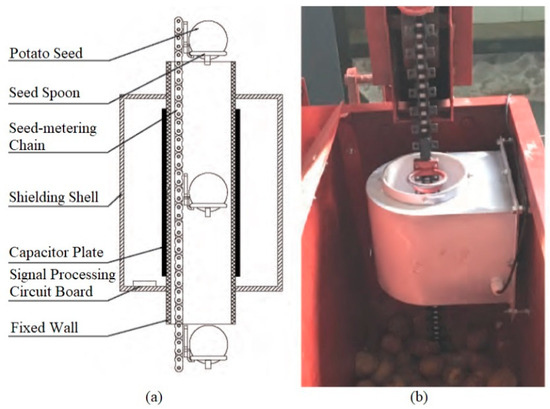
Figure 6.
Capacitive miss-picking monitoring system [37]. (a) Structural diagram of the system; (b) system installation rendering.
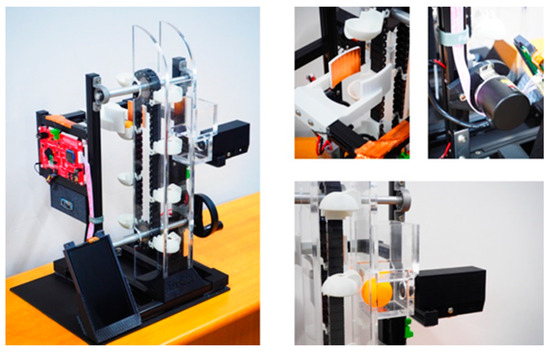
Figure 7.
Potato planter test bed based on capacitive precision seed-monitoring and miss-seeding compensation system [38].
To date, the measures designed to overcome multi-picking have mainly focused on local vibration or agitation at the bottom of the seed box, and alternate schemes with obvious engineering value have not yet been reported. In fact, seed-metering defects are actually formed during the process of picking seeds with the potato spoon. Therefore, in addition to the passive solutions mentioned above, active measures can also be considered. For example, the purpose of optimizing the design of the seed-metering device and seed box system is to improve the efficiency of seed picking [3,4,12]. Meanwhile, the purpose of local forced vibration in the seed box is to enhance the fluidity of the potato seeds inside the seed box, such that the potato spoons can be occupied by as many potato seeds as possible while, at the same time, limiting the number of potato seeds in each potato spoon to no more than one [8]. Of course, these measures are relatively singular and mainly rely on experience for implementation; therefore, it is not yet possible to draw systematic guiding conclusions. Therefore, our team believes that computer simulation with multi-means coupling can be used to consider different parameters and diverse constraints, obtain systematic research conclusions, and provide suggestions for the design of mechanical and control systems. This can actively suppress the problems that may arise during the potato spoon picking process from the source and is an obviously low-cost strategy.
The above review reveals that the technical solutions in the field of potato seed-metering monitoring have gone from the initial infrared photoelectric scheme at first, followed by non-photoelectric systems and, now, machine vision-based technology. The information provided by the monitoring system has diversified gradually, and the reliability has also been significantly improved. Table 1 provides a main technical comparison between the various types of solutions.

Table 1.
Comparison of technical solutions in the field of potato seed-metering monitoring.
In terms of seed-metering defect suppression, the compositions of systems have been continuously simplified, and their practicality has steadily progressed from the initial stepper motor type to the relay quick-impact type and, now, the ‘catching-up compensation’ mechanism. However, in terms of multi-picking elimination, only the local forced vibration in seed box strategy has been implemented, although the latest proposed strategy involving abruptly changing the trajectory of potato seeds, as well as the multi-means coupling simulation, may assist in developing low-cost active seed-metering defect prevention approaches, indicating that the practicality of potato seed-metering defect suppression measures is rapidly increasing. A comparison of the main technical schemes for potato seed-metering defect inhibition is provided in Table 2.
Table 2.
Comparison of main technical schemes for potato seed-metering defect inhibition.
3. Main Problems of Spoon-Type Potato Planters
According to Section 2, to date, research into the monitoring and inhibition of potato miss-picking and multi-picking has not only remained in the laboratory stage but has also mainly focused on miss-picking. The main limitations of the relevant literature are discussed as follows:
(1) Monitoring methods are limited
At present, infrared optoelectronic systems are still widely used; however, these are susceptible to the influence of scattered light sources, such as sunlight, especially due to the poor dust and vibration resistance of the detection components, leading to frequent faults. Although non-optoelectronic methods, such as ultrasound and capacitive sensing, are theoretically feasible, they face high technical difficulties, such as low sampling rates and difficulty in precise positioning due to the more indirect information-acquisition path. Advanced algorithms are needed to overcome the problem of insufficient sampling data in medium- and high-speed operations.
(2) Insufficient research on active inhibition of potato seed-metering defects
In a precision seeding system, actively reducing the probability of miss-picking and multi-picking should be the core work of equipment design. Although the causes of seed-metering defects are complex, our team believes that they mainly relate to the coupling relationship between the structural factors and the operational parameters of the seeding system.
(3) The deep additional impact on ‘catching-up compensation’ urgently needs to be revealed
The existing compensation schemes for potato seed miss-picking inhibition mostly require separate compensation channels for seed movement, which can lead to complex system structures and difficulty in ensuring the accuracy of the compensated potato seed landing points. For this reason, our team’s latest concept, ‘A planting and compensating integrated potato planter with dual one-way clutch cooperation’ [14], has made encouraging progress. However, there has been a lack of quantitative research into the additional effects and parameter limitations of miss-picking and multi-picking due to the sudden change in speed. In this context, obtaining boundary conditions for potato seed stability is essential to ensure the safety of the mechanical structure and the potato seed itself.
(4) The research into multi-picking monitoring and inhibition methods is weak
Multi-picking recognition based on traditional photoelectric detection schemes is difficult, while high-end technologies, such as image identification, have high requirements for the application environment. As such, research into multi-picking inhibition strategies has not received much attention. Therefore, globally, it is still difficult to find any commercial potato planter on the market that possesses complete automatic miss-picking and multi-picking monitoring and inhibition functions.
4. Main Solutions to Existing Problems
4.1. Improve the Reliability of the Seed-Metering Monitoring System
(1) Infrared photoelectric monitoring components should be prioritized for installation in the ascending section of the potato seed-metering channel. As this section is often located in an open area above the seed box, with sufficient space and in the tension zone of the seed-metering chain or belt, its longitudinal and transverse swing amplitude is small, which is conducive to improving the stability of the obtained monitoring information. The upper part is also convenient for the installation of rain and light shelters; in this way, the applicability of the infrared photoelectric detection system can be improved further.
(2) To avoid the attenuation of infrared light in the atmosphere during infrared monitoring, cloudy weather with less fog and dust should be chosen. In addition, other reliable detection methods can be used to monitor the seed-metering status of potato planters; for example, laser sensors should be prioritized. This type of sensor has strong signals and is completely unaffected by stray sunlight or general lighting sources in the working environment.
4.2. Simplification and Practicality of Miss-Picking Compensation System
Given the known potato miss-picking information, the compensation system should take timely action in the simplest and fastest way possible. This inevitably requires a simplified compensation plan and direct actions. Therefore, it is advisable to avoid adding dedicated compensation seed boxes and channels for the compensation of potato seeds as much as possible, and it is best for the entire controller to be completed by one CPU. The ‘catching-up compensation’ described in a patent [14] and papers [33,34] is one of the solutions that meets the above standards. This scheme greatly simplifies the composition of the miss-picking compensation system, and the position deviation of the compensation system can be reduced through a software-based adjustment, thereby achieving a qualitative leap in the usability of the system.
4.3. Implementation of Multi-Picking Reduction Strategy Based on the Abrupt Trajectory Change in Potato Seeds
With the steady implementation of staple food strategies and the continuous promotion of high-yield potato seeds, the cost of potato seeds in potato cultivation has been steadily increasing annually. Multi-picking—which describes one spoon taking more than one seed—is obviously contrary to economic logic and the basic principles of precision agriculture. It can also lead to more serious potential risks, such as weak and sickly seedlings, competition for fertilizer among multiple seedlings, decreased yields, and tuber deformities; however, multi-picking inhibition strategies have not been proposed, except for local forced vibration in the seed box. In this line, our team believes that after the seed spoon comes away from the seed box surface, a small abrupt change in the trajectory of the seed-metering chain can be used to remove excess potato seeds; the earlier this is performed, the more advantageous it is for the excess seeds to fall directly into the seed box (rather than being discharged outside). Moreover, the mutation point adopts a gear-nut-top-thread structure, which is a relatively simple mechanism that can be installed on the seed box directly behind the seed-metering chain. It consists of a movable bolt connected to a small gear, which meshes with the seed-metering chain. By moving this bolt, the meshing force between the seed-metering chain and the small sprocket can be changed. The core function of this device is that, when the seed spoon passes through this point, its movement trajectory will significantly change, and excess potato seeds are more likely to fall off on their own. In addition, this device is more conducive to full tensioning of the seed-metering chain, thus reducing its longitudinal and lateral swing amplitude.
4.4. Research on the Deep Additional Effects of the ‘Catching-Up Compensation’ Strategy
The ‘catching-up compensation’ scheme does not require the addition of a compensating seed box and an independent motion channel for the compensation of potato seeds, thus presenting a simple structure. Prototype tests have also preliminarily proven its practicality [33,34]. However, the execution of miss-picking compensation inevitably leads to drastic changes in the speed of the seed-metering chain, including a sudden increase, uniform speed, and a sudden decrease. This process, in turn, may have additional effects on miss-picking and miss-picking; however, the quantitative relationship and boundary parameters of this effect are still unclear. In addition, the stability changes of potato seeds caused by this process and the corresponding limitations on the movement parameters of the seed-metering system also urgently need to be explored.
4.5. Low-Cost Active Seed-Metering Defect Inhibition Based on Multi-Means Coupling Simulation Assistance
In the design stage of a potato planter, relevant measures can be taken in advance to reduce seed-metering defects, which is a powerful means to improve system efficiency and reduce yield reductions in a fundamental manner. However, this requires systematic and in-depth research. Under traditional conditions, this requires a large number of key component tests (in addition to field tests) and the accumulation of data, as well as a significant amount of time and financial investment. However, with the development of computer science and technology, traditional computationally intensive problems, such as Multi-Body Dynamics and Finite Element Analysis, are no longer the main limiting factors. Many cases have proven that, as long as the system modeling parameters are configured properly, the conclusions obtained can fully simulate the actual agricultural production. Therefore, such methods are effective and worth learning from for the low-cost and rapid implementation of research on complex relationships, such as those considered here.
5. Conclusions and Prospects
5.1. Main Conclusions
(1) Existing research into potato seed-metering monitoring has generally focused on the seed spoon miss-picking phenomenon, and mainstream solutions involve a combination of hardware and software based on infrared optoelectronic components. In order to improve the reliability of these systems, it is recommended to use far-infrared optoelectronic components or laser sensors with wide-angle reception, and it is advisable to use multiple short-term results to enhance the credibility of the obtained results.
(2) Capacitive monitoring is only suitable for low-speed operation planters at present. The reason for this is that the practical frequency for detecting capacitance values directly is around 50–60 Hz at present, according to the technology currently available on the market, which is relatively slow and still presents a significant gap with respect to the lower limit of the required frequency (i.e., 600–700 Hz) [38].
(3) Traditional optoelectronic methods are only relatively successful in the field of miss-picking and have difficulty in effectively detecting multi-picking. While machine-vision-based potato spoon detection involving an image or video monitoring scheme is a feasible method, reducing the information recognition time to within 5 ms is necessary.
(4) The crank-connecting rod strike [30], electromagnetic-thrust-hit [31], and socket–roller [32] miss-seeding compensation systems all require a separate additional seed box and a potato seed movement channel, making these systems complex; furthermore, some schemes require strict prerequisites, which poses significant obstacles to their short-term application. The preliminary feasibility for application of the technology described in [14]—namely, ‘catching-up compensation’—has been proven, although some details have not yet been thoroughly studied.
(5) The use of the ‘local forced vibration in seed box’ strategy is beneficial for enhancing the fluidity of potato seeds, which is advantageous for picking seeds with a spoon and helps to reduce the occurrence of multi-picking. Combined with multi-means coupling simulation assistance, it is currently an active choice for seed-metering defect inhibition.
(6) In contrast, the implementing a sudden change in the trajectory of potato seeds is the latest passive inhibition strategy for the mitigation of multi-picking. Combined with the downward tilting seed spoon concept, this approach is expected to achieve an effective breakthrough in multi-picking inhibition.
5.2. Prospects
(1) Fully electric-driven seed-metering is an important trend in the development of the field at present. First, the seed-metering speed of this driving method is fully electrified, and the selection of the seeding distance can be completed in a digital manner, which is simple and convenient, being greatly superior to traditional pure mechanical systems. Second, this concept provides great convenience for the deployment of miss-picking and multi-picking mitigation schemes, navigation technology, and the application of artificial intelligence systems. The most important thing is that all power comes from only one electric motor, so the overall power transmission system is simple and efficient. The volume and complexity of these new potato planters will be significantly reduced, providing better opportunities for their further popularization in hilly and mountainous areas.
(2) Although the downward tilting seed spoon, which provides advantages for removing excess potato seeds, is simple and easy to operate, the relationships between the spoon structure, tilt angle selection, and seed-metering defects under the new concept need to be studied further. The specific structure of the potato spoon has a significant impact on seed-picking performance, and it needs to be designed to be completely compatible to ensure the reliability of the seed-metering monitoring system. The tilt angle can be tentatively set at 15°, 20°, or 25°. The specific miss-picking rate and multi-picking rate under different seed-metering chain speeds can be studied through simulation and subsequent bench testing in order to ultimately determine the specific optimal parameters.
Author Contributions
Conceptualization, G.W. and W.S.; methodology, X.L.; validation, G.L., J.Z., Z.L. and L.D.; formal analysis, X.L.; investigation, X.L., G.W. and W.S.; resources, G.W.; writing—original draft preparation, X.L., G.W., G.L., J.Z., H.L. and Z.L.; writing—review and editing, X.L., G.W., G.L., J.Z., Z.L. and L.W.; supervision, G.W. and W.S.; project administration, G.W. and W.S.; funding acquisition, X.L., G.W., W.S. and H.L. All authors have read and agreed to the published version of the manuscript.
Funding
This research was funded by the [Education Department of Gansu Province] grant number [2023CYZC-42], [Gansu Provincial Department of Science and Technology] grant number [24ZDCA009], [National Natural Science Foundation of China] grant number [52165028], and [Education Department of Gansu Province] grant number [2025B-098].
Institutional Review Board Statement
Not applicable.
Data Availability Statement
The data that support the findings of this study are available on request from the corresponding author upon reasonable request.
Acknowledgments
This research was funded by the Industrial Support Plan (Education Department of Gansu Province, 2023CYZC-42), the Gansu Province Science and Technology Achievement Transformation Guidance Special Project (24ZDCA009), the National Natural Science Foundation of China (NSFC, 52165028), and the Innovation Fund for College Teachers in Gansu Province (2025B-098).
Conflicts of Interest
Authors Xiaokang Li, Guizi Li, Jiarui Zhang, Zhengsuo Li and Lili Ding were employed by the company Gansu Mechanical Science Research Institute Co., Ltd.. The remaining authors declare that the research was conducted in the absence of any commercial or financial relationships that could be construed as a potential conflict of interest.
References
- Lü, J.Q.; Zhao, Z.M.; Yang, D.Q.; Zhu, X.X.; Qi, Y. Research on Mechanized Sowing Technology and Application of Potatoes. In Proceedings of the 24th China Potato Conference, Qiqihar, China, 15–18 July 2023; pp. 224–229. (In Chinese). [Google Scholar]
- Pei, L.Q.; Sun, W.; Wang, J.L.; Simionescu, P.A. Design and experiment of a film-drilling potato seeder with eccentric coupling. Agriculture 2024, 14, 933. [Google Scholar] [CrossRef]
- Wang, J.R.; Liao, M.; Xia, H.L.; Chen, R.; Li, J.J.; Li, J.M.; Yang, J. Study on a novel reseeding device of a precision potato planter. Agriculture 2024, 14, 1824. [Google Scholar] [CrossRef]
- Gao, Y.; Huang, Y.X.; Li, P.; Zhang, S.L.; Zheng, Z.Q. Design and experiment of three-claw spoon type potato precise metering device. J. Agric. Mech. Res. 2023, 45, 191–197. (In Chinese) [Google Scholar]
- Zhang, W.Z.; Zhang, H.Y.; Liu, S.F.; Zeng, X.; Mu, G.Z.; Zhang, T.T. Detection of potato seed buds based on an improved YOLOv7 model. Trans. CSAE 2023, 39, 148–158. (In Chinese) [Google Scholar]
- Lü, J.Q.; Wen, X.Y.; Li, Z.H.; Li, J.C.; Liu, Z.Y. Design and experiment of the grading device for a potato seed cutting machine. Trans. CSAE 2020, 36, 76–83. [Google Scholar]
- Luo, Q.Y.; Lu, H.W.; Li, G.J.; Gao, M.J.; Lü, J.F. Analysis of the development situation of china’s potato industry in 2022. In Proceedings of the 24th China Potato Conference, Qiqihar, China, 16 July 2023. (In Chinese). [Google Scholar]
- Sun, W.; Liu, X.L.; Zhang, H.; Wang, H.C.; Tian, B. Design of potato casing soil planter in all-in-one machine combined with fertilizing, sowing, ridging, complete film mulching and planting line covering. Trans. CSAE 2017, 33, 14–22. (In Chinese) [Google Scholar]
- Yang, H.G.; Liu, Z.S.; Ni, Z.W.; Lin, L.C.; Yang, R.B. Design and test of 2CM-4 type potato planter. J. Qingdao Agric. Univ. (Nat. Sci.) 2017, 34, 137–140. (In Chinese) [Google Scholar]
- Aboegela, M.A.; El-Ghobashy, H.M.; Shaban, Y.A. Development a single row potato planter for small holdings. J. Soil Sci. Agric. Eng. 2021, 12, 137–143. [Google Scholar] [CrossRef]
- Rathore, F.; Chaturvedi, S. Development and performance evaluation of manually operated potato planter. Bhartiya Krishi Anusandhan Patrika 2018, 33, 215–217. [Google Scholar] [CrossRef]
- Shi, L.R.; Yang, X.P.; Zhao, W.Y.; Sun, W.; Li, R.B.; Sun, B.G. Design and test of potato combine seeder with throwing and covering soil on film edge. Trans. Chin. Soc. Agric. Mach. 2018, 49, 129–137. (In Chinese) [Google Scholar]
- Sun, C.Z.; Wang, F.M.; Li, X.Q.; Su, G.L.; Wang, X.Y.; Wei, Z.C.; Sun, J.B. Design of intelligent control system of potato precision planter. Trans. CSAE 2017, 33, 36–44. (In Chinese) [Google Scholar]
- Wang, G.P.; Sun, W.; Zhang, H.; Liu, X.L.; Yang, X.P.; Yang, H.; Li, Y.M.; Li, H.L.; Yang, W.X.; Gao, X.Y.; et al. A Planting and Compensating Integrated Potato Planter with Dual One-Way Clutch Cooperation. Chinese Patent ZL201910106116.6, 1 September 2023. [Google Scholar]
- Zhang, H.; Zhao, W.Y.; Sun, W.; Wang, G.P.; Liu, X.L.; Feng, B.; Shi, L.R.; Liu, Y.; Li, H.L. Potato planter test bed based on capacitive precision seed-monitoring and miss-seeding compensation system. Int. J. Agric. Biol. Eng. 2022, 15, 104–112. [Google Scholar] [CrossRef]
- Krestenitis, M.; Raptis, E.K.; Kapoutsis, A.C.; Ioannidis, K.; Kosmatopoulos, E.B.; Vrochidis, S. Overcome the Fear of Missing Out: Active Sensing UAV Scanning for Precision Agriculture. Robot. Auton. Syst. 2024, 172, 104581. [Google Scholar] [CrossRef]
- Nagesh, O.S.; Budaraju, R.R.; Kulkarni, S.S.; Vinay, M.; Ajibade, S.S.M.; Chopra, M.; Jawarneh, M.; Kaliyaperumal, K. Boosting enabled efficient machine learning technique for accurate prediction of crop yield towards precision agriculture. Discov. Sustain. 2024, 5, 78. [Google Scholar] [CrossRef]
- Lu, J.Z.; Liu, S.P.; Wang, Q.; Liao, M. Research on device and sensing technology for precision seeding of potato. Agriculture 2024, 14, 2146. [Google Scholar] [CrossRef]
- Lü, J.Q.; Zhang, H.; Li, J.C.; Liu, Z.Y.; Su, W.H.; Zhu, X.Y. Design and experiment of sorting device of potato seed cutting machine. J. Northeast Agric. Univ. 2022, 53, 47–59. (In Chinese) [Google Scholar]
- Yang, S.; Zhai, C.Y.; Gao, Y.Y.; Dou, H.J.; Zhao, X.G.; He, Y.K.; Wang, X. Planting uniformity performance of motor-driven maize precision seeding systems. Int. J. Agric. Biol. Eng. 2022, 15, 101–108. [Google Scholar] [CrossRef]
- Wang, S.; Sun, Y.H.; Yang, C.; Yu, Y.C. Advanced design and tests of a new electrical control seeding system with genetic algorithm fuzzy control strategy. J. Comput. Methods Sci. Eng. 2021, 21, 703–712. [Google Scholar] [CrossRef]
- Mhango, J.K.; Harris, E.W.; Green, R.; Monaghan, J.M. Mapping potato plant density variation using aerial imagery and deep learning techniques for precision agriculture. Remote Sens. 2021, 13, 2705. [Google Scholar] [CrossRef]
- Bai, J.Q.; Hao, F.Q.; Cheng, G.H.; Li, C.G. Machine vision-based supplemental seeding device for plug seedling of sweet corn. Comput. Electron. Agric. 2021, 188, 106345. [Google Scholar] [CrossRef]
- Liu, H.X.; Yin, L.W.; Xie, Y.T.; Zhao, Y.J.; Fang, L. Development of the transfer platform with ground wheel in front for the medium-sized no-tillage stalk mulching ridge corn planter. Trans. CSAE 2022, 38, 10–18. (In Chinese) [Google Scholar]
- He, X.; Wang, M.S.; Zhang, R.; Zhu, Y.H.; Chen, Y.; Shao, F.L.; Chen, Y.; Chen, X.C.; Lü, Z.J. Design and experiment of wheat multi-level ballast control sowing monomer. J. Henan Agric. Univ. 2024, 58, 1002–1011. (In Chinese) [Google Scholar]
- Ding, Y.Q.; Chen, C.; Yu, H.F.; Zhang, H.D.; Dou, X.L.; Liu, Z. Self-correcting method for application rate control parameters of wheat seed drill machine. Trans. Chin. Soc. Agric. Mach. 2023, 54, 31–37+275. (In Chinese) [Google Scholar]
- Ding, Y.C.; Chen, L.Y.; Wang, D.H.; Liu, X.D.; Xu, C.B.; Wang, K.Y. Design and test of monitoring system for rapeseed sowing quality. J. South China Agric. Univ. 2021, 42, 43–51. (In Chinese) [Google Scholar]
- Liao, Y.T.; Sun, M.; Liao, Q.X.; Wang, C.Q.; Zheng, J.; Wu, A.Y. Ordering of seed flow in seed guiding of precision sowing for rapeseed. Trans. CSAE 2023, 39, 23–35. (In Chinese) [Google Scholar]
- Zhang, X.D.; Wu, J.M.; Sun, W.; Wang, D. Design of automatic compensation system for potato planter. J. Gansu Agric. Univ. 2013, 48, 145–149. (In Chinese) [Google Scholar]
- Liu, Q.W.; Wu, J.M.; Wang, D.; Sun, W.; Wang, G.P.; Shi, L.R.; Wu, J. Design and test of a microcomputer-controlled loss sowing compensation system for 2CM-2 potato seeder. Agric. Res. Arid Areas 2013, 31, 260–266. (In Chinese) [Google Scholar]
- Sun, W.; Wang, G.P.; Wu, J.M. Design and experiment on loss sowing testing and compensation system of spoon-chain potato metering device. Trans. CSAE 2016, 32, 8–15. (In Chinese) [Google Scholar]
- Wang, G.P.; Sun, W. Development of a kind of potato loss sowing detection and compensation device. Res. Agric. Mod. 2016, 37, 1008–1014. (In Chinese) [Google Scholar]
- Wang, G.P.; Sun, W.; Zhang, H.; Liu, X.L.; Li, H.L.; Yang, X.P.; Zhu, L. Research on a kind of seeding-monitoring and compensating control system for potato planter without additional seed-metering channel. Comput. Electron. Agric. 2020, 177, 105681. [Google Scholar] [CrossRef]
- Wang, G.P.; Sun, W.; Chen, L.D.; Zhang, H.; Liu, X.L.; Li, H.L.; Yang, X.P.; Yang, H. Realization of an integrated seeding and compensating potato planter based on one-way clutch. Int. J. Agric. Biol. Eng. 2020, 13, 79–87. [Google Scholar] [CrossRef]
- Zhou, L.M.; Zhang, X.C.; Yuan, Y.W. Design of capacitance seed rate sensor of wheat planter. Trans. CSAE 2010, 26, 99–103. (In Chinese) [Google Scholar]
- Zhou, L.M.; Wang, S.M.; Zhang, X.C.; Yuan, Y.W.; Zhang, J.N. Seed monitoring system for corn planter based on capacitance signal. Trans. CSAE 2012, 28, 16–21. (In Chinese) [Google Scholar]
- Niu, K.; Zhou, L.; Yuan, Y.W.; Liu, Y.C.; Fang, X.F. Design and experiment on automatic compensation system of spoon-chain potato metering device. Trans. Chin. Soc. Agric. Mach. 2016, 47 (Suppl. S1), 76–83. (In Chinese) [Google Scholar]
- Wang, G.P.; Yang, X.P.; Sun, W.; Liu, Y.; Wang, C.J.; Zhang, H.; Liu, X.L.; Feng, B.; Li, H.L. Potato seed-metering monitoring and improved miss-seeding catching-up compensation control system using spatial capacitance sensor. Int. J. Agric. Biol. Eng. 2024, 17, 255–264. [Google Scholar]
- Wen, B.Q.; Song, P.X.; Li, J.B.; Huang, Y.; Cen, H.L. Design and test of seeding monitoring and compensating system for belt-spoon type potato seed metering device. Trans. Chin. Soc. Agric. Mach. 2022, 53, 36–46. (In Chinese) [Google Scholar]
- Hu, T. Seed spacing recognition based on machine vision and its application. In Proceedings of the International Conference on Cognitive Based Information Processing and Applications, Changzhou, China, 22 November 2024. [Google Scholar]
- Bai, H.J.; Wang, N.; Long, J. Image-based corn seed embryo orientation detection and adjustment for precision planting. Comput. Electron. Agric. 2024, 224, 109139. [Google Scholar] [CrossRef]
- Li, H.L.; Liu, X.L.; Zhang, H.; Li, H.; Jia, S.Y.; Sun, W.; Wang, G.P.; Feng, Q.; Yang, S.; Xing, W. Research and experiment on miss-seeding detection of potato planter based on improved YOLOv5s. Agriculture 2024, 14, 1905. [Google Scholar] [CrossRef]
Disclaimer/Publisher’s Note: The statements, opinions and data contained in all publications are solely those of the individual author(s) and contributor(s) and not of MDPI and/or the editor(s). MDPI and/or the editor(s) disclaim responsibility for any injury to people or property resulting from any ideas, methods, instructions or products referred to in the content. |
© 2025 by the authors. Licensee MDPI, Basel, Switzerland. This article is an open access article distributed under the terms and conditions of the Creative Commons Attribution (CC BY) license (https://creativecommons.org/licenses/by/4.0/).