


Skip Content
You are currently on the new version of our website. Access the old version .

Pathogens, Volume 9, Issue 4

2020 April - 76 articles

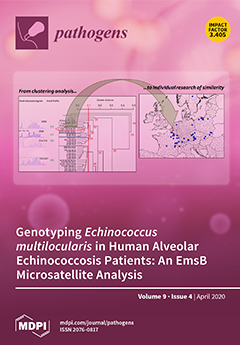
Cover Story: For clinical epidemiology specialists, connecting the genetic diversity of Echinococcus multilocularis (Em) to sources of infection or particular sites has become somewhat of a holy grail. The long incubation period makes it difficult to trace the infection history of alveolar echinococcosis (AE). Genetic variability in Em and various levels of pathogenicity may explain the various parasitic manifestations in human patients, by different genotypes detected. In this study, we investigated through the microsatellite marker EmsB a panel of 63 patients diagnosed with AE, originating from different European countries. Nine EmsB profiles were identified among patients. This study sheds light on possible contamination pathways in humans, as proximity contamination in some cases, and the dominant contamination profiles in Europe, particularly for extrahepatic lesions. View this paper
  • Issues are regarded as officially published after their release is announced to the table of contents alert mailing list .
  • You may sign up for email alerts to receive table of contents of newly released issues.
  • PDF is the official format for papers published in both, html and pdf forms. To view the papers in pdf format, click on the "PDF Full-text" link, and use the free Adobe Reader to open them.

Articles (76)

  • Editorial
  • Open Access
14 Citations
3,364 Views
4 Pages

The economic crisis of the first decades of the 2000s had serious repercussions on the economy of individual countries, producing a gradual impoverishment of populations. The reduction in financial resources has significantly reduced citizens’...

  • Case Report
  • Open Access
12 Citations
4,668 Views
16 Pages

Salmonella Typhimurium Triggered Unilateral Epididymo-Orchitis and Splenomegaly in a Holstein Bull in Assiut, Egypt: A Case Report

  • Manal A. M. Mahmoud,
  • Gaber Megahed,
  • Mohamed S. Yousef,
  • Fatma Abo Zakaib Ali,
  • Rania S. Zaki and
  • Hanan H. Abdelhafeez

This report illustrates, for the first time, a case of unilateral orchitis and epididymitis in a Holstein-Friesian bull, associated with Salmonella enterica infection (Salmonella enterica serovar Typhimurium). A one and a half-year-old Holstein-Fries...

  • Article
  • Open Access
44 Citations
6,183 Views
13 Pages

Background: An epilepsy prevalence of 4.4% was documented in onchocerciasis-endemic villages close to the Maridi River in South Sudan. We investigated the role of the Maridi dam in causing an onchocerciasis-associated epilepsy epidemic in these villa...

  • Article
  • Open Access
14 Citations
4,951 Views
16 Pages

Catalase and Ascorbate Peroxidase in Euglenozoan Protists

  • Ingrid Škodová-Sveráková,
  • Kristína Záhonová,
  • Barbora Bučková,
  • Zoltán Füssy,
  • Vyacheslav Yurchenko and
  • Julius Lukeš

In this work, we studied the biochemical properties and evolutionary histories of catalase (CAT) and ascorbate peroxidase (APX), two central enzymes of reactive oxygen species detoxification, across the highly diverse clade Eugenozoa. This clade enco...

  • Article
  • Open Access
22 Citations
8,931 Views
17 Pages

Venereal Transmission of Vesicular Stomatitis Virus by Culicoides sonorensis Midges

  • Paula Rozo-Lopez,
  • Berlin Londono-Renteria and
  • Barbara S. Drolet

Culicoides sonorensis biting midges are well-known agricultural pests and transmission vectors of arboviruses such as vesicular stomatitis virus (VSV). The epidemiology of VSV is complex and encompasses a broad range of vertebrate hosts, multiple rou...

  • Review
  • Open Access
144 Citations
26,557 Views
26 Pages

Deadly pathogens and parasites are transmitted by vectors and the mosquito is considered the most threatening vector in public health, transmitting these pathogens to humans and animals. We are currently witnessing the emergence/resurgence in new reg...

  • Article
  • Open Access
29 Citations
5,497 Views
9 Pages

Long-Term Incubation PrPCWD with Soils Affects Prion Recovery but Not Infectivity

  • Alsu Kuznetsova,
  • Debbie McKenzie,
  • Catherine Cullingham and
  • Judd M. Aiken

Chronic wasting disease (CWD) is a contagious prion disease of cervids. The infectious agent is shed from animals at the preclinical and clinical stages of disease where it persists in the environment as a reservoir of CWD infectivity. In this study,...

  • Review
  • Open Access
393 Citations
23,274 Views
25 Pages

Phenylpropanoid Pathway Engineering: An Emerging Approach towards Plant Defense

  • Vivek Yadav,
  • Zhongyuan Wang,
  • Chunhua Wei,
  • Aduragbemi Amo,
  • Bilal Ahmed,
  • Xiaozhen Yang and
  • Xian Zhang

Pathogens hitting the plant cell wall is the first impetus that triggers the phenylpropanoid pathway for plant defense. The phenylpropanoid pathway bifurcates into the production of an enormous array of compounds based on the few intermediates of the...

  • Article
  • Open Access
8 Citations
4,669 Views
14 Pages

Genetic Diversity and Recombination in the Plant Pathogen Sclerotinia sclerotiorum Detected in Sri Lanka

  • Thirega Mahalingam,
  • Weidong Chen,
  • Chandima Shashikala Rajapakse,
  • Kandangamuwa Pathirannahalage Somachandra and
  • Renuka Nilmini Attanayake

Sclerotinia sclerotiorum is an important fungal pathogen on many economically important crops including cabbage worldwide. Even though population structure and genetic diversity of S. sclerotiorum is well studied in temperate climatic conditions, onl...

  • Review
  • Open Access
67 Citations
19,012 Views
13 Pages

Origin, Potential Therapeutic Targets and Treatment for Coronavirus Disease (COVID-19)

  • Muhammad Shahid Nadeem,
  • Mazin A. Zamzami,
  • Hani Choudhry,
  • Bibi Nazia Murtaza,
  • Imran Kazmi,
  • Habib Ahmad and
  • Abdul Rauf Shakoori

The ongoing episode of coronavirus disease 19 (COVID-19) has imposed a serious threat to global health and the world economy. The disease has rapidly acquired a pandemic status affecting almost all populated areas of the planet. The causative agent o...

  • Article
  • Open Access
36 Citations
6,996 Views
17 Pages

Ixodes scapularis ticks harbor microbial communities including pathogenic and non-pathogenic microbes. Pathogen infection increases the expression of several tick gut proteins, which disturb the tick gut microbiota and impact bacterial biofilm format...

  • Review
  • Open Access
22 Citations
8,135 Views
14 Pages

Effects of Mycoplasmas on the Host Cell Signaling Pathways

  • Sergei N. Borchsenius,
  • Innokentii E. Vishnyakov,
  • Olga A. Chernova,
  • Vladislav M. Chernov and
  • Nikolai A. Barlev

Mycoplasmas are the smallest free-living organisms. Reduced sizes of their genomes put constraints on the ability of these bacteria to live autonomously and make them highly dependent on the nutrients produced by host cells. Importantly, at the organ...

  • Article
  • Open Access
33 Citations
5,156 Views
12 Pages

Prevention and Control of Legionella and Pseudomonas spp. Colonization in Dental Units

  • Benedetta Tuvo,
  • Michele Totaro,
  • Maria Luisa Cristina,
  • Anna Maria Spagnolo,
  • David Di Cave,
  • Sara Profeti,
  • Angelo Baggiani,
  • Gaetano Privitera and
  • Beatrice Casini

Introduction: Dental Unit Waterlines (DUWLs) have shown to be a source of Legionella infection. We report the experience of different dental healthcare settings where a risk management plan was implemented. Materials and methods: In a Hospital Odonto...

  • Review
  • Open Access
39 Citations
7,176 Views
20 Pages

Human Papillomaviruses and Epstein–Barr Virus Interactions in Colorectal Cancer: A Brief Review

  • Queenie Fernandes,
  • Ishita Gupta,
  • Semir Vranic and
  • Ala-Eddin Al Moustafa

Human papillomaviruses (HPVs) and the Epstein–Barr virus (EBV) are the most common oncoviruses, contributing to approximately 10%–15% of all malignancies. Oncoproteins of high-risk HPVs (E5 and E6/E7), as well as EBV (LMP1, LMP2A and EBNA...

  • Article
  • Open Access
53 Citations
15,558 Views
83 Pages

Systematic Review of Important Viral Diseases in Africa in Light of the ‘One Health’ Concept

  • Ravendra P. Chauhan,
  • Zelalem G. Dessie,
  • Ayman Noreddin and
  • Mohamed E. El Zowalaty

Emerging and re-emerging viral diseases are of great public health concern. The recent emergence of Severe Acute Respiratory Syndrome (SARS) related coronavirus (SARS-CoV-2) in December 2019 in China, which causes COVID-19 disease in humans, and its...

  • Article
  • Open Access
7 Citations
5,350 Views
15 Pages

Real-time PCR (rPCR) is a widely accepted diagnostic tool for the detection and quantification of nucleic acid targets. In order for these assays to achieve high sensitivity and specificity, primer and probe-template complementarity is essential; how...

  • Article
  • Open Access
11 Citations
8,798 Views
23 Pages

Risk Assessment of African Swine Fever Virus Exposure to Sus scrofa in Japan Via Pork Products Brought in Air Passengers’ Luggage

  • Satoshi Ito,
  • Jaime Bosch,
  • Cristina Jurado,
  • José Manuel Sánchez-Vizcaíno and
  • Norikazu Isoda

In recent years, African swine fever (ASF) has become prevalent in many areas, including Asia. The repeated detection of the ASF virus (ASFV) genome in pork products brought in air passenger’s luggage (PPAP) was also reported from Japanese airp...

  • Article
  • Open Access
18 Citations
4,201 Views
16 Pages

Molecular Characterization and Antimicrobial Susceptibility of C. jejuni Isolates from Italian Wild Bird Populations

  • Francesca Marotta,
  • Anna Janowicz,
  • Lisa Di Marcantonio,
  • Claudia Ercole,
  • Guido Di Donato,
  • Giuliano Garofolo and
  • Elisabetta Di Giannatale

Poultry is considered a major reservoir of human campylobacteriosis. It also been reported that not only poultry, but also wild birds, are capable of carrying C. jejuni, thus demonstrating to be a risk of spreading the bacteria in the environment. To...

  • Article
  • Open Access
22 Citations
5,186 Views
13 Pages

Ethylicin Prevents Potato Late Blight by Disrupting Protein Biosynthesis of Phytophthora infestans

  • Shumin Zhang,
  • Meiquan Zhang,
  • A. Rehman Khalid,
  • Linxuan Li,
  • Yang Chen,
  • Pan Dong,
  • Hanyan Wang and
  • Maozhi Ren

Phytophthora infestans, the causal agent of potato late blight, triggered the devastating Great Irish Famine that lasted from 1845 to 1852. Today, it is still the greatest threat to the potato yield. Ethylicin is a broad-spectrum biomimetic-fungicide...

  • Review
  • Open Access
52 Citations
8,932 Views
20 Pages

Subversion of Host Innate Immunity by Human Papillomavirus Oncoproteins

  • Irene Lo Cigno,
  • Federica Calati,
  • Silvia Albertini and
  • Marisa Gariglio

The growth of human papillomavirus (HPV)-transformed cells depends on the ability of the viral oncoproteins E6 and E7, especially those from high-risk HPV16/18, to manipulate the signaling pathways involved in cell proliferation, cell death, and inna...

  • Article
  • Open Access
33 Citations
4,156 Views
13 Pages

Evidence of the Extrahepatic Replication of Hepatitis E Virus in Human Endometrial Stromal Cells

  • Mohamed A. El-Mokhtar,
  • Essam R. Othman,
  • Maha Y. Khashbah,
  • Ali Ismael,
  • Mohamed AA Ghaliony,
  • Mohamed Ismail Seddik and
  • Ibrahim M. Sayed

Hepatitis E virus (HEV) is the most common cause of acute viral hepatitis worldwide. The tropism of HEV is not restricted to the liver, and the virus replicates in other organs. Not all the extrahepatic targets for HEV are identified. Herein, we foun...

  • Article
  • Open Access
75 Citations
7,305 Views
22 Pages

In Vivo Antimicrobial and Wound-Healing Activity of Resveratrol, Dihydroquercetin, and Dihydromyricetin against Staphylococcus aureus, Pseudomonas aeruginosa, and Candida albicans

  • Alexei B. Shevelev,
  • Nicola La Porta,
  • Elena P. Isakova,
  • Stefan Martens,
  • Yulia K. Biryukova,
  • Alexander S. Belous,
  • Dmitrii A. Sivokhin,
  • Elena V. Trubnikova,
  • Marina V. Zylkova and
  • Yulia I. Deryabina
  • + 2 authors

An increase in the spread of antibiotic-resistant opportunistic microorganisms causes serious problems in the treatment of purulent infections, burns, and trophic ulcers. We tested the antimicrobial activity in vivo of three polyphenols, Resveratrol,...

  • Review
  • Open Access
44 Citations
10,479 Views
11 Pages

Since December 2019, coronavirus disease 2019 (COVID-19) caused by severe acute respiratory syndrome coronavirus 2 (SARS-CoV-2) has resulted in devastating consequences worldwide and infected more than 350,000 individuals and killed more than 16,000...

  • Article
  • Open Access
4 Citations
3,515 Views
11 Pages

Effect of Sugars on Chlamydia trachomatis Infectivity

  • Giacomo Marziali,
  • Antonella Marangoni,
  • Claudio Foschi,
  • Maria Carla Re and
  • Natalia Calonghi

Background. Previous works suggest that sugars can have a beneficial effect on C. trachomatis (CT) survival and virulence. In this study, we investigated the effect of different sugars on CT infectivity, elucidating some of the molecular mechanisms b...

  • Article
  • Open Access
6 Citations
4,470 Views
8 Pages

Prevention of Intramammary Infections by Prepartum External Application of a Teat Dip Containing Lactic Acid Bacteria with Antimicrobial Properties in Dairy Heifers

  • Jan-Hendrik Paduch,
  • Johanna Lücking,
  • Elisabeth Mansion-de Vries,
  • Claudia Zinke,
  • Nicole Wente and
  • Volker Krömker

The aim of the current study was to investigate the effects of the prepartum external treatment of teats with a combination of four lactic acid bacteria strains viz. Lactobacillus (Lb.) rhamnosus ATCC 7469, Lactococcus lactis subsp. lactis ATCC 11454...

  • Article
  • Open Access
29 Citations
5,309 Views
13 Pages

The cell wall of Listeria monocytogenes (Lm), a major intracellular foodborne bacterial pathogen, comprises a thick peptidoglycan layer that serves as a scaffold for glycopolymers such as wall teichoic acids (WTAs). WTAs contain non-essential sugar s...

  • Review
  • Open Access
23 Citations
6,151 Views
12 Pages

Updated Management Guidelines for Clostridioides difficile in Paediatrics

  • Margherita Gnocchi,
  • Martina Gagliardi,
  • Pierpacifico Gismondi,
  • Federica Gaiani,
  • Gian Luigi de’ Angelis and
  • Susanna Esposito

Clostridioides difficile, formerly known as Clostridium difficile, causes infections (CDI) varying from self-limited diarrhoea to severe conditions, including toxic megacolon and bowel perforation. For this reason, a prompt diagnosis is fundamental t...

  • Review
  • Open Access
19 Citations
5,930 Views
15 Pages

The Role of Apoptin in Chicken Anemia Virus Replication

  • Cynthia Feng,
  • Yingke Liang and
  • Jose G. Teodoro

Apoptin is the Vp3 protein of chicken anemia virus (CAV), which infects the thymocytes and erythroblasts in young chickens, causing chicken infectious anemia and immunosuppression. Apoptin is highly studied for its ability to selectively induce apopt...

  • Article
  • Open Access
21 Citations
4,932 Views
17 Pages

Impact of Bacteriophage-Supplemented Drinking Water on the E. coli Population in the Chicken Gut

  • Sophie Kittler,
  • Ruth Mengden,
  • Imke H. E. Korf,
  • Anna Bierbrodt,
  • Johannes Wittmann,
  • Madeleine Plötz,
  • Arne Jung,
  • Tatiana Lehnherr,
  • Christine Rohde and
  • Corinna Kehrenberg
  • + 2 authors

Among intestinal coliform microbes in the broiler gut, there are potentially pathogenic Escherichia (E.) coli that can cause avian colibacillosis. The treatment with antibiotics favors the selection of multidrug-resistant bacteria and an alternative...

  • Review
  • Open Access
44 Citations
6,957 Views
23 Pages

Legionella pneumophila and Protozoan Hosts: Implications for the Control of Hospital and Potable Water Systems

  • Muhammad Atif Nisar,
  • Kirstin E. Ross,
  • Melissa H. Brown,
  • Richard Bentham and
  • Harriet Whiley

Legionella pneumophila is an opportunistic waterborne pathogen of public health concern. It is the causative agent of Legionnaires’ disease (LD) and Pontiac fever and is ubiquitous in manufactured water systems, where protozoan hosts and comple...

  • Review
  • Open Access
7 Citations
4,435 Views
20 Pages

Before the establishment of an adaptive immune response, retroviruses can be targeted by several cellular host factors at different stages of the viral replication cycle. This intrinsic immunity relies on a large diversity of antiviral processes. In...

  • Feature Paper
  • Review
  • Open Access
35 Citations
7,529 Views
17 Pages

Infections with high-risk human papillomaviruses cause ~5% of all human cancers. E6 and E7 are the only viral genes that are consistently expressed in cancers, and they are necessary for tumor initiation, progression, and maintenance. E6 and E7 encod...

  • Communication
  • Open Access
16 Citations
3,162 Views
8 Pages

Occurrence of Blastocystis in Patients with Clostridioides difficile Infection

  • Laura Vega,
  • Giovanny Herrera,
  • Marina Muñoz,
  • Manuel Alfonso Patarroyo and
  • Juan David Ramírez

Clostridiodes difficile comprises a public-health threat that has been understudied in Colombia. Hypervirulent strains of C. difficile harbor multiple toxins, can be easily spread, and can have their onset of disease within healthcare facilities (HCF...

  • Article
  • Open Access
7 Citations
2,866 Views
14 Pages

Characterization of an MLP Homologue from Haemaphysalis longicornis (Acari: Ixodidae) Ticks

  • Jin Luo,
  • Hui Shen,
  • Qiaoyun Ren,
  • Guiquan Guan,
  • Bo Zhao,
  • Hong Yin,
  • Ronggui Chen,
  • Hongying Zhao,
  • Jianxun Luo and
  • Guangyuan Liu
  • + 1 author

Members of the cysteine-rich protein (CRP) family are known to participate in muscle development in vertebrates. Muscle LIM protein (MLP) belongs to the CRP family and has an important function in the differentiation and proliferation of muscle cells...

  • Article
  • Open Access
12 Citations
3,276 Views
18 Pages

Foetal Immune Response Activation and High Replication Rate during Generation of Classical Swine Fever Congenital Infection

  • José Alejandro Bohórquez,
  • Sara Muñoz-González,
  • Marta Pérez-Simó,
  • Iván Muñoz,
  • Rosa Rosell,
  • Liani Coronado,
  • Mariano Domingo and
  • Llilianne Ganges

Classical swine fever virus (CSFV) induces trans-placental transmission and congenital viral persistence; however, the available information is not updated. Three groups of sows were infected at mid-gestation with either a high, moderate or low virul...

  • Article
  • Open Access
23 Citations
4,244 Views
21 Pages

Genotyping Echinococcus multilocularis in Human Alveolar Echinococcosis Patients: An EmsB Microsatellite Analysis

  • Jenny Knapp,
  • Bruno Gottstein,
  • Stéphane Bretagne,
  • Jean-Mathieu Bart,
  • Gérald Umhang,
  • Carine Richou,
  • Solange Bresson-Hadni and
  • Laurence Millon

For clinical epidemiology specialists, connecting the genetic diversity of Echinococcus multilocularis to sources of infection or particular sites has become somewhat of a holy grail. It is very difficult to trace the infection history of alveolar ec...

  • Article
  • Open Access
10 Citations
4,132 Views
19 Pages

A Global Analysis of Enzyme Compartmentalization to Glycosomes

  • Hina Durrani,
  • Marshall Hampton,
  • Jon N. Rumbley and
  • Sara L. Zimmer

In kinetoplastids, the first seven steps of glycolysis are compartmentalized into a glycosome along with parts of other metabolic pathways. This organelle shares a common ancestor with the better-understood eukaryotic peroxisome. Much of our understa...

  • Article
  • Open Access
11 Citations
4,740 Views
10 Pages

Efficient Transovarial Transmission of Babesia Spp. in Rhipicephalus microplus Ticks Fed on Water Buffalo (Bubalus bubalis)

  • Dasiel Obregón,
  • Belkis Corona-González,
  • Adrian Alberto Díaz-Sánchez,
  • Yasmani Armas,
  • Eugenio Roque,
  • Márcia Cristina de Sena Oliveira and
  • Alejandro Cabezas-Cruz

Water buffaloes can be infected by tick-borne pathogens (TBPs) in endemic areas where cattle and buffalo coexist. Among TBPs affecting buffaloes is the Apicomplexan hemoparasites Babesia bovis and B. bigemina, transmitted by Rhipicephalus microplus t...

  • Article
  • Open Access
6 Citations
3,154 Views
11 Pages

In Vitro Bactericidal Effects of Photodynamic Therapy Combined with Four Tetracyclines against Clostridioides difficile KCTC5009 in Planktonic Cultures

  • Sung Sook Choi,
  • Hui Yeong Oh,
  • Eui Jin Kim,
  • Hae Kyung Lee,
  • Hyung Keun Kim,
  • Hyun Ho Choi,
  • Sang Woo Kim and
  • Hiun Suk Chae

Surface disinfection in health-care facilities is critical to prevent dissemination of Clostridioides difficile (C. difficile). Tetracyclines (TCs) are broad-spectrum antibiotics that are associated with a low risk of development of C. difficile infe...

  • Article
  • Open Access
14 Citations
3,998 Views
15 Pages

Monitoring of Pseudorabies in Wild Boar of Germany—A Spatiotemporal Analysis

  • Nicolai Denzin,
  • Franz J. Conraths,
  • Thomas C. Mettenleiter,
  • Conrad M. Freuling and
  • Thomas Müller

To evaluate recent developments regarding the epidemiological situation of pseudorabies virus (PRV) infections in wild boar populations in Germany, nationwide serological monitoring was conducted between 2010 and 2015. During this period, a total of...

  • Article
  • Open Access
8 Citations
2,751 Views
13 Pages

Efficacy of a Protein Vaccine and a Conjugate Vaccine Against Co-Colonization with Vaccine-Type and Non-Vaccine Type Pneumococci in Mice

  • Gabriela B. C. Colichio,
  • Giuliana S. Oliveira,
  • Tasson C. Rodrigues,
  • Maria Leonor S. Oliveira and
  • Eliane N. Miyaji

Widespread use of pneumococcal conjugate vaccines (PCVs) has led to substitution of vaccine-type (VT) strains by non-vaccine type (NVT) strains in nasopharyngeal carriage. We compared the efficacy of PCV13 and a nasal protein formulation containing p...

  • Article
  • Open Access
15 Citations
5,457 Views
16 Pages

We have assembled the first genome draft of Anaplasma platys, an obligate intracellular rickettsia, and the only known bacterial pathogen infecting canine platelets. A. platys is a not-yet-cultivated bacterium that causes infectious cyclic canine thr...

  • Letter
  • Open Access
8 Citations
2,963 Views
5 Pages

We aimed to investigate the occurrence of acquired AmpC β-lactamases (qAmpC), and characterize qAmpC-producing Enterobacteriaceae from different non-clinical environments in Portugal. We analysed 880 Enterobacteriaceae resistant to third-generat...

  • Article
  • Open Access
14 Citations
3,197 Views
13 Pages

Comparative Characterization of G Protein α Subunits in Aspergillus fumigatus

  • Yong-Ho Choi,
  • Na-Young Lee,
  • Sung-Su Kim,
  • Hee-Soo Park and
  • Kwang-Soo Shin

Trimeric G proteins play a central role in the G protein signaling in filamentous fungi and Gα subunits are the major component of trimeric G proteins. In this study, we characterize three Gα subunits in the human pathogen Aspergillus fum...

  • Review
  • Open Access
54 Citations
4,763 Views
12 Pages

Protective Properties of Attenuated Strains of African Swine Fever Virus Belonging to Seroimmunotypes I–VIII

  • Alexey D. Sereda,
  • Vladimir M. Balyshev,
  • Anna S. Kazakova,
  • Almaz R. Imatdinov and
  • Denis V. Kolbasov

This article summarizes the study results on the generation of attenuated strains of African swine fever virus (ASFV) of seroimmunotypes I–VIII and the creation of live vaccines for temporary protection of pigs during a period of epizootics in...

  • Review
  • Open Access
11 Citations
3,727 Views
13 Pages

Anthology of Dirofilariasis in Russia (1915–2017)

  • Anatoly V. Kondrashin,
  • Lola F. Morozova,
  • Ekaterina V. Stepanova,
  • Natalia A. Turbabina,
  • Maria S. Maksimova and
  • Evgeny N. Morozov

Dirofilariasis is a helminths vector-borne disease caused by two species of DirofolariaD. repens and D. immitis. The former is overwhelmingly associated with human dirofilariasis. The vector of the worm are mosquitoes of the family Culicidae (...

  • Article
  • Open Access
3,179 Views
16 Pages

Analysis of the Role of TpUB05 Antigen from Theileria parva in Immune Responses to Malaria in Humans Compared to Its Homologue in Plasmodium falciparum the UB05 Antigen

  • Jerome Nyhalah Dinga,
  • Stephanie Numenyi Perimbie,
  • Stanley Dobgima Gamua,
  • Francis N. G. Chuma,
  • Dieudonné Lemuh Njimoh,
  • Appolinaire Djikeng,
  • Roger Pelle and
  • Vincent P. K. Titanji

Despite the amount of resources deployed and the technological advancements in molecular biology, vaccinology, immunology, genetics, and biotechnology, there are still no effective vaccines against malaria. Immunity to malaria is usually seen to be s...

  • Article
  • Open Access
103 Citations
8,319 Views
24 Pages

A Systematic Review: Is Aedes albopictus an Efficient Bridge Vector for Zoonotic Arboviruses?

  • Taissa Pereira-dos-Santos,
  • David Roiz,
  • Ricardo Lourenço-de-Oliveira and
  • Christophe Paupy

Mosquito-borne arboviruses are increasing due to human disturbances of natural ecosystems and globalization of trade and travel. These anthropic changes may affect mosquito communities by modulating ecological traits that influence the “spill-o...

  • Feature Paper
  • Review
  • Open Access
18 Citations
5,102 Views
11 Pages

Papillomaviruses Go Retro

  • Jian Xie,
  • Pengwei Zhang,
  • Mac Crite and
  • Daniel DiMaio

Human papillomaviruses are important pathogens responsible for approximately 5% of cancer as well as other important human diseases, but many aspects of the papillomavirus life cycle are poorly understood. To undergo genome replication, HPV DNA must...

  • Article
  • Open Access
28 Citations
4,175 Views
17 Pages

Biochemical Changes in Leaves of Vitis vinifera cv. Sangiovese Infected by Bois Noir Phytoplasma

  • Carmine Negro,
  • Erika Sabella,
  • Francesca Nicolì,
  • Roberto Pierro,
  • Alberto Materazzi,
  • Alessandra Panattoni,
  • Alessio Aprile,
  • Eliana Nutricati,
  • Marzia Vergine and
  • Andrea Luvisi
  • + 2 authors

Bois noir is a disease associated with the presence of phytoplasma ‘Candidatus Phytoplasma solani’ belonging to the Stolbur group (subgroup 16SrXII-A), which has a heavy economic impact on grapevines. This study focused on the changes ind...

of 2

Get Alerted

Add your email address to receive forthcoming issues of this journal.

XFacebookLinkedIn
Pathogens - ISSN 2076-0817